This video presents 11 principles to make doing hard things easier, focusing on rebalancing dopamine and building a disciplined identity.
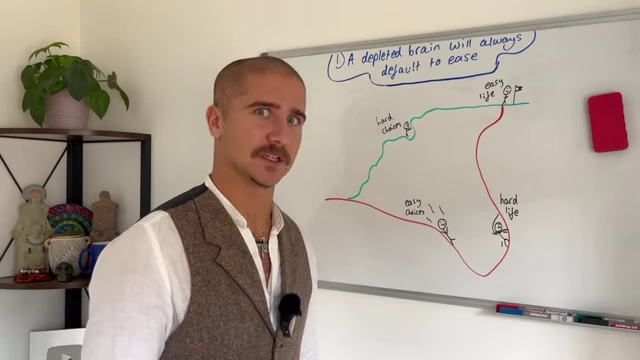
Diagram illustrating the principle 'Hard choices, easy life' versus 'Easy choices, hard life', showing different paths and outcomes.
[
00:12:45
]
Understand Dopamine's Role: A depleted brain defaults to ease; manage dopamine to find hard things rewarding by reducing fast-dopamine activities and channeling focus towards slow-dopamine tasks.
Reappraise Discomfort: View discomfort as beneficial, a necessary step for long-lasting rewards, using mantras to shift your perspective.
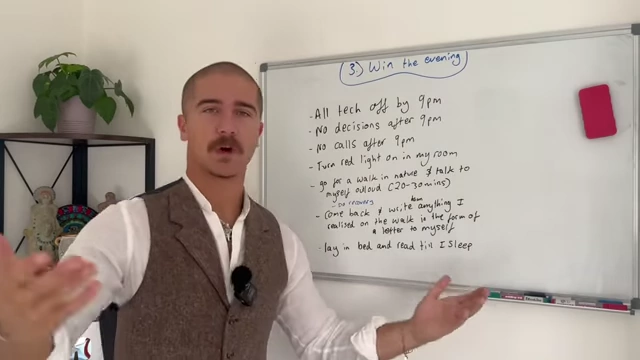
Win the Evening: A solid evening routine prevents dopamine deficit the next morning, ensuring motivation and clarity for hard tasks.
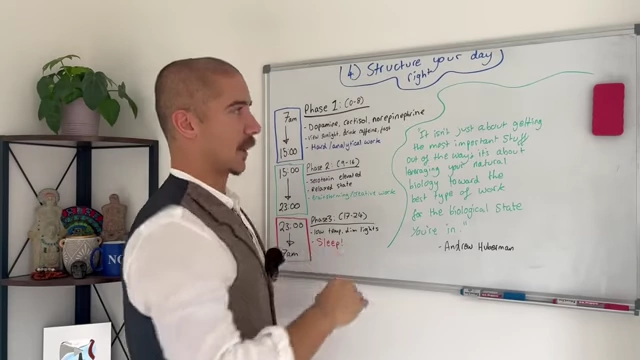
Structure Your Day Right: Align hard tasks with your neurochemical peaks (morning for analytical work, afternoon for creative) for optimal performance.
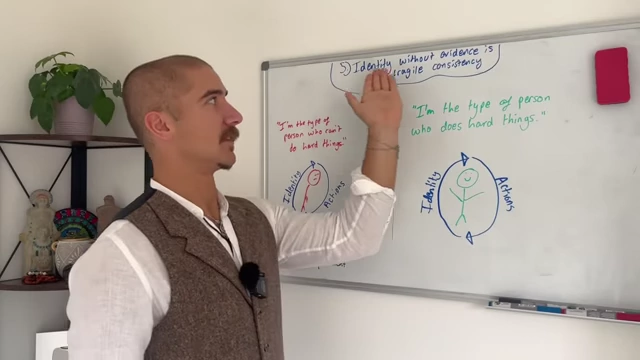
Identity-Based Change: Form an identity as someone who does hard things by consistently taking action, rather than just gaslighting yourself with unevidenced beliefs.
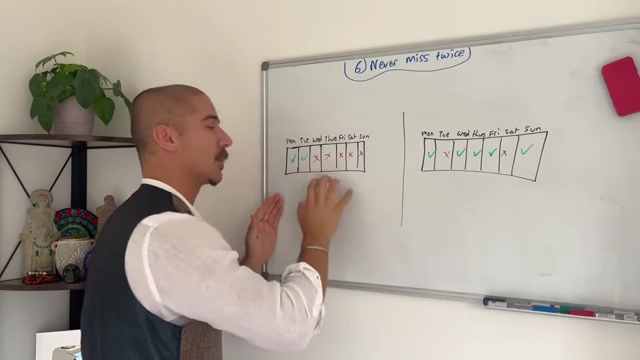
Never Miss Twice: If you skip a day, get back on track immediately to prevent a full regression in habit formation.
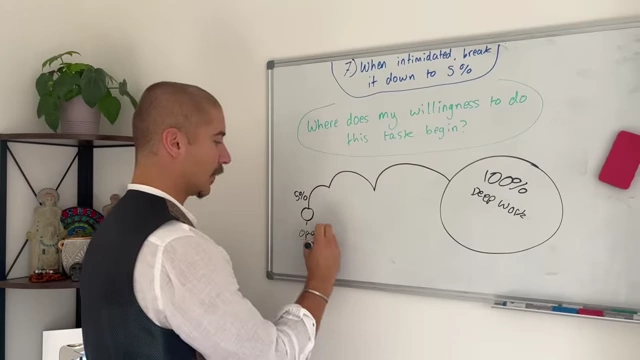
Break Down Tasks: When overwhelmed, reduce the task to 5% of its original size to make it less intimidating and encourage a start.
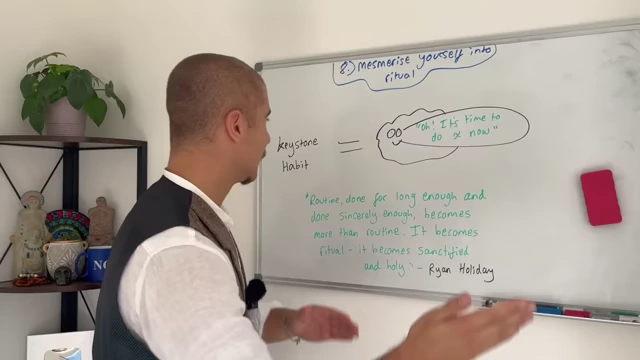
Mesmerize into Ritual: Create keystone habits to signal to your brain that it's time to do the hard thing, transforming routine into ritual.
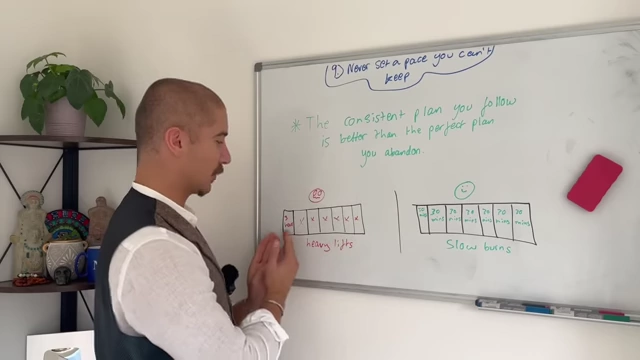
Sustainable Pace: Opt for consistent, shorter efforts over intense, infrequent ones ("slow burns" over "heavy lifts") to maintain long-term discipline.
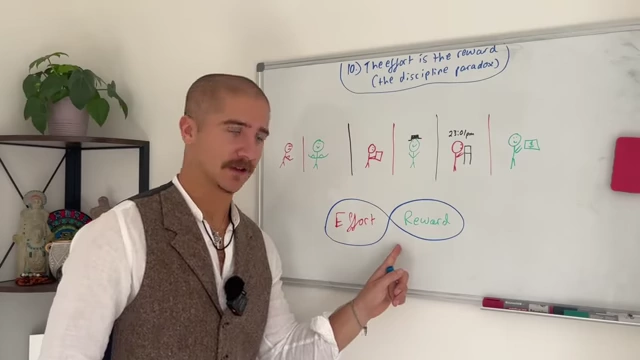
Effort is Reward: Recognize that the effort itself is intrinsically linked to and part of the reward, unlocking lasting discipline.
Self-Negotiation: Listen to your inner voice of resistance and negotiate with it, rather than ignoring it, to avoid self-sabotage and find compromises.
Hard Things & The Bottom Line: Understanding Dopamine [0:00] [0:42]
Mind map showing "Hard Things" connected to deep work, working out, studying, reading, resisting bad habits, and stepping outside comfort zone
[
00:00:00
]
Hard things like deep work, working out, studying, resisting bad habits, and stepping out of your comfort zone bring net benefits but are often avoided due to their difficulty.
The video outlines 11 principles to make these challenging tasks feel easier.
The Core Idea: To make hard things easy, rebalance your dopamine stores and consistently take actions that build an identity of being a disciplined person.
Diagram illustrating the principle 'Hard choices, easy life' versus 'Easy choices, hard life', showing different paths and outcomes.
[
00:12:45
]
1. A Depleted Brain Will Always Default to Ease [1:10]
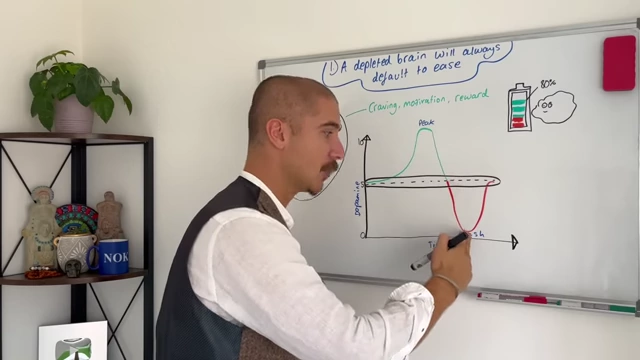
Diagram illustrating the dopamine pleasure-pain balance, showing a high spike from pleasurable activities followed by a crash below baseline, leading to a dopamine deficit state
[
00:03:00
]
Dopamine's Role: Dopamine, a neurotransmitter, is responsible for craving, motivation, and reward. It enables you to find hard things enjoyable and rewarding.
Dopamine Homeostasis: Your brain maintains a homeostatic balance of dopamine levels; there's a finite amount available daily.
Fast Dopamine Activities: Engaging in highly pleasurable activities (e.g., social media, junk food, porn) causes a rapid dopamine spike, followed by a crash below baseline.
Pleasure-Pain Balance: This concept, popularized by Dr. Anna Lembke, explains that intense pleasure leads to an equivalent dip into pain (dopamine deficit).
Consequences: In a dopamine deficit, you lose motivation and ability to find reward in hard tasks, leading to a cycle of failure and self-criticism.
Reclaiming Dopamine:
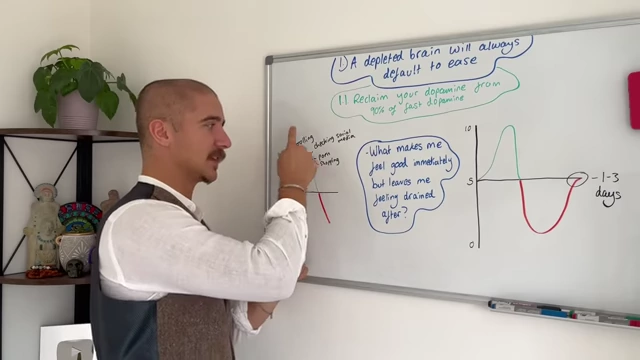
Diagram illustrating how to reclaim dopamine by identifying activities that provide immediate pleasure but leave one drained, showing the dopamine curve recovery over 1-3 days.
[
00:07:56
]
Purge Fast Dopamine: Identify activities that provide immediate pleasure but leave you drained (e.g., scrolling, junk food) and reduce them.
Dopamine Recovery Time: It takes 1-3 days for your brain to return to baseline after heavy fast-dopamine engagement. Expect to feel worse before feeling better.
Self-Compassion: Understand that your brain is being hijacked by highly dopaminergic stimuli; it's natural to struggle.
Schedule Pleasure: Instead of completely eliminating fast-dopamine activities, schedule them (e.g., "only scroll between 6-7 PM") to regain control.
Channel Dopamine: By reducing fast-dopamine consumption, you reclaim dopamine for more fruitful, slow-dopamine activities.
Slow Dopamine Activities: Activities that involve initial pain but lead to lasting pleasure and reward (e.g., exercise, deep work, studying).
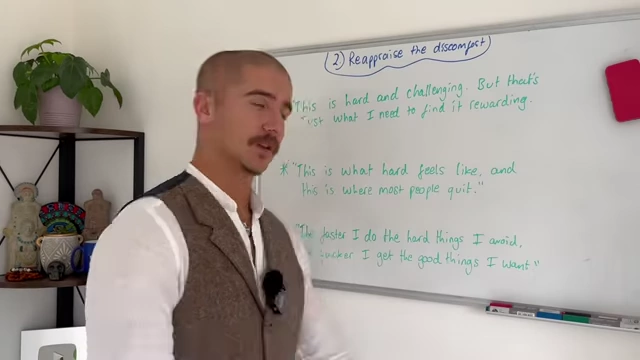
Image showing the written mantras: "This is hard and challenging, but that's just what I need to find it rewarding.", "This is what hard feels like, and this is where most people quit.", "The faster I do the hard things I avoid, the quicker I get the good things I want."
[
00:14:00
]
Shift Your Perspective: How you interpret discomfort is entirely up to you.
Beneficial Pain: View the discomfort of hard tasks as necessary pain for experiencing long-lasting rewards.
Mantras for Persistence:
"This is hard and challenging, but that's just what I need to find it rewarding."
"This is what hard feels like, and this is where most people quit."
"The faster I do the hard things I avoid, the quicker I get the good things I want."
Image depicting a list of evening routine elements: All tech off by 9pm, No decisions after 9pm, No calls after 9pm, Turn red light on in my room, Go for a walk in nature and talk to myself aloud (20-30 mins), Do recovery, Write down anything I've realized on the walk in the form of a letter to myself, Lay in bed and read until I fall asleep.
[
00:15:50
]
Tomorrow is Created Today: Your evening routine directly impacts your motivation and energy for hard tasks the next morning.
Avoid Evening Dopamine Spikes: Engaging in fast-dopamine activities in the evening leads to waking up in a dopamine deficit state.
Solid Evening Routine Components:
All screens off by 9 PM.
No major decisions after 9 PM.
No calls after 9 PM.
Use red light in your room (promotes melatonin).
Go for a nature walk and talk to yourself (20-30 minutes).
Do recovery (e.g., foam rolling, using an acupressure mat).
Write down reflections/realizations in a letter to yourself.
Read until you fall asleep (fiction helps wind down).
Image displaying a daily schedule split into three phases with corresponding activities: Phase 1 (0-8 hours after waking for analytical work), Phase 2 (9-16 hours for creative work), and Phase 3 (17-24 hours for sleep/preparation).
[
00:17:50
]
Neurochemical Variation: Your brain's chemistry changes throughout the day, affecting your ability to perform different tasks.
Leverage Your Biology: Schedule tasks according to your natural neurochemical peaks.
Phase 1 (0-8 hours post-wake): Dopamine, cortisol, and norepinephrine levels are highest. Ideal for hard, analytical work, deep work, studying, and reading.
Enhance this phase by viewing sunlight, consuming caffeine, and remaining fasted.
Phase 2 (9-16 hours post-wake): Serotonin levels increase, leading to a more relaxed state. Ideal for brainstorming, creative work, socializing, and less analytical tasks.
Phase 3 (17-24 hours post-wake): Sleep or prepare for sleep. Maintain a low temperature and dim lights.
Andrew Huberman's Insight: Focus on aligning the type of work with your biological state, not just getting important tasks done.
5. Identity Without Evidence is Just Fragile Consistency [20:48]
Diagram showing the cycle of "Identity" and "Action" reinforcing each other. An arrow points from "Actions" to "Identity" (I'm the type of person who does hard things) and from "Identity" to "Actions".
[
00:20:50
]
Build a New Identity: If you don't currently see yourself as someone who consistently does hard things, you need to build that identity.
Evidence-Based Identity: Identity is built on consistent actions. You need at least a week of daily engagement in the hard task to start forming this new identity.
Behavior Change is Identity-Based: Changing your beliefs about yourself (identity) leads to sustainable behavior change.
Focus on Becoming: Instead of just "doing" the hard thing, focus on "becoming the type of person who does that hard thing."
Self-Questioning: In moments of low motivation, ask: "What would the type of person I want to be do right now?"
Two tables illustrating daily habits. The left table shows a break in consistency (missed Tuesday and Wednesday), while the right table shows consistency maintained despite missing one day (missed Tuesday, but resumed Wednesday).
[
00:23:30
]
Habit Formation: If you want the hard thing to be a daily habit, the key is not to let one missed day become two.
Life Happens: It's okay to miss a day for rest or unforeseen circumstances.
Immediate Return: The crucial rule is to get back to the habit the very next day. Prevent a small lapse from turning into a full regression.
Diagram illustrating how to break down intimidating tasks to 5%, showing examples for '100% Gym' (to 'change into gym clothes') and '100% Deep Work' (to 'open notes, stare at them').
[
00:24:58
]
Resist Self-Criticism: If you've fallen off track, avoid self-criticism and don't demand immediate return to previous consistency.
Find the Starting Point: Ask yourself: "Where does my willingness to do this task begin?"
Micro-Actions: Break down the intimidating task to just 5% of its totality.
Example: Gym: If "going to the gym" (100%) is too much, try "change into gym clothes" (5%) and see how you feel.
Example: Deep Work: If "doing two hours of deep work" (100%) is too much, try "open my notes on my laptop and just stare at them" (5%).
Easy Slip-Backs: Making it easy to start again is crucial for consistency.
Diagram showing "Keystone habit" leading to "Oh, it's time to do X now," illustrating the concept of a cue triggering a habit. A quote from Ryan Holiday is also present.
[
00:25:30
]
Keystone Habit: Create a simple, consistent action performed immediately before the hard thing.
Priming Your Brain: This keystone habit signals to your brain that it's time for the main task, making it easier to start.
Example: Studying: Making a cup of tea and cutting an apple before studying would naturally lead the brain into a flow state.
Example: Gym: Drinking electrolytes before heading to the gym.
Routine Becomes Ritual: As Ryan Holiday states, "Routine done for long enough and done sincerely enough becomes more than routine. It becomes ritual. It becomes sanctified and holy."
Two tables comparing habit consistency. Table A shows a single heavy session once a week followed by recovery days. Table B shows daily 30-minute sessions.
[
00:27:10
]
Consistency Over Perfection: A consistent plan you follow is better than a perfect plan you abandon.
Slow Burns vs. Heavy Lifts:
Heavy Lifts: Doing a hard task in one long, intense session (e.g., 3 hours once a week) often leads to exhaustion and inconsistency.
Slow Burns: Doing the task in shorter, daily segments (e.g., 30 minutes every day) builds consistency and makes it more sustainable.
10. The Effort is the Reward (The Discipline Paradox) [27:29]
An illustration showing "Effort" and "Reward" connected by an infinity symbol, indicating they are inseparable.
[
00:28:30
]
Inseparable Concepts: It's easy to separate the effort you put in from the reward you receive. However, effort and reward are fundamentally linked.
No Discounting Effort: Don't discount the painful, hard work (e.g., gym workouts, studying sessions, deep work nights) when you achieve the desired outcome (e.g., physique, good grades, financial success).
Everlasting Discipline: When you understand that the effort itself is the reward, you unlock lasting discipline. Every moment of effort is a direct contribution to your eventual success.
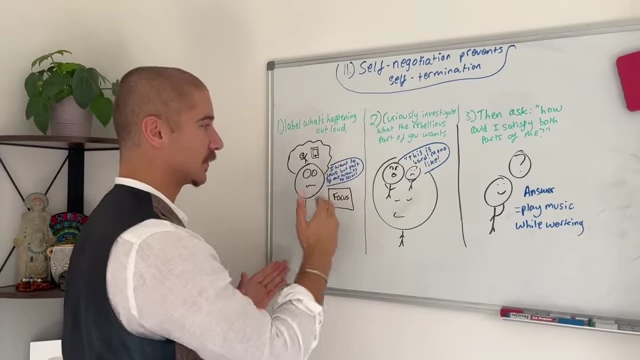
Three diagrams showing a person. The first shows internal voices debating (Focus vs. Scroll). The second shows investigating what the rebellious part wants. The third shows a negotiation outcome where the person finds a way to satisfy both parts (e.g., listen to music while working).
[
00:30:00
]
Acknowledge Inner Resistance: When doing hard things, an inner voice will often scream for you to do anything but the task.
Don't Ignore it: Ignoring this rebellious part leads to self-sabotage, binging, or skipping days.
Three-Step Self-Negotiation:
Label Out Loud: Verbally acknowledge what's happening (e.g., "I want to focus, but part of me wants to scroll social media.").
Curiously Investigate: Understand what the rebellious part truly wants (e.g., "This is hard. I don't like doing this. I want something easier.").
Satisfy Both Parts: Ask, "How could I satisfy both parts of me?" Find a compromise that allows you to continue the hard task while addressing the need for ease or distraction (e.g., "play some music while working").
Incorporate, Don't Discard: Integrate your rebellious parts rather than trying to suppress them.