Why Grindr's Stock Soared by 300% While Other Dating Apps Are Failing
Summary:
This video explains why Grindr is thriving with a 300% stock surge and record profits, while major dating apps like Tinder and Bumble are struggling with stock collapses and layoffs. The key reasons for Grindr's success are:
- A naturally balanced user demographic due to its niche (men seeking men), fostering better interactions.
- Clear user intentions, with 88% of users explicitly seeking casual encounters, eliminating "mind games."
- A user-centric business strategy that prioritizes app improvement and offers valuable free features, leading to voluntary paid upgrades.
- Its role as a crucial social infrastructure for the gay community, ensuring high user loyalty and a strong network effect.
In contrast, straight dating apps suffer from severe gender imbalance, user burnout from harassment, unclear intentions, and aggressive monetization that alienates users.
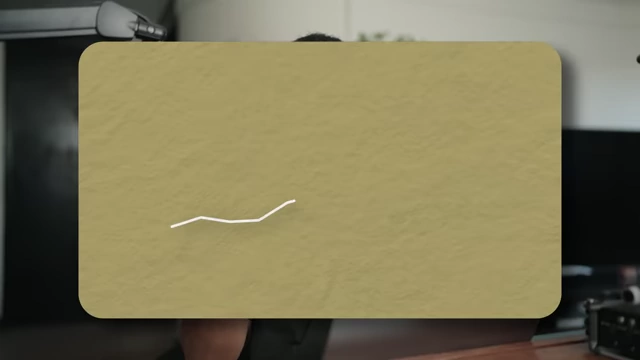
Grindr's stock price has surged over 300% since going public [ 00:00:25 ]
The Struggle of Mainstream Dating Apps vs. Grindr's Boom [0:00]
The dating app landscape shows a stark contrast between established players and Grindr.
- Decline of Mainstream Dating Apps [0:00]
- Bumble has laid off hundreds of people.
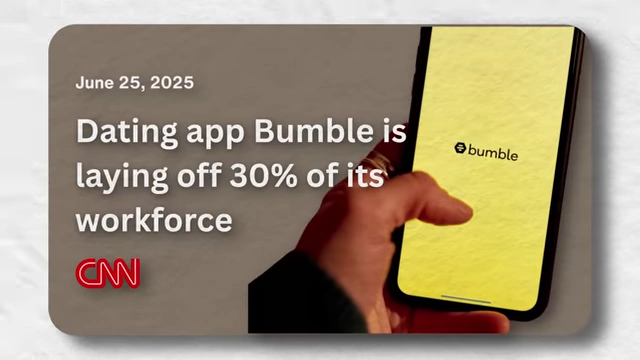
Bumble laying off 30% of its workforce on June 25, 2025 [ 00:00:04 ] - Match Group, owner of Tinder and other major apps, has seen its stock price collapse over 80% from its peak.
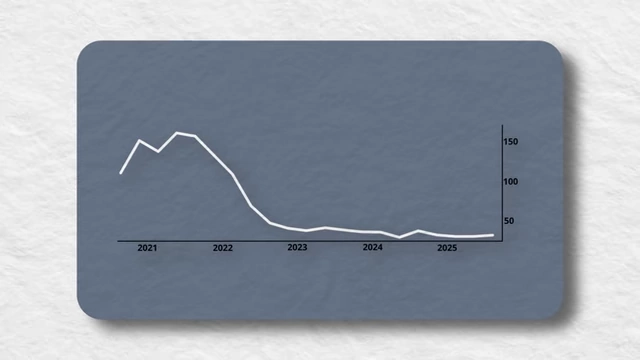
Match Group's stock price chart showing an over 80% collapse from its peak [ 00:00:15 ] - Tinder's revenue grew a mere 1% last year, and overall downloads for dating apps are down 30%.
- Cultural perception has shifted, with dating apps moving from "edgy" to "embarrassing" [0:00].
- Users experience collective exhaustion with the "swipe model," which now feels like work [0:02].
- Bumble has laid off hundreds of people.
- Grindr's Exceptional Growth [0:00]
- Grindr's stock price is up more than 300% since going public in late 2022.
Grindr's stock price chart showing a surge of over 300% since going public [ 00:00:25 ] - The company is posting record profits.
- Users spend an average of 70 minutes a day on the app, more than double the average time spent on Instagram [0:02].
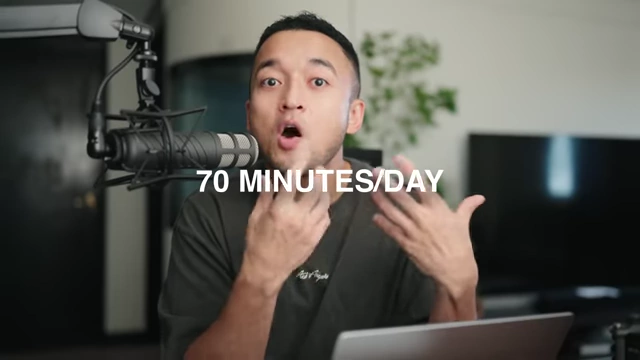
Grindr users spend an average of 70 minutes per day on the app [ 00:02:15 ] - Revenue jumped 34% last year, and monthly active users are still climbing [0:02].
- Grindr's stock price is up more than 300% since going public in late 2022.
Why Straight Dating Apps Are Failing [0:02]
The issues with mainstream dating apps stem from fundamental problems related to user demographics and intentions.
- Skewed Gender Ratio and its Consequences [0:02]
- Tinder's user base is approximately 75% men, meaning three men compete for every woman on the platform [0:02].
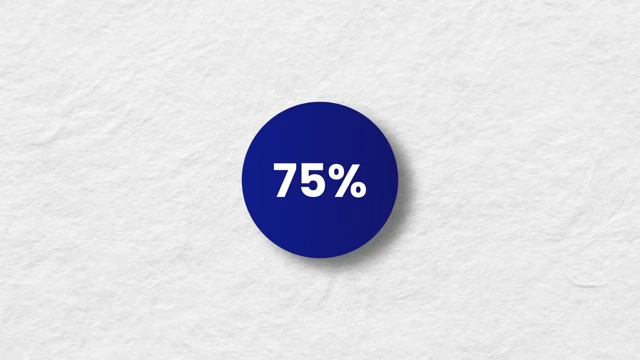
On Tinder, 75% of users are men, creating an imbalanced ratio [ 00:02:50 ] - Male Behavior: Men often resort to "spam swiping," swiping right on 46% of profiles, compared to women's 14% [0:02].
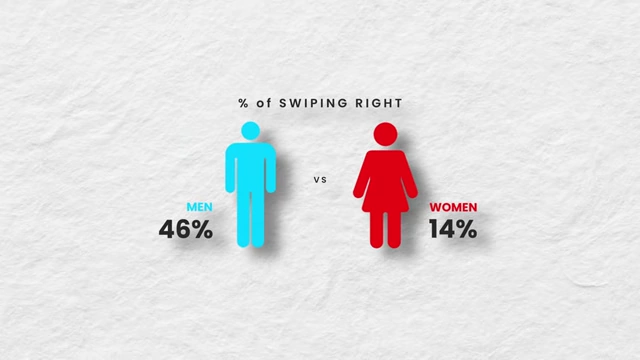
Comparison of men (46%) vs. women (14%) swiping right [ 00:03:01 ] - Female Experience: Women are overwhelmed by messages, with 54% reporting this feeling [0:03].
- The competition leads to disturbing statistics: 56% of women received unsolicited sexual images, 43% experienced continued unwanted contact, and 11% were threatened with harm [0:03].

Statistics show 56% of women receive unsolicited sexual images, 43% experience unwanted contact, and 11% are threatened with harm [ 00:03:54 ]
- The competition leads to disturbing statistics: 56% of women received unsolicited sexual images, 43% experienced continued unwanted contact, and 11% were threatened with harm [0:03].
- Dating App Burnout: A Forbes study found that 79% of Gen Z women report dating app burnout, leading many to limit their time on apps or delete them entirely [0:04].
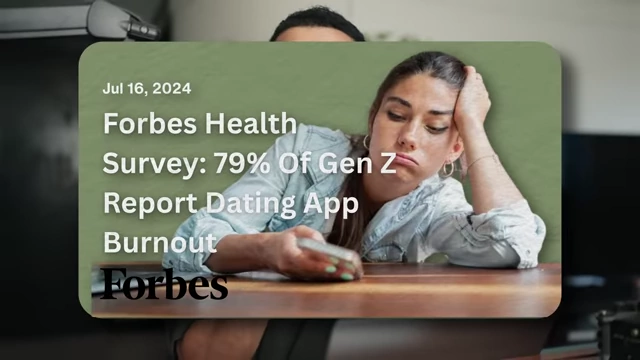
A Forbes article from July 16, 2024, reporting that 79% of Gen Z report dating app burnout [ 00:04:04 ] - This creates a "death spiral": as women leave, the gender ratio worsens, making the experience even more negative for the remaining women, causing more to leave [0:04].
- A 2024 study found that 79% of women are not interested in using dating apps in the future, indicating platforms are "literally running out of women" [0:04].
- Tinder's user base is approximately 75% men, meaning three men compete for every woman on the platform [0:02].
- Ambiguity of User Intentions [0:05]
- Straight dating apps feature a diverse mix of intentions: 41% seek serious relationships, 20% casual hookups, and 39% seek both [0:05].
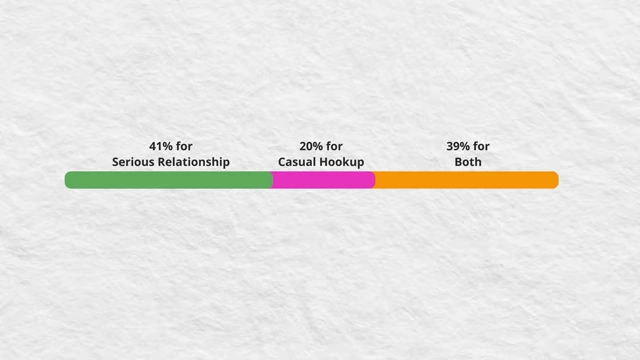
A bar chart illustrating diverse user intentions on straight dating apps [ 00:05:19 ] - This diversity complicates interactions, turning every match into a "weird negotiation" [0:05].
- Users often avoid stating intentions clearly to avoid appearing "weird," leading to exhausting "mind games" [0:05].
- Straight dating apps feature a diverse mix of intentions: 41% seek serious relationships, 20% casual hookups, and 39% seek both [0:05].
Grindr's Winning Business Strategy [0:06]
Grindr's success is attributed to its understanding of its user base and a product-first approach.
- Clear and Balanced User Intentions [0:04]
- Grindr's user base consists almost entirely of men looking for men, creating a balanced "supply and demand" where every user is both [0:04].
- Users are not drowned in unwanted messages, increasing the chance of meaningful interaction [0:04].
- Approximately 88% of Grindr users are explicitly there for casual encounters, eliminating ambiguity and "mind games" [0:05].
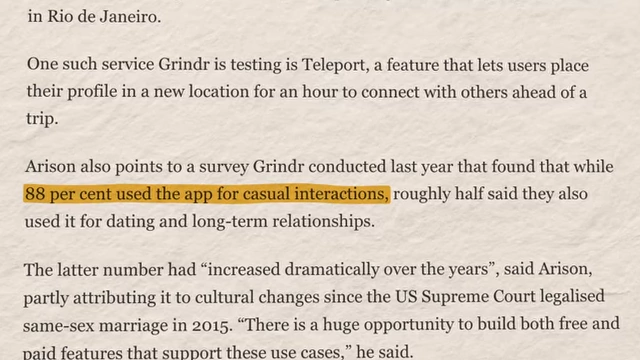
An article stating that 88% of Grindr users engage for casual interactions [ 00:05:54 ] - Profiles allow for explicit details on preferences (e.g., "top or bottom," "cut or uncut," "host or travel," body type, kinks), requiring no "detective work" [0:06].
- User-First Product Development [0:06]
- Grindr prioritized improving the app experience over immediate monetization, unlike its competitors [0:06].
- They rolled out features users actually wanted and kept them free:
- Private Album Sharing: Allows users to organize and share different types of photos selectively [0:06].
- "Right Now" Function: A status feature that connects users looking to meet immediately [0:06].
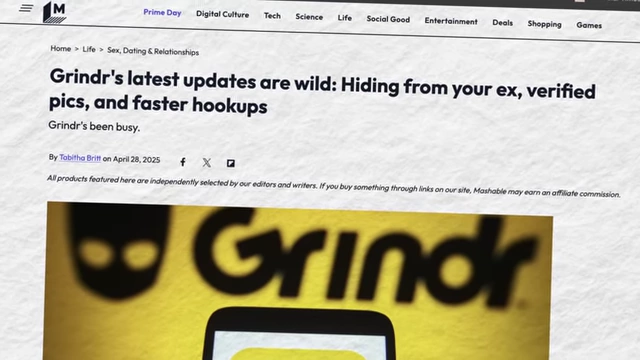
An article headline highlighting Grindr's latest updates, including private album sharing and faster hookups [ 00:06:51 ]
- Grindr's CEO, George Arison, stated, "I don't want Grindr to end up like some of our competitors, who hollowed out their products focusing only on monetization" [0:07].
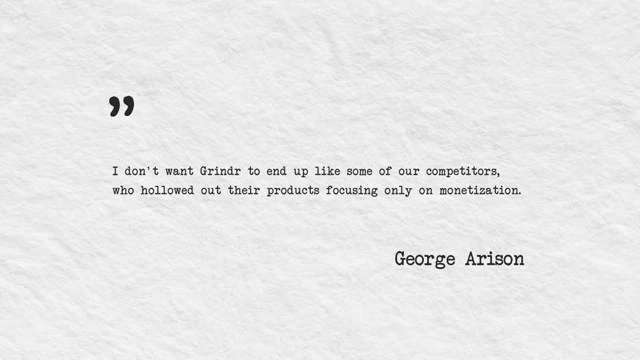
Quote from Grindr CEO George Arison on prioritizing product over monetization [ 00:07:13 ]
- Successful Monetization Model [0:07]
- This strategy led to a 16% growth in paying users in Q1 2025, and revenue has tripled in four years [0:07].
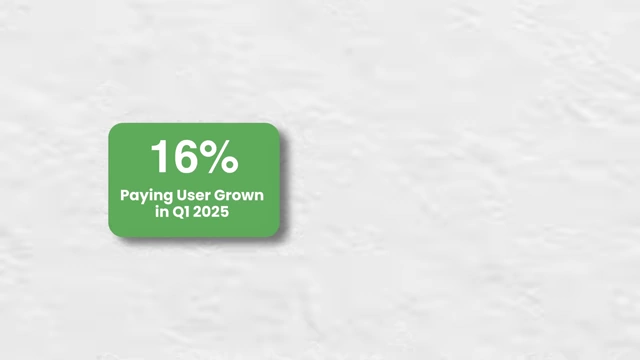
Grindr's paying user growth was 16% in Q1 2025 [ 00:07:23 ] - Grindr achieved this massive revenue growth with only 7-8% of its users paying, compared to Tinder's 20% [0:08].
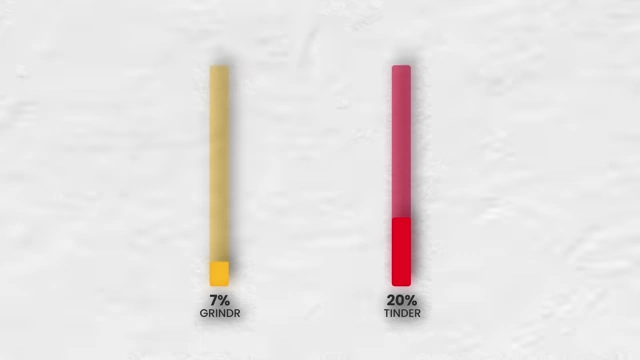
A bar chart comparing paying users: Grindr at 7% vs. Tinder at 20% [ 00:08:13 ] - By providing a great free experience to 93% of users, Grindr cultivated a thriving ecosystem where people want to pay for extra features, rather than being forced to [0:08].
- This strategy led to a 16% growth in paying users in Q1 2025, and revenue has tripled in four years [0:07].
- Community Infrastructure and Network Effect [0:08]
- Grindr has become an essential infrastructure for the gay community.
- Users, even those in relationships, older individuals (50s and 60s), and those in conservative regions, continue to use the app as it's often the only way to connect with other gay people [0:08].
- This creates a powerful network effect: the more people who stay on the platform, the more valuable it becomes for everyone, fostering inclusive micro-ecosystems for different age groups [0:09].
The Fundamental Lesson for Dating Apps [0:09]
Grindr's success highlights a crucial insight:
- It's not about gay men being "better" at dating apps, but about Grindr understanding and working with human behavior [0:09].
- The lesson is to stop fighting human behavior, stop trying to engineer an "idealized version of dating," and stop building features that punish users. Instead, build what people actually want, make it work, and then make it better [0:09].