Directing a Celsius Commercial: A Behind-the-Scenes Look at Creative and Technical Filmmaking Techniques
Summary:
This video details the creative and technical process behind directing a Celsius commercial. Key takeaways include:
- Objective and Constraints: The project aimed to create a studio product shoot for Celsius Essentials cans and integrate VFX transitions with existing brand footage, all while operating under various constraints like budget and time. [0:53]
- Inspiration & Motion Philosophy: The director, Mitchell Mullins, drew inspiration from diverse sources like FPV drone dives and dynamic camera movements to create intentional, unique transitions that felt seamless and authentic to the Celsius brand. [1:57]
- Pre-Production and On-Set Execution: Meticulous planning involved specific creative decisions about camera angles (using a probe lens for large product feel), lighting, and props (like a sports cooler). [6:00] On set, coordination with the art and lighting departments was crucial, adapting to challenges like Bolt Arm calibration and tight schedules. [7:32] The first shot used a Bolt Arm for precise motion of a Celsius can. [8:06]
- THE Dive Shot & Fridge Transition: A significant challenge was the "dive shot" into a Celsius can using a probe lens on a Bolt Arm to create an FPV-like perspective. [9:37] Another creative solution involved cutting the back off a mini-fridge for a unique transition shot. [11:02]
- VFX Process: Mullins personally undertook the visual effects, learning new techniques for fluid simulations in Cinema 4D [17:13] and compositing them in After Effects. [18:06] He also created 3D fan models for a fridge transition, emphasizing resourcefulness and continuous learning. [18:59]
- Director's Role: The video highlights the director's responsibility in making decisive calls, managing the team, and ensuring the final vision aligns with the client's objective while embracing creative problem-solving. [8:59]
My Creative Approach [0:00]
- Introduction to the director, Mitchell Mullins, and his decade-long experience in commercial directing and filmmaking.
- Discussion of constraints (resources, time, budget) not as limitations but as catalysts for innovation and learning new skills.
- The director's job involves understanding client requests and translating them into executable creative plans.
The Objective [0:53]
- Celsius's primary objective was to expand their brand world by:
- Filming studio product shots for their "Essentials" cans.
- Integrating VFX transitions into existing campaign footage.
- The director's task was to communicate these objectives, devise a plan, and execute it efficiently within available resources.
Inspiration [1:57]
- The creative process began with extensive visual research on platforms like Frame Set to find different frames and styles.
- Key creative decisions revolved around:
- Proximity to Product: Deciding whether to use close-up shots (e.g., probe lens for large can feel).
- Brand Authenticity: Aligning new visuals with existing Celsius brand elements rather than inventing entirely new concepts.
- Existing footage provided by Celsius for integration included:
- The director considered how to creatively "flip the script" on existing props and footage to showcase newer products.
Motion Philosophy [3:28]
- Emphasizing intentional and unique camera movements beyond simple gimbals or sliders.
- Applying FPV drone motion principles to VFX:
- The camera should move with purpose and impact, not just for the sake of movement.
- Questions to ask: "Why am I putting this camera somewhere?" and "How can we flow through this scene unapologetically?"
- Aim for fluid, seamless transitions that make the entire visual experience cohesive.
Transition Planning [5:00]
[
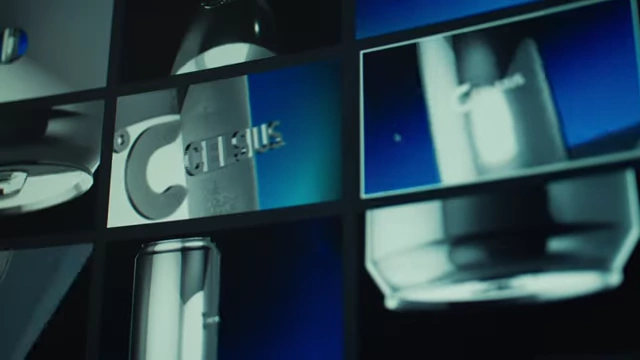
- The goal was to connect disparate shots through dynamic VFX transitions.
- Specific transition ideas:
- FPV-style dive into a Celsius can, transitioning into a liquid swirl.
- Liquid swirl transforming into the fireworks footage.
- A "probe" angle through a USB-C slot as inspiration for navigating tight spaces.
- Pushing through the back of a fridge to reveal new Celsius cans, inspired by an athlete opening a cooler.
- The planning involved identifying common motions and finding creative ways to link them.
Art of Specificity [6:00]
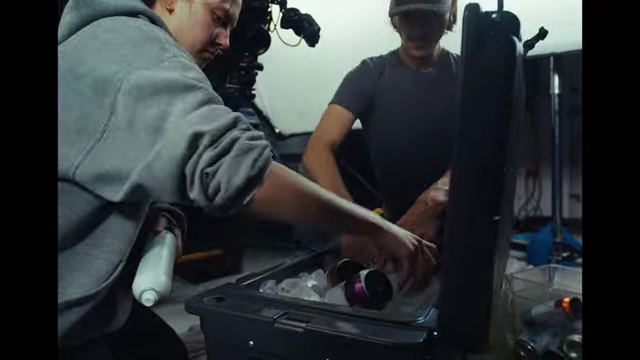
- Detailed planning ensures continuity and high production value.
- This included precise discussions with the art department about:
- Such specificity removes pressure on set by ensuring everyone understands the exact vision and required elements.


On Set [7:32]
[![7:32] ![7:32]](sc0104_t00.06.49.webp)

- The video highlights the energetic and collaborative atmosphere during the shoot in Los Angeles.
- Key personnel mentioned include:
- Dylan (producer) for coordination.
- Brad (Celsius representative) for client liaison.
- Ben (DP) for cinematography.
The First Shot [8:06]
[![8:06] ![8:06]](sc0118_t00.07.51.webp)

- The first shot involved a Celsius can on a reflective surface, captured with a Bolt Arm for precise, dynamic motion.
- Focus was on subtle, high-quality movements and lighting.
Director’s Responsibility [8:59]

- The director makes the final call on set.
- It's crucial to identify when a shot isn't working and to pivot, avoiding the "sunk cost fallacy" (don't continue a bad shot just because time has been invested).
- The director's role is to ensure the team succeeds and delivers footage that will be effective in the final edit.
THE Dive Shot [9:37]
[![9:37] ![9:37]](sc0144_t00.10.38.webp)

- This was a highly anticipated shot using a probe lens on the Bolt Arm to dive into the top of a Celsius can.
- Challenges included:
- Manual focus pulling by the AC (Philip) due to motor issues.
- Required numerous takes (around 30) to achieve precision.
- The goal was to create an FPV-like perspective, making the can appear huge and dynamic.
Fridge Transition Shot [11:02]
[
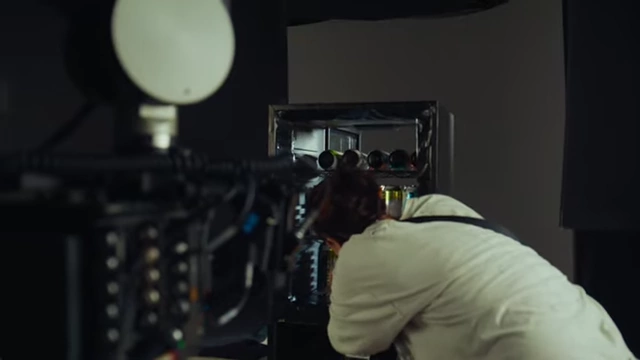

- For this shot, the team literally cut the back off a mini-fridge.
- The probe lens was used to push through the empty space, simulating a dive.
- Adding internal lighting significantly improved the look and mood of the shot, making it feel more premium.
No Time To Waste [12:20]
- With limited time remaining (an hour and a half), efficiency was critical.
- The team needed one more Bolt Arm shot, but decided to try a different approach.
Spinning Key Light [12:47]
[![12:47] ![12:47]](sc0024_t00.00.15.webp)

- Instead of attaching the camera to the Bolt Arm, a light was attached and spun around the stationary cans.
- This "flipped the script," creating dynamic lighting and quick color changes for multiple can types.
The Fish Tank Shot (Final Push) [13:10]
[
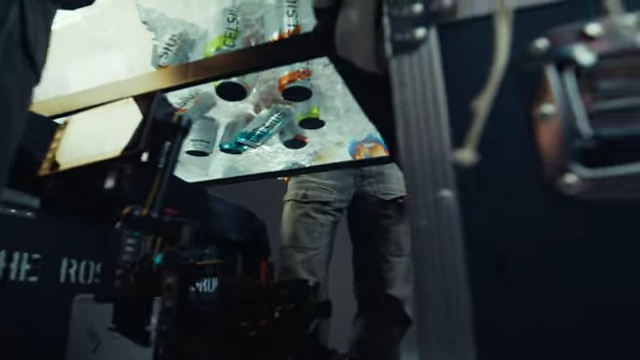

- The final shot was an "all-hands-on-deck" effort to simulate cans in a cooler.
- A fish tank was filled with 40 gallons of water and ice, with Celsius cans floating in it.
- The camera was positioned underneath the tank to capture a unique perspective of a hand grabbing a can.
- Despite being rushed and challenging (water directly over the camera), the team's combined effort made it a favorite moment.
That’s A Wrap [14:36]
- The shoot concluded successfully, having captured all necessary elements for both product shots and VFX transitions.
VFX Process [15:12]
[![15:12] ![15:12]](sc0195_t00.15.14.webp)

- Mitchell Mullins took on the editing and VFX himself, utilizing his background in compositing and 3D work.
- His primary tools were Cinema 4D (C4D) with Octane Render, and After Effects (AE).
- Emphasizes that every VFX project presents new learning opportunities.
Fluid Simulation (C4D) [17:13]
[
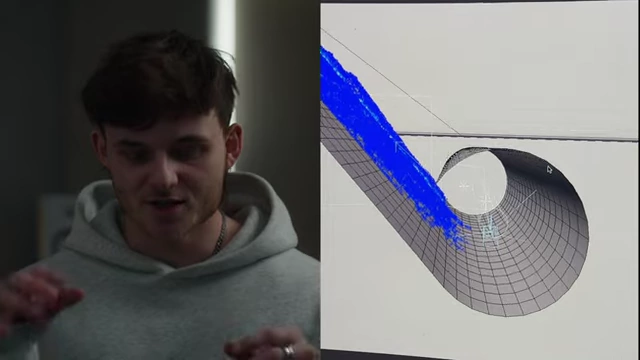

- The fluid simulation for the can dive was a new skill Mullins had to learn.
- He used YouTube tutorials to understand how to create a fluid simulation in C4D.
- The process involved:
- Setting up particle simulations in C4D to mimic liquid flowing through a cylinder.
- Applying artificial gravity to create a swirling effect.
- Texturing the fluid correctly to enhance realism.
- Exporting with appropriate settings (e.g., an Alpha Mat for transparency).
- The goal was to create a dark, moody plunge into the liquid, matching the FPV dive inspiration.
Fluid Composite (AE) [18:06]
[![18:06] ![18:06]](sc0223_t00.18.18.webp)

- In After Effects, the transparent fluid simulation was composited over the live-action can footage.
- This involved positioning the fluid plane correctly beneath the can to make the transition appear natural.
- Tweaking and color correcting the elements ensured a seamless integration.
Fan Push (C4D) [18:59]
[![18:59] [
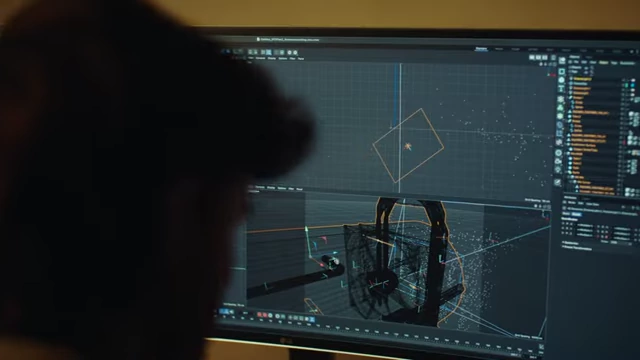
- For the fridge transition, 3D models of spinning computer fans were found online.
- These were integrated into the background of the fridge shot in C4D to create a "pushing through" effect.
- Point tracking from After Effects was used in C4D to match the camera's motion, ensuring the fan animation aligned perfectly with the live-action plate.
- The fan elements were then rendered with an Alpha Mat and composited in After Effects over the original fridge shot.
Final Thoughts [19:52]
- The project was incredibly fun and provided valuable learning experiences.
- Mullins gained confidence in directing sets involving robotic arms and product shots.
- He stresses the importance of continuous learning and resourcefulness in filmmaking.
- Constraints drive innovation, and there are always new skills to acquire, often just a quick tutorial away.
- Gratitude to the Bluehour production team and Brad for making the Celsius commercial a success.