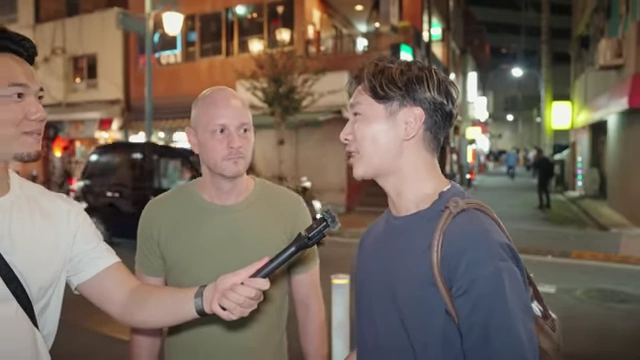
Exploring Shinjuku Ni-chome: Tokyo's Vibrant LGBTQ+ District and Its Diverse Nightlife
Summary:
- Shinjuku Ni-chome is Japan's largest LGBTQ+ district in Tokyo, home to over 400 bars and clubs, offering a unique and vibrant nightlife experience. [0:07]

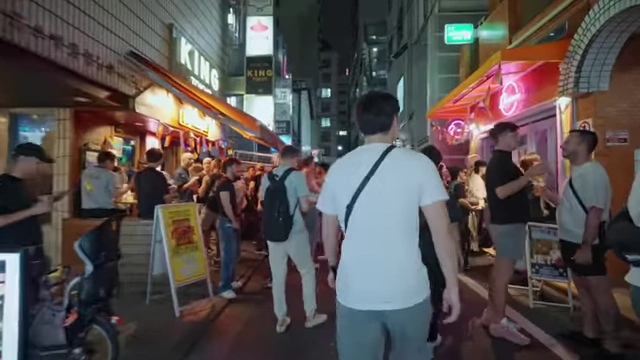
A lively street packed with bars in Shinjuku Ni-chome. [ 00:00:09 ] - The district caters to the entire LGBTQ+ spectrum, featuring gay, lesbian, trans, drag queen, and even cross-dressing bars, alongside themed international and karaoke venues. [1:05]
- Visitors can find "Kankou" bars welcoming to all [2:48], or more exclusive "Kaisei" bars for gay men [3:09].
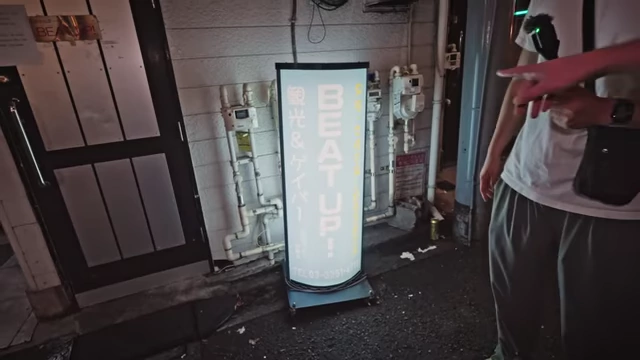
A standing signboard for a "kankou" bar in Japanese, indicating it's open to all [ 00:02:49 ] - A community center in Ni-chome provides resources on sexual health and hosts English classes, fostering a strong sense of community. [2:23]
- The area is characterized by its lively street energy, where people mingle freely between establishments, with a famous 7-Eleven even serving as a popular social hub. [5:41]
- Locals and foreign visitors praise Ni-chome as a welcoming safe space for self-expression and belonging, despite some broader societal challenges for LGBTQ+ rights in Japan. [15:23]
- Many find their first true community here, emphasizing its significance as a place for openness, celebration, and finding acceptance, especially for Asian men. [16:35]
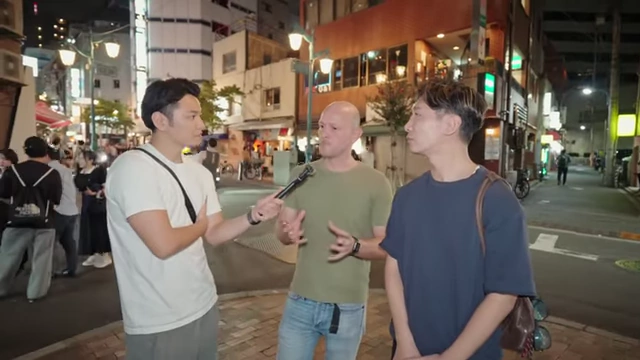
Andrew expressing how Shinjuku Ni-chome represents his first true community, even more than in his home country [ 00:16:43 ] - Newcomers are encouraged to explore the district, perhaps with a local guide or some Japanese language skills, to fully immerse themselves in its unique culture. [15:59]
Exploring Shinjuku Ni-chome: Japan's Premier LGBTQ+ District [0:00]
- Location and Scale [0:00]
- Initial Impressions [0:12]
- The district offers a unique "side of Japan" for visitors, distinguished by its vibrant people, energy, and stories.
- There is a noticeable "barrier" street that, once crossed, transitions visitors into "gay town," a world distinct from mainstream Shinjuku [0:57].
- Guided Tour [0:32]
- The host, Takashii, explores Ni-chome with special guests, Meng and Andrew from Tokyo BTM, who offer insights into gay life in Japan from a foreigner's perspective.

Takashii with Meng and Andrew from Tokyo BTM [ 00:00:48 ]
- The host, Takashii, explores Ni-chome with special guests, Meng and Andrew from Tokyo BTM, who offer insights into gay life in Japan from a foreigner's perspective.

The Diverse Landscape of Ni-chome's Bars [1:05]
- Variety of Establishments [1:05]
- Size and Specialization [1:25]
- While there are around 400 bars, many are very small, some accommodating only five or six seats.
- Community Resources [2:23]
- A community center in the area provides information on sexual health, advocating for safe practices like condom use and PrEP medication.
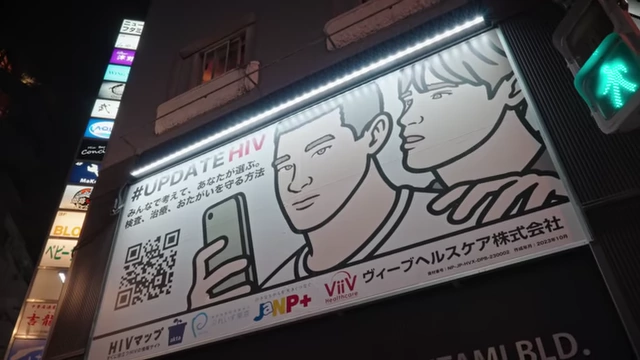
Signboard with information about HIV prevention and healthcare [ 00:02:26 ] - The center also hosts social initiatives, such as English classes, allowing community members to practice language skills and connect [2:39].
- A community center in the area provides information on sexual health, advocating for safe practices like condom use and PrEP medication.
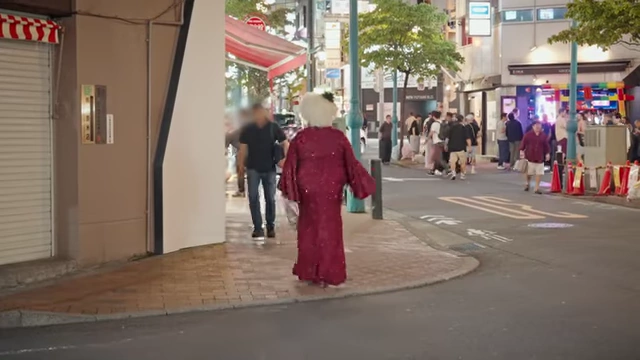
Understanding Ni-chome's Bar Categories [2:48]
- Kankou Bars [2:48]
- Kaisei Bars [3:09]
- Lesbian Bars and Inclusivity [3:20]
- Lesbian bars are primarily for women, and while not strictly exclusive, they aim to cater to lesbian customers and maintain a safe space for their community.
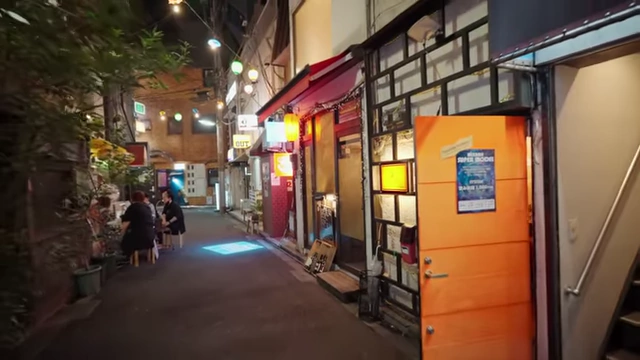
Narrow street with people sitting outside a bar [ 00:04:04 ] - Male allies may be welcome if accompanied by lesbian friends or couples, emphasizing respect for the intended clientele and rules before entering [3:55].
- Lesbian bars are primarily for women, and while not strictly exclusive, they aim to cater to lesbian customers and maintain a safe space for their community.
- International and Themed Bars [4:05]
- The district also offers a diverse range of themed bars, including those catering to Chinese, Korean, and Taiwanese patrons, as well as karaoke bars.
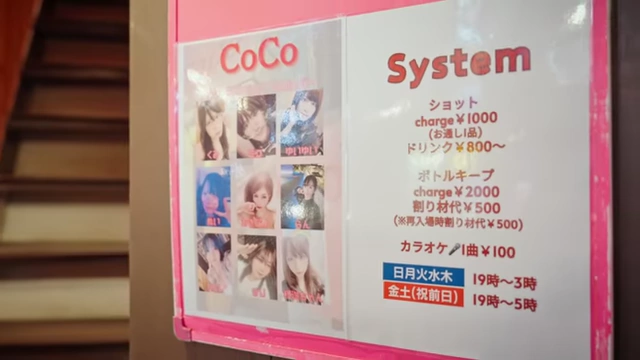
Signboard advertising a bar with staff member photos [ 00:02:11 ] - Many bars are English-friendly, making them accessible for international visitors [4:27].
- The district also offers a diverse range of themed bars, including those catering to Chinese, Korean, and Taiwanese patrons, as well as karaoke bars.
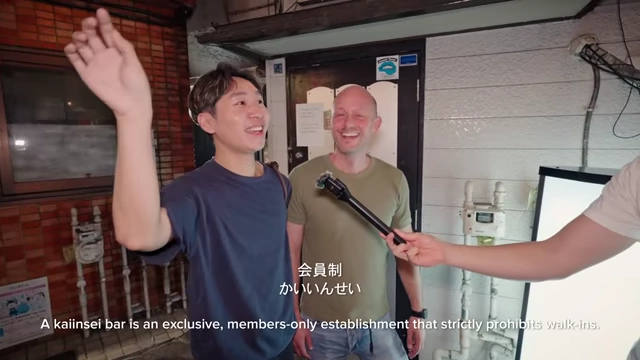
Unique Experiences: Cross-Dressing and Street Culture [4:51]
- Cross-Dressing Bars [4:51]
- Ni-chome hosts unique bars where individuals can pay a fee to wear female attire and makeup, offering a safe space to experiment with gender expression [4:51].
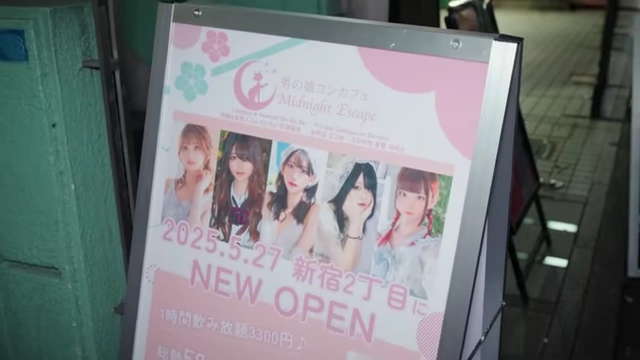
A pink signboard advertising a new open bar with illustrations of women, suggesting a cross-dressing or host bar [ 00:04:48 ] - This provides a recreational and exploratory environment, as demonstrated by a birthday party experience where friends dressed up for fun [5:07].
- Ni-chome hosts unique bars where individuals can pay a fee to wear female attire and makeup, offering a safe space to experiment with gender expression [4:51].
- Vibrant Street Life [5:41]
- The streets of Ni-chome are lively, with people often drinking outdoors and moving between bars, creating a dynamic social atmosphere.

People drinking outside on the streets of Ni-chome [ 00:05:39 ] - A specific 7-Eleven store in the area is famously treated as an informal club, a popular spot for gathering and socializing [5:54].
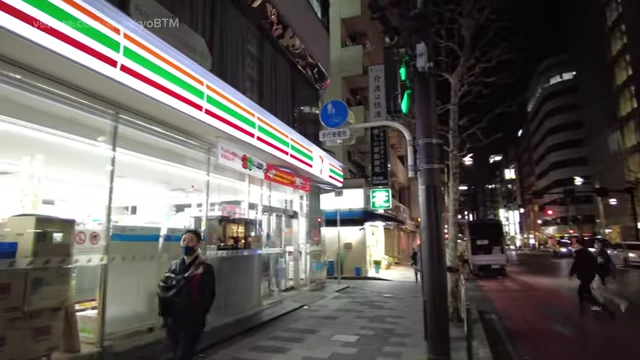
The famous 7-Eleven in Ni-chome [ 00:05:55 ]
- The streets of Ni-chome are lively, with people often drinking outdoors and moving between bars, creating a dynamic social atmosphere.
- Prominent Nightclubs [6:14]
Historical Context and Evolution [11:37]
- Ni-chome's Unique Past [11:37]
- A bar owner with 42 years of experience in Ni-chome recounts its history, describing it as a truly unique district that once had a "risqué atmosphere."
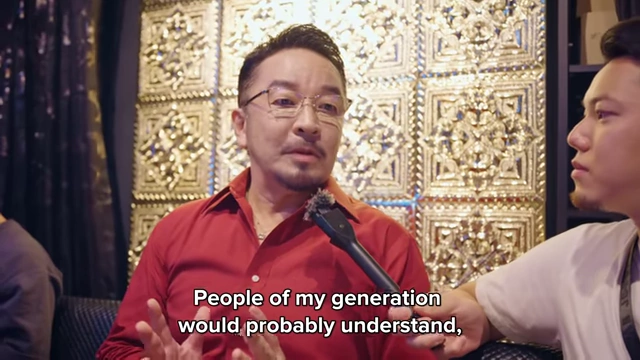
A man in a red shirt (bar owner) being interviewed, gesturing with his hands as he speaks about the district's uniqueness [ 00:12:05 ] - Originally, it was primarily a place for gay men, and many overseas friends knew it as such [12:28].
- A bar owner with 42 years of experience in Ni-chome recounts its history, describing it as a truly unique district that once had a "risqué atmosphere."
- Shift Towards Openness [13:02]
- Over time, Ni-chome has evolved to welcome more diverse groups, including women, and couples of men and women, reflecting an "age of openness."
- The district has expanded to about 400 establishments, becoming a place where people can visit freely [14:02].
- Challenges and Acceptance [13:40]
- Increased media attention from TV shows, while boosting visibility, also led to some individuals who hadn't come out avoiding the area.
- Despite its openness, the evolution highlights the delicate balance between creating welcoming spaces and preserving the core community.
Visitor Perspectives and Advice [15:10]
- Tourist Experiences [15:23]
- Foreign visitors describe Ni-chome as "the best place in Tokyo," highlighting its fun and vibrant atmosphere where individuals can express themselves freely.
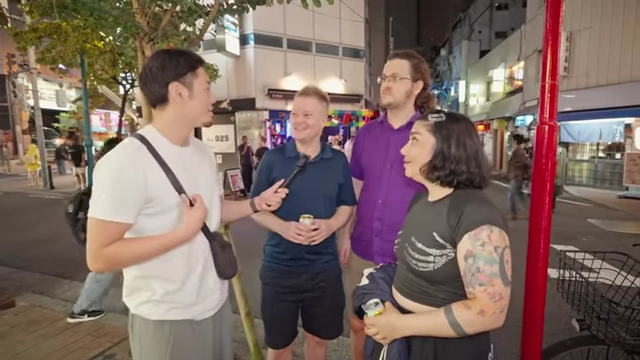
Group of tourists being interviewed in Ni-chome [ 00:15:13 ] - They appreciate how the district "lights up at night," offering a stark contrast to daytime experiences [15:37].
- Foreign visitors describe Ni-chome as "the best place in Tokyo," highlighting its fun and vibrant atmosphere where individuals can express themselves freely.
- Recommendations for Newcomers [15:59]
- Advice for tourists includes simply coming to experience the great time, having someone familiar with the local culture show them around, or learning some Japanese to enhance their experience.
Personal Impact and Community Significance [16:35]
- Finding Community and Belonging [16:35]
- Andrew shares his profound connection to Ni-chome, calling it his "first community" ever, even more so than in his native Canada.
Andrew expressing how Shinjuku Ni-chome represents his first true community, even more than in his home country [ 00:16:43 ] - He describes the district as feeling like "a family," a place where he truly fit in [17:11].
- Andrew shares his profound connection to Ni-chome, calling it his "first community" ever, even more so than in his native Canada.
- Significance for Asian LGBTQ+ Individuals [17:14]
- Encouragement for Future Visitors [17:44]
- While acknowledging that gay rights in Japan still face challenges and are not "perfect," the district offers a positive and safe environment.
- Visitors are encouraged to "give it a shot" and enjoy their time in Tokyo, as Ni-chome is an open and welcoming place [17:57].