Adam McDonald's Step-by-Step Plan to Get Lean for a Movie Role
Adam McDonald outlines his precise strategy to get lean if he had to start over, aiming for a 10% body fat percentage. His plan emphasizes determining a clear start and end point for fat loss, targeting a weekly loss of 0.75% to 1.5% of body weight to preserve muscle. Nutrition is paramount, starting with a calculated 2150 calories and 215g of protein, meticulously tracked using apps like MacroFactor. He prioritizes whole, unprocessed foods and specific meal timing to manage hunger throughout the day. Training involves three to four weightlifting sessions per week to maintain muscle, alongside a daily goal of 12,000 steps, often using a walking pad. Eating out and "fun foods" are strictly limited, and supplements like creatine and Omega-3 are used minimally. Daily weight tracking and weekly averaging ensure consistent progress, with adjustments made if the rate of loss is not within the target range.
Introduction [0:00]
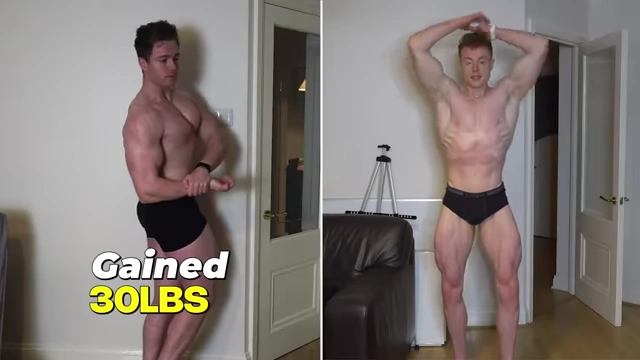
The speaker, Adam McDonald, a health and fitness coach with a master's in nutrition, outlines his exact steps to get lean if he gained 30 lbs of body fat and needed to achieve a ripped physique quickly, as if for a Marvel movie role. He aims to share his thought processes to help viewers implement similar strategies.

Figuring Out Start & End Point [0:35]
It's crucial to define your starting and ending points to estimate the duration of the fat loss journey.
- Initial Assessment: He assumes a starting point of 215 lbs at 20% body fat, aiming for 10% body fat.

A tablet screen displaying "215lbs @ 20%", illustrating the assumed starting body weight and fat percentage. [ 00:00:45 ] - Calculating Target Loss: Using a projection tool, he determines he would need to lose approximately 30 lbs of body fat.
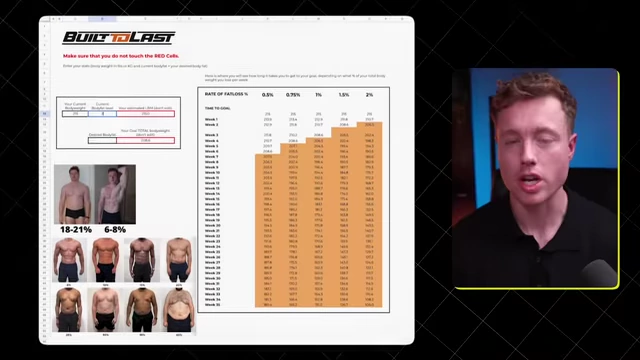
A screenshot of the "Built to Last" spreadsheet projection tool, used to calculate target body fat loss and timeline. [ 00:01:00 ] - Many individuals underestimate the amount of fat they need to lose.
- Focus on body fat percentage goals rather than arbitrary weight targets.
- Rate of Loss: He targets a weekly body weight loss of around 1%, with an acceptable range between 0.75% and 1.5%.

Text overlay indicating the target weekly body weight loss range of "1.5-0.75%". [ 00:02:10 ] - Losing fat faster than 1.5% risks muscle loss.
- Losing slower than 0.75% can lead to motivation loss.
Nutrition: The Most Important Aspect [2:19]
Calories are the foundation of fat loss, though not the only factor.
- Calorie Calculation: Start by multiplying body weight in pounds by 10 (e.g., 215 lbs * 10 = 2150 calories).
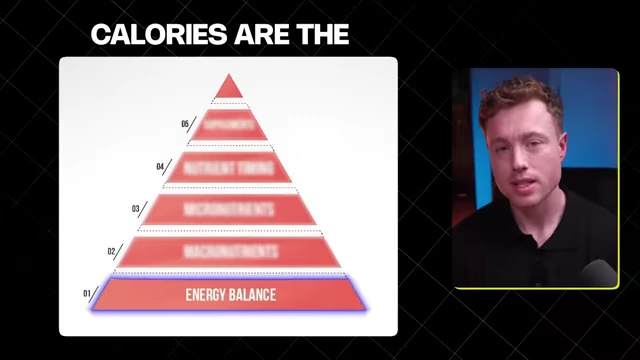
A nutrition pyramid with "Energy Balance" at its base, illustrating that calorie intake is the most fundamental aspect of nutrition. [ 00:02:25 ] 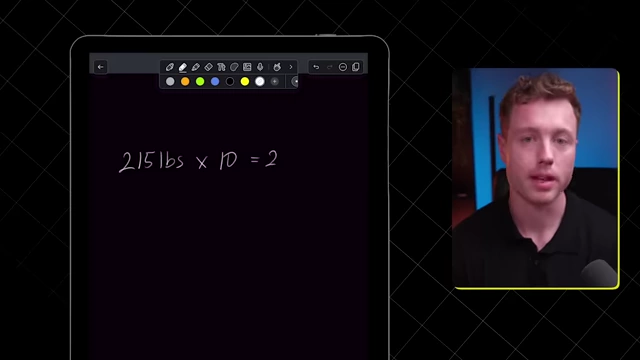
A tablet screen showing the calculation "215lbs x 10 = 2150", representing the initial calorie goal. [ 00:02:37 ] - Tracking: Tracking calories and macros is essential for efficiency and effectiveness.
- Use tracking apps like MacroFactor or MyFitnessPal (paid version recommended for MyFitnessPal).

A screenshot of the MyFitnessPal mobile app. [ 00:02:52 ] 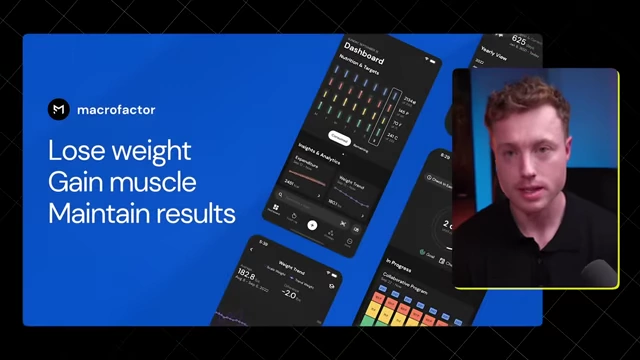
A screenshot of the MacroFactor mobile app. [ 00:02:55 ] 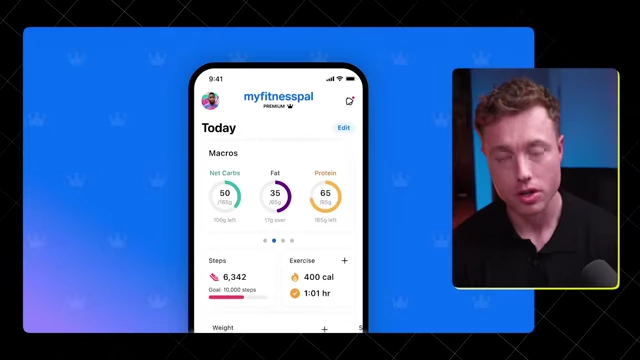
A screenshot of the MyFitnessPal app's macro tracking screen. [ 00:02:57 ] - Input the calculated calorie goal.
- Use tracking apps like MacroFactor or MyFitnessPal (paid version recommended for MyFitnessPal).
- Macronutrient Breakdown:
- Protein: Aim for 1 gram of protein per pound of body weight (e.g., 215 lbs = 215g protein).
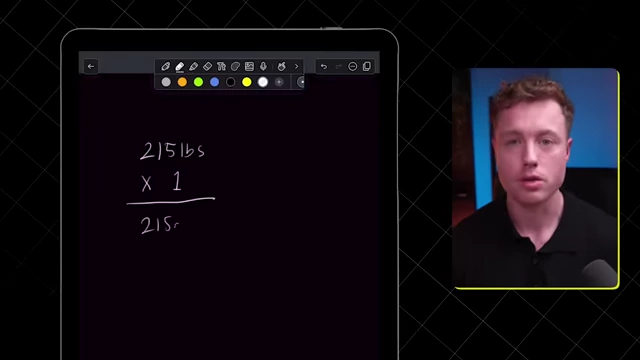
A tablet screen showing the calculation "215lbs x 1 = 215g", indicating the protein target. [ 00:03:19 ] - Fats & Carbs: Split the remaining calories between fats and carbohydrates, potentially favoring slightly higher carbs and lower fats.
- Protein: Aim for 1 gram of protein per pound of body weight (e.g., 215 lbs = 215g protein).
My Approach to Food [4:32]
The key to successful dieting is optimizing for hunger to ensure adherence to the calorie deficit.
- Meal Preparation: Prepare all meals personally and weigh everything on food scales (except consistent items like protein powder or turkey burgers).
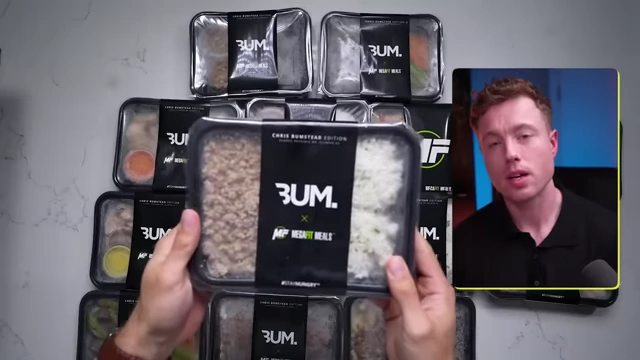
A stack of commercial meal prep containers, which the speaker explains he would avoid during an aggressive fat loss phase. [ 00:04:07 ] 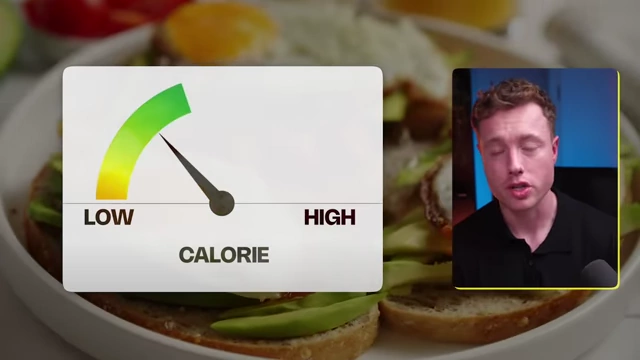
A calorie meter dial from low to high, illustrating the concept of calorie density in foods. [ 00:04:18 ] - This ensures accurate calorie and macro tracking.

A food scale with a bowl, emphasizing the importance of weighing ingredients for accurate tracking. [ 00:04:35 ] - Avoid reliance on meal prep companies or spontaneous daily planning that can lead to missing protein goals or exceeding calorie limits due to non-optimized foods.
- This ensures accurate calorie and macro tracking.
- Daily Meal Structure:
- Morning: Wake up around 6 AM, have black coffee, and fast until 10 AM. This helps manage hunger later in the evening.
- 10 AM Meal: Cooked oats in water with frozen blueberries and 1-2 servings of whey protein (approx. 40g protein). Include kiwis and melon, which are low in calorie density. Another black coffee might be consumed.
- Lunch (1-2 PM): Two turkey burgers, two packs of steamed vegetables, a small portion of boiled white or baby potatoes, and an apple.
- Potatoes are highly satiating per calorie.
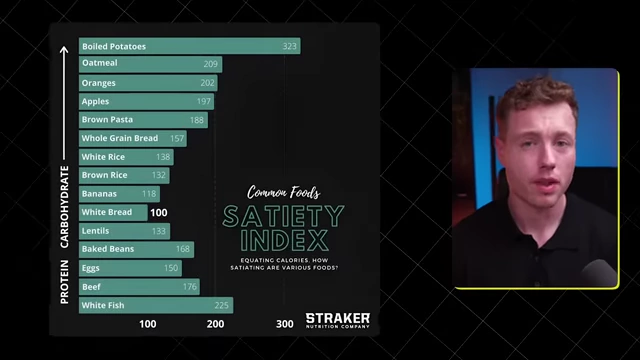
A graph showing the Satiety Index of common foods, highlighting boiled potatoes as one of the highest on the list. [ 00:05:29 ]
- Potatoes are highly satiating per calorie.
- Mid-Afternoon Snack (4 PM): A packet of popcorn and a high-fiber bar (e.g., chocolate fiber bar).
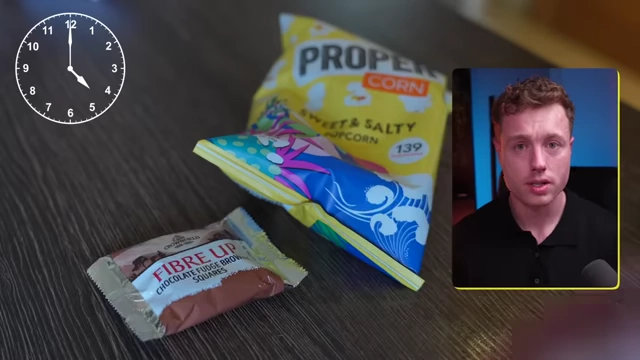
A bag of popcorn and a fiber bar, representing typical mid-afternoon snacks for satiety. [ 00:05:55 ] - Popcorn provides volume and takes time to eat.
- Fiber bars help with sweet cravings but are chosen because they are liked but not loved, preventing overeating.
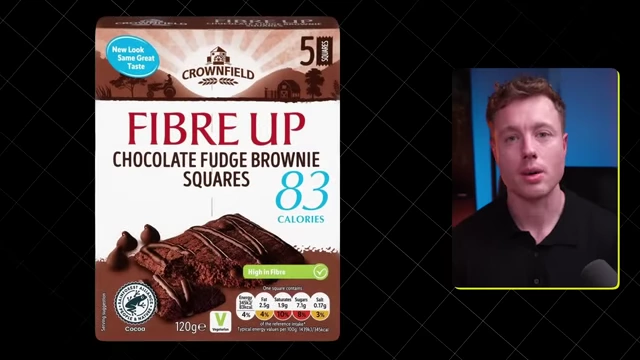
A box of "Fibre Up Chocolate Fudge Brownie Squares", an example of a fiber bar used to manage sweet cravings without overeating. [ 00:06:05 ]
- Dinner: Similar to lunch, with flexibility for variety (e.g., two chicken breasts or red meat with spices, potatoes, and a large side salad with cucumber, tomatoes, feta, and dressing). Alternatively, an omelette with egg yolks, egg whites, vegetables, and light bagels.
- Last Meal: Consistently the same every day for simplicity and hunger optimization before bed.
- 0% Greek yogurt with high-fiber cereal (e.g., All-Bran), banana or fresh blueberries, and peanut butter. Greek yogurt is thick and satiating.

A container of 0% fat Greek yogurt, with an overlay highlighting its "REALLY HIGH IN VISCOSITY" for satiety. [ 00:07:20 ] 
Peanut butter being added to Greek yogurt with cereal and fruit, illustrating the consistent final meal of the day. [ 00:07:29 ]
- 0% Greek yogurt with high-fiber cereal (e.g., All-Bran), banana or fresh blueberries, and peanut butter. Greek yogurt is thick and satiating.
- Food Philosophy: The diet primarily consists of whole, unprocessed foods because they are best for satiety and micronutrient intake.
Training [7:47]
Weight training is crucial for maintaining muscle mass during a fat loss phase.
- Frequency: Train with weights 3-4 days per week.

Adam McDonald performing deadlifts, with an overlay stating "TRAIN WITH WEIGHT - 3 DAYS/WEEK". [ 00:08:00 ] - Training Plan: Stick to a consistent plan (e.g., an upper/lower split with a full-body day as the third session).
- Volume & Intensity: Aim for 10-14 sets per body part per week, 2-3 exercises per body part, and a rep range of 5-20 reps.
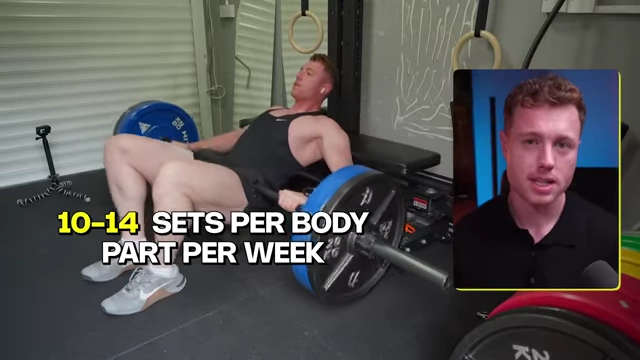
Adam McDonald performing hip thrusts, with an overlay stating "10-14 SETS PER BODY PART PER WEEK". [ 00:08:13 ] - The training plan should remain consistent, as what builds muscle also maintains muscle.
Planning [9:22]
Consistency is key, especially for movement and training.
- Steps: Initially, no specific cardio sessions are planned; instead, focus on daily steps.
- Set a goal of 12,000 steps per day.

A person walking outdoors with an overlay stating "STEPS 12,000 EVERY DAY". [ 00:08:40 ] - Break up steps throughout the day (e.g., 45-60 minute morning walk for 5,000-6,000 steps, walks between meetings, during lunch, and after work).
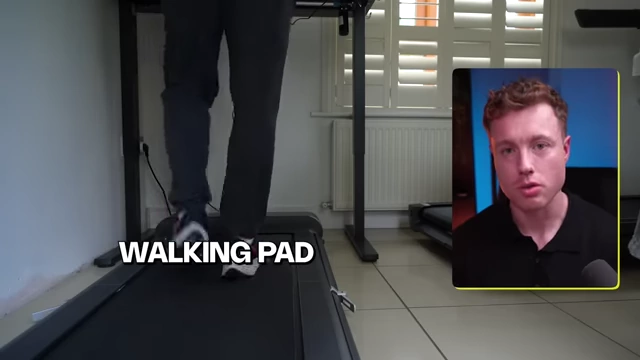
A person walking on a "walking pad" (home treadmill) while working, indicating a method for hitting step goals. [ 00:10:16 ] 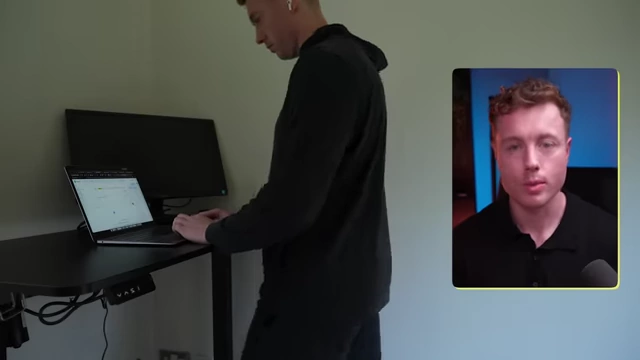
A person standing at a desk with a laptop, using a walking pad underneath, illustrating how steps can be integrated into a workday. [ 00:10:21 ] 
A person walking at night, with an overlay showing "TOTAL STEPS - 8,000/12,000", demonstrating daily step tracking. [ 00:10:30 ] - Aim to have half the step goal completed before lunch.
- Set a goal of 12,000 steps per day.
- Scheduling: Plan specific times for training and walks in a calendar to ensure they are prioritized.
- Adjustments: If weight loss is too slow (e.g., 0.4% loss), either reduce calories (by ~100 from fats/carbs) or add more steps.
- As fat loss progresses, both calories will decrease (e.g., to 1600) and steps will increase (e.g., to 15,000).
Eating Out [10:44]
During an aggressive fat loss phase, eating out should be significantly limited or avoided.
- Flexibility: If good progress is being made, an occasional meal out might be permitted.
- Strategy: Try to fit the meal within the daily calorie target or allow a small buffer (e.g., 200 extra calories).
- "Fun Foods" & Alcohol:
- Initially avoid highly crave-able snacks like chocolate, as they can trigger overeating and are not satiating. Reintroduce only if struggling significantly with adherence.
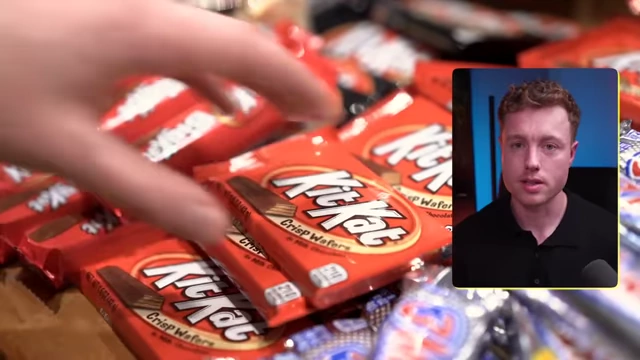
A hand picking up a KitKat chocolate bar from a pile of similar candy, demonstrating a "fun food" that might be a trigger for overeating. [ 00:11:10 ] - Limit alcohol and choose lower-calorie options like spirits. Accept that some days, calorie intake might be slightly higher.

A shot glass filled with a clear spirit, representing a lower-calorie alcoholic beverage choice. [ 00:11:32 ]
- Initially avoid highly crave-able snacks like chocolate, as they can trigger overeating and are not satiating. Reintroduce only if struggling significantly with adherence.
Supplements [11:41]
Supplements play a minor role and should not be overly fussed about.
- Core Supplements: Continue with standard supplements like creatine monohydrate, a multivitamin, magnesium, and occasionally a pre-workout.
- Specific Addition for Leaning: Add 1000 mg of combined EPA and DHA (Omega-3 fish oil).

Images of various Omega-3 fish oil supplements, with an overlay indicating the recommended "1000MG OF COMBINED EPA AND DHA". [ 00:11:54 ] - This is important because fatty fish, a good source of Omega-3s, might be cut from the diet due to their higher calorie and fat content during a calorie-restricted phase.
Progress Tracking [12:12]
Consistent tracking is vital to monitor progress and make informed adjustments.
- Daily Weight Tracking: Track body weight every morning after using the bathroom and before consuming anything.
- Weekly Averaging: Once a week, record all daily weights in a spreadsheet and calculate the average weekly weight loss.
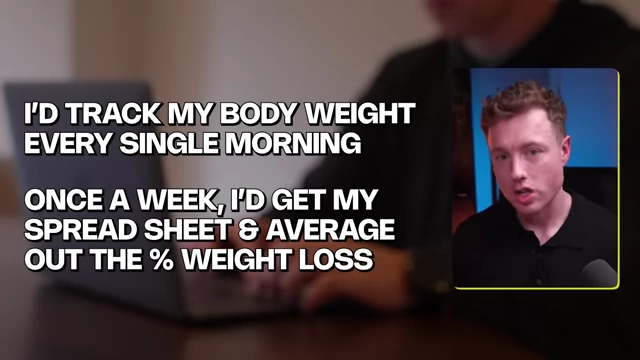
Text overlay indicating to "TRACK MY BODY WEIGHT EVERY SINGLE MORNING" and "ONCE A WEEK, I'D GET MY SPREAD SHEET & AVERAGE OUT THE % WEIGHT LOSS". [ 00:12:20 ] - Averaging helps smooth out daily fluctuations and provides more accurate data.
- Adjustments:
- If the weekly average weight loss falls within the target range (0.75%-1.5%), make no changes.
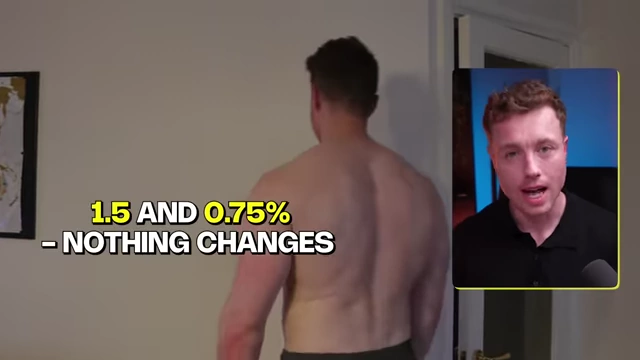
Adam McDonald posing, with an overlay indicating that if weight loss is between "1.5 AND 0.75%", then "NOTHING CHANGES". [ 00:12:40 ] - If it's below the target (e.g., 0.4%), reduce calories by approximately 100 kcal (from fats/carbs) or increase steps.
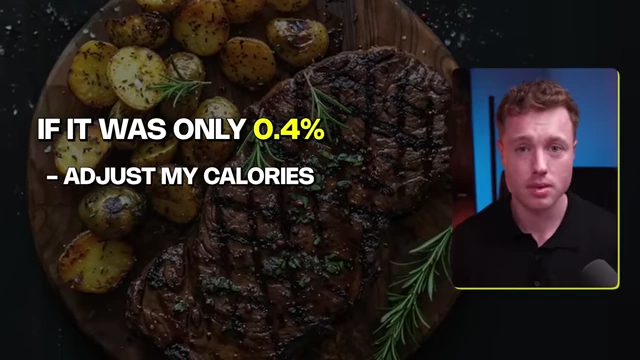
A plate of food with an overlay indicating that "IF IT WAS ONLY 0.4%", the speaker would "ADJUST MY CALORIES". [ 00:12:48 ] 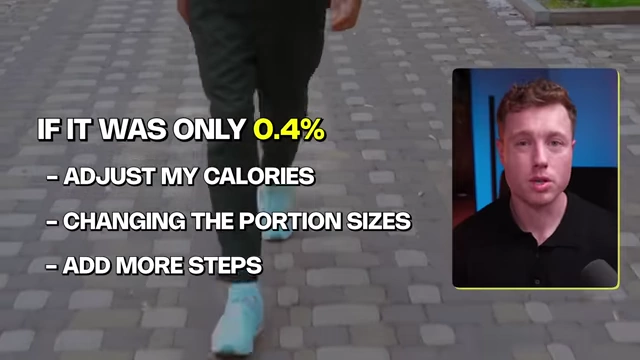
A person walking, with an overlay indicating options for adjustment: "CHANGING THE PORTION SIZES" or "ADD MORE STEPS". [ 00:12:52 ] - As the body adapts to lower calories, both calorie reduction and step increases will likely be necessary.
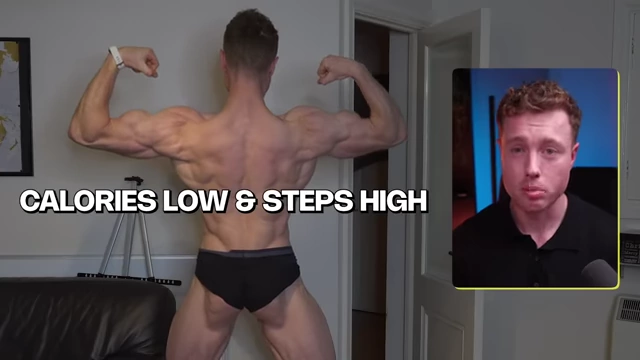
Adam McDonald posing with an overlay stating "CALORIES LOW & STEPS HIGH", representing the state towards the end of a very lean phase. [ 00:13:11 ]
- If the weekly average weight loss falls within the target range (0.75%-1.5%), make no changes.