Understanding Nuclear Weapons: Their Science, Global Proliferation, and Role in Modern Geopolitics
This video offers an in-depth look at nuclear weapons, detailing their immense destructive power, the underlying physics of how they work, and their pivotal role in international relations. It covers the history from their invention to the current global landscape of nuclear powers and explores the complex concept of "deterrence," which has prevented their use since 1945. Case studies of conflicts and geopolitical tensions in Ukraine, India-Pakistan, Taiwan, and North Korea illustrate how nuclear deterrence shapes global decisions and military strategies through credible threats, second-strike capabilities, and strategically vague "red lines." The video concludes by addressing the challenges and complexities of nuclear disarmament in a world characterized by competition rather than central authority, emphasizing the ongoing need for diplomacy and strategic communication to manage these terrifying weapons.

Introduction [0:00]
The video begins by visualizing the devastating impact of a nuclear weapon detonating in Washington, D.C., demonstrating the immediate effects of a fireball (100 million degrees Celsius, vaporizing within half a mile), a supersonic blast wave (leveling within 2.5 miles), and a heat wave (burning within 5 miles).


- The long-term consequence is radioactive fallout, where poisoned atoms release deadly energy for years or even thousands of years.
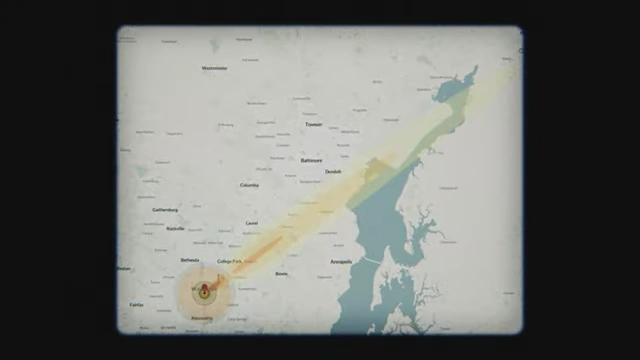
Projected radioactive fallout pattern over the Washington D.C. area. [ 00:01:53 ] - A single American submarine can carry a rocket with eight such warheads, highlighting the immense destructive potential.
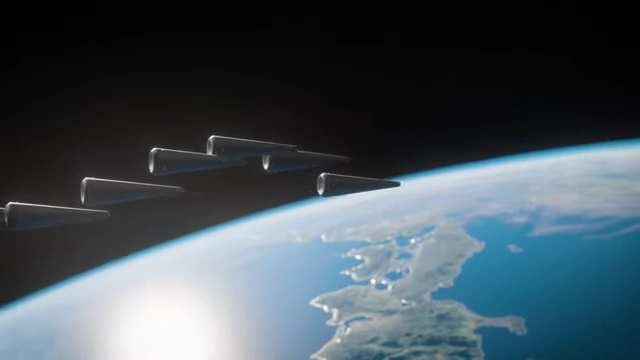
Multiple independently targetable re-entry vehicles (MIRVs) separating from a missile. [ 00:02:19 ] - The video aims to explain how these weapons work, which countries possess them, and their function on the global stage, emphasizing that nuclear weapons are once again central to global politics.

Johnny Harris introducing the video. [ 00:02:31 ]
Tinkering With Atoms [3:42]
Nuclear weapons derive their power from manipulating atoms, the smallest units of matter composed of subatomic particles like electrons, protons, and neutrons.


- According to Einstein's E=MC² (Energy = Mass * speed of Light²), matter can be converted into an enormous amount of energy.

Diagram illustrating the components of an atom: nucleus, protons, neutrons, and electrons. [ 00:05:38 ] - For instance, one gram of mass (like a paperclip) contains 89 trillion joules, enough to power 100,000 homes for two weeks.
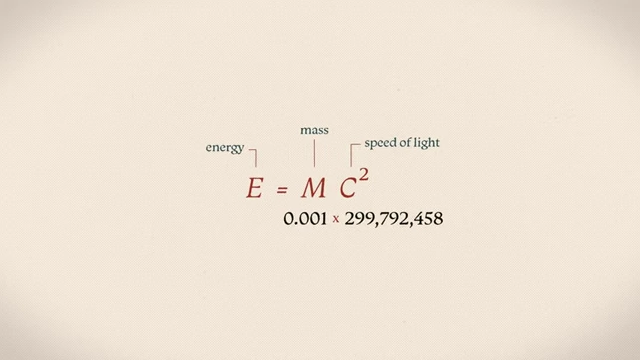
Einstein's E=MC² equation calculating the immense energy contained in one gram of mass. [ 00:08:01 ] - While ordinary matter cannot easily release this energy, unstable atoms like Uranium-235 can.
- There are two primary nuclear reactions:
- Fission: A large, unstable atom splits when hit by a neutron, releasing energy and more neutrons, leading to a chain reaction. This was the basis for the first atomic bombs.

Destin Sandlin explaining fission (atoms splitting) with hand gestures. [ 00:09:41 ] - Fusion: Lighter atoms are smashed together to form heavier ones, releasing even greater energy. This process occurs in stars, including the Sun, and powers modern hydrogen bombs.

Visual representation of light atoms fusing together, releasing energy. [ 00:10:14 ] 
The word "FUSION" overlaid on an image of the sun's fiery surface. [ 00:10:22 ]
- Fission: A large, unstable atom splits when hit by a neutron, releasing energy and more neutrons, leading to a chain reaction. This was the basis for the first atomic bombs.
We want one! [13:00]
The discovery of fission in Germany in the 1930s prompted fears that the Nazis might weaponize it.
- Scientists Lise Meitner and Otto Hahn worked on atomic research in Germany.

Lise Meitner and Otto Hahn, German chemists. [ 00:13:05 ] - Albert Einstein wrote a letter to the US President, urging them to develop an atomic bomb before Germany.

Close-up of a typed letter addressed to F.D. Roosevelt, President of the United States. [ 00:15:01 ] - The Manhattan Project in the US successfully developed fission bombs, which were then used on Japan in 1945, ending World War II and fundamentally changing global conflict.

Construction of the Trinity test tower during the Manhattan Project. [ 00:15:08 ] - A few years later, the Soviet Union developed its own atomic bomb, sparking an arms race.
- The US then developed the even more powerful fusion (hydrogen) bomb, capable of megatons of power—thousands of times more destructive than fission bombs.

Internal diagram of a modern thermonuclear (hydrogen) bomb. [ 00:17:05 ] - Comparing the impact on Washington D.C.:
- A fission bomb (like "Fat Man" on Nagasaki, 20 kilotons) would cause significant damage.
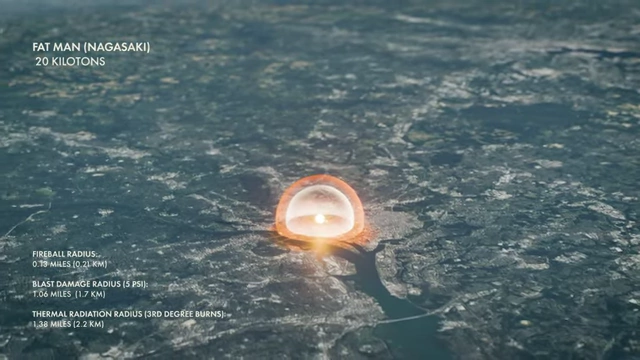
Impact radius of Fat Man (Nagasaki, 20 kilotons) on Washington D.C. [ 00:18:31 ] - A modern US fusion warhead (475 kilotons) could kill an estimated 350,000 people in minutes.
- The largest fusion bomb ever tested (Tsar Bomba, 50 megatons) would destroy a city and cause life-threatening burns 40 miles away, obliterating 300 square miles of buildings.
Impact radius of Tsar Bomba showing destruction from Washington D.C. to Baltimore. [ 00:18:50 ]
- A fission bomb (like "Fat Man" on Nagasaki, 20 kilotons) would cause significant damage.
Who has them? [19:13]
Currently, there are approximately 12,000 nuclear warheads globally, down from over 36,000 during the Cold War peak.
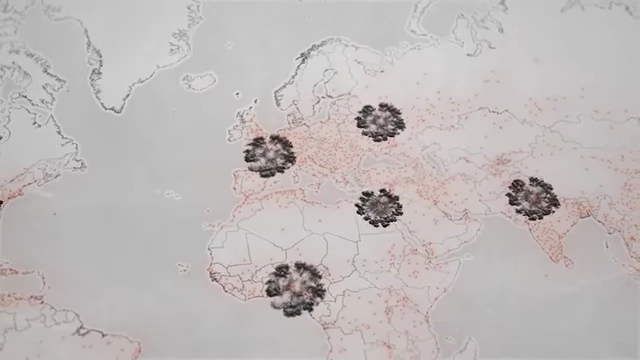
- The vast majority are held by two countries: the United States (around 5,200) and Russia (around 5,800).
- In total, nine countries possess nuclear weapons: the US, Russia, China [600], France [290], the UK [225], India [172], Pakistan [170], North Korea [50], and Israel (does not officially admit to having them, estimated 90).
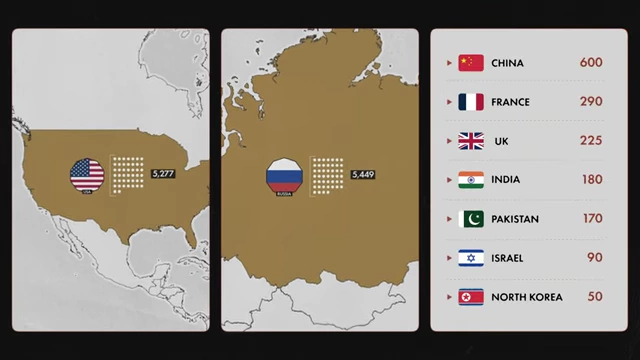
Map showing countries with nuclear weapons and their estimated stockpiles. [ 00:19:53 ] - America's nukes are distributed globally in allied countries, on land, in the air, and deep in the ocean (submarines) as part of its "nuclear posture," which is a core part of its military strategy.

A map showing the deployment of US nuclear submarines in the ocean. [ 00:20:08 ]
Deterrence [20:34]
Nuclear weapons revolutionized warfare by making the concept of victory in a direct conflict between nuclear powers irrelevant, as it would lead to mutual destruction. This gave rise to the concept of "deterrence."


- Deterrence: The act of preventing an enemy from taking action by instilling terror or fear of unacceptable consequences.

Etymology of the word "deterrence" explaining its roots in fear. [ 00:23:12 ] - It is widely believed that nuclear weapons have prevented direct wars between great powers for the past 70-80 years.
- For deterrence to work, it requires several key ingredients:
- Credibility: The enemy must believe that a nuclear power is willing and able to use its nukes. This involves maintaining readiness, having target maps, and centralizing launch authority (e.g., the US President can authorize a strike within five minutes using the "nuclear football" briefcase).

Graphic listing the three key ingredients for deterrence: Credibility, Second Strike, Red Lines. [ 00:24:07 ] 
Historical map in a Strategic Air Command bunker showing potential Soviet targets. [ 00:24:34 ] 
The "nuclear football" briefcase carried by the US President. [ 00:25:36 ] - Second Strike Capability: A nuclear power must be able to retaliate with nukes even after suffering a surprise attack. This is achieved by diversifying and hiding weapons, often through a "nuclear triad" of delivery systems:
- Underground silos (like in the middle of the US).
- Credibility: The enemy must believe that a nuclear power is willing and able to use its nukes. This involves maintaining readiness, having target maps, and centralizing launch authority (e.g., the US President can authorize a strike within five minutes using the "nuclear football" briefcase).


Nuclear Chess [30:02]
The video illustrates nuclear deterrence in action with current geopolitical situations:
- Ukraine War:
- Russia's initial invasion led Putin to put nuclear forces on high alert, manipulating nuclear risk to deter Western intervention.

Vladimir Putin addressing the public with a map of Russia and Ukraine. [ 00:30:47 ] - The West responded with sanctions but debated sending military aid due to Russia's vague nuclear threats of "consequences you have never faced."

Infographic outlining Russia's nuclear "moves and counter-moves" during the Ukraine conflict. [ 00:31:25 ] - NATO deployed troops to its borders, not Ukraine, showcasing the initial deterrence effect.

Map showing NATO troops deployed to borders near Ukraine. [ 00:32:10 ] - The West eventually sent weapons incrementally, carefully calibrating support to avoid crossing Russia's perceived "fuzzy red lines."

Map illustrating calibrated weapon shipments from NATO to Ukraine. [ 00:32:36 ] - Putin's subsequent moves, like relocating nukes to Belarus and lowering Russia's nuclear doctrine threshold, aimed to reinforce deterrence.
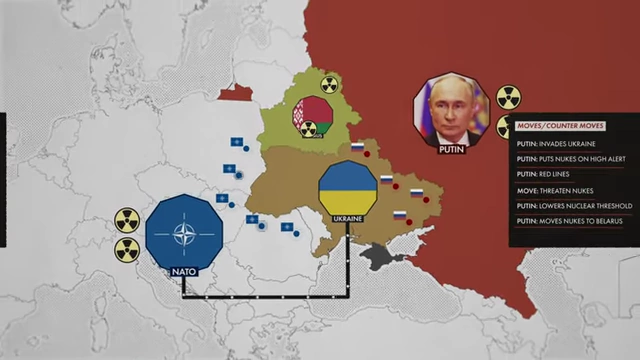
Infographic showing Russia's moves, including lowering nuclear threshold and moving nukes to Belarus. [ 00:33:12 ] - When the US eventually sent long-range missiles to Ukraine, Russia expressed anger but did not escalate to nuclear use, suggesting a bluff was called.
- Experts note that while there was much "nuclear bluster," a real strike was unlikely, but the situation remains fragile, relying on leaders' decisions.
- Russia's initial invasion led Putin to put nuclear forces on high alert, manipulating nuclear risk to deter Western intervention.
India, Pakistan, and China [35:37]
This region represents a unique scenario where two nuclear powers, India and Pakistan, frequently engage in direct conflict.
- India (172 nukes) uses its arsenal to deter both Pakistan and China.
- India adopted a "no-first-use" policy in the early 2000s, aiming for stability, but some argue this may invite conventional attacks on disputed borders.
- Pakistan (170 nukes) maintains a vague red line, deterring India's more powerful conventional military from conquering disputed territory.

Map showing nuclear arsenals and doctrines of India, Pakistan, and China, including India's "No First Use" policy. [ 00:36:26 ]
Taiwan [36:40]
Nuclear deterrence plays a crucial role in Taiwan, which China vows to take, even by force.
- The US provides a "nuclear umbrella" for allies like South Korea and Japan, with clear red lines that deter attacks on them.
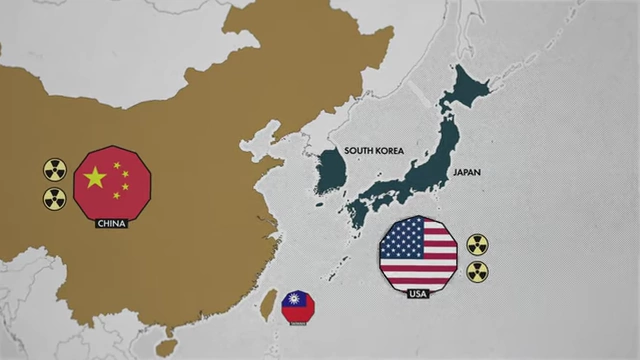
Map illustrating the US "nuclear umbrella" protecting South Korea and Japan. [ 00:37:09 ] - For Taiwan, however, the US maintains a "fuzzy red line." President Biden has stated the US would defend Taiwan, only for the White House to retract and apologize for such explicit statements.

President Joe Biden speaking at a podium. [ 00:37:53 ] - This ambiguity is intentional: the US wants China to believe military intervention, including nuclear escalation, is a possibility, thus deterring an invasion without making a binding commitment.

Map showing the ambiguous US deterrence policy for Taiwan against China. [ 00:37:46 ]
North Korea [38:40]
North Korea (50 warheads) presents a high-stakes nuclear chess game due to its low threshold for nuclear use and "irrational" posturing.
- North Korea's clear red line is the threat to its regime's survival (the Kim family). They credibly threaten nuclear retaliation if their rule is ever challenged.

Map of North Korea with its estimated 50 nuclear warheads. [ 00:39:02 ] - They regularly test nukes and have developed ICBMs capable of reaching the US mainland.

Map showing North Korea's nuclear arsenal and its potential range to the US mainland. [ 00:40:25 ] - This perceived irrationality and credible threat effectively deters the US and South Korea from any attempts to overthrow the regime, forcing them to grapple with the risk of nuclear attack on their own soil.
Can we just stop the nukes? [40:42]
Despite the terrifying nature of nuclear weapons, the video argues that complete disarmament is not a simple solution.
- It's impossible to "un-invent" the technology.
- Sudden disarmament by existing nuclear powers could create a dangerous power vacuum, incentivizing other countries to rapidly build their own arsenals to gain massive power.
- In a world where countries are naturally skeptical and competitive, without a central governing authority, nuclear deterrence is currently seen by many as a "major stabilizer" that prevents full-scale, cataclysmic wars between major powers, leading instead to proxy wars.

Map highlighting countries that have signed the Treaty on the Prohibition of Nuclear Weapons. [ 00:41:10 ] - The Cold War saw the US and Soviet Union manage their arsenals through diplomacy and arms reduction treaties after the Cuban Missile Crisis, which served as a wake-up call.

US President Reagan and Soviet Premier Gorbachev signing an arms reduction treaty. [ 00:42:39 ] 
Newspaper headline from the Cuban Missile Crisis reading "Highest National Urgency". [ 00:44:33 ] - Today, the challenge is more complex due to multiple nuclear powers (e.g., China's rapid arsenal expansion without transparent reasons).

Global map summarizing nuclear powers and their approximate warhead counts. [ 00:45:39 ] - The video concludes that continued dialogue and strategic thinking are crucial to managing nuclear risks and avoiding another crisis, rather than hoping for immediate universal disarmament.