Salvador Dalí's Christ of Saint John of the Cross: A Revolutionary Crucifixion Depicting Cosmic Unity, Not Earthly Suffering, Through Overhead Perspective and Atomic Mysticism
Salvador Dalí's 1951 painting "Christ of Saint John of the Cross" radically departs from traditional crucifixion imagery by:
- Presenting Christ from an impossible overhead viewpoint, akin to God's perspective.
- Omitting conventional markers of suffering such as nails, blood, thorns, and visible wounds, emphasizing serenity and cosmic stillness.
- Placing the floating cross above a calm Spanish bay, detached from any earthly execution site.
- Integrating concepts of "nuclear mysticism," fusing Catholic dogma with atomic physics to depict Christ held by an invisible atomic force.
- Utilizing precise mathematical rules and divine proportion in its composition, calculated by a professional mathematician and modeled by a Hollywood stuntman.
- Rejecting the then-dominant Abstract Expressionism, instead advocating for hyperrealistic Renaissance techniques applied to modern, mystical subjects.
- Provoking strong reactions from critics, clergy, and the public due to its unconventional theological and artistic interpretations.
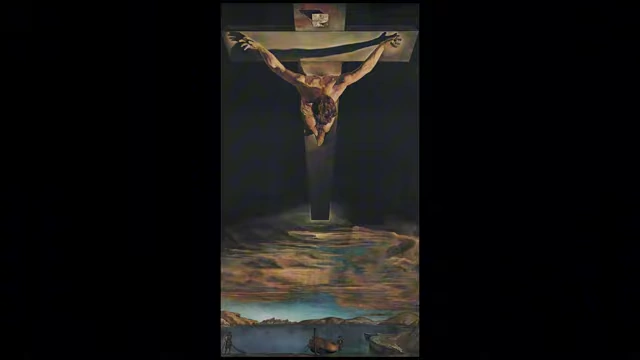
Salvador Dalí's iconic 1951 painting "Christ of Saint John of the Cross," featuring Christ on the cross from an overhead perspective [ 00:07:37 ]
Introduction to Dalí's "Christ of Saint John of the Cross" [00:00:00]
The video introduces Salvador Dalí's 1951 painting "Christ of St. John of the Cross," highlighting its immediate departure from conventional crucifixion depictions.
- Unconventional Details
- Fingers curl softly inward, lacking any indication of nails or blood.
- Skin shows no tension, tearing, or gravitational pull, suggesting weightlessness.
- The composition defies 1500 years of established iconography that emphasized suffering.
Challenging Traditional Crucifixion Iconography [00:00:31]
Traditional crucifixion paintings consistently followed a formula centered on intense suffering and a human perspective.
- Traditional Elements
- Nails piercing flesh, blood pooling at the cross's base.
- Faces contorted in agony, depicting physical pain.
- Viewer positioned at the foot of the cross, looking up, evoking mourning and guilt.
- Dalí's Departures
- Removes all traditional elements of suffering.
- Presents Christ from an overhead perspective, with the cross floating in a black void above a calm Spanish bay.
- The body appears suspended without visible attachment, adhering to geometric precision rather than physical strain.
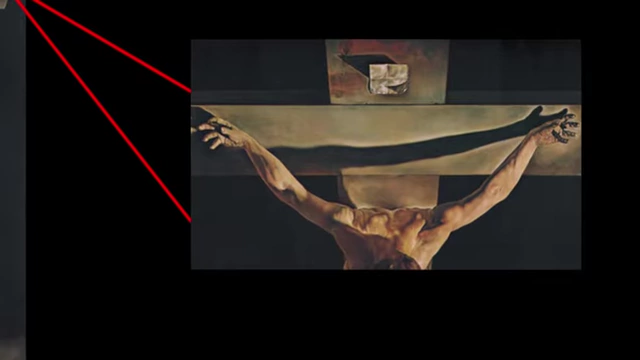
Close-up of Christ's hands, showing the soft, gently curled fingers without nails or blood, indicating suspended gravity rather than suffering [ 00:09:47 ]
"Nuclear Mysticism" and Scientific Influences [00:01:21]
Dalí coined the term "nuclear mysticism" to describe his attempt to fuse Catholic theology with atomic physics in the post-Hiroshima era.
- Post-War Context
- Painted six years after the atomic bombings, during Europe's rebuilding and the onset of the Cold War.
- Science was seen as both a savior and a destroyer.
- Atomic Theory and Theology
- Dalí depicted Christ held to the cross not by iron nails, but by the "same force that keeps atoms from collapsing into each other."
- The soft curl of the fingers serves as "forensic proof" that gravity is suspended and suffering removed.
- The painting is presented as a "theory about the structure of the universe disguised as religious art."
Artistic and Political Context of the 1950s [00:02:05]
Dalí's work was a direct rejection of contemporary art movements and a calculated political alignment.
- Rejection of Abstract Expressionism
- Abstract Expressionism, championed by artists like Jackson Pollock, dominated the art world as a symbol of American freedom.
- Dalí called it "decadent" and positioned himself as a defender of Renaissance realism.
- Alignment with Franco's Regime
- Spain was under Francisco Franco's conservative Catholic dictatorship, seeking cultural legitimacy.
- Dalí, by painting religious subjects in a hyperrealistic style, became "Spain's great Catholic painter," gaining official favor.
- This collaboration enraged his former surrealist friends who viewed it as fascist appeasement.
Inspiration and Meticulous Compositional Process [00:03:20]
Dalí's vision for the painting stemmed from a cosmic dream and an ancient spiritual drawing, meticulously executed with modern techniques.
- Cosmic Dream and Theological Unity
- Dalí claimed the composition came to him in a 1950 cosmic dream, seeing it as the "nucleus of the atom" and the "mathematical and theological unity of the universe," embodied by Christ.
- St. John of the Cross Sketch
- The unique overhead angle was inspired by a thumbnail-sized sketch by St. John of the Cross, a 16th-century mystic.
- This sketch depicted the crucifixion from "God the Father's perspective," providing Dalí "spiritual permission" for the view.
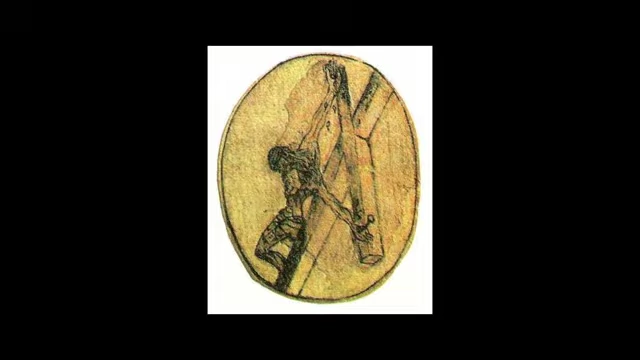
A 16th-century sketch by St. John of the Cross, depicting Christ on the cross from an overhead perspective, serving as inspiration for Dalí's painting [ 00:03:49 ]
- Clinical Realism and Mathematical Precision
- Dalí aimed to paint "metaphysical beauty, not physical suffering," and "the unity of the universe, not the torture of a man."
- He hired a mathematician to ensure the canvas adhered to "divine proportion" and geometric rules.
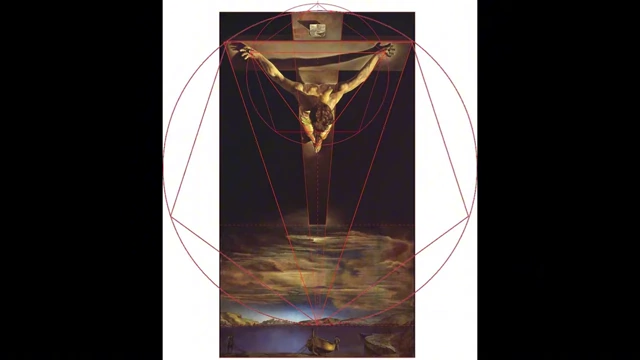
Dalí's painting overlaid with geometric lines, illustrating the precise mathematical rules and divine proportion used in its composition, including triangles for the Trinity and circles for Platonic perfection [ 00:05:00 ] - Russell Saunders, a Hollywood stuntman and acrobat, modeled the body, suspended from a gantry to capture realistic muscle strain from the overhead angle.
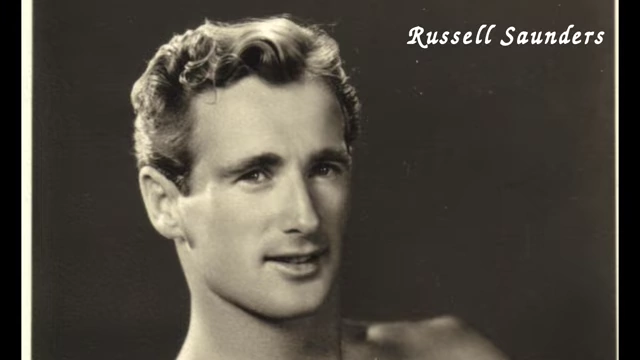
Russell Saunders, the Hollywood stuntman and acrobat who modeled for Christ's body [ 00:06:24 ] - This process ensured the "sacred figure was constructed through technical stunts, not mystical inspiration alone."
Theological and Symbolic Interpretations [00:05:05]
The painting's composition is rich with mathematical and theological symbolism.
- Geometric Symbolism
- The arms and horizontal beam form a perfect triangle, representing the Holy Trinity (Father, Son, Holy Spirit).
- The head tilted forward completes a circle, symbolizing Platonic perfection, unity, and wholeness.
- Geometry is not just an organizing principle but the subject itself, proving "divine order in the universe's structure."
- The Body of Christ
- The musculature is too perfect, strong, and athletic for a 1st-century carpenter. It is the body of a "20th-century acrobat."
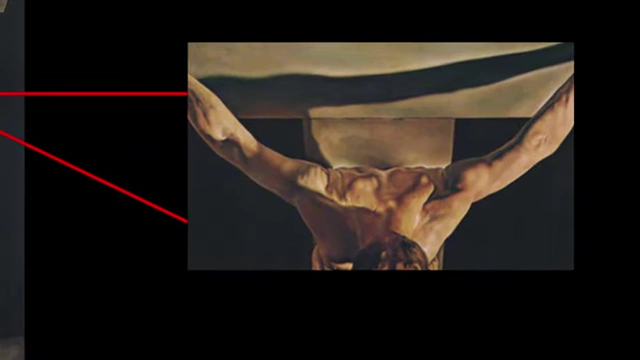
Close-up of Christ's strong, athletic musculature, a departure from traditional emaciated depictions, highlighted by red lines [ 00:06:02 ] - This "clinical realism" replaces the emaciated figures of traditional art, presenting a body that tells "no story of torture," existing "outside time" as a universal form.
- The musculature is too perfect, strong, and athletic for a 1st-century carpenter. It is the body of a "20th-century acrobat."
- The Divine Perspective
- The viewer occupies God's perspective, looking down from heaven at the sacrifice.
- This theological risk was considered "arrogant, even blasphemous" by some, forcing viewers into an "impossible position."
- Discontinuous Reality
- The cross floats in black space, separated from the calm bay below, visualizing Dalí's obsession with atomic theory—that atoms never make physical contact, held together by electromagnetic force fields.
- Christ, as the "nucleus of the atom," unifies this discontinuous structure, making the crucifixion a "demonstration of unity."
- The landscape below features Port Lligat (Dalí's home) and figures from his region, making the cosmic event both timeless and immediate.
Absence of Physical Suffering and its Significance [00:09:25]
Dalí meticulously removed every traditional sign of physical agony to convey a different message.
- Lack of Injury and Strain
- The soft, gently curled fingers, without nails or blood, contradict the "clawed shape" caused by injury in traditional art.
- There is no stretched skin, bulging veins, or slack muscles, indicating gravity is not acting on the body.
- This is "forensic proof of floating," signifying suspension by "something other than physical attachment."
- Rejection of Agony
- No crown of thorns, spear wound, blood trails, or "INRI" inscription are present.
- Dalí removed every "traditional marker of crucifixion as execution."
- The body obeys "mathematical rules rather than the laws of execution," demonstrating the force that holds "discontinuous reality together."
Public and Critical Reception [00:11:04]
The painting generated controversy from its unveiling and faced physical attacks, yet achieved immense public popularity.
- Attack on the Painting
- In 1961, a man suffering from delusions attacked the painting with a chunk of sandstone, tearing an 8-foot gash, because he didn't recognize himself as Christ in the overhead perspective.
- The painting was restored and later protected by armored glass after another attack in the 1980s.
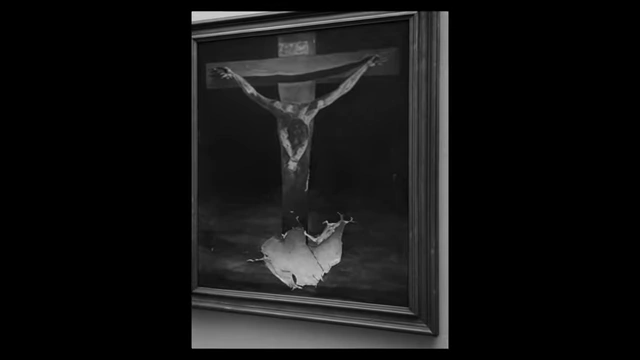
The "Christ of Saint John of the Cross" painting with a large, visible tear after being attacked in 1961 [ 00:11:45 ]
- Initial Critical Dismissal
- When unveiled in London in 1951, critics "despised it," calling it "Benol Kit" and a "stunt by a sellout showman."
- It was seen as a betrayal by the art establishment and "fascist collaboration" by left-wing intellectuals.
- Public Acclaim and Financial Success
- The public "ignored the critics," standing in crowds, drawn by its technical mastery, emotional impact, and visual originality.
- In 1952, Dr. Tom Honeyman acquired the painting and its copyright for a massive sum, despite protests from art students.
- Within a year, postcard and print sales recouped the entire purchase cost, making it Glasgow's most famous and reproduced artwork, valued at over £60 million today.
Dalí's Enduring Vision [00:14:05]
Dalí's "Christ" sought to reconcile faith with atomic-age understanding, offering a new archetype for the 20th century.
- Cosmic Christ
- Dalí aimed to reconcile Catholic faith with "atomic terror," positing that physical suffering was an "illusion" masking deeper structures.
- Christ was a "cosmic principle," the unifying force, the "nucleus around which discontinuous matter orbits."
- The crucifixion was a "demonstration of unity," revealing the universe's atomic structure.
- Visual Manifestation of Theory
- Soft hands prove floating, geometric precision proves divine mathematics, the dark void proves discontinuous space, and the stuntman musculature proves the body is a "prop for ideas."
- Dalí created a "new kind of Christ," beautiful, serene, and "completely alien to 1500 years of Christian Art."