Deleuze & Guattari's Anti-Oedipus: Schizoanalysis as a Model for Creative Political Resistance Against Capitalism and Psychoanalysis
Deleuze and Guattari's Anti-Oedipus critiques psychoanalysis, particularly Freud's Oedipus complex, and capitalism, arguing both restrict desire. They propose "schizoanalysis," viewing schizophrenic delirium not as pathology but as a model for productive, non-linear thought that transcends rigid categories and boundaries, thereby liberating desire.

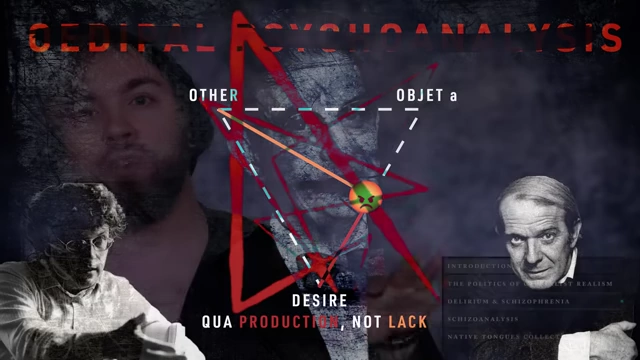


Introduction to Anti-Oedipus and Schizoanalysis [00:00:00]
Deleuze and Guattari (D&G) present Anti-Oedipus as a difficult but essential text for an alternative political model, moving beyond limiting psychoanalysis and traditional left-wing critiques of capitalism.
- The book's core arguments are:
- Anti-Oedipus: A direct critique of psychoanalysis, specifically Freud's Oedipus complex, which they see as foundational but overly limiting [00:01:38].
- Capitalism: Described as a "global desiring machine" that captures and channels human desire [00:01:51].
- Schizophrenia: Proposed not as a disorder to be mimicked in content, but as a model for creative, non-linear thought, and a "productive political process" [00:01:57] whose form of delirium allows for unrepressed, uncoded, and freed desire [00:02:46].
- D&G argue that schizophrenic delirium offers a path to thinking creatively and less hierarchically, challenging both psychoanalysis and capitalism by liberating desire [00:03:09].
- This is a "revolution" not of overthrow, but of internal community pushing outward, generating resistances that capitalism cannot fully capture [00:03:55].
The Limitations of Traditional Politics and Capitalist Realism [00:06:34]
The video outlines a common political worldview, dubbed "capitalist realism," which limits political action to specific, separated "zones."
- The Political World Picture (Concentric Spheres) [00:06:52]
- The world is often segmented into distinct spheres of authority:
- Body: The innermost layer, traditionally managed by medical professionals like psychiatrists [00:08:12].
- Mental/Oedipal: The realm of the mind and individual psychology.
- Social: Encompasses societal norms and interactions.
- Political: Where most mainstream political arguments occur.
- World-Historical: The outermost layer, representing material conditions, ownership, and capital, often seen as outside ideology and managed by scientific specialists [00:07:13].
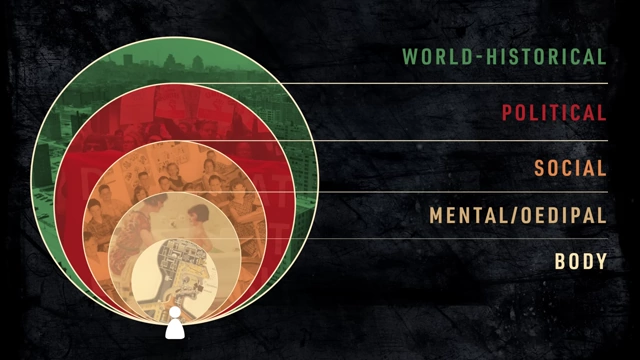
Diagram of political reality as concentric spheres [ 00:07:19 ]
- In this view, politics often becomes "zone control," with different factions arguing within the political and social spheres without affecting the fundamental "world-historical" conditions [00:09:36].
- This leads to a static political landscape where debates and online activism remain contained, doing little to change underlying material realities [00:09:46].
- The diagram illustrates how activists, pundits, and theorists ("cause campers and larpers") occupy different zones, debating within them, while the "real world" of capital flow remains unaffected [00:10:48].
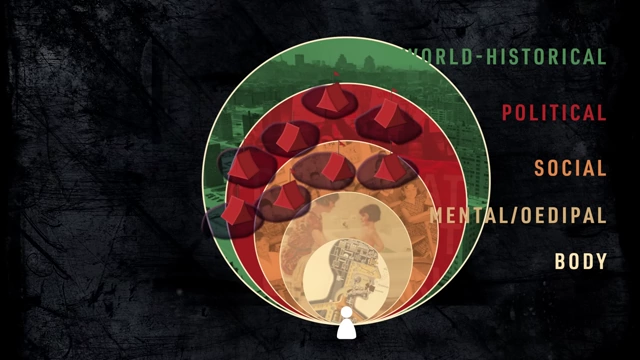
Concentric spheres representing political "zones" with "camps" within the political and social layers [ 00:09:09 ]
- The world is often segmented into distinct spheres of authority:
Schizoanalysis: A Model for Liberated Desire [00:11:07]
Schizoanalysis proposes a radical departure from this segmented view by embracing the boundary-crossing fluidity of schizophrenic thought.
- Schizophrenic Delirium as Creative Fluidity [00:11:17]
- Unlike traditional, linear thought, schizophrenic delirium crosses boundaries and resists categorization, proving "extraordinary fluidity" in its "code of desire" [00:13:29].
- It scrambles codes, shifts explanations, and never invokes the same genealogy or records events the same way, making it resistant to being trapped [00:13:39].
- This fluid desire resists capitalism's attempt to place individuals into demographics and create needs for them [00:14:00].
- Critique of Psychoanalysis: The Oedipus Complex [00:12:16]
- D&G argue that psychoanalysis, particularly the Oedipus complex, is another apparatus for limiting desire, not freeing it [00:12:30].
- By interpreting all motivations and behaviors through a "mommy-daddy triangle," psychoanalysis reduces complex desires to a lack, missing the productive, creative potential of delirium [00:13:00].
Diagram illustrating the Oedipal triangle, labeled as "OUR PROBLEM: NOT LACK" with lines of schizoanalysis crossing it [ 00:13:08 ]
- Judge Schreber: An Example of Boundary-Crossing Thought [00:14:12]
- Schreber, a patient in a mental asylum, wrote a book detailing a complex mythical universe with magical rays, gods, and nerve language [00:14:38].
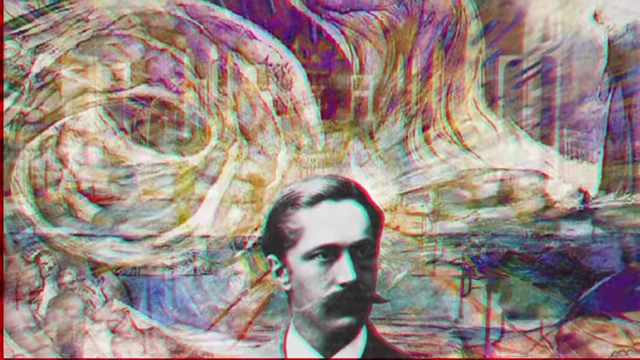
Judge Schreber surrounded by psychedelic and mythical imagery [ 00:14:48 ] - His thought fluidly moves across "zones," claiming authority over world history, then connecting it to his own body (e.g., claiming a doctor stole his stomach), blurring internal and external boundaries [00:14:50].
- D&G note that while some of Schreber's content (e.g., "Jew's stomach") is problematic, the form of his thought demonstrates an intimate and creative connection between disparate regions like the body and world history [00:17:10].
Diagram illustrating schizo thought fluidly crossing boundaries between body, mind, social, political, and world-historical zones [ 00:17:57 ] - This shows how the "schizo" participates in history, hallucinating and raving universal history, and proliferating races, connecting the body's interior with vast historical and cultural narratives [00:18:15].
- D&G emphasize that "Oedipus is completely useless" because the schizophrenic has escaped the limiting family triangle [00:18:52].
- Schreber, a patient in a mental asylum, wrote a book detailing a complex mythical universe with magical rays, gods, and nerve language [00:14:38].
Becoming Minor and Nomadic Resistance [00:19:43]
The video introduces "becoming minor" and "nomad" as key strategies for resisting the capturing forces of the state and capitalism.
- Rejecting Fixed Identities [00:19:43]
- D&G are adamantly opposed to identity politics because committing to a fixed identity risks having one's desire "captured and encircled by the state or by capitalism" [00:19:43].
- Accepting a state's definition means becoming a "molar" statistic or demographic, making one's community a target for capital's interests [00:19:58].
- "Becoming minor" means constantly eluding the state, moving in a nomadic fashion, always staying ahead of categorization [00:20:05].
- Capitalism's Decoding and Recoding of Desire [00:23:08]
- Capitalism is a "challenging machine" that decodes traditions, mores, and existing identities, flowing across borders and creating value wherever it goes [00:23:08].
- This decoding is similar to schizophrenic thought in its boundary-ignoring fluidity, but capitalism has a fundamental limitation: the profit motive [00:23:47].
- Capitalism identifies individuals/groups, channels their desire into demographics, creates needs, and provides solutions for profit, thus capturing desire [00:23:53].
- The Advantage of Schizoanalytic Resistance [00:24:15]
- The limit of capitalism (profit motive) becomes the advantage in resistance: to "become other than ourselves," to become schizo, minor, nomadic [00:24:18].

Diagram illustrating the concentric political zones with an "X" drawn over them, symbolizing escape or transformation [ 00:24:29 ] - This mode of escape has both revolutionary and, historically, fascist potential (e.g., Nazism crossing social fields with mythical histories) [00:24:44].
- However, the revolutionary potential lies in virtual desiring machines that constantly create and innovate, staying ahead of capitalism's rearguard commercialization [00:25:00].
- The limit of capitalism (profit motive) becomes the advantage in resistance: to "become other than ourselves," to become schizo, minor, nomadic [00:24:18].
Schizoanalysis in Action: The Native Tongues Collective [00:25:28]
A modern example of schizoanalytic principles in action is found in the Native Tongues collective, a hip-hop movement from the late 80s and early 90s.
- De-territorialization in Hip-Hop [00:25:42]
- The Native Tongues (including De La Soul and A Tribe Called Quest) embraced "de-territorialization," uniting real and mythical history, art, music, and style to create new identities [00:25:49].
- As a visible minority in white America and a creative minority in the hip-hop scene, they possessed an "outside perspective from within" [00:27:11].
- They consciously broke from commercialized hip-hop symbols, such as the "bling gun thug" image of gangsta rap [00:27:51].

Rappers wearing heavy gold chains, representing commercialized hip-hop [ 00:28:36 ]
- Characteristics of Minor Literature (Applied to Native Tongues) [00:29:33]
- The video references the three characteristics of a minor literature outlined by Deleuze and Guattari:
- De-territorialization of language: Achieved through rap music, creating new forms of expression [00:29:40].
- Connection of the individual to a political immediacy: Embracing a minority stance as inherently political, pushing outward in all directions [00:30:10].
- Collective assemblage of enunciation: The group's collective identity and creative output [00:29:48].
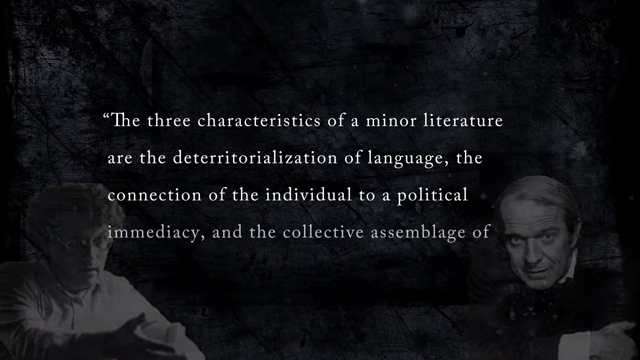
Text overlay listing the three characteristics of a minor literature [ 00:29:45 ]
- The video references the three characteristics of a minor literature outlined by Deleuze and Guattari:
- Creating Divergent Lines of Flight [00:30:26]
- They challenged the hyper-masculine and violent tendencies of hip-hop by including anthems like Queen Latifah's "Ladies First" and "Unity," vocalizing issues like domestic violence and women's empowerment [00:30:33].

Queen Latifah in a music video, representing a divergent line of flight within hip-hop [ 00:30:35 ] - Their innovation extended to musical elements, such as sampling jazz music [00:31:48].
- This collective effort demonstrates a "politics of creativity" – inventing styles, identities, and coloring outside the lines, an "intensity" that burst forth into identity, image, art, and politics simultaneously [00:32:00].
- They challenged the hyper-masculine and violent tendencies of hip-hop by including anthems like Queen Latifah's "Ladies First" and "Unity," vocalizing issues like domestic violence and women's empowerment [00:30:33].
- The Ongoing Struggle for De-territorialization [00:32:38]
- While the Native Tongues' style was eventually commercialized, the goal of de-territorialization is to always stay ahead, keeping desire fluid and creative, as commercialization is always "rearguard" [00:32:38].
Conclusion: A Politics of Creativity [00:33:02]
D&G's philosophy encourages a radical approach to politics, moving beyond rigid categories and reactive stances.
- This is not a manifesto, but an attempt to unite form and content in philosophy and politics [00:33:05].
- It advocates for moving beyond "boring, stale, cut off" academic thinking and political positions focused on "causes of the hour" [00:33:14].
- The call to action is to "go schizo" – to embrace creativity, cross boundaries, make new connections, experiment, and stay ahead of categorization in all fields, whether as a writer, activist, musician, or memer [00:35:10].
- The video mentions that D&G themselves, as writers, and the Native Tongues collective, with their music, exemplify this approach [00:34:39] [00:34:58].

Book covers for Deleuze and Guattari's Anti-Oedipus and A Thousand Plateaus [ 00:05:34 ]