Achieving a "Steroid-Like" Physique Naturally: Identifying 7 Key Features & Blood Test Results
This video explores whether it's possible to achieve a physique that appears to be steroid-enhanced without actually using steroids. Jeff Nippard conducts an experiment where strangers guess the natural status of eight muscular men. Based on their responses, seven key features that contribute to an "enhanced" look are identified: 3D deltoids, peaked biceps, developed upper pectorals, massive traps, leanness, effective lighting and posing, and superior genetics. The video provides natural training strategies for each muscle group. Finally, all eight subjects undergo blood tests for testosterone, LH, and FSH levels, confirming their natural status and demonstrating that high testosterone within the natural range doesn't necessarily correlate with superior muscularity.
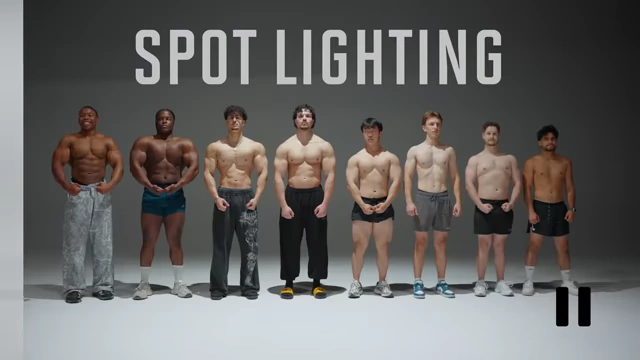
Can You Look Enhanced Without Steroids? [0:00]
The video addresses the common belief that certain levels of muscularity are impossible to achieve naturally.
- Jeff Nippard challenges this by presenting eight self-proclaimed natural bodybuilders to strangers and asking them to identify who is natural and who is not.
- The goal is to pinpoint specific body features that lead people to suspect steroid use.
- All eight subjects are confirmed natural, with their blood test results revealed at the end of the video.
- A medical doctor secretly conducts blood tests to verify testosterone, luteinizing hormone (LH), and follicle-stimulating hormone (FSH) levels.

Jeff Nippard introduces the concept of looking enhanced naturally, with an individual showcasing a muscular physique. [ 00:00:00 ]
- A medical doctor secretly conducts blood tests to verify testosterone, luteinizing hormone (LH), and follicle-stimulating hormone (FSH) levels.
What People Think a Natural Physique Looks Like [1:20]
The perception of a "natural" physique varies widely among the public.
- "Definitely Natty Zone": Most interviewees considered a moderately muscular build, like subject Seb, to be naturally achievable with basic training.
- Some minor skepticism arose regarding subject five's quads, but Jeff confirms their natural development.
- "Questionable Zone": The more muscular subjects were widely perceived as likely using performance-enhancing drugs, even after being told they claimed to be 100% natural.
- Jeff's own physique was generally placed in the middle, between the "definitely natty" and "questionable" zones, by the public.
- Many pointed to his shoulders as an "enhanced" feature.
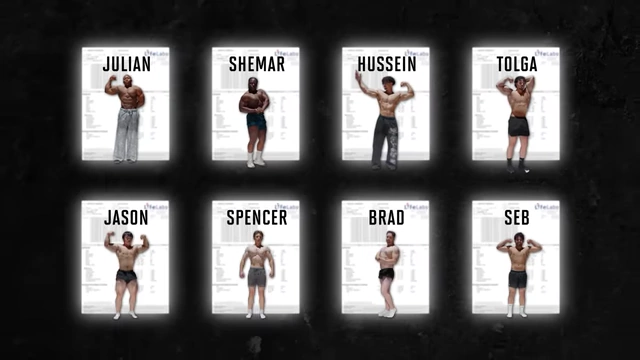
The eight subjects are shown in a lineup, with some perceived as natural and others as enhanced. [ 00:01:20 ]
- Many pointed to his shoulders as an "enhanced" feature.
- Jeff's own physique was generally placed in the middle, between the "definitely natty" and "questionable" zones, by the public.
First Enhanced Feature: 3D Deltoids [2:38]
Rounded, "3D" shoulders are often the first feature people look for when suspecting steroid use.
- Jeff attributes his own prominent deltoid development partly to genetics, showing his mother's naturally muscular shoulders.
- Training Strategy for Side Delts:
- Crucial for a wide shoulder appearance.
- Jeff recommends lateral raises at least twice a week.
- For those struggling, increasing frequency to three to five times a week can be beneficial.
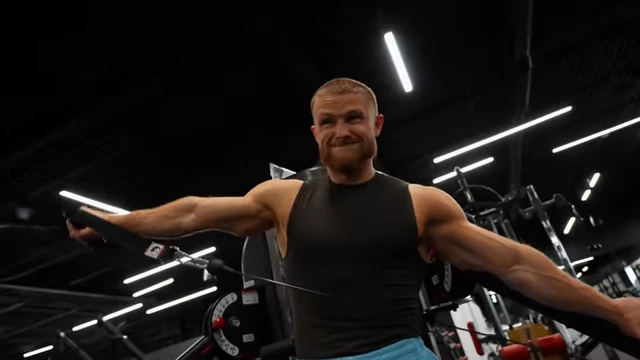
Jeff Nippard demonstrates lateral raises, emphasizing the importance of side delts for a wide, 3D shoulder appearance. [ 00:03:09 ]
Second Enhanced Feature: Peaked Biceps [3:27]
Surprisingly, large, peaked biceps were a frequently cited feature for an enhanced look among the public.
- Subject number four, Tolga, known for his 18-inch arms, attributes his development to a background in gymnastics and specific training methods.
- Training Strategy for Biceps:
- Tolga utilizes preacher curls with forced reps, assisting the concentric phase and controlling the negative.
- Jeff emphasizes Beijian curls (cable curls from a lying position) to target the lengthened position of the biceps, which contributed to his own growth.
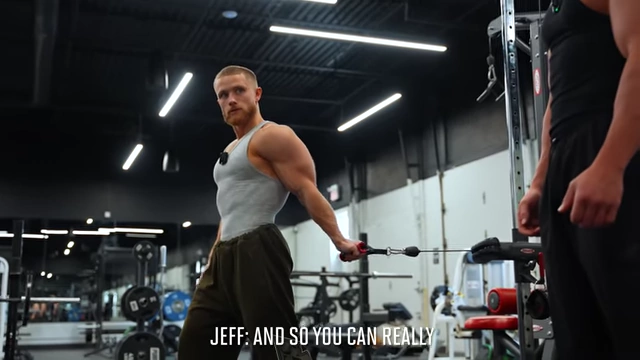
Jeff Nippard demonstrates the Beijian curl using a cable machine, emphasizing the lengthened position for bicep growth. [ 00:04:39 ]
Third Enhanced Feature: Developed Upper Pecs [4:42]
Prominent upper pectorals also contributed to the perception of an enhanced physique.
- Subject number two, Shemar, showcased impressive upper pecs, achieved through dedicated training.
- Training Strategy for Upper Pecs:
- The traditional bench press is highlighted as an excellent exercise for overall chest development.
- Incline bench presses or incline flies are recommended for specific upper pec growth due to their superior targeting of this area.
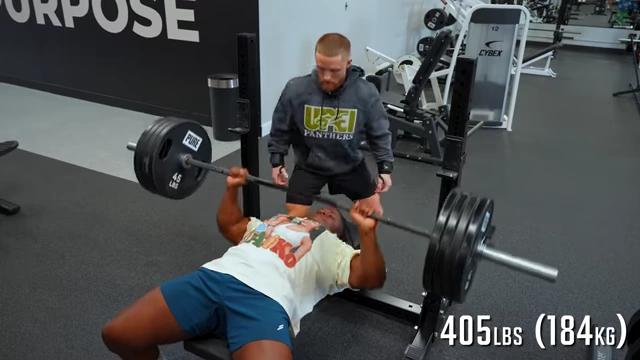
Shemar performs a bench press with heavy weight, showcasing the effectiveness of the exercise for chest development. [ 00:04:59 ]
Fourth Enhanced Feature: Massive Traps [5:27]
Large traps were another indicator, supported by scientific findings on androgen receptor density.
- Scientific Basis: Upper traps have a higher density of androgen receptors, meaning they respond more significantly to testosterone.
- Training Strategy for Traps:
- Shrugs are a staple, with a tip to use a slightly wider grip and shrug "up and in" to better align with the horizontal fibers of the upper traps.
- Overhead raises (e.g., full ROM lateral raises, overhead Lu raises) also help.
- Direct neck training can contribute to overall trap development.
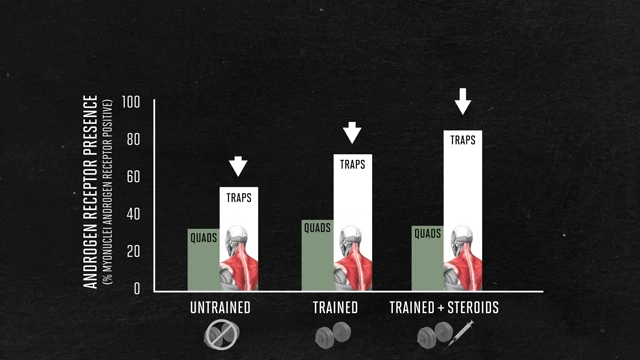
A bar graph illustrates the higher androgen receptor presence in traps compared to other muscles, particularly when trained or trained with steroids. [ 00:05:38 ]
Fifth Enhanced Feature: Leanness [6:29]
Being lean is considered the biggest controllable factor in looking enhanced, assuming a good muscle base.
- Leanness creates the illusion of greater size and enhances muscle definition and vascularity.
- Jeff demonstrates this with a before-and-after comparison, showing he looks more "steroid-like" at 10% body fat despite being 30 lbs lighter than at 20% body fat.
- Vascularity: While often associated with steroids, vascularity is primarily genetic and also significantly enhanced by low body fat.
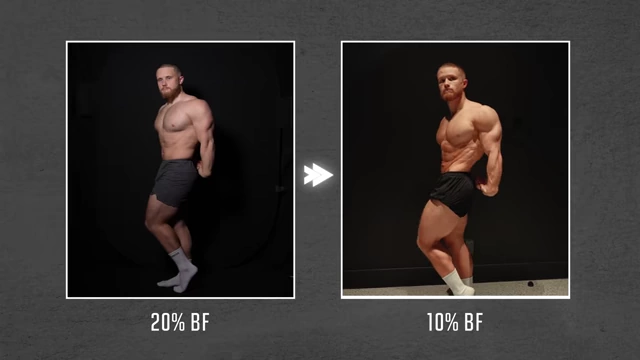
Jeff Nippard shows a before (20% body fat) and after (10% body fat) comparison, illustrating how leanness makes one appear more muscular despite being smaller. [ 00:06:48 ]
Sixth Enhanced Feature: Lighting and Posing [7:36]
The way a physique is presented can drastically alter its perceived size and enhancement.
- Impact of Lighting: Different lighting conditions can make a significant difference. Spotlighting, for instance, dramatically enhances shadows and definition, making muscles appear larger and more sculpted.
- A visual comparison shows subjects transforming from "natty" to "enhanced" simply by switching from diffuse to spotlighting.
- Posing: Strategic posing further accentuates muscle groups and creates a more impressive, "massive" look.
- Jeff demonstrates this by showing a casual kitchen shot versus a posed shot under spotlighting, highlighting the illusion.
A comparison of the eight subjects under standard diffuse lighting versus dramatic spotlighting, showing how lighting influences perceived muscularity. [ 00:08:07 ]
- Jeff demonstrates this by showing a casual kitchen shot versus a posed shot under spotlighting, highlighting the illusion.
Seventh Enhanced Feature: Genetics [8:42]
Genetics play a crucial role in an individual's muscle growth potential, often overlooked when assessing physiques.
- Historical Examples: Photos of bodybuilders like Melvin Wells [1949] and Eugen Karlsen [1912] are shown, demonstrating highly developed physiques achieved before the widespread use or even isolation of injectable testosterone.
- Natural Range of Potential: Just as there's a wide range in height, there's a significant range in natural muscle growth potential. Some individuals are simply genetically predisposed to being more muscular.
- Hard Work and Genetics: World-class genetics combined with super hard training can lead to a level of muscular development that some people find difficult to believe is natural.
- Julian, a 19-year-old subject, exemplifies this, having an exceptionally developed physique at a young age.
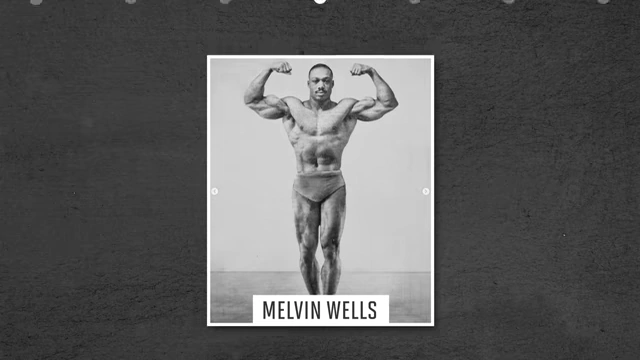
Melvin Wells, pictured in 1949, demonstrating a highly muscular physique that was likely achieved naturally before widespread steroid use. [ 00:10:07 ]
- Julian, a 19-year-old subject, exemplifies this, having an exceptionally developed physique at a young age.
Blood Test Results [12:06]
A medical doctor performs blood tests on all subjects to verify their natural status.
- Testosterone Levels: For healthy young men, normal testosterone levels range from approximately 200 to 850 ng/dL. Levels above 1000 ng/dL become suspicious, and above 1500 ng/dL are considered near impossible without steroid use.
- Subject Results:
- Most subjects had testosterone levels ranging from 415 to 689 ng/dL, well within the normal range.
- One "Curveball": Subject Spencer had a testosterone level of 928 ng/dL, which is high but still within the upper natural range for an active young male.
- Confirmation of Natural Status: To further confirm Spencer's natural status, his Luteinizing Hormone (LH) and Follicle-Stimulating Hormone (FSH) levels were also measured.
- These hormones typically drop very low with steroid use. Spencer's LH and FSH levels were totally normal, right in the middle of the reference range.
- All subjects' LH and FSH levels were found to be normal, confirming their natural status.
- Testosterone and Muscle Growth (Natural Range): Research indicates that within the normal healthy range, higher testosterone levels do not significantly correlate with more muscle growth.
- The substantial muscle-building effects of testosterone are observed only at super-physiological levels, typically achieved through injecting exogenous testosterone.
- Conclusion: The impressive physiques seen are a result of years of hard training, dedicated nutrition, and favorable genetics, dispelling the immediate assumption of steroid use.
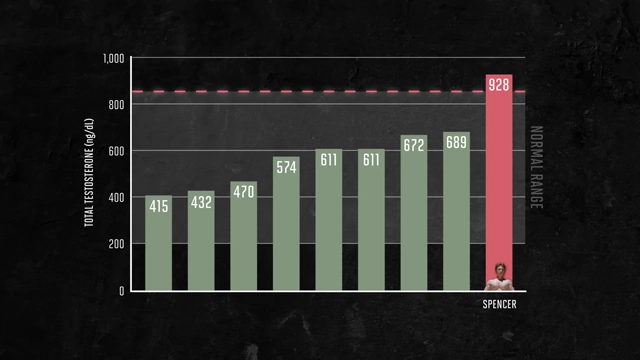
A bar graph showing the testosterone levels of the eight subjects, with Spencer's level highlighted as the highest but still within the normal range. [ 00:13:06 ]