Why God Allows Suffering: An In-Depth Look at the Book of Job
This video explores the Book of Job to answer the question: "Why do good people suffer?"
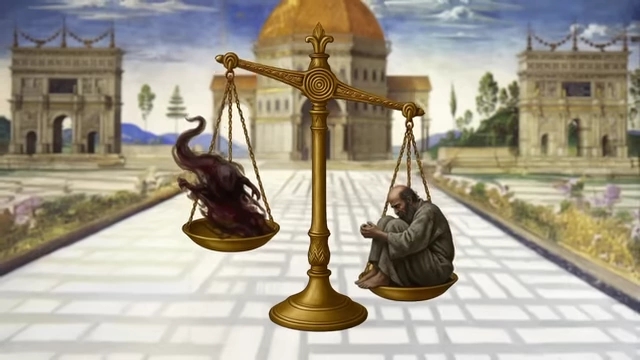
- Job, a wealthy and righteous man, becomes the subject of a divine challenge by "ha satan" (the accuser).
- He loses all his possessions, his ten children, and his health, enduring immense suffering.
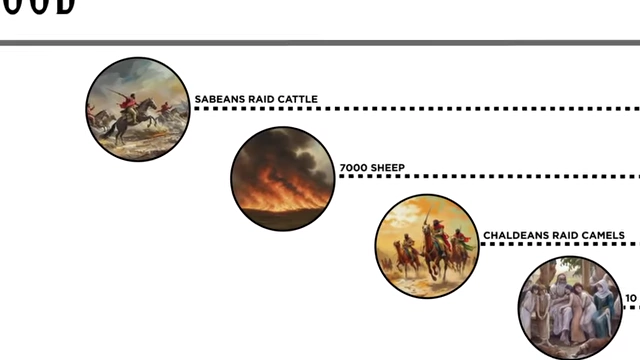
A timeline illustrating Job's rapid succession of losses: Sabeans raiding cattle, fire burning sheep, Chaldeans raiding camels, and a house collapsing on his children. [ 00:02:59 ] - His wife advises him to curse God and die, while his three friends (Eliphaz, Bildad, Zophar) incorrectly assert that Job's suffering must be due to his sin, reflecting ancient beliefs that pain is proportional to wickedness.
- Job, in his despair, accuses God of injustice and demands an explanation.
- A younger man, Elihu, intervenes, suggesting that suffering can also be a tool for purification and preparation, not just punishment.
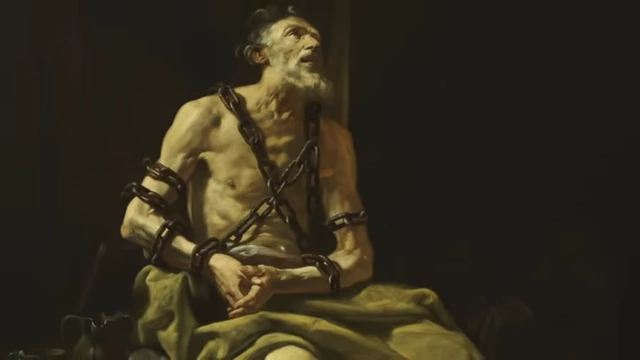
A painting depicting a man in chains, symbolizing Elihu's teaching that suffering can be a tool for preparation and purification. [ 00:13:35 ] - God finally speaks from a storm, asking Job questions about the creation and management of the universe and the animal kingdom, highlighting His boundless wisdom and power.
- God introduces the untamable creatures Behemoth and Leviathan, symbolizing the uncontrollable chaos of life that only He can ultimately manage.
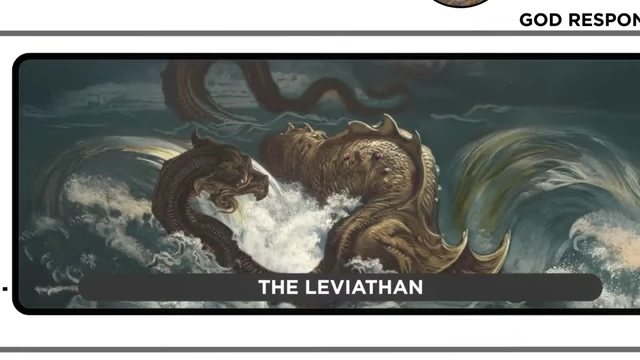
A powerful illustration of the Leviathan, a terrifying sea dragon with impenetrable scales, symbolizing the uncontrollable chaos of life. [ 00:20:48 ] - Job repents his rash words, realizing the limits of his understanding, and God restores his fortunes twofold.
- The video concludes by connecting Job's suffering to Jesus's ultimate suffering on the cross, emphasizing that God understands human pain intimately and provides a path to eternal life free from suffering.
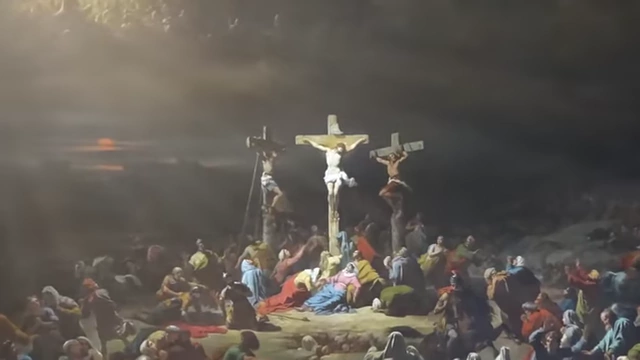
A powerful depiction of Jesus Christ crucified on the cross, symbolizing God's intimate understanding of human suffering and the path to eternal life. [ 00:22:27 ]
Introduction to the Book of Job and the Question of Suffering [0:00]
The Book of Job is presented as the most misunderstood book in the Bible, specifically addressing the profound question: "If God is so good, why do innocent people suffer?" [0:09] This question extends to various forms of pain, from child cancer to personal grievances. The video aims to explain God's often misinterpreted response to this fundamental human dilemma.
Job's Prosperity and Godliness [0:27]
The narrative begins with Job, an exceptionally wealthy man with vast livestock (500 oxmen, 7,000 sheep, 3,000 camels) and a happy family of 10 children. [0:29] He was not only the wealthiest in the ancient Near East but also the most godly, offering sacrifices for his children just in case they harbored ill thoughts toward God. [0:48] Job recognized God's awareness of both actions and heart.
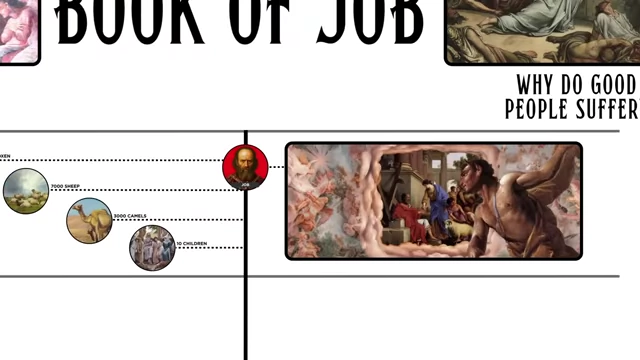
Satan's Challenge and Job's Calamities [1:04]
Job's righteousness attracted the attention of a celestial being.
- Satan's Identity: "Ha Satan" as "the accuser" [1:38]
- The Bible mentions "the sons of God" (angels) presenting themselves before the Lord. [1:11]
- An artistic depiction of God creating the universe, surrounded by celestial beings. [1:20]
- One spirit, referred to in English Bibles as "Satan," is actually "ha satan" in Hebrew, meaning "the accuser." [1:38]
- An artistic depiction of "ha satan" (the accuser) amongst other celestial beings. [17]
- This term describes an accusing spirit, possibly part of God's divine counsel, performing its function. [2:22] This differs from the New Testament's "Satan" (the devil).
- An ancient Assyrian relief depicting individuals, illustrating the concept of "accusers" in ancient empires. [23]
- The Accusation and God's Agreement [2:34]
- "Ha satan" accuses Job of serving God only because of the blessings he receives. [2:37]
- He challenges God: "Stretch out your hand and take away all that he has, and Job will curse you to your face." [2:42]
- God agrees, granting permission for Job to be tested, with the condition that Job's life be spared.
- Loss of Possessions and Children [2:51]
- Within minutes, Job's life collapses: Sabeans raid his oxen, fire from God burns his 7,000 sheep, Chaldeans raid his 3,000 camels, and a great wind destroys his children's house, killing all ten instantly. [2:55]
A timeline illustrating Job's rapid succession of losses: Sabeans raiding cattle, fire burning sheep, Chaldeans raiding camels, and a house collapsing on his children. [ 00:02:59 ]
- Within minutes, Job's life collapses: Sabeans raid his oxen, fire from God burns his 7,000 sheep, Chaldeans raid his 3,000 camels, and a great wind destroys his children's house, killing all ten instantly. [2:55]
- Job's Response to Initial Losses [3:06]
- Instead of cursing God, Job worships, proclaiming: "Naked I came from my mother's womb, and naked shall I return there. The Lord gave and the Lord has taken away. Blessed be the name of the Lord." [3:13]
- Physical Affliction and the Ash Heap [3:31]
- Unimpressed, "ha satan" again questions God, receiving permission to strike Job with painful boils from head to toe. [3:29]
- Job sits on an ash heap, scraping himself with pottery. [3:45] This ash heap was where animal dung was burned, signifying a place of utter destitution and despair in the ancient world. [4:00]
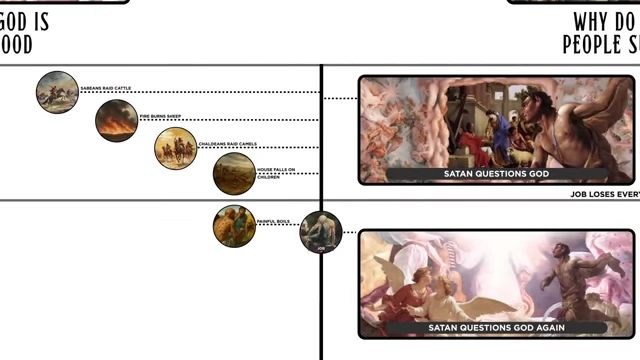
A visual timeline showing Job's complete devastation, including painful boils from head to toe and him sitting in ashes. [ 00:03:39 ]
Job's Wife and Friends' Responses [4:28]
Job's suffering isolates him further as those closest to him offer unhelpful advice.
- Wife's Advice: "Curse God and die" [4:28]
- His wife, overwhelmed by their tragedy, tells him to "curse God and die." [4:31]
- Job's Initial Grief and Curse (not towards God) [4:47]
- Job's three friends (Elephaz, Bildad, Zophar) arrive and sit in silence for seven days. [4:47]
- Job eventually curses the day of his birth, wishing he had been destroyed by Leviathan, a terrifying sea monster from ancient mythology. [4:52] This reflects an extreme wish for non-existence rather than facing his pain.
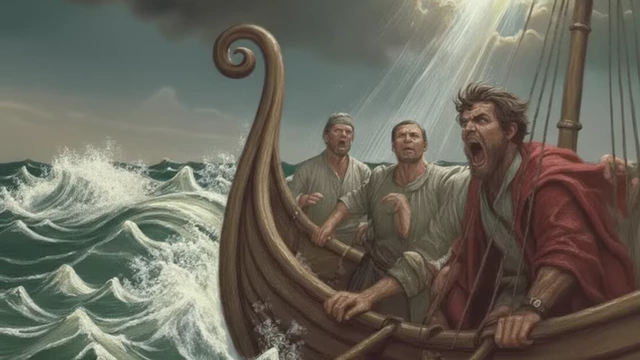
A painting depicting sailors in a stormy sea, with a glimpse of Leviathan in the distance, representing Job's wish for destruction. [ 00:05:15 ] - An incantation bowl discovered in Babylon shows Israelites conjuring "Leviathan, the sea dragon," indicating this belief was present in their culture. [5:36]
- An aerial view of the ancient archaeological site of Nippur, where the incantation bowl was discovered. [66]
- An ancient incantation bowl with spiral writing, discovered in Babylon, referencing "Leviathan the sea dragon." [69]
- Eliphaz's Accusation (wickedness leads to suffering) [6:18]
- Elephaz speaks, comparing Job's family to powerful lions whose teeth are broken, suggesting that even the wicked cannot escape God's judgment. [6:21] He implies Job's suffering is due to hidden sin.
- An artistic depiction of Eliphaz, one of Job's friends, who incorrectly believed Job's suffering was due to his sin. [80]
- A close-up of a lion's open mouth with sharp teeth, representing Eliphaz's analogy of the wicked being overcome. [78]
- Job responds by highlighting his friends' lack of kindness, comparing them to dried-up streams in summer when he needs them most. [7:06]
- A painting depicting a dried-up stream in a parched landscape, symbolizing Job's friends' unreliability in his time of need. [84]
- Bildad's Accusation (hypocrisy leads to suffering) [7:37]
- Bildad compares Job to reeds that cannot flourish without water, stating that "waterless reeds are like the hypocrite who forgets God." [7:47] He explicitly calls Job a phony.
- A painting of reeds flourishing by water, illustrating Bildad's question, "Can the reeds flourish without water?", implying Job's hypocrisy. [88]
- Zophar's Harsh Judgment (Job is greedy and deserves pain) [11:12]
- The Ancient World's View on Suffering [11:34]
- The friends represent the common ancient belief that suffering only happens to evil people and is proportionate to their sin. [11:44] Since Job suffered immensely, they assumed he must be extremely wicked.
- This perspective is contrasted with Jesus's disciples' question about a man born blind: "Who sinned, this man or his parents?" [12:13] Jesus refutes this direct cause-and-effect.
Job's Despair and Challenge to God [8:07]
- Job Accuses God of Injustice [8:25]
- In his profound anguish, Job claims God "mocks the despair of the innocent" and "blindfolds the good righteous leaders" when evil people take over. [8:28] He suggests God is unjust and even causes evil.
- A painting showing blindfolded figures in a desolate landscape, representing Job's accusation that God overlooks injustice. [96]
- Despite Job's accusations, God does not rebuke him.
- An artistic depiction of God listening to Job's despair and accusations without immediate rebuke. [100]
- Job Demands an Answer from God [12:35]
- Job makes a bold declaration, essentially taking God to court: "I sign now my defense. Let the Almighty answer me." [12:41]
Elihu's Intervention [12:58]
Before God responds, a young man named Elihu, seemingly a random figure, interjects.
- Elihu Rebukes Job's Friends [13:13]
- Elihu is furious, rebuking Job's friends for condemning Job without proof. [13:13]
- Elihu's Explanation: Suffering for Preparation [13:30]
- Elihu then turns to Job, rebuking him for not trusting God. [13:27]
- He offers a different explanation for suffering: God sometimes places "chains" on righteous people to slow them down and prepare them for the future. [13:34]
- A painting depicting a man in chains, symbolizing Elihu's teaching that suffering can be a tool for preparation and purification. [135]
- Suffering can be for punishment for the wicked, but for the righteous, it can be a refining process.
- Dark, stormy clouds with lightning, indicating the dramatic entrance of God's voice. [137]
God Speaks from the Storm [14:15]
As Elihu speaks, a massive storm forms, and God speaks directly to Job from within it. [13:55]
- An artistic depiction of Elihu speaking to Job and his friends, just before God intervenes. [139]
- God's Challenge to Job [14:19]
- God's Questions about Creation (Earth, Ocean, Cosmos) [14:53]
- God asks Job where he was when the earth was created and if he possesses the knowledge to determine its measurements or placement. [14:56] The Earth's precise distance from the sun is crucial for life.
- An image of Earth from space, illustrating God's questions to Job about the creation and placement of the planet. [143]
- God questions Job's power to command the ocean, setting its boundaries. [15:22]
- A powerful ocean wave crashing against rocks, symbolizing God's command over the seas. [145]
- He asks if Job controls the sunrise and sunset, or understands the afterlife ("gates of death"). [15:34]
- An artistic rendering of "the gates of death," representing God's ultimate understanding of the afterlife. [150]
- God also questions Job's ability to control weather phenomena like snow, hail, rain, stars, and clouds. [15:58]
- The point is to highlight Job's human limitations compared to God's infinite wisdom in managing the universe.
- God's Questions about the Animal Kingdom [16:41]
- God asks Job if he can provide food for lions, assist in deer birth, or understand the lives of wild donkeys, oxen, ostriches, horses, or eagles. [16:44]
- A series of images depicting various animals (wild ox, ostrich, horse, eagle), representing God's detailed knowledge of His creation. [158]
- Lions feeding on their prey, illustrating God's provision for all creatures. [169]
- A mother deer with its fawn, illustrating God's knowledge of animal birth and survival. [170]
- An eagle's nest high on a cliff, demonstrating God's oversight of even remote parts of nature. [171]
- This shows God's intricate involvement and detailed knowledge of every aspect of His creation.
- The Message: God's Omniscience and Providence [17:32]
- God emphasizes that He sees and provides for all His creations, from the smallest sparrow to the largest beast. [17:46]
- Jesus echoes this in Matthew 10:29-31, assuring disciples that God cares for sparrows and knows every hair on their heads, valuing humans far more. [18:05]
- This implies that even though Job feels forgotten, God's detailed knowledge extends to his personal suffering.
God Introduces Behemoth and Leviathan [19:07]
Before Job can respond, God presents two extraordinary creatures.
- The Behemoth: Uncontrollable Power [19:07]
- God describes Behemoth as a massive creature, eating like an ox, with a tail like a huge tree trunk, bones like bronze beams, and ribs like iron bars. [19:10]
- An illustration of the Behemoth, a massive creature with a tail like a tree trunk, symbolizing untamable power. [188]
- It's a creature no human could defeat, possibly a hippopotamus, dinosaur, or mythical beast representing immense, untamable strength.
- The Leviathan: Symbol of Life's Chaos [19:48]
- God dedicates an entire chapter to Leviathan, a terrifying sea dragon with impenetrable scales, terrible teeth, and fire-breathing capabilities. [19:53] He is "king over all the children of pride."
- God challenges Job: "Lay your hand on him; Remember the battle—Never do it again!" [20:24]
- An ancient relief depicting a mythical creature, serving as an example of how Leviathan was understood in ancient cultures as a symbol of chaos. [203]
- Leviathan is consistently referenced in ancient cultures as a representation of life's uncontrollable chaos. [20:32]
- A powerful illustration of the Leviathan, a terrifying sea dragon with impenetrable scales, symbolizing the uncontrollable chaos of life. [205]
- The Message: Humans Cannot Tame Chaos, Only God Can [20:47]
- Just as no human can tame Leviathan, no one can control the chaos that appears in life (e.g., raids, unexpected diagnoses). [20:47]
- A doctor discussing medical images with a patient, illustrating an unexpected, chaotic life event like a cancer diagnosis. [208]
- Jesus on a boat, calming the stormy waters, an act symbolizing God's power over chaos. [214]
- God asserts His sole power to bring justice and order to this chaotic world, even if its current purpose is beyond human comprehension. [21:04]
Job's Repentance and Restoration [21:19]
- Job's Response to God [21:22]
- After God's revelations, Job humbly responds: "I have heard of You by the hearing of the ear, but now my eye sees You. Therefore I abhor myself, and repent in dust and ashes." [21:28]
- God Restores Job [21:38]
The Ultimate Answer: God's Suffering Through Jesus [21:48]
The video draws a parallel between Job's suffering and another figure in the Bible.
- Jesus as the "Man of Sorrows" [21:48]
- Jesus is described as "a man of sorrows acquainted with grief," who was tested by Satan, stripped of everything, and forsaken by friends, much like Job. [21:55]
- A detailed timeline summarizing the Book of Job, with a parallel depiction of Jesus's suffering, emphasizing God's ultimate answer to human pain. [222]
- Unlike Job, Jesus, being God, never questioned God's plan. [22:07]
- God's Firsthand Experience of Suffering [22:56]
- The Cross: Defeating Death and Offering Eternal Life [22:39]
- The ultimate answer to suffering isn't full comprehension but recognizing that God Himself suffered on the cross, defeating death and offering eternal life free from pain to those who trust in Him. [22:39]
- A powerful depiction of Jesus Christ crucified on the cross, symbolizing God's intimate understanding of human suffering and the path to eternal life. [230]
- While humans may not fully understand God's plan for suffering, faith acknowledges His sovereignty and His ultimate act of love and understanding through Christ.