John Oliver Investigates the "Make America Healthy Again" (MAHA) Movement, RFK Jr.'s Leadership, and the Flawed Approach to Public Health
John Oliver critically examines the "Make America Healthy Again" (MAHA) movement, closely associated with RFK Jr., highlighting its superficial solutions and the questionable figures involved. While MAHA identifies legitimate health concerns, its proposed fixes are often unscientific or dangerous, such as promoting raw milk and attributing all chronic diseases to food. The movement's "wins" like changes in soda ingredients and the removal of synthetic food dyes from ice cream are deemed "nutritionally hilarious" and fail to address core health issues. Key figures like Vani Hari ("The Food Babe") and the Means siblings (Calley and Casey) promote unverified health claims and products, with potential conflicts of interest. Oliver argues that MAHA's influence in the administration is leading to the active undermining of public health through significant cuts to healthy food programs, scientific research (e.g., mRNA vaccine development), and key advisory committees on immunizations and preventive care, all while shifting responsibility to individuals.

Introduction to the MAHA Movement [0:04]
The main story concerns the "Make America Healthy Again" (MAHA) movement, which is closely associated with RFK Jr.
- RFK Jr. and MAHA influencers promote concerns about food ingredients, often highlighting complex chemical names that are common or harmless, like riboflavin (Vitamin B2). [1:01]
-
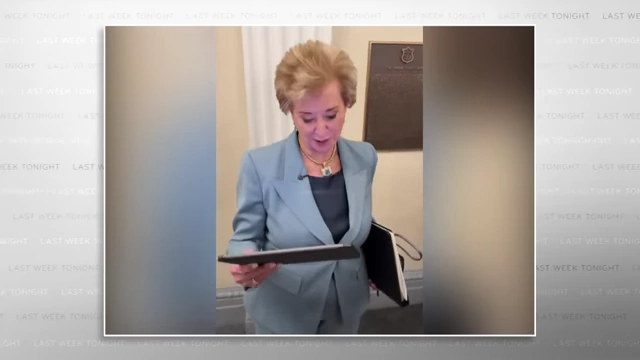
An influencer reads a list of "scary-sounding" food ingredients like riboflavin and titanium dioxide. [ 00:01:16 ]
-
- The movement has a broad coalition of supporters, including Democrats, who share a common desire for healthier food and environments for their children. [2:53]
- Experts like Dr. Marion Nestle acknowledge that RFK Jr. raises valid points about the rise of chronic diseases in American children, a sentiment that resonates with their own concerns about nutrition policy. [4:51]
-

Dr. Marion Nestle, a nutrition policy expert, expresses her surprise at RFK Jr. echoing her concerns about chronic diseases. [ 00:05:07 ] - A JAMA study found that an American child was 15-20% more likely to have a chronic health condition in 2023 than in 2011, highlighting a growing mortality gap. [4:27]
-
MAHA's "Wins" and Superficial Changes [6:09]
MAHA proponents celebrate certain changes as significant victories, but these are often oversold or have minimal impact on overall health.
- Cane Sugar in Coke: Coke announced selling drinks with cane sugar, which RFK Jr. lauded as a "MAHA win," despite nutrition experts deeming it "nutritionally hilarious" as sugar is still sugar. [6:14]
-
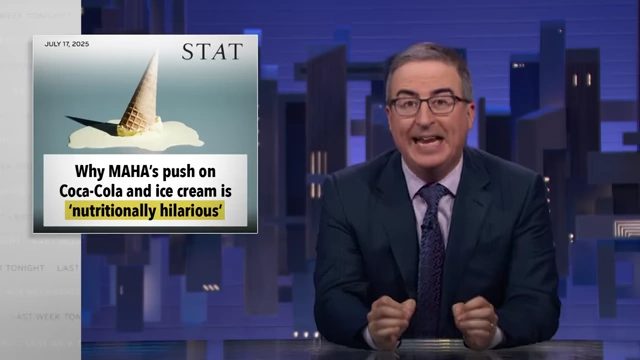
A STAT article headline highlights the "nutritionally hilarious" nature of MAHA's "wins" regarding Coca-Cola and ice cream. [ 00:06:29 ]
-
- Synthetic Food Dyes: The movement pushed for the removal of synthetic food dyes, citing potential neurobehavioral impacts on some children. [7:54]
-
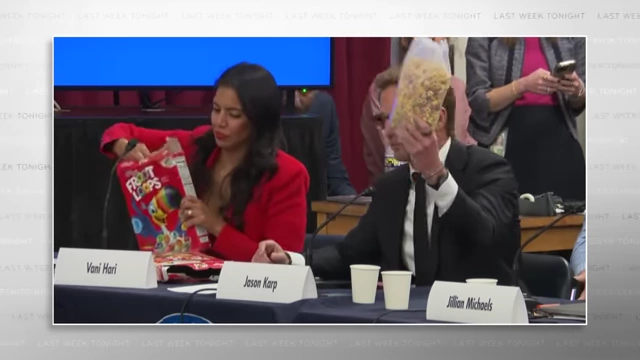
Vani Hari ("The Food Babe") at a Senate roundtable compares the dull color of Canadian Froot Loops made with natural colorants to the bright, artificially dyed US version. [ 00:06:54 ] - The US dairy industry voluntarily agreed to remove synthetic dyes from ice cream, another touted "win." [8:07]
- Critics argue that while removing dyes is not inherently bad, it does not address the fundamental issue of ice cream's high sugar and fat content. [8:14]
-
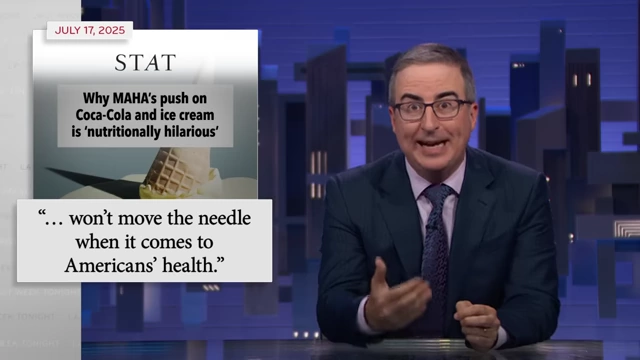
A STAT article quote notes that small moves like removing food dyes "...won't move the needle when it comes to Americans' health." [ 00:08:19 ]
-
-
Key Figures and Their Questionable Science [9:00]
The MAHA movement relies on figures whose scientific understanding and motivations are questionable.
Vani Hari ("The Food Babe"):
- Hari is an influential food blogger and author known for pressuring companies to remove "scary-sounding" ingredients. [9:12]
- She famously targeted Subway for using azodicarbonamide, an ingredient also found in yoga mats. [9:44]
-
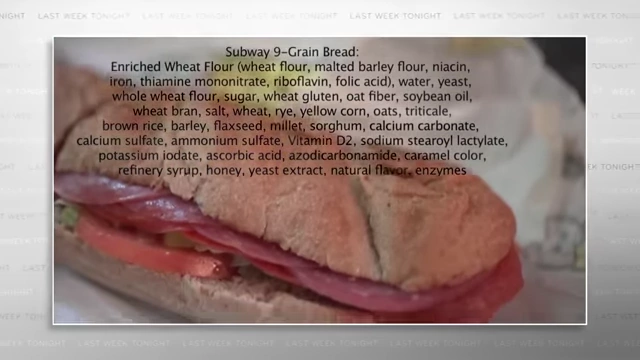
An ingredient list for Subway's 9-Grain Bread, showing "azodicarbonamide," an ingredient Vani Hari famously targeted. [ 00:09:48 ]
-
- While Subway eventually removed the ingredient, Hari's claims are often overblown and sometimes based on deeply unscientific conclusions, such as claiming microwaved water produced a "similar physical structure" to water exposed to the words "Satan" and "Hitler." [10:42]
- Hari also promotes her own product line, creating potential conflicts of interest, as seen in her critique of Chick-fil-A's lemonade followed by a promotion for her own protein powder. [11:22]
-
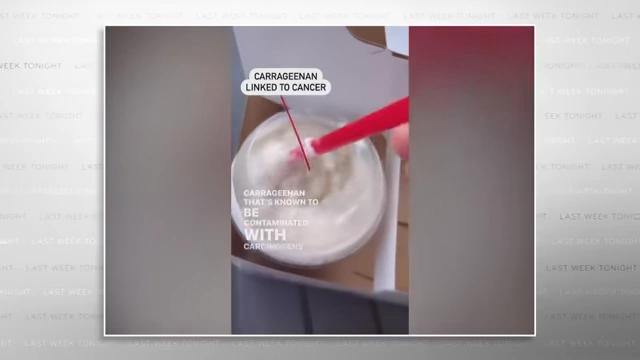
Vani Hari's video criticizing Chick-fil-A's frozen lemonade, highlighting "carrageenan linked to cancer." [ 00:11:45 ] -

Vani Hari promotes her own "Truvani's lemon cookie protein" powder, directly after criticizing a competing product. [ 00:11:48 ] -
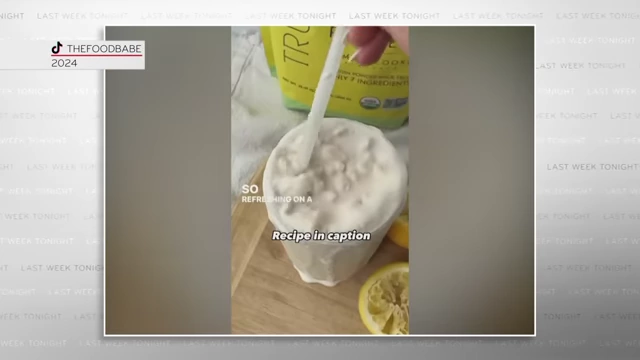
A visual of Vani Hari's "frosted lemonade recipe," which John Oliver describes as "absolutely disgusting." [ 00:12:06 ]
-
Calley and Casey Means (The Means Siblings):
- Calley Means: A top advisor to RFK Jr., who claims to have convinced Kennedy to join the campaign. [12:29]
- He states his "bonafides" as a former lobbyist for the American Beverage Association (Coke's front group), claiming he helped steer money to health organizations like the American Diabetes Association. [13:20]
-
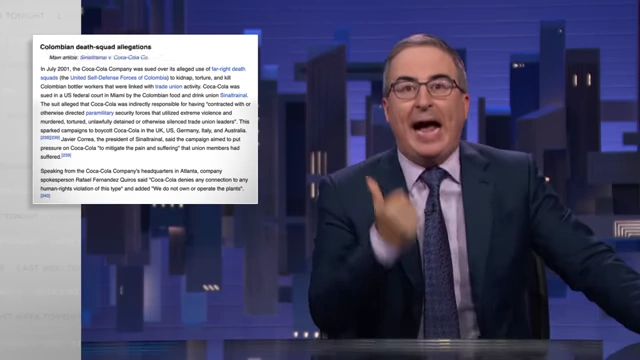
The Wikipedia page for Coca-Cola, showing a section titled "Colombian death-squad allegations," used by John Oliver to illustrate the company's negative history. [ 00:14:14 ]
-
- However, reports indicate that the firms he worked for denied representing Coke or its trade group at the time, and former colleagues are unaware of his claimed role. [14:22]
-
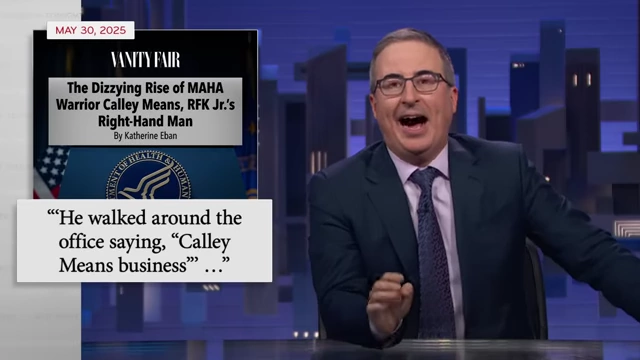
A Vanity Fair article quote about Calley Means, noting he "walked around the office saying, 'Calley Means business.'" [ 00:15:06 ]
-
- He states his "bonafides" as a former lobbyist for the American Beverage Association (Coke's front group), claiming he helped steer money to health organizations like the American Diabetes Association. [13:20]
- Casey Means: An MD and RFK Jr.'s choice for Surgeon General, who shares her brother's views. [15:28]
- She claims she left the medical establishment due to frustration with not learning about the root causes of illness, a dramatic "scalpel down" departure. [16:26]
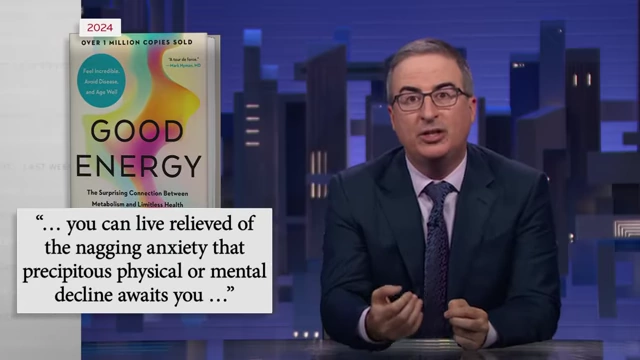
- She is a co-author of the book "Good Energy," which emphasizes metabolic health as the key to avoiding all chronic diseases, even genetic ones, and lists common processed foods as "illicit drugs." [17:01]
-
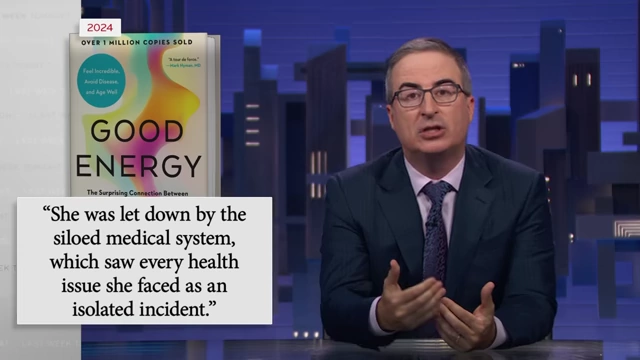
The book "Good Energy" by the Means siblings, which promotes metabolic health and suggests it can relieve anxiety about physical or mental decline. [ 00:17:06 ]
-
- The Meanses downplay the complexity of health, suggesting individual behavior and diet are almost solely responsible for health outcomes. [18:25]
- They advocate for raw milk, despite its known risks and current outbreaks, stating she wants to "pet his cow" to determine if the milk is safe. [19:19]
-
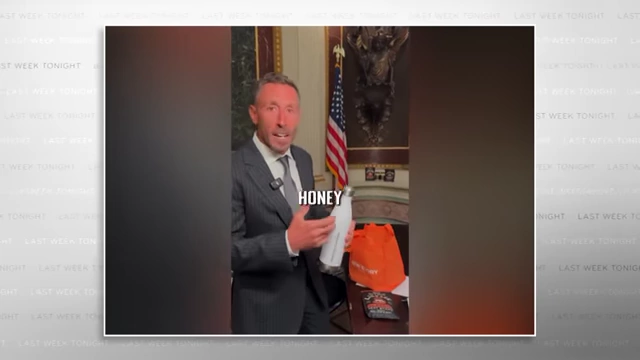
An influencer in the White House showcases his raw milk and raw meat smoothie, which he is consuming for lunch. [ 00:02:14 ] -
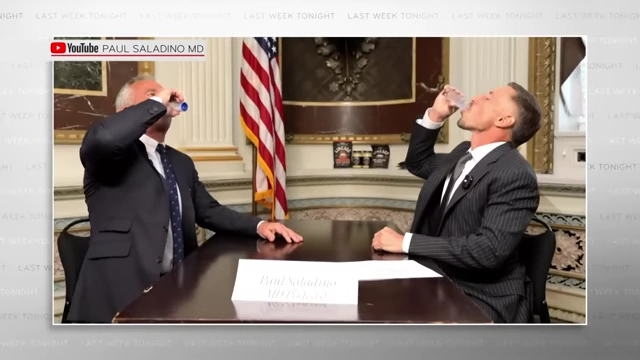
RFK Jr. and Dr. Paul Saladino take raw milk shots, demonstrating the promotion of raw milk within the movement. [ 00:02:37 ] -
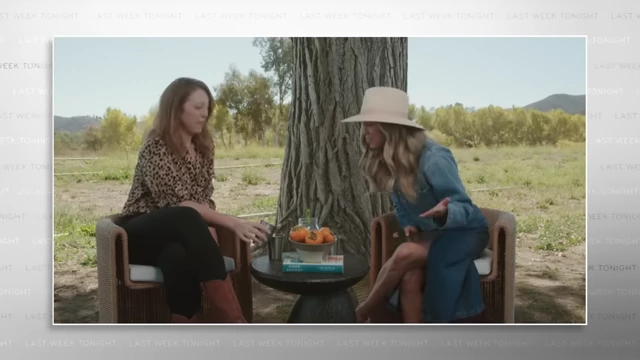
Casey Means on the "Grounded Wellness" podcast, enjoying a "liver smoothie." [ 00:15:55 ]
-
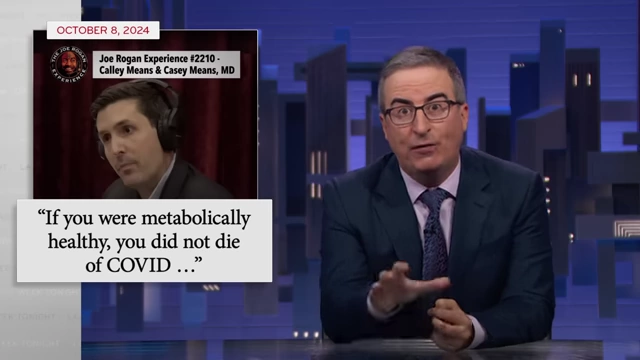
- Casey Means has also expressed concerning views on vaccines, questioning the synergistic effect of multiple childhood vaccines, while Calley Means falsely claimed that "COVID was a foodborne illness" and "If you were metabolically healthy, you did not die of COVID." [20:01]
- Calley Means: A top advisor to RFK Jr., who claims to have convinced Kennedy to join the campaign. [12:29]
Conflicts of Interest and Policy Shifts [20:45]
The Means siblings have potential conflicts of interest, and their philosophy is poised to influence public health policy.
- Casey Means' Levels Company: She co-founded Levels, a company promoting glucose monitoring for non-diabetic individuals, despite little evidence of health benefits for them. [21:01]
-

Casey Means' newsletter sponsors include supplements and products from the wellness industry, highlighting potential conflicts of interest. [ 00:21:00 ] - RFK Jr., despite previously warning about wearable devices as surveillance tools, now advocates for every American to wear a wearable, including glucose monitors, essentially performing a "product shill" to Congress. [21:35]
-
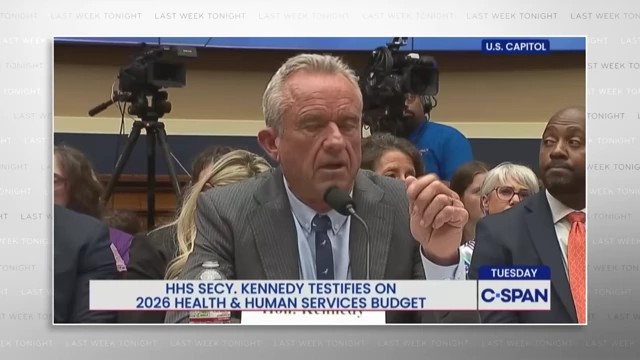
RFK Jr. testifies before Congress, advocating for all Americans to wear wearable glucose meters, despite his past warnings against surveillance. [ 00:22:08 ]
-
- This creates a situation where her company could directly benefit from government policy if she does not fully divest. [21:20]
-
- Individual Responsibility vs. Systemic Issues: The Meanses heavily emphasize individual responsibility for health outcomes, which minimizes the impact of systemic issues like food deserts and poverty. [22:40]
-
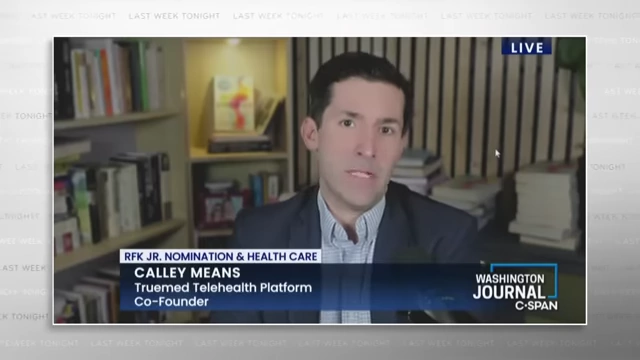
Calley Means on Washington Journal dismisses a caller's question about food deserts as "nihilistic." [ 00:23:30 ] - Calley Means dismisses concerns about food deserts, claiming they would disappear if processed foods were removed from SNAP benefits, showcasing a lack of understanding of complex food system issues. [24:35]
-
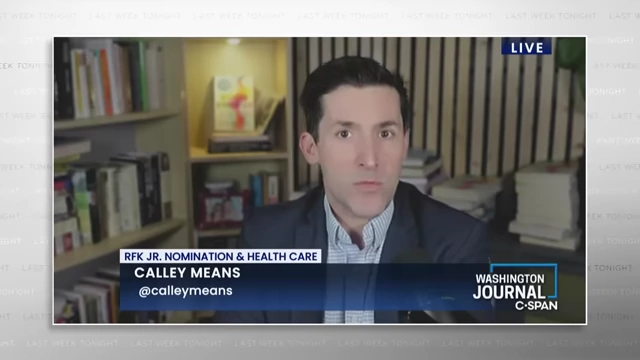
Calley Means argues that food deserts are "driven by the incentives of SNAP" and suggests removing soda and Twinkies from food stamps would make them disappear. [ 00:24:45 ]
-
-
Administration's Detrimental Impact on Public Health [25:50]
Despite MAHA's stated goals, the administration is actively dismantling critical public health initiatives.
- Funding Cuts to Food Programs: The administration has cut a billion dollars in funding for schools and food banks to buy local food, and reduced SNAP eligibility, limiting access to free school meals. [27:11]
-
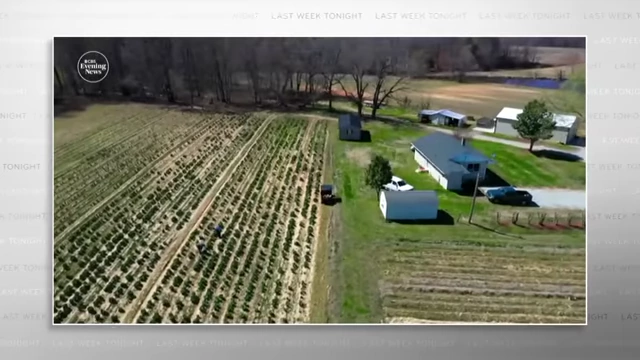
Pine Knot Farms, a local farm, shown as an example of suppliers for school food programs, whose funding was cut. [ 00:26:15 ] -
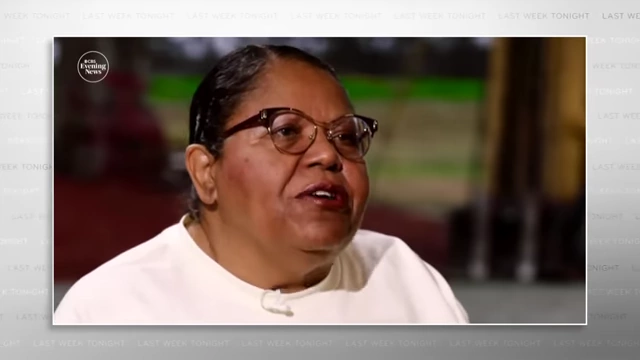
Linda Leach-Hughes questions how America can be made great again if food is being taken from vulnerable groups due to federal cuts. [ 00:26:31 ] -
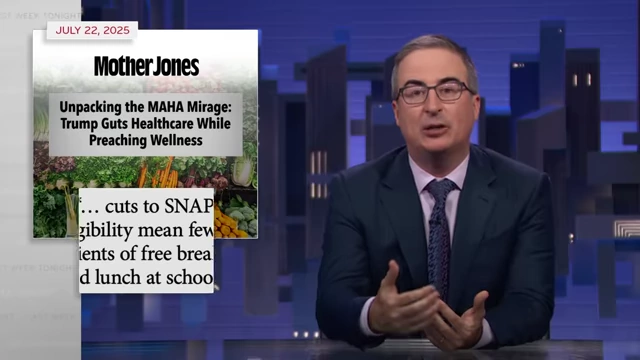
A Mother Jones article headline: "Unpacking the MAHA Mirage: Trump Guts Healthcare While Preaching Wellness." [ 00:27:14 ]
-
- Attacks on Scientific Research and Vaccines:
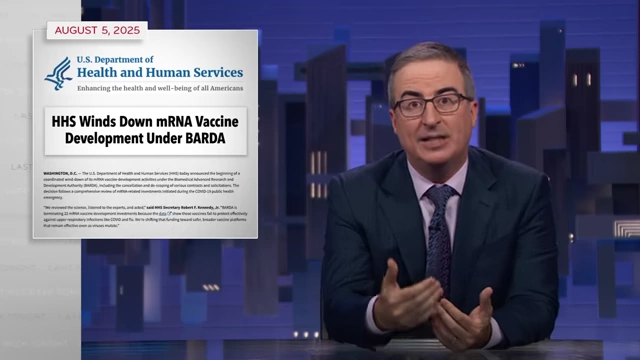
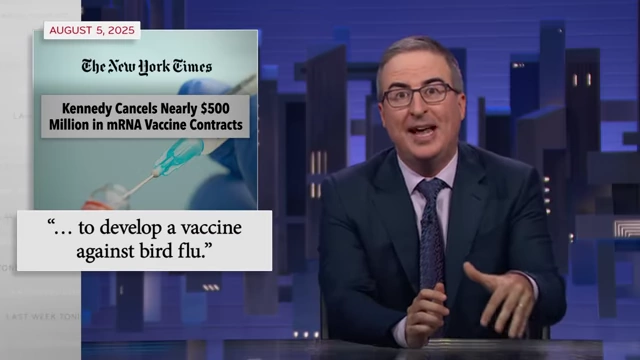
- The HHS is winding down mRNA vaccine development for diseases like bird flu, HIV, and cancer, a decision an expert called the "most dangerous public health decision ever." [27:48]
- RFK Jr. fired the entire Advisory Committee for Immunization Practices (ACIP) and appointed new members, only one of whom is a recognized vaccine expert, with others promoting misinformation (e.g., Robert Malone's claims about COVID vaccines causing AIDS). [28:18]
-

A New York Times article discusses how Kennedy's "purge of advisers" from the Advisory Committee for Immunization Practices could disrupt US vaccinations. [ 00:28:34 ]
-
- RFK Jr. is also reportedly planning to fire members of a task force that decides what preventive health services must be covered by insurance, labeling them "too woke." This could impact coverage for cancer screenings and HIV prevention. [29:01]
-
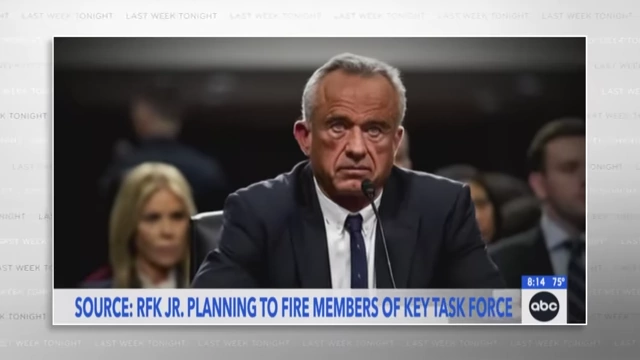
An ABC News report indicates RFK Jr. is planning to fire members of a key task force that decides covered preventive health services, calling them "too woke." [ 00:29:04 ]
-
- RFK Jr.'s Insensitive Actions: RFK Jr. posted photos of a fishing trip shortly after a shooting at a CDC campus, which was perceived as shockingly insensitive given his role as head of the agency. [29:56]
-
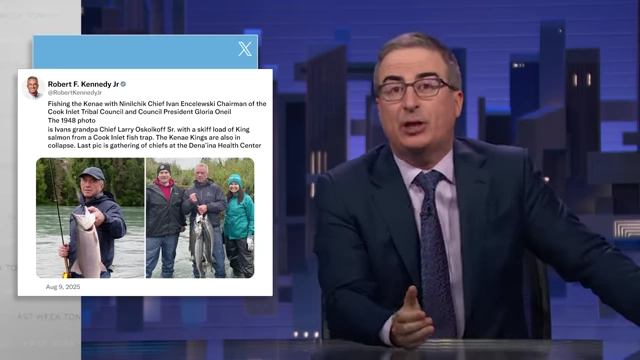
RFK Jr.'s tweet showing photos from a fishing trip, posted insensitive to the CDC shooting incident. [ 00:30:21 ]
-
Conclusion: Misguided Solutions to Real Problems [31:35]
While the desire for a healthier America is legitimate and systemic problems exist, MAHA's current form and the administration's actions are counterproductive.
- An influencer expresses concern about how MAHA plans to achieve its goals of cleaning up food through regulation, given that the administration ran on deregulation. [30:40]
-
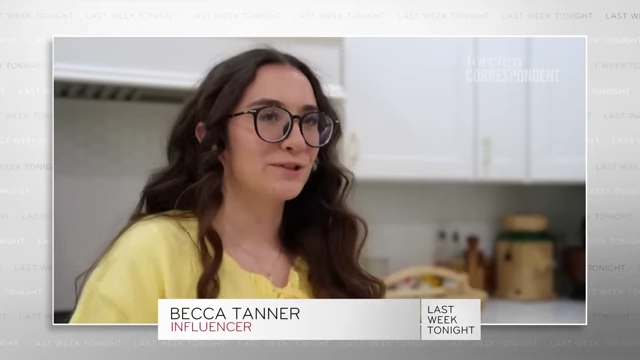
Influencer Becca Tanner expresses concern about how MAHA will clean up food through regulation in an administration that ran on deregulation. [ 00:30:54 ]
-
- The administration's focus on individual responsibility overlooks broader systemic issues and instead cuts social safety nets. [32:22]
- Recommended solutions from experts in the JAMA report include investing in anti-poverty measures, broadening health insurance, investing in primary care, and passing firearm safety laws, which directly contradict the administration's policies. [32:00]
-
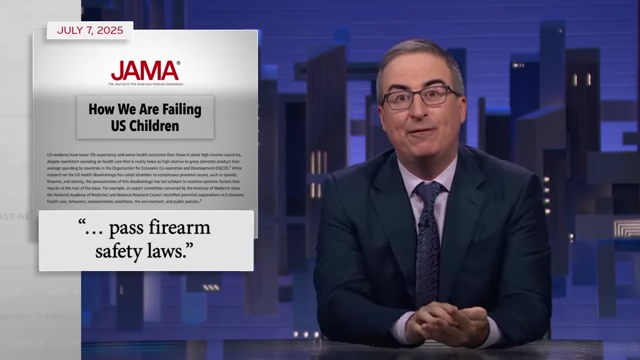
A JAMA editorial recommends policy changes for child health, including passing firearm safety laws. [ 00:32:13 ]
-
- John Oliver concludes that MAHA, in its current form, is not making America healthy but rather laundering the reputation of an administration that is doing the opposite. [32:31]