The Interplay of Virtue and Power: How Freedom of Religion Functions as a Boundary-Based Institution Against Tyranny
The New Enlightenment with Ashley
This video delves into the paradoxical relationship between virtue and power, asking if a ruler should cultivate or fear virtuous subjects. It defines power as either force or virtue, noting that virtuous leaders naturally attract followers, posing a potential threat to unjust rulers. The speaker critiques B.F. Skinner's "creepy utopia" from Walden Two, where virtues are engineered, arguing it suppresses genuine human agency and the capacity for "righteous anger." Drawing on Aristotle's "mean," true virtue is presented as context-dependent, requiring discernment rather than suppression of traits. The video highlights freedom of religion as a crucial "boundary-based institution" from the Old Enlightenment, which protects communities' ability to cultivate their own virtues and rules, thereby acting as a check against "power-to-the-powerful" dynamics that suppress independent virtue.
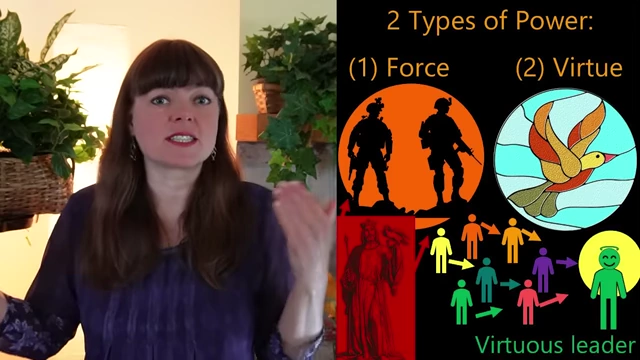
The King's Dilemma: Virtue and Power Dynamics [0:00]
The video begins by posing a question: Should a king cultivate virtuous subjects, or should he fear them?
- The Dual Nature of Virtue for Rulers
- Virtuous subjects might be easier to manage, reducing the need for extensive policing.
- However, virtue is also a source of power, as people are naturally drawn to virtuous leaders.
- A virtuous leader (honest, courageous, just) can expose a king's dishonesty or injustice.
- People will trust and follow virtuous individuals, potentially leading them to challenge the king's injustices.
- This creates a dilemma where a king might fear virtuous subjects due to their potential to undermine his power.
Diagram illustrating two types of power: Force and Virtue, with people following a virtuous leader [ 00:00:40 ]
Understanding the "Power-to-the-Powerful" Dynamic [2:00]
The current system often operates on a "power-to-the-powerful" dynamic, where different types of power are leveraged.
- Types of Power and Leveraging
- Examples include money power, administrative power, technology power, persuasive power (media, religion), and military power.
- Individuals or groups strategically use one form of power to gain another (e.g., money to lobby for administrative power, tech platforms for persuasive power).
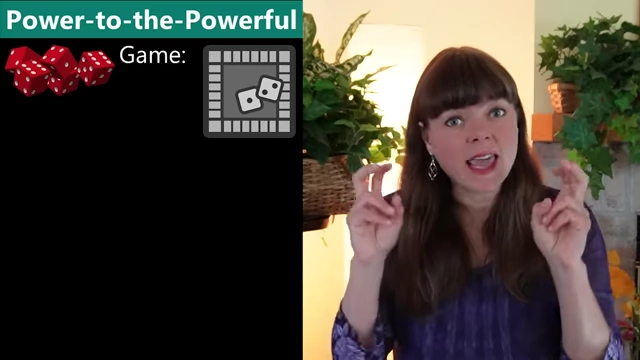
Visual representation of the "Power-to-the-Powerful" game dynamic [ 00:02:32 ]
- Strategic Group Behavior
- The "power-to-the-powerful" dynamic arises when groups strategically gain more power for themselves and their in-group.
- This doesn't necessarily require "evil actors" but reflects a natural tendency to act on behalf of one's group values and resist threats to its power.
- The system is seen as groups clustered at different hierarchical levels.
- Power dynamics can look different depending on whether viewed from a zoomed-out (group level) or zoomed-in (individual interaction within a group) perspective.
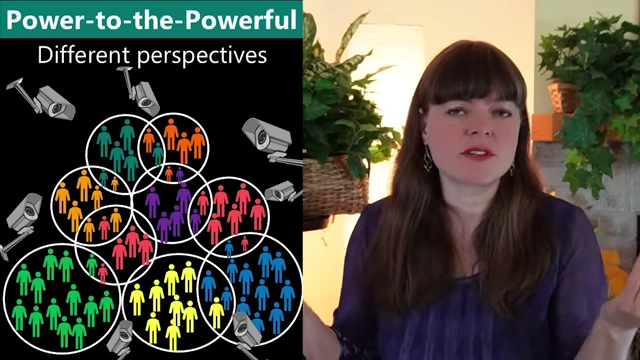
Diagram illustrating different perspectives on power dynamics within overlapping groups [ 00:04:02 ]
- Virtue Cultivation in Communities
- Virtue can be cultivated individually, but it is often more effectively cultivated in communities of people who share values and hold each other accountable.
- These communities naturally create their own rules, norms, and enforcement mechanisms to uphold virtue, forming their own institutions.
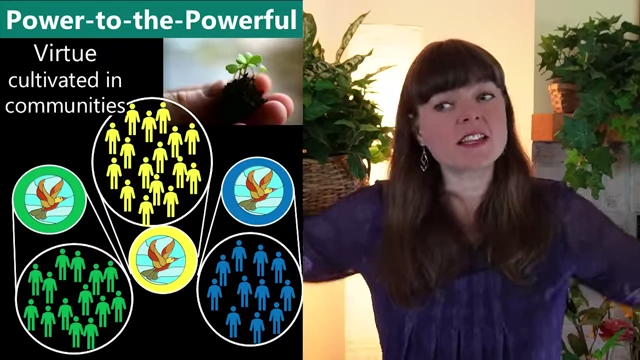
Diagram showing virtue being cultivated within communities of shared values [ 00:04:09 ]
Critiquing Utopian Visions and Institutions [5:00]
The discussion stems from the speaker's previous video on "creepy utopias," which often go wrong despite their aim to redesign institutions.
- Definition of an Institution
- An institution is defined as a set of rules, roles, norms, and enforcement mechanisms that structure human relationships.
- Institutions can be official (written law, legal enforcement) or unofficial (social norms, accolades, scorn).
- Both official and unofficial institutions must work together for societal stability.
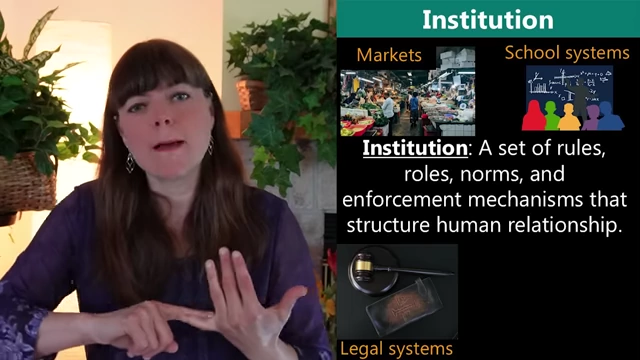
Definition of an institution with visual examples [ 00:05:39 ]
- B.F. Skinner's Walden Two as a Creepy Utopia
- Skinner, a behaviorist, applied principles of positive and negative reinforcement used on lab rats to human society.
- His utopian vision involved a technocratic elite "nudging" people into "behaving well," eliminating emotions like anger and jealousy.
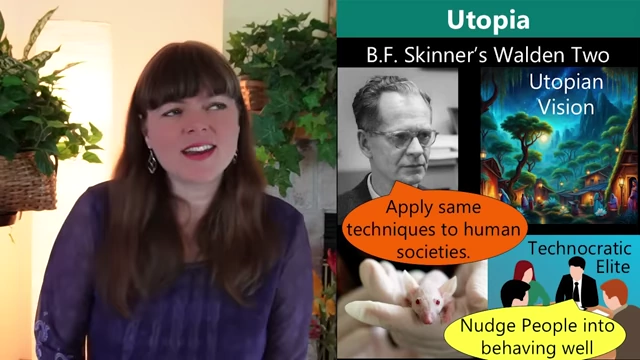
B.F. Skinner's Walden Two utopian vision of a technocratic elite nudging human behavior [ 00:07:08 ] - This vision is deemed "creepy" because the subjects lack genuine human agency; they are "puppets."
- While society needs virtuous subjects, engineering virtue through high-level institutions in this manner is problematic.
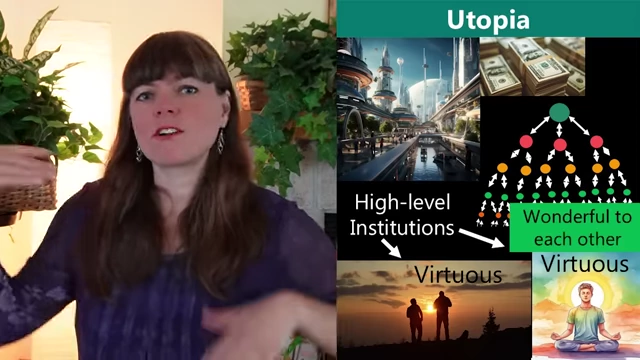
Visual representation of how high-level institutions in Skinner's utopia aim to create virtuous subjects [ 00:07:42 ]
Virtue Ethics and the Aristotelian Mean [9:12]
The critique of Skinner's utopia leads to Aristotle's virtue ethics, particularly the concept of the "Aristotelian Mean."
- The Concept of the Mean
- Virtues exist on a spectrum: neither too much nor too little is virtuous.
- The goal is to find the "right virtuous level" on this spectrum.
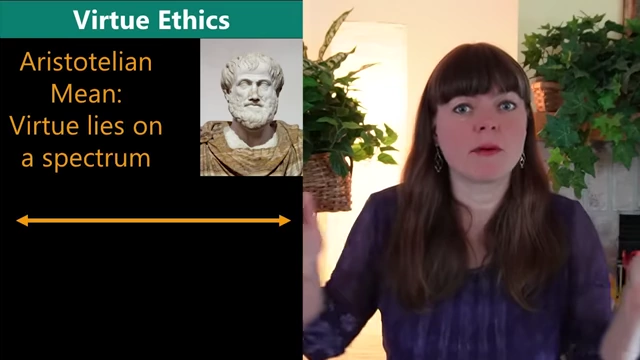
Introduction to Aristotle's concept of the "Aristotelian Mean" where virtue lies on a spectrum [ 00:09:27 ] - Examples of virtues on a spectrum include honesty, generosity, and courage.
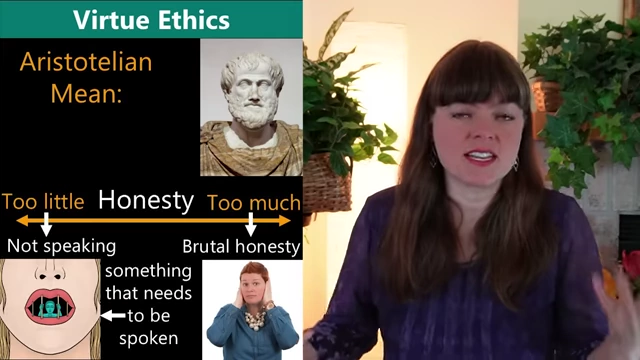
The Aristotelian Mean applied to the virtue of honesty [ 00:09:42 ]
- Righteous Anger
- Skinner's attempt to eliminate anger is flawed because there is such a thing as "righteous anger."
- Appropriate anger can be a virtuous force, signaling moral violations and enforcing accountability.
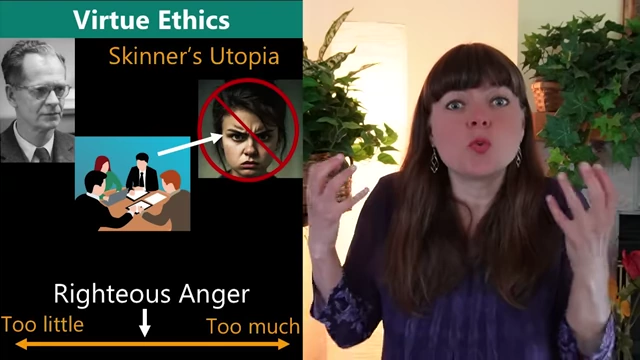
Critique of Skinner's utopia for eliminating anger, showing "Righteous Anger" on the Aristotelian Mean [ 00:10:26 ] - For example, a coach's righteous anger at bullying can enforce moral accountability.
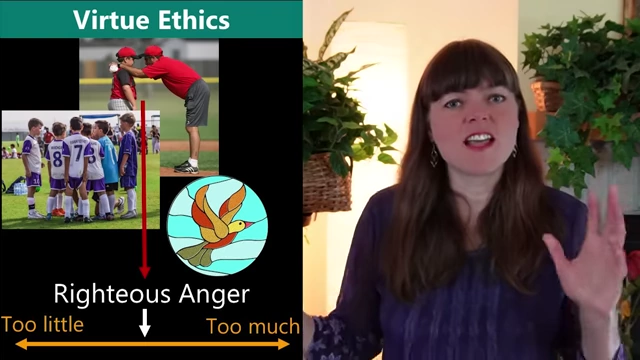
An example of righteous anger demonstrated by a baseball coach [ 00:11:07 ]
- Context-Dependent Virtue
- Finding the Aristotelian Mean requires careful attention to context.
- What constitutes appropriate honesty or courage depends heavily on the specific social situation and the individuals involved.
- Cultivating virtue involves developing the skill of attuning one's actions to the context.
- For an unjust king, the more unjust he is, the more people's virtuous energy (e.g., courage, honesty) will be directed at fighting back, leaning towards the "too much" side of the spectrum as a virtuous response to a dire context.
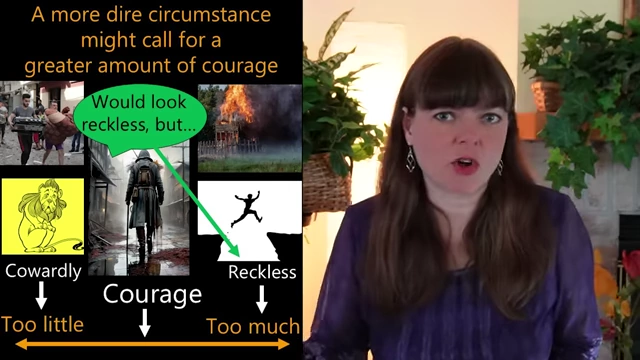
The Aristotelian Mean showing how a dire circumstance might call for a greater amount of courage [ 00:12:08 ]
Freedom of Religion as a Boundary-Based Institution [12:56]
The discussion then connects virtue ethics to institutions, specifically "freedom of religion" from the Old Enlightenment.
- Freedom of Religion as a Virtue-Protecting Institution
- This institution was designed to protect people's ability to cultivate virtue against threatening power structures.
- It was codified in both official law and cultural norms, allowing different groups to foster virtue through their own means.
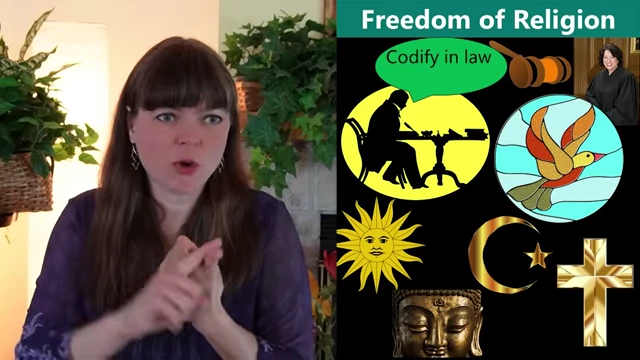
Freedom of Religion being codified in law, protecting different religious practices [ 00:13:12 ] - This institutional protection for virtue acts as a counter to the "power-to-the-powerful" dynamic.
- Unjust Rulers and Virtue
- An unjust ruler fears communities that genuinely cultivate virtue because such virtue (e.g., honesty, courage) can lead subjects to resist injustice.
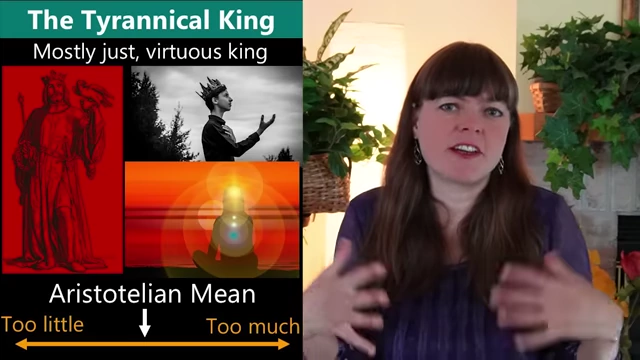
The Aristotelian Mean applied to subjects' virtuous response to a mostly just king [ 00:15:27 ] - The more unjust a king is, the more subjects' virtuous energy will be directed at fighting back against that injustice.
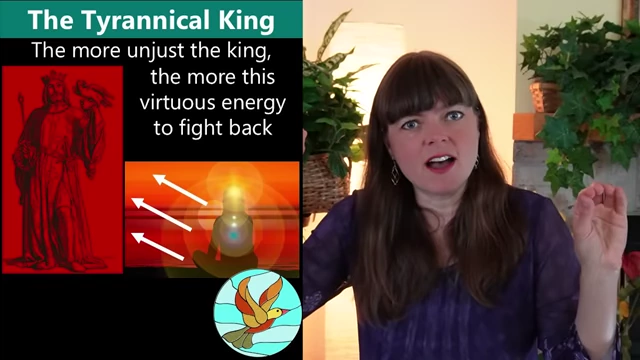
The relationship between an unjust king and the increased virtuous energy of subjects to fight back [ 00:16:24 ] - A truly tyrannical king might even prefer subjects to be unvirtuous (selfish, dishonest, fighting each other) because it makes his own tyranny less noticeable and less likely to be challenged due to a lack of virtuous alternatives.
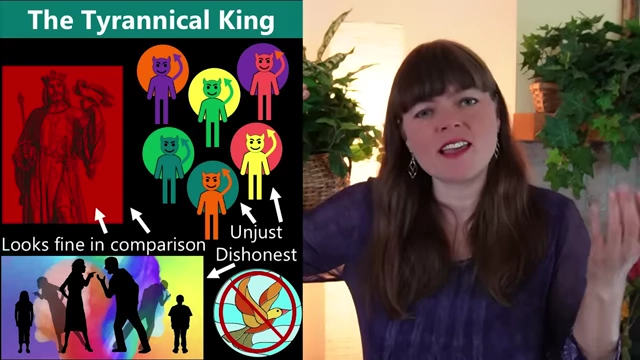
A tyrannical king's preference for unvirtuous subjects to make his own tyranny less noticeable [ 00:17:10 ] - Freedom of religion, by protecting community-level virtue, therefore directly threatens unjust power.
- An unjust ruler fears communities that genuinely cultivate virtue because such virtue (e.g., honesty, courage) can lead subjects to resist injustice.
- The Concept of Boundary-Based Institutions
- Freedom of religion is characterized as a "boundary-based institution."
- Like a fence around a property or a cell membrane, a boundary defines an area within which a group (e.g., family, church) can determine its own rules and institutions.
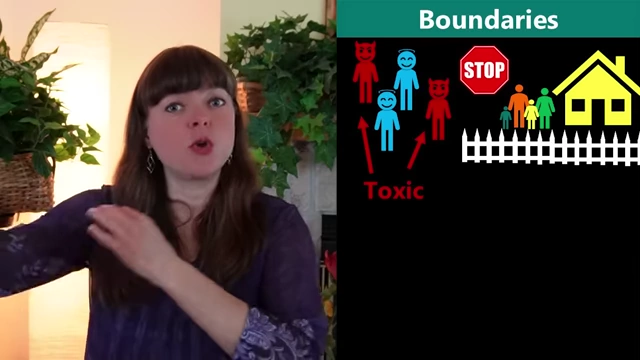
Illustration of a "boundary-based institution" using a fence to protect a family from toxic influences [ 00:19:39 ] - This boundary prevents higher-level authorities (like a king or technocratic elite) from dictating the internal norms and values of smaller communities.
- These boundaries protect the ability of people at a "lower layer" in the system to design their own rules, expectations, norms, and enforcement mechanisms to uphold their values.
- This mechanism actively fights back against power structures that perceive the cultivation of genuine virtue as a threat.