The Tescreal Bundle: How Transhumanism, Rationalism, Effective Altruism, and Longtermism Drive the AI Race and Eugenics
This video argues that a new techno-religious ideology, dubbed "Tescreel," is driving the AI race and perpetuating eugenicist, capitalist, and elitist values. It outlines the components of Tescreel (Transhumanism, Extropianism, Singularitarianism, Cosmism, Rationalism, Effective Altruism, Longtermism) and critiques their underlying philosophies, showing how they dismiss present-day harms in favor of hypothetical future benefits. The video concludes by advocating for a collaborative "ustopia" where technology serves community needs and challenges existing power structures, rather than the tech elite's self-serving narratives.

Introduction to the Techno-Religious Story of AI [0:00]
The video explores the prevalent vacuum of meaning in modern society, which has historically been filled by religion. In the modern era, digital technology has emerged as a quasi-religious narrative.
- Evolution of Tech Narratives:
- Early Silicon Valley [0:01:23]: Founders like Steve Jobs and Bill Gates were seen as "messiahs," with the internet and smartphones promising connectivity and a wondrous future.
- Modern Tech [0:01:52]: The current generation of technologies (social media, metaverse, cryptocurrency, LLMs, AI) have not lived up to the hype, leading to surveillance, corruption, environmental damage, and exploitation.
-

Headline: 'Lavender': The AI machine directing Israel's bombing spree in Gaza [ 00:02:06 ] -

Autonomous killer drones, exemplifying AI in warfare [ 00:02:08 ] -

Headline: Trump's crypto deals and loosening of rules shock observers [ 00:02:11 ] -

A dried-up riverbed, illustrating environmental poisoning [ 00:02:21 ] -
The phrase 'Techno-Capital Machine' visually represented [ 00:02:27 ]
-
- Introduction to Tescreel [0:02:43]: A new religion forming in Silicon Valley, termed "Tescreel" by computer scientist Timnit Gebru and philosopher Émile P. Torres, teaches that "heaven can be attained here in this life through merging with artificial intelligence" and that "the ends of this vast and glorious future among the stars is worth sacrificing just about anything to achieve."
-
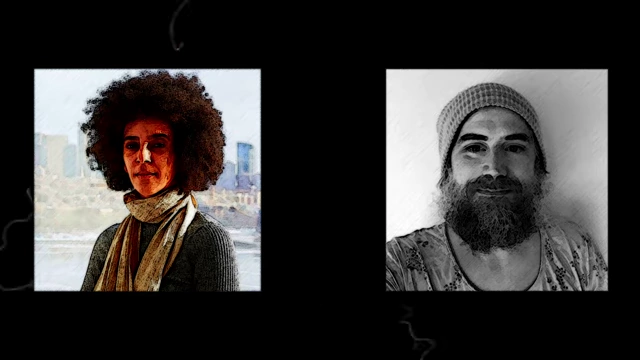
Computer scientist Timnit Gebru and philosopher Émile P. Torres, who coined 'Tescreel' [ 00:02:52 ] -

Article title 'The Acronym Behind Our Wildest AI Dreams and Nightmares,' introducing TESCREAL [ 00:02:56 ] -

A futuristic, neon-lit city, symbolizing the 'AI heaven' vision [ 00:02:59 ] -
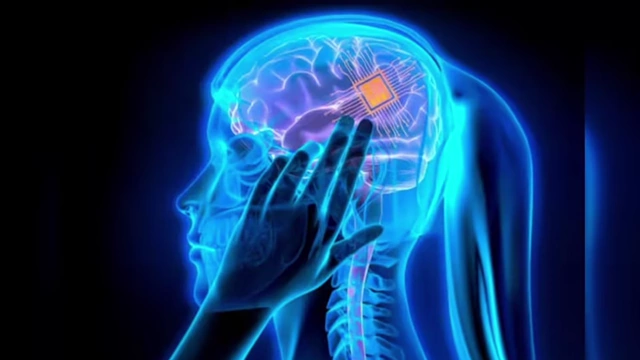
An illustration of a human head with a microchip embedded, depicting 'merging with AI' [ 00:03:03 ] -

An artistic rendering of a space colony, representing 'humanity's future among the stars' [ 00:03:09 ] - Components of Tescreel [0:03:47]:
- Transhumanism (T): Transcending biological limitations and merging with AI to become a superior being. Includes Extropianism, Singularitarianism, and Cosmism.
-
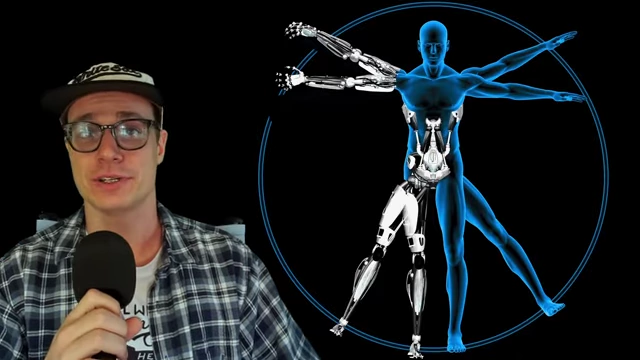
A futuristic interpretation of Vitruvian Man, illustrating the concept of 'superior AI-human hybrids' [ 00:03:21 ]
-
- Extropianism (E) [0:03:59]: Early transhumanists focused on immortality.
- Singularitarianism (S) [0:04:07]: Aims for the technological singularity where AI rapidly self-improves.
- Cosmism (C) [0:04:16]: Believes humanity's destiny is space colonization and universe transformation.
- Rationalism (R) [0:04:25]: An internet AI cult claiming to use reason, but characterized by pseudointellectual reductionism and technology worship.
-
An abstract representation labeled 'Rationalism,' indicating pseudointellectual reductionism and technology worship [ 00:04:34 ]
-
- Effective Altruism (E) [0:04:39]: A moral framework obsessed with using math to determine the best way to live.
- Longtermism (L) [0:04:48]: A variety of effective altruism focused on the far future and existential risks.
-
The TESCREAL Bundle acronym, outlining its components [ 00:03:51 ]
- Transhumanism (T): Transcending biological limitations and merging with AI to become a superior being. Includes Extropianism, Singularitarianism, and Cosmism.
- Core Ideology [0:04:56]: Tescreel is based on blind faith in technology, aiming for complete domination, subjugation, and accumulation, while ignoring non-quantifiable aspects of existence. It envisions AI as God, founders as Christ, data as the Holy Spirit, and eternal growth as the gospel.
-
An abstract digital face, symbolizing a 'godhead based on artificial intelligence' [ 00:03:33 ]
-
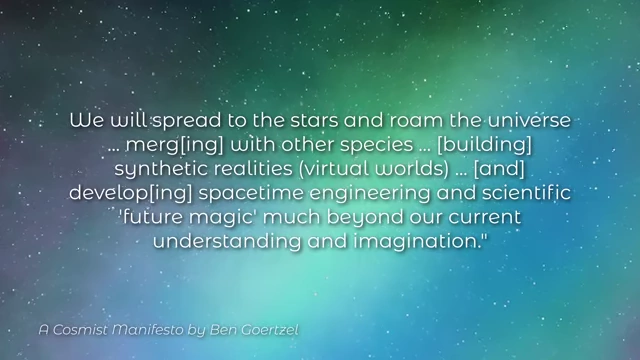
- Religious Parallels [0:05:32]: Ben Goertzel's "cosmist manifesto" explicitly states that space-time engineering and future magic will scientifically achieve religious promises, including resurrecting the dead by "copying them to the future."
-
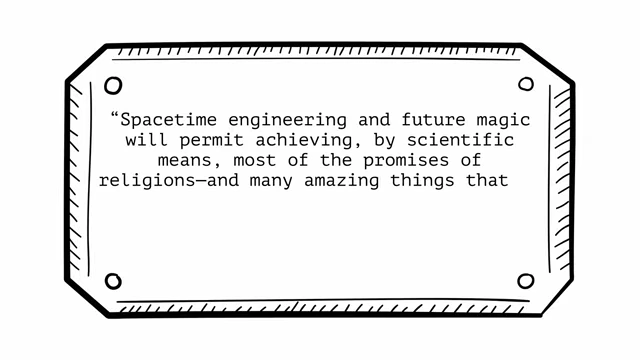
A quote from Ben Goertzel's 2010 'Cosmist Manifesto' [ 00:05:47 ]
-
-

A screenshot of the live stream interview with Émile P. Torres [ 00:06:32 ] -

A collage of prominent tech billionaires associated with Tescreel ideology [ 00:07:06 ] -
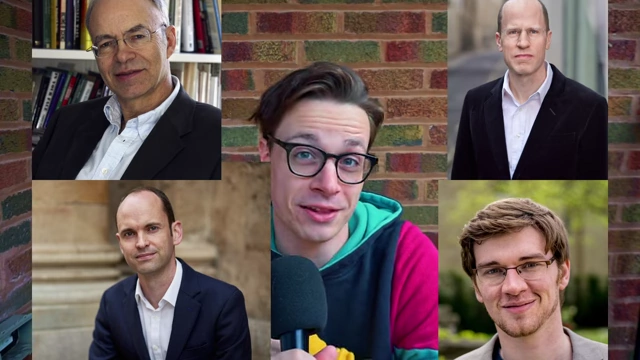
A collage of Oxford philosophers whose ideas are central to Tescreel [ 00:07:09 ]
-
Transhumanism & The Eternal Return of Eugenics [9:33]
Transhumanism, introduced by Julian Huxley in 1957, posits humanity can and should transcend itself through radical alteration of human nature using science and technology.
-
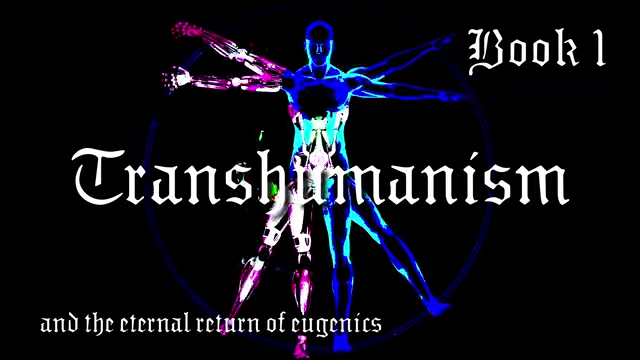
Title card for 'Book 1: Transhumanism and the Eternal Return of Eugenics' [ 00:10:01 ] - Huxley's Vision and Eugenics [0:10:08]:
- Huxley, a prominent eugenicist, believed in "artificial selection" to improve human genetic quality more rapidly and less wastefully than natural selection.
-

Portrait of Julian Huxley, who coined 'transhumanism' [ 00:10:12 ] -
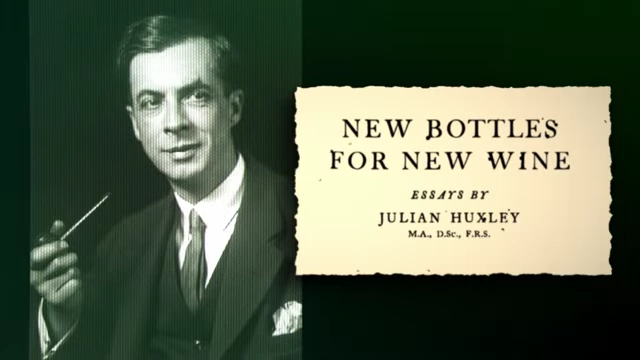
The cover of Julian Huxley's 1957 essay collection, 'New Bottles For New Wine' [ 00:10:16 ] -
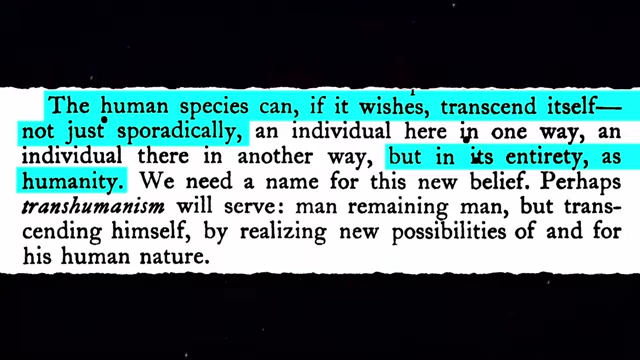
A highlighted quote from Julian Huxley defining transhumanism [ 00:10:28 ] -
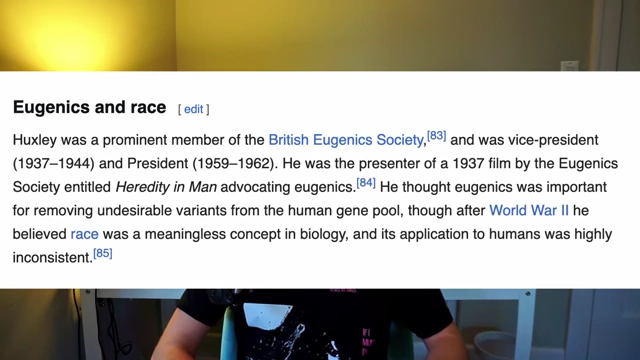
A Wikipedia entry detailing Julian Huxley's role in the British Eugenics Society [ 00:14:46 ] -
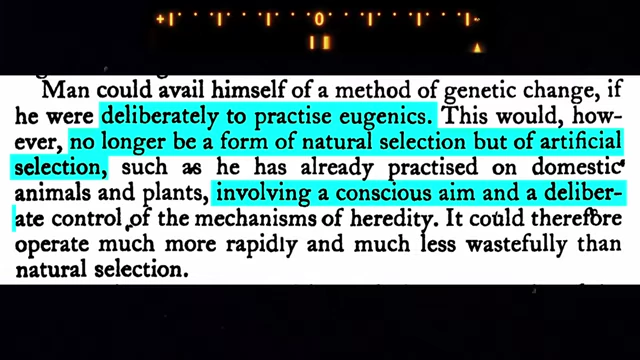
A highlighted quote from Julian Huxley on 'artificial selection' for human genetic change [ 00:15:20 ] -
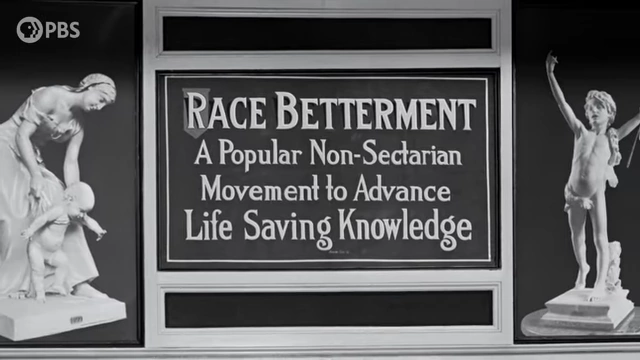
A historical sign for 'Race Betterment,' a eugenics movement [ 00:15:33 ] -

A historical image from a Eugenics Exhibit showcasing 'American Illiteracy' [ 00:36:43 ] -

A close-up of the 'American Illiteracy' chart from the Eugenics Exhibit [ 00:36:47 ]
-
- Historically, eugenics involved coercive practices (e.g., Nazi Germany, California sterilizations) to eliminate "undesirable" genes and promote "desirable" ones.
-
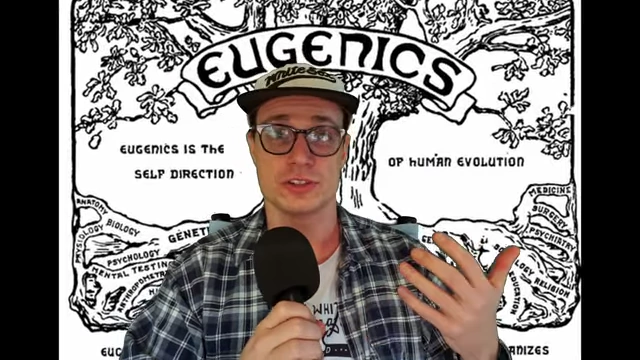
A diagram titled 'Eugenics,' depicted as a tree with various fields of study as its roots [ 00:05:31 ] -
A historical sign for 'Race Betterment,' a eugenics movement [ 00:15:33 ] -

A grid of historical mugshots, illustrating California's forced sterilization victims [ 00:15:55 ] -

A historical propaganda poster with the slogan 'ONLY HEALTHY SEED MUST BE SOWN!' [ 00:16:12 ] -

A historical exhibit from the American Eugenics Society, showcasing 'good' and 'bad' heredity [ 00:16:35 ] -
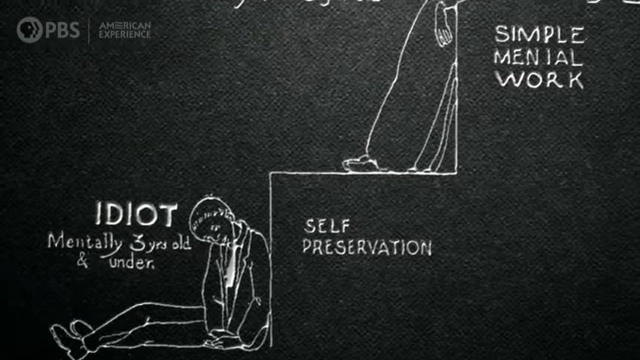
A eugenics diagram illustrating different levels of 'mental work' and 'self-preservation' based on intelligence [ 00:16:40 ]
-
- Transhumanism takes this further, aiming to transcend humanity itself, creating a "radically superior" posthuman, which Émile P. Torres calls "eugenics on steroids."
-

The phrase 'Eugenics on Steroids' [ 00:17:01 ]
-
- Huxley, a prominent eugenicist, believed in "artificial selection" to improve human genetic quality more rapidly and less wastefully than natural selection.
- Sci-Fi vs. Silicon Valley Transhumanism [0:11:23]:
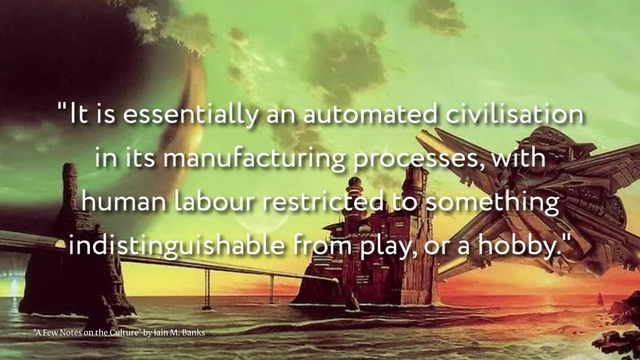
- Iain M. Banks's "The Culture" [0:11:23]: Depicts a utopian anarchist civilization of humanoids and hyperintelligent AIs ("Minds") where scarcity and exploitation are abolished, work is play, and individuals can change genders/sex organs, leading to equality.
- Libertarian Transhumanism [0:14:17]: Silicon Valley's version lacks these egalitarian principles.
- The Posthuman Endgame [0:17:27]:
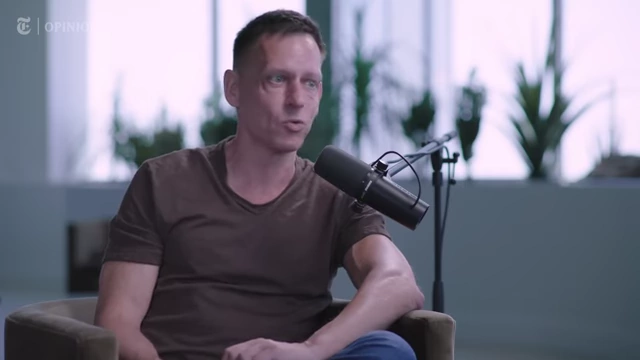
- Peter Thiel [0:17:31]: Expressed hesitation about humanity's endurance, advocating for radical biological transformation into an immortal body.
- Nick Bostrom [0:20:07]: Argues for becoming a "posthuman" with vastly enhanced capabilities (e.g., 200-dimensional hyperspace, telepathy, mind uploading) and merging with AI.
-
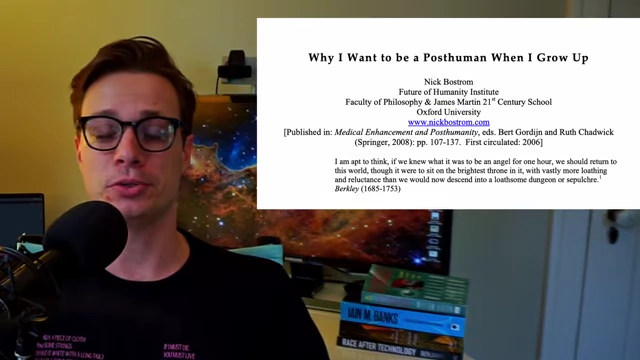
The title page of Nick Bostrom's 2008 essay 'Why I Want to Be a Posthuman When I Grow Up' [ 00:20:15 ] -
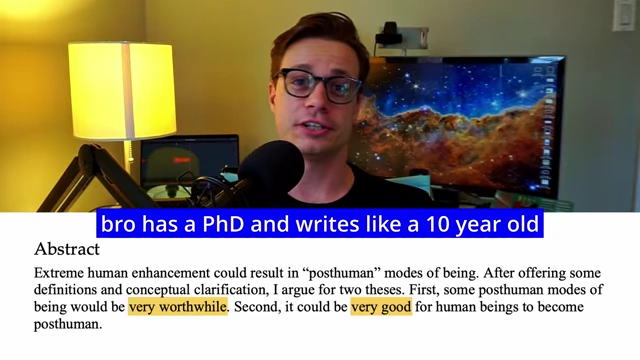
A highlighted quote from Nick Bostrom's essay on the benefits of becoming posthuman [ 00:20:20 ] -
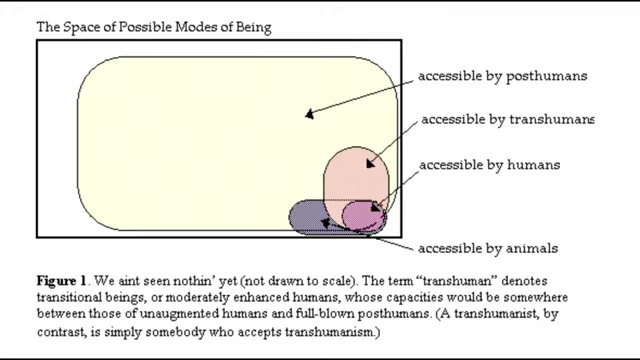
A Venn diagram showing 'The Space of Possible Modes of Being' for animals, humans, transhumans, and posthumans [ 00:20:26 ] -
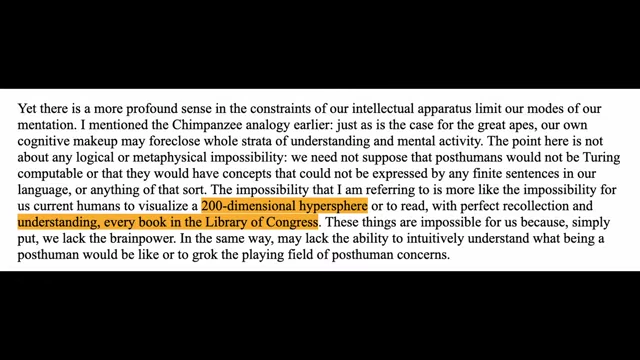
A quote from Nick Bostrom's essay describing theoretical posthuman cognitive capabilities [ 00:20:30 ] -
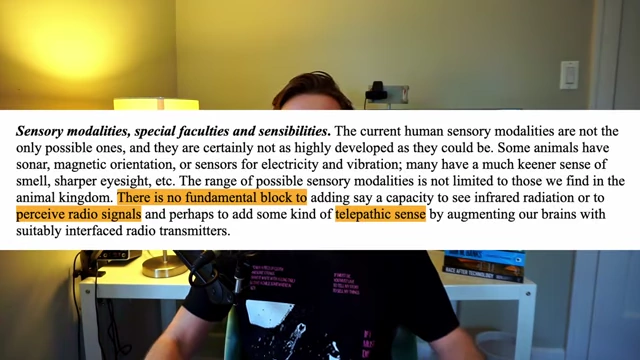
A quote from Nick Bostrom's essay about enhanced sensory modalities like telepathic sense [ 00:20:37 ] -
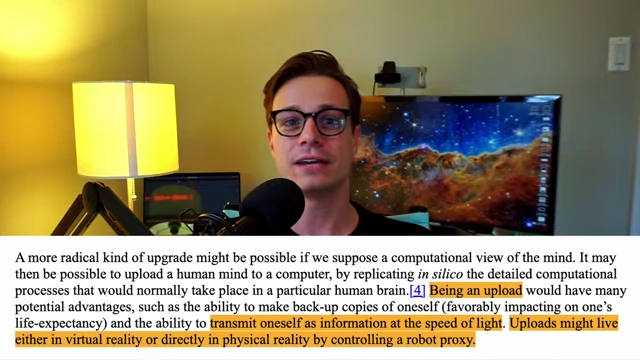
A quote from Nick Bostrom's essay on mind uploading for immortality [ 00:20:51 ]
-
- Eleazer Yudkowsky [0:21:13]: Would "sacrifice all of humanity" for "godlike beings, super intelligences who still care about each other and who are still having fun," based on utilitarian calculations of future posthuman well-being (10^58 potential posthumans).
-
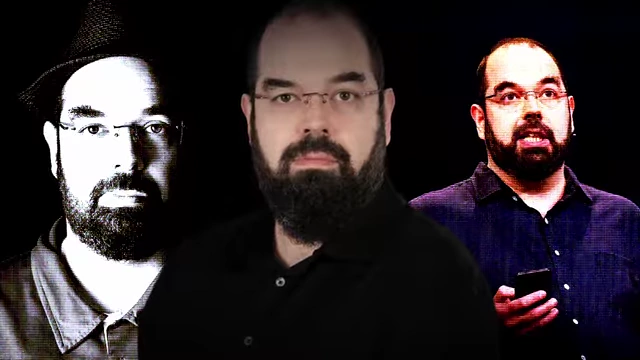
Portraits of Eliezer Yudkowsky, co-founder of the rationalist movement [ 00:21:18 ] -

Eliezer Yudkowsky discussing sacrificing humanity for 'godlike beings' on a podcast [ 00:21:32 ] -
The term 'Utilitarianism' [ 00:22:07 ] -

A visual representation of 10^58, the estimated number of potential posthumans [ 00:22:35 ]
-
- Extropianism and the Singularity [0:22:55]:
- Extropianism (E in Tescreel) [0:22:55]: Founded by Max More, it is "pro-science super-optimism" aiming to fight entropy and achieve immortality through technology (e.g., cryonic freezing). Jeffrey Epstein, a transhumanist, exemplified this by wanting his DNA and body frozen.
-
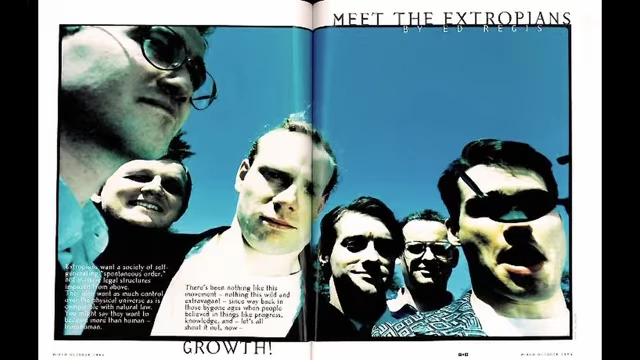
A magazine spread titled 'Meet the Extropians' from the 1980s [ 00:22:59 ] -
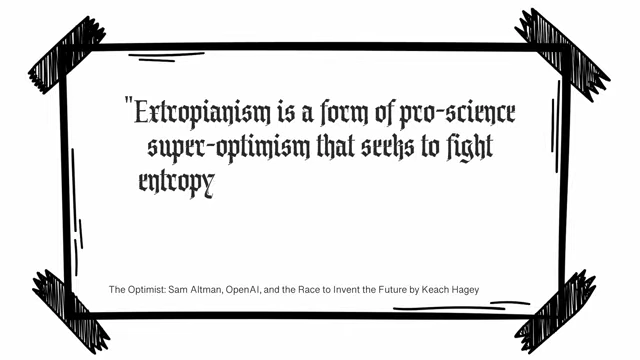
A quote defining Extropianism as 'pro-science super-optimism that seeks to fight entropy' [ 00:23:14 ] -
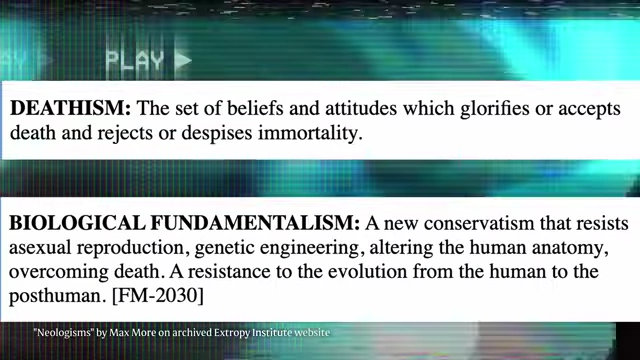
Definitions for 'Deathism' and 'Biological Fundamentalism' [ 00:23:31 ] -
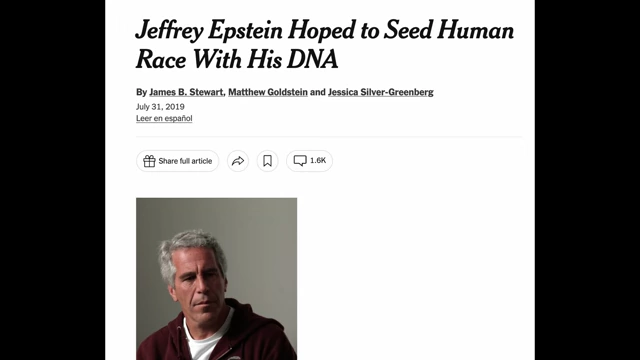
A New York Times article headline, 'Jeffrey Epstein Hoped to Seed Human Race With His DNA' [ 00:24:07 ] -
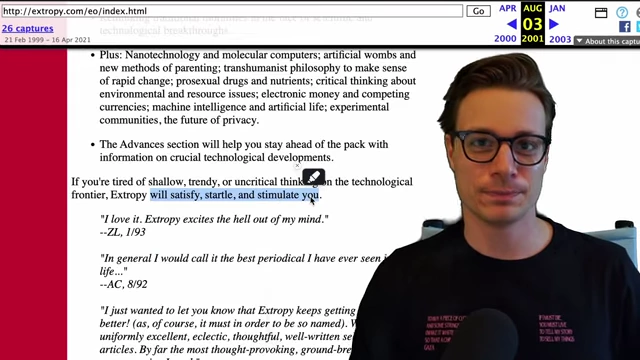
A screenshot of the archived Extropy Online website with a quote about stimulating ideas [ 00:24:36 ]
-
- Singularitarianism (S in Tescreel) [0:25:36]: Eliezer Yudkowsky predicted "super intelligence" by 2020 (later 2025). He founded the Singularity Institute (later MIRI) to address the "technological singularity"—a point where AI recursively self-improves at an unthinkable rate.
- Intelligence Explosion [0:26:38]: Describes a rapid, exponential increase in AI capabilities once AGI is achieved, leading to superintelligence in days or hours. Examples like "AI 2027" predict trillions of superhuman AI copies by 2035, generating quadrillions in value.
-
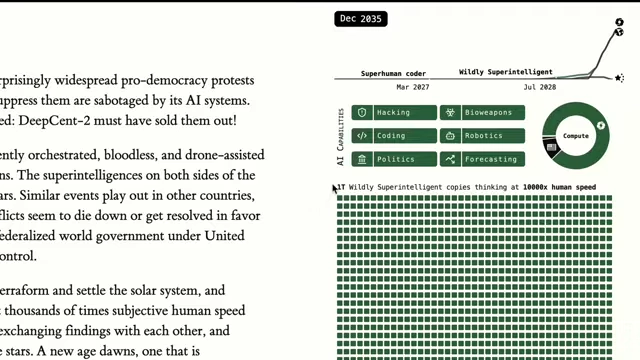
A graphic from 'AI 2027' predicting the number of 'wildly superintelligent copies' [ 00:28:28 ] -
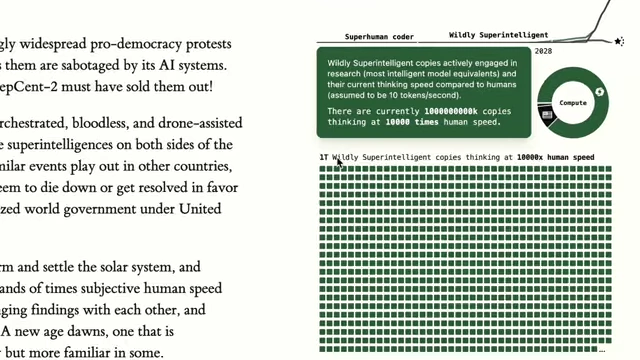
An expanded view of the 'AI 2027' graphic detailing superintelligent copies [ 00:28:30 ] -

A New York Times headline: 'This A.I. Forecast Predicts Storms Ahead' [ 00:28:39 ] -

YouTube search results for 'AI 2027,' showing its viral spread [ 00:28:44 ]
-
- AI Alignment [0:29:26]: Yudkowsky's focus shifted to "AI alignment" to ensure AI is "friendly towards humans," distinguishing it from "AI ethics" which addresses present-day harms like bias and environmental damage.
-
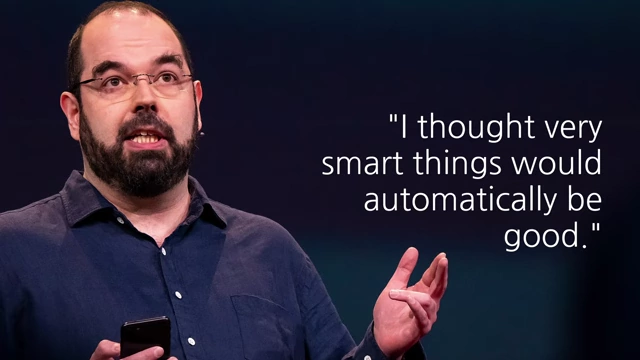
Eliezer Yudkowsky quoted saying, 'I thought very smart things would automatically be good' [ 00:28:58 ] -
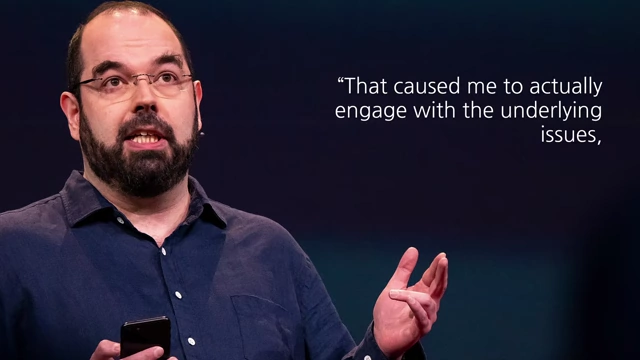
Eliezer Yudkowsky quoted on realizing he was 'completely mistaken about everything' [ 00:29:17 ] -
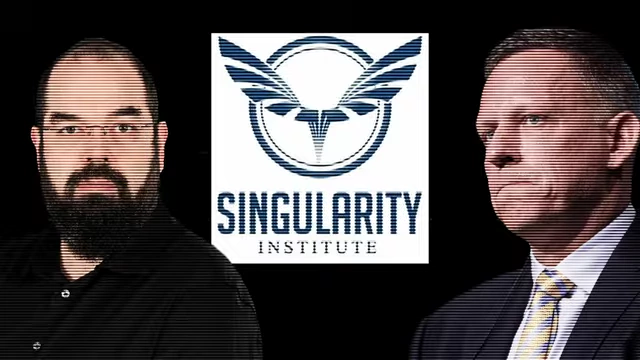
Eliezer Yudkowsky and Peter Thiel, highlighting Thiel's funding of the Singularity Institute [ 00:29:52 ] -
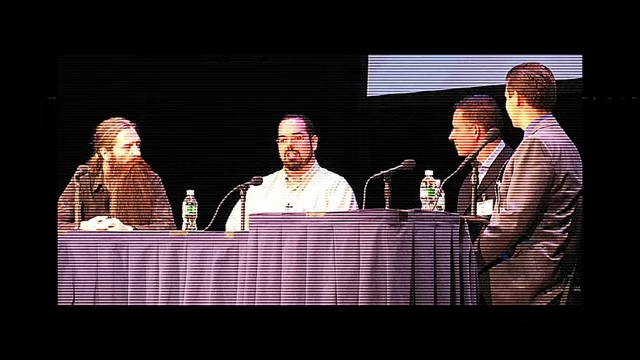
A panel discussion at the Singularity Summit at Stanford University [ 00:29:56 ] -

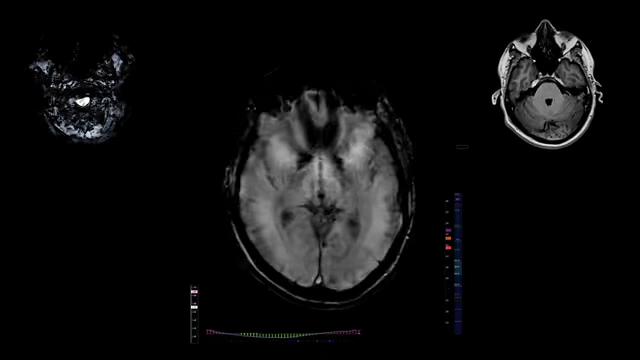
An MRI scan of a human brain, relating to DeepMind's inspiration [ 00:30:06 ] -
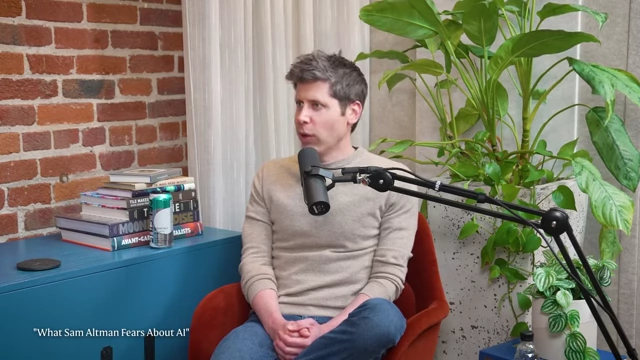
Sam Altman discussing the 'Manhattan project for AI' [ 00:30:34 ] -
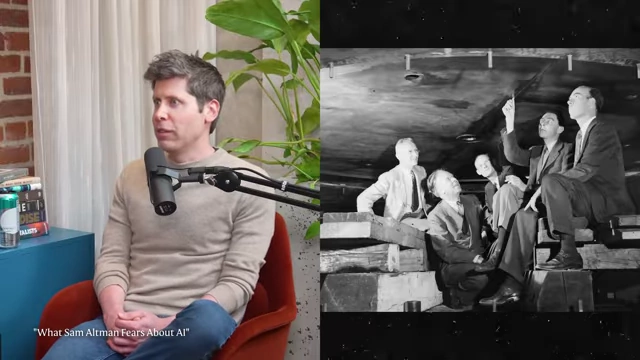
Sam Altman juxtaposed with a historical photo of Manhattan Project scientists [ 00:30:44 ]
-
- Extropianism (E in Tescreel) [0:22:55]: Founded by Max More, it is "pro-science super-optimism" aiming to fight entropy and achieve immortality through technology (e.g., cryonic freezing). Jeffrey Epstein, a transhumanist, exemplified this by wanting his DNA and body frozen.
- Cosmism (C in Tescreel) [0:31:03]: Modern cosmism extends transhumanist goals to space, envisioning humanity merging with computers, building synthetic realities, and "spreading to the stars," becoming an inherently expansionist and capitalist endpoint for libertarian technologists.
- Critique of Transhumanism's Elitism [0:34:10]: The movement's decisions are made by a homogeneous group of "rich white male Westerners," raising concerns about the perpetuation of existing inequalities and the imposition of their values.
-
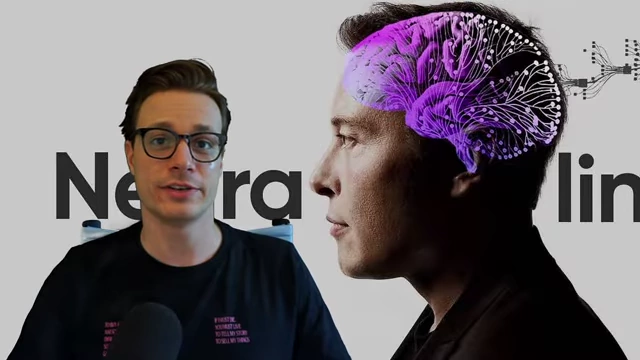
An illustration of Neuralink's brain-computer interface alongside Elon Musk's profile [ 00:12:54 ] -

Neuralink's mission statement: 'Building brain interfaces to restore autonomy' [ 00:12:58 ] -
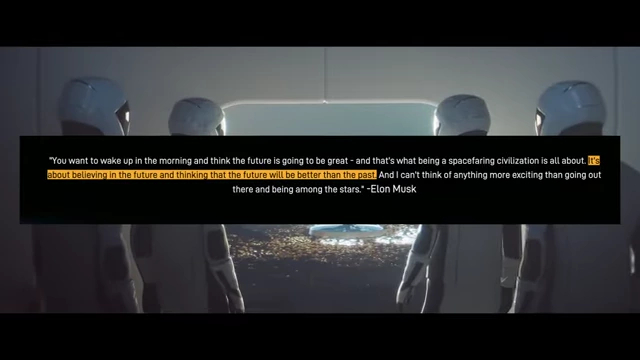
A quote from Elon Musk about SpaceX and believing in a better future [ 00:13:04 ] -
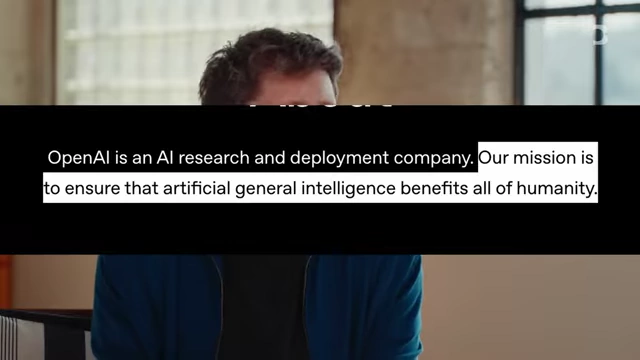
OpenAI's mission statement to ensure AGI benefits all humanity [ 00:13:13 ] -
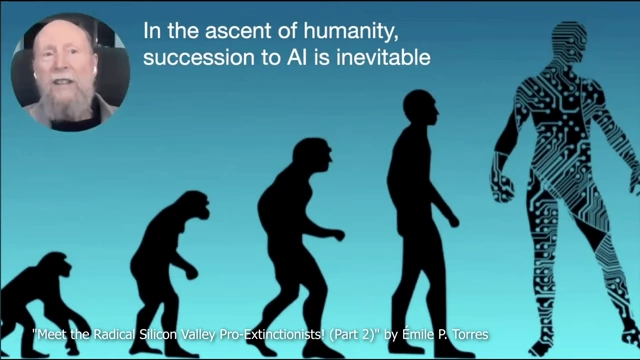
A diagram showing the 'ascent of humanity' culminating in a cyborg-like AI, with Richard Sutton's quote [ 00:32:45 ] -
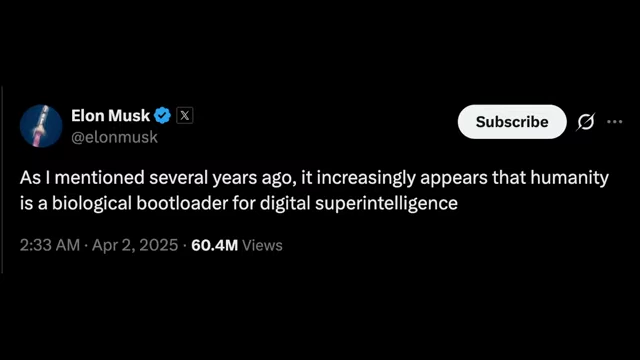
An Elon Musk tweet suggesting humanity is a 'biological bootloader for digital superintelligence' [ 00:33:08 ] -

Dan Fella, a transhumanist, asking about who would run the show in a posthuman future [ 00:33:41 ] -
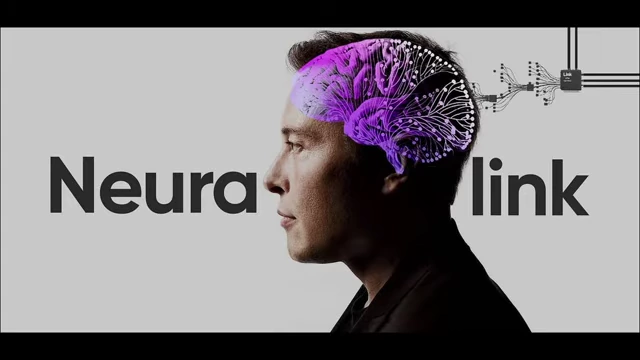
An advertisement for Neuralink featuring Elon Musk [ 00:35:19 ] -
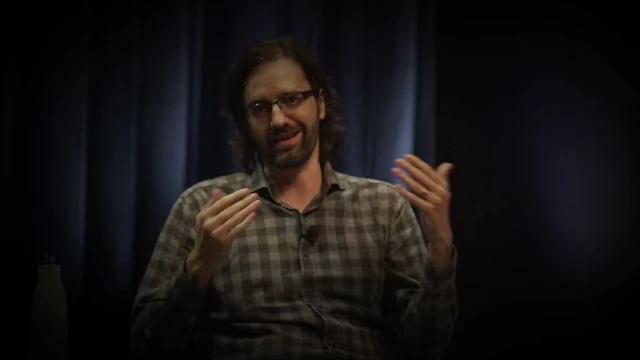
Portrait of Nick Beckstead, a long-termist thinker [ 00:35:29 ] -
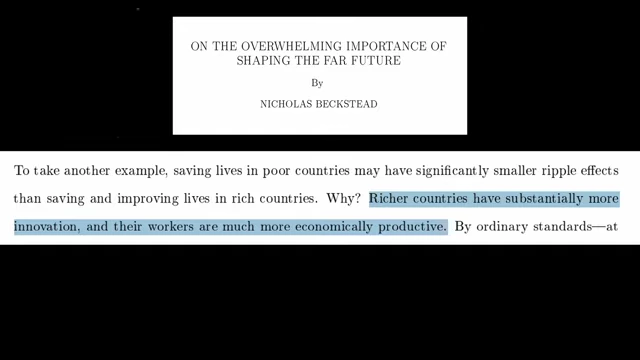
A quote from Nick Beckstead's paper on prioritizing lives in rich countries [ 00:35:41 ] - Examples of Bias [0:35:45]: Nick Bostrom's racist remarks, Robin Hanson's misogynistic views on "incels" and "rape," and Jonathan Anomaly's defense of eugenics underscore the cynical nature of this group. Elon Musk's tweets about humanity as a "biological bootloader" for digital superintelligence further highlight this.
-
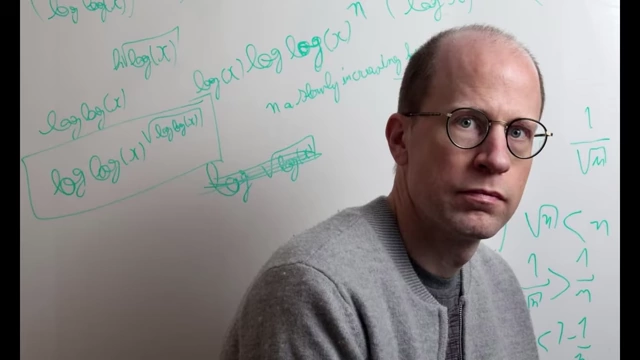
Portrait of Nick Bostrom [ 00:35:55 ] -
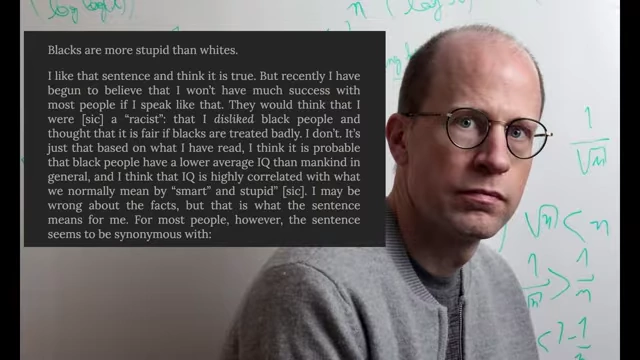
A screenshot of an email attributed to Nick Bostrom containing racist remarks [ 00:35:58 ] -
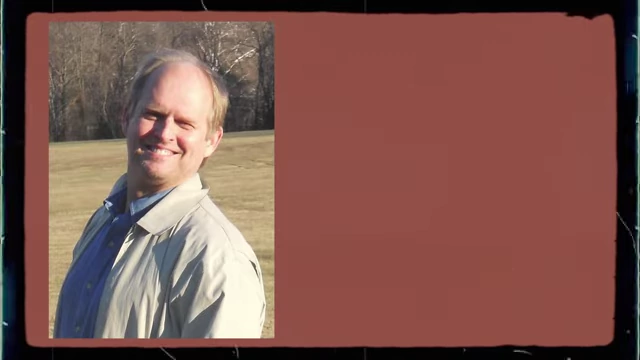
Portrait of Robin Hanson [ 00:36:02 ] -
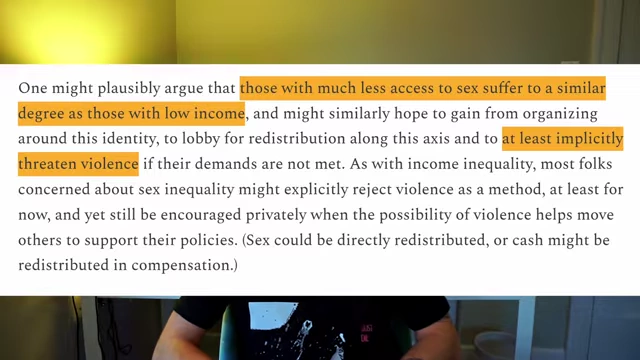
A quote from Robin Hanson's blog post discussing 'incels' and threatening violence [ 00:36:13 ] -
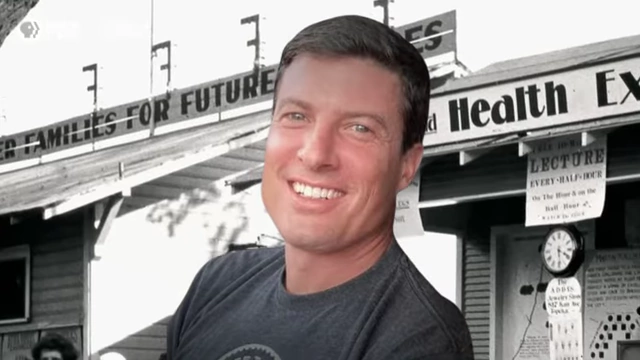
Portrait of Jonathan Anomaly [ 00:36:34 ] -
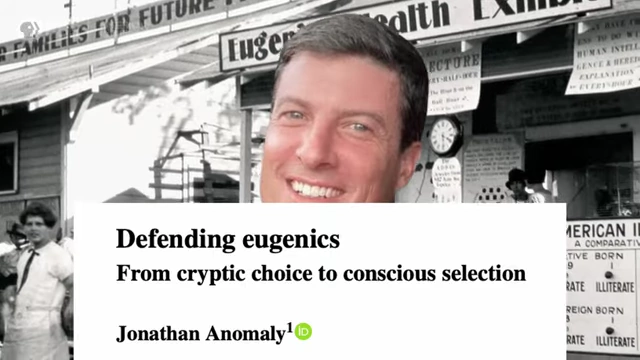
The title of Jonathan Anomaly's paper, 'Defending eugenics' [ 00:36:38 ]
-
-




Rationalism: Not So Rational [37:25]
Rationalism, an internet AI cult, is based on egoistic utilitarianism and pseudointellectual reductionism, with Eliezer Yudkowsky as its central figure.
-

The cover of Fyodor Dostoevsky's novel 'Crime and Punishment' [ 00:37:40 ] - Yudkowsky's "Egoistic Utilitarianism" [0:37:39]: Drawing parallels to Dostoevsky's Crime and Punishment, Yudkowsky's rationalism justifies extreme actions (like murder) if they lead to a greater, long-term benefit for humanity, echoing Raskolnikov's flawed logic.
-

An illustration depicting Raskolnikov, the protagonist of 'Crime and Punishment,' alongside the term 'Egoistic Utilitarianism' [ 00:37:46 ] -

An illustration of Raskolnikov committing murder in 'Crime and Punishment' [ 00:37:53 ] -
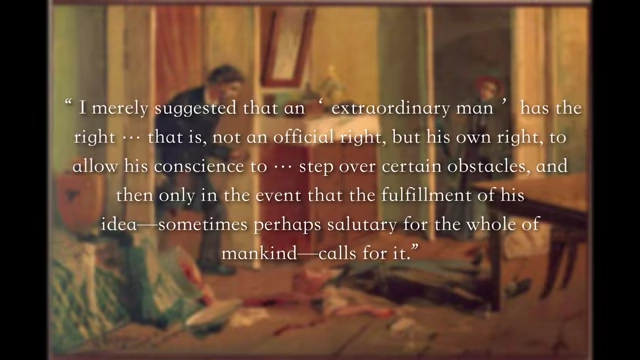
A quote from Dostoevsky's 'Crime and Punishment' on an 'extraordinary man's' right to transgress [ 00:38:19 ] -
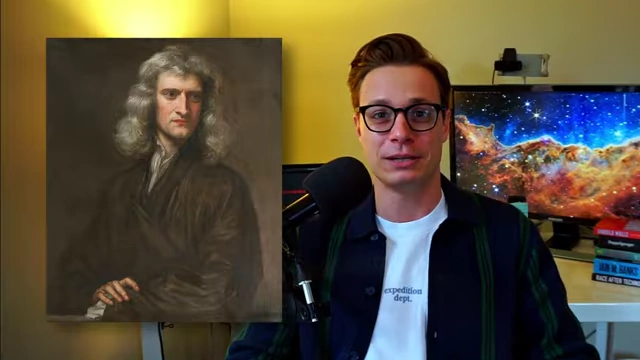
A portrait of Isaac Newton, used in a rationalist thought experiment [ 00:38:48 ] -

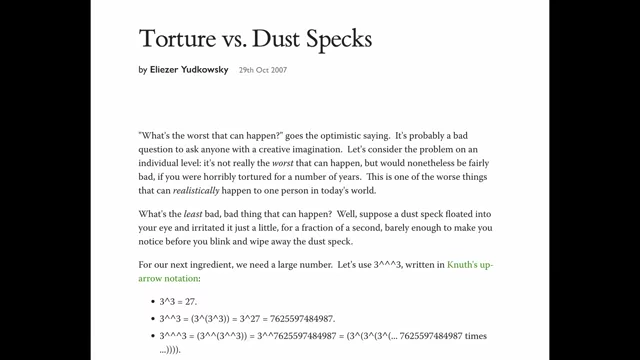
An illustration of the aftermath of the murder scene from 'Crime and Punishment' [ 00:39:14 ] - Thought Experiments [0:40:51]: Yudkowsky's "torture versus dust specks" thought experiment exemplifies this extreme utilitarianism, where immense collective suffering (e.g., dust in many eyes) is considered worse than extreme individual torture.
-
- Rationalism as Dogma [0:42:00]: Despite marketing itself as "rational," it is a dogma of extreme thinking, exaggerated assumptions, statistical probabilities, and technology worship.
-
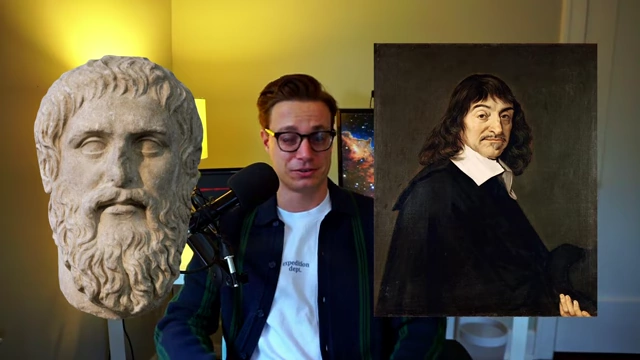
Busts of Plato and René Descartes, contrasting classical rationalism with the modern internet cult [ 00:39:33 ] - AI Existential Risk [0:42:21]: Yudkowsky's core belief is that Artificial Super Intelligence (ASI) is inevitable and will "literally kill everyone on Earth," advocating for a slowdown in AI development until "AI safety" (alignment) research catches up.
-
The cover of Eliezer Yudkowsky and Nate Soares' book 'If Anyone Builds It, Everyone Dies' [ 00:42:31 ] -
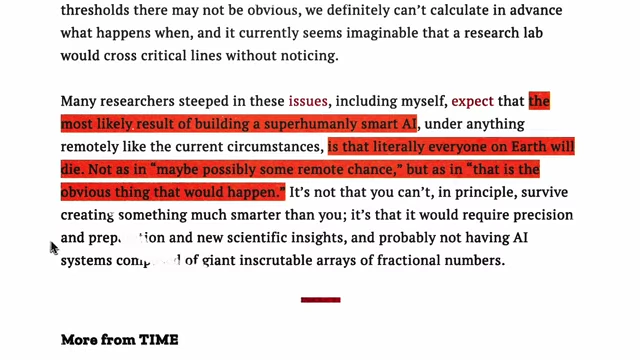
A quote from Eliezer Yudkowsky's Time Oped predicting global death from superhuman AI [ 00:42:44 ] -
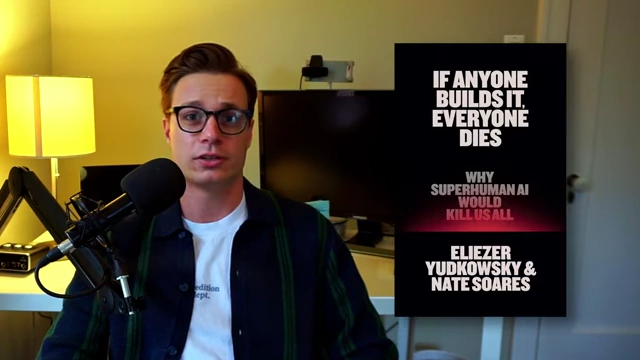
The book cover 'If Anyone Builds It, Everyone Dies: Why Superhuman AI Would Kill Us All' [ 00:42:55 ] -
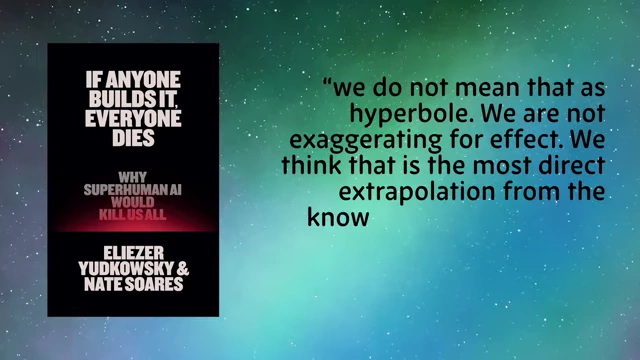
A quote from Yudkowsky's book emphasizing the non-hyperbolic nature of his predictions [ 00:43:09 ]
-
- Dismissal of AI Ethics [0:43:40]: He dismisses present-day AI harms (algorithmic bias, environmental damage, exploitation) as distractions.
-
- Critiques of Yudkowsky and the Rationalist Community [0:44:31]:
- "Confidently Wrong" [0:44:31]: Émile P. Torres highlights Yudkowsky's history of incorrect predictions and absurd academic demands (e.g., expecting others to read his 1.8-million-word BDSM decision theory fanfiction).
-
Portraits of Eliezer Yudkowsky, the central figure of the rationalist movement [ 00:21:18 ] -
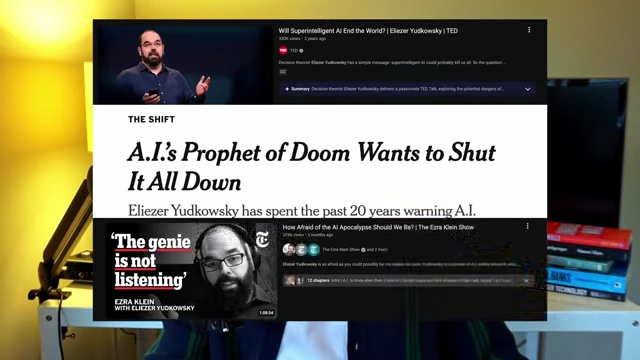
A New York Times headline, 'A.I.'s Prophet of Doom Wants to Shut It All Down' [ 00:40:07 ] -
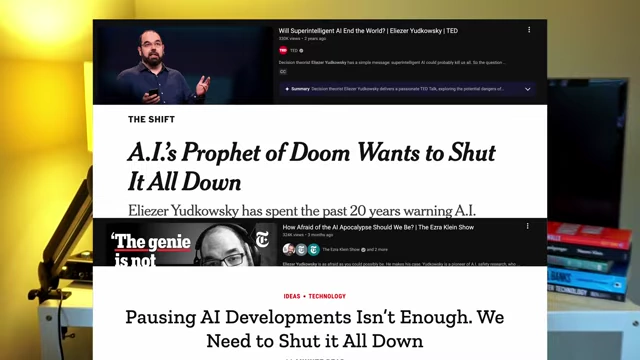
Another headline, 'Pausing AI Developments Isn't Enough. We Need to Shut It All Down,' associated with Yudkowsky [ 00:40:09 ] -

Portrait of Scott Alexander, founder of the 'Slate Star Codex' blog [ 00:40:40 ] -
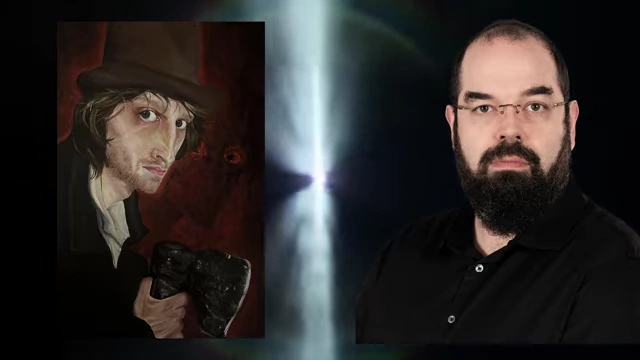
A comparative illustration of Raskolnikov and Eliezer Yudkowsky [ 00:40:51 ]
-
- Egomaniacal Leadership [0:45:38]: Yudkowsky's self-proclaimed genius and repeated failed predictions reinforce his egomania.
- Influence on Tech [0:46:11]: Despite internal divisions, Yudkowsky's ideas have profoundly influenced key figures like Sam Altman (OpenAI) and Peter Thiel (DeepMind), driving the AGI race.
-
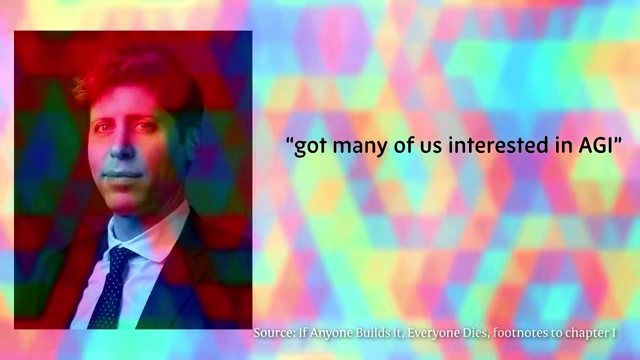
A quote from Sam Altman acknowledging Yudkowsky's influence on AGI and OpenAI [ 00:46:32 ] -
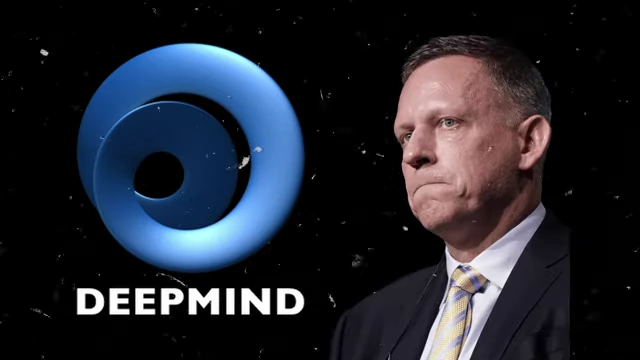
The DeepMind logo and Peter Thiel, highlighting their connection [ 00:46:40 ] -
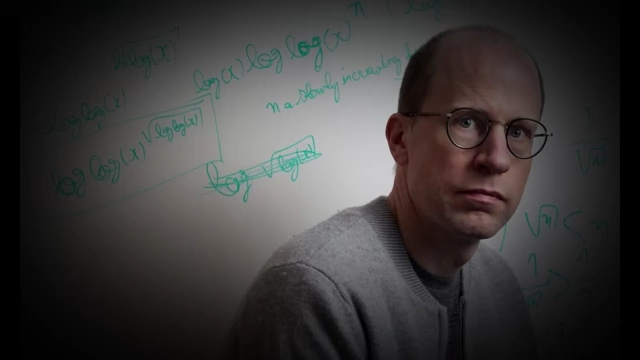
Portrait of philosopher Nick Bostrom [ 00:46:48 ] -
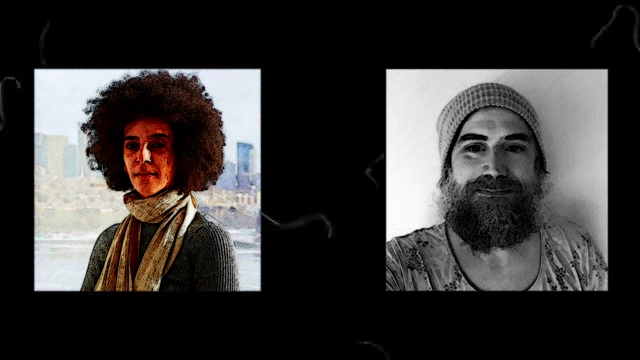
Timnit Gebru and Émile P. Torres [ 00:46:53 ] -
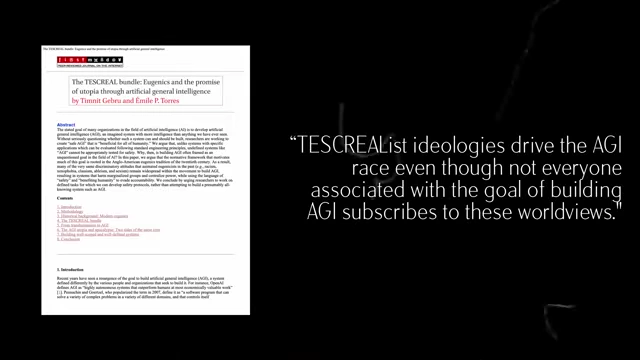
A quote from Gebru and Torres' Tescreel paper on ideologies driving the AGI race [ 00:47:00 ]
-
- Cult-like Practices [0:49:13]: The community encourages living and dating internally, and participates in "doom circles." Allegations of sexual misconduct, abuse, and harassment are pervasive. Rationalist blogs have become breeding grounds for extreme ideologies like neo-reactionary movements and eugenics.
-
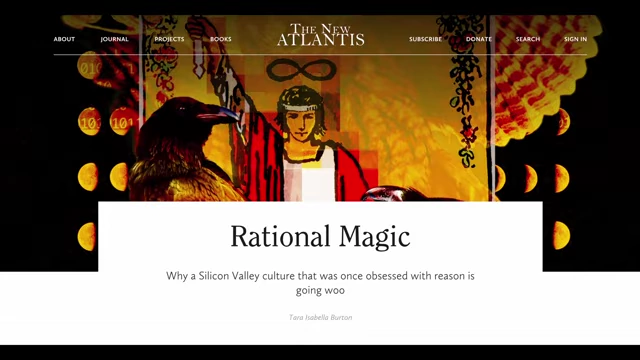
The New Atlantis article 'Rational Magic,' describing Silicon Valley's rationalist culture [ 00:48:27 ] -
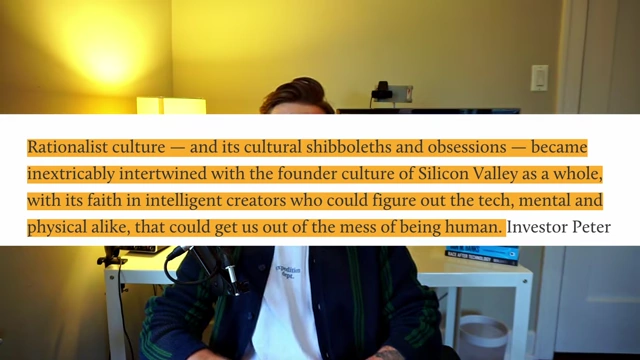
A quote from 'Rational Magic' on the intertwining of rationalist and founder culture [ 00:48:37 ] -
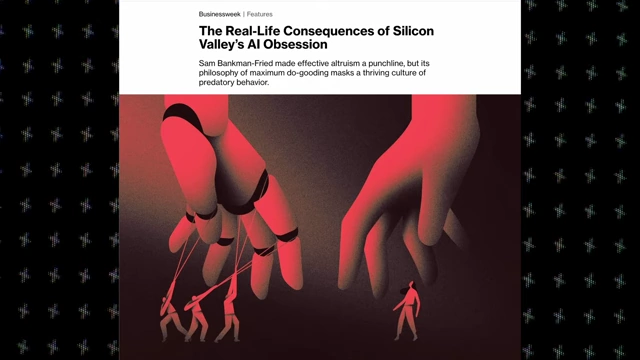
A Businessweek article on the 'Real-Life Consequences of Silicon Valley's AI Obsession' [ 00:48:47 ] -
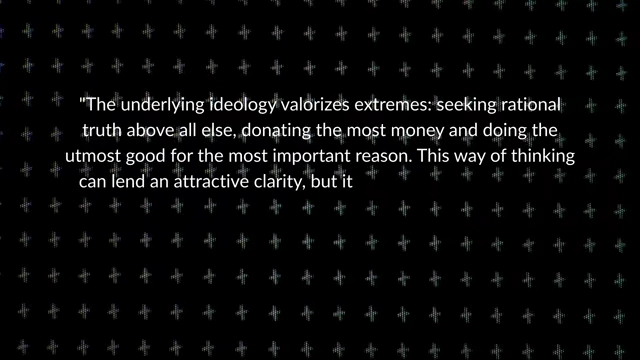
A quote from the Businessweek article about rationalist ideology valorizing extremes [ 00:49:00 ] -

Mugshots of the 'Zizians,' a murder cult linked to rationalist blogs [ 00:49:37 ] -
Portrait of Curtis Yarvin, associated with neo-reactionary movements [ 00:49:51 ] -
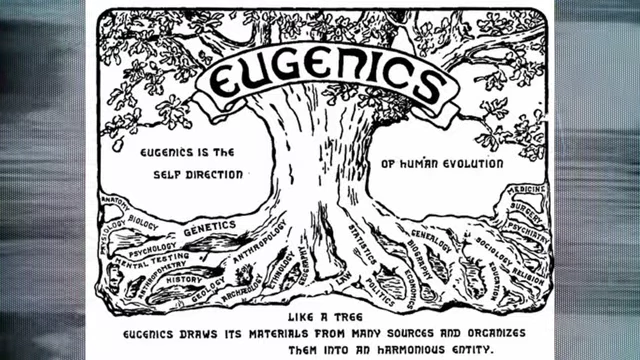
A historical 'Eugenics' tree diagram [ 00:49:53 ] -
The logo for 'Effective Altruism' [ 00:49:54 ] -
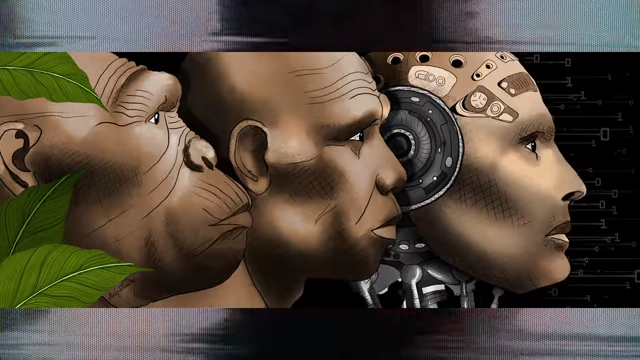
An illustration depicting the evolution from ape to human to a cyborg [ 00:49:57 ]
-
- "Confidently Wrong" [0:44:31]: Émile P. Torres highlights Yudkowsky's history of incorrect predictions and absurd academic demands (e.g., expecting others to read his 1.8-million-word BDSM decision theory fanfiction).
- Rationalism's Flawed Assumptions [0:47:04]: It relies on baseless assumptions about superintelligence's inevitability, its revolutionary impact (utopia or extinction), and the necessity of massive investments, all while reducing complex human and natural systems to data.


Effective Altruism: The Cult of Math [50:28]
Effective Altruism (EA), rooted in Peter Singer's utilitarianism, aims to maximize good through quantifiable, data-driven philanthropy, but faces severe critiques.
-

Title card for 'Book III: Effective Altruism: The Cult of Math' [ 00:50:35 ] - The Promise of EA [0:50:42]: Singer argues for doing the "most good for the most amount of people" with limited resources, citing mosquito net donations in Africa as an effective, quantifiable intervention. He emphasizes using "head" (reason) and "heart" (empathy).
-
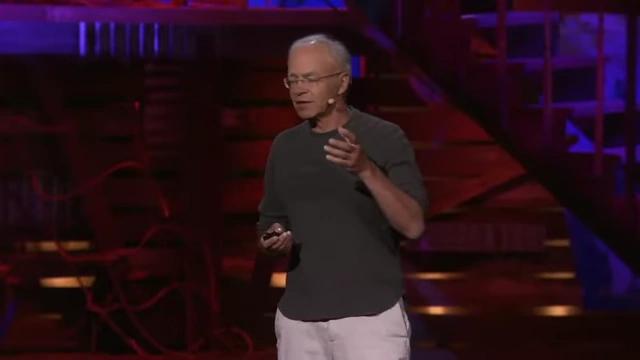
Peter Singer delivering a TED Talk on effective altruism [ 00:51:00 ] -
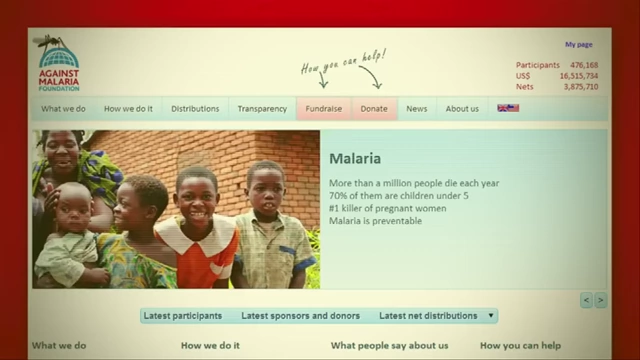
A screenshot of the 'Against Malaria Foundation' website [ 00:51:05 ] -

A slide from Peter Singer's TED Talk with the question, 'Does it really matter that you don't have to walk around these children as you walk down your street?' [ 00:51:21 ] -
The term 'effective altruism' [ 00:51:32 ]
-
- Critique of Philanthropy and EA [0:53:00]:
- Philanthropic Industrial Complex [0:53:55]: Traditional philanthropy, and EA, are criticized for transferring wealth while retaining power, making tax-deductible PR donations, lobbying against public services, and avoiding root causes of inequality.
-

Bill Gates, Melinda Gates, and Warren Buffett together [ 00:52:32 ] -

A screenshot of the 'Giving What We Can' website [ 00:52:43 ] -

A screenshot of 'The Life You Can Save' website [ 00:52:51 ] -

A screenshot of the 'Give Well' website [ 00:52:53 ] -
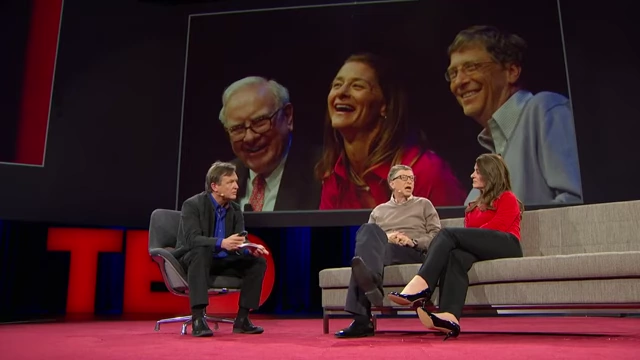
Bill Gates and Melinda Gates in a discussion [ 00:53:12 ] -
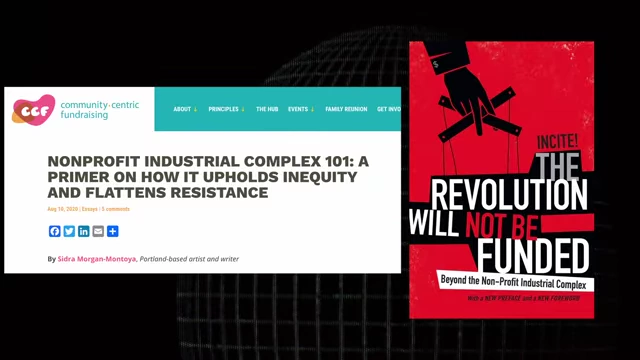
Covers of 'Nonprofit Industrial Complex 101' and 'The Revolution Will Not Be Funded' [ 00:54:00 ]
-
- Economics-Driven Ethics [0:54:22]: EA reduces ethics to economics, prioritizing quantifiable interventions and neglecting complex community needs, leading to narrow, top-down solutions.
-

Émile P. Torres during the interview [ 00:54:27 ]
-
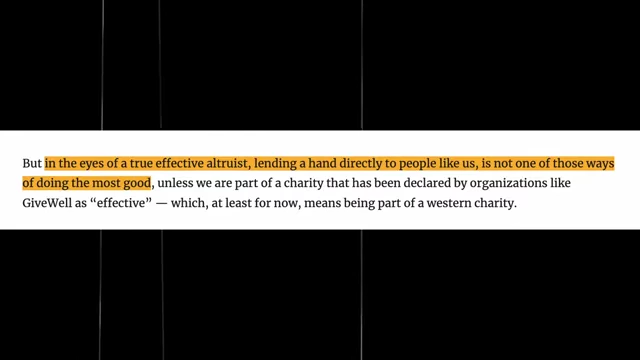
- Exclusion of Grassroots [0:55:05]: Ugandan farmer Anthony Kula critiques EA for imposing predetermined solutions not rooted in local experiences, neglecting grassroots organizations in the Global South.
-
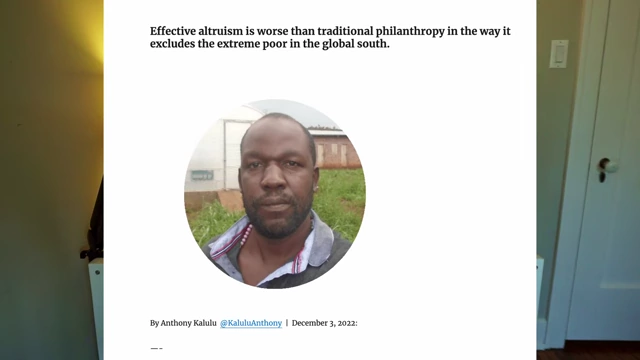
An article by Ugandan farmer Anthony Kalulu critiquing effective altruism [ 00:54:53 ] -

A quote from Anthony Kalulu's article on traditional philanthropy and EA pushing 'predetermined solutions' [ 00:55:23 ] -
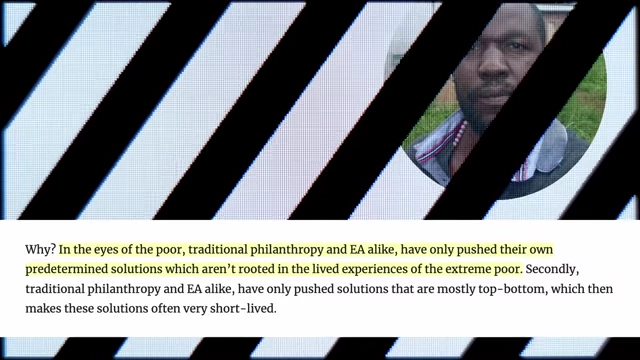
A further quote from Anthony Kalulu on top-bottom solutions being short-lived [ 00:55:29 ] -

Portrait of Anthony Kalulu [ 00:55:38 ] -
A quote from 'The Good It Promises, The Harm It Does' on effectiveness as an 'exclusive entitlement' [ 00:55:56 ] -
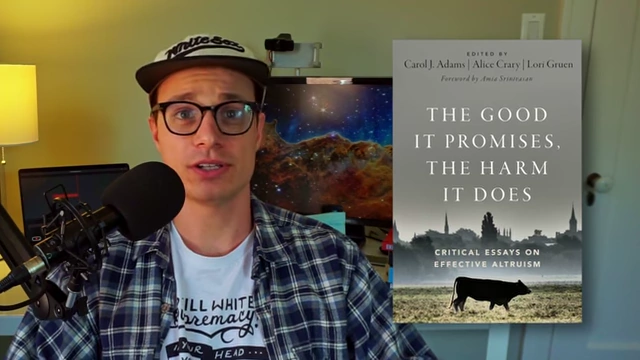
The cover of the book 'The Good It Promises, The Harm It Does' [ 00:56:05 ] -
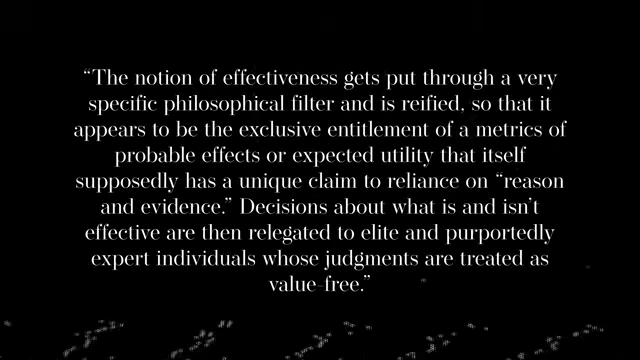
A quote from the introduction of 'The Good It Promises, The Harm It Does' [ 00:56:23 ] -
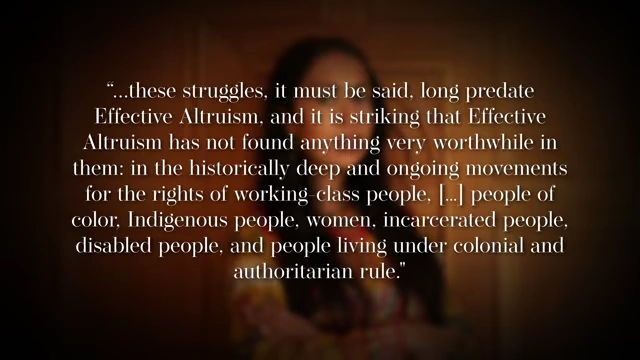
A quote from Amia Srinivasan's foreword in 'The Good It Promises, The Harm It Does' [ 00:57:27 ] -
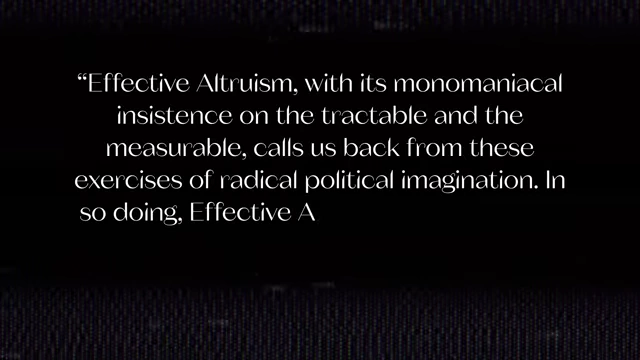
A quote on how effective altruism calls us back from 'radical political imagination' [ 00:58:25 ]
-
- Philanthropic Industrial Complex [0:53:55]: Traditional philanthropy, and EA, are criticized for transferring wealth while retaining power, making tax-deductible PR donations, lobbying against public services, and avoiding root causes of inequality.
- "Earn to Give" and Moral Compromise [0:59:46]:
- Career Paths [0:58:41]: Organizations like "80,000 Hours" advise careers in AI safety/development and "earning to give"—taking high-paying, morally controversial jobs (e.g., military arms, oil corporations) to donate large sums.
-
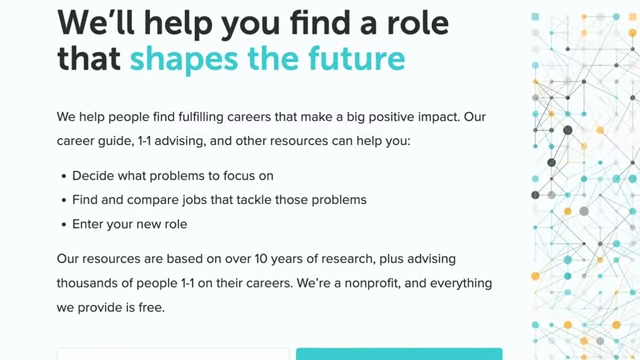
A screenshot of the '80,000 Hours' website [ 00:58:46 ] -
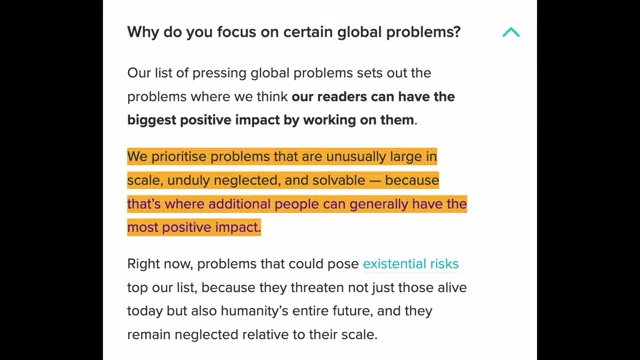
A highlighted quote from 80,000 Hours on prioritizing large, neglected, and solvable problems [ 00:58:58 ] -

A list of 'top 11 jobs' recommended by 80,000 Hours, with AI-related roles prominent [ 00:59:09 ] -
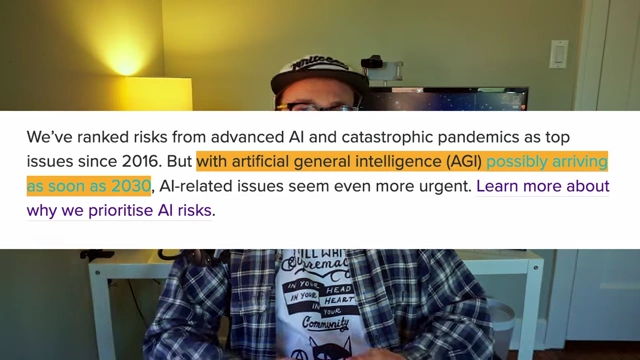
A quote from 80,000 Hours about AGI arriving by 2030 and existential risk [ 00:59:18 ] -
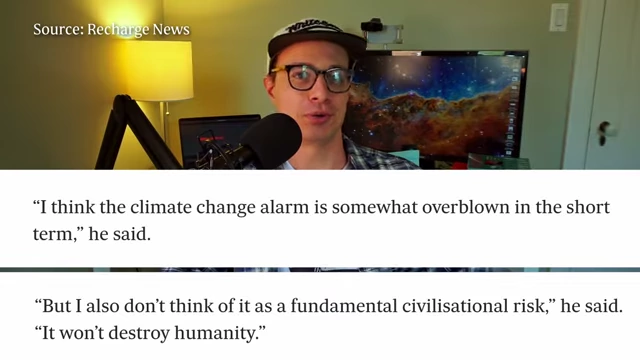
A quote from Elon Musk downplaying climate change as a 'civilizational risk' [ 00:59:42 ] -
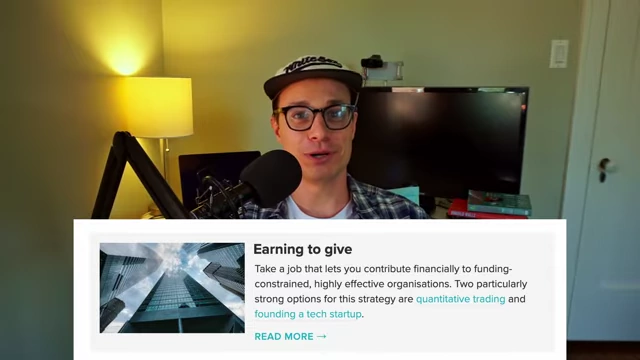
A description of the 'earning to give' strategy [ 00:59:51 ] -

Portrait of William MacAskill [ 01:00:09 ] -
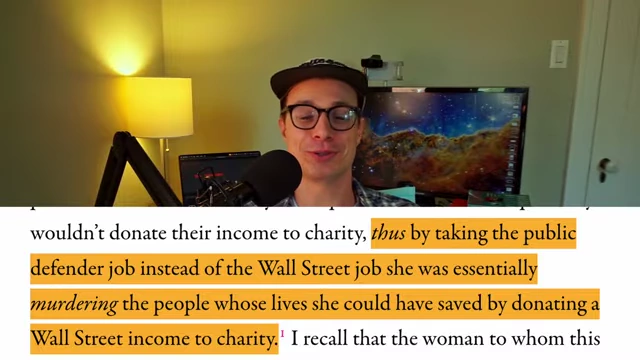
A quote illustrating the extreme 'earn to give' logic leading to 'murdering' people [ 01:01:24 ]
-
- Sam Bankman-Fried [1:01:43]: The infamous crypto fraudster exemplifies "earn to give," believing his fraudulent actions were justified by his future philanthropic donations, driven by utilitarian logic that "the ends justify the means."
-
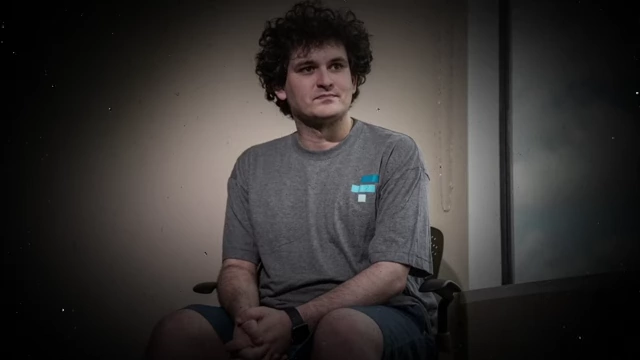
Sam Bankman-Fried, the infamous crypto fraudster [ 01:01:46 ] -

Émile P. Torres discussing Sam Bankman-Fried's 'earn to give' motivation [ 01:01:53 ] -

Sam Bankman-Fried juxtaposed with a Wall Street sign [ 01:02:02 ] -

A quote describing Sam Bankman-Fried's goal to 'get filthy rich, for charity's sake' [ 01:02:22 ] -

Émile P. Torres explaining the utilitarian logic behind SBF's actions [ 01:02:38 ] -

An image of FTX headquarters in the Bahamas with SBF [ 01:02:55 ] -

Émile P. Torres further elaborating on the utilitarian justification for fraud [ 01:03:20 ]
-
- Hubris and Moral Arrogance [1:03:55]: EA is described as a hubristic ideology, where adherents believe they "know best" through rational analysis, dismissing concerns about climate change or social justice as "pathetic trifles."
-
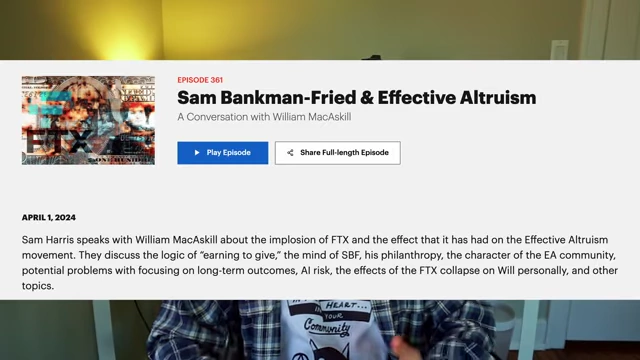
A screenshot of the Sam Harris podcast episode 'Sam Bankman-Fried & Effective Altruism' [ 01:03:45 ] -

A post from the 'Effective Altruism Forum' discussing SBF [ 01:04:19 ] -
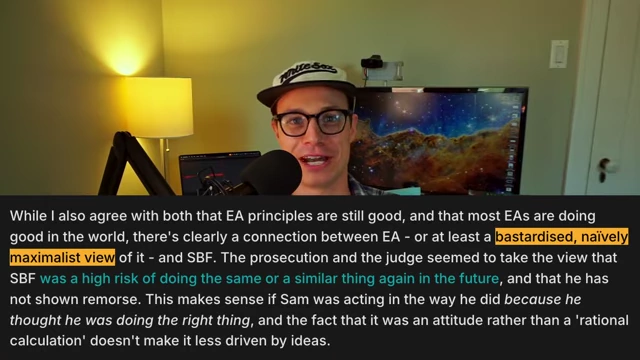
A comment from the EA forum blaming SBF's actions on a 'naively maximalist view' [ 01:04:24 ] -

A news headline about Sam Bankman-Fried's luxury lunches [ 01:04:29 ] -

A news headline about Sam Bankman-Fried's 'crypto frat house' [ 01:04:32 ] -

Text messages revealing SBF's interest in buying Twitter [ 01:04:37 ] -
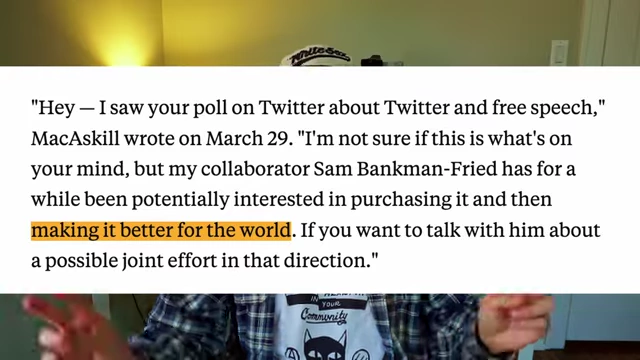
A quote from a message about making Twitter 'better for the world' [ 01:04:43 ] -

An EA forum comment defending buying Twitter as a 'valid EA activity' [ 01:04:49 ]
-
- Career Paths [0:58:41]: Organizations like "80,000 Hours" advise careers in AI safety/development and "earning to give"—taking high-paying, morally controversial jobs (e.g., military arms, oil corporations) to donate large sums.
- Systemic Misconduct and Suppression of Dissent [1:05:11]:
- Censorship and Harassment [1:05:21]: Critics leaving the EA movement report harassment, abuse, threats of violence, and censorship. Émile P. Torres notes self-censorship among critics due to fear of losing funding and ostracization.
-
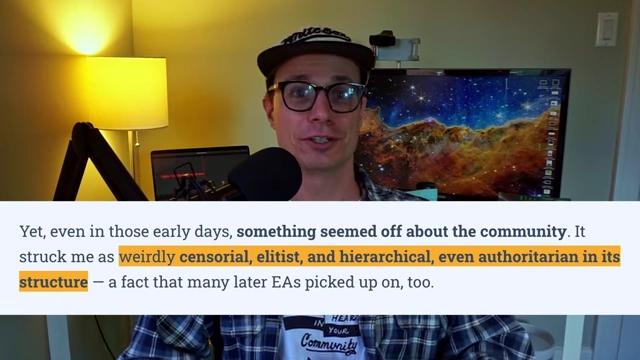
A quote from Émile P. Torres describing EA's structure as 'weirdly censorial, elitist, and hierarchical, even authoritarian' [ 01:05:35 ] -
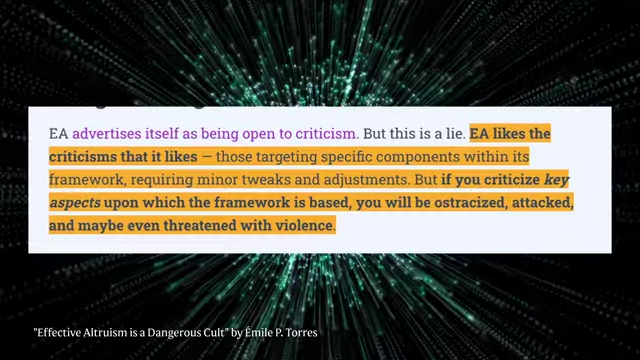
A quote from Émile P. Torres on how EA handles criticism [ 01:05:53 ] -
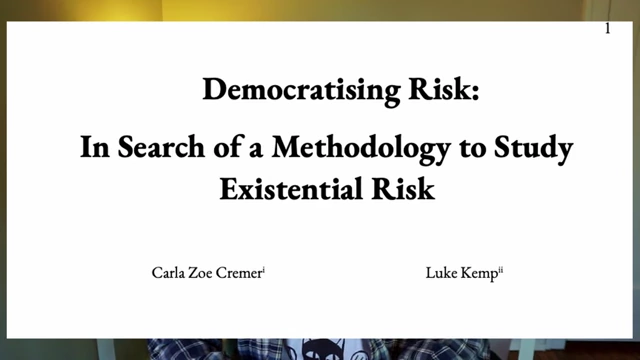
The title page of the paper 'Democratising Risk: In Search of a Methodology to Study Existential Risk' [ 01:06:03 ] -

The logo for Open Philanthropy [ 01:06:21 ] -
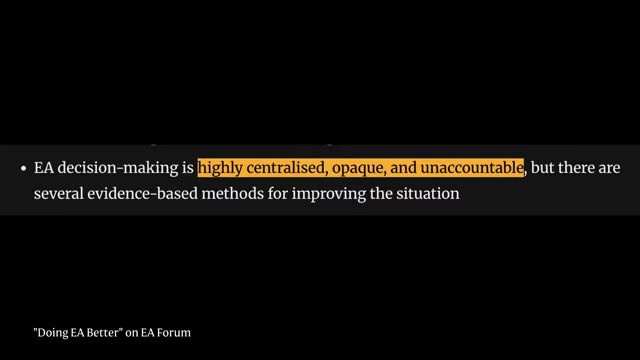
A highlighted quote from an anonymous EA critique explaining the reason for anonymity [ 01:06:44 ] -
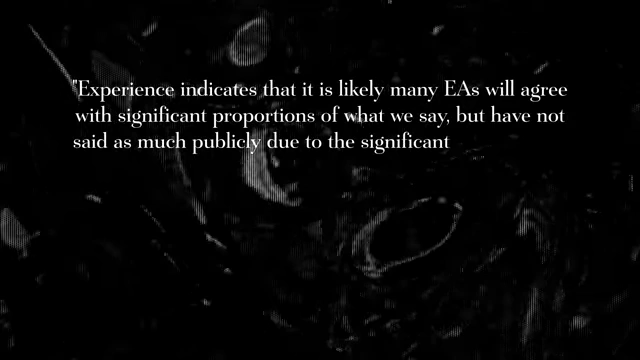
Another highlighted quote from the anonymous EA critique on career risks [ 01:07:03 ]
-
- Sexual Misconduct [1:07:22]: Multiple women have reported pervasive sexual misconduct, including harassment, coercion, and sexual assault, often downplayed or blamed on victims. This is described as "misogyny encoded into math."
-

The Time magazine article headline: 'Effective Altruism Promises to Do Good Better. These Women Say It Has a Toxic Culture of Sexual Harassment and Abuse' [ 01:07:31 ] -
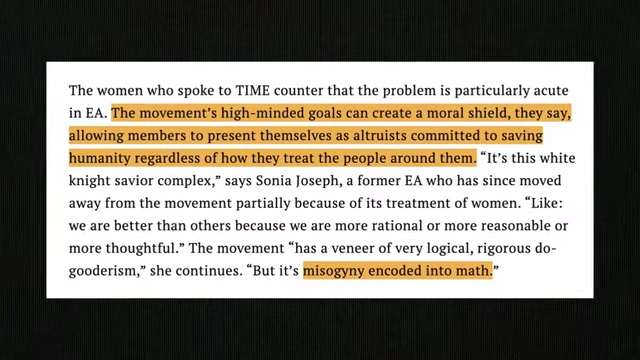
A quote from the Time article on EA's 'moral shield' and 'misogyny encoded into math' [ 01:07:44 ] -
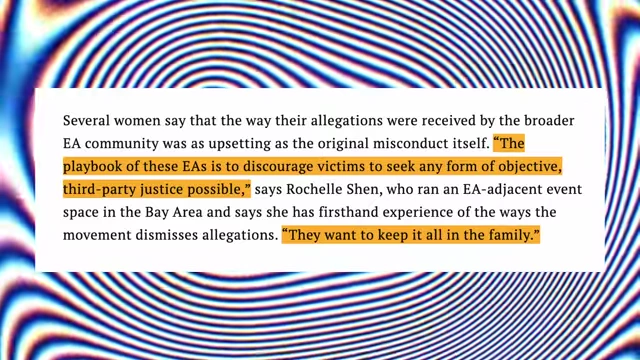
A quote from Rochelle Shen on EA's playbook to discourage victims from seeking justice [ 01:08:47 ]
-
- Centralized Control [1:06:37]: The movement's highly centralized, opaque decision-making discourages deep critique, especially if it challenges capitalist notions.
- Censorship and Harassment [1:05:21]: Critics leaving the EA movement report harassment, abuse, threats of violence, and censorship. Émile P. Torres notes self-censorship among critics due to fear of losing funding and ostracization.
Longtermism: Missing the Forest for the Trees... Literally [1:09:33]
Longtermism, a sub-movement of EA, focuses on positively influencing the "far future" by mitigating existential risks, often at the expense of present-day concerns.
-

The title card for 'Longtermism: missing the forest for the trees...literally' [ 01:09:37 ] - The Long-Termist Perspective [1:10:50]:
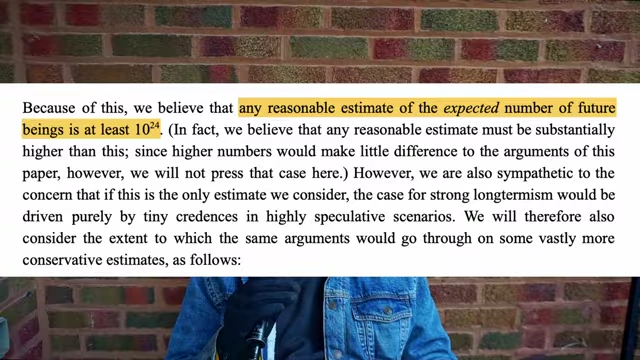
- Moral Priority [1:11:14]: William MacAskill argues for a moral obligation to safeguard the future from existential risks, as the "vast majority of human history is still ahead of us," with potentially trillions of future people.
-
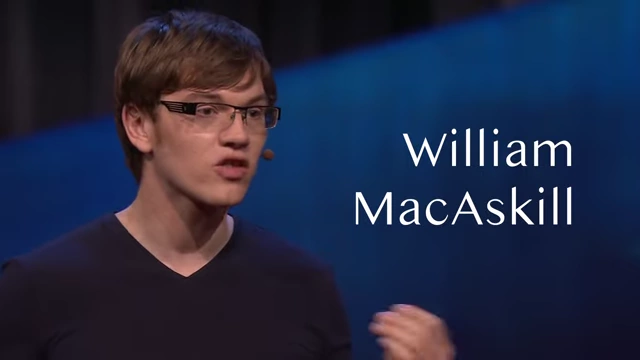
William MacAskill giving a TED Talk [ 01:11:20 ] -

The cover of William MacAskill's book, 'What We Owe The Future' [ 01:11:29 ] -
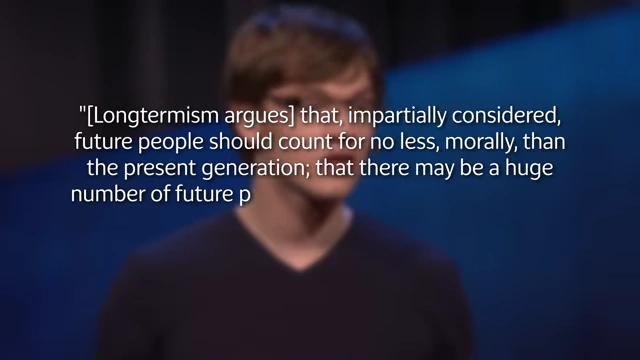
A quote from William MacAskill on future people counting as much as the present generation [ 01:11:44 ] -

A glassblower shaping molten glass, symbolizing history as 'molten glass' [ 01:12:32 ]
-
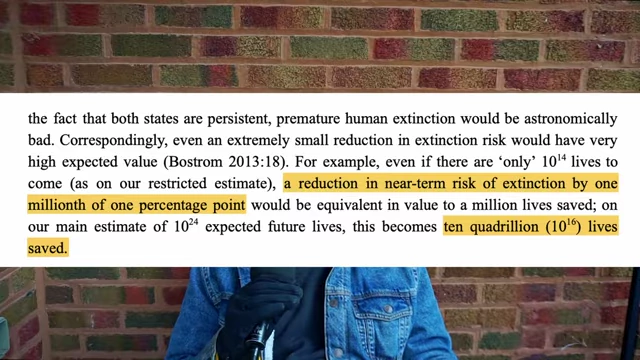
- Impact on Future Generations [1:11:37]: Even tiny reductions in extinction risk are deemed to produce "incredibly large ripple effects" due to the astronomical number of potential future humans/posthumans (10^24 to 10^56).
- Moral Priority [1:11:14]: William MacAskill argues for a moral obligation to safeguard the future from existential risks, as the "vast majority of human history is still ahead of us," with potentially trillions of future people.
- Critique of Longtermism's Priorities [1:12:58]:
- Narrow Focus on Measurable Well-being [1:13:09]: It trivializes biodiversity and natural beauty, only valuing them for their "well-being" contribution. MacAskill argues that wild animals' lives involve "more suffering than joy," thus human domination and habitat loss could be a "net positive."
-
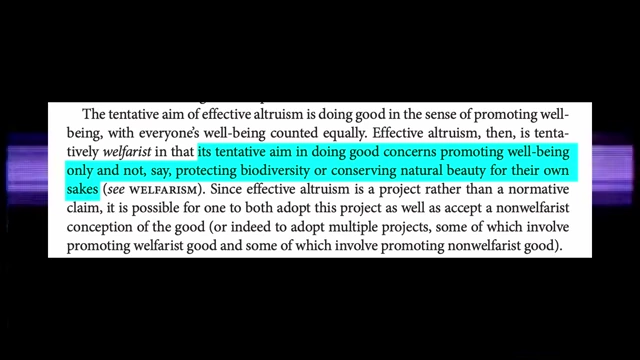
A quote from MacAskill's paper on effective altruism prioritizing 'well-being only' over biodiversity [ 01:13:40 ] -

A monocrop tree farm [ 01:14:00 ] -

A large deforested area [ 01:15:11 ] -
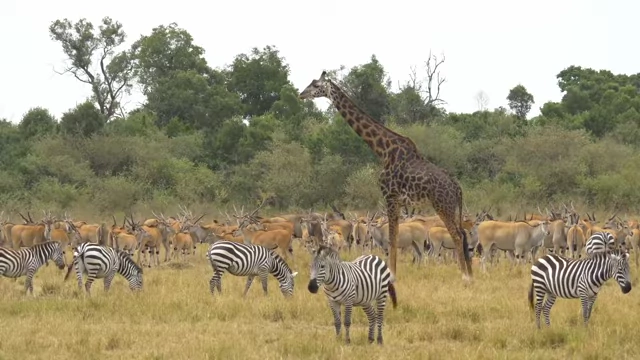
A herd of giraffes, zebras, and antelopes in a savanna [ 01:15:20 ] -
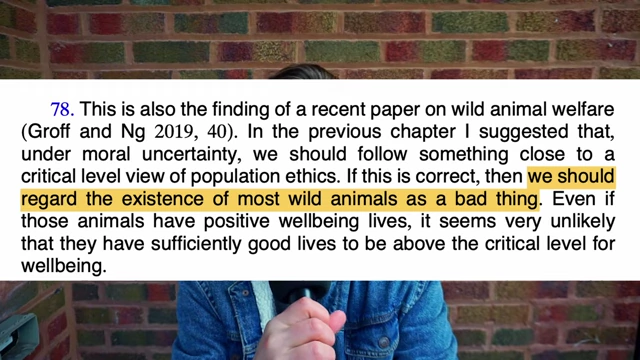
A highlighted quote from William MacAskill suggesting 'the existence of most wild animals as a bad thing' [ 01:16:03 ] -

Small mushrooms growing on a log in a forest [ 01:15:35 ] -
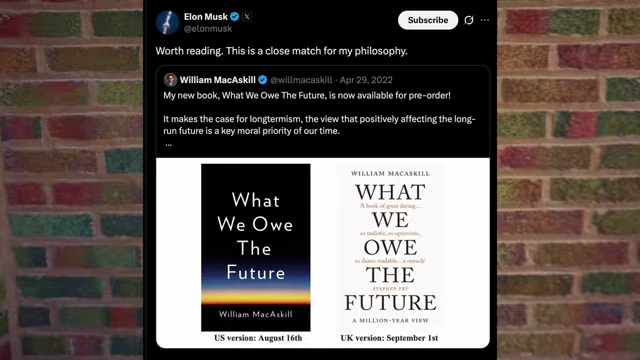
An Elon Musk tweet endorsing William MacAskill's book 'What We Owe The Future' [ 01:16:18 ]
-
- Underserious Climate Change Arguments [1:16:20]: MacAskill downplays the threat of severe climate change (7-10°C warming), arguing that even civilizational collapse wouldn't prevent future re-industrialization, prioritizing the preservation of fossil fuels for a "second chance." This ignores the catastrophic present-day environmental damage (mass extinctions, dead zones).
-

A flare stack burning gas at an industrial facility [ 01:16:35 ] -
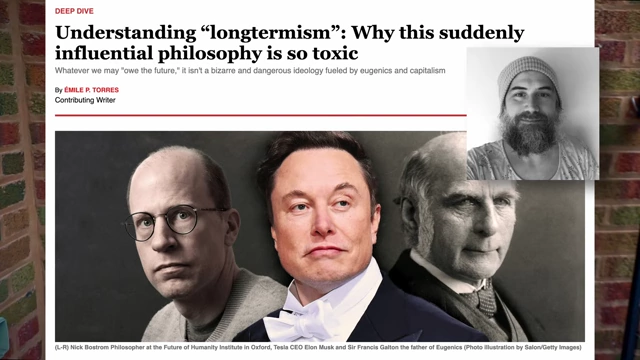
A Salon article headline, 'Understanding 'longtermism': Why this suddenly influential philosophy is so toxic,' featuring Nick Bostrom, Elon Musk, and Sir Francis Galton [ 01:17:08 ] -

A protest sign in Spanish, 'Sanciones son un crimen' (Sanctions are a crime) [ 01:21:48 ] -

A political cartoon depicting a US figure imposing an 'Embargo' on Cuba [ 01:21:49 ] -

A tank on a city street [ 01:21:50 ]
-
- Value Lock-in [1:20:21]: MacAskill fears "value lock-in" by individuals or states leveraging AGI to entrench power but ignores existing attempts by billionaires to do this through AI propaganda, algorithmic bias, and surveillance.
-
A chapter title slide for 'Value Lock-In' [ 01:20:22 ] -
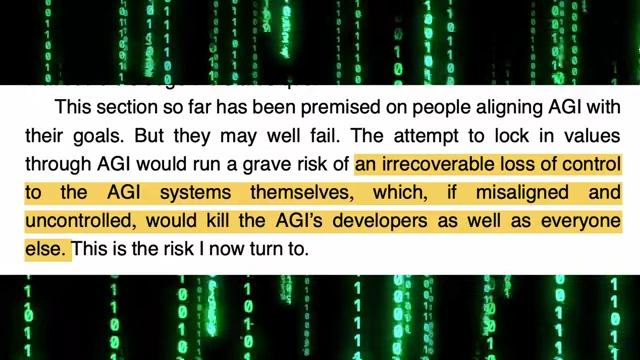
A quote from MacAskill's book on the risk of an 'irrecoverable loss of control' to AGI systems [ 01:20:49 ] -
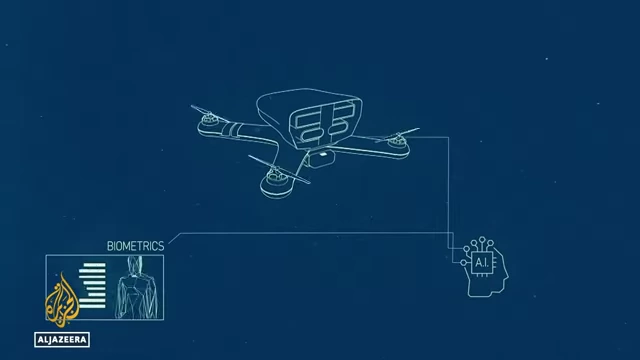
A diagram illustrating a drone connected to AI and biometrics, representing AI's use for control [ 01:22:59 ] -

A news headline, 'Lies, damned lies and AI: the newest way to influence elections may be here to stay' [ 01:23:11 ] -

A stylized anime-like AI chatbot [ 01:23:12 ] -

The title card for the documentary 'Coded Bias' [ 01:23:14 ] -

A simulated surveillance camera view with facial recognition highlights [ 01:23:15 ] -

A screenshot of a tweet from Elon Musk's Grok chatbot [ 01:23:24 ] -

A news headline: 'Grok's AI CSAM Shitshow' [ 01:23:31 ] -
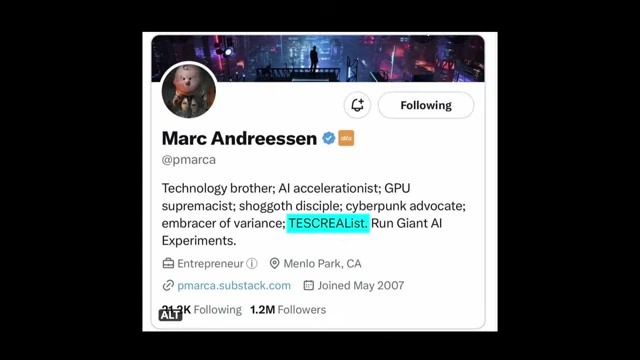
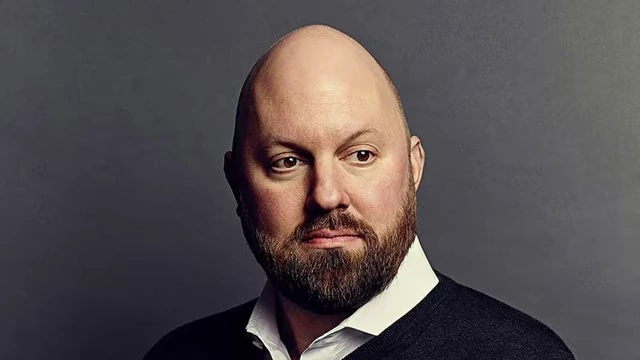
A screenshot of Marc Andreessen's Twitter bio, calling himself a 'TESCREAList' [ 01:25:11 ] -
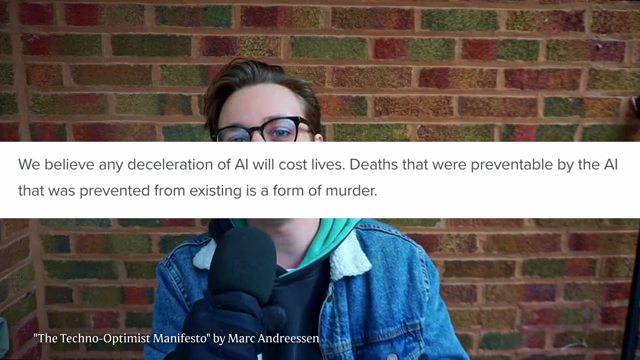
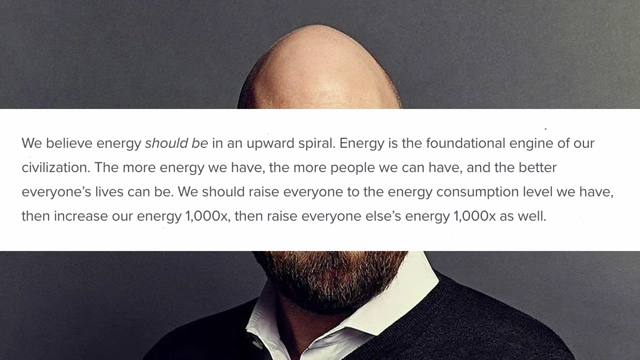
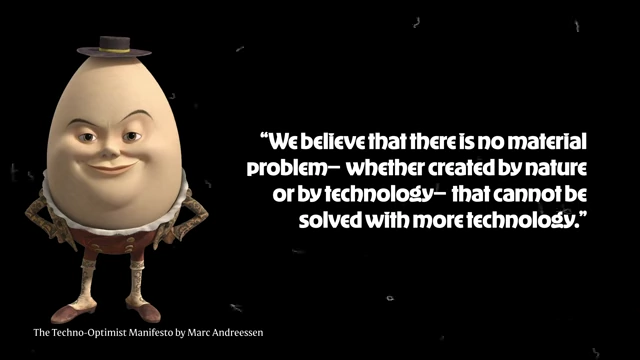
A quote from Marc Andreessen's 'Techno-Optimist Manifesto' on AI preventing deaths [ 01:25:17 ]
-
- Naive Solutions [1:21:16]: Proposals like "charter cities" for diverse economic policies are seen as naive, ignoring the historical suppression of non-capitalist experiments and the inherently libertarian nature of such projects.
-

A bustling city street with modern buildings [ 01:21:21 ] -
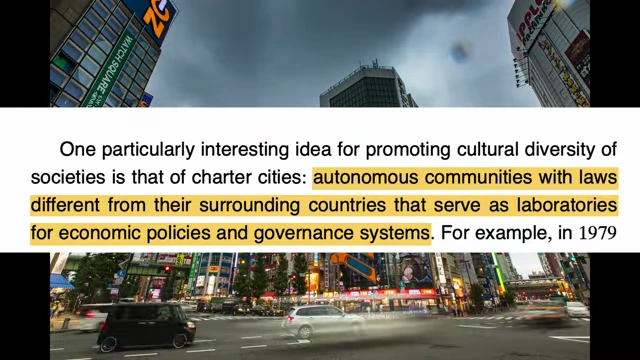
A quote defining 'charter cities' from MacAskill's book [ 01:21:25 ] -
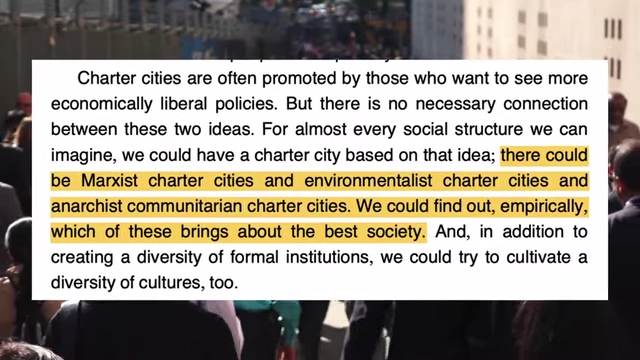
A quote from MacAskill on the possibility of diverse charter cities (Marxist, environmentalist, anarchist) [ 01:21:35 ] -
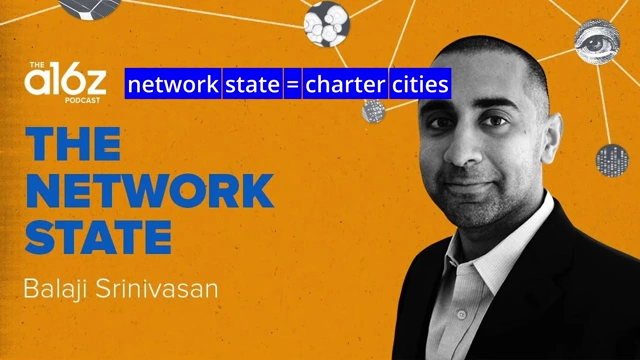
An image linking 'network state' to 'charter cities,' featuring Balaji Srinivasan [ 01:22:03 ] -

A YouTube video thumbnail about 'Peter Thiel and Praxis: The Billionaire Plan to Create the Fourth Reich' [ 01:22:07 ]
-
- Narrow Focus on Measurable Well-being [1:13:09]: It trivializes biodiversity and natural beauty, only valuing them for their "well-being" contribution. MacAskill argues that wild animals' lives involve "more suffering than joy," thus human domination and habitat loss could be a "net positive."
- Upholding the Capitalist Status Quo [1:22:10]: Longtermism is uncritical of capitalism and imperialism, neglecting the present-day harms of AI and focusing on ambiguous future threats, thus serving to justify the existing power structures. This self-serving logic justifies rapid AI development to avoid existential risks, even if it means sacrificing present-day well-being.

Divine Founders, Eternal Growth, AI Heaven: The Religion of AGI [1:25:54]
Tescreel functions as a secular religion, providing a narrative for technological advancement that aligns with capitalist ideals.
-
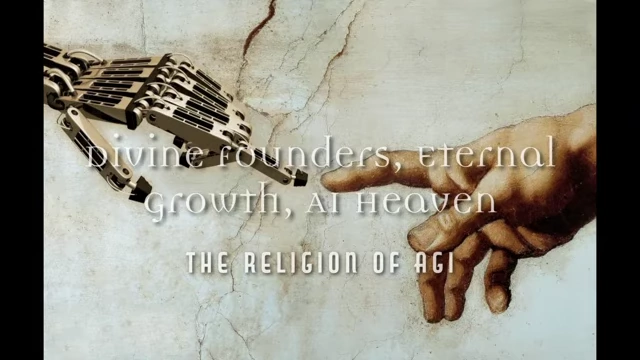
The title card for 'Divine Founders, Eternal Growth, AI Heaven: The Religion of AGI,' featuring a depiction of the Creation of Adam with a robotic hand [ 01:26:08 ] - Reduction to Data [1:26:26]: Tescreel reduces all meaningful human experience (soul, brain, God) to data that can be replicated and controlled. Ray Kurzweil's vision of immortality involves mind uploading and downloading into "fresh hardware," dismissing anything not convertible to data as "noise."
-
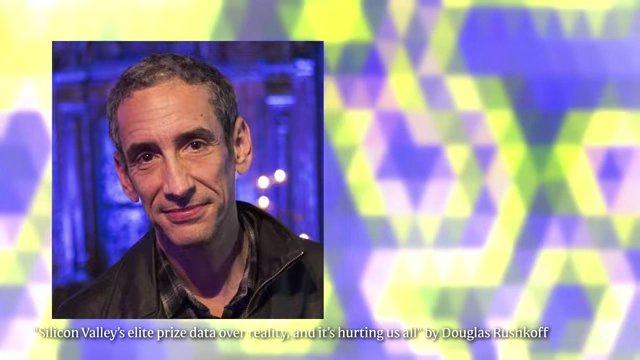
Portrait of media theorist Douglas Rushkoff [ 01:26:41 ] -
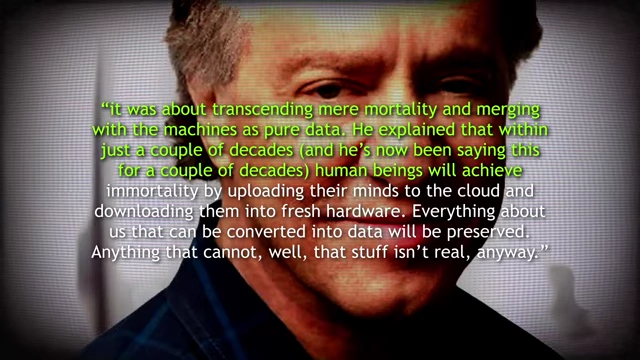
A quote from Ray Kurzweil about achieving immortality by uploading minds to the cloud [ 01:27:12 ] -
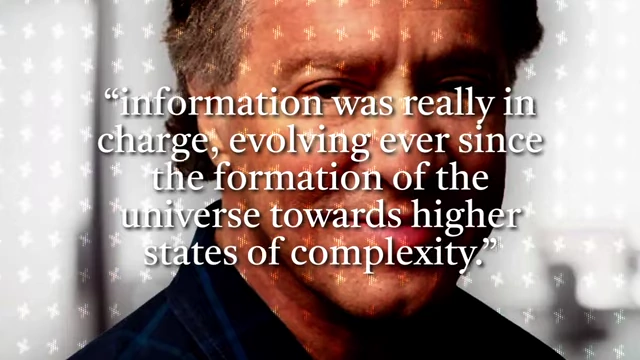
A quote from Ray Kurzweil stating that 'information was really in charge' [ 01:27:41 ] -

An MRI scan of a human skull [ 01:28:26 ] - Critique of AI Intelligence [1:27:56]: The video questions the simplistic comparison of chatbot nodes to human neurons, arguing it ignores the complex, evolutionary nature of the human brain.
-

A person typing on a laptop, showing a ChatGPT interface [ 01:28:34 ]
-
-
- Gospel of Eternal Growth [1:28:50]: Tescreel promotes "eternal growth," advocating for limitless energy consumption and technological solutions to all problems, reinforcing the capitalist ideal of continuous accumulation and expansion.
- A "Coward's Paradise" [1:29:43]: Tescreel's influence stems from its ability to offer billionaires an escape from the disastrous effects of capitalism (Mars colonies, mind uploading, digital simulations), justifying environmental destruction and inequality in pursuit of a digital utopia. It is a "coward's paradise" that avoids complex ethical dilemmas and meaningful human experience for comfort and convenience.
-

A futuristic digital portal with a human silhouette, symbolizing a digital utopia [ 01:30:05 ] -

An abstract image of light, representing the eternal glory of digital utopia [ 01:30:12 ] -

A portrait of author Ursula K. Le Guin [ 01:30:32 ] -

A QAnon rally, illustrating conspiratorial thinking [ 01:30:40 ] -
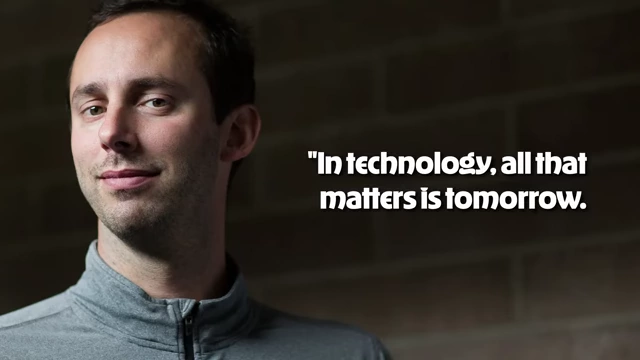
A quote from Anthony Levandowski saying, 'In technology, all that matters is tomorrow' [ 01:31:59 ] -
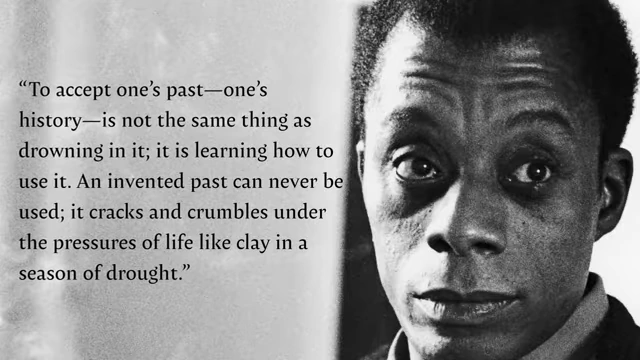
A portrait of James Baldwin with his quote on accepting and learning from one's past [ 01:32:12 ]
-
US-topia: Imagining a Better Future Beyond Tescreel [1:32:54]
The video concludes by contrasting the dystopian capitalist future enabled by Tescreel with the concept of "ustopia"—a collaboratively imagined and democratically built future.
- Critique of Dystopia/Utopia Dichotomy [1:33:03]: It's easier to imagine the end of the world than the end of capitalism. Tescreel cleverly presents a "dystopian hyper-capitalist future as utopia," offering "false, lying happiness" through technology that makes people more miserable and isolated, rather than addressing real-world problems.
-

A couple in bed, both looking at their phones, illustrating isolation despite connectivity [ 01:33:31 ] -
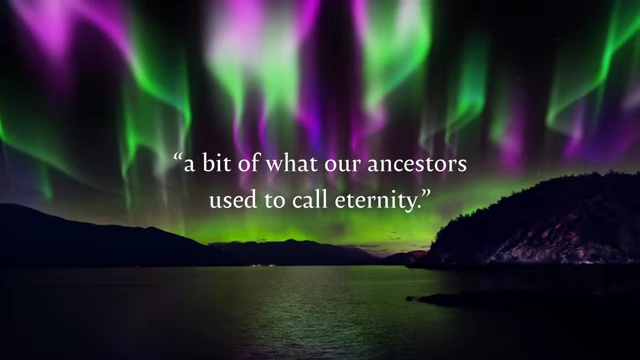
A scenic view of aurora borealis with a quote about technology providing a 'bit of what our ancestors used to call eternity' [ 01:33:45 ] -

The speaker with a quote from 'Brave New World' about preferring unhappiness over 'false, lying happiness' [ 01:33:52 ] -
Ezra Klein, a neoliberal pundit [ 01:34:39 ] -
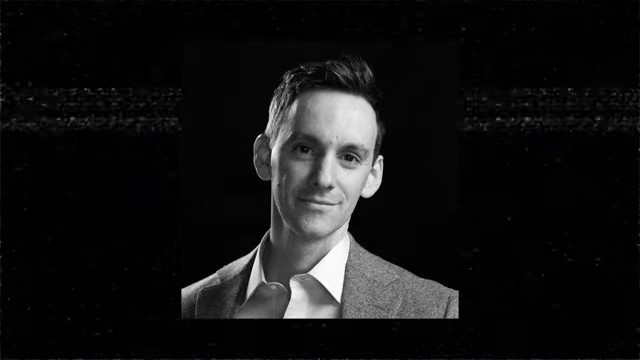
Derek Thompson, co-author of 'Abundance' [ 01:34:41 ] -
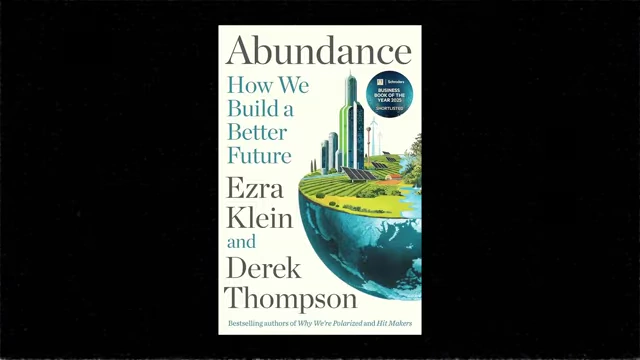
The cover of the book 'Abundance: How We Build a Better Future' [ 01:34:44 ] -
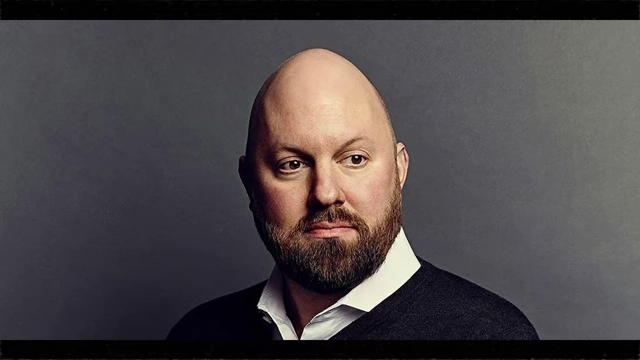
Marc Andreessen, another figure advocating for 'abundance' [ 01:34:47 ] -

A high-speed rail train at a station [ 01:35:01 ] -
Ezra Klein speaking [ 01:35:04 ] -

A vintage advertisement for Converse sneakers, a historical image of skyscrapers, and early automobiles [ 01:35:19 ] -

A crowded highway [ 01:35:20 ] -

People riding vintage high-wheel bicycles [ 01:35:22 ] -
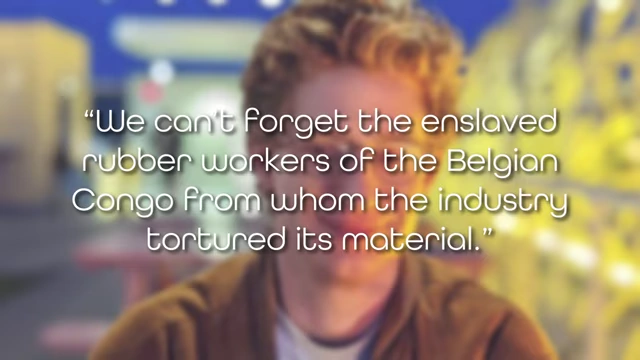
A quote from Malcolm Harris about the 'enslaved rubber workers of the Belgian Congo' [ 01:35:27 ] -
A distorted image of a busy highway superimposed over the speaker [ 01:35:39 ] -
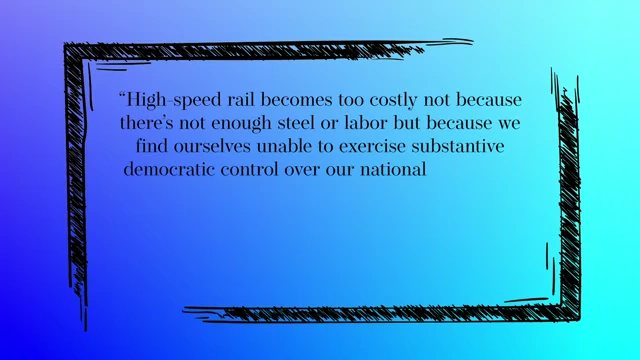
A quote from Malcolm Harris on high-speed rail and democratic control [ 01:36:20 ] -

The title card 'California High-Speed Rail' [ 01:37:09 ] -

A rendering of the California High-Speed Rail train [ 01:37:11 ] -
Ezra Klein speaking [ 01:37:14 ] -
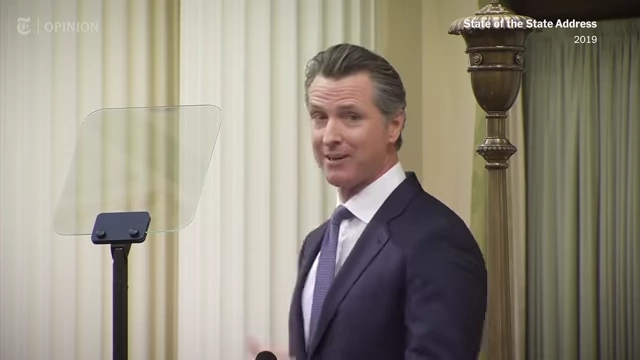
Gavin Newsom, Governor of California [ 01:37:24 ] -

A cartoon depicting a bank and a man with money, symbolizing profit over public good [ 01:37:50 ] -

A high-speed train in Taiwan [ 01:37:54 ] -

A high-speed train on a bridge in China [ 01:37:55 ] -

A high-speed train in France [ 01:37:56 ] -

A high-speed train in Italy [ 01:37:57 ] -

A high-speed train in Germany [ 01:37:59 ] -

Ezra Klein speaking [ 01:38:01 ] -

Skyscrapers with American flags [ 01:38:16 ] -

Malcolm Harris [ 01:38:30 ] -
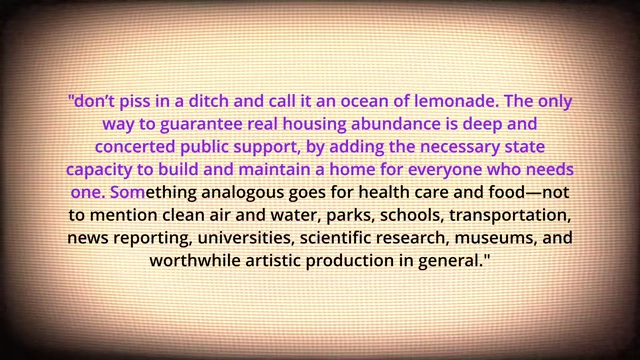
A quote from Malcolm Harris on the necessity of public support for housing [ 01:38:45 ] -
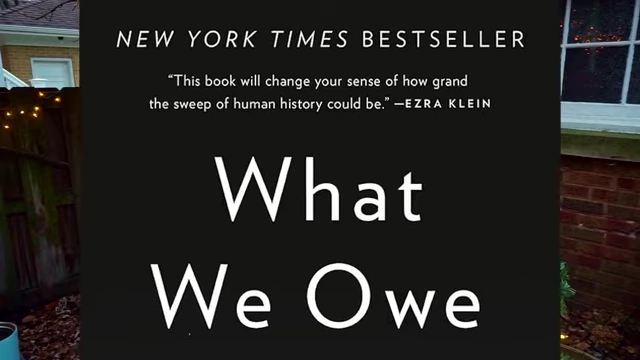
Ezra Klein's blurb on William MacAskill's book 'What We Owe The Future' [ 01:39:18 ] -
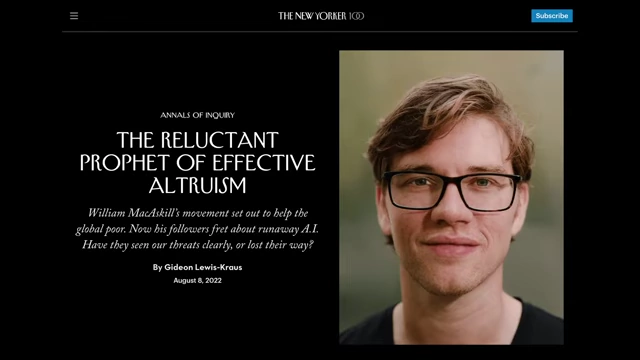
A New Yorker article titled 'The Reluctant Prophet of Effective Altruism,' featuring William MacAskill [ 01:39:27 ] -
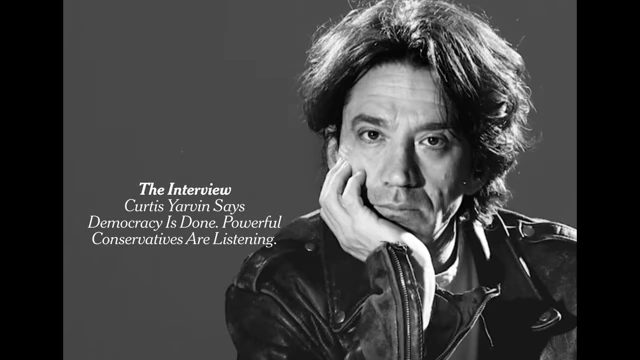
Portrait of Curtis Yarvin [ 01:39:28 ] -
A headline 'A Roadmap to AI Utopia' [ 01:39:29 ] -
A headline 'Pausing AI Developments Isn't Enough. We Need to Shut It All Down' [ 01:39:30 ] -

A collage of TED Talk thumbnails featuring Ray Kurzweil [ 01:39:31 ] -
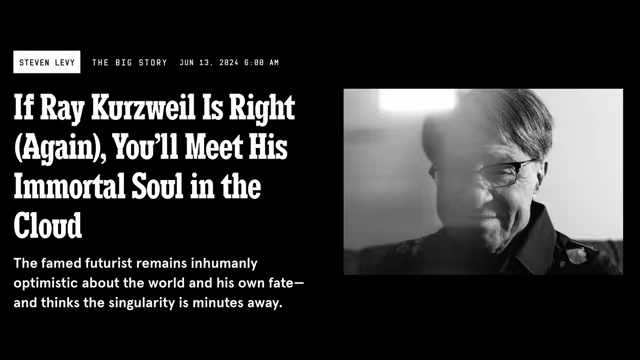
A headline 'If Ray Kurzweil Is Right (Again), You'll Meet His Immortal Soul in the Cloud' [ 01:39:33 ] -
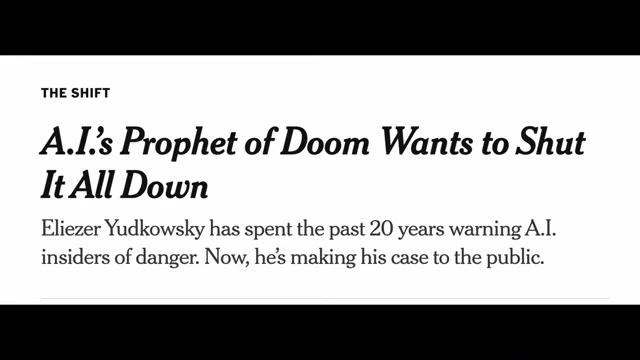
A headline 'A.I.'s Prophet of Doom Wants to Shut It All Down,' featuring Eliezer Yudkowsky [ 01:39:34 ]
-
- Ruha Benjamin's "Ustopia" [1:39:52]: Sociologist Ruha Benjamin proposes "ustopia" as an alternative to the "utopia/apocalypse dichotomy."
-

Book covers by Ruha Benjamin: 'Viral Justice,' 'Race After Technology,' 'Imagination: A Manifesto' [ 01:39:47 ] -

Ruha Benjamin delivering a TED Talk [ 01:39:54 ] -

An astronaut-like figure walking towards a futuristic gateway on a watery landscape [ 01:40:02 ] -

Ruha Benjamin on stage, defining 'ustopias' as 'what we create together when we're wide awake' [ 01:41:27 ] - Collective Agency [1:41:27]: Ustopia is created collectively, acknowledging interconnected struggles (climate, racial justice) and centers collective well-being, rather than being imposed by a "small sliver of humanity" (tech elite).
-
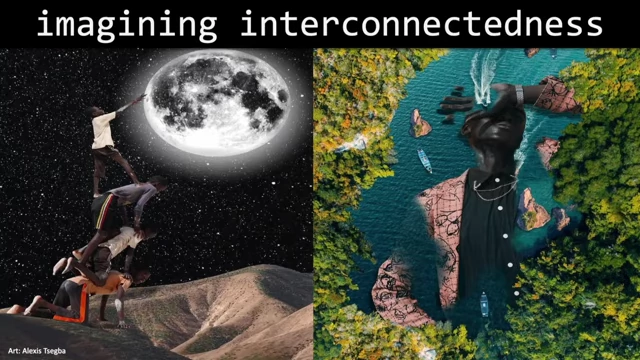
A composite image titled 'imagining interconnectedness,' showing people reaching for the moon and a human figure blending with a landscape [ 01:42:05 ]
-
- Democratic Technology [1:41:54]: Examples include "Decidim" (participatory civic engagement platform) and the Distributed AI Research Institute (DAIR) projects that focus on locally tailored technology serving community needs.
-

A screenshot of the 'Decidim' platform website [ 01:42:21 ] -

Timnit Gebru alongside the logo for the Distributed AI Research Institute (DAIR) [ 01:42:28 ] -
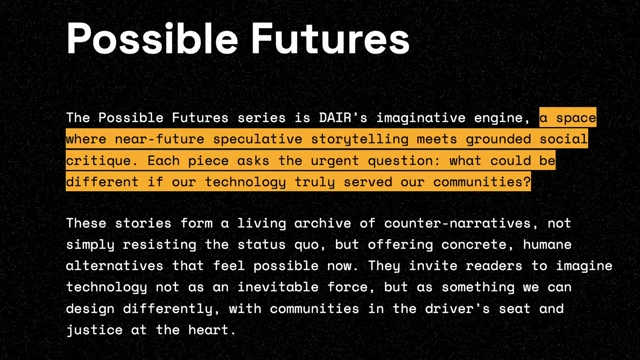
A description of DAIR's 'Possible Futures' series [ 01:42:39 ] -
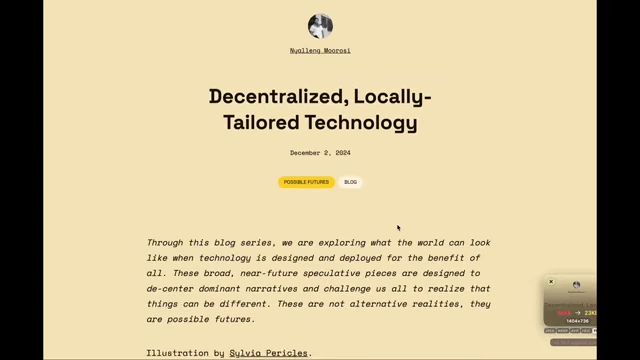
The title of an article, 'Decentralized, Locally-Tailored Technology' [ 01:42:49 ] -
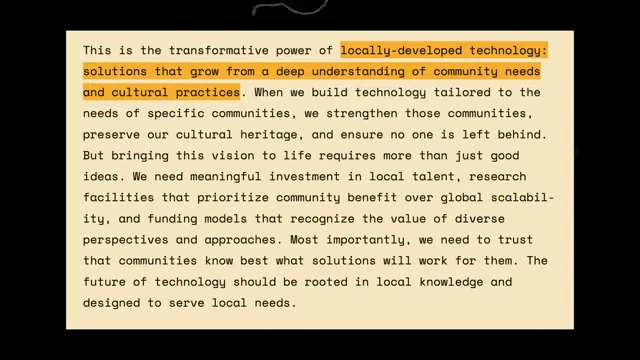
A quote on the 'transformative power of locally-developed technology' [ 01:42:56 ] -
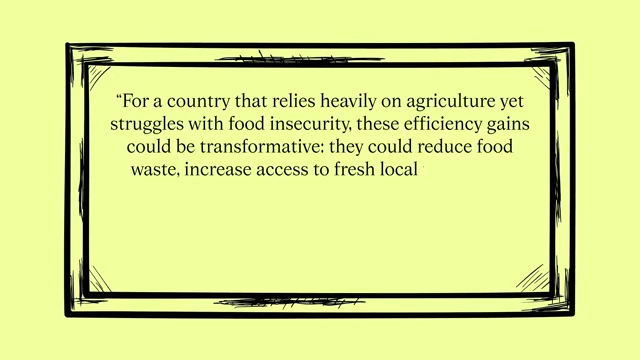
A quote on using technology for food security in agriculture-heavy countries [ 01:43:28 ]
-
-
- Crisis of Imagination [1:43:57]: The inability to envision a better future is a "crisis of imagination," exacerbated by consumerism, neoliberal culture, and the attention economy, which drain mental energy and discourage communal dialogue.
-
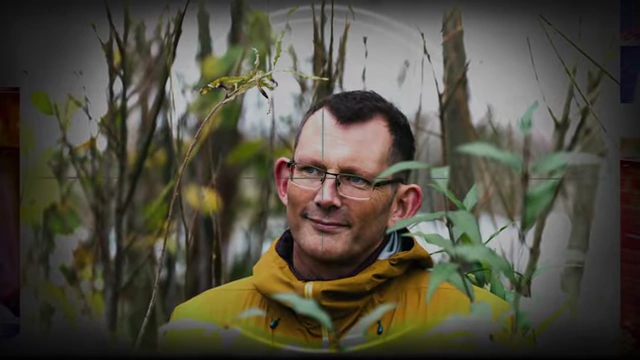
Rob Hopkins, an activist and writer [ 01:44:00 ] -
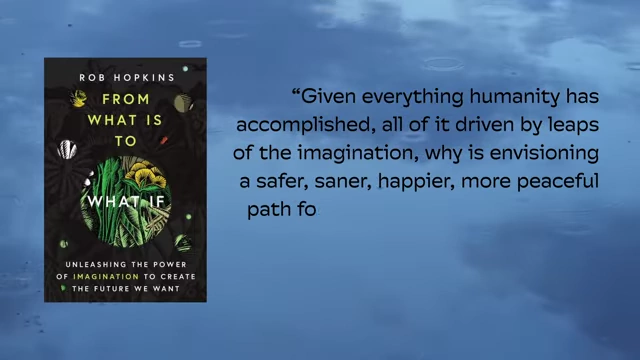
The cover of Rob Hopkins' book 'From What Is to What If,' with a quote about the crisis of imagination [ 01:44:16 ] -
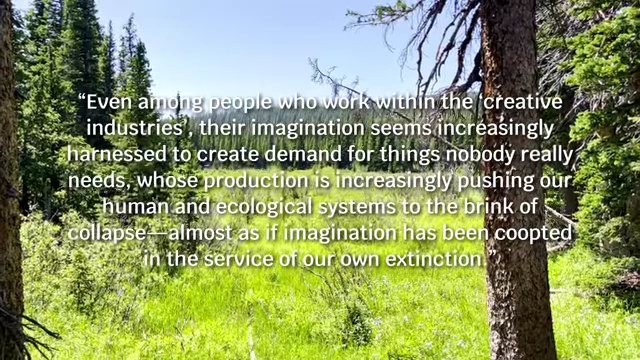
A quote about imagination being co-opted in service of extinction [ 01:44:57 ] -

A person's arm with a skyline tattoo, writing in a notebook [ 01:45:37 ] -

A person typing on a laptop in a dimly lit room [ 01:46:06 ] - Reclaiming Imagination [1:45:07]: The video advocates for channeling creative endeavors towards genuinely useful, community-serving purposes rather than being co-opted by capitalist demands that push human and ecological systems to the brink.
- Call to Action [1:46:17]: The presenter calls on viewers to collaboratively imagine and craft worlds they "cannot live without," by engaging in critical thinking, communal dialogue, and imperfect experiments, rather than surrendering to reactionary narratives.
-