This video offers five core principles for young, ambitious individuals to build wealth, presented through an anecdote about a young man named Jake.
Mark Tilbury offering advice to a young man
[
00:02:00
]
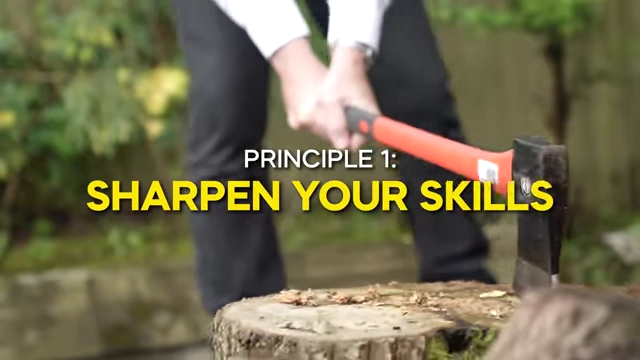
1. Sharpen Your Axe: Focus on mastering high-income skills (e.g., video editing, copywriting, software development) that can earn over $10,000 monthly, as these skills open doors to opportunities and valuable networks, much like the speaker's son earned through videography.
2. Lock Your Money Away: Invest consistently in assets like the stock market to benefit from compound interest, rather than frequently handling money, and aim to grow wealth continuously, rather than just achieving a single financial milestone.
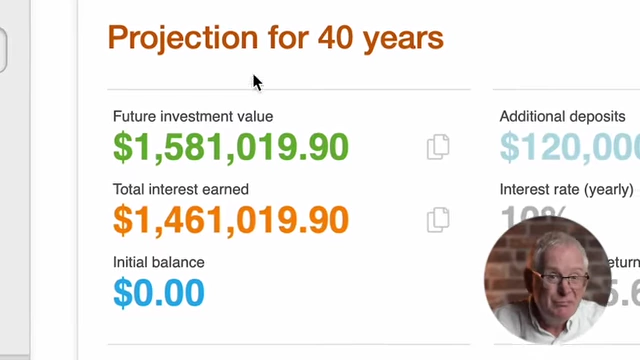
Projection for 40 years: $1,581,019.90
[
00:07:48
]
3. Leverage Your Time: Overcome the fear of failure and judgment by taking calculated risks, especially when young, as time allows for recovery and learning from potential setbacks.
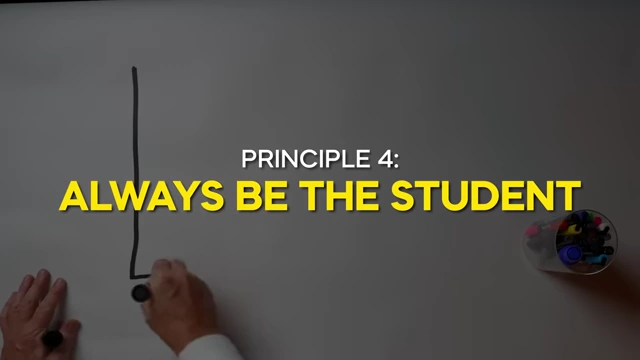
4. Always Be the Student: Commit to continuous learning, beyond formal education, by seeking new knowledge from various sources and mentors, staying updated on current trends like crypto, to adapt and spot new opportunities.
5. Befriend Wealthy People: Actively expand your network to include individuals of high socioeconomic status, as studies show this increases the likelihood of stock market participation and saving money, providing guidance and breaking poverty cycles.
Study findings on the impact of wealthy friends on stock market participation and saving money
[
00:14:25
]
The speaker recounts an interaction at a cafe with a young, ambitious guy named Jake, who comes from a humble background and seeks advice on getting rich. Jake receives dismissive and negative comments from an older customer, "Mr. Grumpy," who criticizes the younger generation as lazy.
The speaker intervenes, defending Jake and the younger generation.
He emphasizes that times have changed, and the challenges young people face are more complex now.
The speaker supporting Jake against Mr. Grumpy
[
00:01:18
]
He notes that young people, like Jake, are often juggling multiple responsibilities like school and work, which requires significant effort.
The path to success is no longer as straightforward as it might have been in previous generations.
He asserts the importance of supporting and guiding the younger generation, rather than belittling their efforts, as they are the future leaders.
Speaker advocating to support and encourage the younger generation
[
00:01:34
]
Inspired by Jake's ambition and realizing there are many like him, the speaker decides to share the five principles he gave Jake to become wealthy.
Mark Tilbury offering advice to a young man
[
00:02:00
]
1. Sharpen Your Axe: Master High-Income Skills [2:20]
Instead of focusing solely on quick millions, young people should prioritize developing valuable skills.
The "Blunt Axe" Metaphor:
The traditional education system often doesn't adequately prepare individuals for the financial realities of the modern world, focusing on subjects like Pythagoras's Theorem and Shakespeare.
Speaker discussing traditional education, with math formulas overlaid
[
00:02:43
]
Trying to start a business without foundational skills is like trying to cut down a tree with a blunt axe – it's ineffective, so focus on sharpening your skills instead of just earning money.
Money symbol crossed out, emphasizing sharpening skills over quick earnings
[
00:03:12
]
Focus on High-Income Skills:
These are skills that can generate at least $10,000 per month.
Treat your money carefully to allow it to grow without constant interference.
The "Crumbling Cookies" Metaphor:
Constantly accessing or moving investments (like handling cookies) can lead to diminishing returns or poor decisions.
Crumbling cookies on a plate, illustrating money diminishing with too much handling
[
00:05:34
]
Warren Buffett built 99% of his wealth after his 50th birthday by understanding and utilizing compound interest.
News article headline about Warren Buffett accumulating 99% of his net worth after turning 50
[
00:05:46
]
Invest in Assets, Not Bank Accounts:
Money needs to be invested in assets to grow significantly.
Various asset classes exist, such as real estate, high-end watches, and gold.
Cookies sealed in a clear plastic container, representing money being locked away to grow
[
00:06:05
]
The speaker's preferred asset is the stock market, where he has personally made millions.
Icons representing various asset classes: a watch, a house with an upward trend arrow, and gold bars
[
00:06:15
]
Cultivate a Mindset of Sustained Growth:
Earning a million once is less significant than consistently growing and maintaining wealth.
The "real game" begins after the first million: can you keep it and grow it into a fortune?
Invest money into long-term assets as soon as possible.
Personal Example and Strategy:
The speaker never sells his long-term stocks.
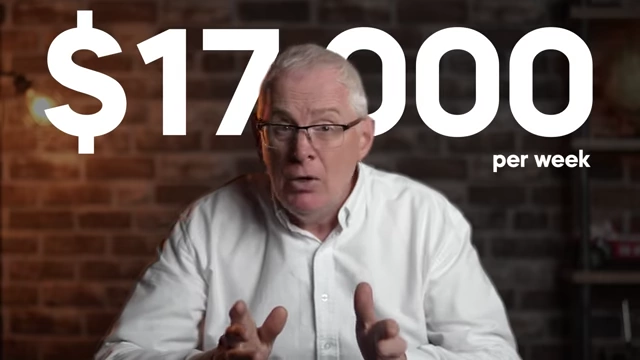
His investments now generate around $17,000 per week in passive income, allowing him to live off investment returns without touching his earned income.
Text overlay indicating $17,000 per week in passive income
[
00:07:00
]
Adopting a "feeling broke" mindset, even when invested, fuels continued hustle and wealth accumulation.
Practical Investment Steps:
Decide a percentage of your income to invest monthly, rather than a fixed amount.
Example: Investing $250 a month in a low-cost S&P 500 index fund with a 10% average annual return could yield over $1.5 million in 40 years.
Calculator projection showing a future investment value of over $1.5 million in 40 years with monthly $250 deposits and a 10% interest rate
[
00:07:48
]
Consistency is more important than the specific amount chosen.
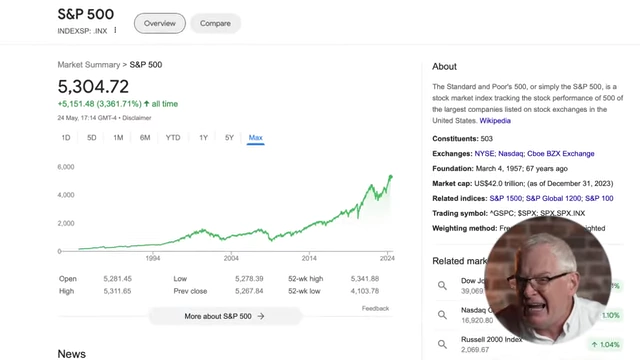
The S&P 500 index fund has given a 10.98% average annual return over the last decade.
Graph showing the historical performance of the S&P 500 index
[
00:07:59
]
3. Leverage Your Time: Take Calculated Risks [9:18]
Young people have a significant advantage in the form of time, which mitigates the impact of risks.
Overcoming the Fear of Failure and Judgment:
The biggest barrier to wealth is often the fear of how others will judge failure.
Many young people are paralyzed by this fear, preventing them from taking necessary risks.
The Necessity of Calculated Risks:
Doing the same as the majority will only yield average results.
Taking calculated risks is crucial for getting ahead.
Time as the Ultimate Advantage:
When young, time allows for recovery and learning from risks that don't pay off.
This means younger individuals can afford to take more risks in their investments (e.g., growth stocks) compared to older investors who prioritize wealth preservation (e.g., bonds and gold).
A set of scales with "FEAR" on one side and "TIME" on the other, indicating a balance or imbalance
[
00:09:27
]
Time is the most valuable thing one has when young, minimizing the impact of fear.
A hand placing additional weights onto the "TIME" side of a scale, showing time as a strong advantage
[
00:09:53
]
Personal Experience with Risk-Taking:
The speaker risked quitting a carpentry job due to bullying, which turned out to be the best decision he ever made.
He emphasizes that regret from missed opportunities is far worse than the experience of failure.
Embrace Failure as Learning:
Failure should be seen as testing rather than a negative outcome.
Most successful people have failed numerous times before achieving their goals.
Success is the reward for enduring and learning from failures.
Be adventurous and seize opportunities, as the ability to take risks diminishes with age, and time ultimately outweighs fear.
A set of scales where "TIME" on the right clearly outweighs "FEAR" on the left
[
00:10:55
]
4. Always Be the Student: Cultivate Continuous Learning [11:40]
Wealth building is a continuous process of learning and applying knowledge.
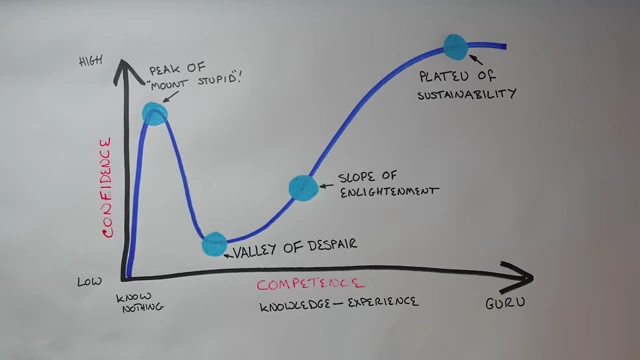
Avoiding the "Mount Stupid" (Dunning-Kruger Effect):
Many people get stuck at a superficial level of confidence without deep knowledge due to arrogance.
They incorrectly believe wealth is about luck, not a learnable skill.
Diagram illustrating the Dunning-Kruger Effect curve, showing "Peak of Mount Stupid," "Valley of Despair," "Slope of Enlightenment," and "Plateau of Sustainability"
[
00:11:46
]
Commitment to Lifelong Learning:
Even at an older age, the speaker actively learns from diverse sources like YouTube, TikTok, and financial news.
This allows him to identify opportunities before others in his generation.
Staying humble and continuously learning from those more experienced is vital.
The Speaker's Investment in Crypto:
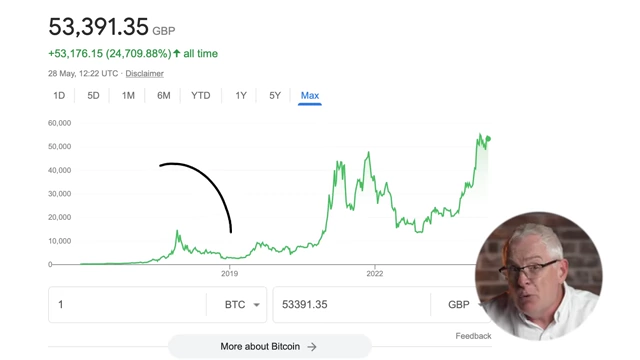
His commitment to continuous learning enabled him to understand and invest in cryptocurrency in 2019, yielding significant returns.
Bitcoin price chart over time, highlighting a period of significant growth around 2019
[
00:12:53
]
Critique of Traditional Education:
The Western education system often implies that learning stops after university, usually in one's 20s.
This approach is "broken" in a rapidly progressing world.
Text listing the traditional learning path: 1. Go to school, 2. Go to college or uni, 3. Stop learning
[
00:13:06
]
"Brain Software Updates":
The brain needs constant updates and to be cleared of "viruses" (outdated knowledge) to remain effective.
The adage "if you don't use it, you'll lose it" applies directly to intellectual agility and financial success.
5. Befriend Wealthy People: Expand Your Circle of Influence [13:55]
PRINCIPLE 5: CHOOSE YOUR CIRCLE WISELY
[
00:13:53
]
Breaking the poverty cycle and achieving wealth is significantly influenced by one's social connections.
The Power of Socioeconomic Networks:
A 2024 study by the National Bureau of Economic Research indicates a direct correlation between befriending wealthy people and an increased chance of becoming rich.
Title page of a study titled "Friends with Benefits: Social Capital and Household Financial Behavior"
[
00:14:02
]
Specifically, every 10% increase in friends of high socioeconomic status was associated with a nearly 3% greater chance of stock market participation and a 5% increase in saving money.
Highlighted text from a study detailing the association between wealthy friends and increased stock market participation and saving money
[
00:14:25
]
Guidance and Overcoming Hesitation:
Many people are nervous about investing or starting side hustles.
Friends who are already wealthy can provide practical guidance and demystify complex financial concepts.
This positive influence dramatically improves an individual's chances of financial success.
Strategic Networking:
The advice is not to abandon old friends or pursue friendships solely for financial gain.
Instead, seek out environments and clubs where wealthy individuals naturally congregate.
This organic approach fosters genuine connections and expands one's positive influence circle.
Empowering the Younger Generation:
The speaker concludes by expressing his admiration for young, ambitious people, acknowledging them as the "backbone of the world" and future leaders.
He encourages them to pursue their goals fearlessly, promising to always support and defend them against disparaging remarks from older generations.