Redefining the Design Process: Thriving in an AI-Driven World by Trusting Intuition, Craft, and Solutions
The speaker argues that the traditional, rigid design process is dead and no longer suitable for the modern era, advocating for a more flexible, intuition-driven approach.
- The conventional design workflow, from user research to problem statements and wireframes, is too slow and inflexible for today's rapidly changing technological landscape.
- AI tools now enable product managers to prototype faster than designers can follow traditional steps, rendering established processes outdated.
- The industry trend of "doing more with less" and evolving designer roles, which span product management and engineering, means there is less time for rigid adherence to every process step.
- In an AI-augmented world where basic creation is democratized, the ability to curate, apply taste, and focus on high-quality craft becomes a key differentiator.
- Great design work today is made by starting with solutions, meticulously refining details, leveraging strong intuition, adapting or inventing process steps, and deliberately designing for user delight.
- Designers must stop worshipping process artifacts and instead cultivate their judgment and adaptability to create truly impactful products, thereby redefining the design process itself.

The speaker's concluding statement: "Don't 'Trust the process'." [ 00:24:41 ]
The Illusion of the Traditional Design Process [0:00:05]
The speaker introduces the commonly taught and perceived ideal design process, which follows a rigid, linear progression.

- Initial Steps:
- Begins with user research to understand target audiences.
- Leads to the creation of detailed user personas, complete with demographic data and fictional identities.
- Followed by mapping out comprehensive user journey maps, detailing user steps, problems, and emotional states within a product.
- Problem Identification and Solution Generation:
- Designers lead brainstorms with cross-functional partners to identify problems aligned with OKRs.
- Perfect problem statements are formulated, often using "How might we..." or "As a [user], I want to [goal], so that I can [benefit]" formats.
- Another brainstorming session is held, this time to generate solutions.
- Solutions are then translated into low-fidelity wireframes, progressing to higher fidelity.
- Testing and Refinement:
- Further research is conducted to validate solutions and identify user problems.
- Designs are refined to high fidelity.
- This cyclical process is presented as a guaranteed path to successful product launches, financial gains, and beloved products.
- However, this idealized scenario is presented as unrealistic and outdated, despite being widely preached and taught.
The Reality Check: Why the Old Process Fails [0:03:01]
The speaker performs a "reality check" on the current environment, highlighting three major shifts that invalidate the traditional design process.
AI's Impact on Design Tools and Prototyping [0:03:04]
- Changing Tool Landscape: New AI tools are emerging daily, making them more capable and overwhelming designers.

Logos of AI-powered tools like Cursor, V0, Lovable, and Claude Code, illustrating the rapid emergence of new capabilities. [ 00:03:19 ] - Faster Prototyping by Non-Designers: Product managers (PMs) can now create functional prototypes faster than designers can complete traditional steps like problem statements or brainstorms, often without conducting prior research or creating personas.
- This trend suggests an expectation for PMs to engage in "vibe coding" or prototyping.
- Empowering Designers: AI also enhances designers' capabilities, moving beyond static image creation to easier prototyping and implementation of "fit and finish" elements.
- Outdated Process: The traditional design process is deemed outdated and less relevant for today's tools and technology.
- Changing Tool Landscape: New AI tools are emerging daily, making them more capable and overwhelming designers.
Doing More with Less: Evolving Roles and Smaller Teams [0:04:21]
- Industry Pressure: The pervasive industry sentiment is "do less with more," driven by widespread layoffs and headcount reductions.

News headlines detailing widespread layoffs and hiring freezes in the tech industry, indicating a trend toward leaner teams. [ 00:04:39 ] - Efficiency of Small Teams: Organizations are realizing that smaller teams can be more effective, reducing coordination overhead.
- Expanding Designer Roles: Designers are now expected to take on broader responsibilities, spanning from strategic product management aspects to hands-on implementation and prototyping.
- Time Constraints: This expanded scope and leaner team structure mean there is insufficient time to rigorously follow every step of a rigid design process.
- Industry Pressure: The pervasive industry sentiment is "do less with more," driven by widespread layoffs and headcount reductions.
The Rising Importance of Craft and Quality [0:05:37]
- Emphasis on "Taste," "Craft," "Quality": These terms are increasingly central to modern design discussions.
- AI's Influence on Value: The hypothesis is that in a world where AI can easily generate basic content, a designer's true value lies in their ability to choose, curate, and achieve exceptional quality.

A slide presenting the hypothesis: "In a world where anyone can make anything... what matters is your ability to choose and curate what you make." [ 00:05:48 ] - AI raises the "floor" of design, meaning human designers must produce work superior to AI-generated "slop" to remain valuable.
- Examples of High-Craft Products:
- Not Boring Software's Camera App: A delightful camera app with tactile controls and sound effects, demonstrating a level of craft beyond simple AI generation.
- Linear: A task tracking app that, despite being in a crowded market, stands out for its well-crafted, fast, and snappy user experience, making users prefer to pay for it.
- Notion Calendar: Offers similar functionality to other calendars but is valued for its "high craft" feel.
- Process vs. Craft: These high-craft products were not developed using a predefined, rigid process. The traditional design process lacks specific steps that encourage or reward such meticulous craft.
Project Variability and the Pitfall of Process Artifacts [0:07:27]
- Unique Project Contexts: Every project is inherently different, influenced by varying stakeholders, complexity levels, problem spaces, unknowns, technical constraints, timelines, business needs, and staffing.
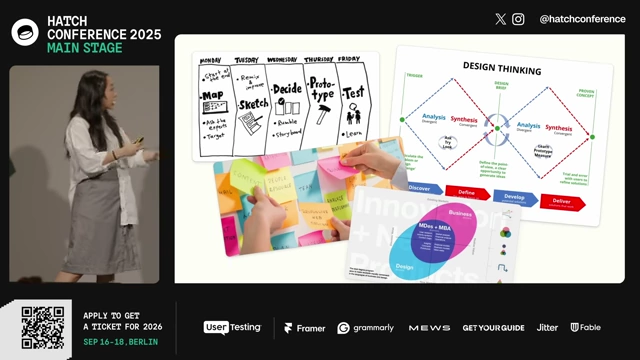
A collage of design thinking artifacts, including a design sprint schedule, a double diamond diagram, a design thinking Venn diagram, and sticky notes, illustrating the variety of process documentation. [ 00:07:37 ] - Inapplicability of Standardized Steps: It is impossible for a single set of prescribed steps to effectively work across such diverse project conditions.
- Prioritizing Artifacts over Experience: The traditional design process inadvertently taught designers to prioritize "process artifacts" (e.g., user journey maps) over the actual "end experiences" of the product.
- This is evident in design portfolios that heavily feature process documentation but lack compelling final designs.
- User Focus on End Experience: Users ultimately care about the product's final experience, not the intermediary process artifacts.

A list of diverse factors that differentiate projects: stakeholders, complexity, problem space, unknowns, technical constraints, timelines, business needs, and staffing. [ 00:08:27 ] - Inability to Create Great Work Repeatably: Relying on a rigid, repeatable process does not consistently produce great work, nor is it practical for every project.
- Unique Project Contexts: Every project is inherently different, influenced by varying stakeholders, complexity levels, problem spaces, unknowns, technical constraints, timelines, business needs, and staffing.
Don't Trust the Process: A Historical Context [0:08:48]
The speaker explicitly states to "Don't trust the process," acknowledging that this stance might be uncomfortable but is necessary for the current era.
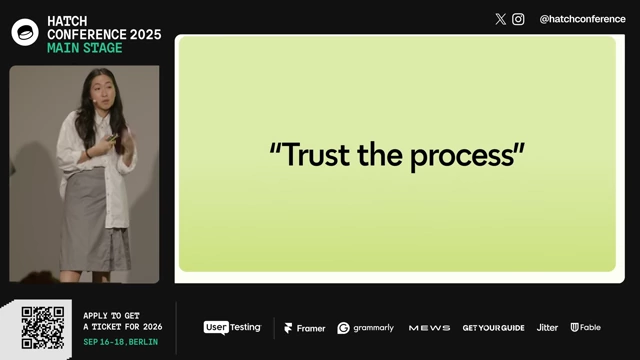
- Origin of the "Trust the Process" Mantra [0:09:17]
- In the early 2000s, design evolved from graphic/web design to complex, full-experience applications, especially with the rise of mobile.
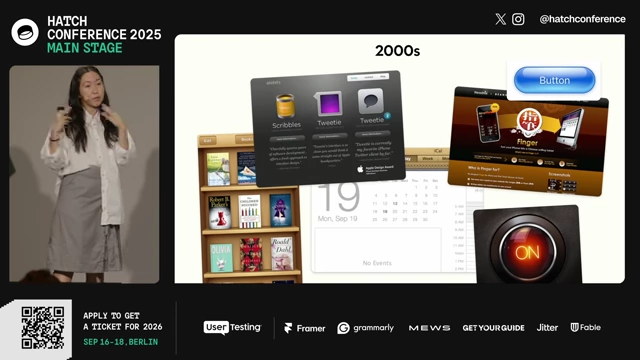
Examples of early 2000s skeuomorphic user interfaces for desktop and mobile applications, showcasing the design trends of the era. [ 00:09:26 ] - Designers were often seen as mere "beautifiers."
- A movement emerged advocating for "design needs a seat at the table" to gain legitimacy and address increasingly complex experiences.
- In the early 2000s, design evolved from graphic/web design to complex, full-experience applications, especially with the rise of mobile.
- The Rise of Design Thinking [0:09:51]
- This led to an explosion of "design thinking" and user-centric design approaches.
- The focus expanded beyond aesthetics to how products felt, worked, impacted daily lives, and contributed to business goals.
- However, this shift often led to an overemphasis on strategy over craft, causing overall craft quality to suffer.
- The Need for Rebalancing [0:10:14]
- In the 2020s, there's a need to rebalance strategy and craft.
- The design landscape is further complicated by new factors: lower barriers to design (due to AI), exponential change, shifting roles, reduced headcounts, new tools, and the renewed importance of craft.

A tangled lines diagram representing the complex interplay of modern design factors: AI, new tools, lower barriers, exponential change, role shifting, less headcount, and craft. [ 00:10:26 ] - These changes are happening at an unprecedented pace, making the old process completely untrustworthy.
How Great Design Work is Truly Made Today [0:10:50]
The speaker shares five ways she has observed great design work being made, which typically involve departing from or augmenting the traditional process.
1. Starting from Solution First [0:11:08]
- The traditional design process often labels starting with a solution as "illegal."
- Example: Anthropic's Claude Artifacts [0:11:59]
- This feature (an interactive code display in a right-hand panel) was first prototyped by a researcher as a rough concept.

A screenshot of Claude Artifacts, showing a conversation on the left and an interactive code panel on the right where code is generated and interacted with. [ 00:11:56 ] - Designer Michael saw its potential, iterated on it, and built a compelling prototype that generated overwhelmingly positive internal reactions.
- The solution was pursued not because it originated from a problem statement, but because it felt innovative and fundamentally changed the perception of AI from text-generating to interactive application creation.
- This demonstrates that sometimes, the problem isn't fully understood until the solution is seen, especially with rapidly evolving new technologies like AI.
- The process should adapt: when new technology emerges, designers must explore how it can solve existing problems in novel ways.
- For example, new Claude model capabilities, such as larger context windows and multi-step reasoning, enabled the creation of sophisticated features like a full-on research report.
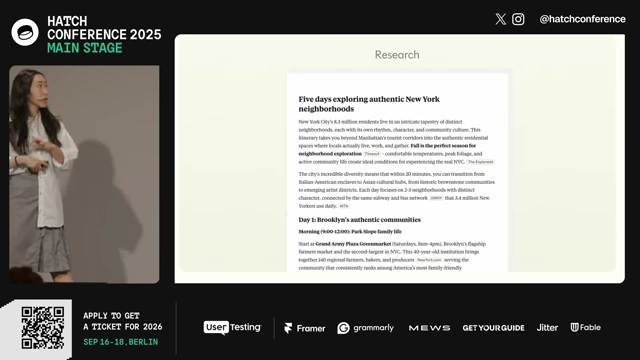
A screenshot of a comprehensive research report generated by Claude, showcasing its advanced capabilities in producing detailed, multi-part content. [ 00:14:44 ]
- This feature (an interactive code display in a right-hand panel) was first prototyped by a researcher as a rough concept.
2. Ruthless Attention to Detail [0:15:10]
- Great work results from teams spending significant time meticulously iterating on every detail to achieve perfection.
- Example: Figma's FigJam Post-Launch Iterations [0:15:16]
- After its initial launch, the FigJam team focused not just on new features but heavily on improving core mechanics and overall quality.

A visual comparison demonstrating iterative improvements in Figma's FigJam, specifically changes to snapping and alignment cues and selection border visuals. [ 00:15:24 ] - Detailed iterations included:
- Refining snapping and alignment behaviors.
- Reducing visual noise from selection borders on the canvas.
- Adjusting color palettes to ensure the right range and prevent excessive loudness.
- Adding various ways to change and adjust font sizes.
- Implementing borders for images to make them stand out on the canvas.
- Tweaking how shapes overflow when users type.
- Refining numerous toolbar interactions.
- This "long tail of quality and iterations" is an ongoing process that is not easily accommodated by the rigid, linear "double diamond" design process. It requires dedicated time and deep care.
- After its initial launch, the FigJam team focused not just on new features but heavily on improving core mechanics and overall quality.
3. Operating on Intuition [0:16:30]
- Intuition, often dismissed as "guessing" or lacking user/data-centricity, is redefined as the ability to make reasoned judgments quickly.

A definition slide stating, "Intuition is... The ability to make reasoned judgments, quickly." [ 00:17:04 ] - It's a valuable and rare "shortcut" that comes from deep expertise in a subject area, eliminating the need for extensive, repeated evidence gathering.
- Building Intuition:
- Constant Feedback Engagement: Regularly consuming user feedback from social media (Twitter, Reddit) and internal channels.
- User Research Immersion: Consistently attending and reviewing user research sessions, even those unrelated to one's specific product area, to broaden understanding of the user base.
- Data Analysis: Regularly monitoring dashboards and trends in overall usage and activity.
- Theoretical Knowledge: Drawing upon cognitive biases and design principles from psychology and textbooks to predict user behavior and decision-making.
- This continuous learning builds an "internal model" of the user and product world, enabling educated guesses that accelerate decision-making without constant A/B testing or extensive research.
- Strong intuition enhances design work, influencing both major product decisions and minor UI details (e.g., button grouping, login page elements), making a designer invaluable in ways AI cannot replicate.
- Intuition, often dismissed as "guessing" or lacking user/data-centricity, is redefined as the ability to make reasoned judgments quickly.
4. Skipping and Inventing Process Steps [0:18:55]
- Rigid, prescribed processes (like the Google Ventures design sprint) are often not optimal, as many steps may not be useful in specific contexts, especially for fast-paced startups.
- Customizing Design Sprints [0:19:11]
- The speaker frequently modifies design sprints, condensing the typical five-day schedule into three days.

A modified Google Ventures Design Sprint schedule, condensed to three days and emphasizing brainstorming, sketching, and prototyping. [ 00:19:23 ] - Emphasis is placed on brainstorming, sketching, and prototyping, as prototypes are highly effective for communicating concepts and gaining understanding.
- The speaker frequently modifies design sprints, condensing the typical five-day schedule into three days.
- Adapting "Working Backwards" for Figma [0:19:54]
- Inspired by Amazon's "working backwards" method (writing a press release to envision a feature's impact), the speaker adapted it for Figma.

A slide featuring an Amazon S3 press release and the book "Working Backwards," representing Amazon's method for product development. [ 00:20:00 ] - Instead of press releases, teams were asked to imagine how users would react to a new feature on Twitter, creating "tweet" components.
- This approach was successfully used for FigJam features like cursor chat, handshakes, emotes, and stamps, with later product launches yielding actual tweets mirroring these imagined reactions.
- Another adaptation involved crafting fake landing page headlines to brainstorm and package features.
- Inspired by Amazon's "working backwards" method (writing a press release to envision a feature's impact), the speaker adapted it for Figma.
- Design as Discovery: Unlike assembling IKEA furniture with known outcomes and instructions, design involves simultaneously defining the end product and charting the path to create it.
- A designer's true value lies in their ability to hone and adapt the process to achieve optimal results, not in blindly following predetermined steps.
5. Designing for Delight [0:21:55]
- This involves creating features purely to evoke positive emotions and make users smile, even if they don't solve a critical "problem" identified through traditional research.
- Example: FigJam's Stamps, Emotes, and Cursor Chat [0:22:24]
- These features were prototyped and tested by having people try them in internal meetings.

A visual showcasing FigJam's interactive features: stamps, emotes, and cursor chat, which were designed to evoke delight. [ 00:22:22 ] 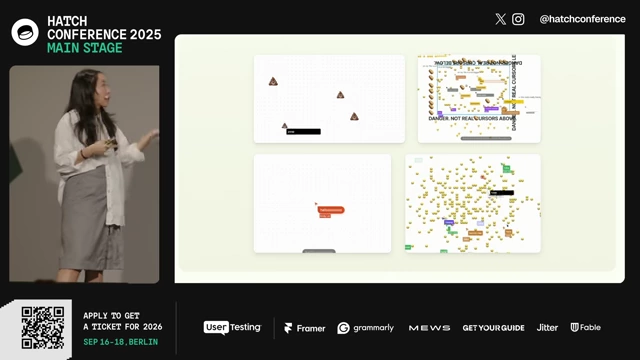
Recordings of users interacting with Figma FigJam prototypes, showing multiple cursors, stamps, and emotes in action during a meeting. [ 00:22:44 ] - Despite initial usability issues, the observed user reactions—smiles and laughter—indicated their inherent value.
- These "delightful" features set a precedent for focusing on emotional engagement within FigJam and Figma, becoming some of the most cherished work.
- They did not originate from problem statements or specific process steps but from a team's deep care and desire to create enjoyable experiences.

A slide displaying a typical problem statement template: "As a _____, I want to _____, so that I can _____." [ 00:23:21 ]
- These features were prototyped and tested by having people try them in internal meetings.
Embracing a New Era of Design [0:23:27]
The speaker concludes by emphasizing that the described approaches are not rigid rules but flexible guidelines for navigating the modern design landscape.
- Flexibility Over Rules: These five ways of working are not hard and fast rules; they don't guarantee good work, shouldn't always be used, and don't need to be followed in order.
- The Demise of "Trust the Process": The old adage "trust the process" is dead, having never been truly trustworthy and being entirely unsuitable for the current era.
- Rewriting the Process: Designers' roles and tools are rapidly changing, but the dictated design processes have remained static. The real value of a designer lies in rewriting and adapting the process to fit each unique project.
- Trusting Ourselves: This new era requires courage to embrace discomfort, take bolder steps, and trust designers' own judgment, experience, and skill sets. It's about wielding the right tools, mixing and matching approaches, and knowing when a design is truly great, regardless of how it was achieved. This self-trust is both empowering and vulnerable, but essential for survival and success.
A slide with the concluding statement: "Don't 'Trust the process'". [ 00:24:41 ]