This video presents an external observation journaling technique, inspired by Haruki Murakami's memoir "What I Talk About When I Talk About Running," to overcome writer's block and achieve deeper insights.
Examples of popular journaling content emphasizing self-discovery and emotional healing
[
00:00:23
]
Many struggle with journaling due to the pressure for profound introspection, leading to writer's block.
Historically, journals recorded ordinary external details, which can naturally lead to deeper meaning.
Murakami's memoir exemplifies this by detailing his running routines, weather, and music, which then organically reveal his philosophy on aging and the creative process.
Haruki Murakami's "What I Talk About When I Talk About Running"
[
00:01:15
]
Robert Pirsig's "Zen and the Art of Motorcycle Maintenance" illustrates how narrowing focus from a broad topic (like the USA) to specific external details (like a single brick) can unlock extensive writing.
Main Street, Bozeman, Montana, illustrating Robert Pirsig's "narrowing the focus" principle
[
00:03:05
]
This approach makes journaling easier to start, like an unforced conversation, allowing deeper thoughts to emerge naturally.
To implement this, choose an existing, consistent activity rich in sensory details and tied to your identity, such as running, cooking, or simply observing outside a window.
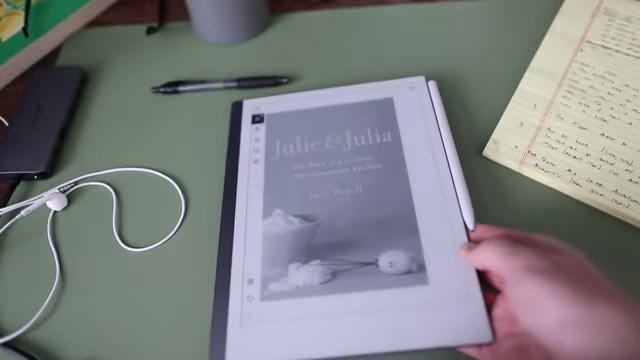
The book "Julie & Julia," an example of journaling through an existing practice rich in sensory details
[
00:07:48
]
Focusing on external observations provides a safe path to self-discovery, leading to more honest and profound reflections without forced performance.
Many individuals find journaling difficult because they struggle to find profound things to say [0:00:00].
This often leads to staring at a blank page, waiting for deep, meaningful, and introspective thoughts to emerge [0:00:03].
When these thoughts don't come easily, people tend to give up on journaling [0:00:13].
The current cultural perception frames journaling as a tool for "self-discovery or emotional healing," turning it into a "performance" rather than a simple act of "noticing your life" [0:00:17].
Examples of popular journaling content emphasizing self-discovery and emotional healing
[
00:00:23
]
Historically, journaling focused on recording external events and ordinary details such as the weather, meals, people encountered, and daily work [0:00:33].
This older approach of focusing on external details paradoxically captures more meaning than directly trying to delve into one's internal world [0:00:47].
The Power of External Observation (Haruki Murakami's Approach) [0:00:33]
The video advocates for a grounded journaling approach rooted in observation rather than performance [0:01:01].
The book is a blend of memoir and diary, written during his marathon training and novel writing [0:01:15].
Murakami used his running practice as a "lens to think about work, aging, endurance, and the creative process" [0:01:21].
How External Details Lead to Deeper Insights [0:01:51]
Murakami's entries often begin with ordinary details like the distance he ran, the weather, his physical feelings, or the music he listened to [0:01:30].
Murakami's observation of an Indian woman on a stroll
[
00:01:37
]
Beneath these surface details, deeper philosophical insights about life and aging naturally emerge, without him explicitly trying to be profound [0:01:40].
For instance, by observing his slower running times over the years in his training log, he naturally began to reflect on what it means to get older and lose abilities [0:01:57].
Murakami's reflection on aging and slowing down, derived from observing his running log
[
00:02:15
]
This method makes writing easier to start because it uses an external reference point as an anchor, drawing the writer into deeper conversations organically [0:02:17].
Robert Pirsig's "Narrowing the Focus" Principle [0:02:39]
Robert Pirsig, in "Zen and the Art of Motorcycle Maintenance," shares a story about a student struggling with a writing assignment [0:02:39].
The student was paralyzed by the broad topic of writing a 500-word essay about the United States [0:02:47].
Pirsig repeatedly narrowed the scope for her: first to "Bozeman," then to "the main street in Bozeman," and finally to "one brick in one building on Main Street" [0:02:54].
Main Street, Bozeman, Montana, illustrating Robert Pirsig's "narrowing the focus" principle
[
00:03:05
]
The Opera House in Bozeman, showing how narrowing focus to a single brick can unlock extensive writing
[
00:03:13
]
This extreme narrowing of focus allowed the student to overcome her block and write 5,000 words on a single brick, demonstrating how focusing on small details unlocks creativity and depth [0:03:08].
The simple shift from trying to sound profound to simply "noticing" allowed her to delve deeper into her topic [0:03:22].
Journaling as a Conversation with Yourself [0:04:08]
Journaling through external observation can be likened to having an unforced conversation with yourself [0:04:08].
Starting a conversation with a direct, big introspective question (e.g., "Are you happy right now?") can cause a "freeze" and lead to inauthentic answers [0:04:16].
However, if a conversation begins with mundane details (e.g., "the weather or your day"), deeper feelings and insights can emerge naturally without feeling forced [0:04:29].
This indirect approach is helpful for confronting difficult topics [0:05:15].
Directly addressing flaws or mistakes can make one self-conscious and lead to self-editing [0:05:20].
Writing "around" difficult topics, using external observations as a starting point, allows these deeper, more honest thoughts to surface organically [0:06:09].
Applying the External Observation Technique to Your Journaling [0:06:43]
To implement this journaling method, the speaker recommends:
1. Anchor to an existing consistent practice [0:06:53]
Avoid trying to implement too many new habits at once (e.g., starting both running and journaling about running) [0:06:57].
Tie your journaling to something you already do consistently to ensure its longevity [0:07:16].
The goal is to make journaling "an extension of your life, not another demand placed upon it" [0:07:21].
2. Choose a practice rich in sensory details [0:07:29]
Running is effective as it exposes you to various sights, sounds, smells, and weather conditions [0:07:30].
Cooking is another excellent example, prompting observations about ingredients, tastes, and processes, similar to the "Julie & Julia" book [0:07:43].
The book "Julie & Julia," an example of journaling through an existing practice rich in sensory details
[
00:07:48
]
3. Pick a practice tied to your identity [0:08:00]
Murakami's identity as a runner naturally connects his external observations to internal reflections [0:08:00].
If you don't have such a practice, start with something simple like observing the view from a window [0:08:18].
Ernest Hemingway's frequent descriptions of weather in his books serve as an example of using simple external details as an entry point for writing [0:08:30].