Master Storytelling with 3 Essential Ingredients: Specificity, Reliving, and Meaning
Summary:
This video debunks common misconceptions about storytelling and reveals three core ingredients for effective communication.
- Misconception 1: Crazy life experiences are needed. The speaker argues that everyday moments with a meaningful perspective are more relatable and powerful.
- Misconception 2: Stories are just fluff; facts matter more. Research shows stories significantly increase memory retention compared to facts alone.
- Misconception 3: Storytelling is only for extroverts. It is a learnable craft relying on structure and timing, not just charisma.
- Ingredient 1: Specificity. Use the six senses (sight, sound, smell, taste, touch, emotion) to immerse the audience and activate mirror neurons.
- Ingredient 2: Reliving. Instead of reporting facts, bring the audience into the experience using present tense and body language.
- Ingredient 3: Meaning. Conclude stories by clearly stating the lesson or relevance to the audience, transforming tales into insights.
- Timing: Stories are most effective for memorability and influence in longer interactions (15+ minutes); otherwise, precise answers are better.
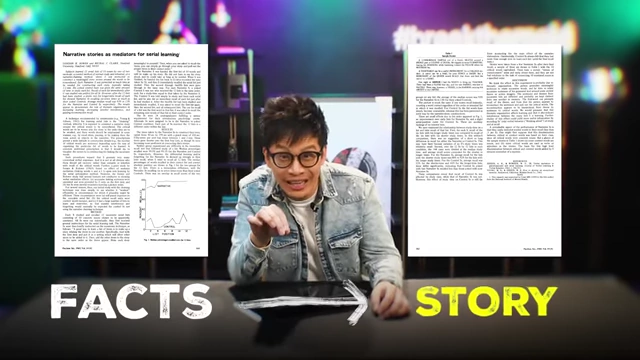
A Stanford study found that stories significantly improve memory retention of facts. [ 00:00:26 ]
Introduction [0:00]
- The video aims to simplify storytelling by focusing on three essential ingredients.
- A Stanford study is cited, showing that students who turned facts into a story remembered 93% of the facts, compared to only 13% for those who didn't, highlighting the power of storytelling.
Debunking Storytelling Misconceptions
1. Misconception: You Need Crazy Life Experiences [0:57]
- People often believe stories require grand, once-in-a-lifetime events like climbing Mount Everest or surviving a disaster.
- This perspective leads to avoiding storytelling, missing opportunities to connect through everyday, relatable moments.
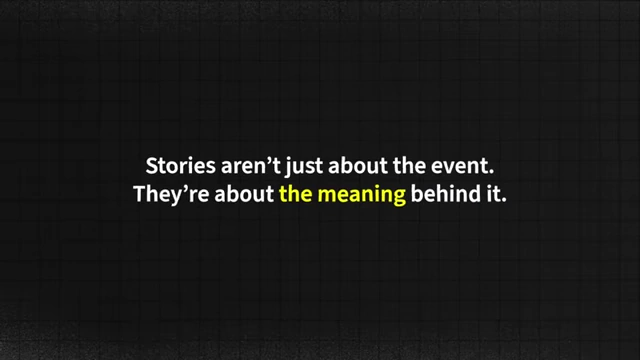
- The true power of a story lies in the perspective and framing, not the event itself.
- Example: The speaker shares a personal story about walking his dogs at 4 AM.
- He thought the walks were for the dogs but realized they were a needed ritual for his own mental clarity and well-being.

The speaker's dogs, Link and Zelda, central to his personal story about finding meaning in everyday routines. [ 00:01:51 ] - The meaning: "Sometimes the things that we do out of responsibility end up being the things we needed for our own soul."
- This ordinary event became a powerful story through his shared perspective and meaning.
- He thought the walks were for the dogs but realized they were a needed ritual for his own mental clarity and well-being.
- Example: The speaker shares a personal story about walking his dogs at 4 AM.
2. Misconception: Stories Are Just Fluff; Facts and Data Matter [3:40]

- Societal conditioning often prioritizes rationality and facts in business, academia, and family life.
- Relying solely on facts loses emotional "stickiness" and memorability.
- People may politely listen but forget the information quickly.
- Without stories, ideas fail to spread and resonate.
- The "fluff" of storytelling acts as the glue that makes facts persuasive and memorable.
- Demonstration: The speaker refers back to the initial statistics about memory retention (93% vs. 13%) and his dog story.
- He challenges the audience to recall the statistics versus details from his dog story (ball color, number on it, reason for the number).
- Most people remember the story details, proving that stories stick more effectively than raw facts.
- Demonstration: The speaker refers back to the initial statistics about memory retention (93% vs. 13%) and his dog story.
3. Misconception: Storytelling Is Only for Charismatic Extroverts [5:23]
- Many introverted or quiet individuals believe they aren't "born storytellers."
- This belief prevents them from practicing and improving, thereby robbing themselves of discovering storytelling's power as a learnable craft.
- Effective storytelling relies on structure and timing, not just sheer energy or bravado.
- Those who master structure and timing can be more impactful than those who rely solely on charisma.
- Example: A comedic skit demonstrates an overly enthusiastic but pointless story, showing that energy alone does not make a good storyteller.
The 3 Essential Ingredients for Great Storytelling
1. Specificity [6:42]
- Being specific means immersing the audience in the experience, not just stating general feelings.
- Unspecific example: "I was nervous before the meeting."

An example of unspecific language: "I was nervous before the meeting." [ 00:06:59 ] - Specific example: "My palms were so sweaty, and the paper in my hands started to wrinkle from the shaking."
- Unspecific example: "I was nervous before the meeting."
- The 6 Senses Framework: To achieve specificity, ask yourself:
- What did I see?
- What did I hear?
- What did I smell?
- What did I taste?
- What did I touch?
- What emotion did I feel?

The 6 Senses Framework for storytelling, including sight, sound, smell, taste, touch, and emotion. [ 00:07:48 ]
- Each sense adds a "brush stroke" to the story, turning it into a vivid painting the audience can experience.
- The Science: Specific details activate the listener's mirror neurons [8:56].
- This means the brain doesn't just process words; it simulates the experience, making the story more impactful and memorable.

A visual representation of brain regions activating, indicating mirror neuron activity when hearing specific story details. [ 00:08:57 ] 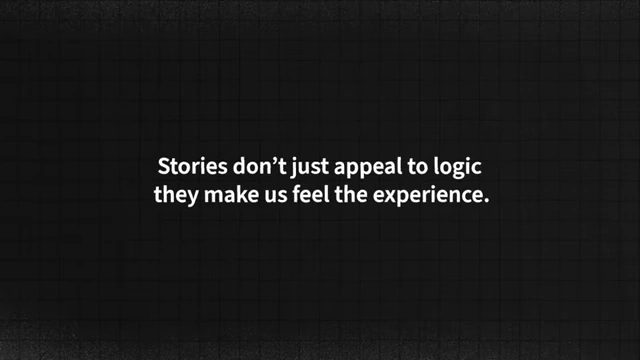
Stories don't just appeal to logic; they make us feel the experience. [ 00:09:16 ]
- This means the brain doesn't just process words; it simulates the experience, making the story more impactful and memorable.
2. Reliving [9:19]
- Reporting vs. Reliving:
- Reporting is information. It's giving the "Wikipedia version" of an event (e.g., "Last night I walked on stage, I was nervous, then I gave my talk").
- Reliving is transformation. It's bringing the audience into the experience with you.
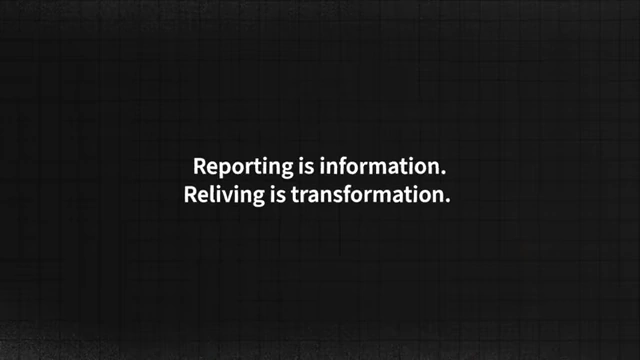
Reporting is information, while reliving a story is transformation. [ 00:09:51 ] - Example of Reporting:

The speaker 'reporting' a story about a speech in a news anchor style. [ 00:10:01 ] - Example of Reliving: "I step onto the stage, and the spotlights are so bright I can't even see the front row. I was so nervous; my hands were shaking so hard the notes were rattling like crazy. And the imposter syndrome in my head was saying, 'You don't belong in this room, Vin, with all these amazing people.'"
- When you relive a story, your voice, face, and gestures change naturally because you are re-experiencing it. This allows the audience to "experience it" with you.
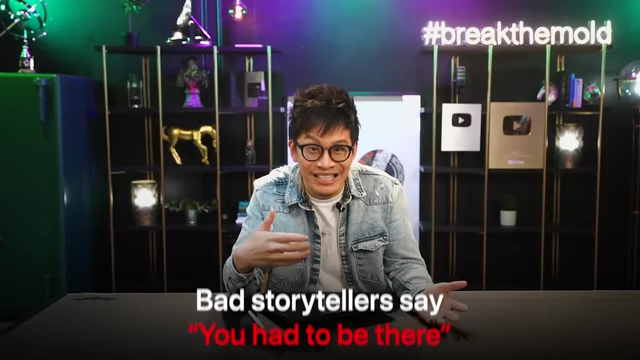
- Bad storytellers often resort to saying, "You had to be there" [9:26].
- 3 Tips to Relive Stories:
- Use the 6 senses framework (as discussed in specificity).
- Use present tense: Instead of "I was standing there nervous," say "I'm standing there, my palms are sweating, my chest is tight."
- Use your body language: Let your physical actions mirror the emotions and events in your story (e.g., if hands are shaking, let them shake).
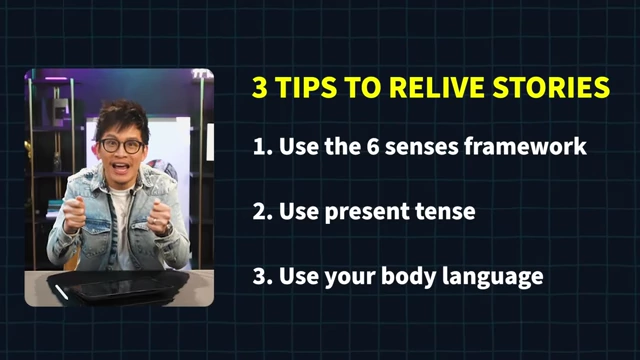
Three tips to effectively relive stories: use the 6 senses framework, use present tense, and use your body language. [ 00:11:56 ]
3. Meaning [12:09]
- The meaning is what makes a story truly useful and powerful.
- It transforms a simple tale into a gift, teaching, inspiring, or shifting the audience's perspective.
- The story is the "doorway," and the meaning is what you lead people into once they've walked through that door.
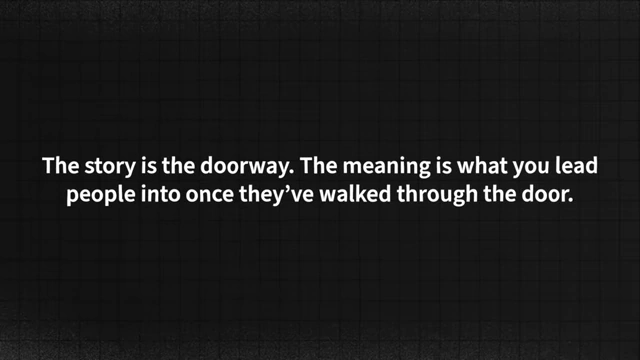
The story is the doorway, and the meaning is what you lead people into once they've walked through the door. [ 00:13:14 ] - Use phrases like "The reason I'm telling you this is because..." to explicitly connect the story to a relevant lesson or point for the audience.
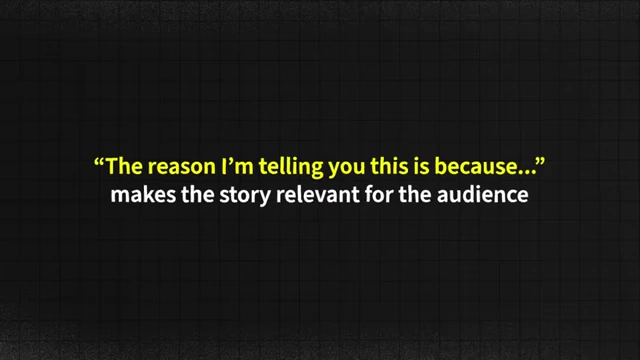
The phrase "The reason I'm telling you this is because..." makes a story relevant for the audience. [ 00:13:23 ] - Audience members want to know not just "what happened to you," but "what does it mean for them?"
- This association makes the story memorable as it applies to their own lives.
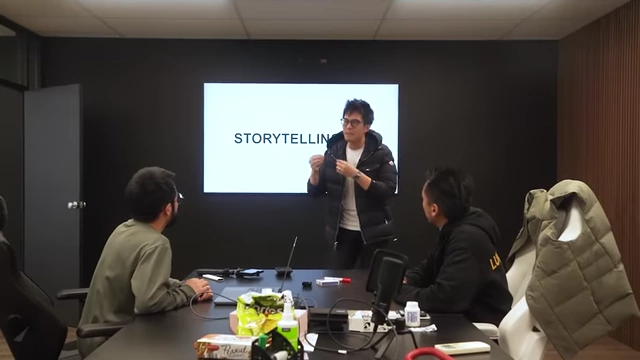
The speaker teaching a small group in a workshop setting, emphasizing the importance of meaning in storytelling. [ 00:13:35 ]
Timing: When to Share Stories [14:58]
- Rule of Thumb: If you have 15 minutes or more with an audience and want to be memorable and influential, share a story.
- Example of effective timing: The speaker recounts a Q&A session where a student asked a deep question about the entrepreneurial journey.

An audience watching a Q&A session during a workshop. [ 00:15:15 ] 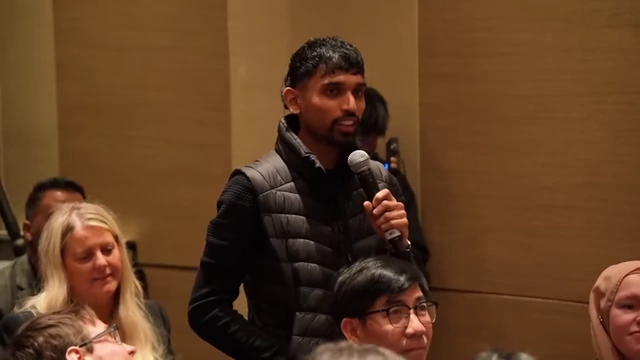
A student asking a thoughtful question during the Q&A session. [ 00:15:17 ] - Instead of a short answer, the speaker chose to tell a personal story about his journey through discomfort (working at a takeaway store, petrol station, doing magic at nightclubs) to "buy blank pages" and write his own story.

The speaker engaging with the audience during a workshop, sharing a personal story about his entrepreneurial journey. [ 00:16:14 ] - This longer, more detailed story was highly impactful and inspiring to the student and others in the room.
- Instead of a short answer, the speaker chose to tell a personal story about his journey through discomfort (working at a takeaway store, petrol station, doing magic at nightclubs) to "buy blank pages" and write his own story.
- When NOT to tell a story: If you have significantly less than 15 minutes and a direct, precise answer is required (e.g., "Can we deliver by Friday? Yes or no?").
- In such situations, telling a lengthy story would be counterproductive and diminish your influence.
- Mastery lies in knowing when to tell a story and when to give a direct answer.
Conclusion
- Your life is a story; you are the author. Live the story you want to tell.
- The video concludes with an encouragement to intentionally live experiences that will become great stories in the future.