How to Achieve Financial Success by Helping Others Generate Revenue: Four Key Principles
This video argues that getting rich on "easy mode" involves helping other people make money, rather than selling to individual consumers. The core idea is to tie your work directly to revenue generation, target clients with money (businesses), charge based on the value you provide, and develop skills that directly impact the bottom line. This approach contrasts with "hard mode," which often involves selling low-priced items to consumers struggling with financial anxieties. The video emphasizes that market value is distinct from societal value, and professions that directly contribute to a business's revenue are often more highly compensated.

Introduction [00:00]
The pursuit of wealth can be approached in two ways: hard mode and easy mode.
- Hard mode: This involves selling to consumers, undercharging, and working excessively for minimal returns.
- Examples: Struggling artists, entrepreneurs selling handmade goods, or individuals crafting unique items hoping for Etsy sales.
- Challenges: Consumers face financial constraints like rent, student loans, and anxieties, making every purchase an emotional battle.

A speaker points to text overlays of "Student Loans," "Financial Anxiety," and "Rent" to illustrate the financial pressures consumers face when making purchases. [ 00:00:35 ]
- Easy mode: This approach, often less romanticized, focuses on a single rule: helping other people make money.
- Thesis: Getting rich on easy mode is achieved by enabling others to increase their income.

A speaker gesturing with text overlay "Help other people make money." This is the core thesis of the video. [ 00:00:50 ]
- Thesis: Getting rich on easy mode is achieved by enabling others to increase their income.
Why “Help Others Get Rich” is How You Get Rich on Easy Mode [01:12]
The economy functions like a pyramid scheme where value is generated at the bottom but captured at the top.
- Selling to consumers (B2C) targets the bottom of the pyramid where money is tight, leading to significant challenges.
- Example: Amazon, for much of its existence, barely broke even on consumer sales. Its main profits come from Amazon Web Services (AWS), which provides infrastructure to other businesses like Netflix and Disney+, helping them make money.

A visual representation of how Amazon Web Services (AWS) powers major companies like Netflix and Disney+, illustrating Amazon's B2B profit model. [ 00:02:09 ]
- Example: Amazon, for much of its existence, barely broke even on consumer sales. Its main profits come from Amazon Web Services (AWS), which provides infrastructure to other businesses like Netflix and Disney+, helping them make money.
- The majority of the top 100 US companies (Fortune 100) are primarily focused on helping other businesses make money.
- Examples:
- Google and Meta (Facebook/Instagram) primarily earn revenue through advertising, enabling other businesses to acquire customers and generate sales. The speaker notes his own business spends $20,000 monthly on Meta ads because they generate more than that in customer revenue.
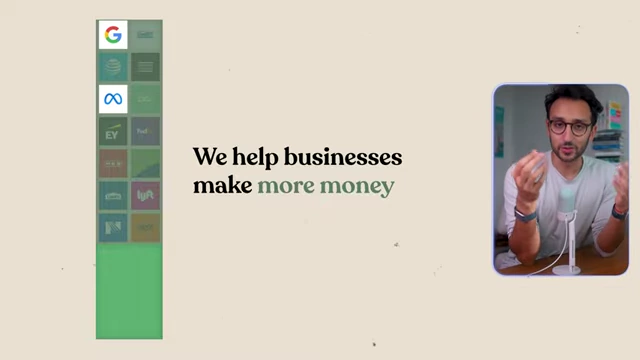
An image displaying the Google and Meta logos, accompanied by the statement: "We help businesses make more money," highlighting their B2B advertising revenue model. [ 00:02:29 ] - Banks like JP Morgan and Goldman Sachs make money by facilitating large transactions for businesses, not primarily through individual consumer deposits.

An illustration showing a bank and the logos of Goldman Sachs and JP Morgan, along with a business icon, signifying how these financial institutions profit by facilitating transactions for other companies. [ 00:03:19 ]
- Google and Meta (Facebook/Instagram) primarily earn revenue through advertising, enabling other businesses to acquire customers and generate sales. The speaker notes his own business spends $20,000 monthly on Meta ads because they generate more than that in customer revenue.
- Examples:
- The core principle is that if your product or service helps others make or save money, you are playing on "easy mode." Otherwise, you are on "hard mode."
An image illustrating that "Easy mode = help others make money" while "Hard mode = everything else," defining the core premise of the video. [ 00:03:44 ]
Principle 1: Tie Your Work Directly to Revenue [03:50]
If you have a job, it's crucial to understand how your role contributes to your employer's revenue.
- Revenue Audit: Ask: "How does my job help my employer make more money?" and "Can I put a number on it?"
- Example: Customer support's true value isn't just answering emails, but preventing customer churn (revenue retention) and upselling, both measurable impacts on revenue.
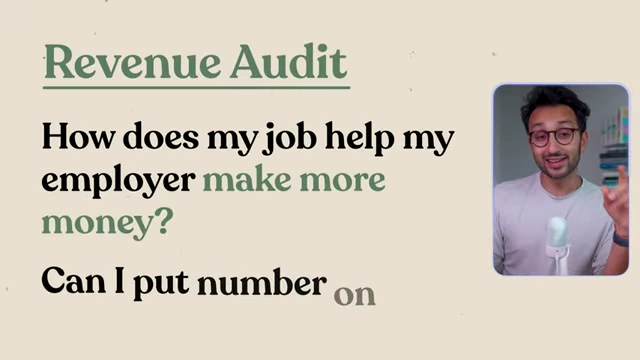
A question prompt for a "Revenue Audit" asking "How does my job help my employer make more money?" and "Can I put a number on it?", emphasizing the importance of quantifiable contributions to revenue. [ 00:04:28 ] - Salespeople are often highly paid because they directly bring in revenue, making their value quantifiable for commissions and raises.
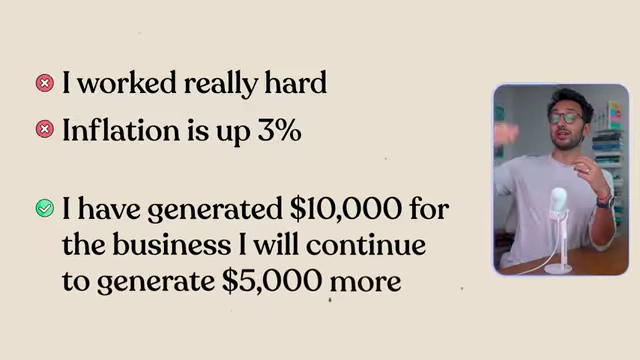
A visual showing a table with two columns, one for common reasons people ask for a raise ("I worked really hard," "Inflation is up") and another for a more effective, revenue-based approach ("I have generated $10,000 for the business I will continue to generate $5,000 more"), highlighting the power of quantifying value. [ 00:05:48 ]
- Example: Customer support's true value isn't just answering emails, but preventing customer churn (revenue retention) and upselling, both measurable impacts on revenue.
- High-Paying Roles and Revenue Correlation:
- Finance: Roles like algorithmic quantitative traders directly contribute to the firm's earnings through algorithms. Investment bankers in front-office roles generate revenue through client relationships.

An icon of two people shaking hands next to a dollar sign, representing how investment bankers' client relationships directly generate revenue for their firms. [ 00:07:43 ] - Tech: Tech companies are profitable because they often provide B2B services that help other businesses make money (e.g., Salesforce).
- Law and Consulting Partners: Partners are highly compensated not just for their legal or consulting skills, but for their ability to bring in new clients and a "book of business," directly contributing to the firm's revenue.

A speaker points to a text overlay that reads "Help your business make more money," encapsulating the key driver for high compensation in various professional roles. [ 00:09:56 ]
- Finance: Roles like algorithmic quantitative traders directly contribute to the firm's earnings through algorithms. Investment bankers in front-office roles generate revenue through client relationships.
Why Some High-Impact Jobs Aren’t Highest Paid [10:18]
Societal value and market value are often different.
- Professions like doctors, teachers, and social workers, while having immense societal value, often struggle to get rich because their work is not directly tied to making money for a business in a measurable way within the current capitalist system.
- Doctors who do get rich often own clinics or hospitals (business owners) or possess highly specialized skills (e.g., neurosurgeons) that allow hospitals to bill high amounts.

A visual illustrating the disparity between "Your value to the market" and "your value to society," indicating that these are not necessarily the same for professionals. [ 00:10:35 ] - The people who get rich are the ones helping other people get rich.

A text overlay stating "The people getting rich are the ones helping other people get rich," highlighting the core principle for wealth accumulation in a capitalist system. [ 00:11:28 ]
How to Reposition Your Skills Toward Revenue [12:06]
Consider how to leverage your existing skills to help businesses generate revenue.
- Example 1: A public school teacher could transition to corporate training, teaching sales or other revenue-generating skills to company staff.

A woman gives a presentation in an office, illustrating a teacher transitioning to corporate training to help businesses improve sales. [ 00:11:57 ] - Example 2: The speaker's website manager, Dan, initially focused on website design or SEO audits. By reframing his service as "optimizing conversion rates on sales pages to increase course purchases," he directly tied his work to revenue and landed a $15,000 client.
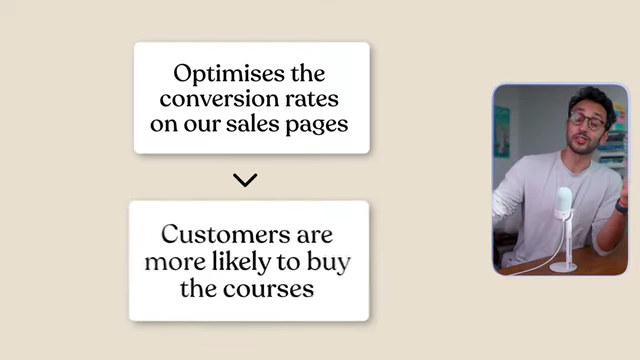
A diagram illustrating that optimizing conversion rates on sales pages leads to customers being more likely to buy courses, directly linking website management to increased revenue. [ 00:12:54 ]
Principle 2: Sell to People Who Have Money [13:35]
Targeting clients with disposable income or significant revenue streams makes selling easier.
- Selling to consumers on a tight budget involves fighting against their financial anxieties for small purchases.

A bar chart comparing an income of $40,000 (Expenses taking most of it) to a $50 service, illustrating the difficulty of selling to consumers with tight budgets. [ 00:13:55 ] - Selling high-value services (e.g., $50,000 service) to a business making $5 million annually is easier, as businesses are driven by ROI (return on investment). If your service helps them make $200,000, they will readily pay $50,000.

A bar chart comparing a business's income of $5,000,000 to a $50,000 service, indicating that businesses with higher income are less concerned about the cost and more about ROI. [ 00:14:11 ] - B2B vs. B2C: Business-to-business (B2B) sales are generally easier than business-to-consumer (B2C) sales.
- Businesses buy with spreadsheets and logic, focusing on ROI.
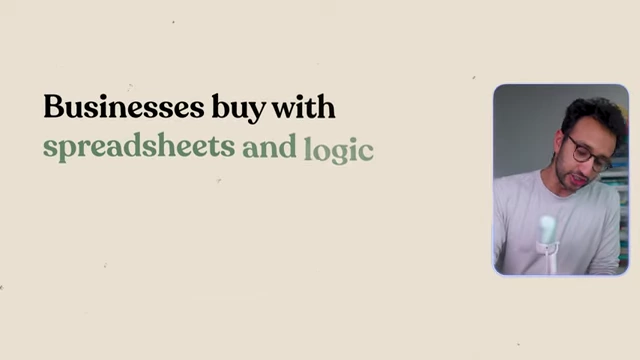
A text overlay stating "Businesses buy with spreadsheets and logic" highlighting the logical purchasing behavior of businesses compared to consumers. [ 00:14:33 ] - Consumers buy with feelings and face tighter budgets.
- Businesses buy with spreadsheets and logic, focusing on ROI.
- To earn significant income (e.g., $100,000), it's easier to sell fewer high-priced items (e.g., 10 items at $10,000) than many low-priced items (e.g., 10,000 items at $10).

A graph plotting Price vs. People, showing two intersecting lines. One line indicates that as the number of people increases, the price decreases, while the other suggests that to reach a high income target (e.g., $100K), it's easier to sell fewer high-priced items (e.g., 10 items at $10K) than many low-priced items. [ 00:14:50 ] - Ideal price point for businesses to start with: $2,000 - $20,000 per service/product, requiring fewer customers for viability.

A graph similar to the previous one, highlighting a "sweet spot" price range of $2,000 to $20,000, which requires fewer customers to achieve a $100K income target. [ 00:15:05 ] - Frame your offer around helping "rich people make more money" (e.g., "I help seven-figure online course creators boost sales by 30%").
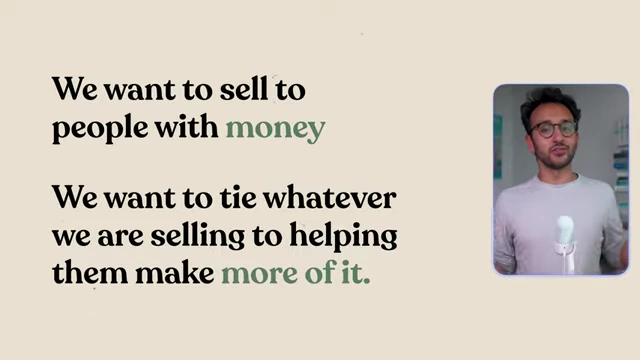
A text overlay emphasizing that "We want to sell to people with money" and "We want to tie whatever we are selling to helping them make more of it," summarizing the strategy for business success. [ 00:15:44 ]
Principle 3: Charge Based on Value, Not Time [15:46]
Avoid capping your income by charging hourly.
- Charging hourly limits your earnings to the number of hours you can physically work and creates an incentive to be slower.

A visual representation of earning $5 per segment, adding up to $40 per day, demonstrating how charging by the hour caps potential income and incentivizes slower work. [ 00:15:57 ] - Focus on the value your service or product provides and quantify it.
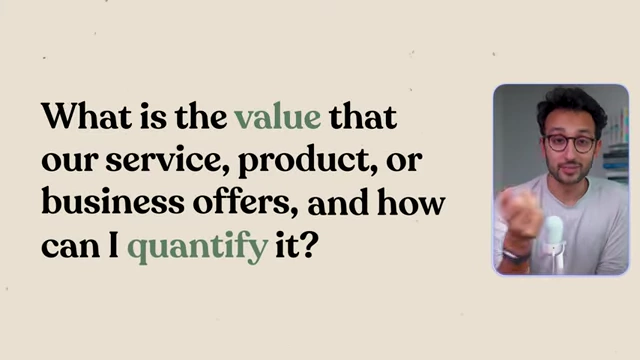
A visual stating "What is the value that our service, product, or business offers, and how can I quantify it?", emphasizing the importance of quantifying value over time. [ 00:16:32 ] - Rule of Thumb: Charge approximately one-tenth (1/10) of the value you help create.
- Example: If you help a client make an extra $100,000, charging $10,000 is a win-win: the client gets a great ROI, and you get rich.

A visual stating "You want to charge about one-tenth of the" value created, suggesting a pricing strategy based on the financial benefit provided to the client. [ 00:16:41 ]
- Example: If you help a client make an extra $100,000, charging $10,000 is a win-win: the client gets a great ROI, and you get rich.
Principle 4: Build Skills That Directly Impact the Bottom Line [16:56]
Not all skills are equally valuable in the marketplace; prioritize "print money" skills.
- High-Income Skills (Closer to Revenue):
- Sales: Directly brings in revenue.
- Marketing: When directly tied to measurable revenue generation.
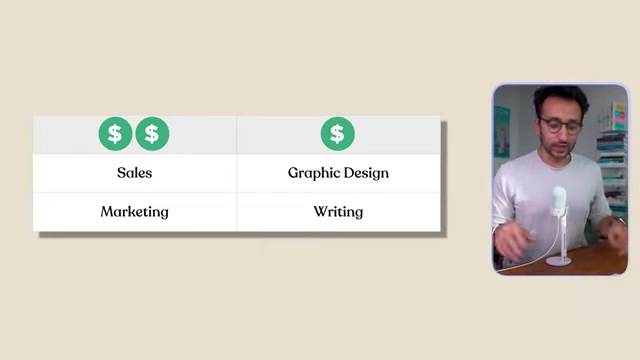
A table showing "Sales" and "Marketing" under a column with two dollar signs (indicating high value) and "Graphic Design" and "Writing" under a column with one dollar sign (indicating lower direct value), illustrating which skills are closer to revenue generation. [ 00:17:52 ]
- Skills Further from Revenue (Nice-to-Have):
- Graphic Design: Unless directly linked to increasing revenue through advertising or conversion.
- Creative, analytical, or content writing: Generally less well-paid.
- Copywriting: The exception, as it directly persuades customers to buy, functioning as a marketing skill.
- The more difficult it is to draw a direct line between what you do and the money you make for an employer or client, the harder it will be to earn significant income.
Final Thoughts [18:23]
You are likely already helping someone make money, as this is the fundamental premise of a job.
- Your employer hires you because you generate more value than they pay you.
- The gap between the value you create and the value you capture (salary) is the business's profit margin.
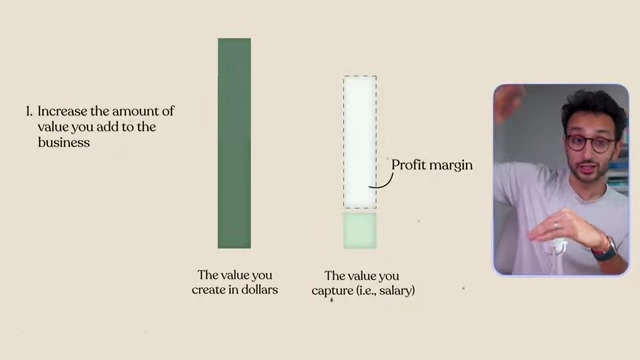
A bar chart illustrating "The value you create in dollars" (a tall green bar) versus "The value you capture (i.e., salary)" (a shorter light green bar), with the difference highlighted as "Profit margin," demonstrating the financial relationship between employee output and compensation. [ 00:19:03 ] - To get rich on easy mode, you can:
- Increase the amount of value you add to the business and articulate it clearly to negotiate a higher share.
- Make the connection between your work and the revenue generated more explicit and visible to your employer or clients, emphasizing the return on investment (ROI).
- Getting rich on easy mode isn't about working harder, but about aligning your efforts with direct revenue generation, recognizing that market value often differs from societal value.
- Starting your own business, especially one focused on helping others make money, is often an easier path to wealth than a traditional job.