How to Become an Art Director in 2025: A Guide to Conceptual Skills, Visual Craft, and Portfolio Building Without Ad School
Summary:
This video provides a roadmap for aspiring Art Directors to enter the field by 2025, focusing on a self-taught path without expensive ad school.
- Art Direction vs. Design: Clarifies that Art Direction is distinct from Design, with AD focusing on strategic visual concepts and ideation, while Design is closer to execution.
- Career Paths: Explores traditional and modern creative career progressions, from junior roles to executive creative director positions, highlighting the fluid nature of these paths.
- Defining an Art Director: Details key responsibilities including concept development, visual storytelling, collaboration, visual composition, directing shoots, and ensuring brand consistency.
- Core Skills (Craft + Ideas): Emphasizes that Art Direction requires both visual craft (design, photography, video editing) and strong conceptual thinking (generating "big ideas" from "insights").
- Conceptual Thinking: Explains "insight" as a deep human truth and "big idea" as a scalable creative concept, providing examples from Snickers, Dove, and Nike campaigns.
- Portfolio Building: Recommends creating a portfolio of "spec ads" (fake, speculative campaigns) to showcase creativity and conceptual abilities without real-world constraints.
- Resources: Mentions "Hey Whipple, Squeeze This" by Luke Sullivan as essential reading and points to free portfolio programs and online resources.

Craft + Ideas are the two main components of Art Direction [ 00:15:39 ]
Introduction to the Art Direction Path [0:00]
- The speaker aims to outline a path to becoming an Art Director by 2025 without needing to attend expensive ad schools or portfolio programs [0:00].
- The path focuses on self-learning through online research and resources [0:01:51].
Art Direction vs. Design: A Key Distinction [2:14]
- Art Direction is not the same as Design, which is a common misconception among graphic designers and even companies [2:14].
- Companies often confuse these roles, leading to graphic designers being expected to perform tasks outside their expertise [6:00].
- Art Directors typically operate "further up the workflow" closer to the idea, strategy, and client brief [6:47].
- Designers are generally closer to the "execution side" of the workflow [6:55].
- Experience in one role does not automatically equate to seniority in the other; a senior designer might have more experience than an Art Director [7:36].
Traditional and Modern Creative Career Paths [4:50]

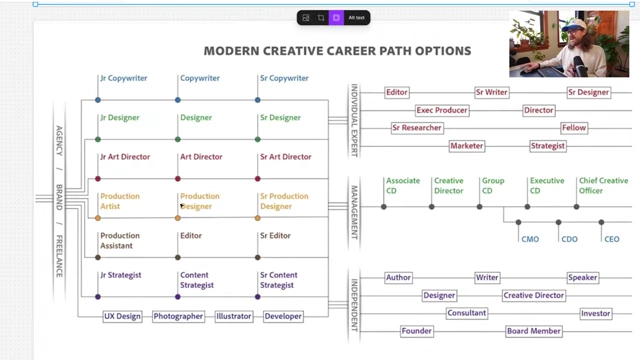
- The speaker uses career path diagrams (from Adam Morgan, former ECD at Adobe) to illustrate potential progressions in creative fields [4:50].
- These diagrams, while helpful, are acknowledged to be somewhat rigid and not fully capture the fluidity of modern career paths [5:27].
- Traditional Path (e.g., 2000 Options):
- Junior roles: Jr. Copywriter, Jr. Designer, Jr. Art Director, Production Artist, Production Assistant [8:08].
- Progression leads to Mid-level and Senior roles (e.g., Art Director, Sr. Art Director) [8:08].
- Entry into Management: From Senior roles, individuals can transition into management as Associate CD, Creative Director, Group CD, and Executive CD [8:52].
- Modern Path:
- The entry point for most aspiring Art Directors is the "Junior Art Director" role, often secured through internships [8:08].
What is an Art Director? Key Responsibilities and Core Philosophy [10:47]
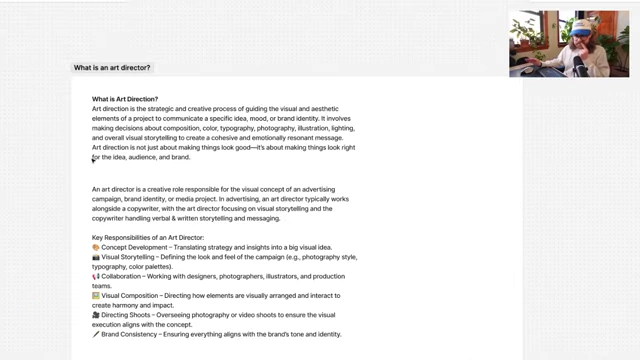
- Definition of Art Direction: It is the strategic and creative process of guiding the visual and aesthetic elements of a project to communicate a specific idea, mood, or brand identity [10:52].
- This involves making decisions about composition, color, typography, photography, illustration, lighting, and overall visual storytelling to create a cohesive and emotionally resonant message [11:07].
- Art Direction is not just about making things "look good," but about making things "look right" for the idea, audience, and brand [11:20].
- Creative Role: An Art Director is responsible for the visual concept of an advertising campaign, brand identity, or media project [11:30].
- They typically work alongside a copywriter, with the Art Director focusing on visual storytelling and the copywriter on verbal/written messaging [11:53].
- Key Responsibilities:
- Concept Development: Translating strategy and insights into a big visual idea [12:16].
- Visual Storytelling: Defining the look and feel of the campaign (e.g., photography style, typography, color palettes) [12:27].
- Collaboration: Working with designers, photographers, illustrators, and production teams, acting as a guide rather than a supervisor [12:51].
- Visual Composition: Directing how elements are visually arranged and interact to create harmony and impact across the entire campaign [13:19].
- Directing Shoots: Overseeing photography or video shoots to ensure visual execution aligns with the concept, often acting as the client to production teams [14:06].
- Brand Consistency: Ensuring everything aligns with the brand's tone and identity, creating cohesive campaign elements (e.g., "matching luggage") [14:31].
Craft + Ideas: The Two Pillars of Art Direction [15:00]
- Simplified View: Art direction fundamentally involves two main components: Craft and Ideas [15:00].
- 1. Craft (Visual Making Skills) [15:04]:
- Includes skills like design, photography, film, cinematography, video editing, and content/social media creation [15:11].
- Many aspiring Art Directors already possess some visual craft skills [18:46].
- While Art Directors don't always execute, they often do, especially in junior roles (e.g., banner ads, print ads, social media posts) [27:31].
- Importance for Pitch Decks: A significant part of an Art Director's role is creating "pitch decks" (Keynotes, PowerPoints, Google Slides) [29:46].
- Design is considered the most universally important craft skill for Art Directors, even if one starts as a "terrible designer" and learns on the job [28:50].
- AI is making visual mock-ups easier for pitch decks, though the speaker prefers not to use AI for final execution [34:19].
- 2. Ideas (Conceptual Thinking) [15:34]:
- This is often the "missing piece" for graphic designers who want to become Art Directors [19:11].
- Advertising agencies and good brands look for "conceptual creatives" who can generate effective advertising ideas [16:33].
- Insight: A "human truth" that explains human behavior, tapping into emotions, psychology, or cultural truths, going beyond mere observation to ask "why" something happens. It highlights a gap or struggle and is actionable [35:06].
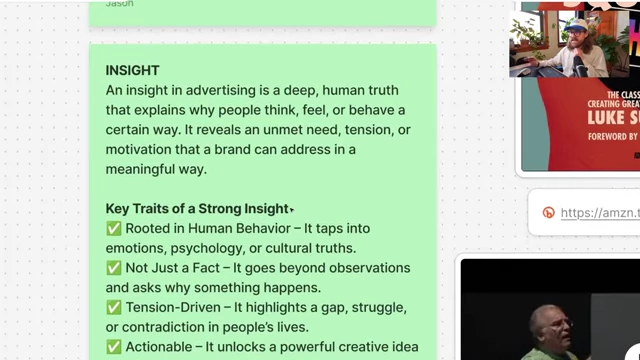
Key traits of a strong insight [ 00:36:03 ] - Big Idea: The overarching creative concept that brings a brand's message to life in a powerful, memorable, and scalable way. It's the core theme driving a campaign. A strong insight combined with a big idea leads to iconic campaigns [35:36].

Key traits of a big idea [ 00:37:17 ] - Examples of Insight and Big Idea:
- Snickers "You're Not You When You're Hungry" [39:18]:
- Observation: People get irritable when hungry.
- Insight: Hunger makes you act like someone else; a quick snack can return you to normal.
- Big Idea: Snickers is a "hunger-fixing personality reset."
- Creative Execution: Celebrities acting uncharacteristically until eating a Snickers (e.g., Betty White playing football).
- Dove "Real Beauty" [42:11]:
- Insight: Women are more beautiful than they think, but self-doubt holds them back.
- Big Idea: Dove sells confidence and self-acceptance, not just beauty products.
- Creative Execution: Forensic artist experiment where women describe themselves more critically than others saw them.
- Nike "Winning Isn't for Everyone" [43:46]:
- Insight: Winning is about mindset, sacrifice, and relentless effort; not everyone is willing to go that far.
- Big Idea: Nike challenges you to earn success, not just celebrates it.
- Snickers "You're Not You When You're Hungry" [39:18]:
- Idea Sizing Chart [45:21]:
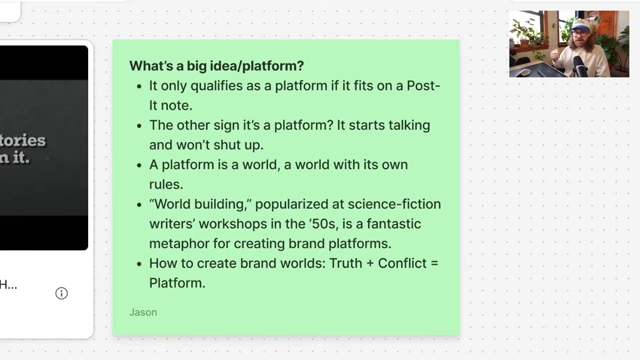
Key characteristics of a big idea and platform [ 00:48:34 ] - Ideas exist on a spectrum of scale:
- Business Strategy & Positioning / Branding: Highest level, often established already.
- Platform: A "Big Idea" that is a single, succinct message (fits on a Post-it note) that generates a multitude of other ideas and allows for "world-building" (Truth + Conflict = Platform) [47:37].
- Campaign: A series of related executions stemming from a platform.
- Execution: A single ad or creative piece.
- One-off: A small idea that doesn't scale.
- Crap: No idea.
- Ideas exist on a spectrum of scale:
Building Your Portfolio with Spec Ads [19:50]
- To become an Art Director, you need to create a portfolio featuring "spec ads" and campaigns [19:50].
- "Spec" means speculative, indicating that the work is fake or not real, which is a completely accepted practice in the creative industry [20:17].
- Spec ads allow you to create "wildest craziest things" without the limitations of real-world budgets, clients, or legal departments [22:01].
- The goal is to make these fake ads look like they could be real campaigns, potentially even cooler than what major brands are currently producing [51:21].
- It's often advised not to create spec ads for the biggest brands (like Apple) because it's hard to surpass their actual work [51:13].
- Once your portfolio is ready, the next step is to apply for internships or junior art director roles [22:29].
- Designers pivoting to art direction might be able to apply for standard Art Director roles if their portfolio demonstrates strong conceptual ability [22:44].
- Portfolio Examples: The FigJam includes links to portfolios from students (your competition) and established Art Directors to draw inspiration from [21:04].

Recommended resources and examples for building an Art Director portfolio [ 00:21:49 ] 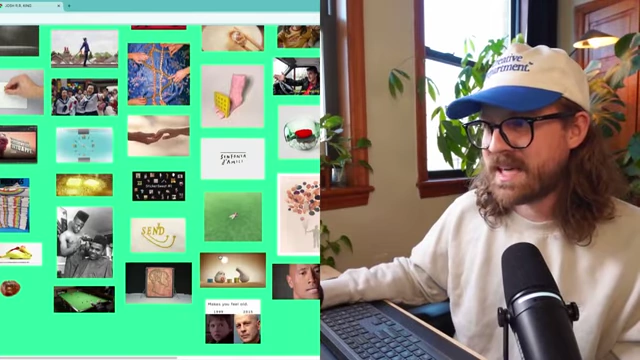
An example of a creative portfolio showcasing diverse and unique projects (Josh King's portfolio) [ 00:56:34 ] 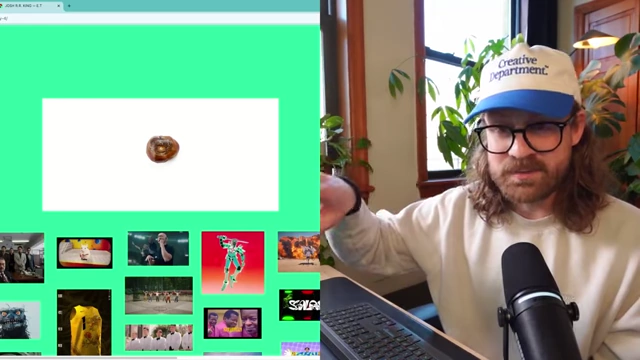
A unique and unexpected item in a creative portfolio, showcasing originality [ 00:56:44 ]
Resources for Self-Learning and Career Development [23:40]
- The speaker maintains a FigJam file (linked in the description) that serves as a living document of resources for aspiring Art Directors [10:13].
- Key Educational Resources:
- Books: "Hey Whipple, Squeeze This" by Luke Sullivan is a foundational text for advertising creatives, helping understand ideas, insights, and advertising psychology [38:02].

'Hey Whipple, Squeeze This,' a foundational text for advertising creatives [ 00:38:18 ] - Videos: Luke Sullivan also has YouTube videos on "Brand Platforms: Ideas That Create Other Ideas" and "Leveraging Tensions to Discover Brand Truths" [38:34].

Luke Sullivan's video on 'Brand Platforms: Ideas That Create Other Ideas' [ 00:38:35 ] 
Luke Sullivan's video on 'Leveraging Tensions to Discover Brand Truths' [ 00:38:55 ] - Free Programs:
- One School for Black Creatives: A free program aimed at increasing black creatives in the industry (requires some craft skills) [24:26].

One School for Black Creatives, a free program to increase diversity in the industry [ 00:24:53 ] - The Workshop: A smaller group mentorship program to help build portfolios [24:57].
- The Academy by GS&P: A free portfolio program by advertising agency Goodby Silverstein & Partners, offering mentorship and industry entry assistance [25:15].
- One School for Black Creatives: A free program aimed at increasing black creatives in the industry (requires some craft skills) [24:26].
- Books: "Hey Whipple, Squeeze This" by Luke Sullivan is a foundational text for advertising creatives, helping understand ideas, insights, and advertising psychology [38:02].
- The speaker plans to continue adding more resources and potentially host future sessions, including portfolio reviews, to further clarify the path to Art Direction [50:07].
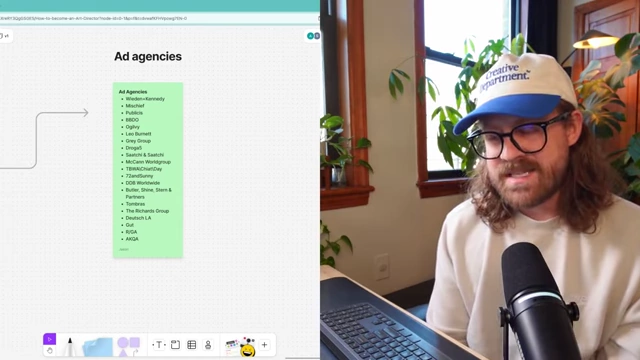
Ad Agencies to Explore [1:00:21]