Mike Hill's 10-Step Playbook to Building 5 Bootstrapped SaaS Apps to $200K MRR
Mike Hill, an Australian founder, shares his proven 10-step playbook for building and scaling multiple bootstrapped SaaS applications, which collectively generate over $200,000 in monthly recurring revenue (MRR). His strategy focuses on minimizing risk by choosing validated ideas, assembling a lean, tech-heavy team with equal co-founder equity, and prioritizing good design. The playbook details how to generate initial capital through lifetime deals (LTDs) on platforms like AppSumo, leverage content marketing for organic growth, and collect customer feedback to refine the product. Mike emphasizes charging for the product from the start and fostering a community for reviews, ensuring sustained MRR without external funding.
Introduction [0:00]
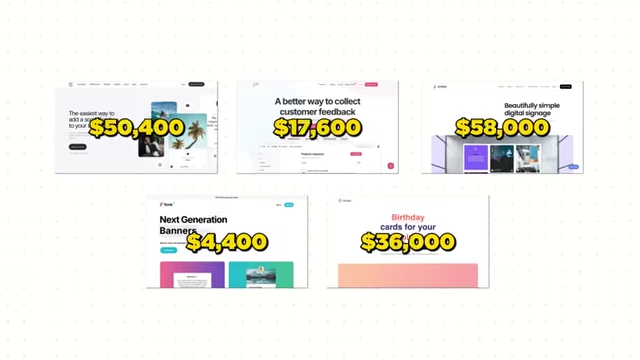
Mike Hill, an Australian founder, has built five successful SaaS applications that collectively achieve over $200,000 in Monthly Recurring Revenue (MRR). He aims to reach $1 million MRR within five years with a minimal team and without external funding, utilizing a repeatable 10-step playbook for each business.

Mike's SaaS Portfolio [1:21]
Mike's portfolio consists of five SaaS applications:
- Curator.io [1:27]
- A social media aggregator for websites and events.
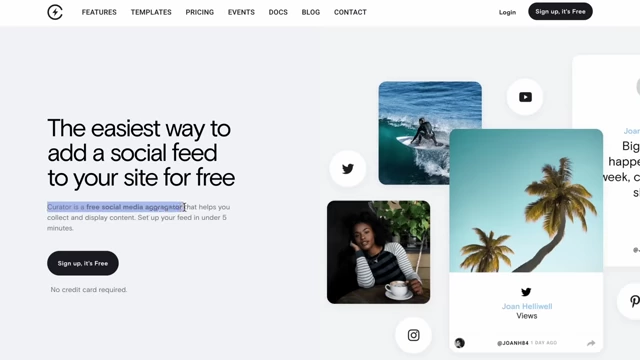
Screenshot of Curator.io website, a social media aggregator [ 00:01:30 ]
- A social media aggregator for websites and events.
- Frill.co [1:31]
- A customer feedback tool that allows users to collect feedback, plot it on a roadmap, and announce new features.
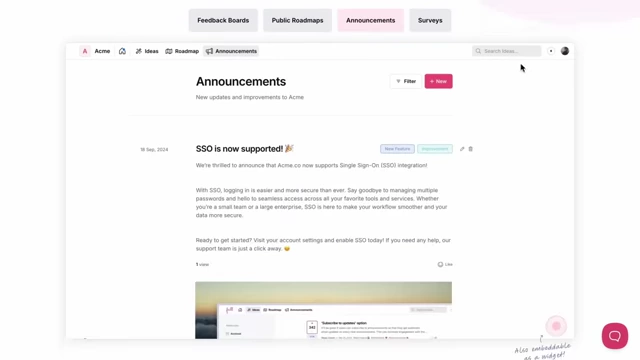
Screenshot of Frill.co's announcements interface, a customer feedback tool [ 00:01:36 ]
- A customer feedback tool that allows users to collect feedback, plot it on a roadmap, and announce new features.
- Juno.co [1:39]
- A digital signage business targeting cafes, gyms, schools, and shops.
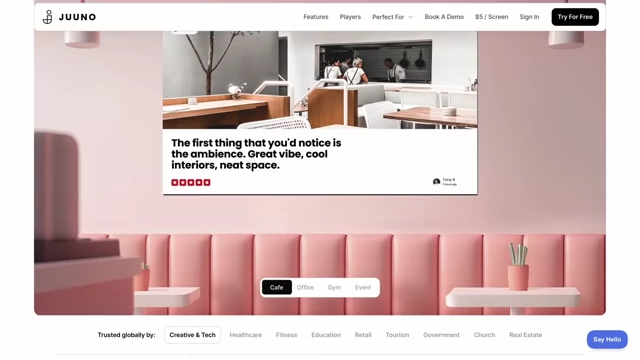
Screenshot of Juno.co website, a digital signage platform [ 00:01:43 ]
- A digital signage business targeting cafes, gyms, schools, and shops.
- Fluke.co [1:44]
- A no-code platform for building onboarding tours, tooltips, and pop-ups for SaaS businesses without developer intervention.
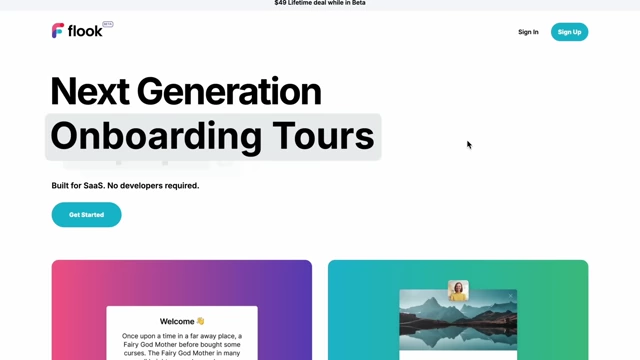
Screenshot of Fluke.co website, a no-code platform for onboarding tours and tooltips [ 00:01:56 ]
- A no-code platform for building onboarding tours, tooltips, and pop-ups for SaaS businesses without developer intervention.
- Smile [1:57]
- An innovative group e-card platform for B2B businesses, launched recently.

Screenshot of Smile website, an anniversary card service for workmates [ 00:02:00 ]
- An innovative group e-card platform for B2B businesses, launched recently.
Mike's Approach to Building [2:50]
Mike's core philosophy for building apps revolves around minimizing risk and ensuring a high success rate.
- Risk Mitigation [3:02]
- Every business is expected to succeed.
- Focus on ideas that cannot fail by building on proven concepts.
- Team Assembly [3:19]
- Assemble a tech-heavy team comprising:
- A front-end developer.
- A back-end developer.
- A UI/UX designer.
- An "overseer" (like Mike himself) for overall product management.
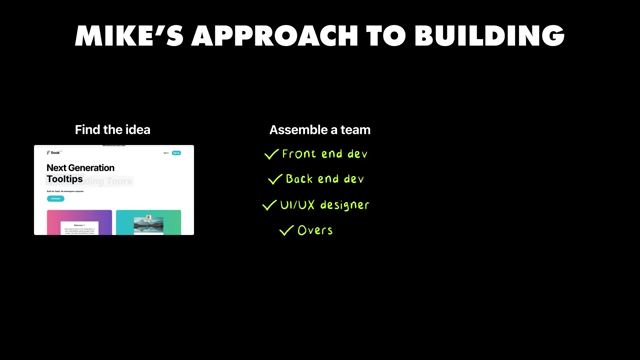
Diagram showing Mike's tech-heavy team assembly: Front-end dev, Back-end dev, UI/UX designer, Overseer [ 00:03:25 ]
- Always start with four co-founders, splitting the company equally (25% each) to minimize founder fallout.
- Assemble a tech-heavy team comprising:
- Design Prioritization [3:37]
- Good design is crucial for sales.
- Every team member should be focused on the product's user experience (UX).
- Financial Strategy [4:00]
- Scale the company to approximately $10,000 MRR to cover initial costs.
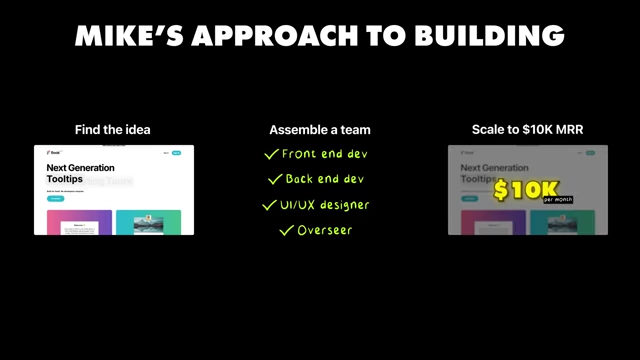
Diagram illustrating the goal to scale a business to $10,000 MRR to cover costs [ 00:04:05 ] - After reaching $10,000 MRR, profits are distributed among founders, aiming for substantial salaries rather than large exits.
- Maintain a lean operation by minimizing investment in advertising and staff to maximize founder profits.
- Scale the company to approximately $10,000 MRR to cover initial costs.
Mike's 10-Step Proven Playbook [5:40]
Mike meticulously follows a 10-step playbook for every new business launch:
- Pick an idea that's been done before [6:01]
- New ideas are risky and require validation.
- Previously validated ideas ensure market demand and functionality.
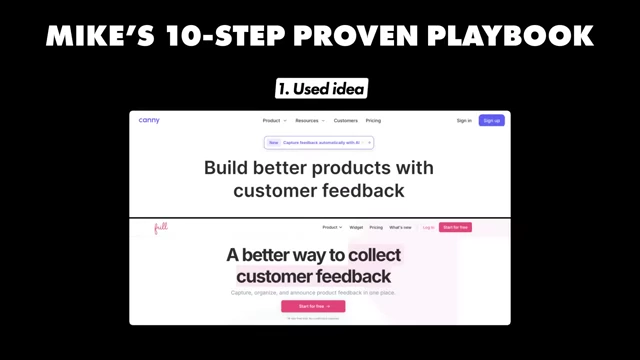
Comparison of a customer feedback tool (Canny) and Frill.co, illustrating the "used idea" concept [ 00:06:02 ]
- Decide on a "good enough" MVP (Minimum Viable Product) [6:11]
- Identify key features customers desire most by analyzing competitors.
- Launch the MVP quickly to gather user feedback.
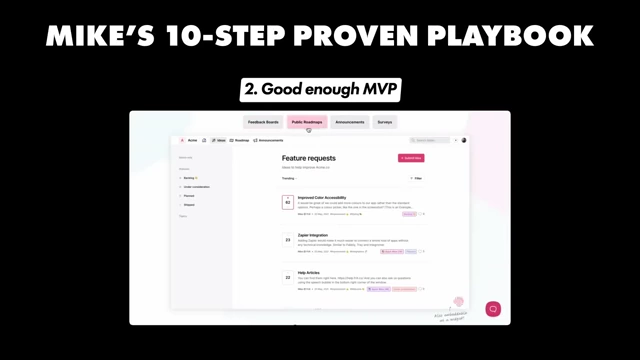
Screenshot of Frill.co's feedback and roadmap interface, representing a "good enough" MVP [ 00:06:15 ]
- Offer a lifetime deal (LTD) [6:29]
- Generate early capital by selling the product for a one-time payment (e.g., $59 or $100).
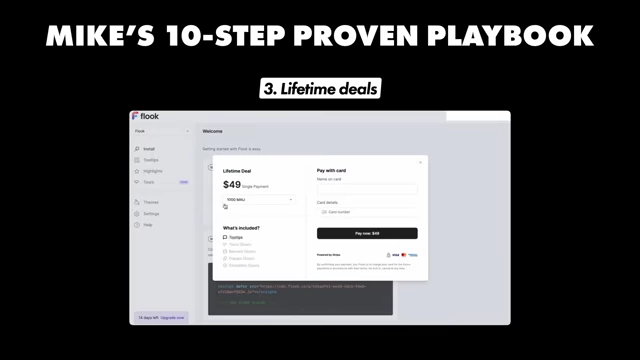
Screenshot of Fluke.co's lifetime deal (LTD) pricing option for a one-time payment [ 00:06:30 ]
- Generate early capital by selling the product for a one-time payment (e.g., $59 or $100).
- Always charge [6:37]
- Never offer accounts for free; paying customers are more likely to use the product and provide valuable feedback.
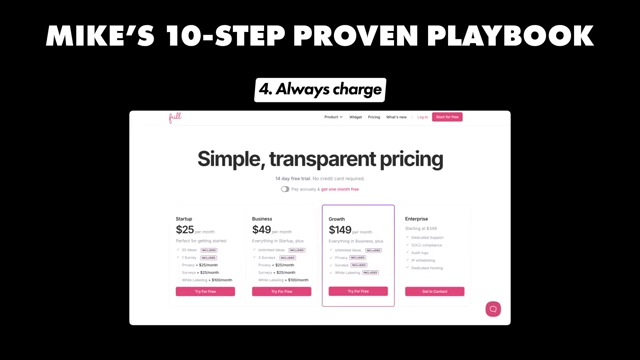
Screenshot of Frill.co's pricing page, emphasizing "always charge" [ 00:06:40 ]
- Never offer accounts for free; paying customers are more likely to use the product and provide valuable feedback.
- Maximize LTD sales [6:50]
- Promote LTDs in relevant online communities like Reddit groups, private Facebook groups, and X (Twitter).

Lifetime deal promotion with logos of Reddit, Facebook, and X, showing where to maximize LTD sales [ 00:07:00 ] - Engage with dedicated LTD groups.
- Example: Frill raised $30,000 from its private LTD.
- Promote LTDs in relevant online communities like Reddit groups, private Facebook groups, and X (Twitter).
- Start writing content early [7:15]
- Begin creating landing pages and blog posts as soon as possible.
- Use capital from LTDs to fund content creation.
- Write competitor comparison pages and "alternative to" articles.
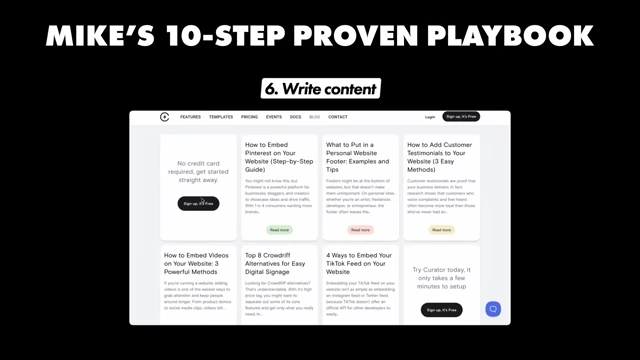
Screenshot of Curator.io's blog page with various articles for content marketing [ 00:07:20 ] - Early content helps with SEO and organic traffic generation through platforms like Google and AI models like ChatGPT.
- Launch on a marketplace (e.g., AppSumo) [7:41]
- Marketplaces offer extensive reach to a large customer database.
- Options include launching on their general marketplace (lower fees) or working with their sales team for a select offering.
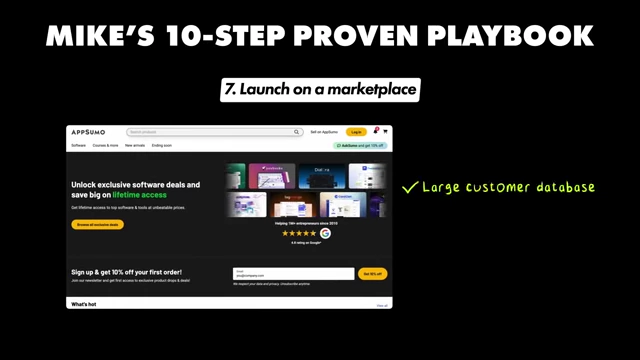
Screenshot of the AppSumo marketplace homepage highlighting its large customer database [ 00:08:03 ] - Aim to generate around $100,000 in capital from these launches, which can fund content creation for one to two years.
- Do one last private LTD [8:21]
- Create a sense of urgency by offering a final, slightly higher-priced LTD before closing it permanently.
- Announce this final deal to your mailing list.
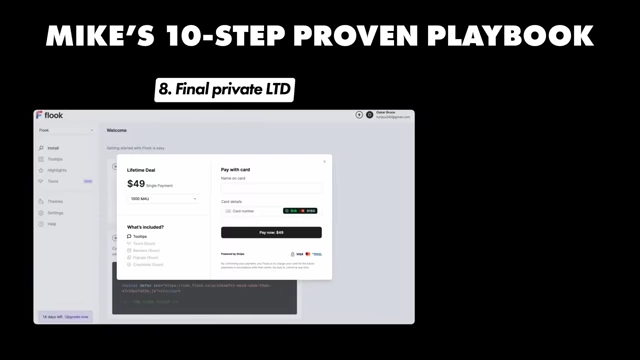
Screenshot of Fluke.co's final private Lifetime Deal (LTD) offer [ 00:08:45 ]
- Get customer reviews [8:48]
- Encourage existing LTD customers to write honest reviews on platforms like Trustpilot and G2.
- These reviews boost domain ranking and provide authentic social proof.
- The LTD community often acts as early ambassadors and is willing to support new products.
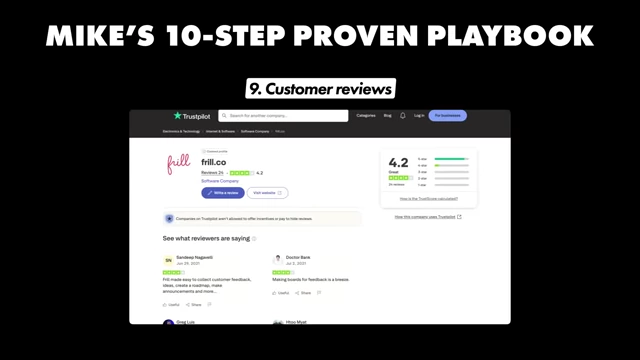
Screenshot of Frill.co's Trustpilot review page, showing customer ratings and feedback [ 00:08:50 ]
- Find customers on Reddit/Quora [9:10]
- Actively monitor and answer questions related to your product or competitors on these platforms.
- Engage authentically within relevant subreddits and Quora spaces.
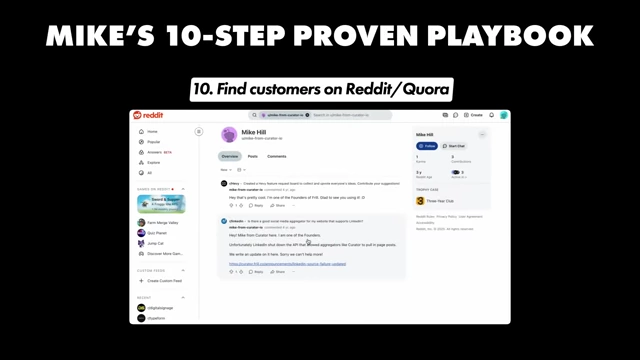
Screenshot of a Reddit discussion board, illustrating how to find customers on Reddit/Quora [ 00:09:15 ] - This strategy helps acquire new MRR as initial capital from LTDs may start to deplete.
Good vs. Bad Ideas [9:52]
Mike distinguishes between ideas that are likely to succeed and those that carry significant risk.
- Bad Idea Example: AI-focused Business [10:16]
- Avoid businesses that heavily rely on third-party APIs or components not under your direct control.
- Such dependencies introduce massive platform risk.
- Good Idea Example: Documentation Tool [10:31]
- Identify existing needs where current solutions are either ineffective or overpriced.
- A documentation tool is a stable idea, especially given AI's increasing reliance on well-structured data.
- The key is not to rely on AI to build the core business, but to serve needs that AI might enhance.
Tech Stack [11:13]
Mike's team utilizes a flexible tech stack depending on the founding team's expertise.
- Front-end Technologies [11:26]
- Vue.js
- React.js
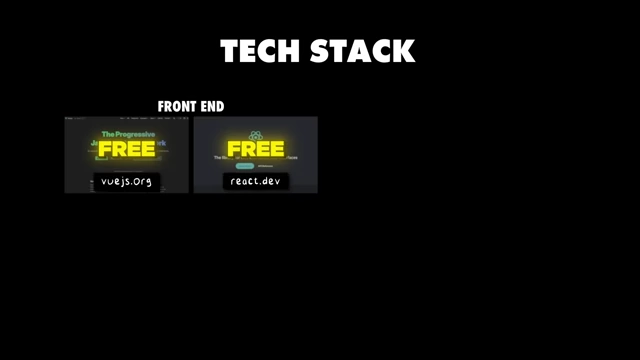
Diagram of front-end technologies: Vue.js and React.js [ 00:11:30 ]
- Back-end Technologies [11:30]
- PHP
- Laravel
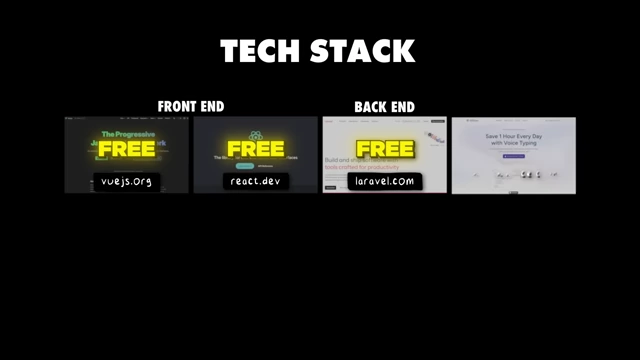
Diagram of back-end technologies: PHP and Laravel [ 00:11:37 ]
- Key Tools [11:35]
- Voice Typing: Willow Voice ($10 per user)
- Meeting Notes: Granolia.ai ($35 per user)
- Communication: Slack ($15 per user)
- Web Design: Framer ($100 per user) - shifts website creation from the tech team.
- Prototyping: VOO ($30 per user), followed by Figma for design.
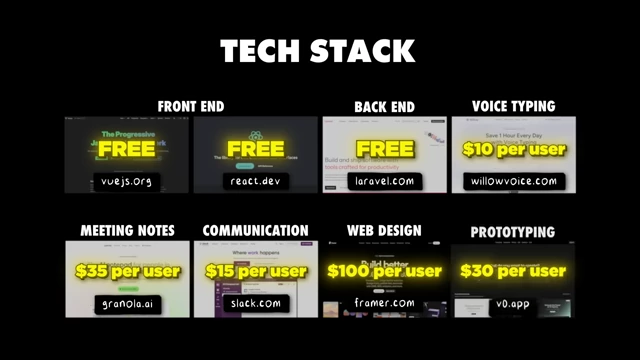
Diagram of key tech tools with their per-user costs for voice typing, meeting notes, communication, web design, and prototyping [ 00:11:55 ]
Final Advice [12:02]
Mike's ultimate advice for aspiring founders:
- Work with people you genuinely enjoy and would happily socialize with.
- Focus on building products that you love, not just what customers want, as this passion fuels dedication and attention to detail.