Building a Profitable Personal Brand: Strategies for Authenticity, Value, and Growth in the Age of AI
Summary:
- The rise of AI has created a "fog" online, making it harder for new creators to stand out. Authenticity and storytelling are crucial to cutting through the noise.
- Genuine self-expression and vulnerability are key to a strong personal brand, involving knowing, accepting, and expressing one's truest self.
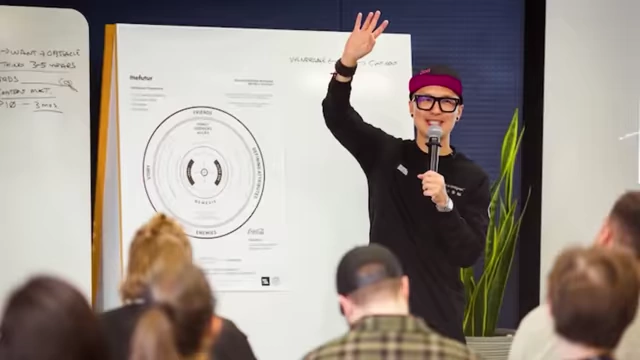
Chris Do explaining the "Vulnerable Leadership Canvas" [ 00:00:34 ] - Providing consistent, impactful value without immediate expectation of return builds "karmic equity" and fosters strong relationships, leading to long-term profitability.
- Focus on internal self-development and mastering a skill to build confidence and a unique identity, rather than chasing external trends or perfection.
- Successful personal branding involves understanding your unique "brand assets" (physique, style, tribe, quirks, story, values, language, actions) and continuously evolving.
The Challenge of Online Visibility in the Age of AI [1:16]
- The "AI Fog": Chris Do describes the current online landscape as a "fog" created by the mass adoption of AI, where robots interact with robots, diminishing human connection. This makes it difficult for new creators to gain visibility.
- Motivation for Content Creation: It's crucial to evaluate why you want to create content.
- The Importance of Storytelling and Meaning: AI-generated content often lacks meaning and personal stories, making it feel "cookie-cutter" and generic [6:16].

Finding Your Authentic Voice and Leaning into Vulnerability [8:25]
- Spirituality as Self-Expression: Chris redefines spirituality as "to know, to accept, and express your truest self" [7:30].
- This involves understanding what makes you unique, embracing it (self-acceptance and self-love), and openly expressing both the good and bad aspects of your true self [7:47].
- This process involves shedding personas and not caring what others think [8:14].
- Chris Do often teaches and demonstrates concepts on whiteboards during his presentations.

Chris Do pointing at a whiteboard with the topic "WHAT'S THE PROBLEM?" and bullet points [ 00:00:14 ]
- Evolution of Self in Content Creation: Many creators start by emulating others, playing characters rather than being themselves [9:46].
- Chris's own journey involved initially playing a "strict business person" role alongside a more "fun-loving" partner, which felt inauthentic [13:03].
- He began leaning into his full personality (jokes, funny voices) around 2016 after his partnership ended, recognizing that he wasn't changing, but rather "being more of myself" [13:40].
- Building Confidence on Camera: Showing up authentically on camera is a muscle that needs to be worked consistently [14:42].
- Early content creation often involves juggling many anxieties (what to ask, how you look, audience perception), which reduces mental capacity for genuine interaction [16:15].
- Taking pauses and allowing for silence helps quiet the "monkey reptile brain" and allows for more thoughtful responses [18:15].
- Clubhouse Lessons: Thinking in Real-Time: The audio-only platform Clubhouse forced Chris to think and speak in real-time, building comfort and fluency at an unprecedented speed due to constant "reps" [20:01].
The Power of Value-Driven Content and Reciprocity [25:01]
- Value Before Selling: Over-promoting and being transactional (like many early Clubhouse users) can ruin a platform or brand [22:55].
- Relational vs. Transactional Interactions: Ryan Dice categorizes people as:
- Impact-Driven Content and Reciprocity: Regularly providing valuable content makes people feel a sense of reciprocity [31:38].
- Similar to free samples or gifts, continuous, helpful content makes an audience feel inclined to support the creator [34:29].
- This builds a "bank of karmic equity"—deposits of value that compound over time, allowing for larger "asks" later [37:50].
- Entertaining content alone doesn't create this same debt; it's often seen as a fair exchange for a view or like [35:19].
- "Riches in the Reaches, Not in the Niches": The traditional model of TV selling ads has collapsed, and creators are now the network, production studio, and ad agency [39:41].
- Brands seek creators with broad reach and strong engagement whose values align with theirs, offering opportunities like advisory roles or equity [41:11].
- Over-niching can limit audience size, making it harder to monetize. The goal is to attract larger audiences and draw them into your niche [42:02].
Continuous Growth and Overcoming Perfectionism [44:08]
- Embracing New Formats and Discomfort: Chris is not "married to the format" but is interested in doing "what works" to transmit ideas effectively [44:32].
- He actively seeks personal growth and challenges, exemplified by adopting the "Man on the Street" interview format despite initial reservations [45:30].
- Leaning into discomfort is essential for continuous improvement and pushing creative boundaries [50:55].

Chris Do writing on a whiteboard with sections like "BRAND", "HEADLINE", "CTA", and "KNOWN -> UNKNOWN", outlining content strategy elements. [ 00:00:21 ]
- The Danger of Chasing "New" (External Innovation): Chasing external trends (new platforms, formats) leads to superficial engagement and prevents mastery [53:20].
- True originality comes from "returning to the source code" – understanding your authentic self before societal pressures shaped you [54:19].
- Being "safe" and copying others is risky because it's hard to stand out unless you're already a top contender. Taking risks by being different is the safer long-term strategy [58:36].
- Developing Calluses to Dislike: Chris's confidence in being disliked stemmed from his skill and identity as a designer, which he developed early in art school [1:00:36].
- An "iconoclast" challenges conventional wisdom, and having a contrarian viewpoint is essential to cut through noise [1:00:10].
- Over time, Chris learned to separate people's opinions from his genuine self, understanding that negative reactions often stem from others' unresolved past experiences [1:03:27].
- Perfectionism as an Avoidance Strategy: Perfection is an illusion used to delay action, stemming from a fear of testing one's ideas and facing potential failure [1:19:53].
Building a Robust Personal Brand for the Future [1:25:08]
- Timeless Philosophies for Brand Building: Regardless of platform changes, core principles remain:
- Know who you are, accept yourself, and have the courage to express your true self [1:27:00].
- Be relational rather than transactional, aiming to help people [1:27:12].
- This builds a strong bond and relationship with your audience [1:40:13].
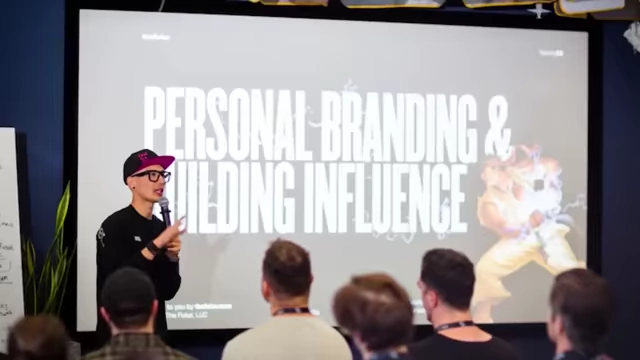
A presentation slide titled "PERSONAL BRANDING & BUILDING INFLUENCE". [ 00:00:34 ]
- Elements of "World Building" for Personal Brands: Like Marvel builds universes with characters and lore, individuals can cultivate their "brand assets":
- Physique & Style: Unique silhouette, clothing, accessories [1:13:39].
- Tribe: The people you associate with [1:14:27].
- Mannerisms & Quirks: Unique gestures, vocal patterns [1:14:48].
- Story: Backstory, defining moments, origin story [1:15:21].
- Beliefs & Values: Core principles that guide actions [1:15:27].
- Language & Messaging: Tone of voice, signature phrases [1:15:31].
- Start with internal aspects (beliefs, values, story) before external presentation (dressing, appearance) to ensure authenticity [1:16:40].
- How Chris monetizes through partnerships & equity [1:23:01]: Chris shares that most of his business monetization comes from organic reach, not heavy ad spending. He uses paid ads for specific, cash-flow positive workshops.
- He noted that ad costs for his Client Acquisition Machine (CAM) workshop increased from $100 per seat to $60 to acquire a customer.
- He emphasizes that if an offering is good, creators owe it to their community to use all means, including ads, to reach them.

Chris Do holding an Emmy award, signifying his achievements and expertise. [ 00:00:13 ]
- Alex Hormozi's Book Launch Analysis [1:27:48]: Chris analyzes Alex Hormozi's "$100 Million Money Models" launch as a masterclass in marketing, highlighting both its brilliance and problematic aspects.
- Success Factors:
- Credibility: Hormozi has a proven track record [1:29:29].
- Low Barrier Entry: The $30 book was an accessible entry point [1:30:29].
- Value Stack: Offering more perceived value at each step of the funnel [1:31:30].
- Emotional Triggers: Attacking shared dislikes (e.g., politicians) and framing it as a collective mission to "dethrone" them [1:32:15].
- False Scarcity: Creating urgency with limited-time offers and limited quantities [1:33:59].
- Visual Representation: Using physical props (binders, books) to convey value [1:33:06].
- Targeting: Effectively reaching entrepreneurs who have spending capacity [1:39:49].
- Community Building: Fostering a community of like-minded individuals [1:39:49].
- Ethical Concerns: Chris questions the ethics of false scarcity, misrepresentation of VIP access, and suggestive language around tax deductibility [1:33:44].
- Overall Takeaway: While the tactics may be questionable, the model is undeniably effective at building a strong relationship with an audience that is willing to spend money, primarily because the product itself is genuinely good and delivers results [1:38:50].
- Success Factors: