Reprogramming Dopamine: 3 Strategies to Resensitize Your Brain for Focus and Productive Work
This video explains how to resensitize your brain's dopamine system to make hard work more rewarding and achieve flow states.
- Dopamine, often called the "molecule of more," drives both addictive behaviors and the reward from accomplishment.
- Instead of "dopamine detoxing," the goal is to resensitize dopamine receptors, reducing the need for high stimulation.
- The speaker shares a personal experience from a silent meditation retreat that naturally reset his reward sensitivity.
- Three practical strategies are provided to calibrate dopamine sensitivity: taking boring breaks, consciously inhabiting "in-between" moments, and focusing on one task at a time.
- These methods aim to shift your brain's baseline, making previously mundane tasks feel rewarding and fostering deep focus and flow.

Summary of the three strategies to calibrate dopamine sensitivity. [ 00:09:27 ]
Introduction to Dopamine and Hyperfocus [0:00:00]
The video begins by highlighting dopamine as a neurochemical that can lead to distraction and overconsumption of stimulating content (like social media or junk food). However, it proposes leveraging the dopaminergic system to achieve hyperfocus and propel individuals forward in their work. The speaker, Rian Doris, CEO of Flow Research Collective, aims to demonstrate how to use neuroscience to access flow states.


My Monk Retreat Experience: A Personal Awakening [0:00:26]
The speaker recounts a 9-day silent Zen meditation retreat, involving 16 hours of meditation daily, no talking, reading, or writing, and bland food.

- The meditation retreat involved only bland, tasteless food.

The silent meditation retreat involved only bland, tasteless food. [ 00:00:39 ] - Upon returning, he experienced an intoxicating dopamine reward from checking his phone.

Checking his phone after the retreat provided an intoxicating dopamine reward, with many social media likes and messages. [ 00:00:50 ] - The next day, still in a "Zen-like state," he tackled a long-delayed, laborious task.
- Surprisingly, he found his attention immediately drawn into the present moment, entering a flow state—an optimal state of effortless absorption and heightened productivity.

Flow is defined as an optimal state of effortless absorption and heightened productivity. [ 00:01:17 ] - The once dreaded task became engaging, and his brain was resensitized to find the work intrinsically rewarding.

During the flow state, hours melted away, and the work became thrilling. [ 00:01:22 ] 
The retreat resensitized his brain, making once boring tasks rewarding. [ 00:01:37 ]
The Problem with Dopamine Detoxing [0:02:02]
Dopamine is dubbed the "molecule of MORE," responsible for the addictive nature of substances like cocaine and the compelling pull of social media, but also for the high derived from accomplishment. It drives the desire for more of whatever produced it.
- Dopamine is known as "The molecule of MORE," driving our desire for more rewards.

Dopamine is dubbed "The molecule of MORE," driving our desire for continued reward. [ 00:01:45 ] - Misconception of Dopamine Detoxing: Scientifically, a "dopamine detox" is not possible as dopamine is a crucial neurochemical for basic function, including focus.
- It's impossible to function without dopamine, as it plays a critical role in focus.

We cannot function without dopamine, as it plays a critical role in focus. [ 00:02:10 ]
- It's impossible to function without dopamine, as it plays a critical role in focus.
- Dopamine Desensitization: Over-stimulation from sources like video games, junk food, and social media can desensitize dopamine receptors.
- Overstimulation from sources like social media, video games, and junk food can desensitize dopamine receptors.

Overstimulation from sources like TikTok, Instagram, and news can desensitize dopamine receptors. [ 00:02:32 ] - When this occurs, dopamine still signals, but fewer receptors receive the signal, leading to a reduced response.
- Overstimulation from sources like social media, video games, and junk food can desensitize dopamine receptors.
- The Goal: Resensitize, Not Detox: Instead of attempting to detox, the objective is to resensitize the brain to dopamine.
- Low sensitivity to reward means a lot of stimulation is needed to capture attention.

Low sensitivity to reward means a lot of stimulation is needed to capture attention. [ 00:02:49 ] - High sensitivity to reward means minimal stimulation is needed to capture attention.
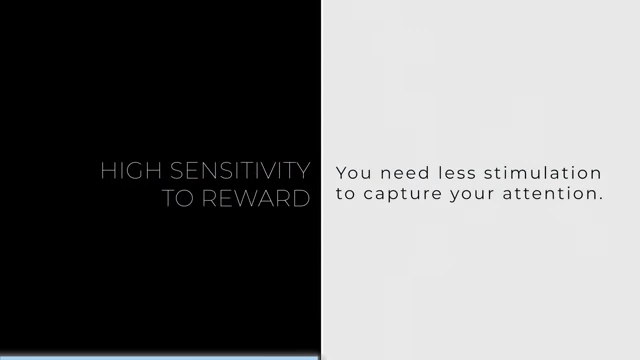
High sensitivity to reward means minimal stimulation is needed to capture attention. [ 00:02:53 ] - Experiencing a dopamine hit from simple pleasures, like a beautiful sunset, indicates high reward sensitivity.

Receiving a dopamine hit from simple pleasures, like a beautiful sunset, indicates high reward sensitivity. [ 00:03:12 ]
- Low sensitivity to reward means a lot of stimulation is needed to capture attention.
- The speaker notes his own past need for high stimulation and how his retreat experience reset his reward sensitivity. He then introduces simpler, quicker methods to achieve this resensitization without extreme measures.
How to Calibrate Your Sensitivity to Reward [0:03:47]
Resensitizing the dopamine system boosts impulse control and enables delayed gratification, making typically "boring" productive tasks as thrilling as high-stimulation activities. There are three key steps to achieve this:

1. Take Boring Breaks [0:04:12]
The common mistake is taking dopamine-fueled breaks (e.g., scrolling social media, checking emails, reading news) that are more stimulating than the work itself.
- This makes returning to work feel dull and unrewarding.
- Solution: Take breaks that are less stimulating than your work.
- The first strategy to calibrate reward sensitivity is to take boring breaks.

The first strategy to calibrate reward sensitivity is to take boring breaks. [ 00:04:19 ] - Examples: Staring at a wall, a 20-minute nap, walking, stretching, mindfulness, breath work, foam rolling, or light exercise.

Take breaks that are less stimulating than your work, such as staring at a wall. [ 00:05:29 ] 
Examples of boring breaks include breath work. [ 00:05:19 ] - The goal is to "starve your brain of dopamine" during the break, causing it to crave the reward of returning to productive work.
- This allows the "dopamine-seeking cage rat" in your brain to pull you back into meaningful tasks rather than keeping you stuck on distracting breaks.
- Consistently taking boring breaks shifts your baseline, making previously mundane tasks more rewarding.

Consistently taking boring breaks shifts your baseline, making previously mundane tasks more rewarding. [ 00:07:02 ]
- The first strategy to calibrate reward sensitivity is to take boring breaks.
2. Inhabit the In-Between [0:05:55]
Many people subconsciously fill "in-between" moments (waiting in line, sitting alone before a meeting) with phone use, seeking quick dopamine hits.
- This habit leads to unintentional information consumption, further fracturing attention and desensitizing dopamine receptors.
- Solution: Consciously leverage these moments to simply settle and be present, cutting out habitual stimulation.
- The second strategy is to inhabit the in-between moments.

The second strategy is to inhabit the in-between moments. [ 00:05:58 ] - Mindlessly using your phone during in-between moments is not ideal.

Filling in-between moments with phone use for quick dopamine hits is not ideal. [ 00:06:13 ] - Examples: Sit quietly without your phone before a meeting, focus on your breath while waiting in line, or commute in silence.
- Consciously leveraging in-between moments to be present helps resensitize dopamine receptors.

Consciously leveraging in-between moments to be present helps resensitize dopamine receptors. [ 00:06:27 ] - This practice forces presence, helps tolerate low stimulation, shifts the baseline for what's considered boring, and cultivates a "monk-like quality of mind" conducive to deep focus and flow.
- The second strategy is to inhabit the in-between moments.
3. Do Everything One Thing at a Time [0:07:10]
Practicing singular focus significantly heightens reward sensitivity. The speaker admits to becoming worse at multitasking, to the point of stopping conversations and walking to send a text.
- Neuroscience of Focus: The brain operates between the Default Mode Network (DMN), active during disengaged attention, and the Task Positive Network (TPN), active during focused attention.
- The third strategy is to do everything one thing at a time.

The third strategy is to do everything one thing at a time. [ 00:07:15 ] - Multitasking involves rapid, inefficient shifting between the brain's Default Mode Network and Task Positive Network.

Multitasking involves rapid, inefficient shifting between the brain's Default Mode Network and Task Positive Network. [ 00:07:18 ] - The Default Mode Network (DMN) is active during disengaged attention.

The Default Mode Network (DMN) is active during disengaged attention. [ 00:07:56 ] - Multitasking involves rapid shifting between DMN and the Task Positive Network (TPN).

Multitasking involves rapid shifting between DMN and the Task Positive Network. [ 00:08:14 ]
- The third strategy is to do everything one thing at a time.
- Multitasking: Involves rapid, inefficient shifting between DMN and TPN. While a burden for multitasking, this rapid shifting is a "superpower for flow."
- Rapid shifting between DMN and TPN is a superpower for achieving flow states.

Rapid shifting between DMN and TPN is a superpower for achieving flow states. [ 00:08:37 ] - The faster one can shift from DMN to TPN, the quicker focus can be engaged, and the higher the reward sensitivity, the easier and faster this shift becomes, funneling more focusing neurochemistry (dopamine) into the system.
- Rapid shifting between DMN and TPN is a superpower for achieving flow states.
- Practice: Cultivate singular focus in all activities.
- Cultivate singular focus by engaging in one activity at a time, such as just eating, working, or conversing.

Cultivate singular focus by engaging in one activity at a time, such as just eating, working, or conversing. [ 00:09:06 ] - Examples: When eating, just eat; when working, just work; when conversing, just converse.
- Embrace life as a series of singular activities, avoiding scattered efforts and constant novelty seeking to secrete dopamine.
- Cultivate singular focus by engaging in one activity at a time, such as just eating, working, or conversing.
Conclusion and Call to Action [0:09:17]
By consistently applying these three strategies—taking boring breaks, inhabiting the in-between, and doing everything one thing at a time—individuals can master their dopaminergic system, propel themselves forward, and reliably access peak performance and flow states. The ultimate goal is to transform work into play, creating a significant competitive advantage.