Linus Tech Tips: How Linus Sebastian Built a Multi-Million Dollar YouTube Empire, Handles Ethics, and Prepares for AI's Impact
Linus Sebastian of Linus Tech Tips (LTT) shares insights into building his multi-million dollar tech YouTube empire and navigating its challenges. He reveals the channel's $26.3 million in lifetime YouTube AdSense revenue.


Real Talk & Declining Views [0:00]
Linus Sebastian opens up about the current state of Linus Tech Tips (LTT), acknowledging a significant decline in viewership over the past 18 months.
Viewership Decline
- LTT's main channel's monthly views have dropped to around 45 million, a decrease from its peak of over 120 million (excluding shorts).
- Linus stresses that this drop is taken "extremely seriously" due to the real-world impact on their team of over 100 employees.

Collage of Linus Media Group's 100+ employees [ 00:00:13 ]
Adapting to the "Curve"
- He refers to "the curve" as the natural life cycle of a YouTuber, where channels typically reach an apex and then face an inevitable decline.
- LTT is actively re-evaluating its content, upload frequency, video packaging, and titles/thumbnails to understand if they need to adapt to a "new meta" or if they are at the end of their growth curve.
Examples of Linus Tech Tips' diverse content formats [ 00:01:09 ]
Looking at Linus' YouTube Earnings & Views [3:39]
The discussion delves into LTT's financial performance and content strategy, showcasing the channel's highest-earning videos and the evolution of its content.
Lifetime AdSense Revenue
- Linus Media Group (LMG) has generated over $26.3 million in revenue through YouTube AdSense alone.
Estimated lifetime YouTube AdSense revenue for Linus Media Group [ 00:00:05 ]
- Linus Media Group (LMG) has generated over $26.3 million in revenue through YouTube AdSense alone.
Top Earning Videos (AdSense)
- "I LOVE BUILDING COMPUTERS!" ($139,000): This video, along with the second highest earner, benefited from an "infinite money glitch period" on YouTube where super-long live stream VODs were algorithmically favored.
- "I Pray This Computer Sucks. Cuz I'm Gonna Sell It For $1" ($102,000): Another live stream VOD that capitalized on YouTube's algorithmic quirks at the time.
- "How To Build a PC, The Last Guide You'll Ever Need" ($78,000): An evergreen video, initially a "low performer" (a "10 of 10" in their internal rating for worst performing out of the last 10 uploads), but became a long-term revenue generator.

Top earning AdSense videos on Linus Tech Tips [ 00:06:00 ]
Content Evolution and "Slow Burns"
- Linus highlights the strategic value of "slow burn" evergreen content, like the PC build guide, which, despite low initial engagement, accrues significant views and revenue over time.
- He advises new creators to produce similar comprehensive, reference-material videos within their niche, as they provide consistent value and attract subscribers long-term.

Jon Youshaei's YouTube Masterclass video, an example of evergreen content [ 00:07:14 ]
Handling Conflicts Of Interests [7:57]
Linus addresses the complex issue of maintaining editorial integrity while engaging with product brands, a critical aspect for a tech review channel.
Clear Distinction in Sponsorships
- LTT draws a strict line: brands can pay for "airtime" (sponsored segments/videos) but cannot buy LTT's "opinion" or its lab team's analysis in editorial content.

Linus in a video parodying brand pressure, demonstrating integrity [ 00:11:53 ] - This separation is fundamental to preserving the channel's credibility with its audience.
- LTT draws a strict line: brands can pay for "airtime" (sponsored segments/videos) but cannot buy LTT's "opinion" or its lab team's analysis in editorial content.
Acknowledging Inherent Conflicts
- Linus admits that working with brands, even on sponsored content, creates a "perception of a potential negative occurrence" (a conflict of interest) when those same brands' products are reviewed.
- LTT counters this by being transparent and consistently demonstrating its independence.
Why Nvidia Stopped Sponsoring Linus [12:50]
Linus recounts a specific instance where LTT's commitment to honest criticism led to a temporary halt in a major sponsorship.
Calling Out Unethical Behavior
- LTT publicly criticized an Nvidia representative for using "mafia tactics" by threatening an independent reviewer (Hardware Unboxed) with withholding early review samples if their editorial direction didn't align with Nvidia's marketing.
Hardware Unboxed's tweet exposing Nvidia's "mafia tactics." [ 00:13:42 ] - This incident occurred shortly after LTT had completed a lucrative brand deal with Nvidia (over $50,000) for the launch of the 3090 GPU.
- LTT publicly criticized an Nvidia representative for using "mafia tactics" by threatening an independent reviewer (Hardware Unboxed) with withholding early review samples if their editorial direction didn't align with Nvidia's marketing.
Consequences and Philosophy
- Nvidia ceased working with LTT in a sponsored capacity for over two years following the criticism.
- Linus explains his business philosophy: "diversify and spend conservatively," aiming for a position where "no single company in the tech space could ever hold us hostage." This independence allows them to criticize even major partners without fearing financial ruin.
Why Apple Hates Linus [15:58]
Linus shares his perspective on why Apple avoids engaging with Linus Tech Tips.
Image and Ideology Clash
- Linus speculates that Apple dislikes him because he doesn't fit their preferred "sleek" image, aligning more with the "geeky nuts and bolts" ethos of Steve Wozniak rather than Steve Jobs' marketing focus.
- LTT's content often prioritizes technical specifications over design.

A Linus Tech Tips video demonstrating "hackintoshing," content Apple dislikes [ 00:17:18 ]
Fundamental Disagreements with Apple Policies
- Linus fundamentally disagrees with Apple's closed ecosystem, user lock-in, and practices he views as monopolistic, as highlighted by Epic Games' lawsuit.

A Wired article detailing Epic Games' lawsuit against Apple's alleged monopolies [ 00:17:40 ] - He criticizes Apple's environmental claims, citing "unnecessarily many Apple devices end up shredded and e-waste" due to strict fleet management and unlocking policies. He dislikes hypocrisy.
- Linus fundamentally disagrees with Apple's closed ecosystem, user lock-in, and practices he views as monopolistic, as highlighted by Epic Games' lawsuit.
Linus’ Advice to New Creators & Responding To Criticism [18:26]
Linus offers advice for aspiring YouTubers and explains LTT's approach to feedback and quality control.
Integrity is Paramount
- He warns new creators that if their integrity is ever for sale, past compromises will be exposed if they achieve significant success.
- He advises against being "malicious or irresponsible" but encourages creators to stand by their beliefs and measurements.
Balancing Quality and Quantity
- LTT has reduced its main channel upload frequency to about 3.5 videos per week (excluding the WAN show) to improve quality. Some sub-channels (Techquickie, GameLinked) have been put on hiatus for the same reason.

Linus Tech Tips video discussing employee feedback on production speed and quality [ 00:22:15 ] 
List of Linus Tech Tips' paused sub-channels to improve content quality [ 00:23:10 ] - They have invested heavily in a 10-person writing team and new workflows to address "significant valid criticism" regarding content accuracy and completeness, even if some criticism came from malicious sources.
- LTT has reduced its main channel upload frequency to about 3.5 videos per week (excluding the WAN show) to improve quality. Some sub-channels (Techquickie, GameLinked) have been put on hiatus for the same reason.
How LTT Catches Errors [24:24]
Linus provides a detailed look into LTT's structured approach to identifying and correcting errors in their content.
Video Error Handling SOP (Standard Operating Procedure)
- LTT classifies errors as either script/verbal or visual, each with specific action plans.
- Errors are rated in severity from 1 (very low, minor misunderstanding) to 5 (very high, completely incorrect/irresponsible statement).
- Actions range from no action for severity 1 to video removal until corrected for severity 5.
Linus Tech Tips' Standard Operating Procedure for handling video errors [ 00:25:29 ]
Pre- and Post-Publication Checks
- Pre-publication: Scripts undergo review by at least two writers.
- Post-publication: A dedicated channel manager assesses the severity of reported errors (often from viewer comments) and determines the appropriate action based on the SOP.
- Community Involvement: An "ECC (Error Correction Crew) squad" of community members also assists in identifying errors.
Writing Process Insight
- Linus stresses the importance of reading scripts aloud during the writing process to identify awkward phrasing, excessive technical jargon, or pacing issues. This ensures the content is clear and engaging when spoken.
Income Breakdown [31:03]
Linus presents LMG's diverse revenue streams, highlighting their strategy for financial stability beyond YouTube AdSense.
Diversified Revenue Model
- Products (55.4%): Physical merchandise (Creator Warehouse) is the largest revenue source.
- Fully Branded Videos (12.5%)
- YouTube AdSense (11.6%)
- Sponsorships (9.2%)
- Memberships (Floatplane - 7.2%): Provides predictable recurring income from dedicated supporters.
- Affiliate (3%)
- Other (1.1%)
Linus Media Group's revenue breakdown by source [ 00:31:09 ]
Sustainability and Predictability
- LMG evaluates revenue streams based on profitability and predictability.
- Floatplane memberships are highly valued for their consistent recurring income, allowing for strategic hires like a dedicated behind-the-scenes person.

FloatPlane memberships contribute 7.2% of Linus Media Group's revenue [ 00:32:11 ] - In-video sponsor spots and fully branded videos (managed by an in-house business team) provide predictable revenue that cushions the volatility of AdSense.

YouTube AdSense accounts for 11.6% of Linus Media Group's revenue [ 00:32:58 ] 
Sponsorships and Fully Branded Videos make up 9.2% and 12.5% of LMG's revenue, respectively [ 00:33:46 ]
Tips for Brand Deals [34:38]
Linus shares his philosophy and strategies for securing and managing successful brand partnerships.
Long-Term Relationship Focus
- LTT prioritizes building long-term relationships with brands, sometimes accepting lower initial fees to ensure a positive ROI for the sponsor and encourage repeat business (ideally quarterly or annually).
Understanding Sponsor KPIs
- It's crucial to understand a sponsor's Key Performance Indicators (e.g., sign-ups, sales, awareness) to tailor content effectively and demonstrate value.
"Stacking W's" (Wins) Philosophy
- Linus aims for "wins" for multiple parties:
- Company: Secures sponsorship revenue.
- Sponsor: Gains positive brand association through organic content integration.
- Audience: Enjoys engaging content, gets to know team members, and receives practical inspiration.
- Team Member: Receives a valuable tech upgrade.
- Example: The "Ultimate Tech Upgrade" series, where a team member gets a $5,000 budget to upgrade their tech, organically integrating a sponsor's product.

Linus and a team member showcasing a custom PC build for the "Ultimate Tech Upgrade" series [ 00:37:38 ] 
A team member enjoying a neck massager, purchased through the "Ultimate Tech Upgrade" series [ 00:38:05 ] 
A team member's model train setup, another example from the "Ultimate Tech Upgrade" series [ 00:38:11 ]
- Linus aims for "wins" for multiple parties:
Growing Merch To 55% Of Revenue [39:22]
Linus discusses the strategic importance of LTT's physical product business, Creator Warehouse.
From Influencer to Brand
- Creator Warehouse, LTT's merch development company with 20+ employees, accounts for over half of LMG's total revenue.

Products (Creator Warehouse) are the largest revenue source, accounting for 55.4% of LMG's total revenue [ 00:39:29 ] - The focus is on creating high-quality, custom-designed products (e.g., screwdrivers, custom clothing) that add genuine value, rather than just slapping a logo on existing items. This transforms the channel from an "online influencer" to a recognized "brand."

A selection of custom products from the Creator Warehouse [ 00:39:40 ] 
Linus demonstrating the LTT custom screwdriver, which took three years to develop [ 00:41:38 ] 
Simone Giertz's video on developing a coat hanger, illustrating creator-made products [ 00:42:27 ] 
A custom everyday carry knife created by Hacksmith Industries, another example of creator-made products [ 00:42:32 ] 
Linus Media Group's custom-designed cargo pants, part of their physical product line [ 00:43:13 ]
- Creator Warehouse, LTT's merch development company with 20+ employees, accounts for over half of LMG's total revenue.
Challenges of Physical Goods
- Despite its success, the physical goods business has lower profit margins, higher overhead, and significant brand damage exposure (e.g., customer service issues, logistics problems like tariffs leading to lost limited-edition products).
- Product development can be lengthy; their screwdriver took three years of R&D.
- Linus advises smaller creators to pursue easier, more profitable, and predictable revenue streams before diving into physical products.
Turning Down $100M Offer To Sell Channel [43:29]
Linus reflects on a significant business decision: declining a lucrative offer to sell Linus Media Group.
Personal Fulfillment vs. Financial Gain
- He turned down a $100 million offer, concluding that it wouldn't fundamentally change his life or his ability to pursue his personal dreams (like starting a badminton club).
- His primary motivation for retaining control is his commitment to projects like LTT Labs, which focuses on independent product testing and consumer education, even though it's a "resource sink" without direct revenue. He fears a private equity firm would cut such initiatives.
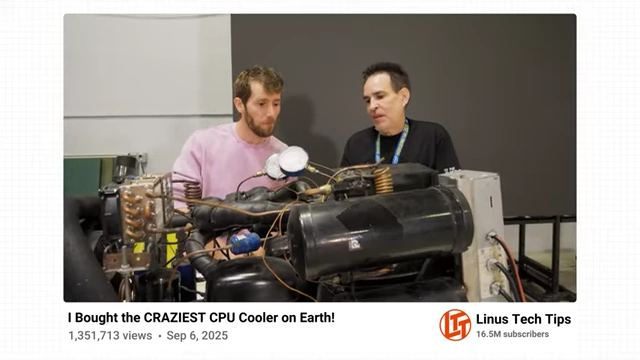
Linus showcasing an extreme $30,000 CPU cooler [ 00:44:02 ] 
Linus and team playing Mario Kart on a giant LED display wall acquired from Craigslist [ 00:44:10 ] 
Linus explains that LTT Labs aims to provide independent product research and comparison [ 00:47:36 ]
Current Valuation
- Linus estimates LMG's current valuation to be between $50 million and $100 million. While viewership has decreased, the growth of the physical goods business and the maturation of the creator economy have bolstered the company's overall value and reduced its dependence on singular revenue streams.
- Maintaining ownership ensures he can continue to support his team and uphold the company's values.
Launching LTT…Then Almost Going Broke [49:51]
Linus recounts the harrowing early days of launching Linus Tech Tips as an independent entity.
Departure from NCIX
- In 2012, Linus negotiated to acquire the "Linus Tech Tips" YouTube channel from his former employer, NCIX, for $1.

Linus at CES 2016, showcasing an external video card for a laptop [ 00:49:53 ] 
A young Linus in an early NCIX Tech Tips video, discussing water cooling [ 00:50:25 ] 
Linus in an early Linus Tech Tips video, "Undisclosed AMD Processor at 3.6GHz (Linus Tech Tips #1)" [ 00:51:21 ] - He offered NCIX a two-year deal to continue hosting their "NCIX TechTips" channel, provide mentorship for a new internal team, and grant a perpetual license to use LTT content on their website. He also agreed to a non-compete clause for competing tech retailers.

Linus demonstrating a Sunbeam Tuniq Tower heatsink in an early NCIX Tech Tips video [ 00:57:50 ] 
Linus promoting an NCIX warehouse sale [ 00:59:33 ] - The negotiation was tense and prolonged, lasting four months, partly due to his attempt to poach his cameraman without prior discussion, which was seen as a betrayal of trust.
- In 2012, Linus negotiated to acquire the "Linus Tech Tips" YouTube channel from his former employer, NCIX, for $1.
A Leap of Faith with Minimal Resources
- He started LMG with only an estimated $10,000-$20,000 in savings, an infant child, and his wife (Yvonne Ho, CFO of Linus Media Group) on maternity leave.
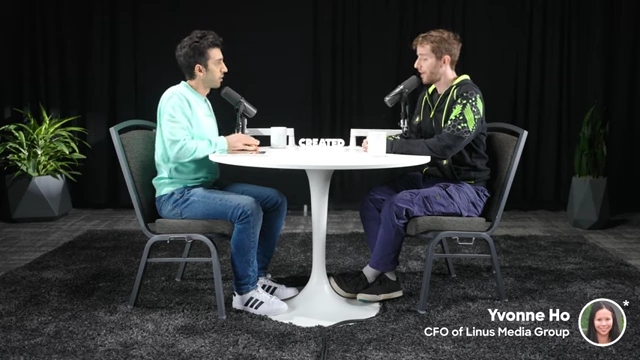
Yvonne Ho, CFO of Linus Media Group [ 01:09:49 ] - Crucially, he hired two employees from day one, driven by a sense of responsibility as they had forgone other opportunities to join him.
- He started LMG with only an estimated $10,000-$20,000 in savings, an infant child, and his wife (Yvonne Ho, CFO of Linus Media Group) on maternity leave.
Survival Through Hustle
- The first six months were a constant struggle, "burning cash" to cover payroll and expenses.
- A "make-or-break" moment was attending CES (Consumer Electronics Show) with only $10,000 in sponsorships, just enough to cover travel expenses (with hotel costs subsidized by a friend's dad).
- At CES, Linus conducted over 30 video interviews in a week and relentlessly networked with brand managers to secure small brand deals. These initial sponsorships arrived just in time to cover payroll as LMG was on the brink of bankruptcy.
Building Team from Day 1 [1:10:57]
Linus explains the strategic decision to start LTT with a team from the very beginning.
Advantage of a Team
- Unlike many creators who start solo, Linus immediately hired two employees. This approach, while financially risky, was driven by the belief that a team could scale and produce content more efficiently from the outset.
- He emphasizes that growing as a business requires delegating and building structure.
Early Lessons at NCIX
- His previous role at NCIX taught him invaluable lessons in time management and the power of educational content.
- He initially resisted creating videos, preferring text, but was eventually compelled to start, learning video production from scratch.
- He learned to prioritize educating customers over aggressive selling, believing that informed customers would naturally choose quality products. This philosophy clashed with NCIX's management, who focused on "buying less inventory" (a "shrinking company mindset") rather than "selling more" (a "growth mindset"). This fundamental disagreement spurred his decision to leave.
Most Stressful Moment [1:10:57]
Linus pinpoints the transition to a dedicated studio as one of the most challenging periods in LTT's history.
The Studio Crisis
- After outgrowing his garage studio, LTT purchased a house to use as a studio, which quickly led to neighbor complaints and a cease-and-desist from the city due to using a residential property for commercial purposes.

Linus in his garage studio from 2013, illustrating the humble beginnings [ 01:11:21 ] 
Linus touring the new office at home in 2013, after moving from the garage [ 01:11:25 ] - This forced them to find a commercial space: a 7,500 square-foot studio.
- Financing was a major hurdle, as banks did not take "creator" businesses seriously, making it difficult to secure loans or even business credit cards. The total cost for the studio and tenant improvements was approximately $1 million, with a substantial down payment.

Exterior of the Linus Media Group studio [ 01:12:29 ]
- After outgrowing his garage studio, LTT purchased a house to use as a studio, which quickly led to neighbor complaints and a cease-and-desist from the city due to using a residential property for commercial purposes.
The Vessel Deal
- Facing eviction from their home studio and unable to afford the build-out for the new commercial space, Linus reluctantly accepted a significant signing bonus (tens of thousands of dollars) from Vessel, an early-access video platform. This money was crucial for funding the studio's tenant improvements, allowing LTT to survive and continue operations.
Linus’ Prediction & Thoughts on AI [1:14:23]
Linus shares his forward-looking perspective on the impact of artificial intelligence on the content creation landscape.
Focus on Consumer Behavior
- He believes the key to navigating AI's rise is understanding how it will change "viewer and consumer behavior," rather than just focusing on the technology itself.

A Sora AI-generated video featuring a dog astronaut [ 01:14:32 ]
- He believes the key to navigating AI's rise is understanding how it will change "viewer and consumer behavior," rather than just focusing on the technology itself.
The Value of Human Touch in Tech Reviews
- Linus hopes that as AI-generated content becomes ubiquitous and potentially "decays" in quality, there will be a "snapback" where consumers seek "bespoke" and "human-validated testing" for products.
- He argues that AI can never replicate genuine human experience, such as feeling a product or understanding its practical implications (e.g., the fit of AirPods Pro).

Linus critically reviewing AirPods Pro 3 in a video [ 01:16:38 ]
Concerns for Entertainment Content
- He expresses concern for "pure entertainment" verticals on YouTube, as AI can more easily generate content that audiences might consume on a "second screen" without deep engagement.
- Linus notes the intersection of studios seeking cost-cutting measures through AI and audiences having shorter attention spans, potentially leading to a broader decline in content quality.
Consumer Discernment
- He critically observes a general lack of discernment among consumers, citing how readily audiences accept inauthentic content, such as obviously fake apology videos, as evidence that many viewers may not be "savvy" enough to differentiate human from AI-generated content. He believes this makes some content creators more vulnerable to being replaced by AI.