Unlock Peak Productivity: The Counterintuitive "Slow Down to Speed Up" Approach to Time Management
This video challenges traditional productivity notions, advocating for a "slow down to speed up" mindset. The summary outlines key strategies:
- Set Clear, Measurable Goals: Define specific and realistic targets to avoid aimless work and gain dopamine boosts from small wins.
- Embrace Intentionality: Rushing leads to stress and mistakes; slowing down allows for smarter work, fewer errors, and clearer thinking.
- Implement Contingency Plans: Start tasks early and build in buffer time (e.g., two extra weeks for studying) to handle unforeseen events without stress.
- Leverage the Compound Effect: Consistent, small study sessions (e.g., 30 minutes daily) are more effective for long-term memory and learning than intense cramming.
- Combat Task Paralysis: Use techniques like changing study environments, body doubling, and positive reinforcement through reward systems to overcome inertia.
- Manage Distractions Actively: Instead of fighting distractions, manage them using tools like phone focus modes or self-negotiated screen time limits.
- Delegate with Technology: Lighten your mental load by using task management apps (Notion, Trello), automation (phone timers), and software (Grammarly) for repetitive tasks.
- Be Patient and Adapt: Productivity improvement is gradual; customize strategies and adjust them as needed to find what works best for you.

The Counterintuitive Secret to Productivity: Slow Down to Speed Up [0:00]
The video begins by challenging conventional productivity advice, introducing the core concept that slowing down actually leads to more effective time management and increased productivity. The speaker emphasizes moving away from frantic rushing towards intentional, focused action.
- Forget traditional productivity advice [0:00]
- Embrace a backwards time management secret: The more you slow down, the more time you gain [0:09]
- This approach focuses on real-life scenarios rather than "hustle harder" mantras [0:30]
Setting Clear, Specific, and Measurable Goals [0:56]
To avoid aimless work, it's crucial to set explicit and quantifiable goals, making the journey and destination clear.

- Define your destination clearly [1:04]
- Make goals specific and realistic [1:50]
- Avoid unrealistic targets like "learn an entire syllabus in 2 seconds," which causes anxiety [1:53]
- Aim for tangible outputs, such as "write 500 words by noon" or "finalize presentation outline by 3 PM" [2:07]
- This provides dopamine hits for feeling accomplished [2:18]

Achieving small goals provides a dopamine hit [ 00:02:19 ] - It breaks down larger tasks into trackable progress [2:23]
- This provides dopamine hits for feeling accomplished [2:18]

The "Slow Down to Speed Up" Mindset [4:21]
Rushing is counterproductive, leading to stress, mistakes, and a feeling of being overwhelmed. Deliberately slowing down promotes smarter, more intentional work.

- Rushing creates stress and mistakes [4:21]
- Intentional slowing down leads to smarter work [5:01]
- Implement a contingency plan: Start early and build in buffer time [5:16]
- Plan studying months in advance for major exams, like starting in November for a January exam [5:41]
- Schedule two weeks of buffer time before an exam [5:53]
- This allows for flexibility during unexpected events (e.g., holidays, family time) [6:01]
- Pushing deadlines forward creates a "win-win" situation: either finish early and relax, or use buffer time to catch up [6:17]
- Reduces frantic mindset and allows for more efficient work [6:37]
The Compound Effect of Consistent Small Actions [6:45]
Small, regular study sessions accumulate over time, leading to significant and lasting results due to principles like spatial repetition and active recall.

- Avoid cramming; opt for regular, short sessions (e.g., 30 minutes daily) [6:55]

Dealing with Task Paralysis (How to Get Unstuck) [7:49]
For those struggling with getting started, especially neurodivergent individuals, specific tricks can help initiate action and maintain focus.

- Common for individuals with ADHD or neurodivergence [7:52]
- Simple tricks to break paralysis:
- Study crawls / Change environments: Switch between different study locations (e.g., cafes) to prevent boredom and reset your brain [8:17]

Working in different open spaces and cafes can help reset your brain [ 00:08:20 ] - Body doubling: Study alongside someone else, even virtually, to create accountability and ease into studying [8:55]
- Watching "study with me" videos can simulate this presence [9:06]
- Reward system (dopamine boosts):
- Set big rewards for major achievements (e.g., new tech for boyfriend) [9:29]
- Use small, frequent rewards for daily accomplishments (e.g., treats) [9:48]

Use a reward system to celebrate accomplishments [ 00:09:45 ] - Rewards need to be varied to avoid boredom, especially for neurodivergent individuals [9:57]
- Positive reinforcement motivates the brain to continue [10:12]
- Study crawls / Change environments: Switch between different study locations (e.g., cafes) to prevent boredom and reset your brain [8:17]
Eliminating Distractions [10:16]
Instead of fighting distractions, the strategy is to manage them effectively, integrating tools and self-discipline.
- Practical trick: Manage, don't fight, distractions [10:48]
- Put your phone in another room or use it to record yourself studying [10:24]

Place your phone in another room to avoid distraction [ 00:10:25 ] - Seeing yourself being distracted acts as a deterrent [10:40]
- Use phone focus sessions to block apps and notifications [10:52]
- Negotiate with yourself: Allow short bursts of distraction (e.g., 5 minutes TikTok) followed by dedicated study time (e.g., 20 minutes) [11:14]
- Put your phone in another room or use it to record yourself studying [10:24]

Delegating Tasks with Tools [11:23]
Delegate mental load and repetitive tasks to apps and software, freeing your brain to focus on higher-level thinking.

- Delegate mental load and repetitive tasks to apps and software, freeing your brain to focus on higher-level thinking.

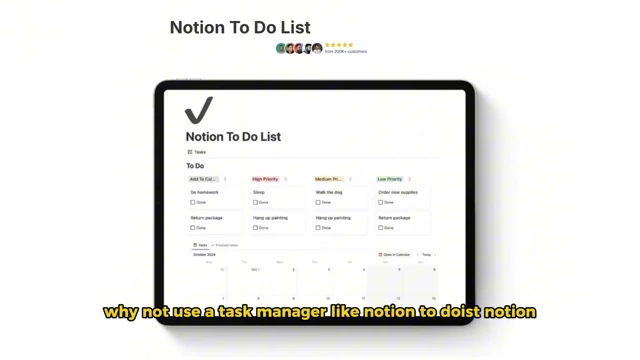
Reduce mental clutter by delegating information to external tools [ 00:11:39 ] - Delegate to an app: Use task managers like Notion, Trello, or Todoist to remember and organize information [11:34]
- Delegate to automation: Set up automated features on devices or apps [11:53]
- Delegate to software: Use tools that handle mechanical aspects of work [12:05]


Review and Adjust Your System [12:21]
Productivity improvement is a gradual process requiring patience, customization, and continuous adaptation.
- Productivity takes time; don't give up after one day [12:22]
- Customize systems to fit your unique needs [12:35]
- What works for one person may not work for another [12:41]
- Continuously revise and adjust strategies [12:49]
- Experiment with different methods (e.g., instead of TikTok live, put phone in bin) [12:53]
Conclusion: Embrace Intentional Productivity [13:27]
Ultimately, effective time management is about wise attention use, not overworking. By slowing down and using smart strategies, you gain control and achieve goals.