How to Get Good with Money: Mastering Financial Behavior, Saving, and Investing with Morgan Housel
Morgan Housel, author of "The Psychology of Money," shares essential financial advice, emphasizing that good financial habits are more crucial than intelligence or background, focusing on behavioral aspects of money.

- You can get good with money: Financial independence is within everyone's control, focusing on behavior like patience, controlling expectations, and not comparing oneself to others.

Key Money Behaviors to Learn [ 00:06:20 ] - The #1 thing that will keep you broke is social comparison: Constantly chasing "more" based on what others have leads to a never-ending treadmill of dissatisfaction and debt.

The #1 thing that keeps people broke: Your desire to keep up with other people. [ 00:25:47 ] - Every dollar comes down to two decisions: Spending to genuinely enhance your life or spending to impress others.

Two buckets for spending decisions: personal happiness or impressing others. [ 00:32:39 ] - Morgan's top investing tips: Prioritize long-term patience with investments like index funds to leverage compound interest, rather than seeking quick, high returns.

Investing in the stock market requires putting up with volatility and uncertainty. [ 00:45:00 ] - The difference between being rich and wealthy: Being rich means having money to spend; being wealthy means having independence and control over your time, often achieved through saving rather than extravagant spending.

Definitions of Rich vs. Wealthy [ 00:54:38 ] - The importance of saving: Treat saving as a mandatory expense, even small amounts. Automate it. Savings provide independence and a safety net against life's uncertainties.
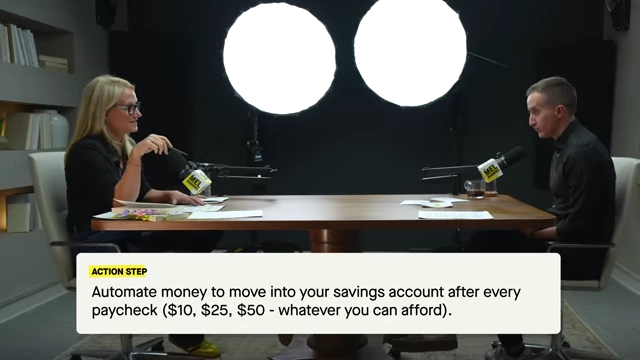
Automate money to move into your savings account after every paycheck. [ 01:08:47 ] - Enough is better than more: Cultivate contentment by managing expectations and practicing gratitude for what you have. This mindset shift reduces stress and the relentless chase for more.

Stephen Hawking's philosophy on happiness: "My expectations were reduced to zero when I was 21. Everything since then has been a bonus." [ 01:13:17 ] - You can change your financial story: Money can improve life, but true happiness comes from controlling your mindset and emotions, not just accumulating wealth.
Meet the Guest [00:00:00]
Mel Robbins introduces Morgan Housel, author of "The Psychology of Money," stating that his work transformed her perspective on finances. Housel's insights focus on the psychological aspects of money rather than complex formulas. Mel also shares her personal journey from $800,000 in debt to financial recovery, highlighting that anyone can improve their financial situation.
You Can Get Good with Money [00:07:16]
Morgan Housel asserts that financial independence and feeling wealthy are within everyone's control, regardless of education or background.
- Behavior over Intelligence:
- It's not about being smart or having secret connections, but about good financial behavior:
- Thinking long-term.
- Keeping expectations in check.
- Patience.
- Not comparing oneself to others.
- Using money as a tool for a better life, not a yardstick for social comparison.
- These "kindergarten-level" behaviors are simple and accessible.
Key Money Behaviors to Learn [ 00:06:20 ]
- It's not about being smart or having secret connections, but about good financial behavior:
- Redefining Financial Success:
- Most people's ultimate financial goal is stability, a cushion for emergencies, dignified retirement, and time with family, not private jets.
- Social media exacerbates comparison, making it harder to feel financially secure, as people constantly compare themselves to "perfect" online representations.
- A news article highlights that buying a home is harder for younger generations.

Buying a home: Why it's harder for younger generations than their parents [ 00:10:28 ]
- Happiness: The Gap Between Expectations and Reality [00:11:08]
- Housel states that "All happiness is the gap between expectations and reality."

Quote: "All happiness is the gap between expectations & reality." [ 00:11:19 ] - When expectations spiral out of control, fueled by comparison, people spend beyond their means, creating a wider gap and unhappiness.
- Money is easily quantifiable, leading people to chase it as a measure of a "good life," often to fill a psychological void.
- Mel shares her experience: acknowledging responsibility for past debt and poor spending habits (driven by outsized expectations) was the first step toward making better decisions.
- Will Smith's quote about being depressed even when rich illustrates that money doesn't solve all problems.

Quote from Will Smith: "If only I had more money, all of my problems would go away." [ 00:15:23 ] - The average debt in America is over $105,000 across mortgages, auto loans, student loans, and credit cards.

The average debt in America is over $105,000 across mortgages, auto loans, student loans, and credit cards. [ 00:20:42 ] - Financial anxiety often spurs demand for consumer budgeting apps.

Financial Anxiety Spurs Demand for Consumer Budgeting Apps [ 00:01:29 ]
- Housel states that "All happiness is the gap between expectations and reality."
- The Noble Goal: Independence [00:22:08]
- The true noble goal of money is independence – the freedom to control your time and choices, not ostentatious displays of wealth.
- One can have financial independence with little money, while billionaires can be completely beholden to others' opinions and influences.
- An individual's feeling of independence is a mindset, not a fixed financial threshold.
The #1 Thing that Will Keep You Broke [00:28:58]
- Social Comparison and Moving Goalposts:
- The primary factor keeping people broke is the overwhelming desire to keep up with others, constantly feeling behind.
The #1 thing that keeps people broke: Your desire to keep up with other people. [ 00:25:47 ] - Expectations rise with results, so having more money, power, or prestige often increases ambition faster than satisfaction. This creates a "treadmill" with no end.
- Housel quotes his book "The Psychology of Money": "The hardest financial skill is getting the goalpost to stop moving."

Excerpt from "The Psychology of Money" on getting the goalpost to stop moving. [ 00:27:37 ] - This often leads to taking greater and greater amounts of risk.
- The primary factor keeping people broke is the overwhelming desire to keep up with others, constantly feeling behind.
- The Futility of Chasing Status:
- People often spend money trying to impress others, most of whom are strangers and are too busy worrying about their own status to notice.
- Housel recounts his experience as a valet: being impressed by luxury cars but never the driver, only imagining himself in the driver's seat. This illustrates that people are often more impressed by the stuff than the person, imagining themselves with it.
- Close relationships value character (good spouse, parent, friend) over material possessions.
- Changing Spending Habits:
- To change bad spending habits, one must ask: "What hole am I trying to fill with this purchase?"
- Most material purchases offer fleeting happiness but long-lasting debt.
- Every dollar of debt represents a piece of your future owned by someone else, while every dollar saved buys you a piece of your future independence.

Quote: "Every dollar of savings that you have, is a piece of your future that you own." [ 00:39:53 ] - Shifting mentality: saving money isn't delayed gratification; it's purchasing independence, peace, and better sleep today.
Every Dollar Comes Down to 2 Decisions [00:37:54]
Every spending decision falls into one of two categories:
- Buying for personal happiness/family well-being: This includes essentials like food or experiences that genuinely enhance life.
- Buying to impress others: This typically involves status symbols like new clothes or a fancy car, often aimed at strangers who are not truly paying attention.
- This distinction is crucial for conscious spending.
Deciding between buying things to make me happier or to impress others. [ 00:32:39 ]
- This distinction is crucial for conscious spending.
Morgan’s Top Investing Tips [00:47:18]
- The Power of Patience and Compound Interest:
- Success in investing is less about earning extraordinary returns and more about extraordinary patience and consistency.
- Compound interest means earning returns on your initial investment and on the interest those returns have already generated.

Definition of Compound Interest [ 00:43:12 ] - An example shows how a 10% return on $100 grows over two years.

Example calculation of compound interest over two years. [ 00:43:50 ] - Housel uses the example of Warren Buffett, who accumulated 99% of his net worth after his 60th birthday due to the long-term power of compounding.
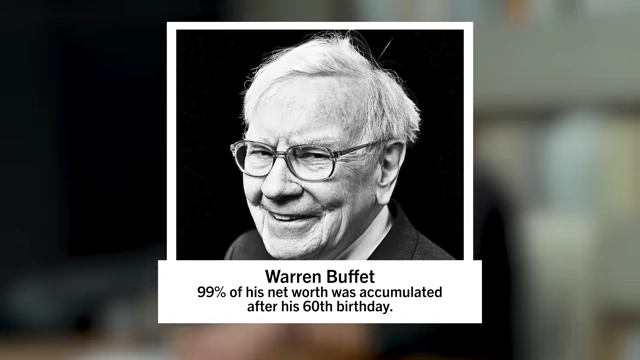
Warren Buffett: 99% of his net worth was accumulated after his 60th birthday. [ 00:44:23 ] - Being an average investor for an above-average period can lead to incredible returns.
- Housel uses the example of Warren Buffett, who accumulated 99% of his net worth after his 60th birthday due to the long-term power of compounding.
- Housel's parents are an example: consistent, patient investing for 40 years, without special knowledge, put their returns in the top tier of professional money managers.
- Simple and Boring is Best:
- Housel invests in index funds – low-cost funds that own a broad basket of stocks, essentially every stock in the market.
- He invests consistently and never sells in significant amounts, aiming to pass this money on.
- Complicated investments are harder to stick with for decades; simplicity increases the odds of long-term adherence.
- Investing is defined as using money to buy something that you believe will be worth more in the future.
Definition of Investing [ 00:45:00 ]
- Maximize for a Good Night's Sleep:
- Housel maintains a significant portion of his net worth in cash and bonds, even if financial advisors suggest more aggressive investment.
- His goal is to maximize peace of mind and minimize financial stress, especially with young children. This means having a cushion for worst-case scenarios.
- Ask yourself or your partner, "what are you/we trying to maximize for?"

Action Step: Ask yourself or your partner "what are you/we trying to maximize for?" [ 00:49:26 ] - There is no return high enough to compensate for constant worry.
The Difference Between Being Rich and Wealthy [00:59:30]
- Rich vs. Wealthy Definition:
- Rich: Having the money to buy desired things; it's about current income and spending capacity.
- Wealthy: Having independence; it's money saved or invested that is not being spent, providing financial and psychological freedom.
Definitions of Rich vs. Wealthy [ 00:54:38 ]
- Historical Example: The Vanderbilt Family:
- The Vanderbilt family was once the richest in the world, with heirs receiving massive trust funds.

Cornelius Vanderbilt [ 00:55:09 ] - However, their lives were often miserable, dictated by social expectations and family influence, demonstrating a lack of independence despite their wealth.
- Anderson Cooper, a descendant, did not receive a substantial inheritance and attributes his career success and happiness to being forced to build his own path. He had to figure it out for himself.

Anderson Cooper [ 00:56:57 ] 
Anderson Cooper with mom Gloria Vanderbilt and brother Carter, circa 1969. [ 00:57:07 ]
- The Vanderbilt family was once the richest in the world, with heirs receiving massive trust funds.
- True Value of Money:
- Money's true value lies in how it's used to enhance life, fostering happiness and contentment, rather than merely accumulating status symbols.
- Housel asks: "Would you rather earn $70,000 a year and have a good life (admiring kids, great marriage, good health) or make a million a year with a worse life (multiple divorces, estranged kids, bad health)?" Framing it this way makes the choice obvious, yet many still chase the latter, believing they will be the exception.
The Importance of Saving [01:07:49]
- Savings as an Expense:
- Housel advocates for treating savings as a mandatory expense, just like rent or food. If viewed as optional, it's easy to neglect.
- Automate Savings:
- The most effective way to make saving a habit is to automate it. Set up automatic transfers (e.g., $10, $25, $50) from your paycheck to a savings account.
Action Step: Automate money to move into your savings account after every paycheck ($10, $25, $50 - whatever you can afford). [ 01:08:47 ] - Even small amounts are significantly better than nothing; every dollar saved represents a piece of your future that you control.
- The story of Ronald Reed, a janitor and gas station attendant who left millions to charity, exemplifies the power of consistent small savings over a long time.

Ronald Reed [ 01:09:55 ]
- The most effective way to make saving a habit is to automate it. Set up automatic transfers (e.g., $10, $25, $50) from your paycheck to a savings account.
- The Reality of Financial Fragility:
- Life, careers, and the economy are inherently fragile and unpredictable.
- It is almost 100% guaranteed that everyone will experience periods of zero income (e.g., job loss, medical emergency).
- In such times, accumulated savings become the most valuable asset.
- Financial literacy and management are not optional; they are an obligation that impacts life regardless of personal interest.
- Daily Bank Account Check:
- A simple yet powerful habit is to check your bank account balance daily to stay aware of income and expenses. This builds financial consciousness.

Action Step: Check your bank account balance every single day. [ 00:59:33 ]
- A simple yet powerful habit is to check your bank account balance daily to stay aware of income and expenses. This builds financial consciousness.
Enough is Better Than More [01:15:54]
- Contentment over Accumulation:
- Housel emphasizes that "desiring less can have the same impact on your well-being as gaining more money."
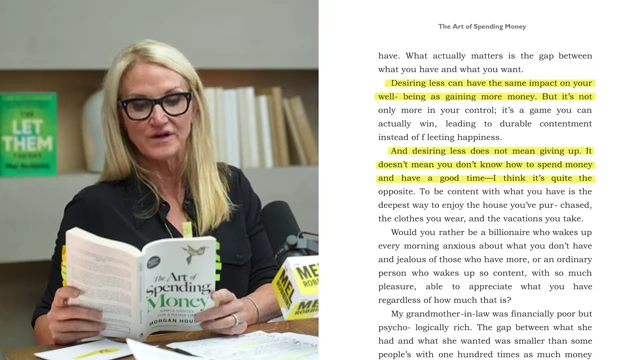
Excerpt from "The Art of Spending Money" on desiring less for well-being. [ 01:10:59 ] - This doesn't mean giving up on ambition but strategically balancing ambition with contentment for what you already have.
- The narrower the gap between "what you have" and "what you want," the happier you will be.
- Housel reflects that having $5,000 in his youth felt like extraordinary wealth, a feeling he doesn't get from larger sums now, illustrating how expectations can spiral.
- Contentment is defined as an inner state of peace, satisfaction, and acceptance with your current life and circumstances.

Definition of Contentment [ 00:18:46 ]
- Housel emphasizes that "desiring less can have the same impact on your well-being as gaining more money."
- The Power of Gratitude:
- Practicing gratitude for what you possess, rather than focusing on what you lack, is a powerful psychological tool for contentment.
- He cites Stephen Hawking, who, despite his severe illness, found immense happiness because his "expectations were reduced to zero when he was 21; everything else since then has been a bonus."
Stephen Hawking's philosophy on happiness: "My expectations were reduced to zero when I was 21. Everything since then has been a bonus." [ 01:13:17 ] - While hoping to avoid such trauma, Housel notes that significant life challenges can sometimes force an appreciation for what one does have.
- Controlling Your Mindset:
- The ultimate wealth is the ability to control your thoughts, manage expectations, and cultivate gratitude. It is not about net worth.
- Realize that others are often too self-absorbed to notice or care about your material possessions. This realization can diminish the urge to spend for external validation.
You Can Change Your Financial Story [01:21:34]
- Money can enhance happiness: Money can make you happier, but not always in the way you expect, or to the extent you imagine.
- Money as a tool, not a yardstick: Use money to live a better life, not as a measure of self-worth or status.
- Actionable Advice for Mindset Shift:
- Control your expectations.
- Manage your emotions.
- Practice gratitude for what you have.
- Understand that people are not thinking about your possessions as much as you are; they are preoccupied with their own lives. This awareness helps detach from external validation.
- By applying these principles, individuals can gain greater independence and feel freer in their financial lives, creating a better future regardless of their starting point.