Understanding the Soviet Wired Radio System: History, Technology, and Cultural Impact
This video explores the Soviet wired radio, a simple device crucial to millions of Soviet households, tracing its history, technology, and legacy.
- Device Overview: The presenter disassembles a "radio" from his grandmother's kitchen, revealing it's merely a loudspeaker and a small transformer, designed to connect to a dedicated "radio" outlet.

The simple internal components of a Soviet wired radio, showing a loudspeaker and a power transformer. [ 00:01:05 ] - How it Worked: Instead of an antenna, it connected to a wired network broadcasting analog audio. This complex network used high voltages to transmit signals over long distances, stepping down to 30V at homes.

A diagram illustrating the hierarchical distribution of the wired radio signal from a regional center to individual homes, with various voltage reduction stages. [ 00:07:25 ] - Historical Context: The system originated in the 1920s as a cheap, controllable means of propaganda and communication, especially vital during WWII for air-raid alerts.
- Decline and Legacy: Post-Soviet collapse, the system declined due to modern alternatives, becoming a nostalgic item for seniors. In a poignant turn, it was revived in Ukraine in 2022 for air-raid alerts.

A wired radio in Ukraine broadcasting an air-raid alert in 2022, signaling its unexpected return to a vital role. [ 00:14:34 ]
Introduction [00:00]
The video begins with the presenter introducing a device from his post-Soviet childhood, found in his grandmother's kitchen.
- The device, referred to as a "radio," lacked an antenna or tuning dial, indicating it operated on a different technology.
- Initial attempt to plug the device into a standard electrical outlet produced a loud 50-hertz sine wave, demonstrating it's not a conventional radio.
- The user manual explicitly warned against plugging it into an electrical outlet.
The Soviet Wired Radio Receiver [00:53]
The presenter disassembles the device to reveal its surprisingly simple internal components.
- The device contains only three primitive components:
- A loudspeaker.
- A small power transformer.
- A volume control knob.
- This minimalist design highlights its specific purpose and connection method.
The simple internal components of a Soviet wired radio, showing a loudspeaker and a power transformer. [ 00:01:05 ]
The Soviet Wired Radio Network [01:55]
The video explains the unique infrastructure that powered these radios.
- Every Soviet apartment had a smaller, physically compatible electrical outlet labeled "radio," typically located in the kitchen.

A Soviet-era radio outlet on a wall, with a wired radio receiver plugged in. [ 00:02:05 ] - The external appearance of the wired radio receiver was a simple, compact box.

The external appearance of a Soviet wired radio receiver. [ 00:03:10 ] - This outlet was connected to a "wired radio network," which transmitted an analog audio signal at approximately 30 volts.
- The signal flowed into the radio's step-down transformer and then played through the loudspeaker.
- The presenter demonstrates a modern replication of the wired radio system using an audio power amplifier, playing Soviet music through the old radio.
- The robust construction of the radio allowed it to withstand significantly higher voltages (eight times its design voltage) without damage.
History [03:35]
The origins and evolution of the Soviet wired radio system are detailed.
- Early Development (1920s):
- The system was established in the 1920s when Soviet Russia lacked a developed electronics industry.
- Early wired radio utilized large horn loudspeakers in public spaces.

Early outdoor horn loudspeakers used for wired radio broadcasts in the 1930s. [ 00:03:47 ] - The government prioritized a constant presence in citizens' homes for propaganda, promoting the "superior" system and "happiest" country.

People gathered around an early wired radio receiver in 1934. [ 00:03:58 ] 
A group of people listening to a wall-mounted wired radio receiver. [ 00:04:03 ]
- Addressing Challenges:
- Importing millions of conventional radios was unaffordable due to the absence of natural gas deposits.

Children and adults inspecting a display of conventional wireless radios, highlighting their initial scarcity and cost. [ 00:04:25 ] - Wireless radios posed a risk of citizens tuning into foreign "enemy propaganda."
- Wired transmission mitigated both issues:
- Receivers were cheap and easy to manufacture, as shown by their simple internal components.
- Receivers could only play content transmitted through the wire, preventing unauthorized listening.
- A 1930 wired radio receiver demonstrates the early manufacturing of these devices.

A close-up of a 1930 Soviet wired radio, showing its manufacturing details. [ 00:04:51 ] - Infrastructure workers were crucial in setting up and maintaining the wired network.
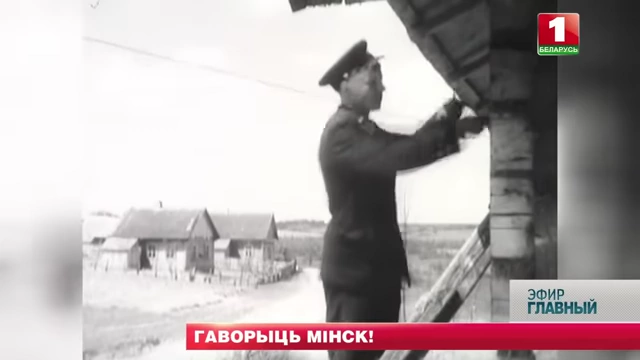
A worker installing or maintaining wired radio infrastructure on a building. [ 00:04:40 ]
- Importing millions of conventional radios was unaffordable due to the absence of natural gas deposits.
- Growth and Wartime Importance (1940s-1980s):
- By the 1940s, there were six million wired radios versus half a million wireless ones.
- During WWII, wireless radios were confiscated to prevent the spread of enemy content, while wired radios continued to transmit "accurate" information and critical air-raid alerts, often working even during power outages.

A man tuning a wireless radio, which were later confiscated during WWII. [ 00:05:16 ] - The war proved the value of the wired radio system.
- Post-war, every new housing development was mandated to include a wired radio socket.

A view of Soviet apartment blocks, where wired radio sockets were mandated in every new development. [ 00:06:01 ] - By the late 1980s, 80 million wired radio receivers covered almost the entire Soviet population.
Broadcast Content [06:09]
The content broadcasted through the wired radio system is described.
- Programming began daily at 6 AM with a distinctive jingle, which served as a widely recognized alarm sound, often accompanied by visuals of early morning in Soviet cities.

Early morning in Moscow as the wired radio broadcast begins daily at 6 AM. [ 00:06:10 ] - This broadcast was a morning routine for tens of millions of families.

A wired radio on a kitchen table, part of the daily morning routine in many Soviet homes. [ 00:06:51 ] - Broadcasts included:
- Reports on industrial achievements (e.g., tractor industry, harvest records).
- Children's programming.
- Live classical music performances.
- Content was tailored regionally, with central broadcasts from Moscow sent to regional stations via telephone cables.
Technical Details [07:08]
A deeper dive into the technical aspects of the wired radio network is provided.
- Signal Quality:
- Wired radios offered interference-free listening.
- The use of vacuum tubes in network equipment contributed to a "warm and rich" sound.
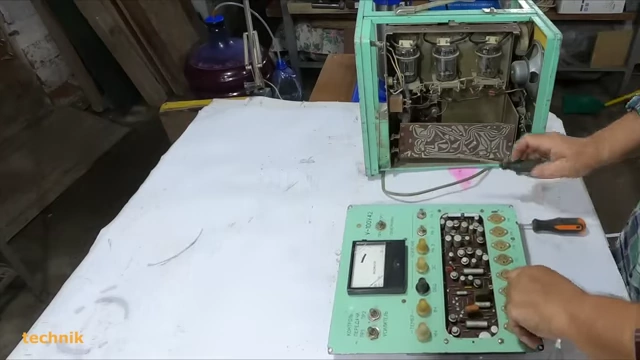
Vacuum tube equipment used in the wired radio network, contributing to its 'warm and rich' sound. [ 00:07:13 ]
- Network Architecture:
- The system operated like a power grid, using hierarchical voltage reduction for efficient transmission.
A diagram illustrating the hierarchical distribution of the wired radio signal from a regional center to individual homes, with various voltage reduction stages. [ 00:07:25 ] - Regional stations generated high-voltage audio signals (960 volts) and distributed them to cities.
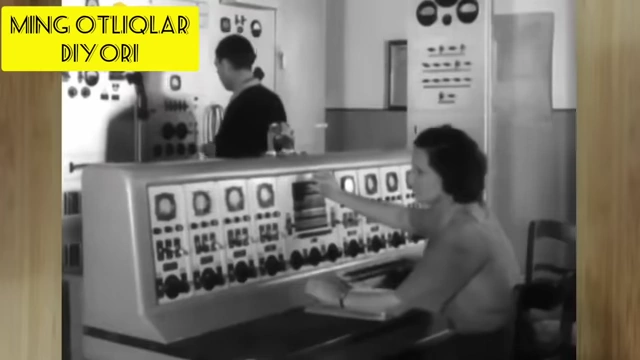
Operators at a regional radio station, managing broadcasts for the wired radio network. [ 00:07:27 ] - City-level stations reduced the voltage to 240 volts for distribution to apartment blocks.
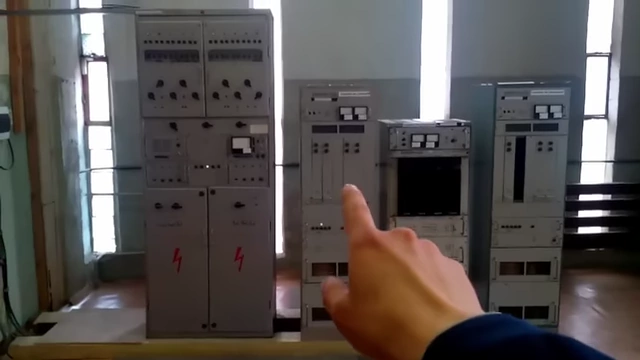
Equipment racks at a city-level radio station, showing voltage reduction stages for local distribution. [ 00:07:52 ]
- The system operated like a power grid, using hierarchical voltage reduction for efficient transmission.
- Household Connection:
- Each apartment block used an 8-to-1 step-down transformer to deliver the 30-volt signal to individual radio sockets in homes.
- The use of 30-volt signals allowed for long cable runs without significant signal loss or interference, unlike low-voltage audio cables that require shielding.
- The internal transformer in each radio further stepped down the voltage to prevent damage to the loudspeaker, providing a reliable and clear audio experience.
Three-Program Broadcasting [09:35]
The evolution to multi-program broadcasting is explained.
- In the 1960s, the system was upgraded to transmit three different radio programs over the same two wires.
- First Program: Continued to be transmitted at sound frequency and could be picked up by existing simple receivers.
- Second and Third Programs: Transmitted using amplitude modulation (AM) at 78 and 120 kilohertz, respectively.
- These programs required more advanced receivers with decoders, which also needed to be plugged into a standard electrical outlet for power.
- Older, primitive receivers naturally ignored these ultrasonic-frequency signals as their loudspeakers were unable to reproduce them.

An advanced Soviet wired radio receiver, disassembled to show its electronic components for multi-program reception. [ 00:10:19 ]
Decline [10:38]
The video concludes with the decline of the wired radio system and its enduring legacy.
- Post-Soviet Collapse: After the fall of the Soviet Union, the wired radio network declined significantly.
- Listeners transitioned to new forms of entertainment like FM broadcasting and television.
- Enduring Audience: By 2000, only 10% of households, primarily elderly individuals, still used wired radios.

An elderly woman listening to a wired radio, representing the enduring audience after its decline. [ 00:11:04 ] - Programs like "Microforum" allowed elderly women to call in and complain about local issues.

An elderly couple with their wired radio, symbolizing the audience for programs like 'Microforum' where seniors could call in. [ 00:11:29 ] - The radio held a nostalgic and comforting role for the older generation, reminiscent of a stable past.
- This emotional connection was unfortunately exploited by advertisers promoting questionable "therapy devices" and "herbal medicines" in the post-Soviet capitalist era.

A wired radio on a shelf surrounded by advertised 'therapy devices' and 'herbal medicines' targeting the elderly post-Soviet collapse. [ 00:12:05 ]
- Programs like "Microforum" allowed elderly women to call in and complain about local issues.
- Infrastructure Decay:
- Major repairs to apartment blocks and the installation of new internet infrastructure caused further damage to the aging wired radio network.

Damage to the old wired radio infrastructure due to new internet cable installations. [ 00:13:14 ] - Entire neighborhoods were left without radio service for months, affecting elderly residents who relied on it.

Elderly residents affected by the loss of wired radio service in their neighborhood. [ 00:13:18 ] - Telephone companies, which inherited the network, had no financial incentive to maintain it due to extremely low government-mandated tariffs (e.g., 80 cents per month).

An elderly woman holding a bill, highlighting the issue of low tariffs for wired radio service. [ 00:13:51 ] - Despite pleas from the public to raise prices for service maintenance, the system largely ceased functioning by the late 2010s, leaving many seniors without their accustomed radio.
- Many seniors struggled with new wireless radios, not knowing how to tune them.
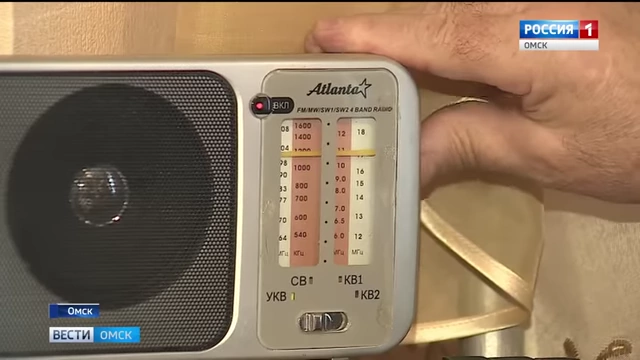
A close-up of a wireless radio dial, representing the struggle of seniors to adapt to new technology. [ 00:14:03 ] 
An elderly woman attempting to operate a new wireless radio after the wired service ceased. [ 00:14:14 ]
- Major repairs to apartment blocks and the installation of new internet infrastructure caused further damage to the aging wired radio network.
- Modern Resurgence: In a poignant turn, the wired radio system was repurposed in Ukraine in 2022 to broadcast critical air-raid alerts, returning to its original role as a vital communication tool during times of crisis.
A wired radio in Ukraine broadcasting an air-raid alert in 2022, signaling its unexpected return to a vital role. [ 00:14:34 ]