Optimize Your Content Creation: A Guide to Efficient Routines, Editing, Consistency, and Strategic Posting
This video offers a comprehensive guide to overcoming content creation struggles by providing distinct solutions for "Type A" (structured) and "Type B" (intuitive) creators, focusing on efficiency and intentionality.
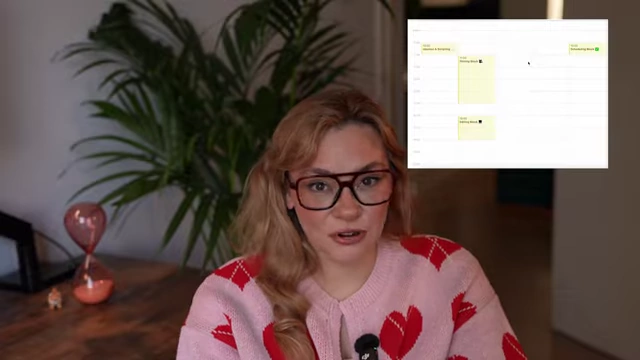
- Time Management: Implement "time blocking" and "batching" to segment tasks like ideation, filming, editing, and scheduling, ensuring focused work within set time limits.
- Efficient Editing: Combat perfectionism by setting strict time limits per video (e.g., 20-30 minutes for short-form content) or by adopting "live editing" within creation apps, or by "romanticizing" the editing process to make it an enjoyable part of creation.
- Consistency through Systems: Leverage content scheduling tools and planned workflows to maintain a regular posting schedule, reducing burnout and the need for manual posting.
- Intentional Content: Ensure every piece of content has a clear purpose—to "grow," "nurture," or "convert"—to prevent flopping and maximize engagement.
- Overcome "What to Post" Fatigue: Utilize "content pillars" (proven content formats) in conjunction with content buckets (strategic aims like grow, nurture, convert) to streamline idea generation and reduce decision fatigue.
Introduction to Content Creation Challenges [00:00]
The video addresses five common reasons creators fall out of love with content creation: the time it takes, the editing process, maintaining consistency, content flopping, and knowing what to post. The aim is to provide practical solutions and frameworks to help creators "fall back in love" with their craft, emphasizing efficiency and intentionality.
Optimizing Time for Content Creation [01:09]
The first major challenge is the perceived endless time commitment for content. The speaker argues that content takes hours not due to output but due to a lack of clear boundaries and processes, leading to inefficiency and burnout.
Solution for Type A Creators: Time Blocking & Batching
For structured creators, the recommended approach involves breaking down content creation into four distinct time-blocked categories:
- 1. Ideation and Scripting [04:32][06:23]
- Duration: Approximately 1 hour per week.
- Process:
- 10-minute daily "scrolly scroll": Quickly scroll through feeds to identify trending topics or unique angles, bookmarking ideas and audios. The feed is seen as a pulse-check, not a primary source of creativity.
- 45-minute scripting: Plan 4-6 video ideas, including hooks, outfits, and formats, within a strict time limit. If fewer videos are scripted, fewer are filmed.
- Key Principle: The boss (you) sets time constraints for the employee (also you).
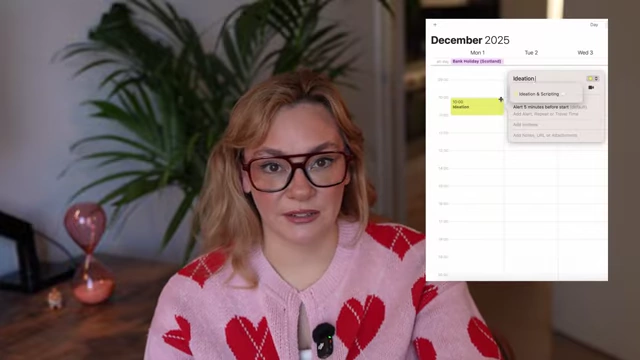
A calendar highlighting a scheduled 'Ideation & Scripting' block for content planning. [ 00:06:00 ]
- 2. Filming [04:37][08:41]
- Duration: Approximately 4 hours, including 1 hour for getting ready (hair and makeup). This allows for filming 4-6 reels.
- Process:
- Preparation: All ideas, scripts, and hooks are already prepared from the "Ideation and Scripting" block.
- Focus: Solely on filming; avoid creating ideas or scripting during this block.
- Minimize Distractions: Turn phones to "Do Not Disturb" mode.
- No Reviewing Clips: Don't review footage during filming to maintain flow state. If a mistake is made, simply restart the sentence.
- Warm-up: Allow 10-15 minutes to get comfortable on camera and review the script before beginning.
- Key Principle: Separate filming from planning to reduce stress and increase efficiency.
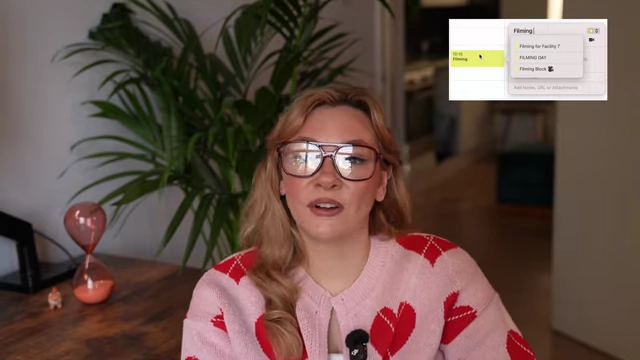
A calendar entry for a 'Filming' block, demonstrating a dedicated time slot for video recording. [ 00:08:50 ]
- 3. Editing [04:39][10:38]
- Duration: 1 to 2 hours, done immediately after the filming block.
- Rationale: Editing requires a lower energy state, making it suitable for later in the day.
- Key Principle: Strict time constraints prevent overthinking and perfectionism.
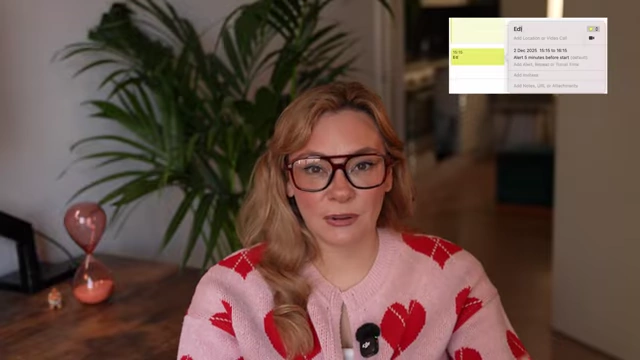
A calendar entry showing an 'Editing' block scheduled after filming, emphasizing sequential workflow. [ 00:10:40 ]
- 4. Posting or Scheduling [04:41][11:24]
- Duration: A small block at the end of the week.
- Process: Uploading and scheduling finished, edited content using a scheduling app.
- Key Principle: This finalizes the content process, leading to a consistent content bank.

A calendar entry for a 'Scheduling Block' at the end of the week, for planning content distribution. [ 00:11:26 ]
An overview of a content creator's weekly calendar, showing distinct time blocks for Ideation & Scripting, Filming, Editing, and Scheduling. [ 00:11:50 ]
Solution for Type B Creators: Vibe Blocking
For intuitive creators who find rigid structures stifling:
- Energy Diary: Keep a diary for 28 days to track high and low energy periods.
- Task Alignment: Allocate high-energy tasks (like filming and presenting) to your high-energy times and low-energy tasks (like editing or emails) to your low-energy times.
- Cycle Awareness: Monitor your menstrual cycle to identify naturally more creative or camera-ready times.
- Goal: Use existing time more productively by aligning tasks with natural energy fluctuations.
- The solution isn't about finding more time, but using the time you have more effectively.
Simplifying the Editing Process [15:03]
The second pain point is the time-consuming and often perfectionism-driven editing process. Editing is where "creativity meets perfectionism," often turning the creator into a critic.
Solution for Type A Creators: The 90/30 Framework
- Single Editor: Choose and stick to one editing software.
- Time Budget: Set an overall weekly time limit for editing.
- Per-Video Limit: For short-form content (reels, TikToks), allocate a maximum of 20-30 minutes per video.
- No Exceptions: Use a timer and adhere strictly to the time limit. The output at the end of the timer is the finished product.
- Rationale: Short-form content has a brief shelf life (max 2 weeks), so excessive time investment is not worthwhile unless editing is a core brand pillar.
- Dedicated Block: Schedule editing on specific days, typically directly after filming, to prevent it from encroaching on other business areas.
Solution for Type B Creators: Live Editing or Romanticizing the Edit
- Live Edit Method:
- Film directly within the app (TikTok, Instagram) and edit in real-time.
- Film a clip, trim/edit it immediately, then move to the next clip, adding text and captions on the spot.
- This method can significantly speed up content output for those who adapt to it.
- Romanticize Your Edit:
- Reframe editing as an enjoyable part of the creative process.
- Create an appealing editing environment: put on music, light a candle, get cozy with blankets.
- Treat editing as an artistic endeavor, focusing on expression through fonts, color grading, and transitions, rather than a chore.
Achieving Content Consistency [22:36]
Inconsistency often leads to social media burnout. The speaker emphasizes that "consistency always beats talent" and is a learnable skill, not an inherent trait.
Solution for Type A Creators: Systems and Scheduling
- Batching & Systems: Rely on batching and structured systems (as outlined in the time management section) to maintain a regular posting schedule.
- Strategic Scheduling: Use scheduling tools to plan content in advance, allowing for consistency without daily manual posting. This frees up time for other activities and reduces stress.
- The tool allows visual planning of the grid, ensuring a cohesive aesthetic.
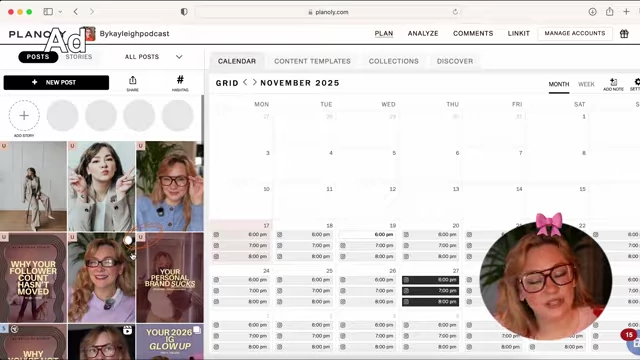
The interface of a social media scheduling tool, displaying an Instagram grid preview alongside a monthly calendar for content scheduling. [ 00:26:13 ] - It also provides optimal posting times based on analytics, increasing content reach.
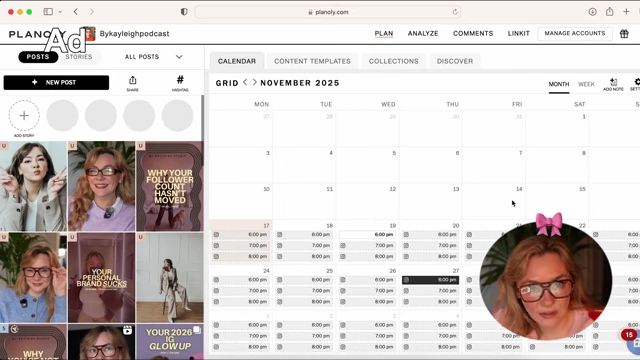
A calendar view in a social media scheduling tool indicating optimal posting times for content based on analytics. [ 00:26:57 ] - Scheduling is easy with drag-and-drop functionality and options to pre-write captions and auto-post.
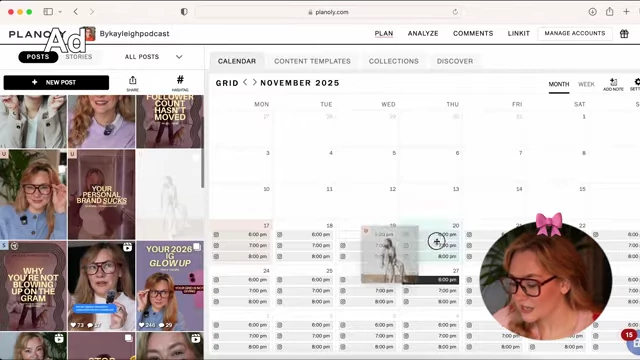
Demonstration of dragging content onto a calendar slot for scheduling posts within a content scheduling app. [ 00:27:19 ] 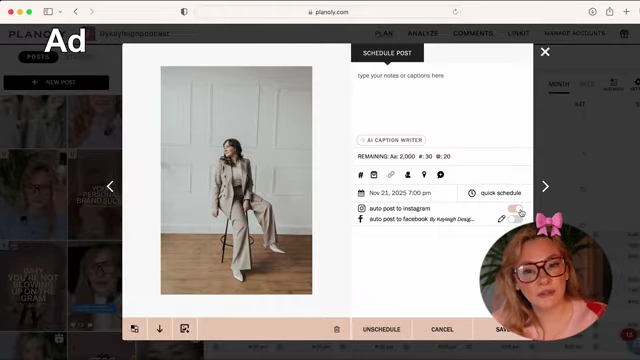
A 'Schedule Post' window within a content scheduler, showing options to write captions and enable auto-posting. [ 00:27:43 ] 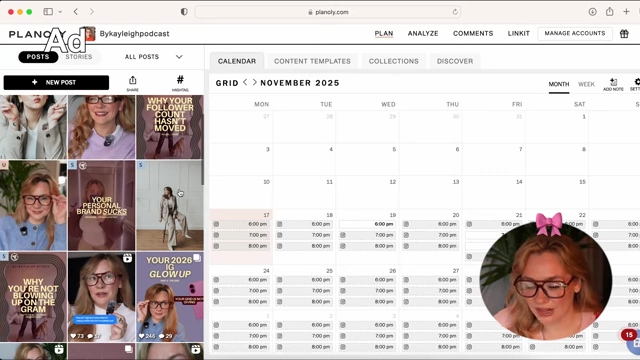
A calendar view in a content scheduling tool displaying multiple scheduled posts, marked with 'S' for scheduled. [ 00:28:04 ]
- The tool allows visual planning of the grid, ensuring a cohesive aesthetic.
Solution for Type B Creators: Creative Vision Board
- Centralized Content Hub: Use a scheduling tool as a visual hub to dump all edited content.
- Weekly Planning: Once a week, open the tool and arrange content on the grid until it feels visually balanced and aligned with your aesthetic.
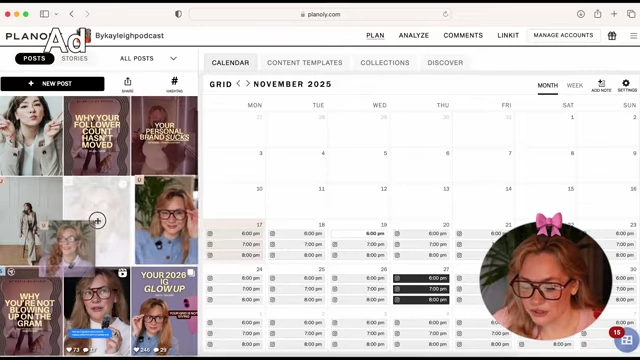
A drag-and-drop feature within a social media scheduling tool, allowing users to visually arrange content on their Instagram grid. [ 00:26:32 ] - Intuitive Posting: Post content whenever inspiration strikes, pulling from the pre-organized media library.
- Caption Flexibility: Write captions when in a creative mood, directly within the planning tool.
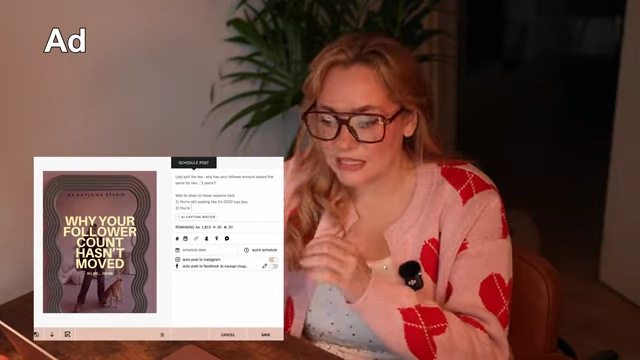
A content scheduling interface showcasing a post and options for writing captions and scheduling, serving as a creative hub for intuitive creators. [ 00:29:43 ]
Addressing Content That Flops [30:36]
Content that receives no engagement can kill momentum. The primary reason for content flopping is a lack of purpose or objective.
Solution for Type A Creators: Content Strategy (Content Buckets)
Every piece of content should serve one specific aim:
- 1. Grow: Attract new followers and expand reach.
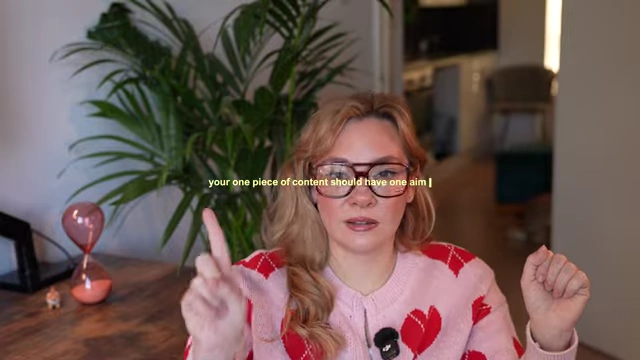
Text overlay emphasizing the principle that each piece of content should have a single, clear aim. [ 00:33:40 ] - 2. Nurture: Engage and build trust with your existing audience, guiding them through a sales funnel.
- 3. Convert: Drive specific actions like purchases, sign-ups, or community joins.
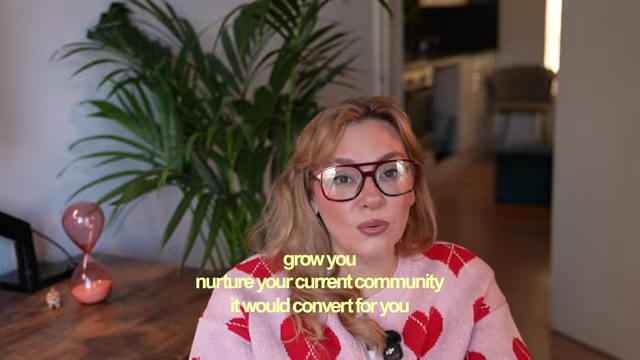
Text overlay listing the three main content buckets: 'grow you,' 'nurture your current community,' and 'it would convert for you.' [ 00:34:20 ] - Optional: Wildcard: For experimental or diverse content that doesn't fit the other three, but still has an intention.
- Allocation: Assign percentages to each bucket based on current business goals (e.g., 40% Grow, 40% Nurture, 20% Convert).
- Tracking: Label content within planning tools (G for Grow, N for Nurture, C for Convert) to visually track the content mix.
- No purposeless posts: If a post has no intention, it's not worth creating.
Solution for Type B Creators: Simple Intentional Questions
- Loose Weekly Plan: Every Monday, have a loose idea or bullet points for content to film that week.
- Three Key Questions: Before filming any piece of content, ask:
- Does this content make people want to follow me?
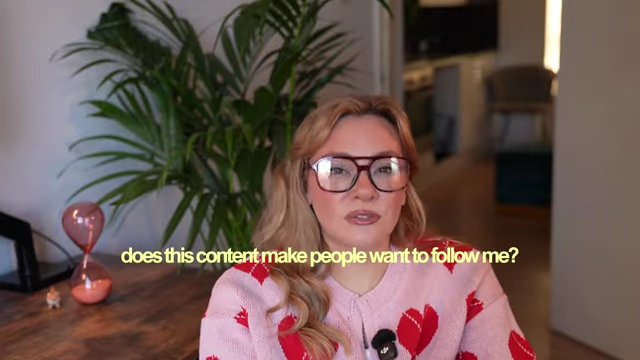
A question posed on screen: 'Does this content make people want to follow me?', guiding intentional content creation for Type B creators. [ 00:37:34 ] - Does this content make people trust me?
- Does this content make people want to buy from me?
- Does this content make people want to follow me?
- Rework if No: If the answer is "no" to all three questions, rework the content idea until it aligns with at least one purpose.
Overcoming "What to Post?" Fatigue [38:01]
Decision fatigue stems from overconsumption of content, which drowns out a creator's unique voice and leads to analysis paralysis.
Solution for All Creators: Content Pillars
Content pillars are specific formats or styles of content that consistently perform well for your brand, rather than generic topics.
- Identify Your Pillars:
- Growth Content Pillars: For attracting new audiences, current effective formats might be carousels or very short-form reels.
- Example: A carousel post titled "STOP RUNNING YOUR GRAM LIKE ITS 2020" that previously achieved over a million views, becomes a proven format for growth.

An example of a carousel post titled 'STOP RUNNING YOUR GRAM LIKE ITS 2020', illustrating a successful content pillar for attracting new audiences. [ 00:40:10 ]
- Example: A carousel post titled "STOP RUNNING YOUR GRAM LIKE ITS 2020" that previously achieved over a million views, becomes a proven format for growth.
- Nurturing Content Pillars: For engaging existing followers, longer-form formats like signature series, mini mic talking head videos, or "what to post" guides might be effective.
- Example: A "tiny mic" video, known for its direct engagement with the audience.

A small video clip featuring a 'tiny mic' talking head, serving as an example of a nurturing content pillar. [ 00:41:30 ]
- Example: A "tiny mic" video, known for its direct engagement with the audience.
- Growth Content Pillars: For attracting new audiences, current effective formats might be carousels or very short-form reels.
- Reduce Decision Fatigue: By pre-determining the formats (pillars) that work for each content bucket (grow, nurture, convert), you streamline the creation process.
- Instead of asking "What do I post?", ask "What bucket do I want to pull from today, and what format do I want to draw from?"
- This shifts creativity from choosing a format to developing engaging content within a proven format.
- You don't need more inspiration; you need a clear content bucket and pillar strategy, with occasional wildcard posts for variety.

Text overlay summarizing the content strategy: 'a bucket and a pillar' with an option for 'wild card' posts. [ 00:42:20 ]