Why Apple Will Eventually Win The AI Race
Apple is pursuing a long-term AI strategy focused on privacy, ecosystem integration, and hardware innovation, despite initial perceived delays.
- Strategic Acquisitions: Apple has acquired numerous AI startups, including WhyLabs for AI security and Darwin AI for efficient on-device processing, strengthening its privacy-first approach.
- Privacy as an Economic Moat: Apple Intelligence prioritizes on-device processing via neural engine chips and uses Private Cloud Compute (PCC) for encrypted cloud tasks, ensuring user data remains private.
- Ecosystem Advantage: With over 2.2 billion active devices, Apple leverages instant distribution for AI features, integrating ambient intelligence across its products (camera, writing, photos) to create a seamless, deeply personalized experience.
- Hardware-First AI: Apple is developing new AI-powered hardware, such as a smart home hub in 2026 with a multi-user "Charismatic" OS and a tabletop robot ("J595" or "Pixar lamp") by 2027 featuring a virtual Siri personality, redefining AI interaction.
- Strategic Partnerships: Apple's approach involves negotiating with external AI providers like Google Gemini and ChatGPT, positioning itself as a gatekeeper that mandates compliance with its privacy and hardware standards.
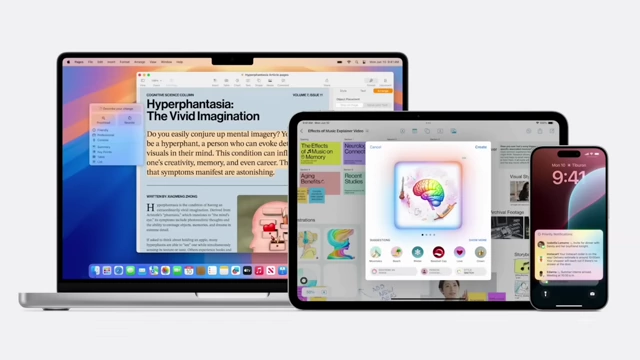
Apple Intelligence integrated across its device ecosystem [ 00:05:55 ]
Apple's Initial AI Delays and Critics' Concerns [0:00:00]
Apple has faced criticism for lagging in the AI race, particularly regarding Siri's long-promised overhaul.
- Siri's Unfulfilled Promise:
- At WWDC 2024, Tim Cook promised a deeply intelligent and more personal Siri, but this has been delayed for over a year.
- Siri's major AI upgrade was initially pushed from Fall 2024 to Spring 2025, and now to sometime in 2026.
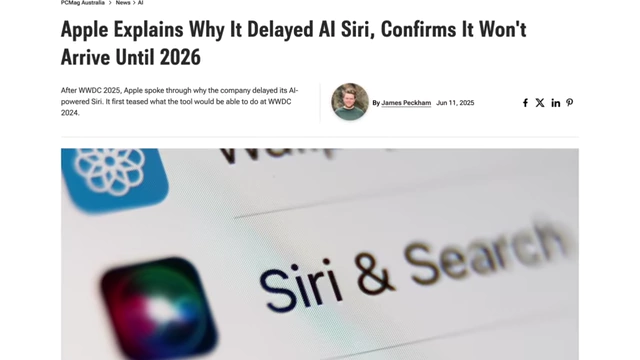
Apple Explains Why It Delayed AI Siri, Confirms It Won't Arrive Until 2026 [ 00:00:26 ] - Apple Intelligence features launched feeling incremental compared to rapid advancements from competitors like OpenAI.
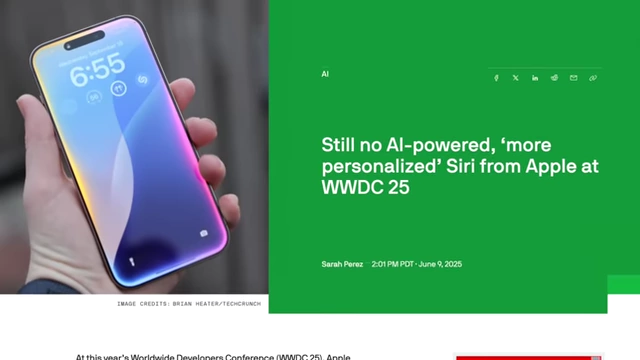
Still no AI-powered, 'more personalized' Siri from Apple at WWDC 25 [ 00:00:14 ]
- Competitor Dominance:
- Companies like OpenAI, Google, and Anthropic are currently dominating the AI market with rapid product releases and significant investments in data centers and infrastructure.
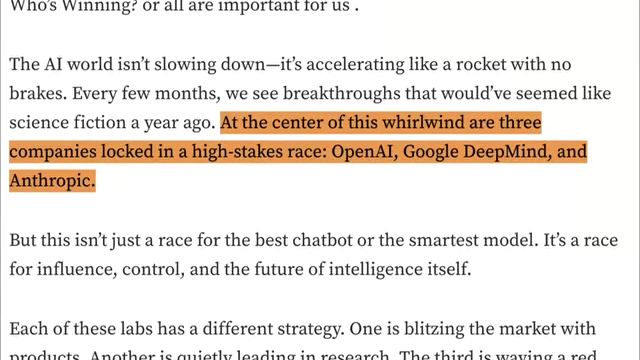
Leading AI companies dominating the market [ 00:00:20 ] - Critics have referred to Apple's situation as its "Blackberry moment," highlighting the risk of missing a major technological shift.
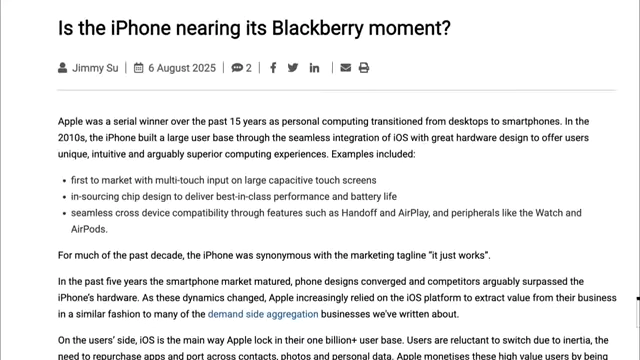
Is the iPhone nearing its Blackberry moment? [ 00:00:57 ]
- Companies like OpenAI, Google, and Anthropic are currently dominating the AI market with rapid product releases and significant investments in data centers and infrastructure.
The Strategic Foundation of Apple's AI Comeback [0:01:34]
Despite the perception of delays, Apple has been quietly building a strategic foundation for its AI initiatives through significant acquisitions and investments.
- Acquisition Strategy:
- Tim Cook stated in July 2025 that Apple is "very open to M&A that accelerates our roadmap" and is not "stuck on a certain size company."
- Apple acquired 7 AI companies in a single year, revealing a clear strategic direction.
- In 2023 alone, Apple quietly bought 32 AI startups, surpassing the combined acquisitions of Google, Meta, Microsoft, and Amazon.
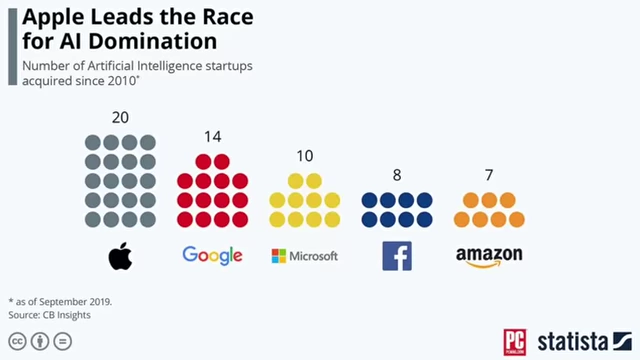
Apple leads the race for AI startup acquisitions [ 00:02:45 ] 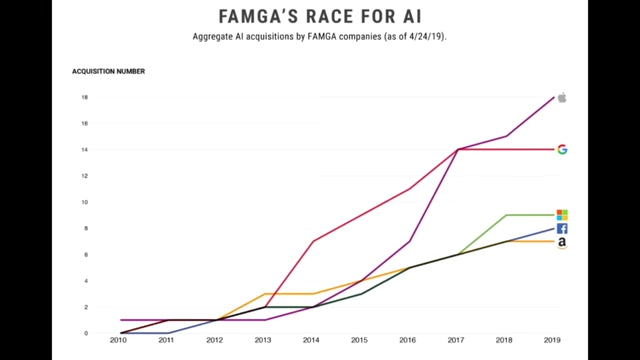
FAMGA's aggregate AI acquisitions over time [ 00:08:53 ]
- Key Acquisitions and Their Impact:
- WhyLabs (January 2025): Acquired this Jeff Bezos-backed AI security startup specializing in real-time monitoring and security for AI applications.
- WhyLabs technology prevents AI hallucinations and security breaches by detecting and redacting sensitive data (e.g., shipping addresses leaked by chatbots).
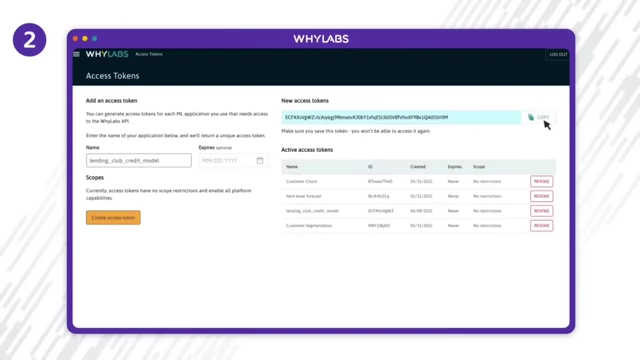
WhyLabs real-time AI security monitoring to prevent data breaches [ 00:02:16 ] - This acquisition focuses on building "bulletproof AI" by proactively preventing privacy compromises.
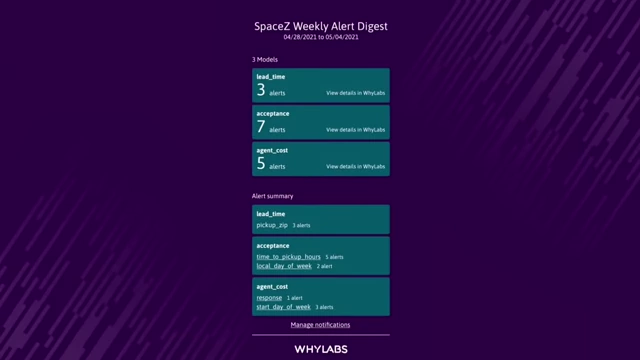
WhyLabs alert digest showing security monitoring [ 00:02:27 ]
- WhyLabs technology prevents AI hallucinations and security breaches by detecting and redacting sensitive data (e.g., shipping addresses leaked by chatbots).
- Darwin AI: Acquired this Canadian startup focused on making AI models smaller and faster.
- This technology is crucial for optimizing AI for on-device processing, reducing reliance on cloud infrastructure.
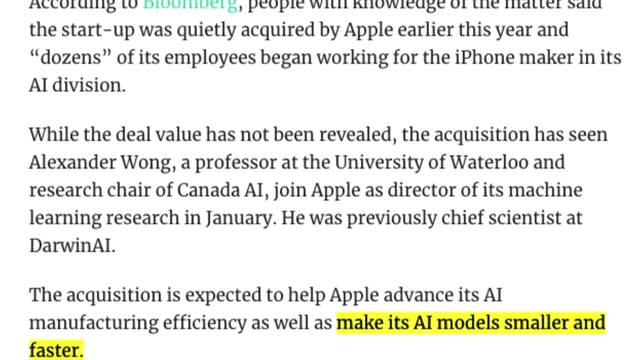
Darwin AI's technology for smaller, faster on-device AI models [ 00:03:57 ]
- This technology is crucial for optimizing AI for on-device processing, reducing reliance on cloud infrastructure.
- WhyLabs (January 2025): Acquired this Jeff Bezos-backed AI security startup specializing in real-time monitoring and security for AI applications.
- Potential Major Acquisition:
- Apple has held internal talks about acquiring Perplexity AI, an $18 billion startup, which would be Apple's largest acquisition ever if it materializes.
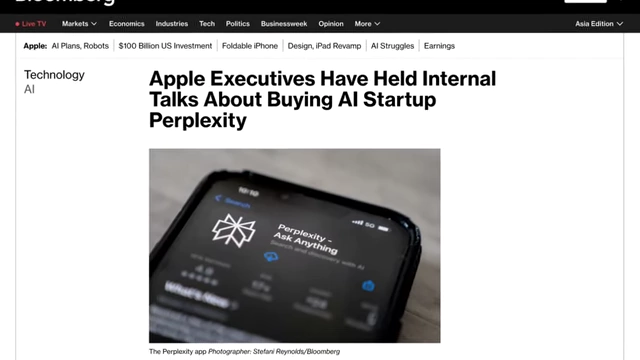
Apple executives have held internal talks about buying AI startup Perplexity [ 00:02:54 ] 
Potential acquisition of Perplexity AI by Apple [ 00:03:00 ] - Apple's strategic moves include plans for expansion into AI robots, home security, and smart displays.

Apple's expansion into AI robots, home security and smart displays [ 00:00:38 ]
- Apple has held internal talks about acquiring Perplexity AI, an $18 billion startup, which would be Apple's largest acquisition ever if it materializes.
AI Privacy as Apple's Economic Moat [0:03:07]
Apple's approach to AI heavily relies on a privacy-first philosophy, transforming privacy from a marketing slogan into a core economic advantage.
- On-Device and Secure Cloud Processing:
- Apple Intelligence primarily runs on-device using its neural engine chips (A17 Pro, M1, M2, M3, M4).
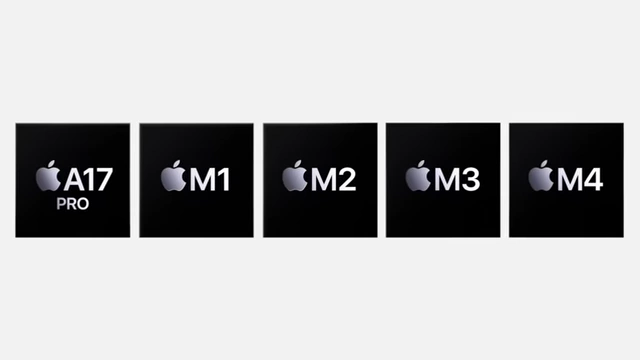
Apple's neural engine chips for on-device AI processing [ 00:03:25 ] - For cloud processing, Apple uses Private Cloud Compute (PCC) servers running Apple Silicon with encryption, ensuring that even Apple cannot access user data.
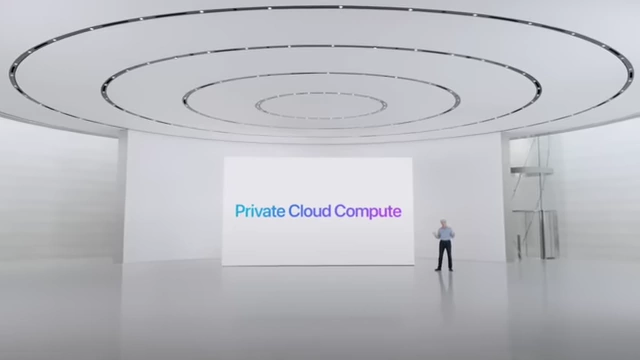
Apple's Private Cloud Compute for secure cloud processing [ 00:03:30 ]
- Apple Intelligence primarily runs on-device using its neural engine chips (A17 Pro, M1, M2, M3, M4).
- WhyLabs and Darwin AI Reinforce Privacy:
- WhyLabs' real-time security monitoring actively prevents AI systems from compromising user privacy.
- Darwin AI's model compression allows more AI processing to occur locally on devices, further reducing the need for external cloud interaction.
- These acquisitions, as seen in WhyLabs' security policies and Darwin AI's model optimization, bolster Apple's privacy strategy.
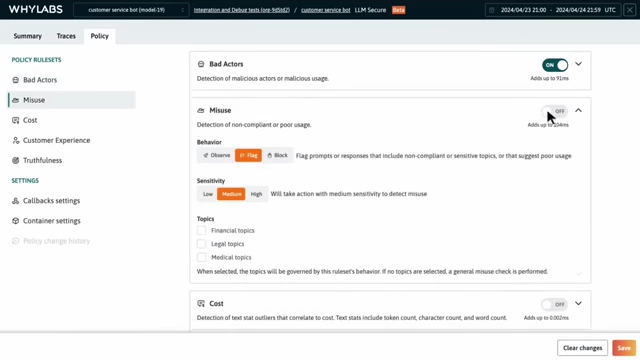
WhyLabs real-time AI security monitoring to prevent data breaches [ 00:03:47 ]
Darwin AI's technology for smaller, faster on-device AI models [ 00:03:57 ]
- Contrast with Competitors:
- While competitors' AI models often learn and get smarter by ingesting and analyzing vast amounts of user information and work patterns, Apple's AI aims to get smarter without learning personal details about the user, actively preventing security breaches in real-time.

Competitor AI models often save user data [ 00:04:05 ]
- While competitors' AI models often learn and get smarter by ingesting and analyzing vast amounts of user information and work patterns, Apple's AI aims to get smarter without learning personal details about the user, actively preventing security breaches in real-time.
- Strategic Partnerships and Gatekeeping:
- Apple is actively negotiating partnerships with external AI providers like Google (for Gemini AI) and has an existing ChatGPT partnership.
Apple's potential partnership with Google for Gemini AI [ 00:04:24 ] 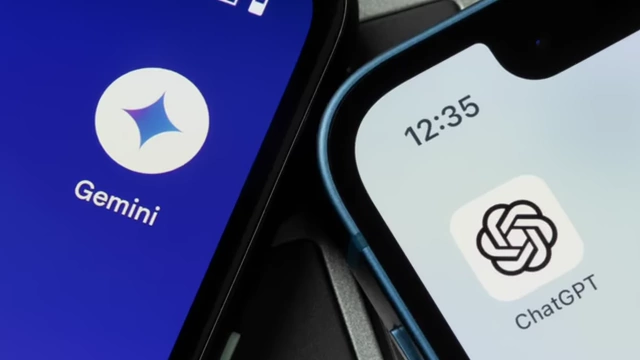
External AI models like Gemini and ChatGPT integrated into Apple's ecosystem [ 00:04:42 ] - This strategy positions Apple as the "gatekeeper of AI on mobile devices," compelling AI companies to adapt to Apple's stringent privacy rules and ecosystem integration requirements to gain access to its 2.2 billion users.
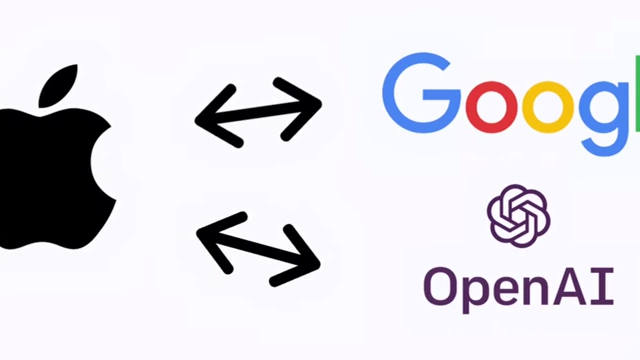
Apple positioning itself as a gatekeeper for AI providers [ 00:05:07 ] 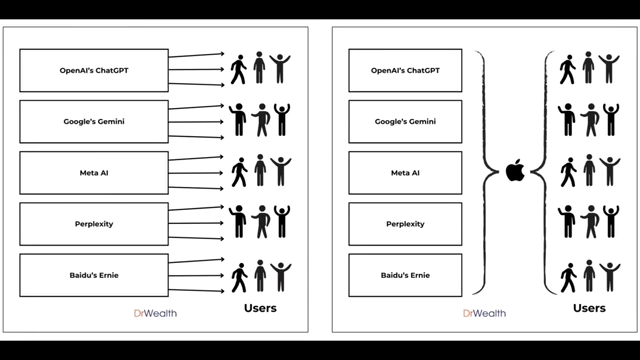
Apple's gatekeeper strategy for AI access to its users [ 00:05:15 ]
- Apple is actively negotiating partnerships with external AI providers like Google (for Gemini AI) and has an existing ChatGPT partnership.
Ecosystem Advantage: Seamless Integration and Instant Distribution [0:05:36]
Apple's vast ecosystem and deep integration capabilities provide an unparalleled distribution channel and user experience for its AI.
- Massive Installed Base:
- Apple boasts 2.2 billion active devices, including over a billion iPhones, half a billion iPads, and hundreds of millions of Macs.
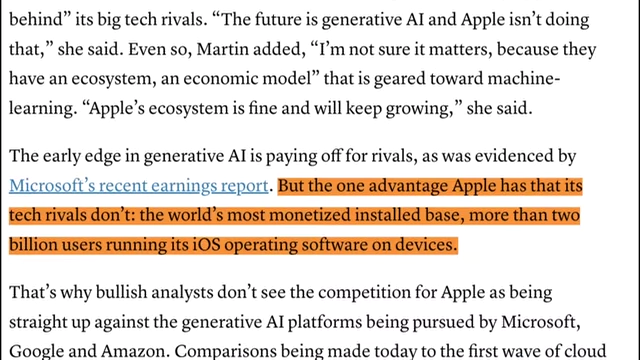
Apple's installed base of over two billion users [ 00:05:49 ] - This provides instant, unparalleled distribution for new AI features.
- Apple boasts 2.2 billion active devices, including over a billion iPhones, half a billion iPads, and hundreds of millions of Macs.
- Ambient Intelligence:
- Apple Intelligence is delivered as a software update and seamlessly integrated into every interaction, rather than being a separate app.
Apple Intelligence integrated across its device ecosystem [ 00:05:55 ] - Examples include:
- Visual intelligence in the camera.
- Smart suggestions in writing.
- Advanced search capabilities in photos.
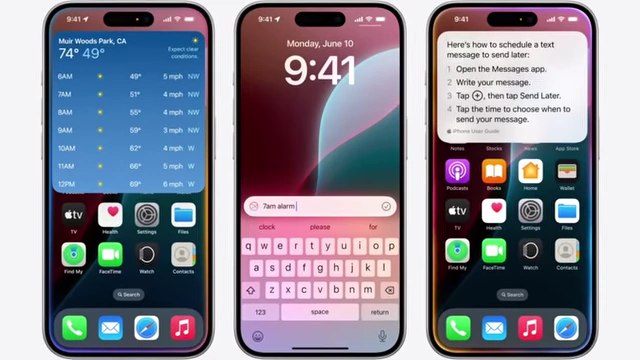
Ambient intelligence woven into every interaction on iPhone [ 00:06:09 ]
- This deep integration contrasts with the current trend of independent AI applications struggling to understand full user context.
Independent AI apps struggling to understand user context [ 00:06:29 ]
- Apple Intelligence is delivered as a software update and seamlessly integrated into every interaction, rather than being a separate app.
- User Lock-in:
- As Apple's AI learns user preferences across all devices, the convenience and personalization make leaving the ecosystem exponentially harder.
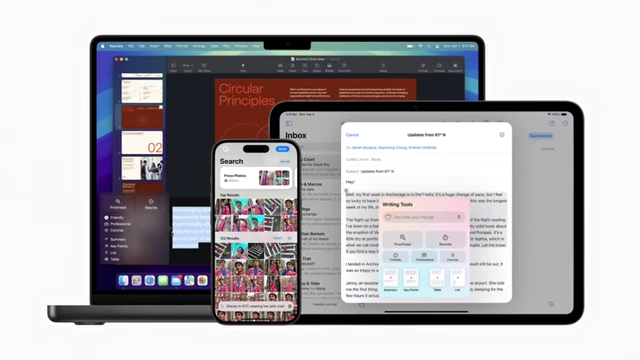
Apple's ecosystem of integrated devices [ 00:06:37 ]
- As Apple's AI learns user preferences across all devices, the convenience and personalization make leaving the ecosystem exponentially harder.
Hardware-First AI: New Product Categories [0:06:56]
Apple is investing in the future of AI by developing entirely new hardware categories where AI is the primary interface, distinguishing itself from competitors focused solely on software models.
- Smart Home Hub [2026]:
- Rumored to launch in 2026, this AI-powered display will control the entire smart home ecosystem.
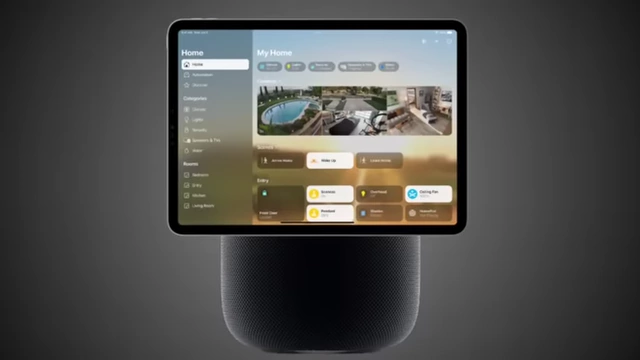
Concept for Apple's rumored smart home hub [ 00:07:12 ] - It will run on a new operating system called "Charismatic," designed for multi-user households.
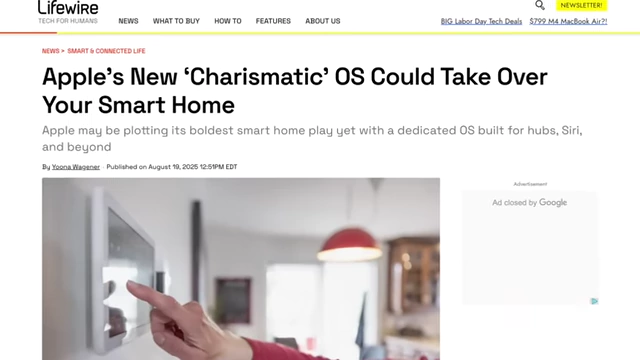
Apple's new 'Charismatic' OS for smart home hubs [ 00:07:27 ] - Features include facial recognition to personalize interfaces for each family member.
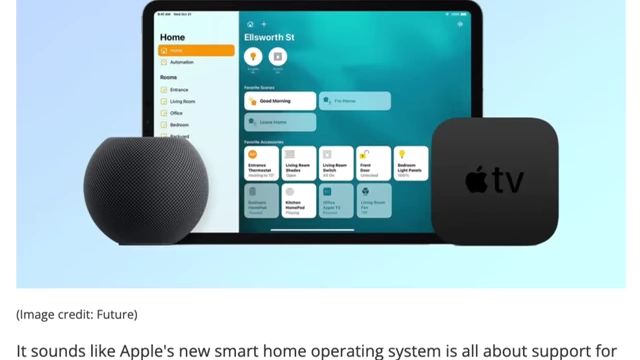
Apple's smart home hub with personalized interfaces [ 00:07:30 ]
- Rumored to launch in 2026, this AI-powered display will control the entire smart home ecosystem.
- Tabletop Robot [2027]:
- Expected in 2027, this device, internally nicknamed "The Pixar Lamp" (codenamed J595), is described as an iPad on a movable robotic arm.
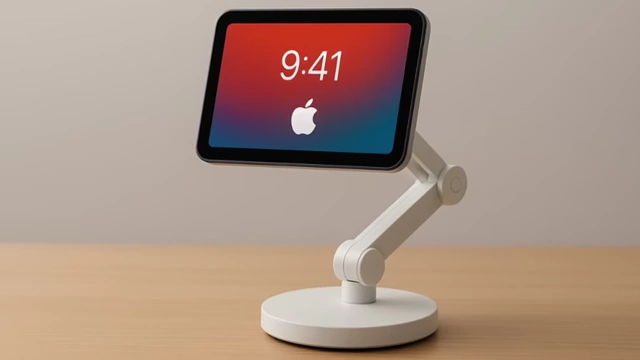
Rendering of Apple's rumored tabletop robot, 'The Pixar Lamp' [ 00:07:45 ] - It features a 7-inch display on an arm that can rotate 360 degrees, track user movements, and engage in natural conversations.
- Expected in 2027, this device, internally nicknamed "The Pixar Lamp" (codenamed J595), is described as an iPad on a movable robotic arm.
- Re-imagined Siri:
- Both new hardware products will feature a re-imagined Siri with a "virtual personality"—an animated character that can actively participate in conversations.
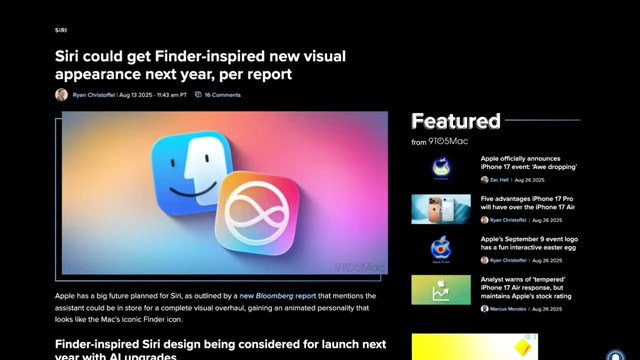
Siri's potential new visual appearance and virtual personality [ 00:08:21 ] - This represents a fundamental shift: AI is not just an added feature but the primary interface, with hardware as the key differentiator.
- These future hardware products are part of Apple's broader expansion into AI robots and smart displays.
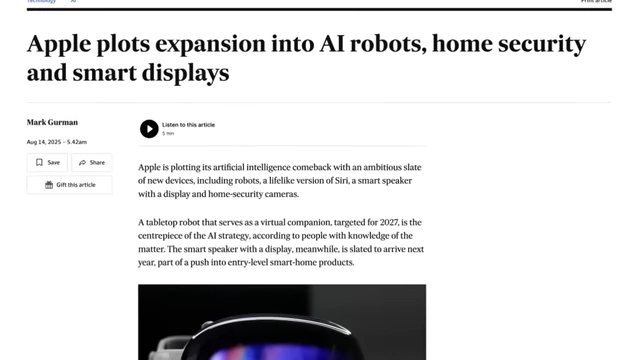
Apple's expansion into AI robots and smart home displays [ 00:07:15 ]
- Both new hardware products will feature a re-imagined Siri with a "virtual personality"—an animated character that can actively participate in conversations.
Conclusion: Apple's Long-Term Strategic Victory [0:08:44]
Apple's comprehensive strategy, focusing on privacy, ecosystem integration, and hardware innovation, positions it to redefine success in the AI race.
- While others rushed to build the most impressive AI models, Apple focused on building the most strategic one, aligned with its core values.
- By 2026, the upgraded Siri will offer a truly personal AI experience that knows the user without compromising privacy, integrated across an ecosystem that competitors cannot easily replicate.
- The AI race is a marathon, and Apple is taking a different route, prioritizing a secure, seamlessly integrated, and physically embodied AI future.