Understanding the Debasement Trade: Fiat Currency Devaluation, Gold, Silver, Bitcoin, and Investment Strategies
The video explains the "debasement trade," an investment trend betting against the US dollar by investing in real assets.
- What is the Debasement Trade? It's investing in assets like gold, silver, and Bitcoin because the US dollar is expected to lose purchasing power against them, not other currencies. This is driven by the zero intrinsic value of fiat currency and continuous money printing by governments, leading to inflation.
- Is it Too Late? The speaker argues it's not too late if one believes governments will continue printing money due to global debt, preventing economic depression. Stopping money printing would cause an economic crash and threaten politicians' power.
- Speaker's Investment Strategy: The speaker seeks "asymmetric trades" (low risk, high reward).
- Gold offers the lowest risk and moderate returns.
- Silver offers moderate risk and the highest potential gain due to "silver slams" by "banksters."
- Bitcoin is deemed highest risk with moderate returns due to its volatility and current underperformance relative to gold and silver.
- Recommendation: For most, a combination of gold and silver is recommended, leaning towards gold for conservatism or silver for aggressiveness. Gold mining stocks are identified as current asymmetric opportunities, specifically undervalued ones, despite the VanEck Gold Miners ETF (GDX) already rising significantly.
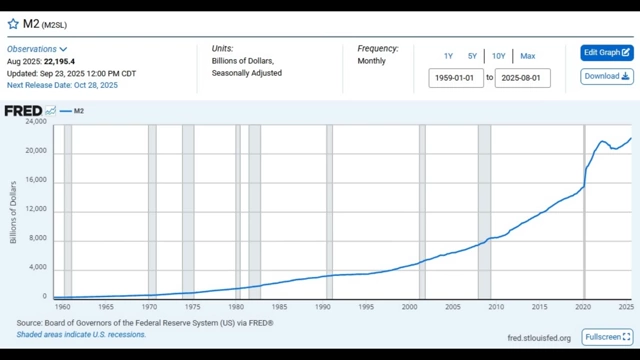
M2 money supply chart showing a consistent upward trend over 65+ years [ 00:01:35 ]
Introduction to the Debasement Trade [0:00]
The video introduces the "debasement trade" as a significant investing trend where investors bet against the US dollar by investing in real assets.
- This trade implies a belief that the US dollar will devalue against real assets, rather than other currencies.
- Essentially, each US dollar is expected to lose purchasing power.
- Investors engage in this trade by buying assets such as gold, silver, and Bitcoin to protect against the dollar's devaluation.
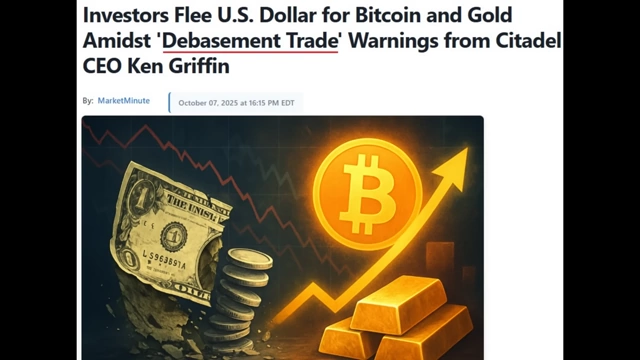
News headline about investors fleeing the US dollar for Bitcoin and Gold amidst 'Debasement Trade' warnings [ 00:00:10 ]
Why the US Dollar is Devaluing [1:01]
The speaker explains two primary reasons why the US dollar is believed to be losing purchasing power.
- Intrinsic Value of Fiat Currencies:
- Fiat currencies like the US dollar have zero intrinsic value; they are not backed by any tangible asset.
- Historically, dollars were backed by cotton and linen, but now are largely digital, lacking a physical commodity foundation.
- Excessive Money Printing and Expanding Money Supply:
- The federal government, central banks, and commercial banks have been printing trillions of dollars.
- The M2 money supply is at a record high, with a consistent upward trend over the past 65 years.
- This increase in money supply directly leads to the devaluation of fiat currency and causes inflation.
Chart illustrating the M2 money supply over 65+ years, showing a consistent upward trend [ 00:01:35 ] - Example with Gold: The price of gold has risen from $380 an ounce in 1995 to around $4,000 an ounce. This increase isn't because gold became more valuable, but because more devalued dollars are now required to purchase the same amount of gold. This phenomenon is called asset price inflation or currency debasement.
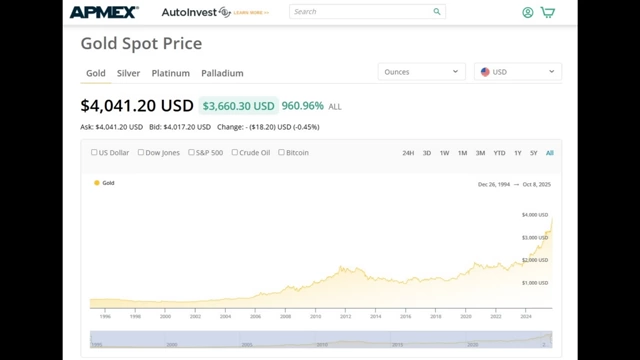
Gold Spot Price chart showing the historical rise in gold prices [ 00:01:55 ]
- This increase in money supply directly leads to the devaluation of fiat currency and causes inflation.
- Global Debt Bubble:
- The current global economy is characterized by a significant debt bubble.
- Governments and central banks are expected to continue printing more fiat currency and expanding money supplies as the only way to sustain the economic system and manage mounting debt.

News article headline: "Debt is Higher and Rising Faster in 80 Percent of Global Economy" [ 00:02:55 ] - ChatGPT Example: A query to ChatGPT regarding how long it would take the US government to pay back $38 trillion in debt if it overspends by $2 trillion annually, resulted in the answer that the debt "would never be paid back" and would "actually grow larger every year."

ChatGPT's answer to the question about US government debt repayment [ 00:03:29 ]
- ChatGPT Example: A query to ChatGPT regarding how long it would take the US government to pay back $38 trillion in debt if it overspends by $2 trillion annually, resulted in the answer that the debt "would never be paid back" and would "actually grow larger every year."
- Safe Haven for Investors:
- The ongoing money printing drives investors to seek safe havens.
- This is why gold, silver, and Bitcoin have recently reached record highs; they are assets that cannot be printed by governments or central banks.
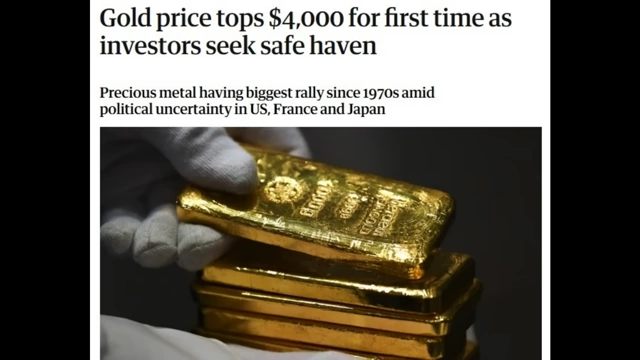
News headline: "Gold price tops $4,000 for first time as investors seek safe haven" [ 00:03:54 ] 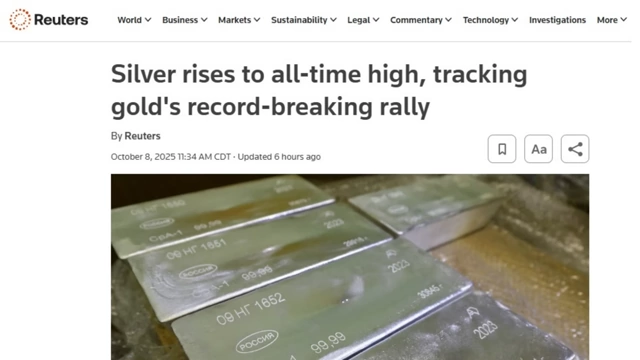
News headline: "Silver rises to all-time high, tracking gold's record-breaking rally" [ 00:04:03 ] 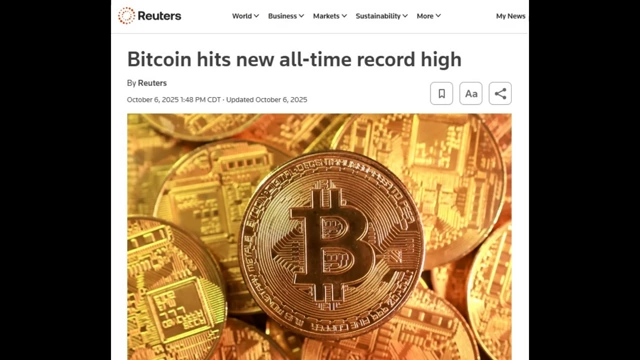
News headline: "Bitcoin hits new all-time record high" [ 00:04:04 ]
Is it Too Late for the Debasement Trade? [4:16]
The speaker addresses whether it's too late to enter the debasement trade.
- Continued Money Printing: Based on the historical M2 money supply chart, the speaker posits that money printing is unlikely to stop.
- Stopping money printing would likely cause the debt bubble to burst, leading to a guaranteed economic depression.
- Such an outcome would result in politicians being voted out, losing their power and funds, and the Federal Reserve being blamed and disbanded.
- Conclusion: As politicians and central bankers would want to avoid such a scenario, they are expected to continue printing money. Therefore, if one believes this trend will persist, it is not too late to participate in the debasement trade, and "better late than never."
- The relevant question is not how high gold or silver can go, but "how much money can they print?"
Investment Strategy: What Brian Would Do [5:42]
The speaker outlines his personal approach to investing in the current debasement trade.
Defining an Asymmetric Trade:
- An asymmetric trade is an investment opportunity where the potential upside (gain) significantly outweighs the potential downside (loss).
- It's a low-risk, high-reward profile. These opportunities are rare.
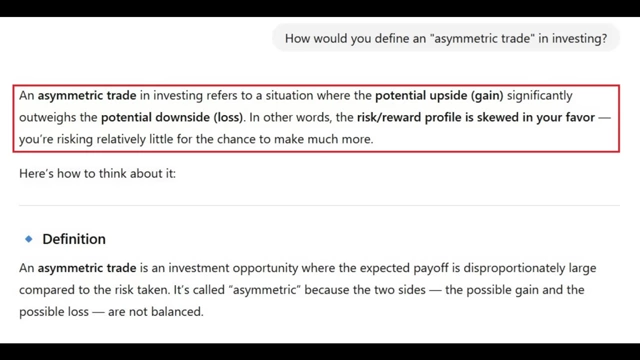
ChatGPT's definition of an asymmetric trade [ 00:06:23 ] - Past Example: Silver was considered an asymmetric trade a year or even a few months prior to the video.
Risk/Reward Analysis of Gold, Silver, and Bitcoin (Current Perspective):
- Gold [6:59]
- Current Price: Near $4,000 an ounce.
- Movement: Expected to "grind up" with a slower climb.
- Risk/Return Profile: Lowest risk, moderate return.
- Silver [7:20]
- Risk/Return Profile: Moderate risk, highest potential gain.
- Higher Risk Explanation: Due to historical "silver slams" (price manipulation) by "banksters," though these have been short-lived and shallow recently.
- Bitcoin [7:47]
- Risk/Return Profile: Highest risk, moderate return potential.
- Rationale: High volatility (can plunge 10-30% in a short period) and has been underperforming gold and silver year-to-date despite media hype.
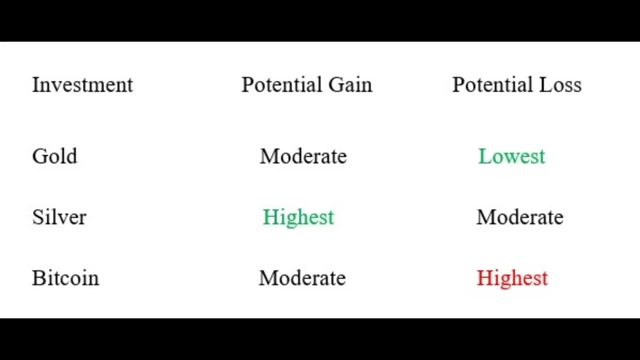
Table summarizing the Investment, Potential Gain, and Potential Loss for Gold, Silver, and Bitcoin [ 00:08:53 ]
- Gold [6:59]
Focus on Gold Mining Stocks for Asymmetric Opportunities [9:29]
- The speaker believes that a clear-cut asymmetric trade (low risk, high return) in direct precious metal investments is currently not available, as "that ship has sailed."
- He would still buy gold and silver, but no single one is a clear favorite for asymmetric returns.
- Recommendation for Asymmetric Trade: Asymmetric opportunities can still be found in gold mining stocks.
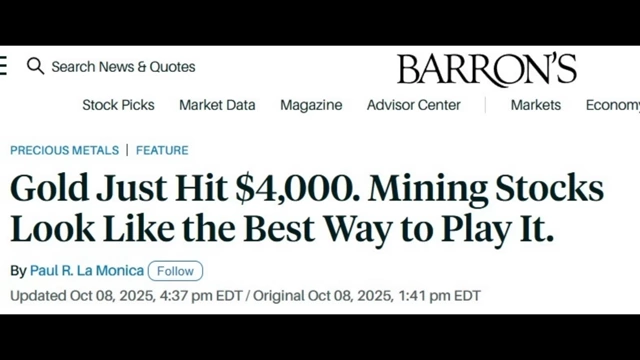
Barron's article headline: "Gold Just Hit $4,000. Mining Stocks Look Like the Best Way to Play It." [ 00:09:37 ] - Leveraged Play: Gold mining stocks offer an exponential profit increase when gold prices rise.
- Example: If gold price doubles from $2,000 to $4,000, and mining cost is $1,500, profit per ounce increases fivefold (from $500 to $2,500).
- Current Status: Gold mining stocks have quietly outperformed (e.g., the MSCI gold miner index is trading slightly below its 5-year average earnings estimates, indicating potential undervaluation).
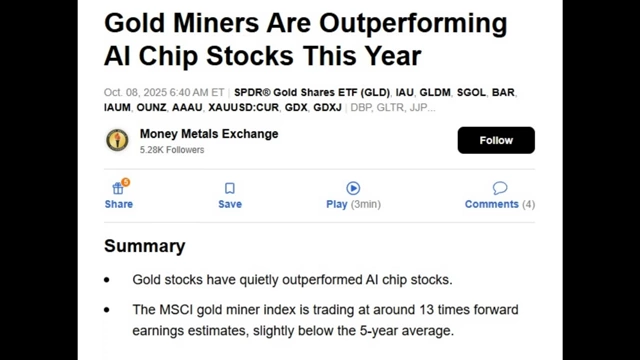
News article highlighting gold miners outperforming AI chip stocks and the MSCI gold miner index trading below its 5-year average [ 00:11:03 ] - The VanEck Gold Miners ETF (GDX) has already seen a significant increase of 133.41% year-to-date in 2025.
- Strategy: Identify specific, severely mispriced or undervalued gold mining stocks.
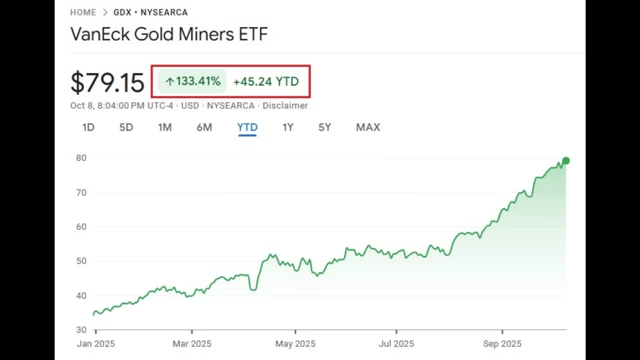
VanEck Gold Miners ETF (GDX) chart showing a 133.41% year-to-date gain in 2025 [ 00:11:12 ]
- Leveraged Play: Gold mining stocks offer an exponential profit increase when gold prices rise.
Recommended Portfolio Allocation for a Good Debasement Trade (for most people) [11:44]
- For those not inclined to actively hunt for individual gold mining stocks, a combination of gold and silver is recommended.
- Conservative/Defensive: Allocate more towards gold.
- Aggressive/Higher Risk Tolerance: Allocate more towards silver.
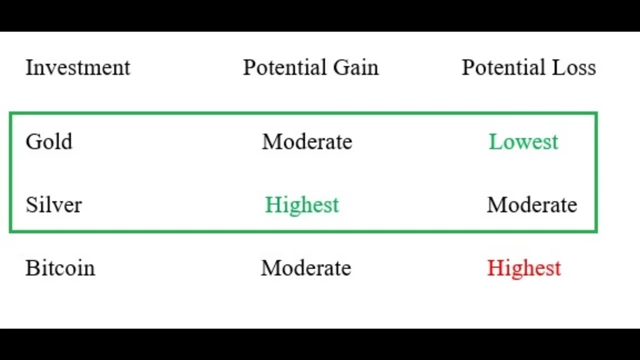
Table recommending gold for lowest risk/moderate gain and silver for moderate risk/highest gain [ 00:12:00 ]
- Bitcoin (Speaker's Stance): The speaker is not a buyer of Bitcoin at its current high price (e.g., $120,000). He believes silver has a better chance of doubling to $100 than Bitcoin doubling to $240,000.
- For those not inclined to actively hunt for individual gold mining stocks, a combination of gold and silver is recommended.
Conclusion [12:29]
The debasement trade focuses on preserving purchasing power against currency devaluation through real assets. The speaker emphasizes continued updates on this trend.