The AI Bubble: Understanding the Forces Driving the Market and How to Invest Safely
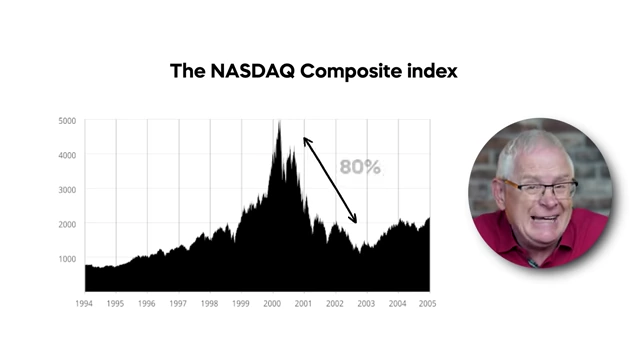
The video warns of a potential AI stock market bubble, drawing parallels to the dot-com crash of 2000, where the NASDAQ fell 80%.
- The AI Arms Race: Seven tech giants (Magnificent Seven) are pouring hundreds of billions into AI, driving economic growth but creating high concentration risk within the S&P 500, which they make up 37% of. This spending is predicted to increase dramatically, fueling a global competition for dominance.
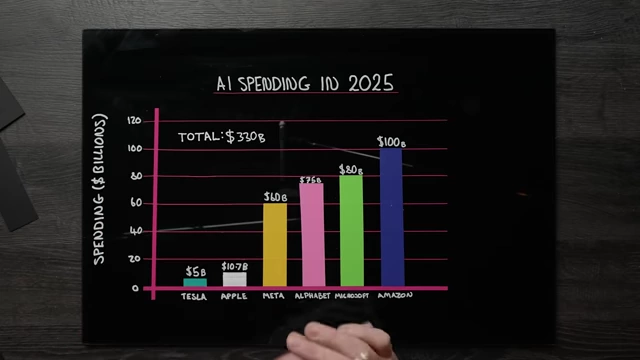
Bar chart showing AI spending in 2025 for the Magnificent Seven companies [ 00:03:40 ] - The AI Money Machine: A circular funding model among key AI players like Microsoft, OpenAI, Nvidia, and Oracle is artificially inflating revenue and stock prices, with OpenAI showing a $500B valuation on $12B revenue. Nvidia is emerging as a significant winner by selling chips to all participants.
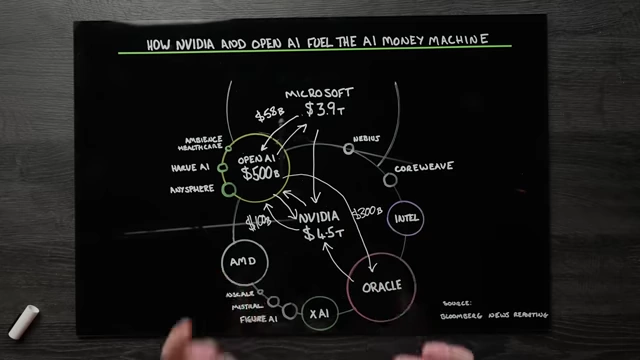
Diagram illustrating the circular funding model among AI companies, with Nvidia as a central beneficiary [ 00:07:59 ] - The AI Data Wall: AI's rapid progress is reliant on massive data consumption, and it's nearing a point (projected by 2027) where it will exhaust available human-generated public data, potentially slowing down advancements unless new learning methods are developed.
Despite these concerns, the speaker suggests AI has more real utility than dot-com companies. For investors, he advises continuing to invest in broad, low-cost index funds, increasing income, and diversifying portfolios across assets like stocks, bonds, and precious metals to navigate potential market volatility.
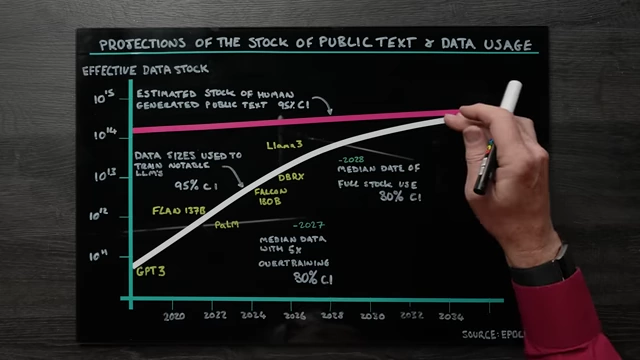
Graph showing projections of public text & data usage, indicating a looming data wall for AI around 2027-2028 [ 00:11:08 ]
Intro: Echoes of the Dot-Com Bubble [00:00]
The video opens by comparing the current AI investment frenzy to the dot-com bubble of 1998-2000.
- Historical Parallel (1998-2000) [00:02]:
- Investors poured money into internet companies based on catchy names and hype.
- The NASDAQ fell nearly 80% when the bubble burst in 2000.
The NASDAQ Composite Index showing an 80% drop from 2000-2002 [ 00:00:44 ] - Only 48% of dot-com companies survived, leading to significant financial losses for many.
- Despite the crash, the internet proved to be a transformative technology, but overconfidence still led to one of the biggest bubbles in history.
- Current AI Hype [01:08]:
- A similar "energy" is observed in the AI sector, with many calling it a "once-in-a-lifetime opportunity."
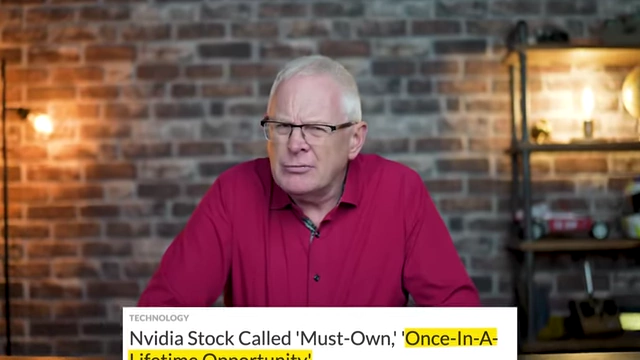
News headline about Nvidia stock being a "once-in-a-lifetime opportunity" [ 00:01:21 ] - The video aims to break down three hidden forces driving this potential AI bubble.
- The key question is whether "this time it's different" or if history is "rhyming" again, as "The four most expensive words in investing are, 'This time it's different.'"
- A similar "energy" is observed in the AI sector, with many calling it a "once-in-a-lifetime opportunity."
1. The AI Arms Race [01:57]
The fate of the stock market and investor portfolios is heavily influenced by seven dominant companies known as the "Magnificent Seven," all engaged in an intense race to lead the AI revolution.
- The Magnificent Seven [02:02]:
- Comprises Amazon, Microsoft, Alphabet (Google), Meta, Apple, Tesla, and Nvidia.
Logos of the Magnificent Seven companies [ 00:02:13 ] - These companies collectively account for approximately 36% of the S&P 500's total market capitalization, making their performance critical for broader market returns.
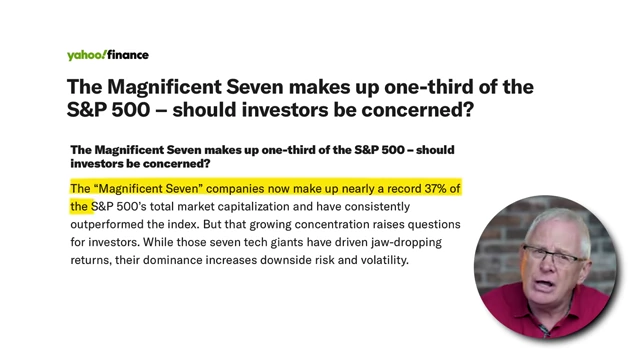
Yahoo Finance article stating "The Magnificent Seven makes up nearly a record 37% of the S&P 500" [ 00:02:19 ] - Even those owning a share of the S&P 500 are betting on these companies.
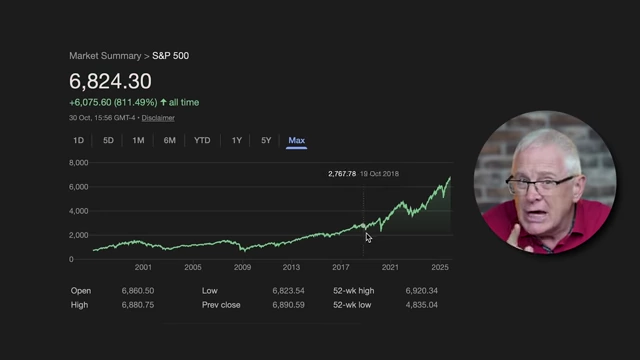
S&P 500 market summary chart showing growth until 2025 [ 00:02:27 ]
- Comprises Amazon, Microsoft, Alphabet (Google), Meta, Apple, Tesla, and Nvidia.
- Massive AI Spending [02:36]:
- These companies are projected to invest a total of $330 billion in AI in one year [2025].
Bar chart showing AI spending in 2025 for the Magnificent Seven companies [ 00:03:40 ] - Tesla plans on spending $5 billion on autonomous driving and xAI.
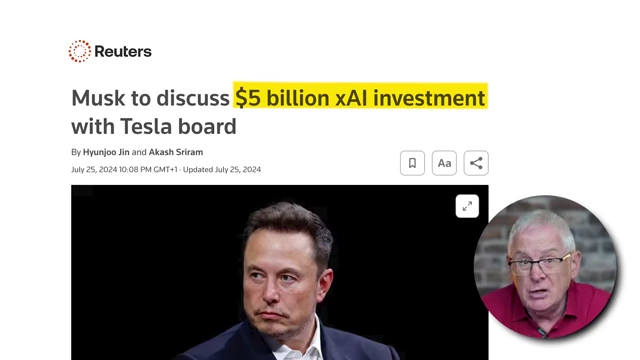
Reuters headline: "Musk to discuss $5 billion xAI investment with Tesla board" [ 00:02:56 ] - Apple plans to spend $10.7 billion to make Siri smarter.
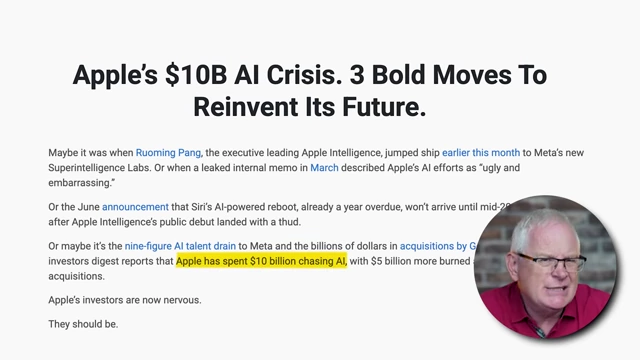
Article headline: "Apple's $10B AI Crisis. 3 Bold Moves To Reinvent Its Future." [ 00:03:01 ] - Meta plans to spend $60 billion on data centers and the metaverse.
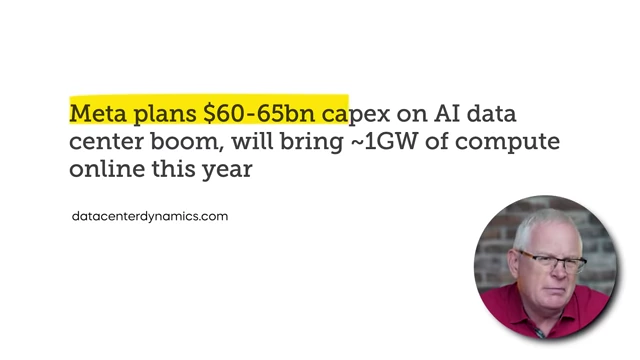
Article headline: "Meta plans $60-65bn capex on AI data center boom" [ 00:03:08 ] - Google plans to spend $75 billion on rebuilding the internet with AI.
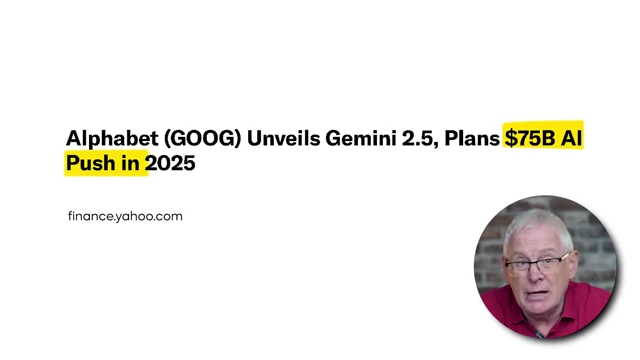
Yahoo Finance article: "Alphabet (GOOG) Unveils Gemini 2.5, Plans $75B AI Push in 2025" [ 00:03:13 ] - Microsoft plans to spend $80 billion funding OpenAI and supercomputers.

Investopedia article: "Microsoft Slated to Invest $80 Billion in AI-Enabled Data Centers This Fiscal Year" [ 00:03:18 ] - Amazon plans to spend $100 billion on AWS to own the infrastructure.
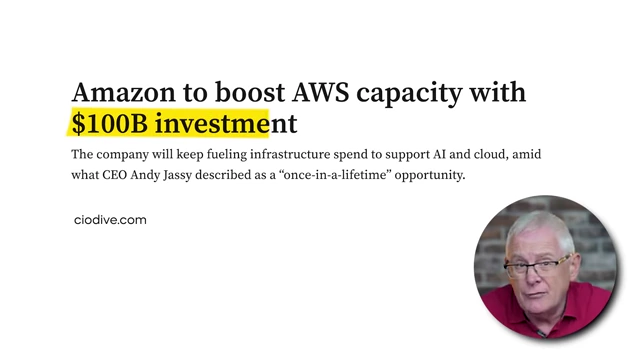
Ciodive.com article: "Amazon to boost AWS capacity with $100B investment" [ 00:03:24 ]
- Tesla plans on spending $5 billion on autonomous driving and xAI.
- This spending exceeds the entire GDP of countries like Finland or Portugal.
- Global AI spending is expected to reach $500 billion by 2026, with spending on power and resources for electricity demand topping $3 trillion annually by 2030.
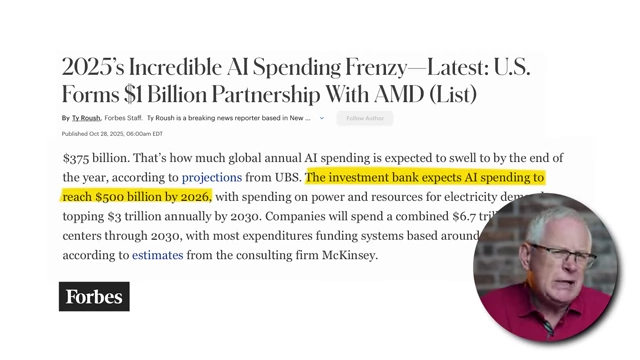
Forbes article snippet: "investment bank expects AI spending to reach $500 billion by 2026" [ 00:04:08 ]
- These companies are projected to invest a total of $330 billion in AI in one year [2025].
- Economic Impact and Competition [03:48]:
- This extensive AI spending appears to be currently sustaining the economy; without it, the US might already be in a mild recession.

CNBC chart: "Underlying real GDP growth" comparing total vs. excluding tech spending [ 00:03:55 ] - The International Monetary Fund estimates that about 60% of jobs in the developed world are exposed to AI, meaning they could be transformed or replaced by automation.
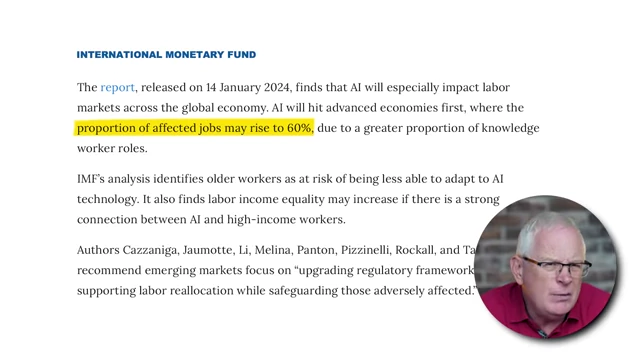
International Monetary Fund article snippet: "proportion of affected jobs may rise to 60%" [ 00:04:23 ] - The company that first cracks AI technology will be rewarded with a "crazy amount of power."
- The AI race is also a competition between nations (e.g., US and China) for global dominance.
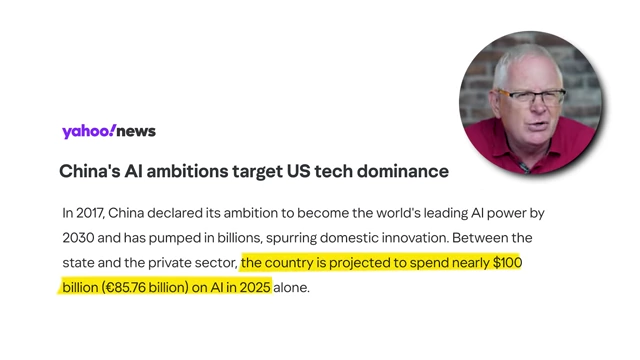
Yahoo News article snippet: "China is projected to spend nearly $100 billion on AI in 2025 alone" [ 00:04:56 ]
- This extensive AI spending appears to be currently sustaining the economy; without it, the US might already be in a mild recession.
- Investment Outlook [04:59]:
- If AI delivers on its promise, the next decade of investing could mirror the internet boom of the 2000s.
- Conversely, if the expected profits don't arrive fast enough, the same stocks currently driving portfolios could cause a significant downturn.
2. The AI Money Machine [05:57]
A unique and concerning circular funding model within the AI industry raises red flags about artificial revenue boosting and company valuations.
- Key Players and Their Roles [06:09]:
- Chip Designers (Intel, AMD, Nvidia): Design the chips that power AI models.
- AI Companies (OpenAI, xAI): Buy these chips.
- Data Centers (Oracle, CoreWeave): Buy chips and lease out computing power to AI companies, acting as middlemen.
- The Circular Funding Model Illustrated [06:40]:
- The cycle begins with investors at Microsoft funding OpenAI.
- OpenAI then pays Microsoft to use its data centers.
- Microsoft uses this money to buy chips from Nvidia.
- Nvidia, in turn, invests back into OpenAI, often with the condition that OpenAI buys more Nvidia chips.
- This enables each company to record these transactions as revenue, artificially inflating stock prices.
Diagram illustrating the circular funding model among AI companies, with Nvidia as a central beneficiary [ 00:07:59 ]
- Exaggerated Valuations [07:04]:
- OpenAI, for example, is valued at $500 billion but generates only around $12 billion in revenue and operates at a monthly loss.

NBC News headline: "Microsoft and OpenAI reach new deal valuing OpenAI at $500 billion" [ 00:07:17 ] ![OpenAI profile showing Revenue $12.00B, Valuation $500.00B [<a href="https://youtube.com/watch?v=C6eXTvqdaro&t=2025">2025</a>]](https://storage.googleapis.com/summarizer-images/images/C6eXTvqdaro/sc0118_t00.07.19.webp)
OpenAI profile showing Revenue $12.00B, Valuation $500.00B [<a href="https://youtube.com/watch?v=C6eXTvqdaro&t=2025">2025</a>] [ 00:07:19 ]
- OpenAI, for example, is valued at $500 billion but generates only around $12 billion in revenue and operates at a monthly loss.
- Nvidia as a Major Beneficiary [07:58]:
- Nvidia's share price has increased by 1600% since ChatGPT launched.
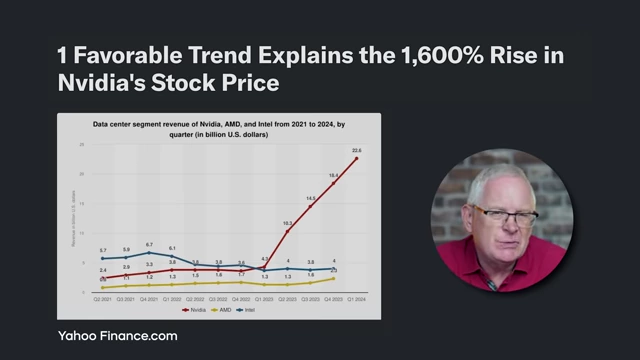
Yahoo Finance chart comparing data center segment revenue for Nvidia, AMD, and Intel, showing Nvidia's steep rise [ 00:08:03 ] - Nvidia sells its chips to nearly all major players (Microsoft, Meta, Google, Amazon, OpenAI, Oracle) and then invests back into these same companies, potentially artificially boosting demand for its products.
- Nvidia's share price has increased by 1600% since ChatGPT launched.
- The "Gold Rush" Analogy [08:29]:
- Nvidia is selling the "shovels," Oracle is providing the "land," and OpenAI is "digging the quarry," with all parties collaborating to lure people into the "mines" but with no one having "struck gold" yet.
- Path to Profitability [09:00]:
- Despite current losses, AI companies have large levers to pull for profitability.
- OpenAI's ChatGPT has over 700 million weekly users, representing significant attention and data.
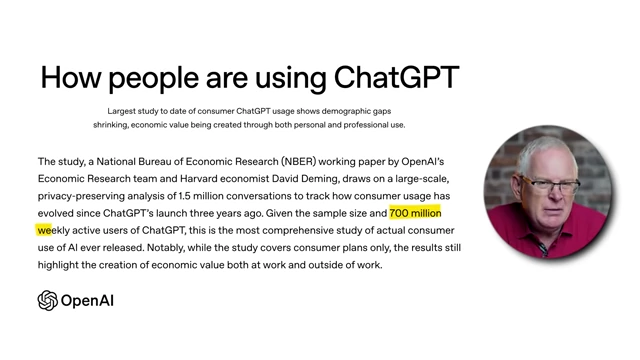
OpenAI study showing "700 million weekly active users of ChatGPT" [ 00:09:07 ] - Future profit strategies could include:
- Introducing ads and allowing companies to recommend products directly within ChatGPT conversations.

Example of ChatGPT conversation with product recommendations ("What are the best jogger pants under $100?") [ 00:09:22 ] - Allowing erotica in chats for verified adults, tapping into a large industry.

Cnet.com article: "OpenAI Plans to Allow Erotica and Change Mental Health Restrictions for Adult Users" [ 00:09:31 ] - Building AI systems to undercut the human workforce, making corporations dependent on AI and allowing AI companies to hike prices and "cash in."
- Introducing ads and allowing companies to recommend products directly within ChatGPT conversations.
3. The AI Data Wall [10:05]
The relentless improvement of AI models, which heavily relies on consuming vast amounts of data, is approaching a significant limitation.
- Rapid AI Progress [10:08]:
- AI has shown remarkable progress, exemplified by advancements in AI video generation.
![Side-by-side comparison of AI-generated videos of Will Smith eating spaghetti [<a href="https://youtube.com/watch?v=C6eXTvqdaro&t=2023">2023</a>]](https://storage.googleapis.com/summarizer-images/images/C6eXTvqdaro/sc0173_t00.10.18.webp)
Side-by-side comparison of AI-generated videos of Will Smith eating spaghetti [<a href="https://youtube.com/watch?v=C6eXTvqdaro&t=2023">2023</a>] [ 00:10:18 ] - The stock market's high valuations for AI companies are largely based on the assumption that this rapid rate of improvement will continue.
- AI has shown remarkable progress, exemplified by advancements in AI video generation.
- The Data Depletion Challenge [10:25]:
- AI has been consuming public data at an unsustainable rate, devouring every scrap of public data available for years.
- By 2027, AI is projected to have ingested nearly all human-generated online content.
Graph showing projections of public text & data usage, indicating a looming data wall for AI around 2027-2028 [ 00:11:08 ] - This looming "data wall" threatens to slow down AI's progress, as it's running out of new data to learn from.
- Current AI models have been fed centuries' worth of human knowledge (books, research, data).
- Consequences of Hitting the Data Wall [11:06]:
- If AI companies cannot find ways to scale beyond this data limit, progress could decelerate, expectations might collapse, and the AI bubble could burst.
- Potential Solutions: Beyond Raw Data [11:16]:
- Humans learn not just from being fed data, but from interacting with the world and accumulating unique experiences, which AI currently cannot simulate.
- Overcoming the data wall might not just be a question of "more data" but of "different data" and new learning paradigms that mimic human-like experiential learning.
My Honest Thoughts (& what to do) [11:57]
The speaker provides his perspective on the current AI market and offers advice for investors.
- AI Bubble vs. Dot-Com Bubble [12:05]:
- The current situation is similar to the dot-com bubble but not entirely the same.
- The main difference is that these AI companies have "real utility and a clear path to profits," unlike many dot-com companies that derived crazy valuations from fancy names alone.
- However, the ultimate size of these profits remains to be seen.
- Signs of a Bubble [12:27]:
- Despite the utility, the speaker still believes it is a bubble due to:
- Overvaluation of companies.
- Artificial revenue boosting ("faking revenue").
- Geopolitical competition (mania).
- Scaling limitations (the data wall).
- The exact stage of the bubble (beginning or end) is unknown.
- Despite the utility, the speaker still believes it is a bubble due to:
- Investment Recommendations (Not Financial Advice) [12:45]:
- Continue Investing Consistently [12:53]:
- If at the start of the bubble, current prices could be bargains in a few years.
- Set up automatic monthly investments into broad, low-cost index funds.
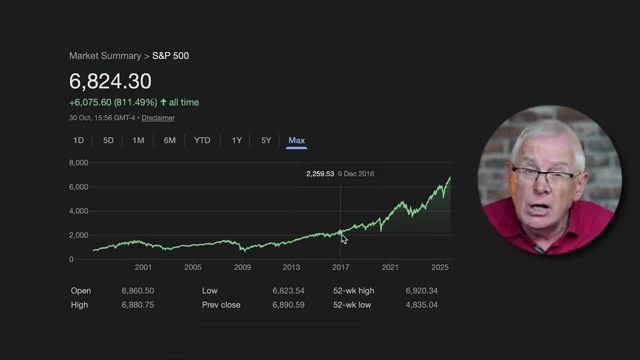
S&P 500 market summary chart from 2001-2025 [ 00:13:08 ] - Historically, the market bounces back; the key is not to panic when the portfolio drops.
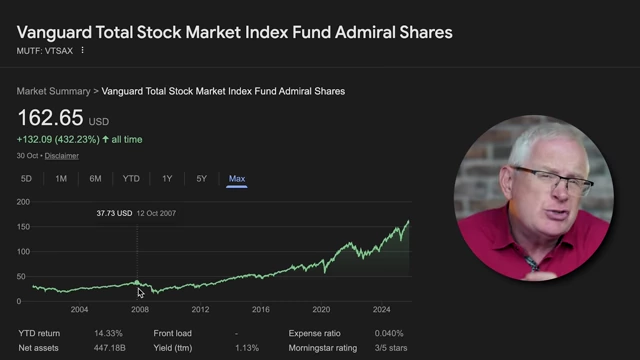
Vanguard Total Stock Market Index Fund chart showing historical growth [ 00:13:26 ] - Being debt-free and not over-leveraged is crucial to sustain investing during a downturn.
- Increase Income [13:56]:
- Your income is the fuel for wealth growth.
- Increase income through promotions or starting a side hustle to supercharge returns, especially during market falls when bargains can be acquired.
- Focus on Diversification [14:14]:
- Avoid putting all money into one type of investment; diversification is key to surviving market bubbles.
- Spread investments across different asset types, such as stocks, bonds, precious metals (like gold), real estate, and cryptocurrency.

List of asset types: Stocks, Bonds, Precious metals [ 00:14:31 ] - Consider dividend-paying stocks, as they perform well during downturns by generating passive income.
- Continue Investing Consistently [12:53]:
- Long-Term Perspective [14:44]:
- A market bubble bursting is not the "end of the world."
- Understanding such situations allows investors to avoid panic and take advantage of opportunities while others are selling.