Market Outlook: Analyzing the Policy Disconnect and its Impact on Tech, AI, Bitcoin, and Gold
This video presents a market thesis predicting a tech crash and AI bubble implosion due to a "policy disconnect."
- Tech stocks are currently down, while safe-haven assets like gold and Bitcoin are rising, and the dollar is strengthening, despite expected Federal Reserve rate cuts.
- The 30-year Treasury yields are paradoxically increasing, nearing 5%, reflecting inflation fears and lack of confidence in the economy.
- Banks are arbitraging the lower Fed rates by borrowing cheaply and buying higher-yielding Treasuries, preventing liquidity from reaching the real economy.
- This policy disconnect leads to constrained corporate capital expenditures, a stalled housing market, declining equities, and a flight to safe havens.
- The AI bubble is also unsustainable, with large language models likely unprofitable, suggesting an impending contraction that could further depress the economy, leading to potential widespread wealth destruction and a devalued dollar.
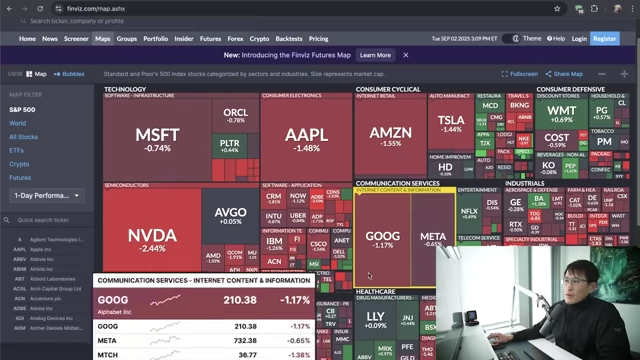
Market overview showing major tech stocks like Microsoft, Apple, Amazon, Nvidia, and Google experiencing declines, with many sections of the market colored red. [ 00:01:55 ]
Introduction to Market Thesis [0:00]
The speaker introduces his thesis regarding an impending crash in the tech markets and the implosion of the AI bubble, potentially as early as this month. He emphasizes his extensive experience in the tech field spanning over 30 years, contrasting it with newer entrants. He also suggests that coding is no longer glorified by younger generations who are primarily driven by quick money, leading to a shift away from the traditional tech dream.
Current Market Observations [1:50]
The market is exhibiting peculiar behavior, signaling a "policy disconnect."
- Tech Stocks Downturn: Major tech companies such as Google, S&P 500, Nvidia, Microsoft, Apple, and Amazon are all showing declines.
- Google is down 1%.
- S&P 500 is down about 1%.
- Nvidia is down 2.5%.
- Many other tech companies are also experiencing a downturn.
Market overview showing major tech stocks like Microsoft, Apple, Amazon, Nvidia, and Google experiencing declines, with many sections of the market colored red. [ 00:01:55 ]
- Safe Haven Assets Rise:
- Gold has reached record highs.
- Bitcoin is up, while Ethereum is down.
- The dollar index is strengthening against other currencies.
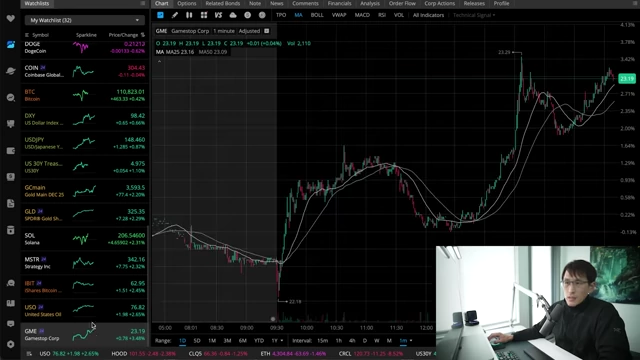
A watchlist showing various assets, with Gold and Bitcoin in green (up), while tech stocks like Microsoft, Apple, and Nvidia are red (down). [ 00:02:06 ] - The 30-year Treasury yield is increasing, approaching 5%.
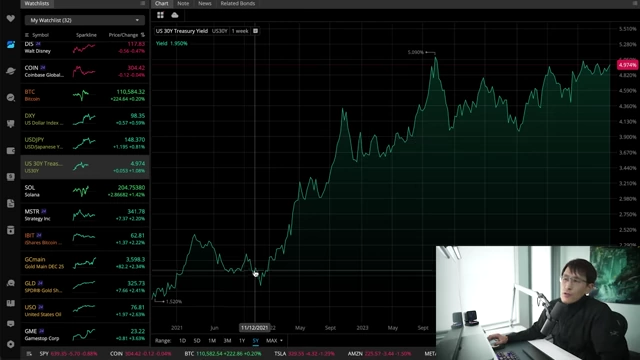
A chart displaying the 30-year U.S. Treasury yield, showing a clear upward trend nearing 5%. [ 00:05:10 ]
- Counterintuitive Market Behavior: This market behavior is counterintuitive because the Federal Reserve is widely expected to cut interest rates (PolyMarket predicts an 80% chance of a 0.25% decrease).
Normally, rate cuts would lead to liquidity injections and a rise in asset prices. Instead, the market is showing a flight to safe-haven assets, as if anticipating a rate increase.
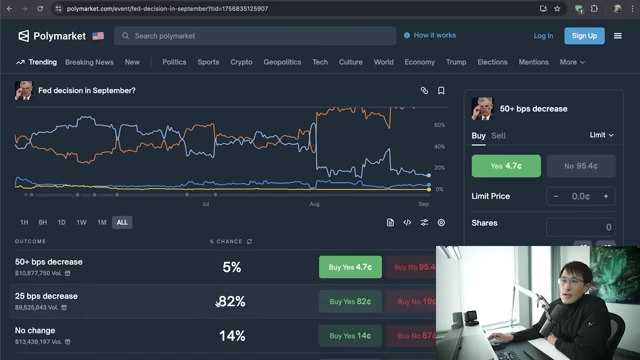
PolyMarket prediction market showing an 82% chance of a 25 basis point decrease in the Fed rate for September. [ 00:02:36 ]
The "Policy Disconnect" Theory [3:15]
The observed market behavior can be explained by a "policy disconnect" regarding the Fed rate.
- Fed's Limited Control: The Federal Reserve does not solely set the rates; the market rate, such as the 30-year Treasury yield, is determined by buyers' demand.
- Treasury Yields Driven by Demand: Buyers of Treasuries are demanding a higher yield (currently almost 5%) on their dollars for long-term investments due to inflation fears, making them unwilling to buy at lower rates.
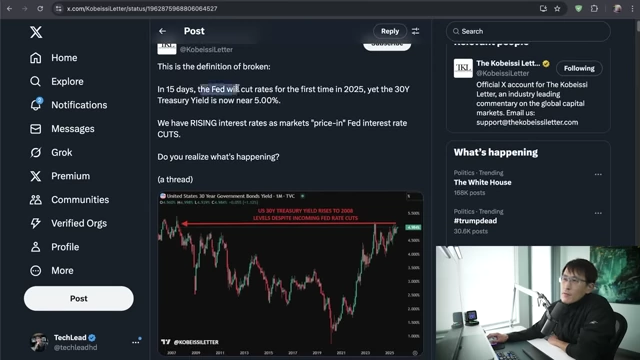
A tweet from The Kobeissi Letter highlighting the disconnect between the Fed's intention to cut rates and the rising 30-year Treasury yield, comparing it to 2008 levels. [ 00:05:40 ] - Historical Parallels: This scenario of rising interest rates despite impending Fed rate cuts is reminiscent of 2008, during the biggest financial crisis in US history, indicating a lack of confidence in the economy.
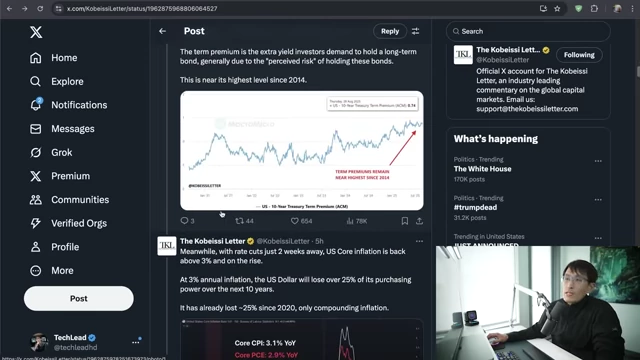
A tweet from The Kobeissi Letter discussing rising term premiums and US Core Inflation, suggesting the dollar will lose purchasing power. [ 00:05:56 ] - Housing Market Impact: Mortgage rates are also not necessarily decreasing with Fed rate cuts.
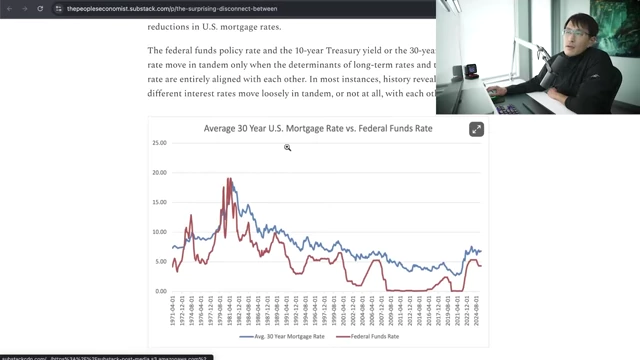
A graph comparing the average 30-year U.S. Mortgage Rates and the Federal Funds Rate, showing that mortgage rates do not always fall in tandem with Fed rate cuts. [ 00:06:05 ] - Treasury Secretary Scott Bessent has warned of a potential national housing emergency.
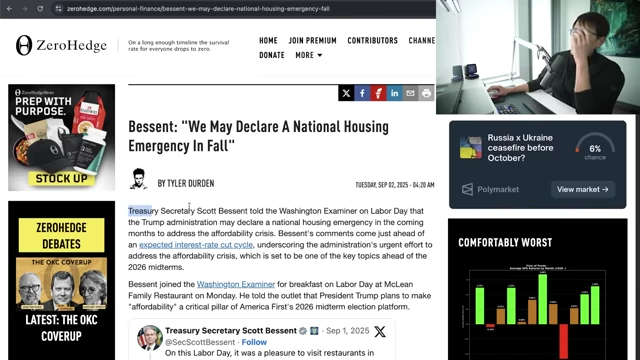
An article from ZeroHedge titled "Bessent: 'We May Declare a National Housing Emergency In Fall'," discussing rising mortgage rates and housing affordability. [ 00:06:14 ] - The housing market is stalled due to high rates, and lowering Fed rates may not resolve the issue.
- Treasury Secretary Scott Bessent has warned of a potential national housing emergency.
Mechanism of the Disconnect: Bank Arbitrage [6:30]
The speaker, referencing a ChatGPT explanation, details how the "policy disconnect" impacts liquidity.
- Banks' Arbitrage Strategy:
- Banks borrow money at the cheaper short-term Fed rate (e.g., 3-4%).
- They then use these funds to buy higher-yielding 30-year Treasuries (e.g., 5-7%).
- This allows banks to pocket the yield difference (arbitrage).
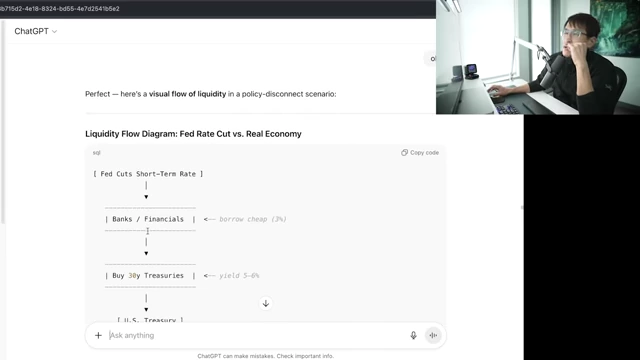
A flow diagram generated by ChatGPT illustrating how banks borrow at lower Fed rates to buy higher-yielding Treasuries, preventing liquidity from reaching the real economy. [ 00:06:35 ]
- Lack of Real Economy Liquidity:
- The borrowed liquidity from the Fed does not circulate back into the broader economy.
- It does not flow into corporations for capital expenditures, nor does it help with employment or housing mortgages.
- The US Treasury benefits by getting funds to pay down its debt, and banks profit, but the real economy remains starved of liquidity.
- Market Skepticism: The market, observing this disconnect, becomes skeptical of the government's ability to manage its debt, leading to demands for even higher premiums on Treasuries, further driving up market rates.
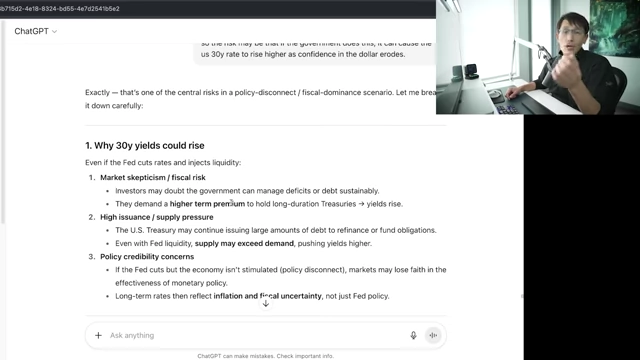
ChatGPT explaining that 30-year Treasury yields could rise due to market skepticism, high issuance, and policy credibility concerns, leading to higher real rates. [ 00:08:01 ] - Real Rates Increase: Despite the Fed's attempts to cut short-term rates, the real rates effectively increase due to market demand and inflation expectations, leading to higher borrowing costs for consumers and corporations.
Economic Impact and Asset Behavior [8:55]
The policy disconnect has severe economic consequences and influences asset performance.
- Economic Deterioration:
- Corporate capital expenditures become constrained.
- The housing market and mortgages suffer, potentially leading to a real estate crash.
- Equities (stocks) decline due to a lack of liquidity and repricing downwards.
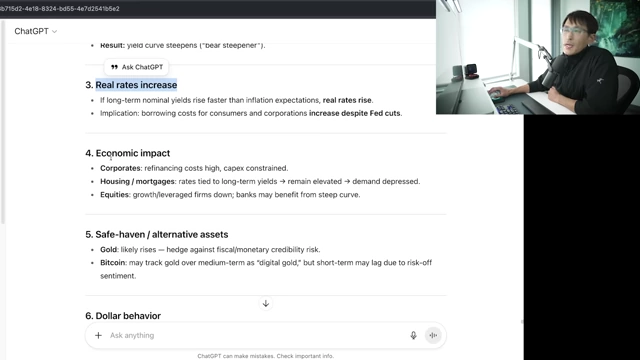
A list outlining the economic impacts, including constrained capex for corporations, suffering housing/mortgages, and declining equities. [ 00:09:00 ]
- Flight to Safe-Haven Assets:
- Gold: Expected to rise as a safe haven against monetary credibility risk and a hedge against inflation.
- Bitcoin: May also track gold, acting as "digital gold," though its short-term behavior might be influenced by market sentiment.
- Dollar Behavior: The dollar strengthens in the short term due to higher real rates of return, as investors demand more for their dollars. However, in the long term, inflationary fears could cause the dollar to remain flat or even weaken.
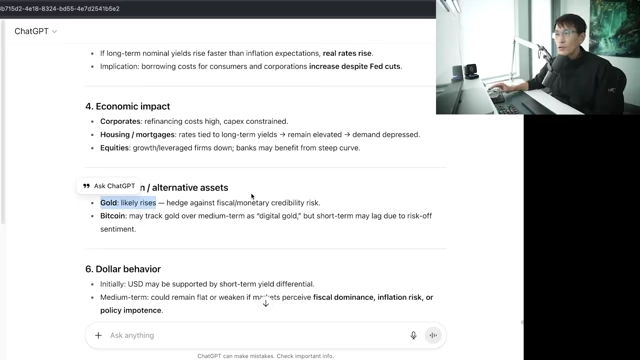
A summary of safe-haven and alternative assets, suggesting gold and Bitcoin as plays against economic uncertainty. [ 00:09:20 ]
Investment Strategy [9:47]
Given the predicted market conditions, the recommended strategy is to divest from riskier assets and move into safe havens.
- Sell Equities:
- Growth and leveraged equities (especially tech stocks) will be hardest hit by higher long-term rates.
- Corporate borrowing costs will increase, and capital expenditures will be constrained.
- Stocks will be repriced downwards due to higher discount rates and lack of liquidity.
- Banks and financials may initially outperform, but could eventually face asset pressure.
- Buy Gold:
- Acts as a safe haven against monetary credibility risk.
- Hedges against high long-term yields.
- Often rises with market fear, fiscal dominance, and inflation uncertainty.
- Optional Considerations: Bitcoin could serve as "digital gold." The USD may remain strong in the short term but could face long-term challenges. Longer-term Treasuries might continue climbing.
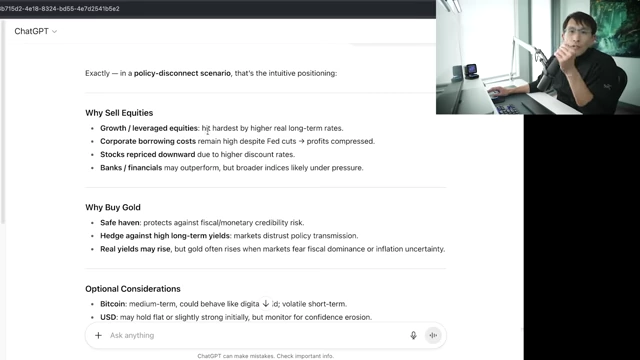
A visual summary of investment strategies, recommending selling equities due to high rates and buying gold as a safe haven. [ 00:09:50 ]
AI Bubble and Broader Implications [11:23]
The AI bubble adds another layer of risk to the current market outlook.
- Unsustainable AI Investments: The capital expenditures in AI, particularly for Large Language Models (LLMs), are "insane," and most LLM models are not profitable.
- Potential AI Bubble Burst: If the hype around Artificial General Intelligence (AGI) does not materialize, tech companies may be forced to:
- Lower capital expenditures.
- Scale back operations.
- Implement widespread layoffs.
- Chain Reaction of Crashes: A tech slowdown and mass layoffs would further exacerbate economic issues:
- The housing market would crash as people lose jobs and cannot afford houses or mortgages.
- Interest rates could remain high despite Fed efforts to lower them, stalling the housing market.
- Wealth Destruction: This scenario could lead to a "mass destruction of American wealth" across portfolios, stocks, 401ks, retirement accounts, and housing values.
- Dollar Devaluation: The remaining US dollars could be inflated away or devalued as the world shifts to alternative global reserve standards like the Chinese Yuan, Bitcoin, or gold.
- Third-World Scenario: The speaker concludes that without robust infrastructure and skills, the US risks becoming a "third-world" nation.