The Strength of the US Military in 2025: A Comparative Analysis of Budget, Manpower, and Equipment
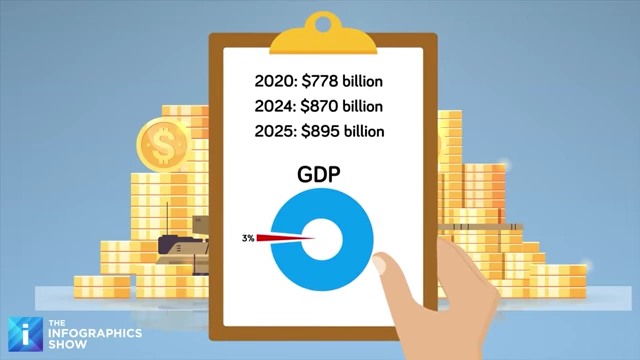
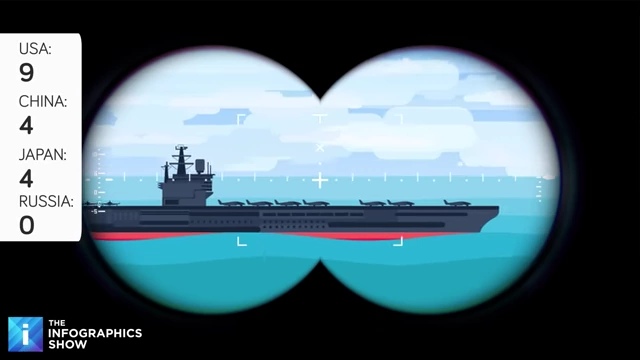
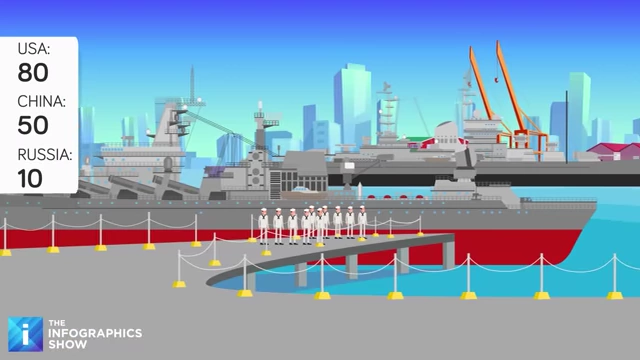
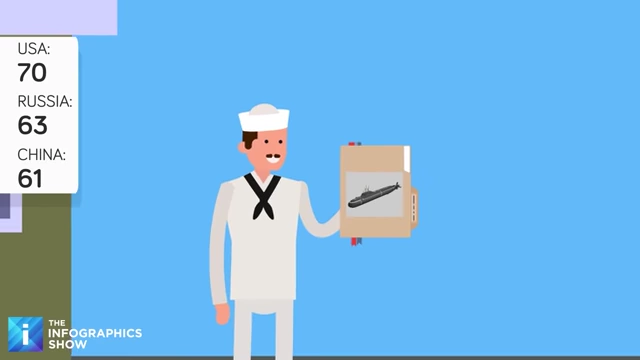
The U.S. military is projected to remain the world's strongest in 2025, primarily due to its unparalleled defense budget, expected to reach $895 billion. It holds a leading position in Global Firepower rankings (0.0744 PowerIndex score), surpassing China and Russia. While it lags in total available manpower, it excels in active-duty personnel (over 1.3 million), emphasizing highly trained elite forces. The U.S. boasts overwhelming superiority in armored vehicles (392,000 units) and an air force fleet of over 13,000 aircraft, including top fighter jets and a dedicated bomber fleet. Its naval force leads in critical assets like 11 aircraft carriers, 9 helicopter carriers, 80 destroyers, and 70 submarines, ensuring global logistical reach. Despite some deficiencies in artillery, frigates, corvettes, and patrol vessels, the U.S. is proactively investing to address these areas.
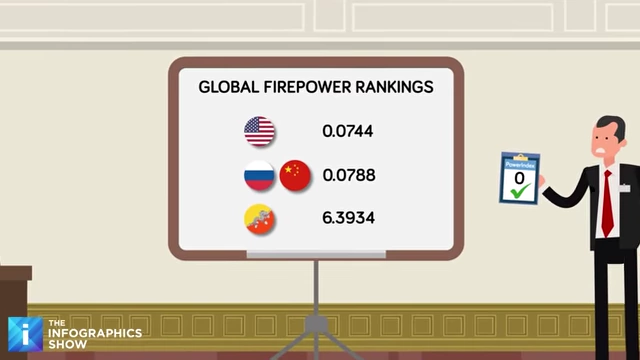
Introduction and Global Rankings Methodology [00:00:00]
The U.S. military is widely recognized as the strongest globally, a position attributed to its substantial defense budget and commitment to maintaining a leading fighting force.
- Global Firepower Index: This index ranks 145 countries annually based on military strength, considering over 60 factors including troop numbers, military spending, technology, gear, and geography [00:00:32].
- 2025 Global Firepower Rankings:
- U.S.: 0.0744 [00:01:40]
- China & Russia: 0.0788 (tied) [00:01:48]
- Bottom: Bhutan, with a PowerIndex score of 6.3934 [00:01:55]
- Other top nations include India, South Korea, the UK, France, Japan, Turkey, and Italy, which are considered America's main competition [00:02:00].
Global Firepower Rankings for USA, Russia, China, and Bhutan in 2025 [ 00:01:50 ]
Military Spending [00:02:16]
Significant financial investment is crucial for building and maintaining a powerful military, covering costs for equipment, personnel, infrastructure, operations, training, research, development, and logistics [00:02:20].
- U.S. Defense Budget Trends: The U.S. has historically allocated a large portion of its budget to defense [00:02:49].
- Comparison with Major Rivals (2025 Budgets):
- China: Around $245 billion (less than 30% of the U.S. budget) [00:03:36].
- Russia: Around $126 billion (barely 14% of the U.S. budget) [00:03:42].
- The combined budgets of the countries ranked 2nd to 10th (China, Russia, India, Saudi Arabia, the UK, Japan, Australia, France, and Ukraine) still do not match the U.S. budget [00:03:58].
- Future Projections: The U.S. military budget is set to increase further, with plans to approve a $1 trillion military budget in 2026, solidifying its status as the world’s pre-eminent military force [00:04:15].
Manpower Analysis [00:04:39]
Beyond finances, a strong military requires substantial and capable personnel [00:04:39].
- Total Available Military Manpower: This refers to the theoretical number of people a country could mobilize in extreme situations like full-scale global warfare [00:04:58].
- Fit-for-Service Population: The number of people physically able to fight or support a prolonged military campaign [00:05:45].
- Active-Duty Personnel & Reservists: These are trained military members with experience and knowledge of warfare [00:06:59].
- Active-Duty Personnel: Full-time soldiers and military staff [00:07:04].
- China: More than 2 million (highest) [00:07:58].
- India: More than 1.4 million (second) [00:07:52].
- U.S.: Just over 1.3 million (third) [00:07:42].
- The U.S. force, while smaller than China's or India's, boasts one of the most rigorous and high-performance training systems globally, including elite units like the Navy SEALs and Green Berets [00:08:13].
- Reservists: Individuals with military backgrounds not engaged full-time, but willing to join if needed [00:07:23].
- Vietnam: 5 million (highest) [00:09:26].
- South Korea: 3.1 million [00:09:31].
- Taiwan: 2.3 million [00:09:36].
- Russia: 2 million (numbers reportedly dwindling) [00:09:36].
- UK: 924,000 [00:09:47].
- U.S.: Under 800,000 (10th place globally), a consequence of its focus on active-duty personnel [00:09:20].
- China: Around 510,000 [00:09:54].
- Active-Duty Personnel: Full-time soldiers and military staff [00:07:04].
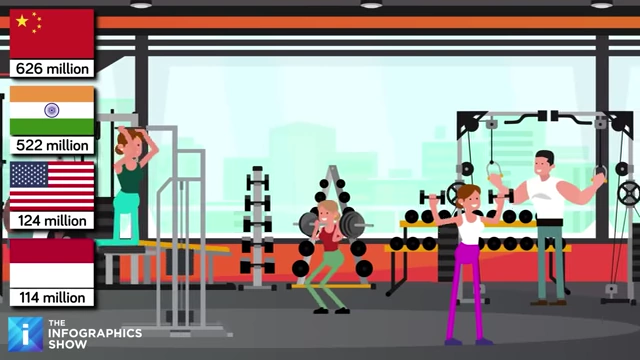
US Military Branches and Their Strengths [00:09:59]
The United States Armed Forces are divided into six branches, with the Army, Air Force, and Navy being the most prominent [00:10:23]. The U.S. military demonstrates a balanced strength across all fronts.
- The Army: The largest branch.
- Comprises almost 453,000 active-duty members, 325,000 National Guard, and nearly 177,000 Army Reserve personnel, totaling approximately 955,000 [00:10:44].
- The Air Force: The second-largest branch.
- Includes close to 322,000 active-duty members, 105,000 Air National Guard members, and around 68,000 Air Force reservists, for a total of approximately 495,000 members [00:11:01].
- The Navy: America's seafaring military force.
- The U.S. military is highly balanced, with strong ground, air, and naval forces, unlike other countries that often have significant weaknesses in certain branches [00:11:40].
Ground Forces Equipment [00:12:00]
The U.S. Army relies on combat tanks, armored vehicles, artillery, and multiple-launch rocket systems [00:12:05].
- Combat Tanks:
- U.S.: Around 4,600 tanks, primarily the M1 Abrams, a powerful third-generation battle tank with sophisticated Chobham composite armor, an advanced fire control system, and a 120mm smoothbore cannon [00:12:13].
- The M1A2 Abrams SEPv3 variant features stronger communications, networking, improved maintenance, better defenses against IEDs, and next-generation armor [00:12:50].
- China: Boasts the biggest tank supply with 6,800 units, including the Type 96 and Type 99 [00:13:14].
- Russia: Has around 5,700 tanks, including the T-72 (main battle tank, not comparable to M1 Abrams) and the T-14 Armata (unmanned turret, state-of-the-art technology) [00:13:24].
- North Korea: Around 4,300 tanks [00:13:24].
- Other highly-ranked tanks: Germany’s Leopard 2A7+ and South Korea's K2 Black Panther [00:14:28].
- U.S.: Around 4,600 tanks, primarily the M1 Abrams, a powerful third-generation battle tank with sophisticated Chobham composite armor, an advanced fire control system, and a 120mm smoothbore cannon [00:12:13].
- Armored Vehicles:
- U.S.: Tops the charts with 392,000 vehicles, exceeding the combined fleets of China and Russia [00:14:52].
- Models include Bradley Fighting Vehicles (BFVs) (6,700 units, armed with 25mm chain guns and TOW missile launchers, capable of destroying tanks up to 13,000 feet) [00:15:34].
- Strykers (over 4,000 units, diverse configurations for medical evacuation, reconnaissance, infantry carrying) [00:15:58].
- Other vehicles: M88 Hercules (towing damaged tanks), M113 Armored Personnel Carrier, Mine-Resistant Ambus h Protected Vehicles (MRAPs) [00:16:17].
- India: 148,600 [00:15:03].
- China: 144,000 [00:15:03].
- Russia: 131,000 (BMP Series, BTR personnel carriers, BMPT Terminator) [00:15:03].
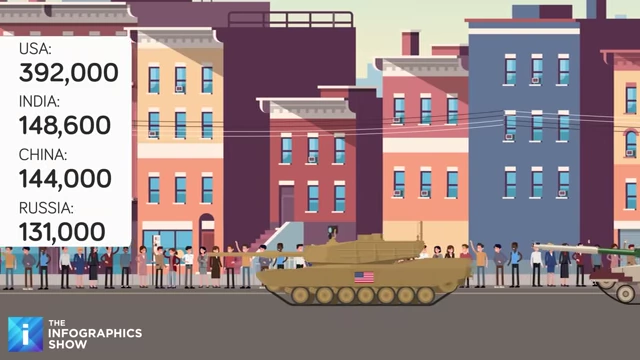
Armored vehicle count comparison for USA, India, China, and Russia [ 00:14:56 ]
- U.S.: Tops the charts with 392,000 vehicles, exceeding the combined fleets of China and Russia [00:14:52].
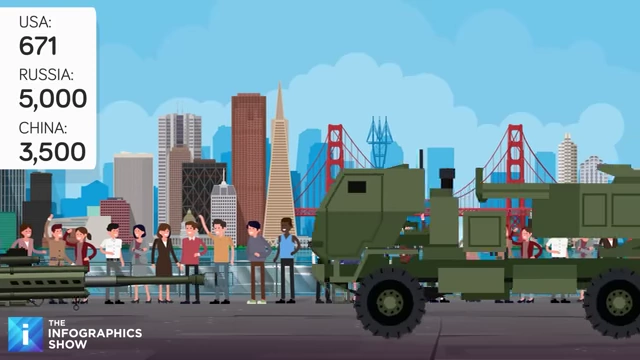
- Artillery: Categorized into self-propelled, towed, and rocket systems [00:17:08].
- Self-Propelled Systems:
- Towed Artillery:
- Rocket Projectors:
Air Forces Equipment [00:18:03]
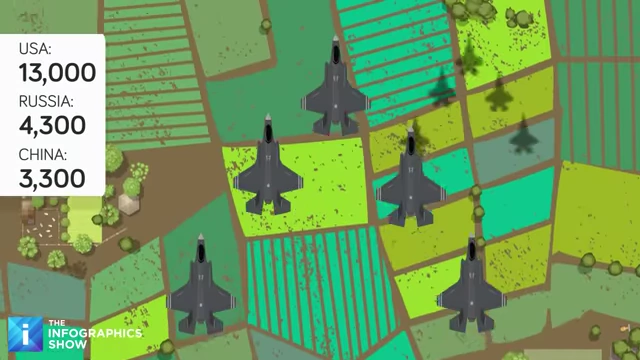
America possesses superior aerial capabilities [00:18:06].
- Overall Aircraft Fleet:
- Bombers: The U.S. is one of the only countries with a dedicated bomber fleet of around 140 units, capable of dropping conventional and nuclear bombs [00:18:28].
- Fighter Jets: U.S. fighter jets consistently rank among the world's best [00:19:05].
- Lockheed Martin F-35 Lightning II: Over 300 units, capable of Mach 1.6 (1,200 mph), carrying up to 18,000 pounds of weaponry, and exceptionally difficult to detect on radar [00:19:34].
- Lockheed Martin F-22 Raptor: Over 180 units, features unmatched engine thrust, flies more than twice the speed of sound, reaches over 50,000 feet, and has a range of over 1,800 miles [00:19:25].
- Other fighters: 300 F-15s and over 700 F-16s [00:19:57].
- Rival jets: China's Chengdu J-20 Mighty Dragon is a reasonable rival to the F-22, and Russia has the Sukhoi Su-57, but their overall air force strength cannot match the U.S. [00:20:05].
- Other Aircraft:
- Helicopters:
- U.S.: More than 5,800 helicopters, including over 1,000 attack models, providing a significant tactical advantage due to their versatility in missions like ground support, search and rescue, evacuation, and transport [00:20:44].
- Russia: Over 1,600 helicopters, with 557 attack models [00:20:49].
- China: Less than 1,000 total choppers, with just 281 attack units [00:20:55].
Naval Forces Equipment [00:21:16]
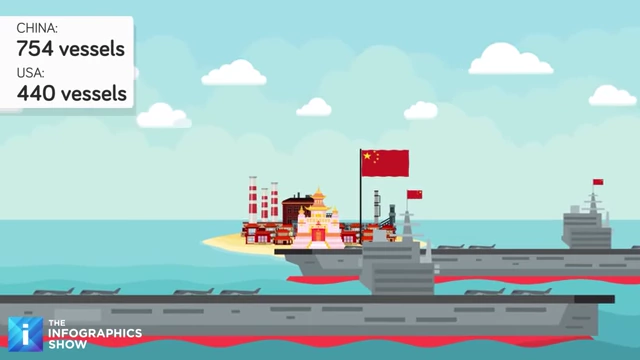
While China boasts the largest naval force by vessel count, the U.S. excels in the quality and strategic importance of its fleet [00:21:20].
- Overall Vessel Count:
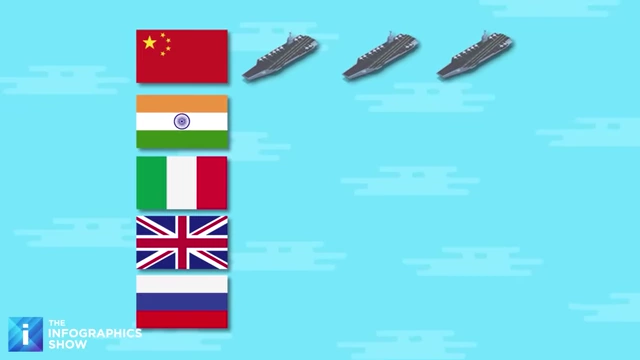
- Carrier Ships: Crucial for long-running and far-reaching global campaigns, transporting troops and aircraft [00:22:09].
- Helicopter Carriers:
- Destroyers: Multi-role vessels with extensive weaponry and surveillance equipment for land, air, and sea engagements [00:22:53].
- Submarines: Stealthy vessels crucial for modern naval warfare, some capable of firing nuclear weapons [00:23:30].
- Other Naval Vessels (Areas where the U.S. Lags):
- Frigates: U.S. has 0 (China 47, Turkey, Egypt, Greece have more than a dozen) [00:23:56].
- Corvettes: U.S. has 26 (China 72, Russia 83) [00:24:06].
- Patrol Vessels: U.S. has 0 (China 150, Colombia over 200) [00:24:12].
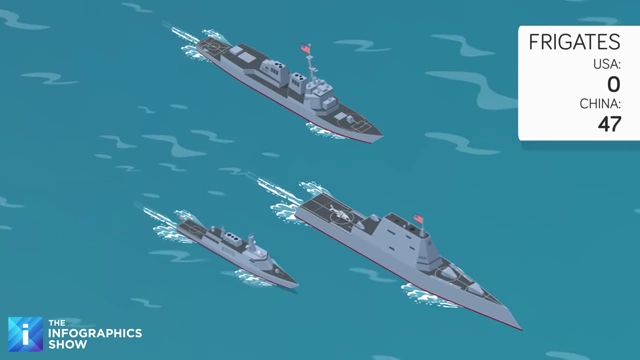
Frigate count comparison for USA and China [ 00:24:04 ] 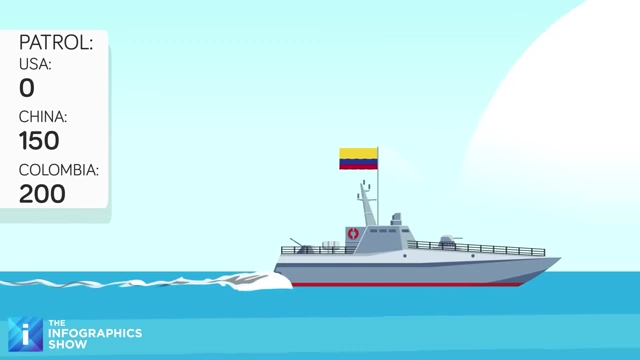
Patrol vessel count comparison for USA, China, and Colombia [ 00:24:28 ] - Mine and Countermine Warships: U.S. has 8 (Russia 47, China 36) [00:24:28].
- However, the U.S. is proactively addressing these gaps with new construction plans for frigates and corvettes [00:24:39].
Conclusion: US Military Dominance [00:24:47]
The U.S. maintains its position as a titan of military might, consistently leading its rivals [00:24:53].
- While countries like China and Russia are catching up in certain areas, they cannot match the colossal expenditure, cutting-edge equipment, and logistical superiority of the U.S. [00:25:03].
- With projected increased budgets and ongoing development of new vehicles and weapons, the U.S. military is expected to continue strengthening in the coming years [00:25:12].