Breaking Free: A 4-Stage DARC System for Sustained Personal and Professional Growth
This video introduces the DARC System, a 4-stage framework for overcoming stagnation and achieving personal goals, illustrated with the speaker's journey and client success stories.
- Introduction to being stuck: The initial state of going in circles instead of moving towards goals is effectively shown.

Visualizing being stuck in circles versus moving towards goals [ 00:00:10 ] - The DARC System Framework: The system outlines four critical stages: Direction, Action, Resilience, and Consistency, which are essential for sustained progress.
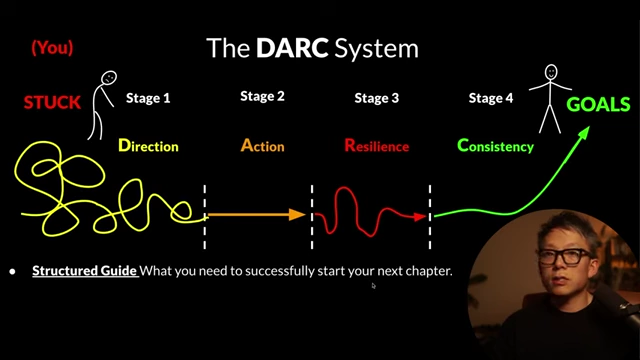
Overview of the DARC System stages: Direction, Action, Resilience, Consistency [ 00:01:50 ] - Direction: Focuses on clarifying personal values and envisioning future paths, combating decision paralysis and external influences. This stage helps individuals define what truly matters, creating an internal compass.
- Action: Addresses procrastination and fear of failure by advocating for psychologically safe, simplified steps, recognizing the "strategist vs. performer" dynamic. It emphasizes breaking down overwhelming tasks into manageable actions and neutralizing excuses.
- Resilience: Equips individuals to handle setbacks and emotional drains through recovery routines, understanding "peak emotional events," and implementing "defensive playbooks" to prevent burnout.
- Consistency: Emphasizes flexible routines, seamless habit integration into existing lifestyles, and external "anchor points" for long-term adherence, even when motivation wanes.
- Free Assessment: A tool is offered to help viewers assess their current standing in each DARC pillar.
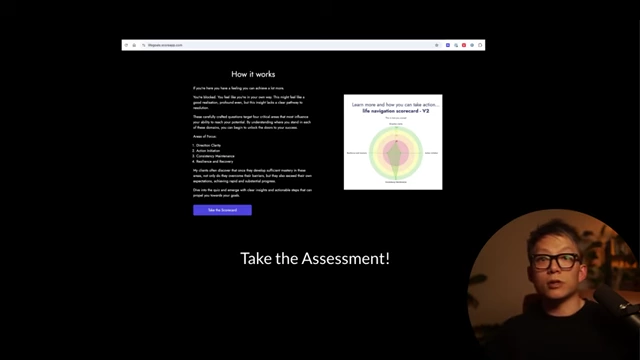
The free DARC system assessment tool [ 01:01:31 ]
The DARC System offers a structured guide for those seeking to make significant, lasting changes in their lives, moving from feeling stuck to actively pursuing their goals.
Introduction and the Problem of Being Stuck [0:00]
The video begins by addressing the common feeling of being stuck in life, despite a desire for change. The speaker, James Lim, illustrates this as going in circles instead of moving towards goals, often due to decision paralysis, overwhelm, procrastination, and fear of failure. He shares his own experience of being stuck for over a decade in a corporate job, struggling with unclear direction, shiny object syndrome, overwhelm, and lack of consistency, leading to many half-finished projects.
Overview of the DARC System [1:45]
James introduces the DARC System, a four-stage framework designed to help individuals overcome these challenges and achieve their goals. The system comprises:
- Direction: Establishing a clear path.
- Action: Initiating the first steps.
- Resilience: Bouncing back from setbacks.
- Consistency: Maintaining progress long-term.
He emphasizes that each stage is crucial and builds upon the previous one, warning that skipping stages, especially stage 4, can lead to years of stagnation. The system has been successfully used with hundreds of clients, transforming their lives.
The DARC System: Direction, Action, Resilience, Consistency [ 00:01:50 ] - Client Example: Joe [2:51] Joe was stuck for over five years in a well-paid job, lacking direction and purpose, and suffering from fear of failure. He dreamed of connecting people and cultures.
- Result: Joe transformed from zero to over 140,000 social media followers, connecting cultures through food and earning an income.
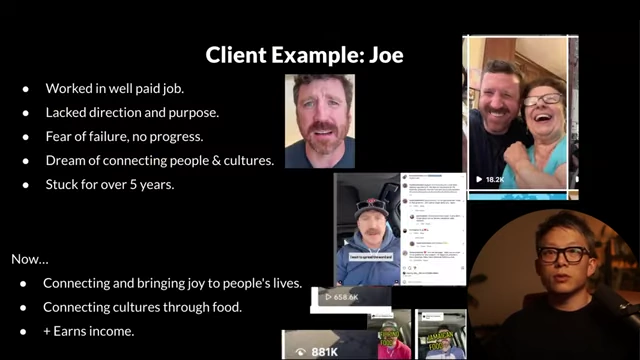
Client example Joe's social media growth indicating successful goal achievement [ 00:03:36 ]
- Result: Joe transformed from zero to over 140,000 social media followers, connecting cultures through food and earning an income.
Stage 1: Direction [6:20]
Symptoms of Lacking Direction [6:31]
- Setting goals that feel unfulfilling or meaningless.
- Constantly chasing new ideas (Shiny Object Syndrome).
- Frequent questioning of the next steps.
Mental Trap 1: The Copy/Paste Trap [7:39]
This trap occurs when external influences (social media, friends, family, society) dictate one's direction, pulling them away from their internal compass. It leads to a feeling of "should" rather than genuine desire.
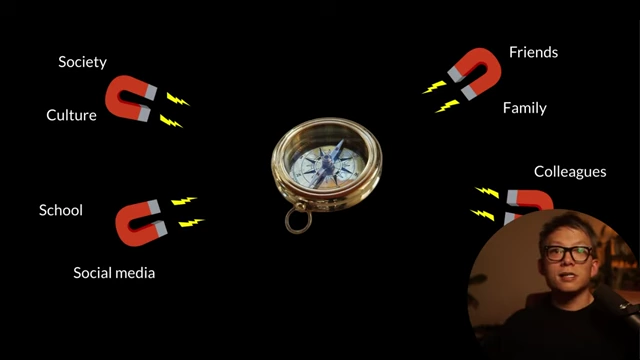
How to Find Your Direction [9:30]
- Create a Strong Internal Signal:
- Stop looking externally for answers and look within, defining what truly matters through your values. This is a difficult exercise, requiring a "re-tuning" away from societal noise.
- Values as Your Compass:
- Values act as filters, like choosing a holiday destination with specific criteria, to guide life decisions and filter out distractions.
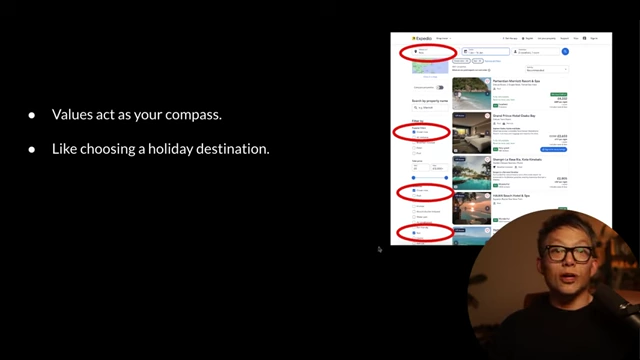
Values acting as filters, like choosing a holiday destination on Expedia [ 00:10:18 ] - Methods to "mine" your values include analyzing preferences, non-negotiables, irritations, frustrations, dislikes, significant life events, and timelines.

Various methods for identifying and 'mining' your core values [ 00:11:21 ] - Client Example: Jodie [10:33] Jodie transitioned from a corporate role to a conservationist by aligning with her core values of nature, wild animals, people, and communication.
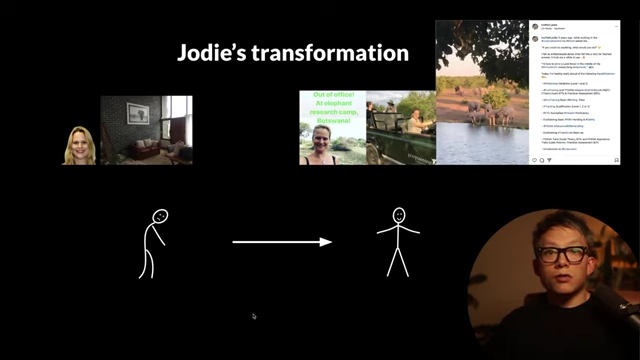
Jodie's transformation from corporate life to a conservationist [ 00:11:22 ]
- Values act as filters, like choosing a holiday destination with specific criteria, to guide life decisions and filter out distractions.
- Vision and Paths (Articulating Your Journey) [11:53]
- Our brains need a clear context of the entire journey and what long-term success looks like.
- It's crucial to explore possible life paths (e.g., Life 1: existing, Life 2/3: alternatives) through low-risk experiments.
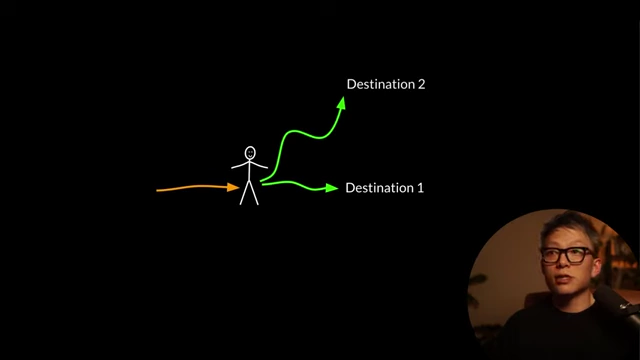
Visualizing different life paths as alternative destinations [ 00:12:58 ]
- Version 2.0 (Becoming Your Future Self) [13:25]
- Identify who you need to become to achieve your vision, similar to a caterpillar transforming into a butterfly.
- Change happens gradually (e.g., Version 1.0 to 1.1, 1.2, etc.), with each step representing tangible milestones that build confidence.
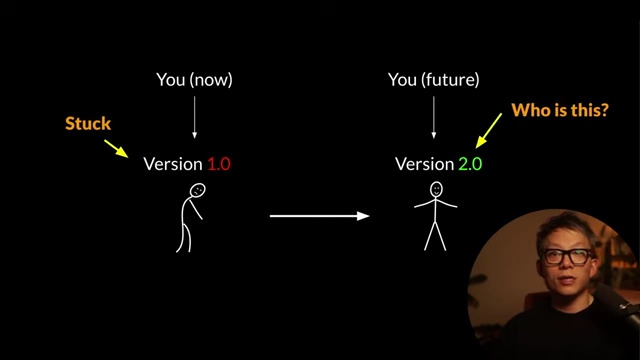
The gradual transformation from "You (now) Version 1.0" to "You (future) Version 2.0" through incremental steps [ 00:13:58 ] - Self-Example: Physique Transformation [15:05] James shares his personal transformation in physique, illustrating the gradual process of overcoming initial fears and difficulties to reach Version 2.0.
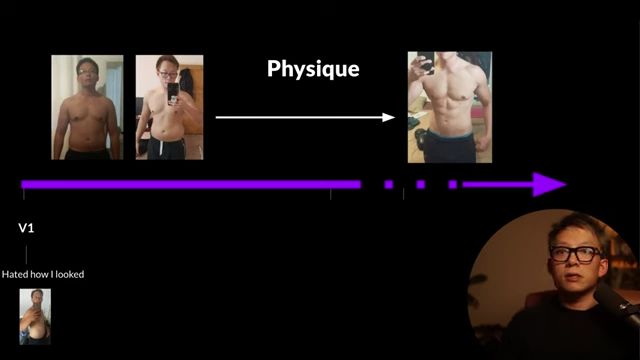
The speaker's personal physique transformation as an example of reaching Version 2.0 [ 00:15:11 ]
Stage 2: Action [17:18]
Symptoms of Inaction [17:22]
- Stuck in research mode (consuming books, courses, motivational videos).
- Constant planning and strategizing without execution.
- Strong avoidance and procrastination tendencies.
Mental Trap 2: The Fake Action Trap [18:19]
This trap involves engaging in activities that feel productive but don't lead to real progress (e.g., endless research, watching motivational videos). This avoidance stems from fear, uncertainty, self-doubt, and overwhelm when faced with the "edge" of actual execution.
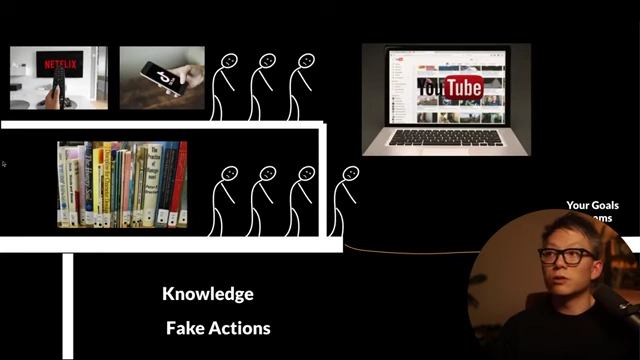
- Self-Example: YouTube Channel [20:20] The speaker shares his own regret of waiting 13 years (from 2006 to 2019) to start posting content on YouTube, illustrating missed opportunities due to fake action.
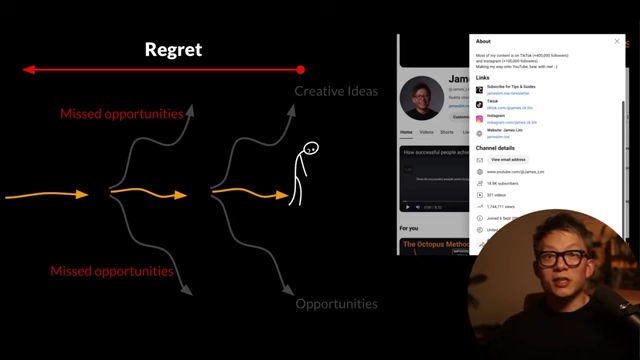
A timeline showing the speaker's regret and missed opportunities due to delayed action on creative ideas [ 00:20:27 ]
How to Initiate Action [20:52]
- Design Psychologically Safe Steps [23:54]
- Break down daunting tasks into low-risk, data-gathering "tentacle" steps, like an octopus exploring its environment without committing its whole body. This reduces overwhelm and manages emotional energy.
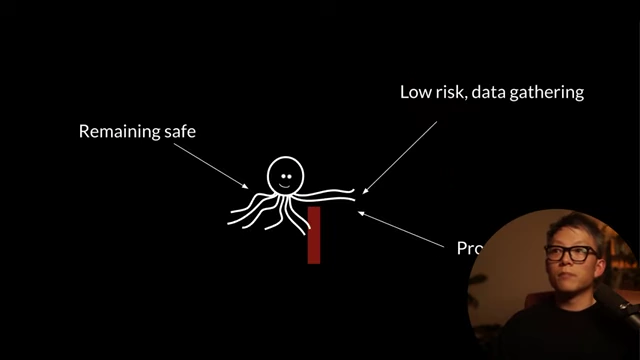
Ollie the Octopus: managing risk with low-risk, data-gathering tentacle steps for progress [ 00:22:47 ]
- Break down daunting tasks into low-risk, data-gathering "tentacle" steps, like an octopus exploring its environment without committing its whole body. This reduces overwhelm and manages emotional energy.
- Create a Plan That Actually Works [24:17]
- Avoid overly elaborate plans that lead to overwhelm. Simplify to reduce anxiety and paralysis.
- Recognize the difference between the "strategist" (planning stage) and the "performer" (execution stage) within yourself.
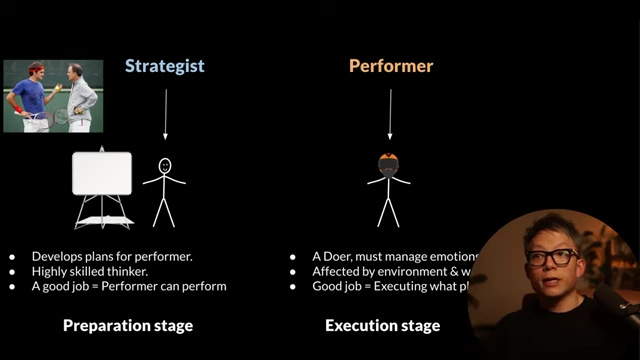
The strategist (planning) and performer (execution) dynamic, highlighting how complex plans often overwhelm the performer [ 00:26:26 ] - Simple Rules for the Performer: Develop clear, precise, low-effort actions that solve a bottleneck and act as a catalyst for a series of behaviors. These rules should be concise (less than 12 words) and lead directly to the desired behavior.
- Client Example: Helen [29:17] Helen overcame writer's block for her blog by focusing on the simple rule: "Open a Google Doc and type."
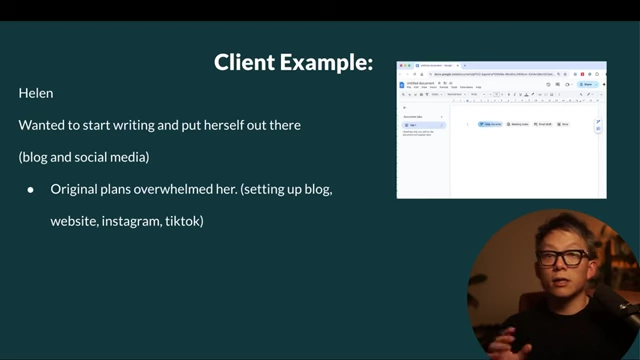
Client example Helen's simple rule: "Open a Google Doc and type" to overcome writer's block [ 00:29:46 ]
- Neutralize Avoidance and Excuses [30:27]
- Understand that excuses arise from maximum fear experienced at the "edge" of action, where the brain tries to escape perceived threats.
- Build a system to neutralize excuses by preparing clear, precise counter-arguments away from the edge (strategist stage), aligning counters with your long-term identity (Version 2.0), and stacking multiple counters.
- Client Example: Mark [33:34] Mark used prepared counter-arguments to overcome excuses for skipping gym workouts during his lunch break.
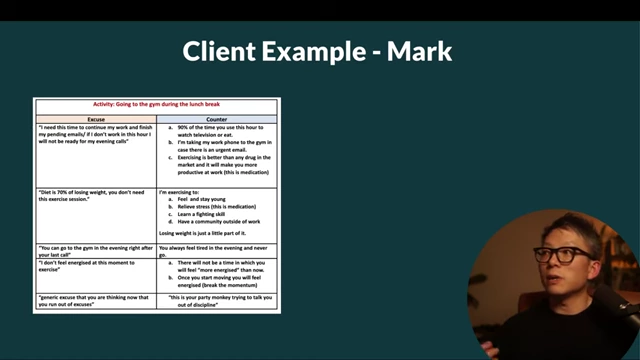
Mark's activity and counter-argument table for overcoming gym excuses [ 00:33:35 ]
Stage 3: Resilience [34:52]
Symptoms of Lacking Resilience [35:18]
- Quitting when things get hard.
- Overdoing it, leading to burnout and then quitting.
- Inability to recover from "life curveballs" (personal setbacks).
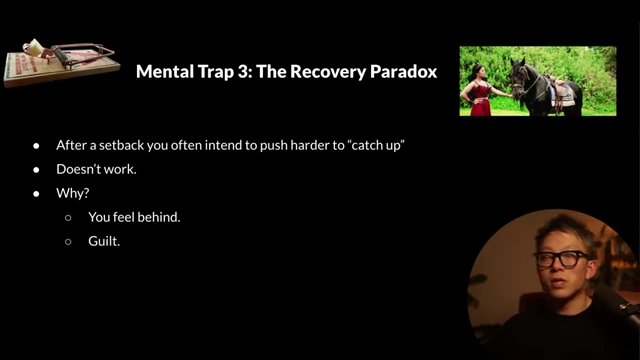
Mental Trap 3: The Recovery Paradox [35:35]
After a setback, the tendency is to push even harder to "catch up," driven by guilt and a feeling of being behind. This often leads to sickness and further burnout, especially for driven individuals.
How to Become More Resilient [36:46]
- Develop a Recovery Routine [36:55]
- Instead of pushing harder, implement a safe, sustainable rehabilitation process after a setback. This gradual recovery routine prevents further burnout and helps return to a productive state.
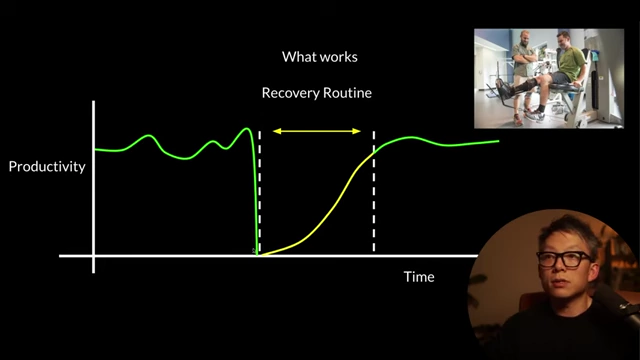
A graph illustrating a recovery routine: a gradual, sustainable rehabilitation process after a setback to restore productivity [ 00:38:34 ]
- Instead of pushing harder, implement a safe, sustainable rehabilitation process after a setback. This gradual recovery routine prevents further burnout and helps return to a productive state.
- Manage Emotions (Understanding Peak Emotional Events) [39:44]
- Recognize that significant life events (personal, professional) cause an "emotional drain" that affects focus and creativity for days or even weeks before and after the actual event.
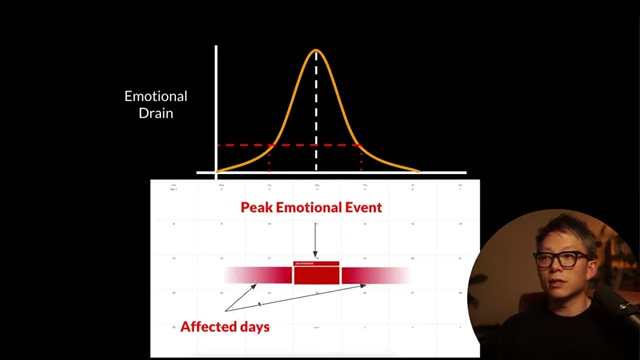
A calendar and graph illustrating an emotional drain from a 'Peak Emotional Event' and its impact on affected days [ 00:41:36 ] - This "peak emotional event" can drop your focus below a functional threshold, making it impossible to work on ambitious projects.
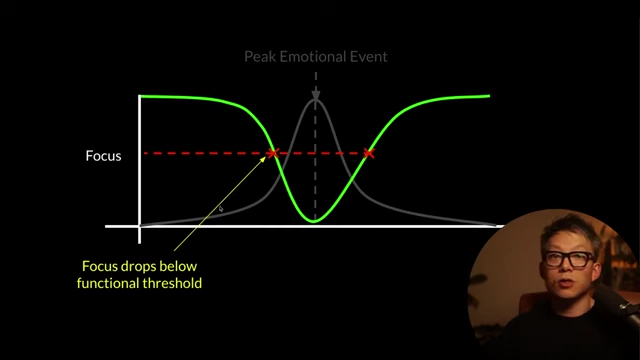
A graph showing how emotional drain from a 'Peak Emotional Event' causes focus to drop below a functional threshold [ 00:42:04 ] - Stacking emotional events (multiple personal or professional demands close together) can lead to prolonged periods of low energy and focus.
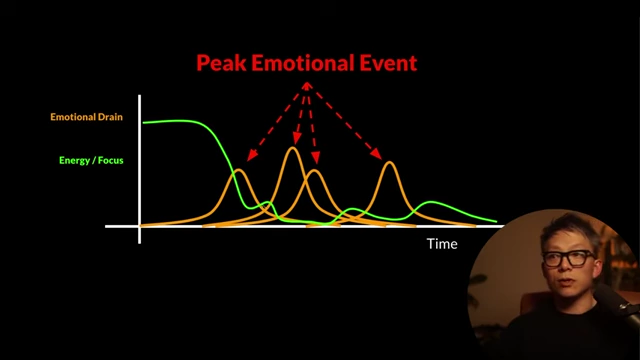
A graph showing 'Stacked Peak Emotional Events' leading to sustained periods of low energy and focus [ 00:43:53 ]
- Recognize that significant life events (personal, professional) cause an "emotional drain" that affects focus and creativity for days or even weeks before and after the actual event.
- Implement Defensive Systems (Defensive Playbooks) [45:05]
- Just as a ship prepares for storms, you need systems to handle inevitable life setbacks.
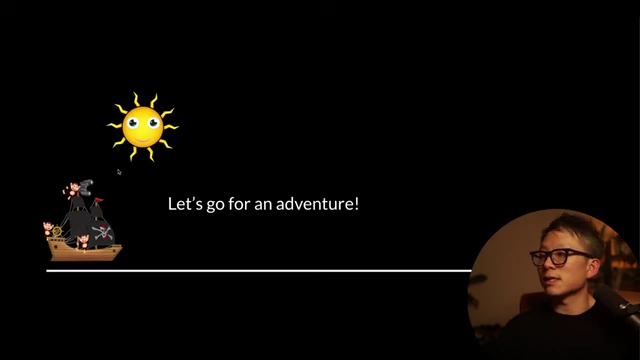
Metaphor of a ship sailing from sunny weather into a storm, highlighting the need for defensive systems [ 00:45:23 ] - Create "defensive playbooks": practical, pre-planned actions for when challenges hit (e.g., specific steps for when you get sick, are stressed, or face a crisis).
- These playbooks may involve "battening down the hatches" (reducing activity, prioritizing rest) to prevent complete derailment.
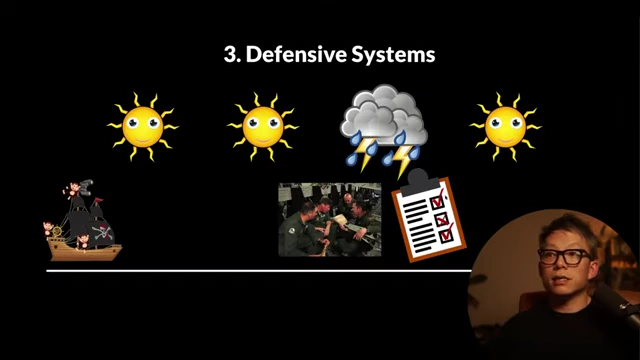
Defensive systems: a checklist and preparation for navigating unexpected storms in life [ 00:49:23 ]
- Just as a ship prepares for storms, you need systems to handle inevitable life setbacks.
Stage 4: Consistency [50:45]
Symptoms of Lacking Consistency [51:14]
- Starting strong but losing momentum.
- Life repeatedly pulling you off track.
- Struggling to balance multiple life priorities and demands.
Mental Trap 4: The Willpower Fallacy [51:28]
Believing consistency means pushing 100% all the time leads to burnout, boredom, distraction, and guilt, making it unsustainable. This often happens from copying others' output without considering their long-term journey.
How to Build Long-Term Consistency [52:31]
- Adopt Flexible Routines [52:58]
- Instead of rigid habits that shatter under pressure, develop routines that adapt to your energy levels, like a flexible tree in the wind.

Flexible palm trees swaying in the wind, illustrating the concept of adaptable routines [ 00:52:52 ] - Create "multiple gears" for your routines (e.g., upper limit for optimal days, lower limit for challenging days) to ensure continuous progress without falling off track.
- Instead of rigid habits that shatter under pressure, develop routines that adapt to your energy levels, like a flexible tree in the wind.
- Focus on Habit Integration [54:05]
- Many focus on short-term habit initiation without considering long-term integration into their existing lifestyle.
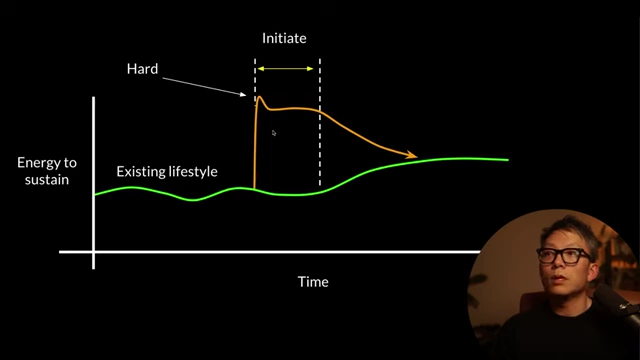
A graph showing the initial 'hard' peak of a new habit, followed by a decline and then gradual integration into an existing lifestyle [ 00:55:42 ] - The "initiation" phase is hard, but true sustainability comes from a slower "integration" phase where new habits blend with your existing life. This means making new habits easier and removing overly difficult ones, potentially reducing initial effectiveness but increasing longevity.
- Many focus on short-term habit initiation without considering long-term integration into their existing lifestyle.
- Utilize Anchor Points [57:11]
- Don't rely solely on motivation; expect motivation dips.
- Anchor points (environment and people) keep you aligned with your direction during these dips.
- Examples include personal rituals, group accountability, and working with coaches or mentors.

Different types of anchor points: self-guided, group accountability, accountability partners, and coaches/mentors, all keeping one aligned with goals [ 00:58:51 ]
Free Assessment [1:01:27]
James concludes by offering a free DARC system assessment to help viewers identify their current strengths and weaknesses across the four pillars. Achieving around 60% in each pillar is a good starting point for sustained progress, with an ideal target of 80% for strong results.