How to Build a Personal Brand (Full Course)
This comprehensive guide outlines a strategic framework for building and scaling a personal brand for long-term success and monetization.
- Branding Foundations: Learn to define your brand by identifying desired and undesired associations, using a 4-question "Brand Journey Framework" to reverse-engineer your goals.
- Content Strategy: Discover how to choose the right content mediums (written, video, audio, visual) and platforms based on your strengths and audience, prioritizing conversion metrics over vanity metrics.
- Team Building & Management: Understand the importance of hiring to solve specific problems and building a high-performing team by prioritizing cultural fit, effective onboarding, and fostering a culture of ownership and continuous growth.
- Monetization Models: Explore five primary monetization paths, emphasizing the critical principle of building trust and providing immense value before initiating transactions.
- Long-Term Game: Focus on delivering exceptional free content to build loyalty, strategically scaling content efforts, and protecting your brand's reputation to ensure sustained success.

An overview of the four main sections discussed in the video: Brand, Content, Team, and Monetize. [ 00:01:00 ]
Intro [0:00]
The video presents two paths for individuals: a forgettable brand or an intentional brand. This course aims to transition individuals from a forgettable brand (random content, no engagement, no sales) to an intentional one (owning associations, building trust, driving decisions) and help those already intentional to break through ceilings and achieve scale. The course is built on 16 years of real execution experience and covers four main sections: Brand, Content, Team, and Monetize.
What Brand Is [1:06]
Brand is defined as the audience inherently associating certain things with you, while good branding is the intentional and consistent pairing of relevant things.
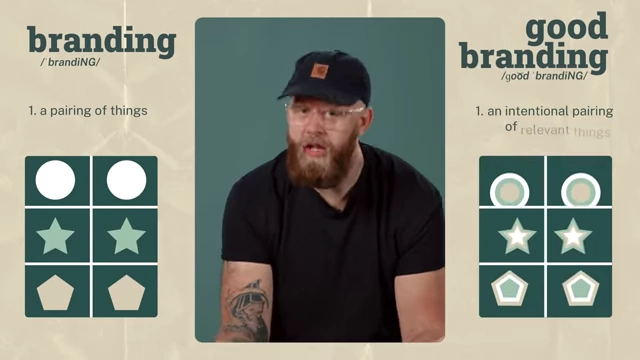
- Examples of Branding:
- Nike and Michael Jordan: Intentionally paired with "athletic greatness" in basketball.
- Gary Vaynerchuk: Synonymous with "content" due to consistent actions like writing "Crush It."
- Harley-Davidson: Intentionally paired with "freedom" in their marketing.
- Operationalizing Branding: Identify the desired associations and consistently pair yourself with them through deliberate actions.
- Importance of Disassociation: It is crucial to define what you do not want to be associated with.
- Avoiding negative associations helps protect your brand from dilution and misinterpretation.
- Aligning with untrustworthy individuals can negatively impact your own brand's credibility, even if it offers exposure.
Define Your Brand [3:42]
Your brand exists whether you define it or not, so it's essential to be intentional and take control.
- Brand Journey Framework (4 Questions): Work backward from the end goal.
- What is our desired outcome? (The end goal)
- What do I have to be known for in order for that to happen?
- What do I have to do in order to be known for that? (Focus on actions, not just words)
- What do I have to learn in order to do that? (Day-one actionable steps)
- Clarity on Outcome: Having a clear desired outcome ensures every decision aligns with your goals, preventing aimless wandering.
- Defining Associations:
- Identify what you want to be associated with (e.g., business, trustworthiness, mental well-being). Every piece of content should reinforce these.
- Critically, identify what you do not want to be associated with. This is vital for protecting your brand in a saturated market.
- Being intentional about disassociation prevents your audience from drawing unintended negative connections.
- Intentionality vs. Good/Bad: Intentionality doesn't inherently mean "good." You can intentionally pair yourself with "wrong things," leading to negative audience associations.
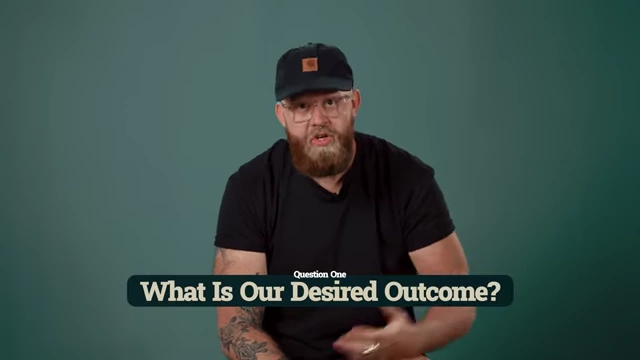
A visual representation of the Brand Journey Framework, posing the four questions to help define your brand by working backward from your desired outcome. [ 00:04:30 ]
Position Your Brand [12:09]
The goal is to stand out by finding and owning the gaps in your industry.
- Finding Your Gap: Identify what is missing in your industry. This could be unique information, a distinct philosophy, or your unique personality and perspective.
- Questions to Ask:
- What are others saying that I disagree with?
- How can I bring a fresh perspective to existing ideas?
- Example (Speaker's approach): While others focus on virality, the speaker emphasizes building long-term, trust-based brands that last beyond algorithm changes.
- Share Your Story: Your personal story is your brand's secret weapon, making you unique.
- List pivotal moments, challenges, turning points, and unique experiences that shaped your perspective.
- Stories resonate more than generic attributes (e.g., "hardworking"); tell the story behind the attribute.
- Proactively Address Skepticism: Anticipate and address audience objections within your content before they appear in comments. This builds trust and credibility.
- Don't Be a Robot: Share not just wins, but also losses and lessons learned. Vulnerability builds trust and relatability more effectively than constant posturing.
- Listen to Your Audience: Ignore hateful comments, but pay close attention to genuine feedback, questions, and compliments. Use this feedback to refine your positioning and double down on what resonates.
- Example: The speaker noticed clients complimented his "energy and personality," prompting him to lean into it in his content.
- Stay True to Yourself: Don't chase trends that don't align with your authentic self or what your audience values most about you.
Brand Story Framework [26:24]
Your brand story is a series of intentional decisions, not just a one-time transformation.
- Three-Part Framework:
- The Catalyst: Why your brand exists. What needed to change? What opportunity did you see that others didn't? Why did you feel compelled to act?
- The Core Truth: What makes you or your company different? This is your core conviction that sets you apart, shared publicly.
- What do you believe that others do not?
- What about your personality stands out?
- What do people compliment you on that you can amplify?
- Example: The speaker's core truth is that strong brands are built on intentional, consistent pairing, not just virality.
- The Proof: How you consistently reinforce your identity. Your brand is what you do and prove repeatedly.
- How does every piece of content reinforce desired associations?
- What case studies or examples establish your credibility?
- What's the first thing people think of when they hear your name?
- Example: The speaker's proof comes from building businesses that scale to millions and offering free, in-depth content.

Pick Your Topic(s) [33:12]
Approach topic selection strategically for building early trust and long-term credibility.
- Start Narrow: Build early trust by being great at and consistently talking about one specific thing.
- Example: Gary Vaynerchuk started as the "wine guy" on YouTube before expanding into business and marketing.
- Expand in Layers, Not Leaps: Only expand to adjacent topics once you've achieved excellence and consistent positive feedback on your core subject.
- Ensure new topics have credibility built on your existing expertise (e.g., Gary's wine business success gave him credibility in marketing).
- Listen to Your Audience: Pay attention to what your audience asks for or hints at.
- Don't Be Rigid: While guidelines are helpful, don't let them stifle your passion. If you want to talk about something outside your core niche, do it, especially if it adds to your human dimension.
- Return to Your Roots: For established brands, occasionally re-engage with past content styles or niche topics to connect with long-time fans and reinforce brand identity.
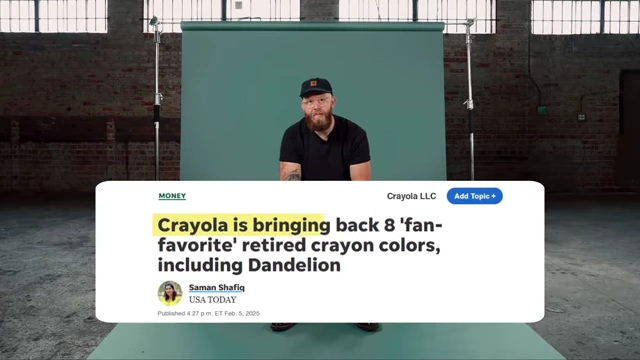
A news headline announces Crayola is bringing back fan-favorite retired crayon colors. [ 00:40:34 ] - 80/20 Rule for Content:
- 80%: Dedicate to your main, revenue-driving topic.
- 20%: Use to explore personal interests ("interest stacking"), making your brand more human and relatable.
- Example: Joe Rogan's podcast covers various interests beyond his core, giving audiences multiple "at-bats" to connect with him.
Section 2: Content [51:02]
Content serves to amplify your brand, and the strategy should be sustainable for the long term.
- Sustainability First: Design a content strategy that you can consistently stick with. Don't try to immediately replicate top creators' high volume or production if it leads to burnout.
Choose Your Content Medium [52:49]
Select content mediums that play to your strengths and ensure long-term sustainability. Emphasize one or two main mediums, but aim to eventually use all four.
- Written Content:
- Best for LinkedIn, X (Twitter), Facebook, email newsletters, ebooks, articles.
- Ideal for those who enjoy writing and can articulate dense information concisely.
- LinkedIn is currently a powerful platform for written content, offering "true virality."
- Video Content:
- Highest leverage medium as it allows for extensive repurposing across multiple platforms (long-form, shorts, audio, text, stills).
- Requires comfort on camera and willingness to improve publicly.
- If video is intimidating, start with audio (podcasting) as a stepping stone.
- Audio Content (Podcasts):
- Similar to video but removes the visual discomfort.
- Requires strong verbal articulation and clarity due to the lack of visual aids.
- Often favors deeper, longer conversations.
- Visual/Graphic Content:
- Includes infographics, carousels, PDFs.
- Leverages tools like Canva, Adobe, Figma.
- Ideal for simplifying complex concepts visually and those who enjoy polished aesthetics.
- Self-Assessment Questions provided for each medium to help determine best fit.
Choosing the Right Platforms [1:08:28]
Prioritize 2-3 platforms to focus on, avoiding single-platform risk and ensuring content is tailored.
- Avoid Single Platform Risk: Diversify across platforms to mitigate risks from algorithm changes or platform instability (e.g., TikTok outage example).
- "Eye of Sauron" Approach: Prioritize one platform to pour most resources into, while keeping others in "maintenance mode," rotating focus over time.
- Short-Form vs. Long-Form:
- Short-form content (TikTok, Instagram Reels) is excellent for driving awareness and brand recognition due to lower barriers to entry.
- Long-form content (YouTube long-form, podcasts) is where true conversion happens, demonstrating expertise and leveraging the "sunk cost fallacy" (more time invested leads to higher likelihood of conversion).
- Data-Driven Platform Choice:
- Start where you feel most comfortable and where you naturally spend time.
- Identify where your target audience congregates (e.g., LinkedIn for business leads).
- Track performance and conversions: Focus on the platform that drives actual sales or desired outcomes, not just vanity metrics (likes, views). A smaller, engaged audience is more valuable than a massive, disengaged one.
- Do not let ego dictate platform choice; focus on actual results rather than vanity metrics.
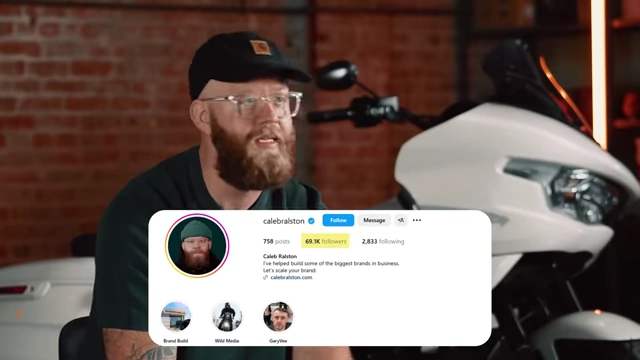
The speaker's Instagram profile showing a follower count of 69.1K. [ 01:20:00 ]
Your Posting Cadence [1:23:56]
The optimal posting cadence balances quantity and quality to gather audience insights and sustain efforts.
- Quality vs. Quantity:
- Quantity (high volume) is a tool for speed and learning to understand what your audience defines as quality, not for immediate maximum reach.
- Quality is determined by your audience's engagement and response, not your subjective opinion or production value.
- Initial Cadence Strategy:
- Start with a frequency you can consistently maintain, even if it's low. Building the habit of posting is paramount.
- Increase volume in the early days to acquire data faster on what resonates with your audience.
- "Waterfall Distribution Method": Create one long-form "pillar" piece of content (e.g., YouTube video), and then repurpose it into numerous smaller, platform-specific pieces (shorts, written posts, graphics, podcast clips). This maximizes output from a single creative effort.
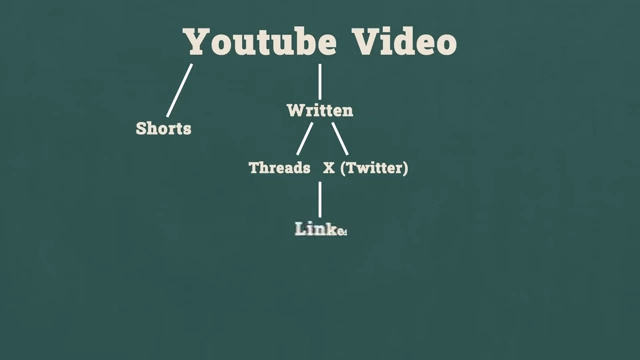
A diagram illustrating the "Waterfall Distribution Method" where a single YouTube video branches into shorter clips, written content for platforms like Threads/X, and longer posts for LinkedIn. [ 01:38:49 ] - Example: A YouTube video can generate shorts for Instagram/TikTok, written quotes for X/Threads, longer posts for LinkedIn/Facebook, and audio for podcasts.
- Scaling by Platform:
- Focus on scaling one platform at a time (your "Eye of Sauron" platform).
- Increase effort per piece of content on your primary platform once you have data on what works, rather than just increasing sheer volume across all platforms.
- Continuously analyze the top 10% performing content to identify replicable elements and improve future content.
- Content Sustainability:
- Play for the Long Term: Choose mediums and processes you enjoy to avoid burnout.
- Build a Simple Content Machine: Implement batching and scheduling content production.
- Remove Yourself from Execution: Invest in a team (freelancers or in-house) to handle filming, editing, and distribution. Ensure the team creates a conducive environment for you as the talent.
- Systematize Repurposing: Develop clear processes for transforming pillar content into various formats for different platforms. The ideal is to make content "contextual" (native) to each platform.
- "70/20/10 Framework" for Experimentation:
- 70% of content: Proven, reliable content that consistently performs.
- 20% of content: Minor improvements and iterations to existing successful content.
- 10% of content: Pure experimentation with new formats, topics, or creative approaches. This is where breakthroughs happen.

- Scaling Mindset:
- Consistency is Key: The ones who win in the content game are those who consistently show up for the long term.
- Iteration, Not Perfection: Focus on continuous improvement based on audience feedback.
- Audience Determines Greatness: Let your audience's engagement and conversions dictate what "great" content is.
Storytelling In Your Content [2:08:12]
Storytelling is a powerful tool for engagement, emotional connection, and shifting perspectives.
- Why Stories Matter: They entertain, change perspectives, retain attention, and build emotional connections. People remember stories and lessons derived from them more than facts.
- Storytelling Framework: Not rigid, but a guide.
- The Hook: Grab attention immediately (2-3 seconds for short-form, 15-20 seconds for long-form). Use bold statements, contrarian views, pattern interrupts, or thought-provoking questions.
- The Problem: Set up the stakes by introducing a conflict or relatable challenge the protagonist (often you or your audience) faces. Make it specific and relatable.
- The Journey: Show how the problem was overcome, including both victories and losses. Emphasize progress over perfection and be transparent about struggles ("messy middle").
- The Lesson: Make it useful for the audience by providing the core takeaway and actionable steps. Connect the lesson back to your expertise and offer.
- The Call to Action (CTA): Prompt action, but it doesn't have to be a direct sale. Encourage engagement (comments, shares) or lead magnet downloads.
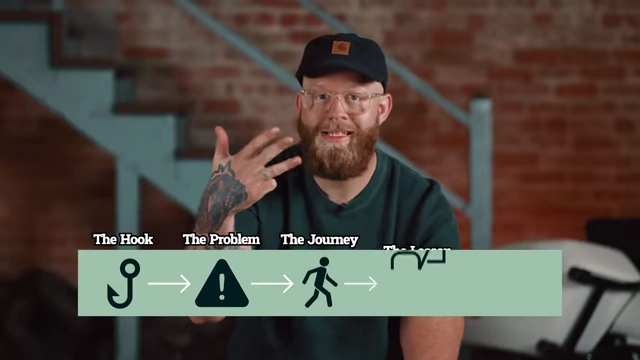
A flowchart illustrating the storytelling framework: Hook, Problem, Journey, Lesson, and Call to Action. [ 02:09:55 ]
- Best Types of Stories to Tell:
- Origin Stories: Explain why you do what you do and resonate deeply with cold audiences.
- Failure Stories: Build relatability and trust through vulnerability. Share lessons learned to help the audience avoid similar mistakes.
- Success Stories: Showcase before-and-after transformations, your own small wins, and client/customer successes. This builds credibility and validates your expertise.
- Industry Stories (with a Contrarian View): Challenge common industry tropes or beliefs. This sparks conversation and positions you as a unique voice.
Community Driven Content [2:34:17]
Involve your audience in your content creation to foster deeper engagement and build a loyal community.
- Shift Mindset: Creator-First to Community-First: Focus on serving and involving your audience.
- Create Feedback Loops:
- Actively listen to DMs, comments, and questions. This provides insights into what content your audience truly needs, making them feel heard.
- Example: Gary Vaynerchuk's "social listening" strategy for content ideas.
- Make Your Audience the Hero: Share community wins, transformations, and case studies where your audience applies your advice and achieves results.
- This incentivizes others to take action and encourages user-generated content (UGC).
- Leverage User-Generated Content (UGC): Encourage your audience to create content based on your insights (e.g., stitching TikToks). This creates a perpetual cycle of engagement and promotes your brand.
- Three Pillars of Community Content:
- Educational Content: Teaching and solving community problems.
- Conversational Content: Engaging the audience and making them feel heard and involved.
- Social Proof Content: Highlighting real stories and impact from your community.
- Turning Viewers into Community Members:
- Make engagement the goal, not just views.
- Respond and reward participation. Set an example that you engage with comments.
- Create inside jokes and shared language unique to your community. This fosters a sense of belonging and insider status.
Scale Your Content [2:45:24]
Scaling content means increasing output and impact without burning out, by optimizing team structure and creative processes.
- Platform-Specific Content: Move beyond simple repurposing to creating content tailored to each platform's unique style and audience expectations.
- Example: A single piece of raw footage can be edited differently by specialists for TikTok, Instagram, and LinkedIn.
- Delegating Platform Ownership: Assign individual creators or editors on your team to own specific platforms.
- They should immerse themselves in that platform's trends, language, and audience psychology.
- This fosters deeper expertise and accountability.
- Data Tracking and Benchmarking: Implement robust data tracking (e.g., multiplier sheets) to understand content performance across platforms relative to benchmarks.
- Focus on metrics that drive conversions, not just vanity metrics.
- Regularly update benchmarks (monthly) to ensure continuous improvement.
- Content Assembly Line: Streamline your content workflow into distinct phases: Ideation, Creation, Editing, Distribution, and Analysis. This systematizes production.
- Create Room for Experimentation (70/20/10 Rule):
- 70% of content: Proven, reliable content that consistently performs.
- 20% of content: Minor iterations and improvements to successful content.
- 10% of content: Pure experimentation with completely new formats, topics, or creative approaches. This is crucial for innovation and avoiding plateaus.
- Content Hackathons: Dedicate specific days (monthly/quarterly) for the team to experiment with new ideas without fear of failure, fostering innovation.
- Scaling Mindset:
- Consistency is Key: The ones who win in the content game are those who consistently show up for the long term.
- Iteration, Not Perfection: Focus on continuous improvement based on audience feedback.
- Audience Determines Greatness: Let your audience's engagement and conversions dictate what "great" content is.
Section 3: Team [3:20:37]
Building a strong team is crucial for scaling a brand; it acts as a multiplier for your vision.
Define Your Needs Before Hiring [3:23:56]
Hire based on actual problems and constraints within your process, not perceived needs or desires.
- Problem-Solving Focus: Identify bottlenecks (e.g., editing backlog, lack of content ideas) and hire to alleviate those specific issues.
- Define the Role Clearly (4 Rs Framework):
- Role: The overall contribution and function within the team.
- Responsibilities: Specific daily, weekly, monthly tasks they will own.
- Requirements: Necessary skills and experience.
- Results: Key Performance Indicators (KPIs) and success metrics (input vs. output).
- Ancillary Considerations: Include communication expectations, work environment (remote/in-person), and core values in the job description to attract the right fit and avoid time-wasting.
- Avoid Generalists for Specialists: While early on individuals may wear multiple hats, aim to hire specialists for high-impact roles as the team scales.
Streamline Your Hiring Process [3:33:35]
Implement a structured, detailed hiring funnel to attract the right talent and avoid costly bad hires.
- Hiring Funnel Stages:
- CV Submission: Collect résumés and optionally videos to assess initial fit and commitment.
- Screening Call: Verify basics (salary, availability, location preferences) and ask light technical questions to weed out unsuitable candidates or AI-generated responses.
- Technical Interview: Conducted by someone knowledgeable in the role, assessing strategic knowledge and problem-solving abilities (e.g., "How would you innovate on this?").
- Technical Assessment: A practical test mirroring day-to-day tasks (e.g., editing raw footage). Assess time management, execution, communication, and ability to "show their work." Provide the same assessment to all candidates for consistency.
- Culture Interview: Assess alignment with company culture and values. Use situational questions to gauge behavior in common workplace scenarios.
- Final Interview: Conducted by a senior leader, reviewing all previous notes and addressing any remaining questions.
- Flexibility for Small Teams: Combine stages if headcount is limited (e.g., screening and technical in one call).
- Try-Out System (for Editors, Designers, Strategists): A specific funnel where the technical assessment comes first, allowing for evaluation of actual work early in the process.
Hire for Culture, Train for Skills [4:06:12]
Prioritize cultural fit and mindset over technical proficiency, as soft skills are harder to train.
- Cultural Fit Over Technical Perfection: A motivated individual with strong cultural alignment (humility, eagerness to learn, adaptability) can be trained to excel technically.
- Prioritize Strengths Matching Platform: Hire individuals whose skills and interests align with the specific platforms they will manage (e.g., a TikTok editor immersed in trends, a LinkedIn writer focused on concise, conversational content).
- Red Flags: Be wary of candidates overly focused on high production value without understanding audience engagement, or generalists claiming expertise across all platforms.
- Data-Backed Decisions: Use data (e.g., multiplier sheets) to determine where to allocate talent and continuously optimize performance.
- Eliminate Social Media Manager Role: Empower platform-specific creatives to manage their respective channels directly, fostering accountability and expertise.
Start Lean, Grow Intentionally [4:14:50]
Avoid overhiring and grow your team strategically, focusing on specialists who are willing to be multifunctional initially.
- Avoid Bloat: A small, nimble team is more efficient and adaptable.
- Multi-Role Hires Early On: Hire individuals who can wear multiple hats (e.g., videographer/editor) due to budget constraints.
- Specialize as You Scale: As the team and workload grow, split roles to allow individuals to become specialists, improving efficiency and mastery. Document processes to facilitate this transition.
- Why Starting Lean Matters:
- Avoids unnecessary payroll expenses before proving content ROI.
- Keeps operations nimble and adaptable to changing platform algorithms or company needs.
- Develops contextual understanding and versatility within the team.
Full-Time Employees vs Contractors/Agencies [4:21:36]
Choose between full-time employees and contractors/agencies based on various factors.
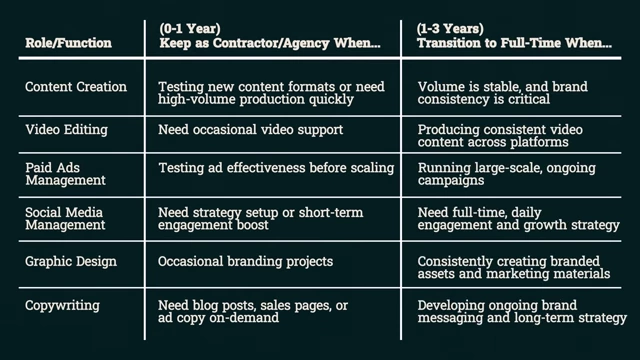
- Budget:
- Full-Time: Higher long-term cost (salary, benefits, training).
- Contractor/Agency: More cost-effective for short-term projects or specialized needs.
- Workload:
- Full-Time: Ideal for ongoing daily tasks requiring full-time attention.
- Contractor/Agency: Best for project-based, flexible, or temporary work.
- Expertise:
- Full-Time: Develops deep knowledge and long-term investment in the company, even if starting with less experience.
- Contractor/Agency: Provides immediate access to specialized expertise, useful for expedited learning or temporary needs.
- Speed and Agility:
- Full-Time: Requires time for onboarding and training (60-90 days for full ramp-up) but offers long-term continuity.
- Contractor/Agency: Provides immediate expertise for quick project execution.
- Brand Consistency:
- Full-Time: Easier to maintain consistent messaging and brand alignment due to deep immersion and regular feedback.
- Contractor/Agency: Requires more oversight to ensure brand consistency due to external nature.
- Scalability:
- Full-Time: More scalable long-term as employees can be trained into leadership roles and grow with the company.
- Contractor/Agency: Useful for testing new theories without high commitment or for temporary scale-up during sprints.
- General Recommendation:
- 0-1 Year: Primarily use contractors/agencies to stay lean, test theories, and validate platform effectiveness.
- 1-3 Years: Begin transitioning critical, high-volume roles in-house.
- 3+ Years: Bring most critical roles in-house, retaining some agencies/contractors for niche expertise or temporary sprints.
Onboard Your Team Effectively [4:39:12]
A structured and intentional onboarding process is critical to ensure new hires integrate smoothly, understand expectations, and remain motivated.
- Poor Onboarding Consequences: Leads to wasted productivity, demotivated employees, and high turnover.
- Structured 30/60/90-Day Plan:
- Day 1-30 (Orientation & Core Learning): Focus on gathering context, understanding company vision, values, workflows, and core processes. Assign small, low-stakes tasks to build momentum. Conduct regular, frequent check-ins (e.g., 3x/week for 10 min) to provide clarity and emotional support.
- Day 31-60 (Ownership & Workflow Development): New hires begin executing independently on core responsibilities. They start developing their own efficient workflows and systems. Continue regular check-ins to provide feedback on process and output.
- Day 61-90 (Full Integration & High Contribution): New hires fully integrate, owning major tasks with minimal supervision. They demonstrate tangible results against KPIs. Conclude with a comprehensive 90-day review to provide real feedback and address any issues.
- Key Elements for Effective Onboarding:
- Clear Plan Before Day One: Provide onboarding materials (handbook, vision deck, 30/60/90 plan) in advance.
- Assign a Mentor/Buddy: Pair new hires with a senior team member for guidance and a trusted point of contact for questions.
- Regular Check-ins: Consistent feedback sessions to monitor progress, address concerns, and celebrate wins.
- Publicly Reinforce Positive Actions: Celebrate small contributions and behaviors that align with team goals and values.
- Build a Resource Hub: A central repository (e.g., Google Drive folder) with SOPs, playbooks, video tutorials, and Q&A documents.
- Continuous Role Definition: As roles and team needs evolve, continuously update and clarify responsibilities to avoid ambiguity and overlapping tasks.
- Benefits: Faster ramp-up time, stronger retention, increased ownership and initiative, and a more engaged workforce.
Develop and Retain Your High Performing Team [4:55:10]
Retaining a strong team goes beyond just hiring; it involves continuous development, aligning opportunities with individual goals, and fostering a supportive culture.
- Culture of Ownership:
- Encourage employees to solve problems themselves by asking "How would you handle this?" instead of immediately providing solutions.
- Push them to bring proposed solutions rather than just problems.
- Grant autonomy with accountability; allow them to make mistakes in low-stakes situations for learning.
- Make Leadership a Habit: Empower team members to lead trainings and share their expertise. This fosters mastery and allows hidden strengths to emerge, identifying future leaders.
- Align Growth with Individual Goals: Understand each team member's long-term career aspirations and provide opportunities (projects, trainings, new responsibilities) that align with their personal growth path.
- Example: Providing a content strategist who wants to be a creative director with opportunities to lead campaigns and present.
- Invest in Strategic Education: Pay for external workshops, courses, or certifications. Have team members who attend then lead internal trainings to share knowledge and reinforce their learning.
- Run Effective One-on-Ones: Regular, structured check-ins to discuss workload, roadblocks, career goals, and provide consistent feedback (both positive reinforcement and constructive criticism).
- Build a Strong Team Culture (Recap):
- Define & Reinforce Core Values: Hire for alignment, publicly celebrate actions reflecting values, and lead by example.
- Transparency: Communicate decisions and pivots openly, even if difficult, to maintain trust.
- Pay Attention to What They Care About: Show genuine interest in their personal lives and interests outside of work.
- Inspire Loyalty Through Growth: People are loyal when they see a future for themselves within the organization.
- Implement Maker/Manager Schedule: Protect "maker" time for deep, uninterrupted creative work to boost efficiency and morale.
- Lead with Empathy: Understand external factors affecting performance and respond with compassion. This fosters a supportive environment where creativity thrives.
Remote vs In Person vs Hybrid [5:39:13]
The optimal work model depends on a balance of flexibility, collaboration, productivity, cost, talent pool, and culture.
- Flexibility:
- Remote: High (work from anywhere, adaptable schedules).
- In-Person: Low (fixed hours, required location).
- Hybrid: Moderate (mix of remote and office days).
- Collaboration:
- Remote: Requires strong digital tools and intentional communication; accidental collaboration is minimal.
- In-Person: High real-time collaboration; spontaneous idea exchange is frequent.
- Hybrid: Balanced, combining structured in-person collaboration with focused remote work.
- Productivity:
- Varies by individual for both remote and in-person. Some thrive at home, others in an office.
- Cost:
- Remote: Most cost-effective (no office space, reduced commute costs, access to lower-cost talent pools).
- In-Person: Highest cost (office rent, utilities, perks).
- Hybrid: Can be inefficient if office space is underutilized, but offers a balance of benefits.
- Talent Pool:
- Remote: Global access, broad talent pool, potentially lower salaries.
- In-Person: Limited to local market; can be a constraint in non-major cities.
- Hybrid: Expanded beyond local market but may require relocation incentives.
- Culture & Engagement:
- Remote: Harder to build strong culture, requires high intentionality with check-ins and virtual team building.
- In-Person: Easiest for building culture, fostering tight-knit relationships, and real-time feedback. Can lead to interpersonal drama if not managed.
- Hybrid: Offers a good blend of in-person bonding and remote focus, balancing culture building with individual work.
- Recommendation: Hybrid is often the best balance, combining in-person benefits with remote flexibility. However, the "best" model depends on your priorities (cost, talent, etc.).
Section 4: Monetize [6:04:14]
Monetization should follow the establishment of trust and value, rather than preceding it.
Trust Before Transactions [6:04:28]
Monetize only after building immense trust and providing significant value.
- Trust is Currency: Trust is the prerequisite for transactions. Pushing offers too early erodes trust.
- Sequence for Success: Provide unbelievable value upfront, demonstrate credibility and expertise, and establish a strong relationship with your audience.
Define Your Monetization Model [6:06:30]
Align your monetization strategy with your strengths, value proposition, and audience needs. Start with one model and expand.
- Five Primary Paths:
- Services: High-touch, direct impact (e.g., agency, consulting, coaching). Ideal for deep expertise.
- Products (Digital/Physical):
- Digital: Ebooks, templates, playbooks, courses (high margin, scalable).
- Physical: Books, apparel.
- Affiliates & Sponsorships: Monetize through strategic partnerships with trusted brands. Only promote products/services you genuinely use and believe in to protect your brand.
- Community & Memberships: Recurring revenue via exclusive content, masterminds, online groups, or paid newsletters. Great for super-fans.
- Ads & Content Monetization: YouTube ad revenue, podcast sponsorships. Often a supplementary income stream, more effective for large, established brands.
- Starting Point: Look at your audience's questions in DMs and comments; they reveal what they already need.
Share the Knowledge, Sell the Execution [6:09:58]
Give away valuable knowledge freely; charge for the specialized execution of that knowledge.
- Value Creates Demand: The more free value you provide, the more demand you create and the more trust you build.
- Formula: Share the "what" and "why" (knowledge) for free, but sell the "how-to-do-it" (execution), which might require tools, resources, or direct help.
- Audience Perception: If your free content is incredibly valuable, people will assume your paid offers are worth even more.
Build Your Offer Stack [6:12:12]
Develop a tiered offer system that guides your audience from free content to higher-ticket services.
- Gradual Progression: Don't start with multiple offers. Refine one, then expand.
- Simple Offer Progression:
- Free Content: Builds trust and awareness.
- Lead Magnet: Free valuable resource (mini-course, playbook) in exchange for contact info, building direct access to audience.
- Low-Ticket Offer ($10-$100): Ebooks, mini-courses, templates. Low barrier to entry.
- Mid-Ticket Offer ($500-$5,000): Group coaching, memberships, in-depth courses. For highly committed buyers.
- High-Ticket Offer ($10,000+): One-on-one consulting, agency services, "done-for-you" services. For high ROI clients.
- Trust First: Most successful brands establish significant trust and awareness before introducing high-ticket offers.
Let Your Content Do the Selling [6:14:16]
Make sales feel natural and unforced by letting your content demonstrate your value and expertise.
- Natural Sales: People prefer buying from trusted sources rather than feeling sold to.
- Content as a Sales Tool:
- Teach valuable lessons with a soft call to action.
- Share client success stories to showcase impact.
- Document your process to show the "behind-the-scenes" of your offer.
- Address common objections within your content.
- Use lead magnets to capture contact information for direct communication.
Play the Long Game [6:15:40]
Focus on building long-term trust and audience retention over short-term revenue gains.
- Long-Term Trust: Prioritize building lasting trust, as it's harder to rebuild than to maintain.
- Consistent Value: Continuously deliver value to encourage repeat engagement and purchases.
- Recurring Content Formats: Create series, challenges, or weekly breakdowns to keep your audience returning.
- Easy to Consume Content: Organize content into playlists or categories to facilitate binge-watching and discovery.
- Protect Your Reputation: Be obsessive about who and what your brand is associated with. Any short-term cash grab that compromises trust carries significant long-term costs. Always evaluate if a monetization play will increase or decrease audience trust.
- Build a Sustainable Brand: Aim to build a brand that endures, providing continuous value and fostering loyalty over time.
It’s Your Turn to Take Action [6:19:11]
The course encourages viewers to download accompanying playbooks and worksheets to put the strategies into action. The ultimate goal is to empower individuals to scale their brands and achieve their dreams, regardless of whether they partner with the speaker's consulting firm.