Re-evaluating the Declining Testosterone Levels: New Study Suggests Measurement Error as a Primary Cause, While Individual Levels Still Decline Naturally
Summary:
- Initial studies from the USA, Denmark, and Finland indicated a concerning global decline in men's testosterone levels across generations, beyond the natural age-related drop of 1-2% per year after age 30.
- Low testosterone is linked to weakened bones, decreased energy, depressed mood, and increased risks of heart disease and overall mortality.
- While factors like pesticides, microplastics, aluminum, and especially rising obesity rates were considered potential causes, they didn't fully explain the observed decline.
- A new analysis suggests that the perceived global decline might be largely a "false alarm" caused by a shift in testosterone measurement methods, where newer methods yield lower readings.
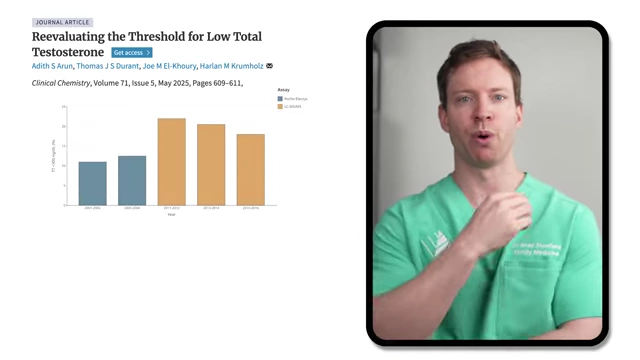
Bar chart illustrating how different measurement methods can impact reported testosterone levels. [ 00:05:19 ] - However, an Israeli study still showed a decline with consistent methodology, though it suffered from selection bias by only testing men already suspected of low testosterone.
- Regardless of the global trend, individuals can support healthy testosterone levels through weight loss, regular exercise (resistance and aerobic), and adequate sleep.

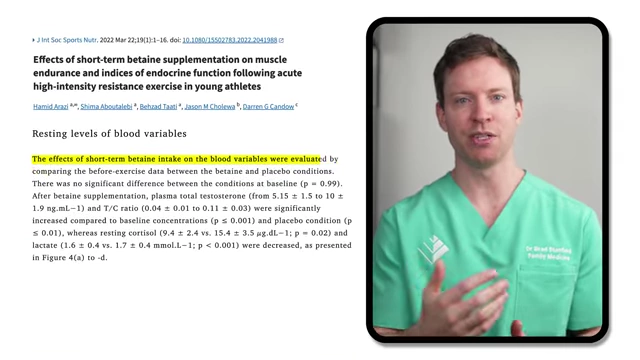
Four proven ways to support testosterone: Weight loss, Exercise, Adequate sleep, TMG (Betaine). [ 00:09:13 ] - Betaine (TMG) is mentioned as a supplement with some evidence for boosting testosterone levels.
The Declining Testosterone Levels [00:00]
- Initial concerns about falling testosterone levels emerged in 2007 with a study published in a respected journal.
- This study analyzed blood samples from 1,500 American men between 1987 and 2004, revealing a population-level decline.
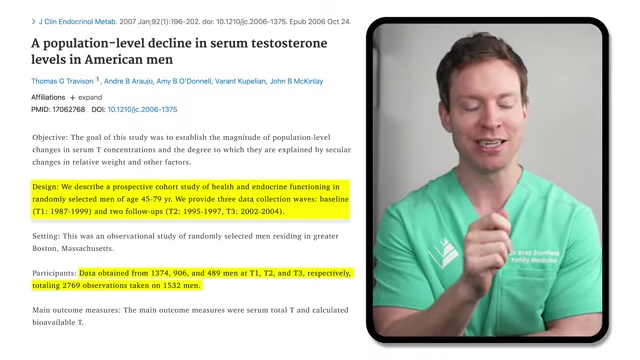
Screenshot of a research paper titled "A population-level decline in serum testosterone levels in American men" with key sections highlighted, indicating the study's objective and methodology. [ 00:00:22 ]
- This study analyzed blood samples from 1,500 American men between 1987 and 2004, revealing a population-level decline.
- Natural decline of testosterone with age:
- Levels typically decrease by 1-2% per year in men after age 30.
- Evidence suggested a decline not only with age but also across generations, implying environmental factors might be at play.
- Health implications of low testosterone:
- Weakened bones, decreased energy, depressed mood.
- Linked to elevated all-cause and heart disease-related mortality.
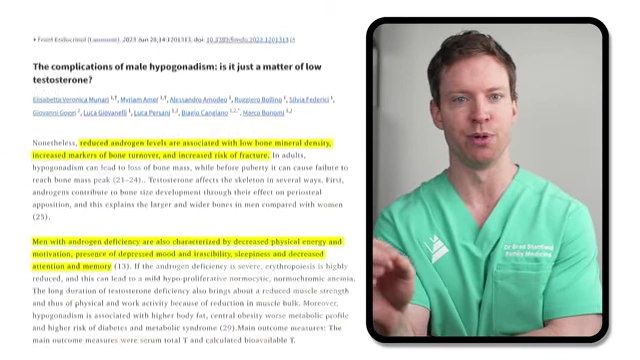
Screenshot of a research paper discussing the complications of male hypogonadism, highlighting that reduced androgen levels are associated with low bone mineral density, decreased physical energy, depressed mood, and increased risk of fracture. [ 00:01:04 ]
- Global observations:
- Large population studies in Denmark and Finland also reported falling testosterone levels.
- A more recent USA study confirmed the ongoing trend in adolescents and young adults.

Screenshot of a research paper titled "Decline in Serum Testosterone Levels Among Adolescent and Young Adult Men in the USA" with a map indicating Denmark and Finland, showing widespread decline. [ 00:01:27 ]
Possible Causes of Decline [01:44]
- Various environmental factors were suggested:
- Pesticides in modern diets [01:47]
- Microplastics (shown to decrease testosterone in mice) [01:50]
- Aluminum toxicity [01:55]

Screenshot showing titles of research papers: "Pesticides May Block Male Hormones," "Chronic Polystyrene Microplastic Exposure Reduces Testosterone Levels in Mice," and "Mechanism and impact of heavy metal-aluminum (Al) toxicity on male reproduction." [ 00:01:50 ]
- Obesity emerged as a significant causal factor:
- Excess weight triggers testosterone reduction through insulin resistance and other mechanisms.
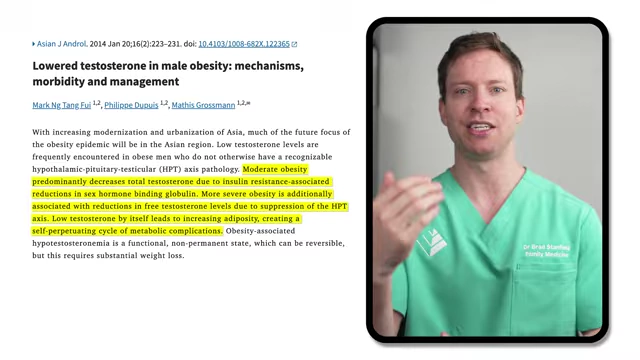
Screenshot of a research paper titled "Lowered testosterone in male obesity: mechanisms, morbidity and management," highlighting sections that explain how moderate obesity decreases total testosterone due to insulin resistance. [ 00:02:09 ] - Low testosterone can, in turn, lead to weight gain, creating a negative feedback loop.
- Worldwide obesity rates have more than doubled in adults since 1990 and quadrupled in adolescents.
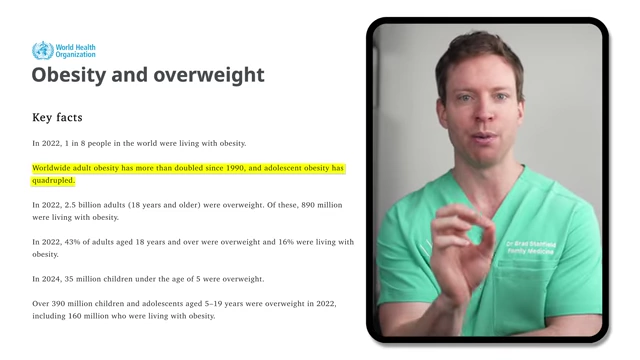
Screenshot from the World Health Organization website showing key facts about obesity and overweight, highlighting that worldwide adult obesity has more than doubled since 1990 and adolescent obesity has quadrupled. [ 00:02:24 ] - Despite its impact, rising obesity rates did not fully explain the observed decline in all studies.
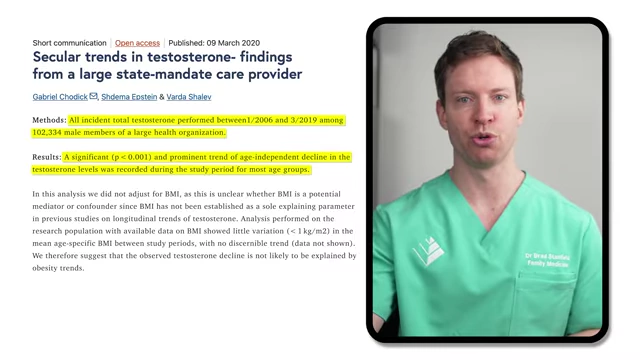
Screenshot of a research paper on secular trends in testosterone, indicating that the observed testosterone decline is not likely to be explained by obesity trends. [ 00:02:51 ] 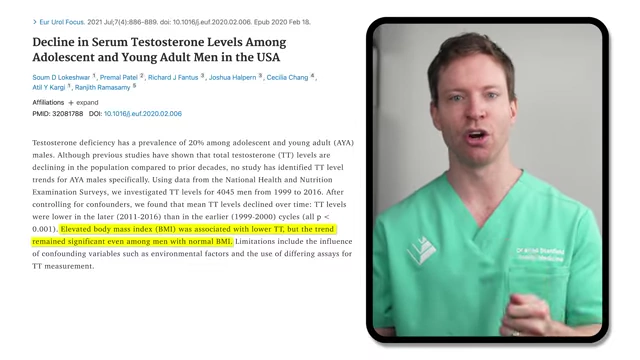
Screenshot of a research paper confirming the decline in serum testosterone levels among adolescent and young adult men, noting that the trend remained significant even among men with normal BMI. [ 00:03:15 ]
- Excess weight triggers testosterone reduction through insulin resistance and other mechanisms.
FINALLY Explained Why Testosterone Levels Fell [03:26]
- A new analysis proposes an unexpected answer: the perceived decline might be due to measurement errors.
Slide title: "The Hidden Reason Testosterone Looks Low" with a subtitle explaining that a new analysis reveals the global panic over declining testosterone may be built on a simple measurement mistake. [ 00:03:31 ] - This issue of how testosterone levels are measured has been highlighted before by researchers.
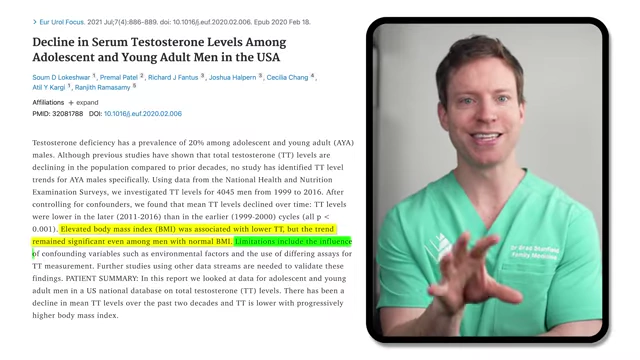
Screenshot of a research paper on the decline in serum testosterone levels, with a highlighted section noting that limitations include the use of differing assays for testosterone measurement. [ 00:03:50 ] - Different measurement methods can yield different results.

A person weighing luggage with a handheld scale, showing a digital reading. [ 00:04:06 ] 
A person weighing luggage at an airport check-in counter, displaying a digital weight reading. [ 00:04:13 ]
- This issue of how testosterone levels are measured has been highlighted before by researchers.
- The new analysis re-examined USA health data from five distinct periods, which had previously been used to establish the decline.
- It was noted that the first two data collection periods used one measurement method (Roche Elecsys immunoassay), while the later three used an entirely different method (LC-MS/MS assay).
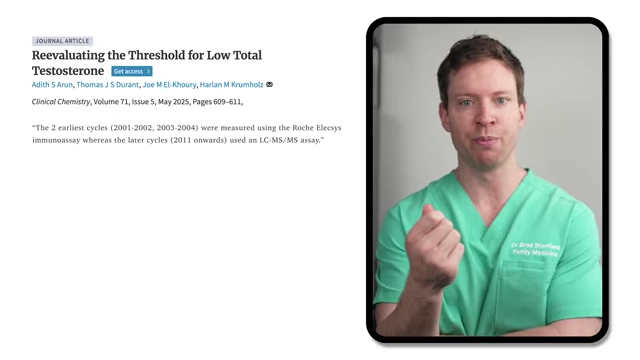
Screenshot of a research paper discussing reevaluating the threshold for low total testosterone, highlighting that different measurement methods were used in different cycles of data collection. [ 00:05:04 ] - The newer measurement method tends to give a lower reading for testosterone levels.
- It was noted that the first two data collection periods used one measurement method (Roche Elecsys immunoassay), while the later three used an entirely different method (LC-MS/MS assay).
- When raw data is plotted, there is a significant jump in the percentage of men with "low testosterone" coinciding with the switch to the newer, lower-reading method.
Bar chart illustrating the percentage of men with low testosterone over different time periods, showing a distinct increase coinciding with a switch in assay methods. [ 00:05:19 ] - Adjusting the threshold for "low testosterone" to reflect the newer measurement methods eliminates this artificial jump.
- In fact, after adjustment, the percentage of men with low testosterone appears to be falling over the last three measurement periods.
- This suggests that the global panic over falling testosterone might be a false alarm caused by a shift in how levels are measured.
The Flaw in the Israeli Study [06:10]
- The measurement error explanation does not apply to the Israeli study, which also reported a decline.

Slide title: "But There's One Problem" explaining that the new explanation works for U.S. data but not for the results coming out of Israel. [ 00:06:10 ] - The Israeli study explicitly stated that its testing methodology remained consistent throughout the data collection period (2006-2019).
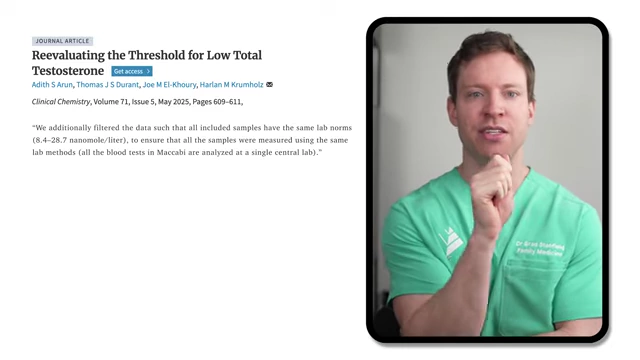
Screenshot of a research paper noting that all included samples were measured using the same lab methods at a single central lab, ruling out measurement method changes. [ 00:06:22 ]
- The Israeli study explicitly stated that its testing methodology remained consistent throughout the data collection period (2006-2019).
- A crucial flaw in the Israeli study's design:
- Participants were men referred by a physician for testosterone testing, meaning they were already suspected of having low testosterone.

Screenshot of a research paper stating that the data analyzed came from a large population of Israeli patients referred for testosterone testing by a physician. [ 00:06:40 ] - This creates a selection bias problem, as the study population does not truly represent the general public, potentially skewing results towards a decline.
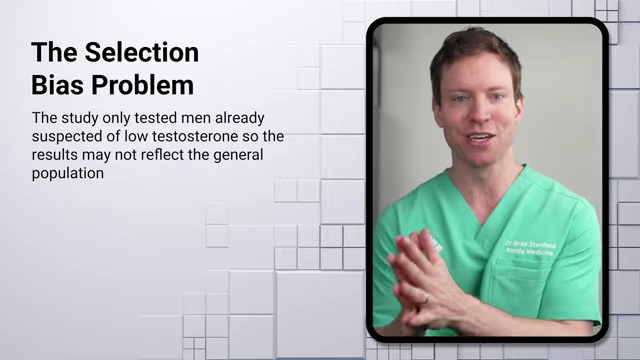
Slide title: "The Selection Bias Problem" explaining that the study only tested men already suspected of low testosterone, so the results may not reflect the general population. [ 00:07:00 ]
- Participants were men referred by a physician for testosterone testing, meaning they were already suspected of having low testosterone.
Maintaining Testosterone Levels [07:27]
- Regardless of whether population-level testosterone is declining due to measurement errors, individual testosterone levels naturally decrease with age.

Slide title: "What We Can Actually Control" explaining that even if testosterone is not truly falling worldwide, individual levels still decline with age, and there are ways to fight back. [ 00:07:31 ] - Strategies to counter natural decline and support healthy testosterone levels:
- Weight loss: Decreasing body fat is a highly significant intervention, especially for overweight individuals, as obesity is strongly linked to lower testosterone.
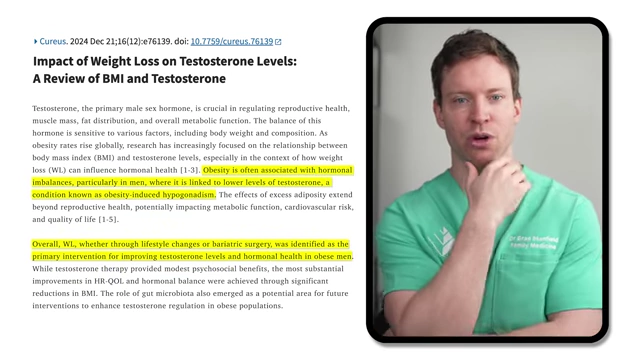
Screenshot of a research paper titled "Impact of Weight Loss on Testosterone Levels: A Review of BMI and Testosterone," highlighting that obesity is often associated with hormonal imbalances and weight loss is the primary intervention. [ 00:07:45 ] - Exercise:
- Resistance training elevates testosterone.
- Aerobic training also contributes to increased testosterone levels.
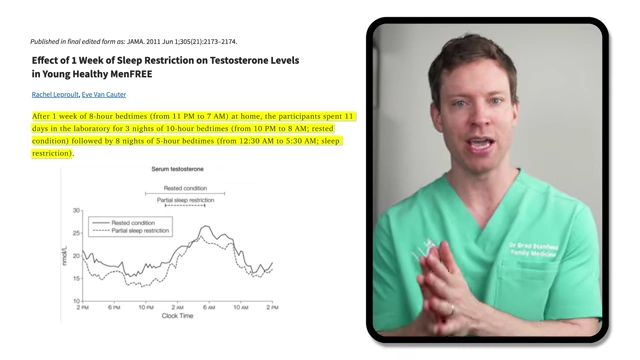
- Adequate sleep: Researchers have found that sleep duration plays a pivotal role in maintaining testosterone levels.
- One study showed that restricting sleep to 5 hours a night for eight consecutive nights resulted in lower testosterone levels throughout the day compared to rested conditions.
- Weight loss: Decreasing body fat is a highly significant intervention, especially for overweight individuals, as obesity is strongly linked to lower testosterone.
Supplements for Boosting Testosterone [08:29]
- Some supplements have study evidence to support their role in boosting testosterone:
- Betaine (TMG):
- A study in soccer players showed increases in testosterone levels with TMG supplementation during a season compared to a placebo group.
- Another study with participants doing resistance exercise found improvements in testosterone levels with TMG over a placebo.
- Betaine (TMG):