Personal Results and Dosing Strategies for GLOW vs KLOW Peptide Blends (KPV, BPC-157, TB500, GHK-Cu)
This video discusses the speaker's personal experience and results using GLOW and KLOW peptide blends, which contain KPV, BPC-157, TB500, and GHK-Cu, focusing on healing and recovery. Key takeaways include:
- The speaker found that extending peptide cycles beyond 10 days provided better long-term results for inflammation reduction, as seen in CRP and IL-6 markers.
- Oral KPV demonstrated effectiveness in improving gut inflammation markers like myeloperoxidase.
- Injected GHK-Cu showed systemic benefits for skin barrier integrity, beyond just localized effects.
- Peptide blends offer convenience for beginners, but sourcing from reputable suppliers is crucial for purity and sterility.
- Tracking health data with wearables and AI tools helps in correlating peptide use with recovery and physiological improvements like heart rate variability.
- Lifestyle adjustments, such as proper exercise technique and stretching, remain vital for injury prevention, even when using peptides.

CRP Methylation Level Trends [ 00:02:49 ]
GLOW & KLOW Differences and Personal Protocol [0:00]
The speaker shares personal results and dosing strategies for GLOW and KLOW peptide blends, which include KPV, BPC-157, TB500, and GHK-Cu.

Previous KLOW Cycle and Injury Background [0:16]
- The speaker completed a 10-day intense KLOW cycle on February 14th, following a persistent back injury from June 2025, re-triggered in October.
- Initial recovery from the injury was partial, necessitating continued peptide use.
- An epigenetic test was performed on February 16th to assess long-term inflammation trends.

Blood spot kit for epigenetic testing [ 00:00:27 ] - CRP and DNA Methylation: C-Reactive Protein (CRP) is produced by the liver in response to acute inflammation, and DNAm CRP provides a stable, long-term measure of chronic inflammation.

CRP and DNA Methylation Relationship [ 00:00:30 ]
Intense 10-Day Cycle Dosing [0:50]
- The KLOW blend was an 80mg vial, meaning 1mg/day of BPC-157, TB500, and KPV, and 5mg/day of GHK-Cu.
- These doses are higher than typical advised ranges, suitable for post-surgery or intense athletic events over a short period.
- Long-term biological processes like angiogenesis and extracellular matrix remodeling require more than 10 days for optimal results.
Chronic Inflammation Markers Improvement [1:44]
- C-Reactive Protein (CRP): Improved significantly to the 10.1 percentile by November, remaining constant despite re-triggered injuries, indicating consistent positive lifestyle choices.
CRP Methylation Level Trends [ 00:02:49 ] - Interleukin-6 (IL-6): Historically a weak area, it dropped from the 96th percentile in June 2023 to the best-ever 63rd percentile.

IL-6 Methylation Level Trends [ 00:03:29 ] - Inflammation Age: Using True Diagnostics Symphony Age clock (updated in November to be more sensitive), the speaker shaved off 3.6 years of inflammation age since November.
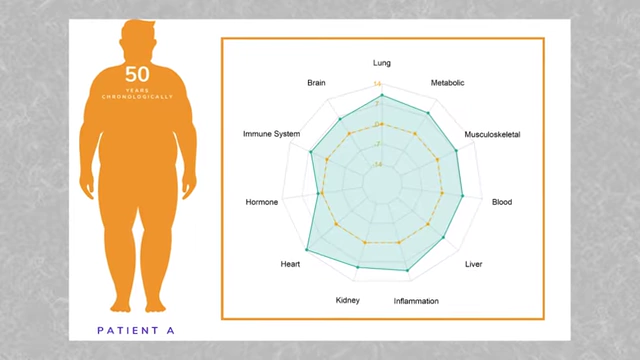
True Diagnostics Symphony Age Clock Overview [ 00:03:55 ] 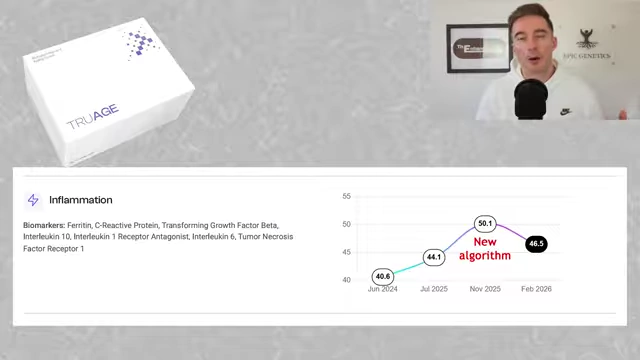
Inflammation Age Trend [ 00:04:06 ]
- C-Reactive Protein (CRP): Improved significantly to the 10.1 percentile by November, remaining constant despite re-triggered injuries, indicating consistent positive lifestyle choices.
Current GLOW Cycle and Dosing [4:15]
- The speaker extended the GLOW cycle to over 20 days for better ROI, despite initial concerns about peptide degradation.
- Research indicates minimal degradation (1.1% over 28 days) for combined peptides if stored properly away from direct sunlight.
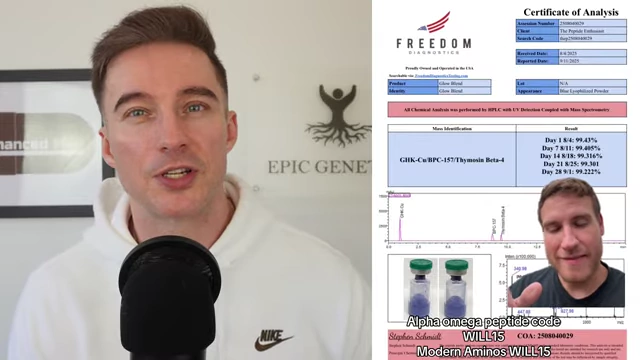
Peptide degradation data from a Certificate of Analysis [ 00:04:44 ] - Current daily dosing: 2.5mg GHK-Cu and 500mcg each of BPC-157 and TB500, often with a couple of days off.
- Injections are done in the evening to avoid interfering with post-exercise pro-inflammatory signals, but GHK-Cu can cause stinging that may disrupt sleep if taken too close to bedtime.
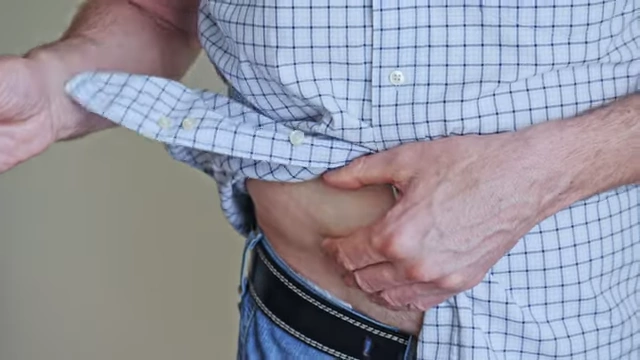
Administering a subcutaneous peptide injection [ 00:05:35 ]
KPV and GHK-Cu Results [6:47]
The speaker discusses specific results observed from KPV and GHK-Cu.
KPV Efficacy (Oral vs. Injectable) [6:47]
- No significant difference was noted between intense 10-day cycles of KPV in GLOW or KLOW stacks.
- Oral KPV, taken for 30 days, showed positive results in gut inflammation.
- Research on KPV and its effectiveness orally in mice.
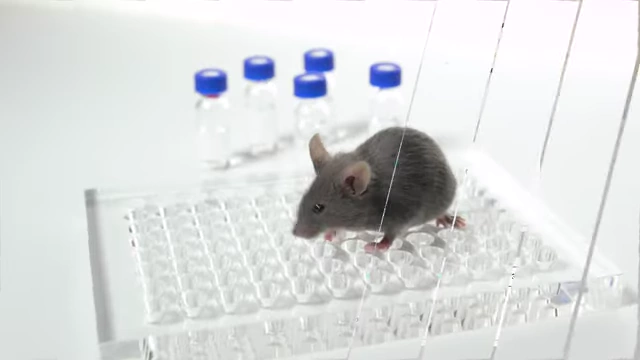
Mouse in a lab, relating to KPV research [ 00:07:29 ] - Myeloperoxidase (MO) Marker: A 7% drop between July and November, challenging the notion that oral KPV is ineffective.
- Phenylacetylglutamine (PAG) Marker: An indicator of gut inflammation often seen in weight training individuals on high-protein diets, improved by 3.2% as of February 16th following the injectable KLOW stack.
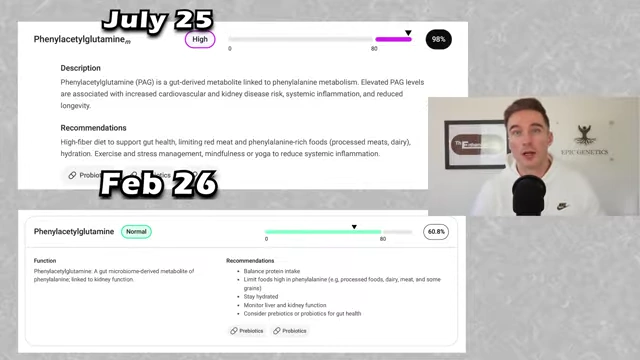
Phenylacetylglutamine (PAG) Levels in Gut [ 00:08:15 ] - Oral KPV capsules were used to target localized effects in the gut.
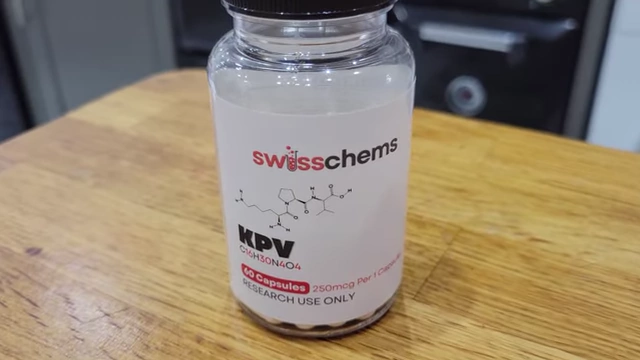
KPV oral capsules [ 00:08:22 ]
GHK-Cu Benefits [9:17]
- GHK-Cu plays a crucial role in extracellular matrix remodeling, collagen synthesis, and maturation, making longer cycles more cost-effective.
- Injections provide systemic effects, upregulating collagen and elastin synthesis throughout the body, not just localized areas.
- The Dunedin PACE test, which assesses the pace of aging, correlates highly with quality of life metrics and facial aging.
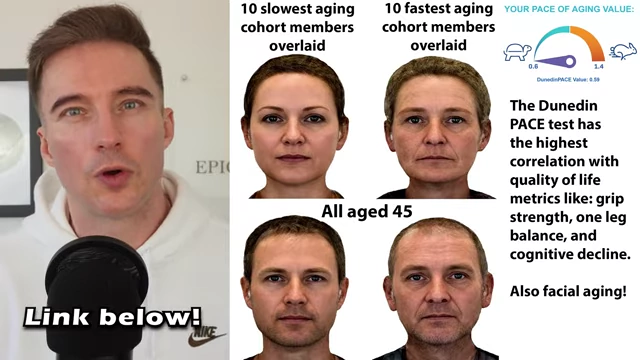
Dunedin PACE Test and Facial Aging Comparison [ 00:09:55 ] - Anecdotal evidence suggests GHK-Cu helps tighten skin after weight loss and with aging.
- Topical GHK-Cu serum was used to further enhance skin benefits.
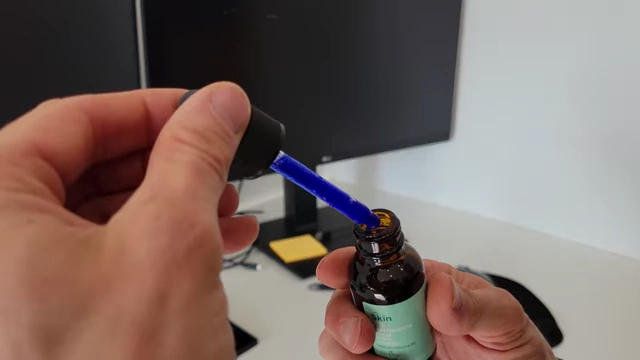
Topical GHK-Cu serum application [ 00:10:19 ] - Skin Elasticity: Improved marginally by 2% over the last year, a difficult metric to change.
- Skin Barrier Integrity: Increased by 12% from February 2025 to 2026, attributed primarily to topical 3.3% GHK-Cu serum used for 60 days straight, with a possible association with the GLOW stack.
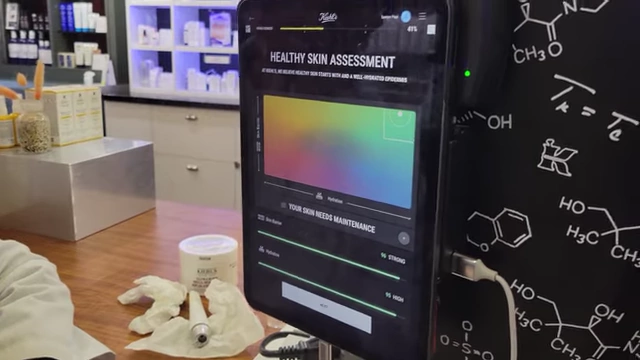
Healthy Skin Assessment Data [ 00:10:54 ] - Skin hydration also remained excellent, even late in the day, indicating improved ability to retain moisture.
Are Blends Better? [11:49]
The convenience of peptide blends is highlighted for new users.
- Convenience for Beginners
- Blends simplify the process of peptide therapy, as common peptides like TB500, BPC-157, and GHK-Cu are often used together.
- Reconstituting multiple peptides can be intimidating for new users, potentially leading to waste.
- Simplicity is crucial for increasing accessibility to peptides.
- Sourcing peptides from reputable suppliers, like Peptides of London, is essential for purity and sterility to avoid adverse reactions like injection site inflammation.
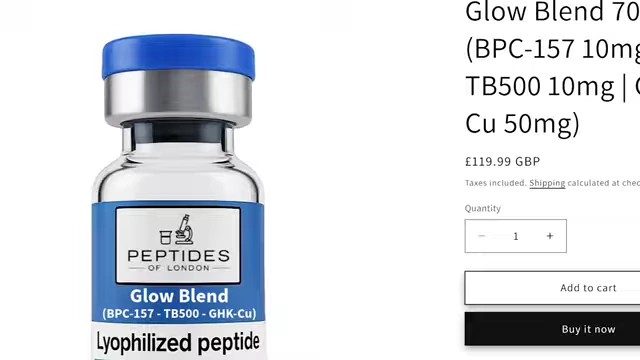
Peptides of London Glow Blend product page [ 00:12:37 ] 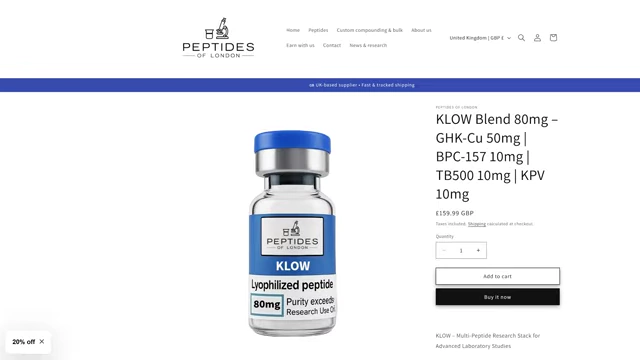
Peptides of London KLOW Blend product page [ 00:12:41 ] - Another example of a blend product from Swiss Chems was mentioned.
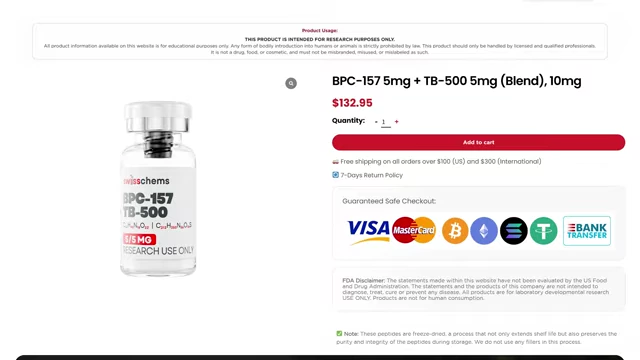
Swiss Chems BPC-157 + TB-500 Blend [ 00:09:10 ]
KLOW Recovery Results [13:17]
Wearable tech data confirmed physiological improvements during the KLOW cycle.
- Whoop Data Analysis
- Tracking heart rate variability (HRV) with wearables provides short-term insights into physiological functioning when introducing new compounds.
- Using AI (e.g., ChatGPT) to triangulate raw data from wearables can help identify correlations.
- During the 10-day intense KLOW cycle, the speaker's HRV increased by 3.72 milliseconds, indicating improved heart contractility under stress.
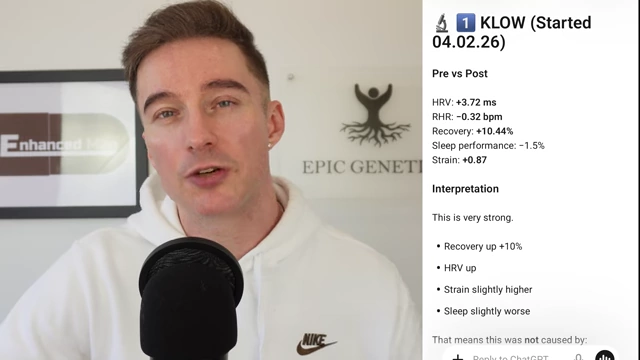
Whoop Data Analysis: HRV and Recovery Metrics [ 00:13:55 ] - Recovery scores improved by nearly 10.5%, despite a slight decrease in sleep performance and increased training intensity (strength up by 0.87).
- This suggests the peptides enhanced recovery even with higher physical demands.
Injury Prevention [15:44]
Strategies for preventing inflammation and managing back pain.
- Managing Back Inflammation
- The speaker focuses on maintaining low C-reactive protein (CRP) levels and optimizing Interleukin-6 (IL-6) to the 5th percentile (not too low to avoid immune suppression).
- Lifestyle adjustments are prioritized over peptide reliance for long-term health.
- Key Preventative Measures:
- Maintaining good technique during gym workouts.
- Regular back stretching, especially after prolonged sitting.

Stretching for back pain prevention [ 00:15:57 ] - Avoiding uncomfortable prolonged seating arrangements.
- Strategies for long car journeys (e.g., rotating seating positions).
- Significant improvement: No deep tissue massages have been required since autumn last year, indicating better pain management and reduced severity.