China's "Bed Rotting" and "Lying Flat" Phenomenon: Understanding the Rise of the "Low-Energy Rat People" Amidst Societal Pressures
In China, a growing cultural movement dubbed "bed rotting" or "lying flat" describes a lifestyle of minimal effort, spending days in bed, ordering takeout, and avoiding traditional societal pressures.
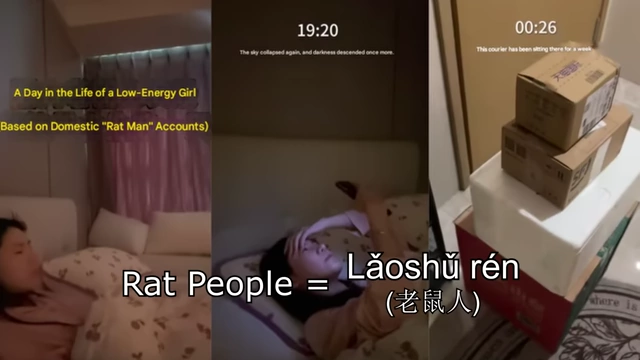
- This trend, popularized on platforms like Douyin, involves individuals identifying as "rat people" (lǎoshǔ rén) who embrace a low-energy existence, often staying indoors, doom-scrolling, and minimizing social interaction.
- The "lying flat" (tǎngpíng) philosophy emerged as a rejection of China's demanding "996" work culture (9 AM to 9 PM, 6 days a week) and traditional expectations like marriage and homeownership.
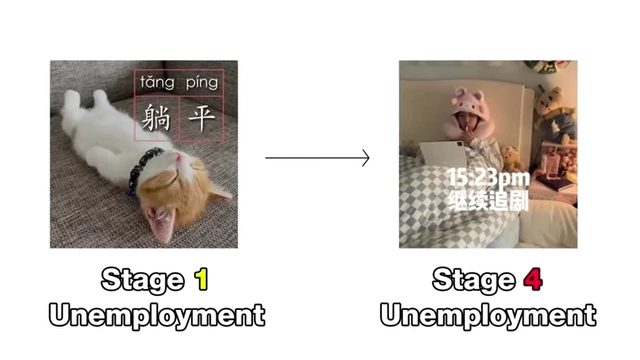
A visual illustrating the progression from 'Lying Flat' (Stage 1 Unemployment) to 'Rat People' (Stage 4 Unemployment) [ 00:03:38 ] - Despite government attempts to censor "lying flat" content, the sentiment evolved into new forms like "rat people" vlogs, even leading to brand collaborations and merchandise.
- The "Chongqing Bachelor Brothers" took the "lying flat" concept offline, forming a communal lodge in rural areas, but their collective, anti-establishment message was quickly shut down by authorities.
- The movement's pioneer, "Kind Traveler," articulated a philosophy of minimal consumption and sporadic work (e.g., as a film extra), viewing "lying flat" as an intellectual exercise and a "sick leave from desires," reflecting deep-seated frustration with societal demands and economic pressures like high youth unemployment.
The Emergence of the "Low-Energy Rat People" [00:00:00]
The video introduces a growing trend in China where individuals embrace a "low-energy" lifestyle, often referred to as "bed rotting" or identifying as "rat people" (lǎoshǔ rén). This trend, prevalent on platforms like Douyin, involves:
Characteristics of the Lifestyle - Waking up around noon and staying in bed for extended periods.
- Ordering all meals via delivery. - Spending hours doom-scrolling on phones in dim light.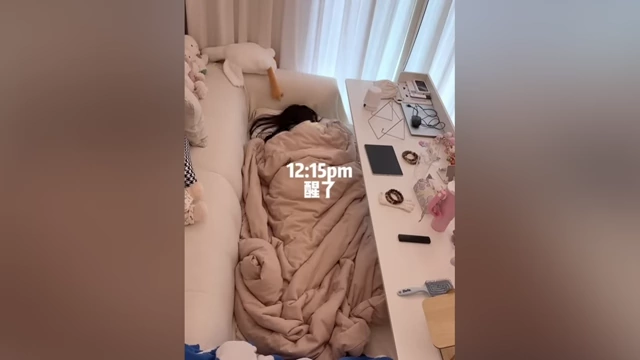
A person wakes up at 12:15 PM, embodying the 'bed rotting' lifestyle. [ 00:00:13 ] - Lacking ambition or external plans, akin to "NPC hibernation." - Purposely self-deprecating aesthetic that resonates with many viewers.
Doom-scrolling in bed at 2:00 AM. [ 00:00:27 ] Origin of the Trend [00:00:35] - A young creator from Jiangsu posted a viral vlog showcasing her routine of waking at noon, staying in bed, ordering food, and working remotely on "ultra-low power saving mode," avoiding unnecessary communication. - Her motto, "We don't live to leave a deep impression on others. We just need to live comfortably," resonated widely.
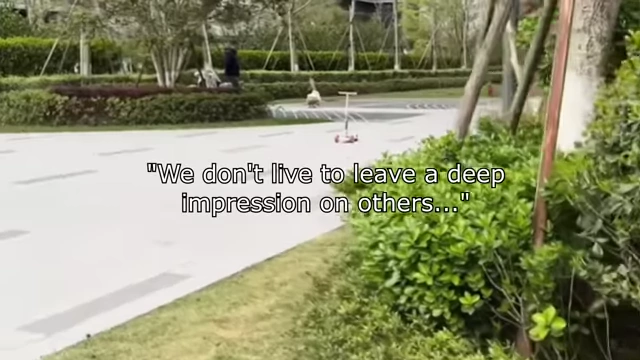
A quote emphasizes prioritizing comfortable living over external impressions. [ 00:01:15 ] Competitive Laziness and Commercialization [00:01:48] - The trend escalated into "competitive laziness," where participants boast about the minimal effort they exert (e.g., only getting up once a day).
- The movement gained commercial traction with merch, plushies, and even skincare and lifestyle brands collaborating with influencers for "low-energy home-body vlogs."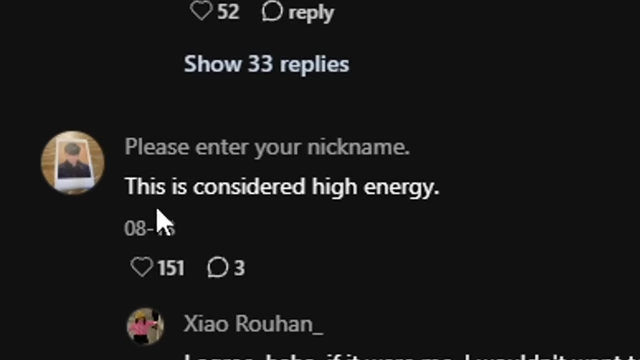
A Douyin comment highlights 'competitive laziness' with a user claiming the featured routine is 'high energy'. [ 00:01:45 ] 
Merchandise featuring 'rat people' plushies and keychains available for purchase. [ 00:02:31 ] 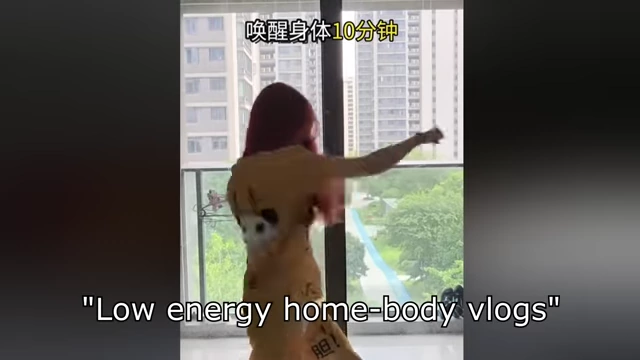
A scene from a 'low energy home-body vlog' featuring a sponsored product. [ 00:02:39 ] - The trend extended to couples embracing the lifestyle.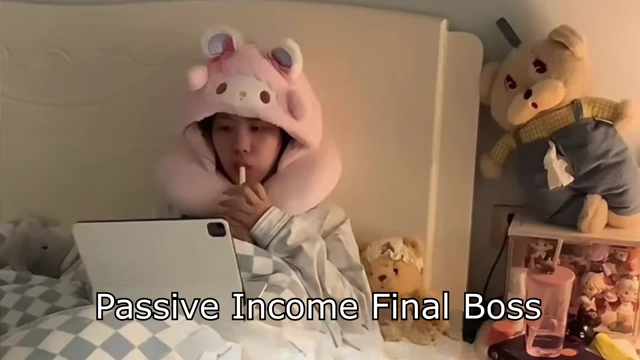
A person working from bed, labeled 'Passive Income Final Boss', illustrating commercialization of the trend. [ 00:02:47 ] - Comments online expressed sentiment against traditional life choices like marriage, highlighting the appeal of the low-energy lifestyle.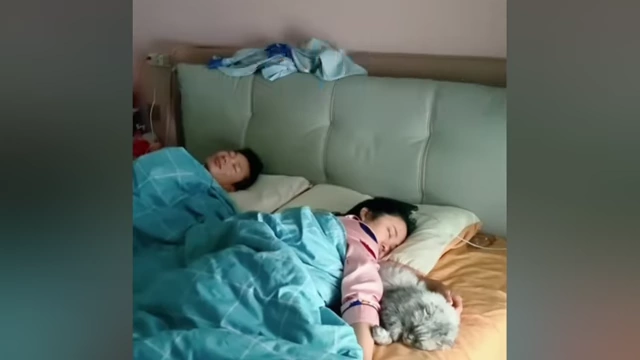
A couple 'bed rotting' together, highlighting the trend's communal aspect. [ 00:02:49 ] - Many viewers expressed aspirations to adopt this lifestyle. - The general aesthetic is self-deprecating but resonates deeply, indicating widespread fatigue with hyper-productive ideals.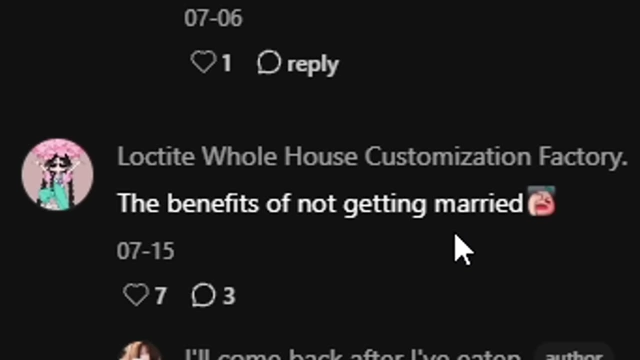
A comment highlighting 'The benefits of not getting married' as part of the rejection of traditional pressures. [ 00:03:14 ]
The "Lying Flat" (Tangping) Movement and Government Reaction [00:03:34]
The "low-energy rat people" phenomenon evolved from an earlier movement called "lying flat" (tǎngpíng), which carried a more direct ideological stance.
Rejection of "996" Culture [00:03:41] - "Lying flat" emerged as a counter-culture response to China's intense "996" work culture (9 AM to 9 PM, 6 days a week), where individuals were expected to grind constantly.
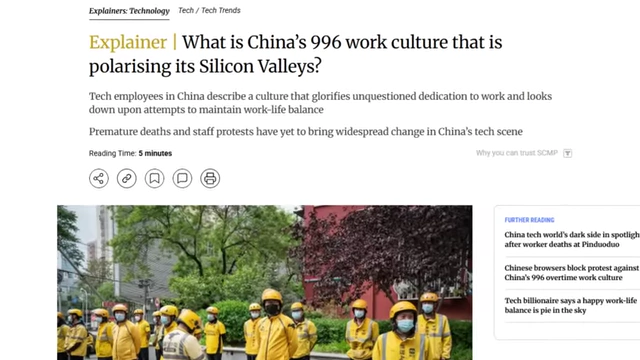
A news headline explaining China's demanding '996' work culture. [ 00:03:42 ] - The philosophy advocated doing the bare minimum to stay sane, rejecting traditional societal pressures like marriage and homeownership.
A crowded subway station in China, symbolizing the intense urban work environment that led to 'lying flat'. [ 00:03:44 ] Government Censorship and Youth Unemployment [00:03:59] - Chinese authorities were not amused by "lying flat" and censored related content, urging young people to work hard.
- This pushback indicates the government's concern over the trend impacting national productivity and traditional values, but censoring the term did not censor the feeling, leading to new forms like "rat people."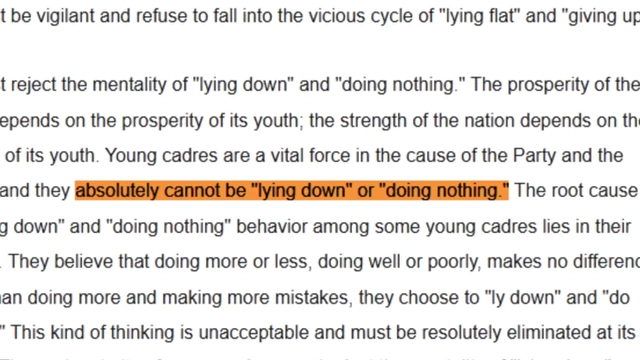
An official document emphasizing that young cadres 'absolutely cannot be lying down or doing nothing'. [ 00:04:04 ] - The prevalence of these low-energy vlogs demonstrates a widespread cultural shift.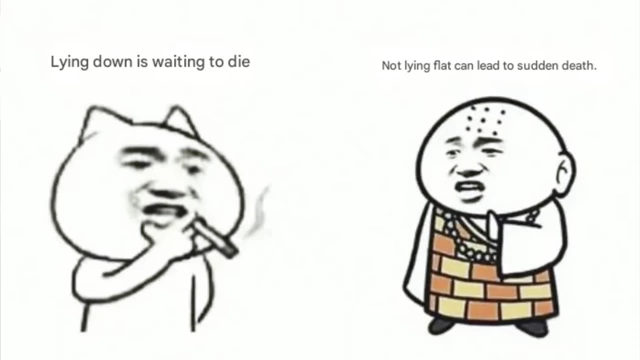
A meme contrasting the ideas of 'lying down is waiting to die' with 'not lying flat can lead to sudden death'. [ 00:04:09 ] 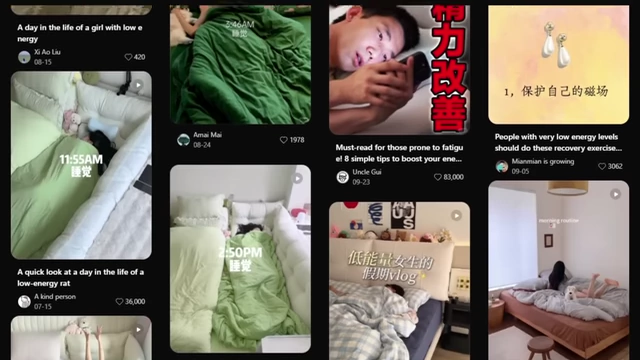
A collage of social media posts showcasing the widespread 'low-energy rat people' vlogs. [ 00:04:12 ] - The rise of these movements is deeply intertwined with a challenging job market, highlighted by the mainland youth unemployment rate hitting new highs (e.g., 21.3% in June). This economic reality fuels the feeling of powerlessness that "lying flat" addresses.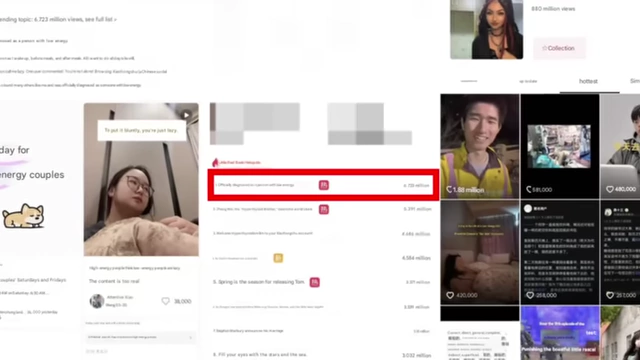
A compilation of 'low-energy' content, highlighting millions of views and engagement on platforms like Douyin. [ 00:04:19 ] 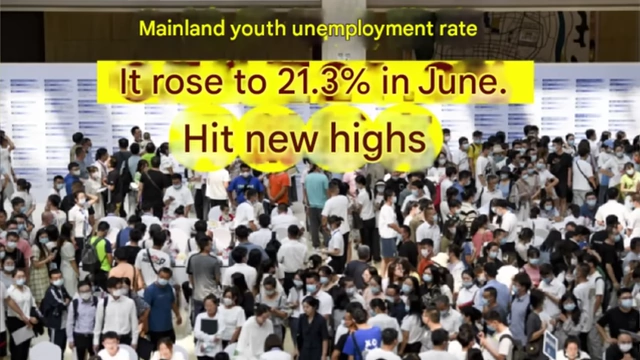
A graphic displaying China's mainland youth unemployment rate, which rose to 21.3% in June and hit new highs. [ 00:04:24 ]
The "Chongqing Bachelor Brothers" and Collective Disobedience [00:04:41]
The "lying flat" ideology found an organized, public expression through the "Chongqing Bachelor Brothers."
Offline Lying Flat - This group of single men left city life for rural hills, forming a "bachelor lodge" where they lived communally.

The 'Chongqing Bachelor Brothers' eating communally, a core aspect of their lifestyle. [ 00:04:43 ] - Their lifestyle rejected mortgages, car loans, and marriage, focusing instead on simple living, eating, sleeping, and light farming for content.
A group photo of the 'Chongqing Bachelor Brothers' in their rural 'bachelor lodge'. [ 00:05:08 ] - They consciously portrayed an "extreme we lie down and do nothing" aesthetic, questioning why they should work for a system that doesn't benefit them.
A 'Chongqing Bachelor Brother' in his simple living space, embracing minimal consumption. [ 00:05:16 ] - Their defiant attitude resonated with many.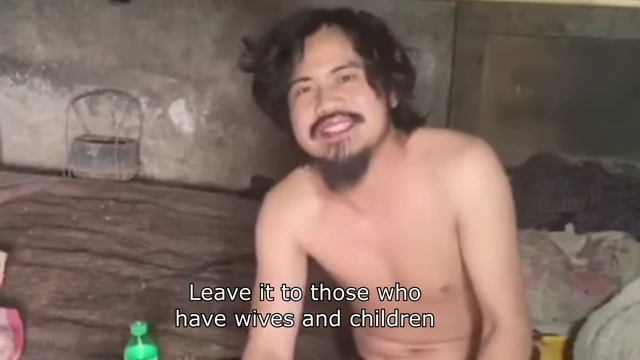
A 'Chongqing Bachelor Brother' stating, 'Leave it to those who have wives and children,' articulating their rejection of traditional responsibilities. [ 00:06:08 ] 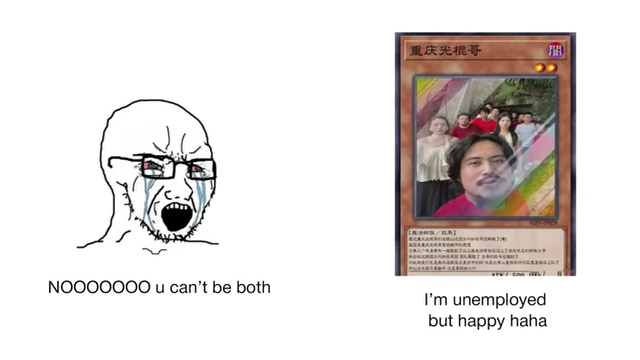
A meme from the 'Chongqing Bachelor Brothers' conveying, 'I'm unemployed but happy haha,' reflecting their defiant attitude. [ 00:06:38 ] Forced Disbandment [00:06:50] - Their public, organized display of "lying flat" was deemed a "stability risk" by authorities.
- On May 15th, the Bachelor Lodge announced its shutdown due to "unspecified forced factors," understood to be government intervention.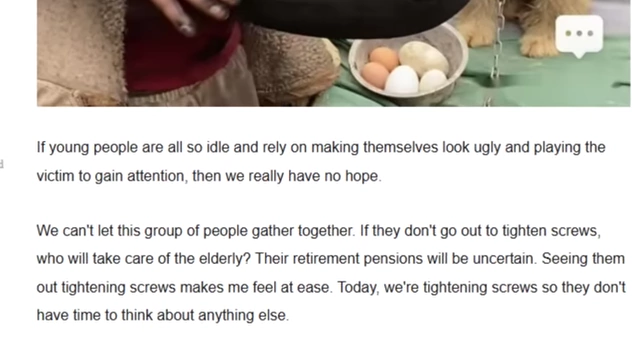
An article criticizing the 'Chongqing Bachelor Brothers' for being idle and setting a bad example for youth. [ 00:06:45 ] 
A notification announcing the official disbandment of the 'Bachelor Lodge'. [ 00:06:57 ] - This incident demonstrated how quickly expressions of laziness or disengagement can be perceived as a threat by state-controlled media, especially when organized and sending a collective message.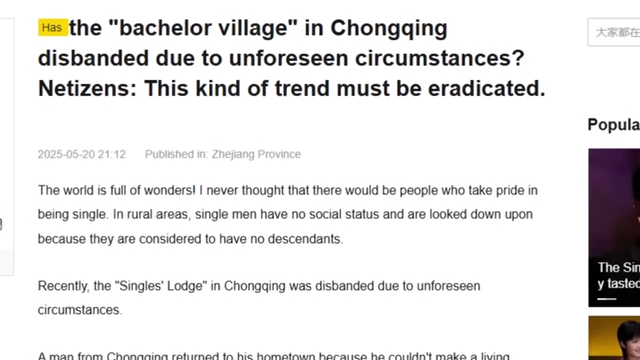
A news headline reporting the disbandment of the 'Bachelor Village' in Chongqing due to 'unforeseen circumstances'. [ 00:06:58 ]
The Pioneer: "Kind Traveler" and the Philosophy of Lying Flat [00:07:34]
The video highlights "Kind Traveler" as the original pioneer of the "lying flat" philosophy, whose post "Lying Down is Justice" became foundational.
Survival Strategy [00:07:55] - He confessed to not having a stable job for two years and feeling no guilt.
- His survival strategy involved extremely low expenses (200 RMB/month, mainly for food: noodles, eggs, rice, vegetables).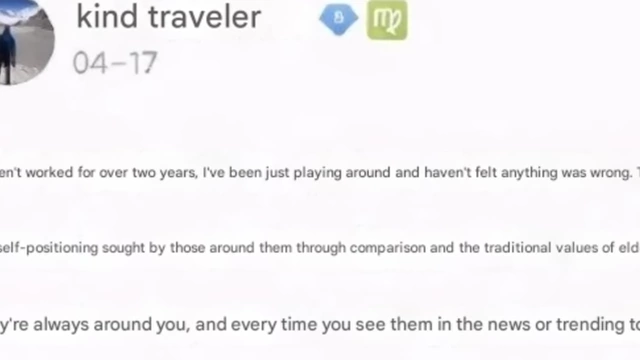
An excerpt from 'kind traveler's' post, stating he feels no guilt for not having a stable job for two years. [ 00:07:54 ] - He would work odd jobs for one to two months a year when savings ran low, then return to his "horizontal mode." - He even obtained an actor's license to get paid for lying around on film sets as an extra.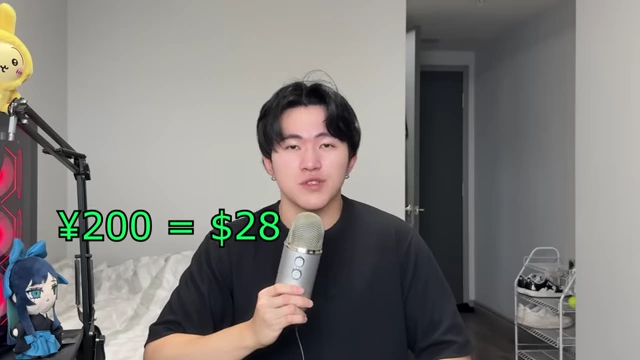
A visual showing 200 RMB converts to approximately $28 USD, highlighting 'kind traveler's' extremely low expenses. [ 00:08:11 ] 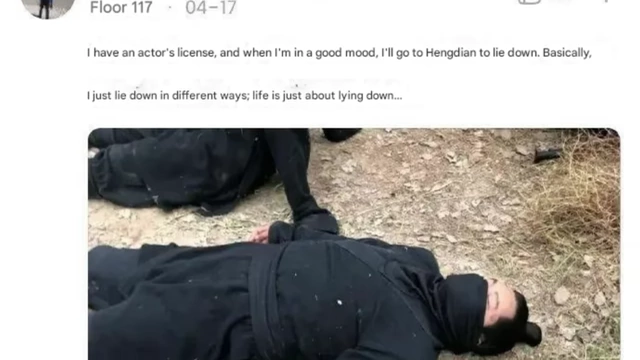
A screenshot from 'kind traveler's' post detailing how he obtained an actor's license to get paid for lying down on film sets. [ 00:08:27 ] 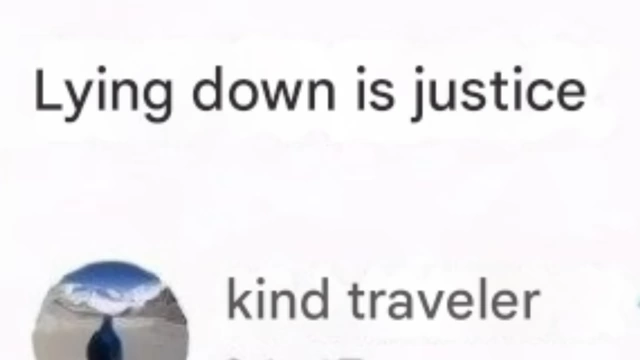
The foundational post by 'kind traveler' titled 'Lying down is justice'. [ 00:07:47 ] Intellectual Justification [00:08:35] - "Kind Traveler" framed "lying flat" as an "intellectual exercise" and a way to elevate human subjectivity in a system that doesn't.
- His philosophical outlook questioned human agency and the pursuit of meaningless excitement. - He observed busy people from his window, sometimes laughing at their rush to jobs they hate.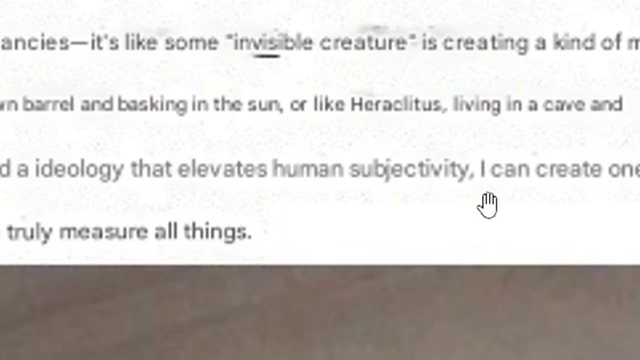
An excerpt from 'kind traveler's' philosophy: 'Lying flat is my intellectual exercise; only by lying flat can one truly measure all things.' [ 00:08:37 ] - His most famous quote, "Lying flat is the sick leave I took from my desires," encapsulates the profound rejection of consumerism and societal expectations.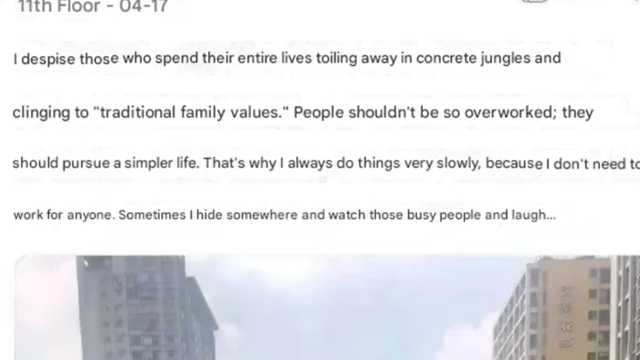
A quote from 'kind traveler' expressing disdain for overworked individuals and his amusement at their rush. [ 00:09:06 ] 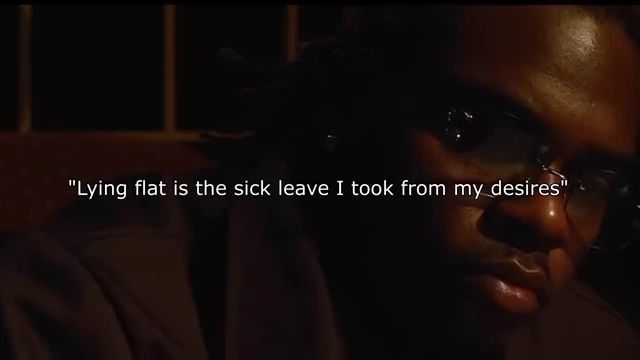
The iconic quote from 'kind traveler': 'Lying flat is the sick leave I took from my desires'. [ 00:09:12 ]
Broader Implications [00:09:19]
The video concludes by emphasizing that these trends are more than mere laziness; they represent a global cultural movement driven by economic pressures and a desire for self-preservation.
- It's a shared sentiment that "life is expensive, sleep is free," and many feel they are not "failing" but participating in a larger cultural shift.
- The movements reflect a deep-seated exhaustion with hyper-productive ideals and a longing for leisure and relaxation in an increasingly demanding world.
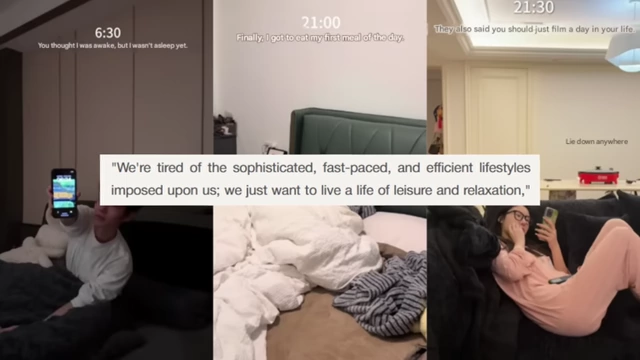
A quote reflecting the sentiment of being 'tired of sophisticated, fast-paced, and efficient lifestyles'. [ 00:02:21 ]