Understanding the Shrinking Middle Class and Widening Wealth Gap in America: Causes, Consequences, and Strategies for Financial Protection
The American middle class is shrinking, decreasing from 61% in 1971 to 51% in 2023, with this trend expected to continue. This is attributed to several key factors:
- Wages not keeping pace with the soaring cost of living for essentials like housing, food, and healthcare.
- The disappearance of middle-income jobs due to globalization, which sent 5.8 million manufacturing jobs overseas, and the growing threat of AI to white-collar positions.
- Inflation, which disproportionately harms the working class who struggle to keep up with rising costs, forcing millions to rely on credit cards and personal loans, accumulating high-interest debt. The speaker predicts future economic crises will lead to more government bailouts and increased money printing, exacerbating inflation and widening the wealth gap. To protect oneself, it is advised to invest in various assets like stocks, gold, or crypto, rather than holding cash, to counter the effects of inflation and grow wealth.
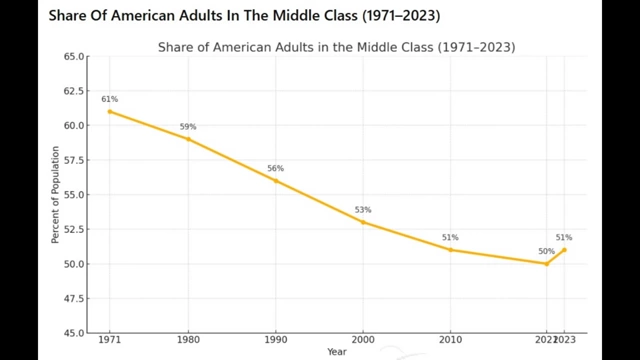
The Shrinking American Middle Class [0:00]
The American middle class is steadily shrinking, a trend evident over the past few decades.
- In 1971, 61% of Americans were considered middle class.
- By 2023, this number had dropped to 51%.
- This downward trend is expected to continue, leading to a country primarily composed of "haves" and "have-nots."
Key Factors Contributing to the Shrinking Middle Class [0:43]
Several critical factors explain the decline of the middle class and the widening wealth gap.
- Stagnant Wages vs. Rising Cost of Living: [0:47]
- The prices of essential goods and services, including housing, food, healthcare, education, insurance, and property taxes, have dramatically increased.
- Wage growth has lagged significantly behind these rising costs, leaving many struggling to maintain their standard of living.
- 95% of workers report that their paychecks do not keep up with the spikes in the cost of living.
- Disappearance of Middle-Income Jobs: [1:08]
- Globalization and offshoring have led to a substantial loss of US jobs; an estimated 5.8 million manufacturing jobs moved overseas in the past two decades.
- The emergence of Artificial Intelligence (AI) now poses a threat to white-collar jobs, mirroring globalization's impact on manufacturing.
- Inflation: [1:34]
- While an ideal scenario would see newly printed money distributed evenly, in reality, the elite class (politicians, donors) receives the majority of this money first.
- An inflationary environment inherently favors the wealthy because their assets (stocks, real estate, private equity, businesses) tend to rise in value with inflation.
- The working class, living paycheck to paycheck, bears the brunt of economic pain as their purchasing power diminishes without corresponding asset growth.
- This dynamic makes it increasingly difficult for the middle and working classes to climb the economic ladder and achieve the "American Dream."
The Impact of Rising Debt [2:52]
To cope with inflation, many Americans are increasingly relying on high-interest debt.
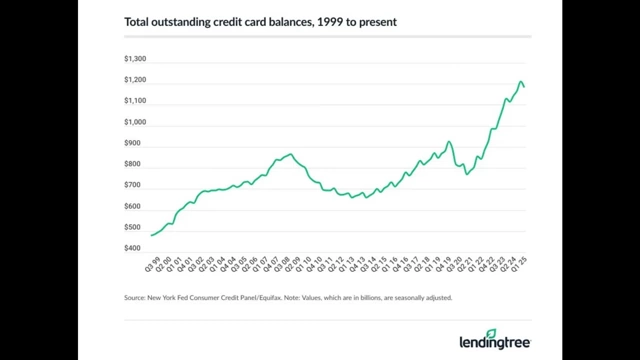
- Total US credit card debt has soared past $1.2 trillion, reaching record highs.
- The average interest rate on credit cards is over 20%.
- This debt is being used to cover the gap created by inflation, pushing many deeper into financial holes they cannot afford to repay.
Future Economic Outlook and Federal Reserve Actions [3:36]
The speaker predicts that inflation will re-accelerate and the wealth gap will continue to widen.
- Government Debt: The US government's debt exceeds $37 trillion.
- Expected Response: The speaker believes the government will resort to more borrowing and money printing to address this debt.
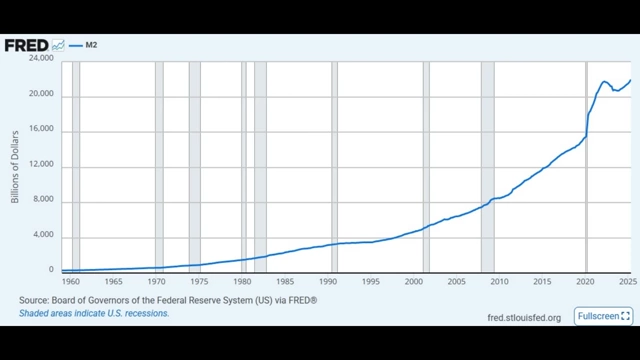
- M2 Money Supply: The M2 money supply, indicating the amount of money in the system, is near record highs and continues to grow, explaining why asset prices like stocks, Bitcoin, and gold are reaching new highs.
- Federal Reserve Balance Sheet:
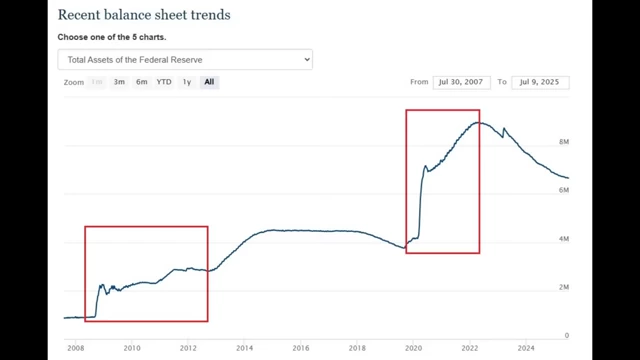
- During the 2008 Great Financial Crisis, the Federal Reserve expanded its balance sheet to buy toxic assets and prevent financial collapse.
- Similarly, during the pandemic, the Fed stepped in to avert an an economic meltdown, significantly increasing its balance sheet.
- The next anticipated crisis is a "sovereign credit crisis," where US government debts (Treasury bonds) could become toxic assets.
- In such a scenario, the Federal Reserve is expected to act as the "buyer of last resort," further expanding its balance sheet, potentially by another $7 trillion, to prevent system collapse.
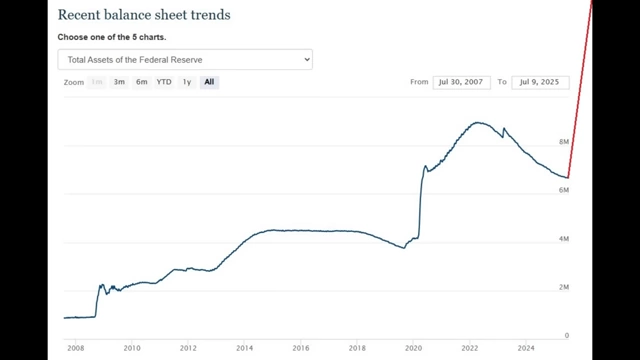
- Historically, the Federal Reserve's balance sheet has roughly doubled after each major crisis, leading to more financial asset inflation and cost-of-living inflation.
Strategies for Personal Financial Protection [7:22]
Given the predicted economic environment, it is crucial to position oneself strategically to protect and grow wealth.
- Investment in Assets:
- With continued money printing and inflation, asset prices are expected to rise, lifting all investments.
- It is advisable to be invested in assets such as:
- Stocks
- Stock market index funds
- Gold
- Silver
- Other precious metals
- Cryptocurrencies
- Diversification across various assets is recommended.
- Avoid Holding Large Amounts of Cash: While some cash is necessary for liquidity, holding large sums means losing purchasing power due to inflation.
- Seize Opportunities: If market dips occur, it's an opportunity to invest and prevent losses from inflation.
Conclusion: The Damaging Effects of Inflation and Widening Wealth Inequality [8:55]
Inflation, coupled with government responses to economic crises, exacerbates wealth inequality, making the rich richer and the poor poorer.
- The share of US household wealth held by the top 0.1% increased from 8.5% in 1990 to 13.8% in Q4 2024.
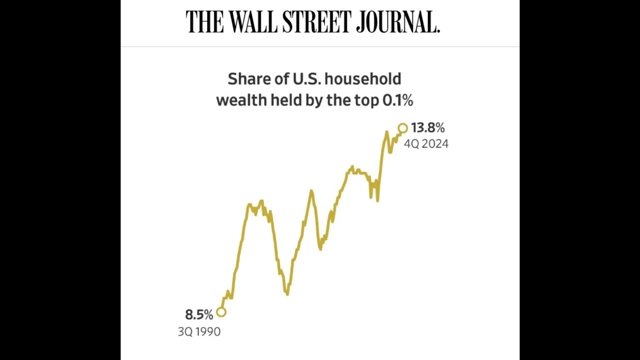
- This widening gap leads to increased societal division, frustration, and instability.
- The continuous cycle of economic crises, government bailouts, money printing, and inflation perpetuates wealth inequality.