The Trust Matrix: Building a Personal Brand for Long-Term Success and Monetization
This video details how to build a successful personal brand by focusing on a "Trust Matrix" composed of three pillars:
- Growth: Develop the "idea to execution muscle" by researching high-performing content structures and articulating ideas that resonate with a broad audience.
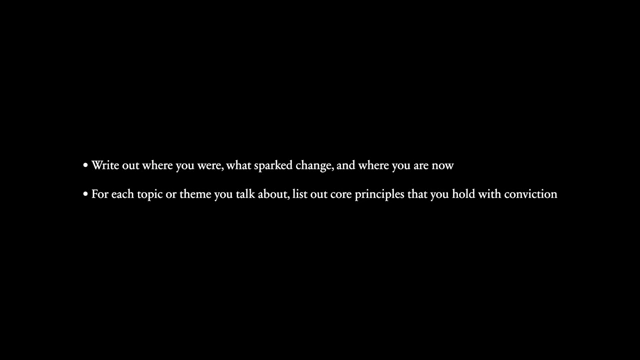
- Authenticity: Foster a deep connection with your audience by sharing your unique story, core beliefs, and allowing for authentic polarization.
- Authority: Establish yourself as an expert through persuasive education, reframing common topics through your unique lens or novel ideas, and crafting content that appeals to a non-interested social media audience by addressing pain points and desired outcomes.
For monetization, beginners should focus on creating low-effort digital products (e.g., templates, short trainings) within a week, charging around $10 to validate the idea before scaling, as a personal brand serves primarily as a traffic and trust mechanism for any business model.
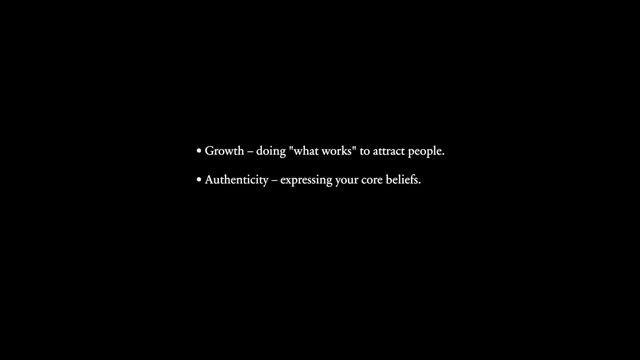
The initial pillars of the Trust Matrix: Growth and Authenticity. [ 00:07:19 ]
I Failed Over And Over [0:00]
The speaker recounts his early failures in various ventures before discovering personal branding.
- Early creative attempts [0:00]
- Started a YouTube channel in college [2016] with a friend, making videos on calisthenics, eating challenges, and talking heads, but it "didn't get anywhere" [0:10].
- Experimented with photography, digital art, and editing, leading to the creation of his handle "The Dankoe" [0:42].
- Burned out from daily digital art edits due to the intense work required [1:13].
- Business failures and debt [1:25]
- Driven by a desire to avoid a traditional job, he tried building three e-commerce stores: dropshipping rave clothes, minimalist wallets, and blue light glasses [1:40].
- Borrowed $2,000 from his dad and, after taking Facebook ads courses, accumulated $8,000 in debt as a college junior [1:49].
- Other short-lived ventures included an SEO agency, a content marketing agency, web design, and Facebook ads [2:06].
- Being $8,000 in debt as a broke college kid was a highly stressful situation [2:16].
Why Personal Branding Saved My Life [2:30]
The speaker explains how his journey led him to embrace personal branding as a solution to his past struggles.
- Transition to web design job and freelancing [2:30]
- Studied programming, a skill attainable without a degree, as a backup plan [2:33].
- Secured a base-level web design job at an agency in Arizona [2:51].
- Used early work hours to pursue personal projects and land freelance web design clients, realizing most desk jobs involve significant procrastination [3:02].
- Discovered that freelance web design felt like another "9 to 5" due to working on client projects he didn't care about [4:08].
- Discovery of the creator economy and personal branding [4:36]
- Realized the power of social media, observing creators posting their knowledge and interests to attract clients without constant outreach [4:36].
- Saw web designers selling digital products that required minimal effort after creation [4:50].
- Despite previous attempts with YouTube and digital art failing to monetize, he accumulated lessons from these experiences and his freelancing work [4:58].
- His accumulated experience led him to become a "writer" and "brand advisor," helping others establish their unique brands [5:16].
Build A Better Personal Brand Than 99% Of People [5:47]
The core philosophy of building a trustworthy personal brand is introduced, emphasizing its role as a trust mechanism.
- The essence of authenticity [5:56]
- A quote from Naval highlights that artists and entrepreneurs are authentic, creating businesses and products aligned with their desires and means.
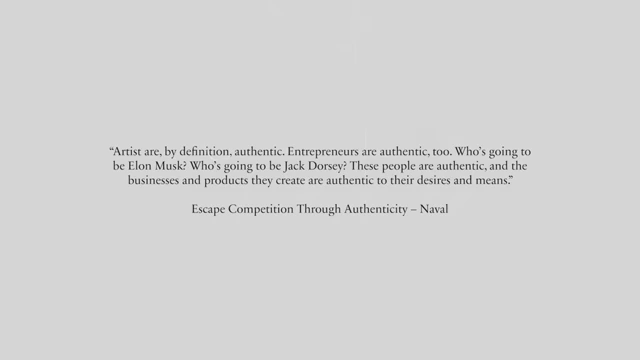
A quote from Naval emphasizing authenticity in artists and entrepreneurs. [ 00:05:59 ]
- A quote from Naval highlights that artists and entrepreneurs are authentic, creating businesses and products aligned with their desires and means.
- The goal of a personal brand [6:18]
- The objective is to convert interests or skills into a "future-proof income source" without compromising personal values or creating another restrictive "9 to 5" [6:18].
- Focus should be on the quality of content and ideas shared consistently over time, as this builds trust, which is the entire business strategy [6:56].
- Money is ultimately a measure of trust in the marketplace [7:05].
- The Trust Matrix [7:10]
- The video introduces the "Trust Matrix," a framework for personal branding composed of three key pillars: Growth, Authenticity, and Authority.
The initial pillars of the Trust Matrix: Growth and Authenticity. [ 00:07:19 ]
- The video introduces the "Trust Matrix," a framework for personal branding composed of three key pillars: Growth, Authenticity, and Authority.
Growth – Build Your Idea To Execution Muscle [7:49]
This pillar focuses on generating engaging content that attracts and expands your audience.
- Identifying high-potential ideas [7:56]
- Successful creators quickly capture ideas that lie at the intersection of "performance" (engaging and likely to do well) and "excitement" (genuine personal interest) [7:56].
- Ideas often arise during walks, listening to audiobooks/videos, reading "heavy content," or conversations [8:06].
- Performance: Understanding how to articulate ideas in an engaging way, with the potential for high engagement [8:18].
- Excitement: Having a genuine interest in the idea and a desire to articulate it in a unique way, viewing the brand as a collection of these ideas [8:26].
- The inability to articulate or consume information at the "edge of understanding" are common reasons for struggling with ideas [9:03].
- Practicing articulation for growth [9:11]
- Use "high performing post structures" as training wheels for articulation [9:11].
- Practical steps:
- Identify 5-10 writers/creators admired for their articulation [9:30].
- Spend an hour daily for a week scrolling their social accounts to find "anomalies" (posts with 2x engagement or more) [9:36].
- Screenshot or note down these high-performing posts [9:47].
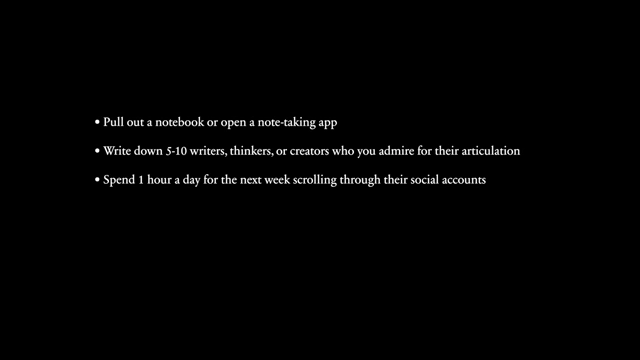
Practical steps for identifying high-performing content structures for audience growth. [ 00:09:39 ]
- Shift from consuming content as a passive viewer to a proactive researcher for your own ideas [9:50].
- Analyzing successful posts:
- Breakdown why these 20-30 posts worked well, identifying 3-5 bullet points under each [10:04].
- Consider psychological patterns used, attention-capturing techniques, and perceived value [10:29].
- Utilize an AI prompt to perform a comprehensive analysis of a social post, including structure, word choice, psychological tactics, and a step-by-step replication guide [10:36].
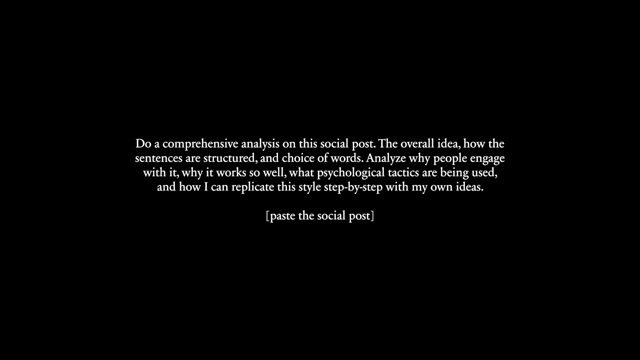
An AI prompt designed to analyze social media posts and guide replication. [ 00:10:38 ]
- Growth as a byproduct [11:06]
Authenticity – Core Beliefs Attract The Right People [11:43]
This pillar emphasizes the importance of personal connection and unique perspective in branding.
- The power of personal connection [11:54]
- People follow individuals who share ideas, not just the ideas themselves (e.g., James Clear vs. a random person tweeting "Habits are good for you") [11:54].
- Existing knowledge of a creator's story and philosophy influences how their content is perceived, boosting engagement [12:11].
- Engagement depends on both idea quality and the creator's "time spent in the game" [13:19].
- Components of authenticity [13:36]
- Time under attention: The more time people spend with your long-form content (articles, books, videos), the more they interpret your short-form posts through the lens of your broader ideas [12:42].
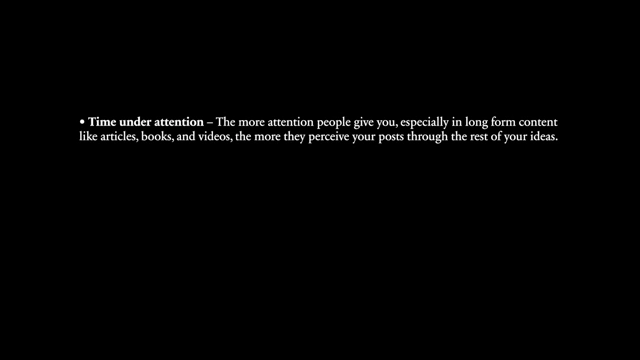
The first component of authenticity: Time under attention. [ 00:12:48 ] - Alignment of values: When your audience understands your background, journey, and core beliefs, they form a deeper relationship with your entire body of work [13:36].
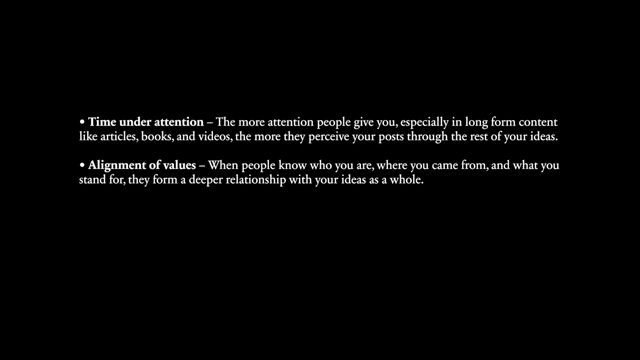
The second component of authenticity: Alignment of values. [ 00:13:38 ] - Authentic polarization: Being genuinely divisive on certain topics means you're liked intensely by some and disliked by others, fostering strong agreement from your core audience [13:46].
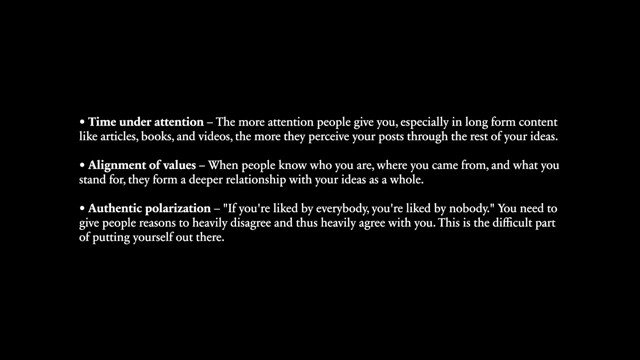
The third component of authenticity: Authentic polarization. [ 00:13:48 ]
- Time under attention: The more time people spend with your long-form content (articles, books, videos), the more they interpret your short-form posts through the lens of your broader ideas [12:42].
- Cultivating your unique voice [14:31]
- The creator economy is not easily saturated because everyone expresses ideas through their distinct "lens" and story [14:31].
- Your unique story makes even common topics unique when presented by you [15:35].
- Customers are more likely to buy from a creator they trust than from a random brand selling the same product [14:45].
- Illustrating your story and beliefs [15:06]
- Consistently integrate your story and core beliefs into your content, both as dedicated topics and as a way of reframing existing ideas [15:06].
- Practical steps:
- Actively reflect on and dig up unconscious beliefs over time, possibly by consuming content that triggers your own thoughts [16:35].
- Utilize AI prompts to help extract and organize your story and beliefs into a coherent document [16:46].
Authority – Persuasive Education Changes Behavior [17:31]
This pillar focuses on how to teach and persuade effectively in a crowded online space.
- The educational nature of most creator businesses [17:39]
- Most successful creators build businesses around education, teaching their skills and interests, aiming for "positive impact and meaningful work" [17:39].
- The challenge for beginners is that many others already teach similar topics, leading to questions like "Why would they learn from you?" [17:53].
- Solutions for building authority [18:10]
- Teach through a new lens:
- Reframe existing topics using your personal story or unique core beliefs [18:12].
- Introduce a topic through a "novel idea" or a unique perspective, making it more compelling and distinct [18:30]. For example, discussing personal branding through Naval's idea that "ideas are the new oil" and this generation gets rich in "idea space, not physical space" [18:41].
- Persuade the non-interested:
- Recognize that most social media users are not actively seeking to learn; they are discovering content [19:10].
- Frame your ideas broadly and appealingly to capture attention from a wide audience, rather than diving immediately into specific instructions [19:38].
- Start your content by addressing common "pain points" or "desired outcomes" to immediately hook potential viewers [20:31].
- For instance, begin with "If you hate the thought of building someone else's dreams for the rest of your life, start a personal brand," then elaborate on the benefits [20:47].

A strategy for persuading non-interested audiences by focusing on desires and pain points. [ 00:20:36 ] - Understanding the "five levels of awareness in marketing" is crucial for tailoring content to different audience states [19:54].
- Teach through a new lens:
The Best Way To Monetize As A Beginner [21:06]
This section addresses practical monetization strategies for new personal brands.
- Personal brand as a trust and traffic mechanism [21:13]
- Any monetization method can work for a personal brand, including ebooks, templates, coaching, paid newsletters, sponsorships, or selling physical products [21:13].
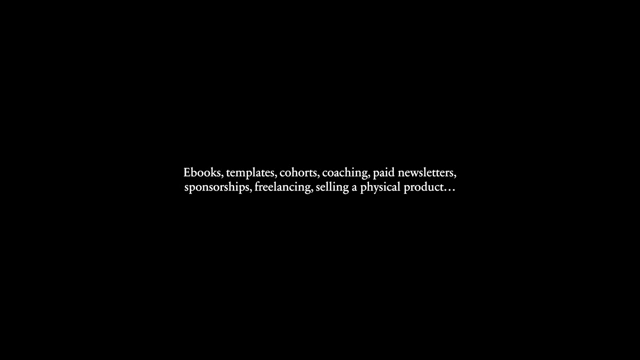
Various monetization options available for creators with a personal brand. [ 00:21:16 ] - A personal brand is not a business model itself but rather a powerful "traffic source" and "trust mechanism" for any business [21:23].
- A trustworthy personal brand enables you to sell virtually anything, from coffee to software, because the audience already trusts you [21:35].
- Unlike traditional businesses that rely on direct response marketing to build trust quickly, a personal brand's content pre-sells the product, reducing the need for aggressive or unethical sales tactics [21:41].
- Any monetization method can work for a personal brand, including ebooks, templates, coaching, paid newsletters, sponsorships, or selling physical products [21:13].
- Launching your first product [22:23]
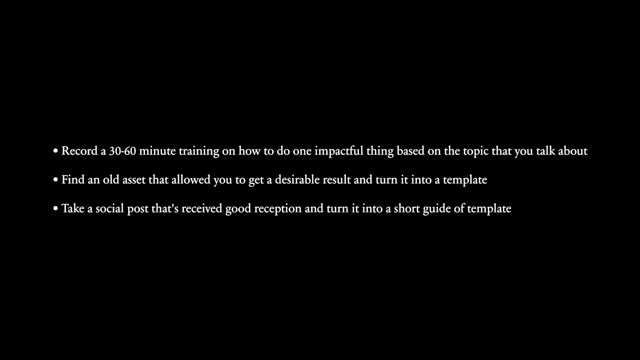
- Your first product should be built quickly, ideally within a week, by leveraging existing assets or simple ideas [22:23].
- Examples of beginner products:
- The goal is to validate the idea, not to earn significant income initially; start by charging a low price, such as $10 [23:43].
- If the product achieves a conversion rate of 2.5% or higher, then consider investing more time to develop a more comprehensive version [23:54]. This strategy prevents wasting effort on products nobody wants.