The Impact of Resistance Profile on Muscle Growth: A Comprehensive MRI Study on Stretch-Mediated Hypertrophy
A $40,000 MRI study led by Jeremy Ethier investigated the popular belief that training a muscle in its stretched position (stretch-mediated hypertrophy) is superior for muscle growth. Using custom machines, the study compared "stretch-focused" versus "squeeze-focused" training for the chest, glutes, side delts, and rear delts in 20 participants over 10 weeks. Utilizing a "within-subjects" design, one side of each person's body did stretch-focused training, and the other did squeeze-focused. The results revealed no significant difference in muscle growth between the two methods for these specific muscles. This indicates that for many muscles, the resistance profile (where the exercise is hardest) isn't the primary factor, as long as full range of motion and some tension in the stretched position are maintained. However, bi-articulate muscles (like hamstrings, quads, triceps) and calves are exceptions that still benefit from being loaded in a deeper stretch. The study concludes that consistent hard training with full range of motion, regardless of resistance profile, allows a wide range of exercises to be effective for growth.
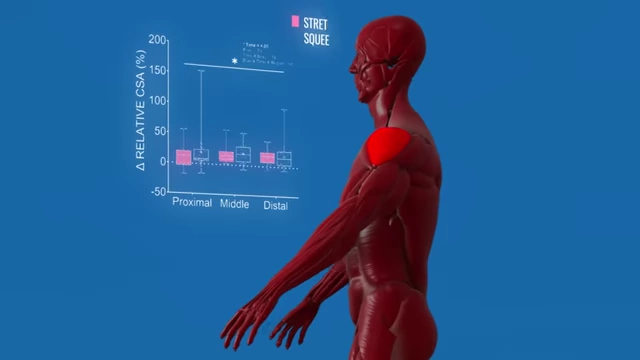
The Stretch-Mediated Hypertrophy Trend [0:00]
- The fitness community has become fixated on lengthened muscle training, believing it's the fastest way to gain muscle.
- This belief stems from early research and comparative studies.
- Early research in the 1970s involved hanging weights from chicken wings, which resulted in a 170% increase in lat muscle growth from stretch alone.
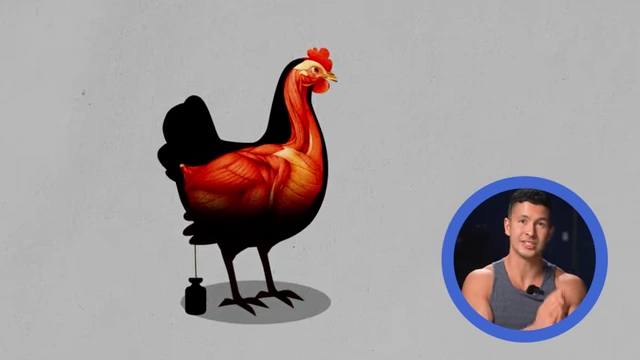
Chicken lats grew 170% from stretch alone in a 1970s experiment. [ 00:01:30 ] - Human studies on extreme loaded stretching for the chest and calves showed almost as much growth as normal strength training.
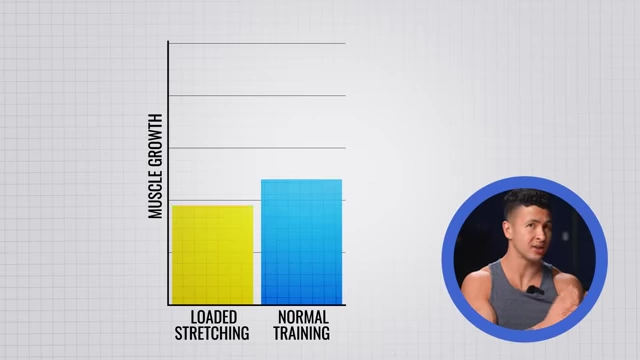
Graph comparing muscle growth from loaded stretching versus normal training, showing significant growth from stretching. [ 00:01:49 ]
- Early research in the 1970s involved hanging weights from chicken wings, which resulted in a 170% increase in lat muscle growth from stretch alone.
- Comparative exercises showed deeper stretches led to more growth.
- Overhead triceps extensions (deeper stretch for long head) led to 1.4 times more growth than triceps pushdowns.
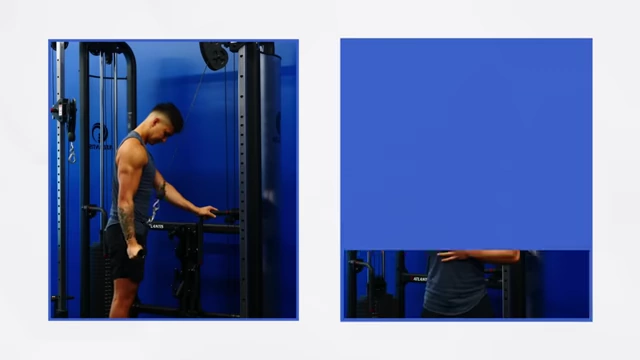
Comparison of tricep pushdowns versus overhead tricep extensions, showing the overhead extension places the tricep long head in a deeper stretch. [ 00:02:08 ] 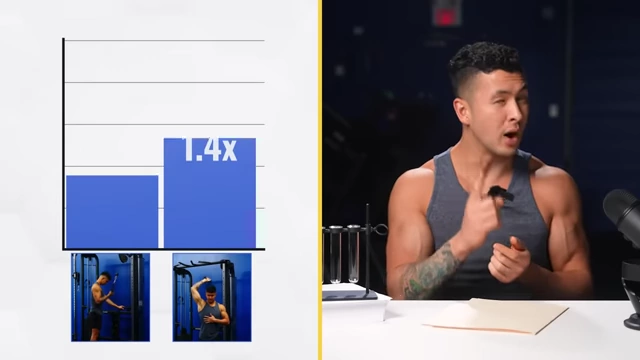
Bar chart showing overhead triceps extensions led to 1.4 times more growth compared to tricep pushdowns. [ 00:02:15 ] - Leg extensions challenged in a more stretched position (leg more bent) resulted in up to twice as much quad growth.

Comparison of leg extension positions, showing how a more bent leg challenges the quads in a more stretched position. [ 00:02:38 ] - Comparing bottom-half leg extensions to top-half showed more growth from the stretch-focused bottom half.
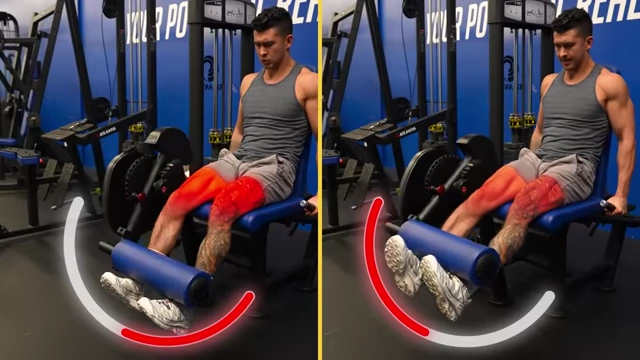
Comparison of bottom-half versus top-half leg extensions, indicating the importance of the stretched position for quad growth. [ 00:02:52 ]
- Overhead triceps extensions (deeper stretch for long head) led to 1.4 times more growth than triceps pushdowns.
- These findings fueled the trend, suggesting stretch-focused training was the answer for faster gains and optimized exercises.
Critical Gaps in Existing Research [3:11]
- Despite numerous studies, three significant gaps were identified in the research:
- 1. Limited Scope of Muscles Studied: [3:17]
- Most studies focused on biceps, quads, or calves because they are easier and cheaper to test.
- These muscles do not stretch or behave identically to all other muscle groups.
- Certain muscles, particularly bi-articulate ones, may respond uniquely to stretch.
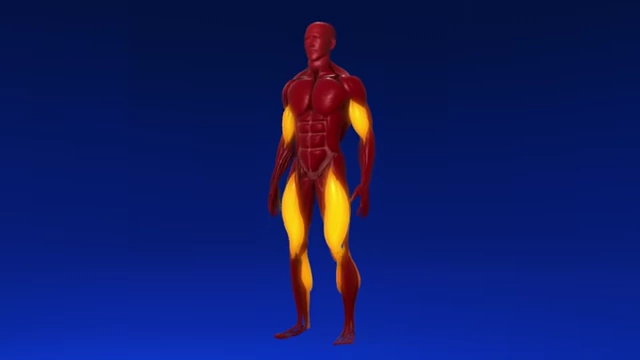
Anatomical illustration highlighting muscles commonly studied for stretch, such as quads, calves, and biceps. [ 00:05:04 ]
- 2. Confounding Variables in Exercise Comparisons: [3:42]
- Many studies compared entirely different exercises (e.g., preacher curls vs. incline curls).
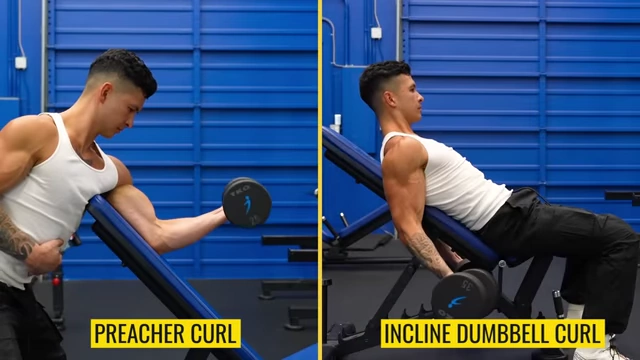
Past research often compared different exercises like preacher curls vs. incline curls, making it hard to isolate the effect of stretch from other variables like stability. [ 00:03:49 ] - The "better" exercises often also provide increased stability, making it difficult to determine if growth came from the stretch, stability, or both.
- Many studies compared entirely different exercises (e.g., preacher curls vs. incline curls).
- 3. Limitations of Measurement Techniques: [4:04]
- Most studies used ultrasound, which is fast and cheap but has limits.
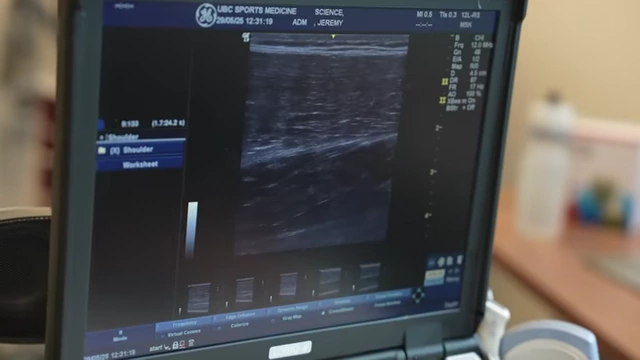
Ultrasound screen showing a 2D snapshot of muscle thickness, illustrating the common but limited measurement technique in past studies. [ 00:04:08 ] - Ultrasound provides only a snapshot of muscle thickness at specific points.
- Muscles do not grow evenly from top to bottom, making single-point measurements problematic for understanding stretch effects across the entire muscle.
- Most studies used ultrasound, which is fast and cheap but has limits.
- 1. Limited Scope of Muscles Studied: [3:17]
The New Comprehensive MRI Study [4:40]
- To address these gaps, a new study was designed and executed.
- Research Team and Funding: [4:46]
- Collaborated with a university and experts like Bret Contreras and Kassem Hanson.
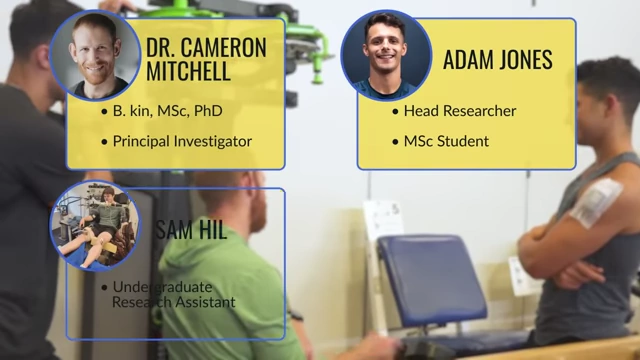
Key research team members including Dr. Cameron Mitchell, Adam Jones, and Sam Hil, indicating their roles. [ 00:04:47 ] - Jeremy Ethier with Bret Contreras, a key collaborator who helped fund the MRI expenses.
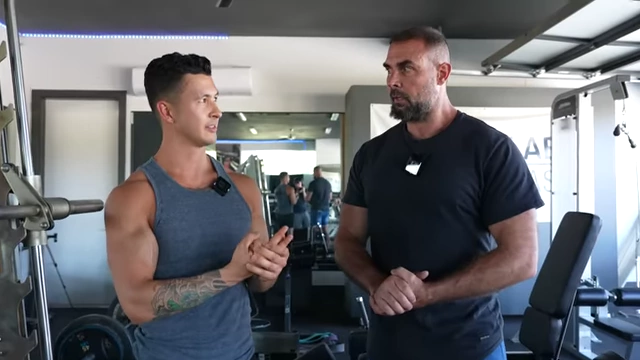
Jeremy Ethier with Bret Contreras, also known as 'the glute guy', a collaborator who helped fund the study's MRI expenses. [ 00:04:51 ] - Kassem Hansen, a biomechanics expert, also contributed to the study plan.
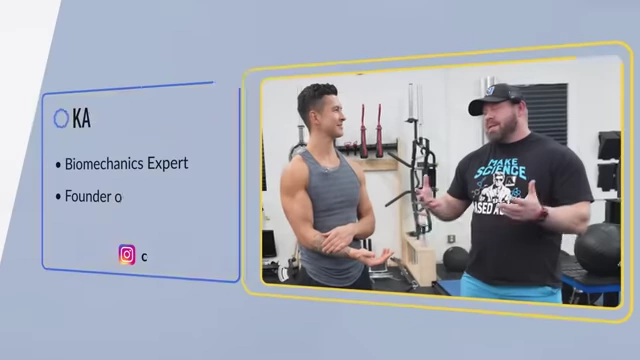
Biomechanics expert Kassem Hansen, another key collaborator in the study's design. [ 00:04:54 ]
- Collaborated with a university and experts like Bret Contreras and Kassem Hanson.
- Selection of Muscles and Measurement: [4:55]
- Focused on muscles rarely studied for stretch: chest, glutes, side delts, and rear delts.
- Used MRI (Magnetic Resonance Imaging) as the "gold standard" for precise, full 3D muscle volume measurement.
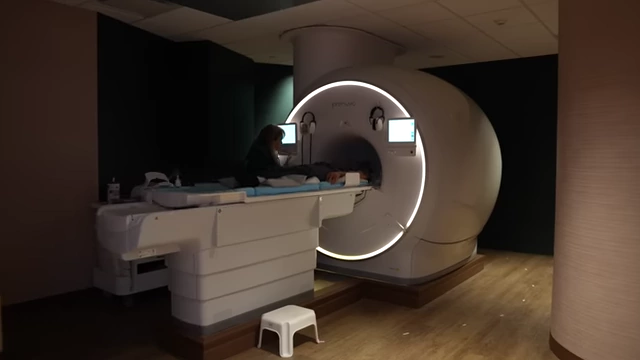
An MRI machine used to capture precise 3D images of muscles, serving as the gold standard for measurement. [ 00:05:16 ] 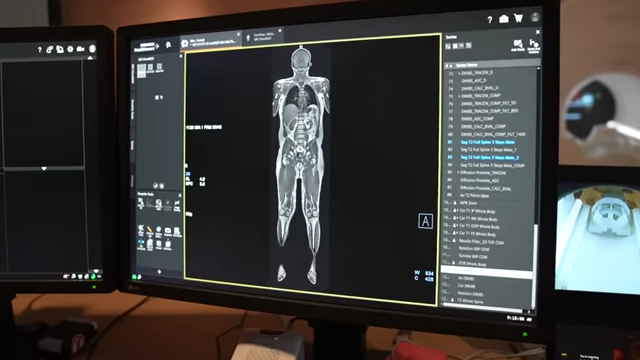
An MRI scan displayed on a monitor, showing a detailed 3D model of the human body for muscle analysis. [ 00:05:19 ]
- Custom Equipment for Controlled Comparisons: [6:19]
- Prime Fitness USA provided custom machines for lateral raises, hip extensions, pec flyes, and reverse flyes.
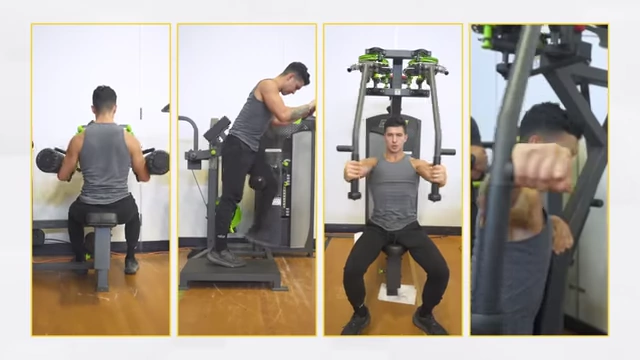
Custom-built machines provided by Prime Fitness USA for various exercises like lateral raises, hip extensions, pec flyes, and reverse flyes. [ 00:06:29 ] - These machines allowed instant adjustment of the resistance profile with a knob, making the exercise hardest either in the stretched position or the squeezed position.
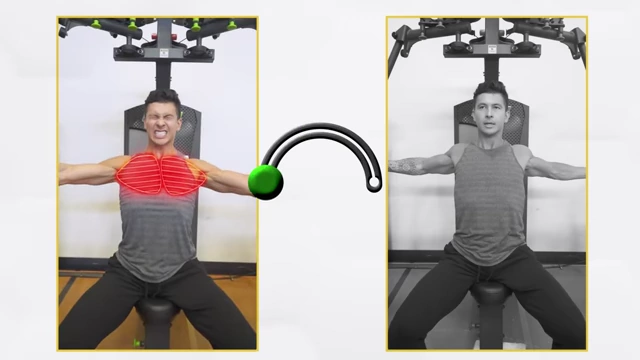
A pec fly machine illustrating how a simple knob adjusts the resistance profile to make the exercise hardest in either the stretched or squeezed position. [ 00:06:42 ] - This ensured that the exercise, volume, and range of motion remained identical, isolating the resistance profile as the sole variable.
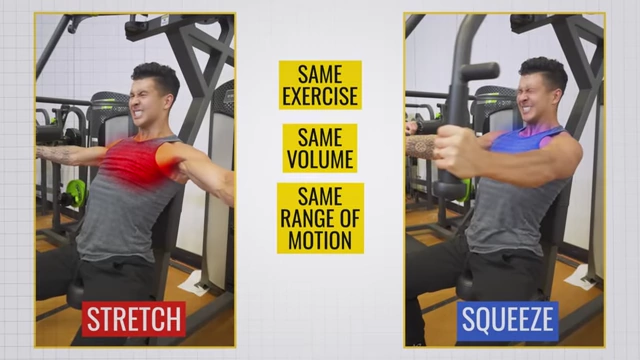
Diagram showing the experimental setup comparing "stretch" and "squeeze" conditions for the same exercise, volume, and range of motion. [ 00:06:59 ]
- Prime Fitness USA provided custom machines for lateral raises, hip extensions, pec flyes, and reverse flyes.
- Study Design and Execution: [7:02]
- 20 male and female participants were recruited.
- A "within-subjects" design was used, where one side of each participant's body performed stretch-focused training, and the other side did squeeze-focused training. This significantly enhanced statistical power, similar to having over 40 subjects.
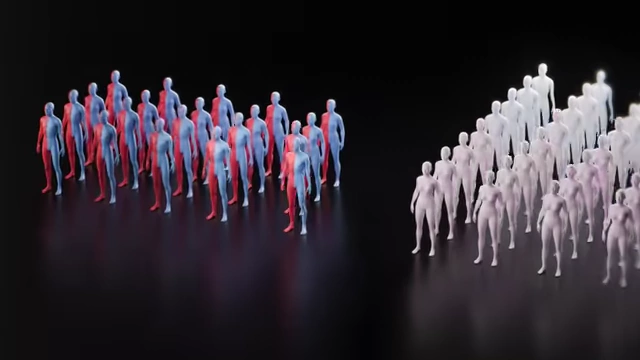
A visual representation of the "within-subjects" study design, comparing training methods on different sides of the same participant's body, effectively doubling statistical power. [ 00:07:29 ] - The analysis was blinded, meaning MRI analysts and statisticians were unaware of which side received which training.
- MRI data analysis involved manually outlining and measuring every single muscle image, a process that took over 200 hours.
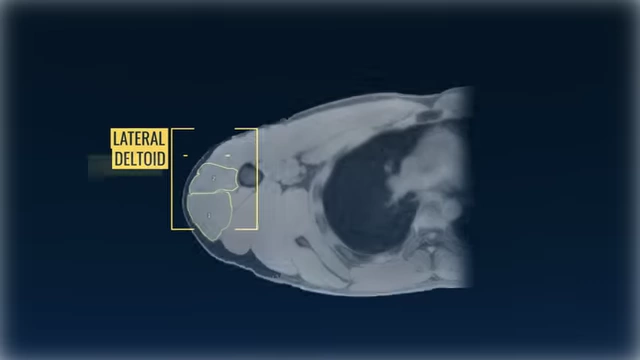
An MRI scan of a lateral deltoid muscle, with specific regions outlined for precise measurement and analysis. [ 00:08:45 ] - The study achieved 97% adherence over 10 weeks, with participants experiencing an average of 20% muscle growth.
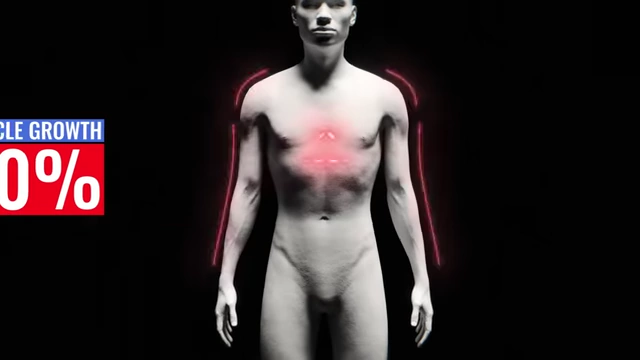
Graphic indicating that participants achieved approximately 20% muscle growth over the 10-week study period. [ 00:08:57 ]
- Research Team and Funding: [4:46]
Key Study Results: Stretch vs. Squeeze [9:16]
- The findings were surprising to the researchers.
- Equal Muscle Growth: [9:30]
- For the chest, side delts, rear delts, and glutes, both the stretch-focused and squeeze-focused training sides showed the exact same amount of muscle growth.
- No trends were observed suggesting one side performed better than the other.
Graph illustrating similar relative muscle cross-sectional area (CSA) growth for both stretch-focused and squeeze-focused training in the side delts. [ 00:09:38 ] 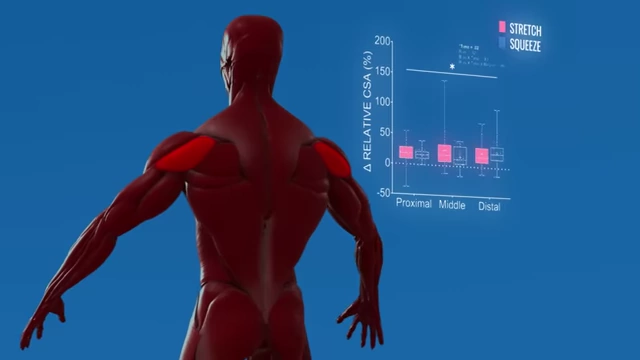
Graph illustrating similar relative muscle cross-sectional area (CSA) growth for both stretch-focused and squeeze-focused training in the rear delts. [ 00:09:43 ] - Growth was consistently equal when measured at three different points along each muscle and for total muscle volume.
- Equal Muscle Growth: [9:30]
Interpreting the Findings: Understanding "Stretch" [10:19]
- The study provided clarity by breaking down the concept of "stretch" into three distinct ideas:
- 1. Degree of Stretch: [10:41]
- Refers to how much a muscle can stretch.
- Bi-articulate muscles (crossing two joints), such as hamstrings, quads, calves, and triceps, can stretch further than most other muscles.
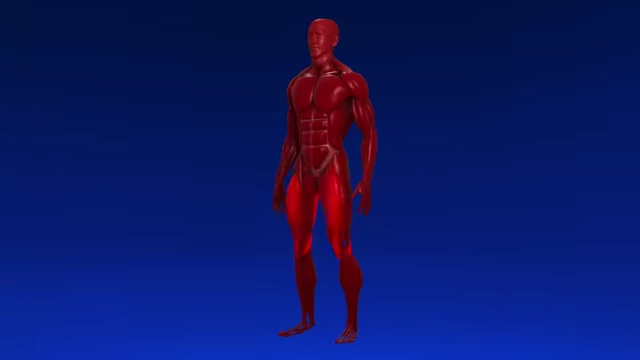
Anatomical illustration highlighting bi-articulate muscles like hamstrings, quads, calves, and triceps, which cross two joints and can stretch further. [ 00:10:49 ] - Studies consistently show that exercises that stretch these bi-articulate muscles more lead to faster growth.
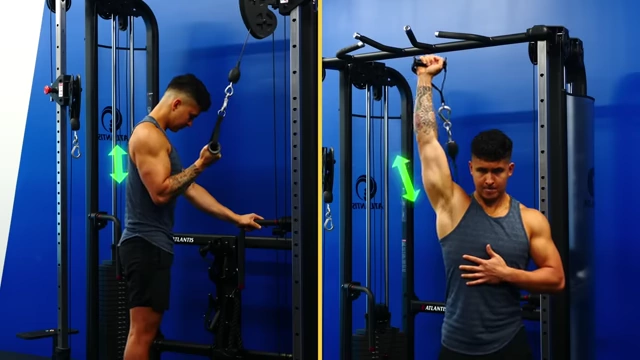
Comparison of tricep exercises showing how overhead extensions provide a greater degree of stretch for the triceps compared to tricep pushdowns. [ 00:10:58 ] 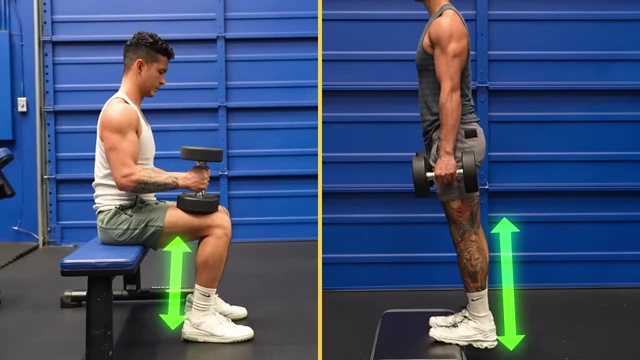
Comparison of seated versus standing calf raises, showing how standing calf raises allow for a greater degree of stretch in the calves. [ 00:11:03 ]
- 2. Range of Motion (ROM): [11:15]
- Refers to how deep one goes on each repetition.
- The stretched position (often the bottom of a movement) is crucial for growth.
- Cutting repetitions short limits gains.
- This study’s results do not contradict the importance of full ROM, as both training groups used full range of motion.
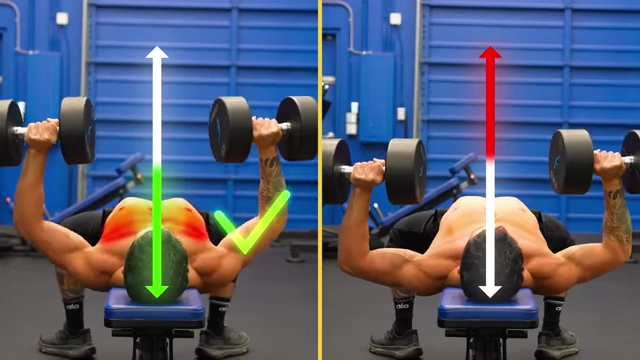
Illustration comparing full range of motion versus partial range of motion in a dumbbell press, emphasizing the importance of reaching the stretched position for optimal muscle growth. [ 00:11:27 ]
- 3. Resistance Profile: [11:45]
- This is the specific aspect tested by the new study.
- It refers to whether a lift is hardest in the stretched position or the squeezed position.
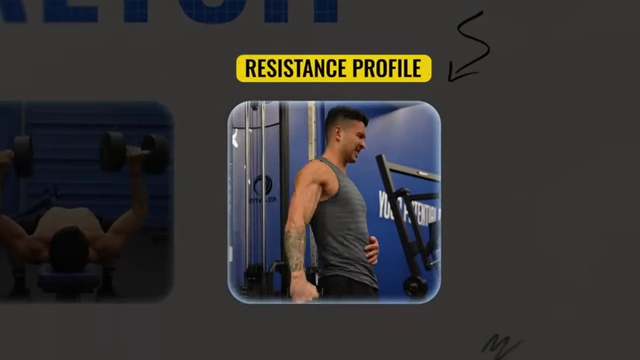
Graphic defining "resistance profile" in training, referring to whether an exercise is hardest in the stretched (bottom) or squeezed (top) position. [ 00:11:49 ] - For the muscles tested (chest, glutes, side delts, rear delts), making an exercise hardest in the stretch did not lead to more growth.
- As long as a full range of motion is used and there is at least some tension in the stretched position, it appears not to matter if the hardest part of the lift is at the bottom (stretch) or the top (squeeze).
- This aligns with another recent study comparing cable and dumbbell lateral raises, which showed similar shoulder growth despite different resistance profiles.
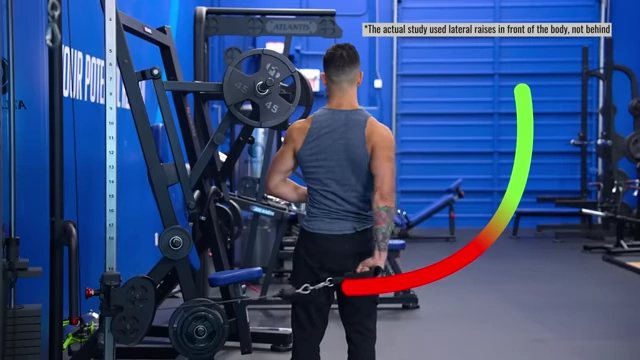
A cable lateral raise illustrating the resistance curve, showing that tension can be maintained in the stretched position. [ 00:12:22 ] 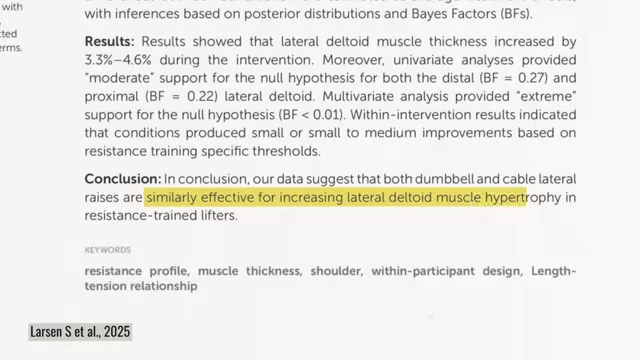
Study conclusion stating that both dumbbell and cable lateral raises are similarly effective for increasing lateral deltoid muscle hypertrophy. [ 00:12:26 ]
- 1. Degree of Stretch: [10:41]
Study Limitations and Specific Muscle Exceptions [12:37]
- Untrained Subjects: [12:39]
- The study used untrained participants, who tend to experience growth from various stimuli, potentially obscuring smaller differences between training methods.
- However, most related research also uses untrained participants and has still found clear differences.
- For well-trained lifters, introducing a new challenge (e.g., switching from dumbbell to cable lateral raises) can still stimulate growth, possibly due to novelty or increased effort.
- Muscle-Specific Responses: [13:39]
- Calves: These muscles are a notable exception, responding exceptionally well to stretch-focused training. One study even found that half-reps performed only in the stretched bottom position led to more growth than full range of motion reps.
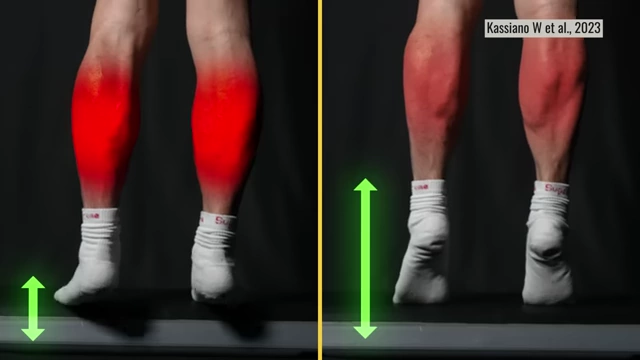
Comparison of half-reps focused on the stretched position versus full range of motion reps for calf raises, showing greater growth from the stretch-focused half-reps. [ 00:13:57 ] - Bi-articulate Muscles: Muscles like the quads, hamstrings, and triceps (which cross two joints) consistently benefit from being loaded in a deeper stretched position.
- Recommended Exercises for Bi-articulate Muscles:
- Lean-back leg extensions for quads.
- Seated leg curls for hamstrings.
- Standing calf raises for calves.
- Overhead triceps extensions for triceps.
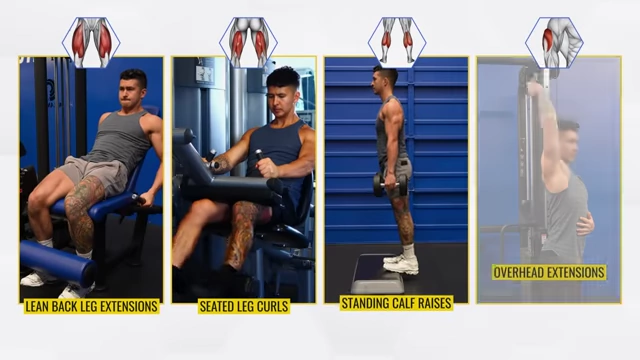
A grid displaying recommended exercises that maximize stretch for bi-articulate muscles: lean-back leg extensions, seated leg curls, standing calf raises, and overhead triceps extensions. [ 00:14:50 ]
- Lats: The lats might also be an exception, but more data is needed.
- Calves: These muscles are a notable exception, responding exceptionally well to stretch-focused training. One study even found that half-reps performed only in the stretched bottom position led to more growth than full range of motion reps.
Overall Takeaways for Muscle Growth [14:04]
- The study indicates that if future research supports these findings, a broader array of exercises can be highly effective for muscle growth.
- Key Principles:
- Training hard and consistently.
- Using a full range of motion in exercises.
- Ensuring there's at least some tension in the stretched position.
- Flexibility in Exercise Selection: This means exercises traditionally considered "squeeze-focused," like hip thrusts for glutes, reverse dumbbell flyes for rear delts, and chest flyes, can be just as effective as their "stretch-focused" counterparts.
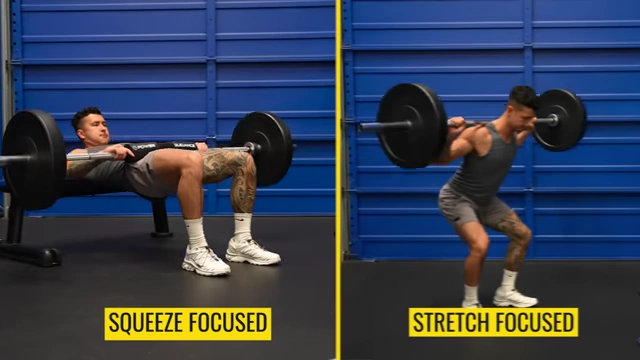
Comparison of a squeeze-focused hip thrust versus a stretch-focused squat, illustrating that both can be effective for glute growth. [ 00:14:24 ] 
Comparison of a squeeze-focused reverse dumbbell fly versus a stretch-focused cable reverse fly, showing both can be effective for rear delt growth. [ 00:14:27 ] 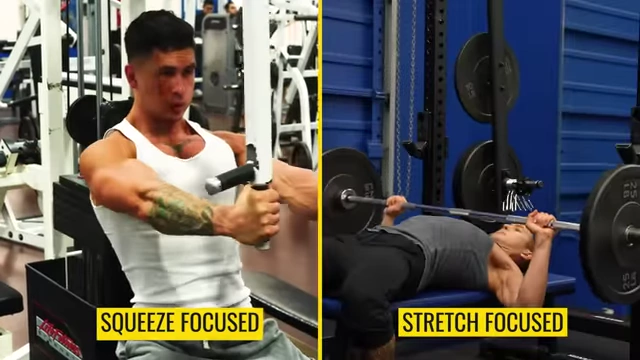
Comparison of a squeeze-focused chest fly versus a stretch-focused bench press, suggesting both can be effective for chest growth. [ 00:14:31 ] - This provides greater flexibility for individuals working around injuries, with limited equipment, or seeking easier recovery.

Graphic highlighting situations where exercise flexibility is beneficial, such as working around injuries or with limited equipment. [ 00:14:36 ] - Jeremy Ethier discusses the study results with fellow science enthusiast Jeff Nippard, highlighting the study's contribution to refining current understanding in the fitness community.

Jeremy Ethier discussing the study results with Jeff Nippard, an expert in the field. [ 00:15:08 ] - The scientific process involves continuous refinement and clarification of knowledge, not "flip-flopping" on stances.