Effective GLP-1 Dosing: The 5 Scenarios for Sustainable Weight Loss and Maintenance
This video explains five critical scenarios for adjusting GLP-1 medication doses (Semaglutide and Tirzepatide) to ensure long-term success and avoid the common "escalator" dosing myth.
- 1. Stay: Maintain your dose if you're in the "sweet spot," experiencing quiet food chatter, hitting protein targets, stable weight, good energy, and calm side effects. Avoid increasing for minor plateaus.
- 2. Increase: Only raise your dose if food chatter genuinely returns and disrupts your adherence to the protocol, not just for a weight loss plateau. Always check foundational health habits first.
- 3. Decrease: Consider lowering your dose if experiencing "oversuppression" (food repulsion, constant exhaustion, brain fog, feeling cold, weight stall despite low intake), often called "battery saving mode" or "zombie mode." This can occur as metabolic health improves.
- 4. Taper: Begin tapering when ready for maintenance, indicated by quiet food chatter, natural protein intake, and consistent resistance training. The goal is often a "microdose" for long-term management, not necessarily complete cessation.
- 5. Reset: If on a high dose with no results due to receptor desensitization, implement a gradual taper to zero, take a 3-week break for receptor resensitization, then restart at the lowest effective dose.
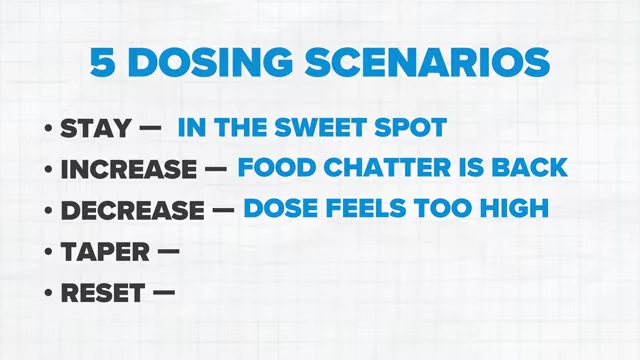
Five GLP-1 Dosing Scenarios [ 00:15:43 ]
Intro [0:00]
The video addresses the common issue of weight regain after stopping GLP-1 medications, affecting two-thirds of patients within a year. This failure is often attributed to incorrect dose changes based on short-term weight fluctuations rather than actual physiological signals. Most doctors follow an "escalator" dosing approach, steadily increasing the dose until the maximum is reached or results are seen, which can lead to negative consequences.


The "Escalator" Dosing Myth Explained [1:13]
The standard GLP-1 dosing protocol, often seen as a continuous upward escalation, is problematic.

- Rapid Escalation: Patients are typically started at a low dose (e.g., 2.5 mg Tirzepatide) and systematically increased every four weeks, sometimes skipping doses, leading to max doses within just a few months.
- Clinical Trial Design vs. Long-Term Success: This protocol originated from clinical trials designed to demonstrate maximum weight loss and safety data for FDA approval within a specific study window, not for patients' long-term sustainable success.
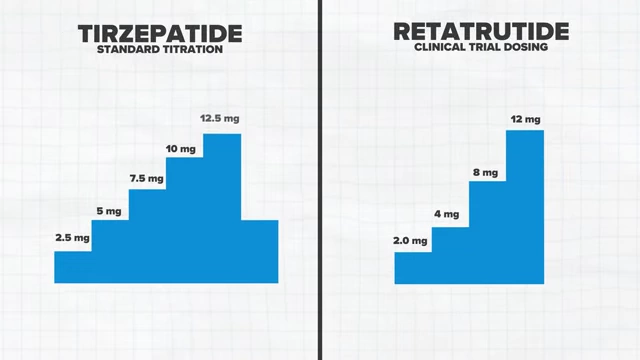
Comparison of standard titration for Tirzepatide and clinical trial dosing for Retatrutide [ 00:02:40 ] - Consequences: This approach leads to patients hitting higher doses, experiencing stalls, feeling terrible, and losing precious muscle mass.
Why You Are Losing Muscle (Not Just Fat) [2:43]
Rapidly increasing GLP-1 doses without addressing metabolic foundations can be detrimental.
- Lack of Foundational Support: Without sufficient protein intake, proper resistance training, adequate hydration, electrolyte balance, stress management, and quality sleep, pushing higher doses leads to significant muscle loss.
- Metabolic Slowdown: Muscle is the primary engine for calorie burning. Losing muscle mass slows metabolism, making it harder to maintain weight loss.
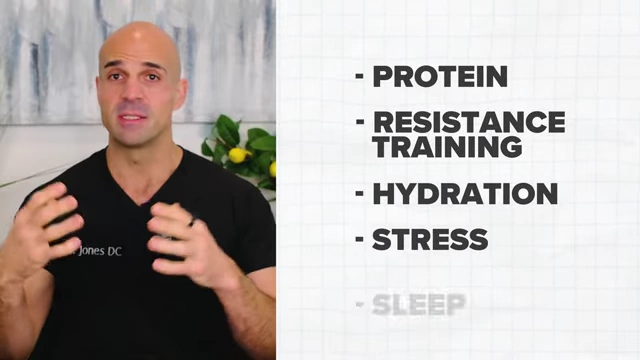
Checklist of metabolic foundation elements: protein, resistance training, hydration, stress, sleep [ 00:02:58 ] 
Bar chart illustrating the impact of muscle loss on daily calorie burn [ 00:03:09 ] - Rebound Effect: When medication is reduced or stopped, hunger often returns intensely. With a weakened metabolic engine due to muscle loss, weight regain becomes highly probable. This is a "timing failure," not a medication failure.
Scenario 1: STAY (Finding Your Sweet Spot) [3:56]
The first and most overlooked scenario is to maintain the current dose, especially when in the "sweet spot."
- The "Sweet Spot": This is defined as the lowest effective dose where the medication is working efficiently. The goal is to remain at this dose for as long as possible.
- Signs You're in the Sweet Spot:
- Food chatter is quiet and manageable, not entirely absent.
- You can easily meet your protein targets without difficulty.
- Weight is consistently trending down or is stable if in maintenance.
- Energy levels are good.
- Side effects have subsided after the initial adjustment period.
- You make healthy food choices without feeling constant internal struggle.

Checklist of indicators for being in the "sweet spot" [ 00:04:39 ]
- Avoid Premature Increases: A temporary slowdown in weight loss (a "plateau" of a few weeks) is not necessarily a signal to increase the dose. It's crucial to first check foundational health habits.
- Protect the Lowest Effective Dose: Each dose increase consumes "ammunition" that might be needed later and can lead to collateral damage (e.g., muscle loss).
Scenario 2: INCREASE (When Food Chatter Returns) [5:45]
Dose increases should be driven by specific signals, primarily the return of significant food chatter.
- Primary Signal for Increase: Food chatter genuinely returns and actively disrupts the ability to follow the established protocol. This means weeks of struggling with meals, obsessing over food, feeling like the medication is no longer effective, and being unable to adhere to the plan.

A person looking wistfully at a plate of donuts and pastries, indicating strong food chatter [ 00:06:07 ] - Distinguishing from Plateaus: A stalled scale (plateau) without disruptive food chatter is not a reason to increase the dose. This indicates a need to review foundational habits, not medication.
- Check the Basics Before Increasing [7:08]: Before requesting a higher dose, rigorously assess and optimize basic health parameters:
- Protein: Are you consistently tracking and hitting your protein targets?
- Sleep: Are you getting quality rest?
- Stress: Is cortisol under control?
- Hydration + Electrolytes: Are you adequately hydrated with sufficient electrolytes?
- Resistance Training: Are you consistently engaging in resistance training?

Checklist of basic factors to check before increasing dosage [ 00:05:09 ]
- Our Clinic's Approach: In a clinical setting, an increase is considered only after at least one week of consistent food chatter (after an initial 4-week titration window) and after ensuring foundational health factors are fully optimized. A true plateau is defined as three consecutive weeks of no weight or waist movement despite dialed-in basics.
Scenario 3: DECREASE (Zombie Mode & Over-Suppression) [8:10]
Decreasing the dose is a crucial scenario often overlooked in standard protocols, but essential for listening to the body's signals.
- Signs of Over-Suppression/Overdosing:
- Food Aversion: Food seems uninteresting, repulsive, or causes nausea.
- Struggling to Eat: You're not just not hungry, but you struggle to consume food, feeling full after only a few bites. This indicates the medication is working too aggressively.
- "Battery Saving Mode" / "Zombie Mode": Symptoms include constant exhaustion not relieved by rest, persistent brain fog, feeling cold all the time, and a complete stall on the scale despite minimal food intake. This is the body shutting down non-essential functions due to insufficient fuel.

A person sitting at a table with a small salad, looking unenthusiastic and fatigued, symbolizing food aversion due to over-suppression [ 00:08:59 ] 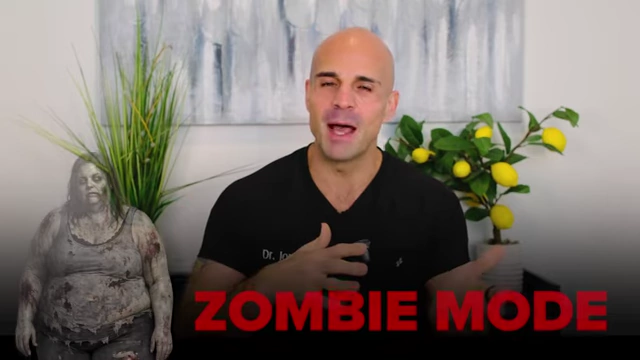
The speaker describing "zombie mode" with an image of a zombie as a visual metaphor [ 00:09:25 ]
- Rule out Dehydration/Low Electrolytes: These can mimic over-suppression symptoms like fatigue, brain fog, and headaches, so check these first.
- Metabolic Healing: As metabolic health improves (e.g., through fasting, lifestyle changes, reduced insulin resistance), the body may require less medication to achieve the same effect. A dose that was appropriate previously might now be too strong, signaling a need to decrease.
- When to Decrease:
- Persistent over-suppression signals not resolved by hydration and basic adjustments.
- Side effects that never fully calmed down after the initial adjustment period.
- Evidence that metabolic healing has made the current dose too potent.

Checklist of when to decrease your GLP-1 dose [ 00:10:07 ]
Scenario 4: TAPER (How to Step Down Safely) [10:30]
Tapering is the process of gradually reducing the dose when preparing for long-term maintenance, a phase where standard protocols often lack guidance.
- Criteria for Taper Readiness: We look for three specific signs:
- Quieter Food Chatter: Not eliminated, but significantly reduced, allowing for healthy choices without constant struggle. The individual is actively participating in their weight management, not relying solely on medication.
- Natural Protein Intake: Consistently hitting protein goals becomes effortless and habitual, not forced. This signifies ingrained healthy eating habits.
- Consistent Resistance Training: A sustained period (ideally months) of resistance training is critical. Muscle is the metabolic engine; building this engine is essential for a successful exit strategy.

Illustration of the human muscular system with text "Muscle = Metabolic Engine" [ 00:11:36 ]
- Beyond Goal Weight: Reaching a specific goal weight is secondary to building a robust metabolic foundation. Many at their goal weight are not ready to taper if they haven't developed this foundation.
- Microdosing for Long-Term Maintenance [11:44]: Complete weaning off medication might not be feasible or optimal for everyone. A low "microdose" can effectively manage food chatter and provide anti-inflammatory benefits in the long term, making it a realistic and effective strategy for many.
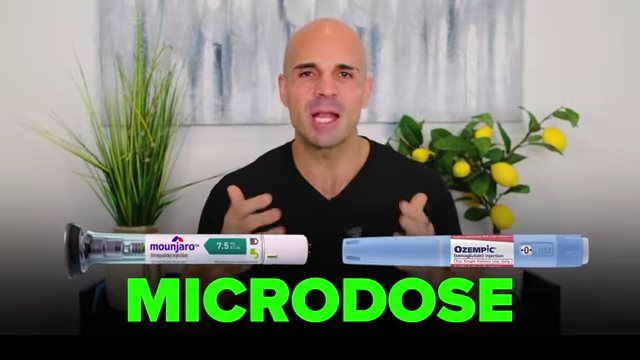
Image of Mounjaro and Ozempic pens with the text "MICRODOSE" [ 00:12:27 ] - The Taper Process (Tirzepatide Example):
- Reduce the dose by one increment (e.g., 15 mg to 10 mg).
- Hold at the new dose for 1-2 months to assess adaptation, stability, and control.
- Reduce again only when ready, continuing this gradual process down to the lowest dose (e.g., 2.5 mg Tirzepatide).
- Consider intermittent use (e.g., every other week) or a monthly microdose (e.g., 3-5 mg once a month) for ongoing maintenance.
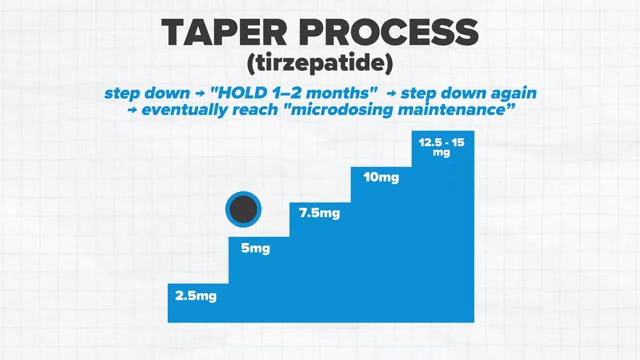
Diagram showing the taper process for Tirzepatide, gradually stepping down doses from 12.5-15mg to 2.5mg, with holding periods [ 00:12:56 ]
Scenario 5: RESET (When Medication Stops Working) [12:58]
A reset is necessary when high doses of medication stop being effective, typically due to receptor desensitization.
- When to Consider a Reset:
- You've been on a high dose (e.g., 10-15 mg Tirzepatide or 1.5 mg Semaglutide) for several months.
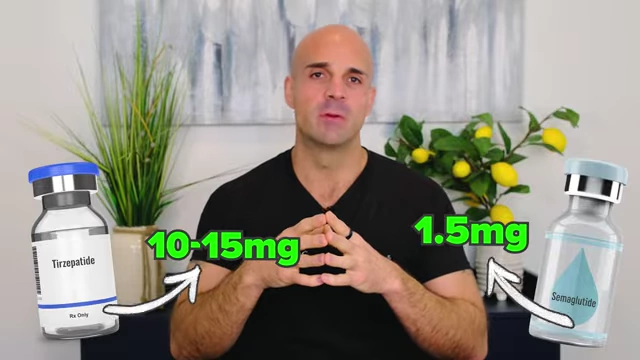
Tirzepatide and Semaglutide vials with indications for high doses (10-15mg and 1.5mg respectively) [ 00:13:46 ] - You've plateaued despite consistently optimizing foundational habits (protein, training, sleep, stress).
- The medication no longer seems to have any effect.
- You've been on a high dose (e.g., 10-15 mg Tirzepatide or 1.5 mg Semaglutide) for several months.
- Receptor Desensitization: Prolonged exposure to high levels of GLP-1 medication can make receptors less responsive.

Animated graphic of a human body with glowing areas, representing receptor desensitization [ 00:13:57 ] - The Reset Protocol Timeline:
- Gradual Taper to Zero: Slowly reduce the dose (e.g., 10 mg -> 5 mg -> 2.5 mg -> 0 mg). Avoid going cold turkey from a high dose.
- 3-Week Break: Take a complete break from the medication for approximately three weeks. This allows for receptor resensitization.
- Restart at Starter Dose: Begin again with the initial lowest starter dose (e.g., 2.5 mg Tirzepatide).

Timeline diagram showing the reset protocol: tapering down, a 3-week break for receptor resensitization, and restarting at a low dose [ 00:14:26 ]
- During the Break:
- GI Tolerance: GI tolerance often decreases, making restarting at a lower dose crucial to minimize side effects.
- Mental Discipline Test: This break also serves as a mental challenge to see if you can adhere to the protocol without the medication's heavy lifting. A strong metabolic foundation built through consistent protein, training, and fasting will be vital. The goal is to strengthen mental discipline, not necessarily to sustain full protocol adherence without medication at this stage.

The speaker emphasizing that the break is a "Mental Discipline Test" [ 00:14:40 ]
The Cost of Guessing Your Dose Wrong [15:35]
Incorrect dosing decisions have significant negative consequences.
- Increasing When You Should Stay: Leads to premature use of higher doses, potential muscle loss, and increased dependency, saving no "ammunition" for later.
- Staying When You Should Decrease: Results in misery, chronic undereating, and a tanked metabolism.
- Stopping When You're Not Ready: Often leads to weight regain, making you another "rebound statistic."
- Importance of Accurate Assessment: Accurately assessing your body's signals is challenging, as plateaus and underpowered doses can feel similar, and over-suppression might be normalized. Objective evaluation is key for long-term success.
Text on screen stating "Plateaus and underpowered doses can feel similar" [ 00:16:09 ]
Final Thoughts [16:09]
Understanding these five scenarios and accurately interpreting your body's signals is crucial for long-term GLP-1 success. The right answer for dose adjustment depends on your body's current state and your specific protocol. This strategic approach, informed by your metabolic foundation, fosters mental discipline and sustainable results, moving beyond just chasing scale numbers.