The Complete Blueprint for Leading and Training High-Performing Creative Teams
This video provides a comprehensive guide to leading and training creative teams, drawing from the speaker's experience building a media team from 0 to 18 members, generating billions of impressions.
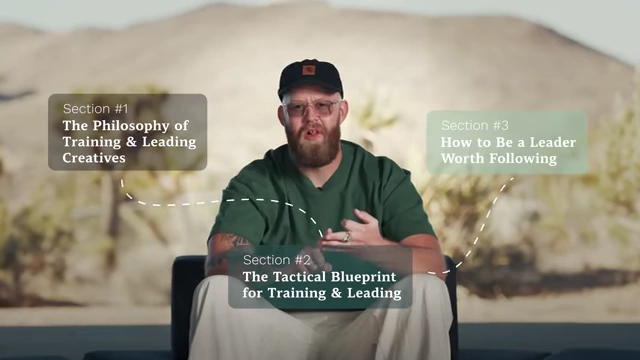
- 1. Philosophy of Training & Leading Creatives [0:00:21]: Focus on empowering teams with a "bottom-up" strategy, delegating tasks, fostering trust, and creating an environment where team members become subject matter experts on their platforms.
-
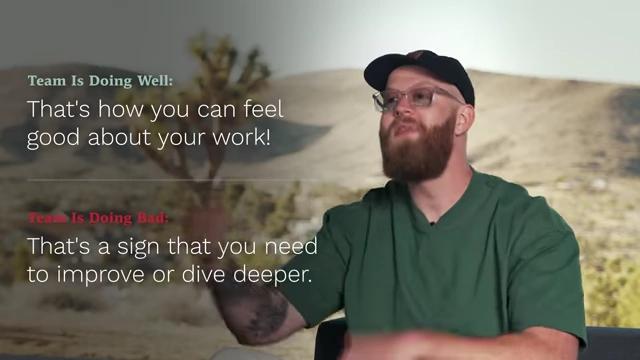
How to derive value as a leader based on team performance [ 00:11:40 ]
-
- 2. Tactical Blueprint for Training & Leading [0:32:38]: Implement actionable strategies like reinforcing positive behaviors, using the "for future reference" rule for non-critical feedback, scheduling content hackathons, adopting the 70/20/10 content framework, building real-time feedback loops, and encouraging problem-solving through leading questions.
- 3. Being a Leader Worth Following [1:12:25]: Emphasize internal team branding, acting as a shield against executive pressure, caring for team members beyond work, providing growth paths without forcing leadership roles, teaching advocacy for their work, and preventing burnout through work-life balance and efficient workflows like the "maker-manager" schedule.
1. The Philosophy of Training and Leading Creatives [0:00:21]
Mindset Shifts for Leading Creative Teams [0:00:43]
Training is not about control:
- Micromanagement stifles creativity and innovation.
- An anecdote of a brilliant but overly controlling manager led to a plateau in ideas. The solution was to involve the team in idea generation and strategy.
- Shift from a top-down, authoritarian approach to empowering and equipping the team with a bottom-up strategy.
- Delegate tasks, systems, processes, and culture to enable the team to amplify efforts and scale faster.
- Create an environment where people feel comfortable pitching new ideas without fear of rejection.
- Enable individuals to become subject matter experts on platforms they own, driving strategy while the leader provides feedback and context.
- Tactic: Assign platform ownership to individuals (e.g., one editor for Instagram, one for YouTube, one for TikTok). [0:05:55]
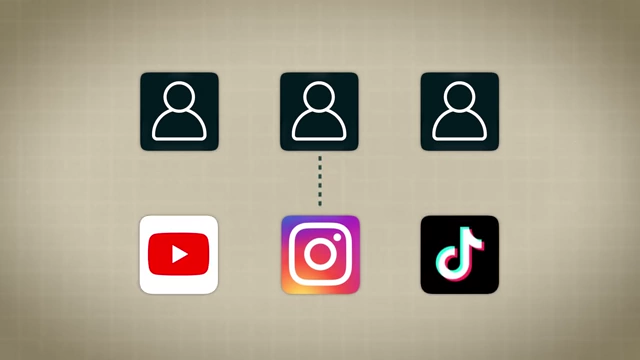
Assigning platform ownership to individual team members [ 00:06:09 ] - The leader's role shifts to focusing on the larger brand strategy and how micro-strategies fit into it.
Managing vs. Leading Creatives: [0:06:40]
Comparing managing vs. leading creatives [ 00:06:44 ] - Managing involves telling the team exactly what to do to achieve a goal.
- Leading involves casting a grand vision, providing clear deadlines and expectations, sharing the project's mission and values, and equipping the team with tools to take ownership.
- An anecdote: For a high-stakes campaign, the speaker involved his creative director, DP, and lead editor, sharing the vision, budget, and timeline, and letting them develop the concept, shot list, and talent. This resulted in a superior creative product.
- It is crucial to check in at key points to ensure alignment and address potential issues without micromanaging. [0:52:00]
- Leaders demonstrate trust and belief in their team's abilities, setting them up for future success.
Transition from Individual Contributor to Leader: [0:09:23]
The transition from individual contributor to leader [ 00:09:26 ] - This is a significant identity shift, requiring a change in where one derives value.
- Initially, the speaker found validation in individual output (e.g., editing many shorts quickly).
- As a leader, validation shifts to the team's output and success, not individual accolades.
- When the team performs well, the leader should feel good about their work because they built the environment for that success. If the team struggles, it's a sign for the leader to improve. [1:11:34]
How to derive value as a leader based on team performance [ 00:11:40 ] - This shift requires letting go of perfectionism and embracing coaching, mentoring, and training.
- Trust the team to execute tasks differently but effectively. Focus on empowering and showing trust.
- Tactic: At the end of the day, instead of asking "What did I get done?", ask "What did my team get done? What roadblocks did I remove for them?" [1:12:41]
The Silent Killers of Creativity: [1:18:00]
Identifying silent killers of creativity [ 00:13:21 ] - Fear, micromanagement, and lack of ownership stifle creativity.
- Leaders who use micromanagement and fear to control their teams achieve the opposite of what they desire.
- Fear:
- Create an environment where it's okay to experiment and fail.
- Phrase: "We love a good flop." [1:40:00] This shows the team that experimentation and failure are accepted as part of innovation.
The "We love a good flop" mindset for encouraging experimentation [ 00:14:09 ] - Accept that not every experiment will succeed. The more you experiment and fail, the closer you get to winning.
- Creatives who fear failure stick to safe, uninspired work, which negatively impacts engagement.
- Tactic: Build a culture where "failure" is a stepping stone, not a career-ending mistake. [1:39:50]
- Micromanagement:
- Micromanagement leads to a less effective and successful creative output.
- It fosters doubt in the team, slowing down processes and leading to worse results.
- Tactic: Shift from "checking in" (micromanaging specific details) to "checking on" (inquiring about progress, problems, and offering help). [1:51:00]
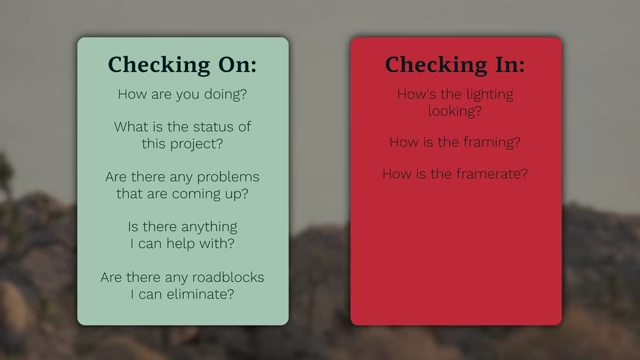
Differentiating between "checking on" (leading) and "checking in" (micromanaging) [ 00:18:12 ]
- Lack of Ownership:
- Delegating ownership increases engagement and breeds future leaders.
- An anecdote: Delegating short-form video review to an emerging editor (Trevor) led to increased ownership, engagement, and eventually his promotion to manager.
- Tactic: Delegate ownership of tasks to your team in manageable chunks, not all at once. [2:18:00] Start with smaller elements (e.g., sound or lighting for a shoot) and gradually increase responsibility.
- Encourage the team to develop strategies, game plans, and agendas, bringing them to the leader for review. This provides opportunities for informal training and skill development.
The Biggest Myth with Creatives [2:28:00]
- Creatives don't care about business results: This is false. They care deeply when they understand how their work contributes to the company's bigger picture.
- Many leaders mistakenly believe creatives only care about artistic integrity, not conversions, impressions, or revenue.
- Lack of communication from leadership about how creative work drives business results is often the cause of this perception.
- An anecdote: A team editing promotional seminar content initially didn't care about sales. After implementing tracking that showed how their documentary piece sold out an entire seminar, the team became highly motivated to create content that drove sales.
- Truth: When people are given visibility into how their work impacts the business, they become more engaged, not less. [2:51:00]
- Tactic: Share data with the team. Show how their work improves the business, drives profitability, and contributes to successful campaigns. [2:53:00] Connect organic content to leads and sales.
2. The Tactical Blueprint for Training & Leading [0:32:38]
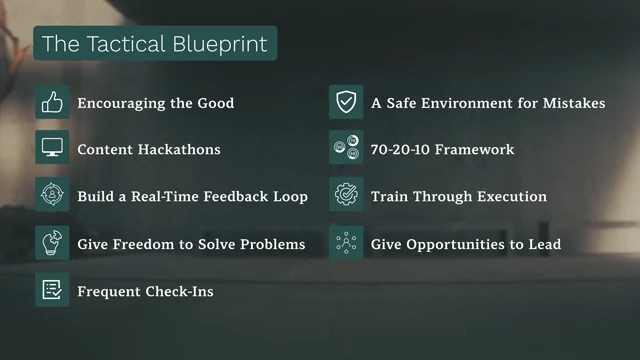
Creative Leadership Philosophy [2:50:00]
- Lead with Empathy, Not Authority [2:50:00]:
Leading with empathy, not authority [ 00:26:10 ] - Balance structure and freedom. Too much structure stifles creativity; too little creates chaos.
- Tactic: Set clear expectations ("the what"), but allow for autonomy in "the how." [2:58:00]
- Encourage Ownership and Agency (Avoid a "Checklist Army") [2:44:00]:
Building problem-solvers, not a checklist army [ 00:26:45 ] - Micromanaging robs the team of problem-solving skills.
- Tactic: Assign ownership of key projects, allowing creatives to set goals, strategy, and solutions, with the leader guiding them. [2:47:00]
- Operate in Humility (Give Credit) [2:50:00]:
Operating in humility as a leader [ 00:27:26 ] - Hoarding credit stifles motivation.
- Tactic: Publicly recognize and praise individuals for their contributions. Provide constructive criticism and feedback in private. [2:58:00]
- Less Debating, More Doing (Audience Decides) [2:58:00]:
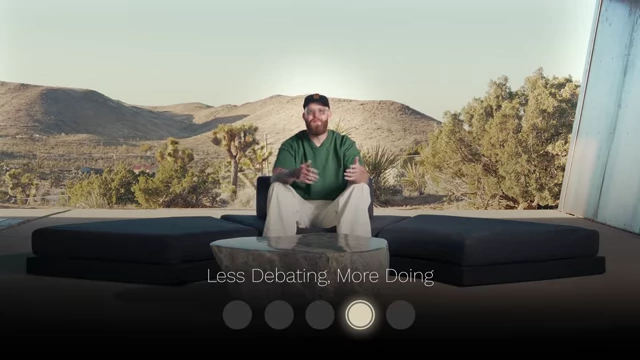
Focus on action over endless debate [ 00:28:25 ] - Creative work is subjective.
- Tactic: Instead of debating subjective creative choices, AB test ideas and let the audience determine what works best. [2:59:00]
- Love Data, Don't Fear It [3:06:00]:
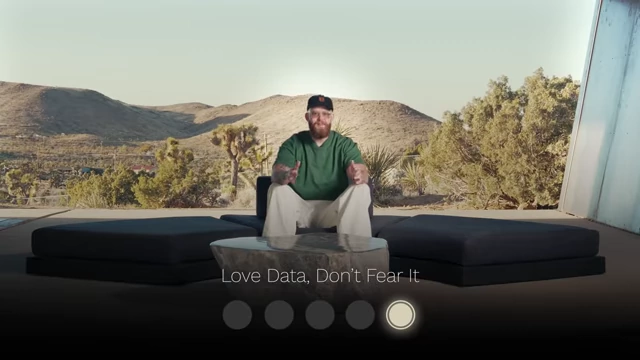
Embracing data in creative decisions [ 00:29:38 ] - Creatives often have a bias against data due to past negative experiences.
- Tactic: Conduct weekly calls to recap content performance, showing how data enhances creative decisions. [3:08:00]
- Key takeaway: Leadership is about empowering your team to make great decisions on your behalf. [3:19:55]
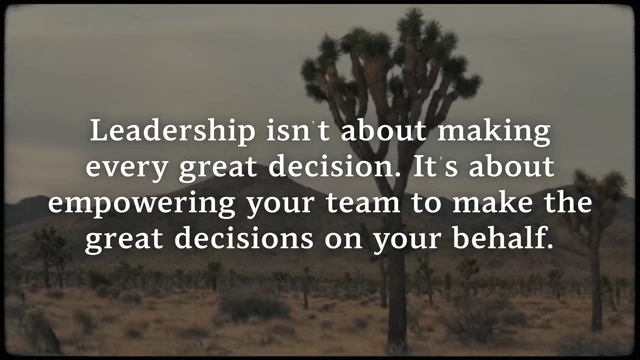
Empowering the team to make great decisions [ 00:31:59 ]
Building a Culture of Feedback that Promotes Growth [3:20:00]
Encouraging the Good [3:20:00]:
- Don't just point out corrections; reinforce what the team did right and should continue.
- This reduces mental fatigue for creatives and speeds up their learning.
- Tactic: When reviewing content, make more comments about what you liked and want to see continued than what you want changed. [3:29:00]
- Example: Providing context with cutaways for an unknown person like Flex Lewis.

Cutaways providing context about Flex Lewis [ 00:34:08 ]
The "For Future Reference" Rule [3:45:00]:
- For high-volume content, differentiate between "mission-critical" and subjective notes.
- Mission-critical notes: If ignored, the video breaks (e.g., spelling error, brand-damaging content). [3:27:00]
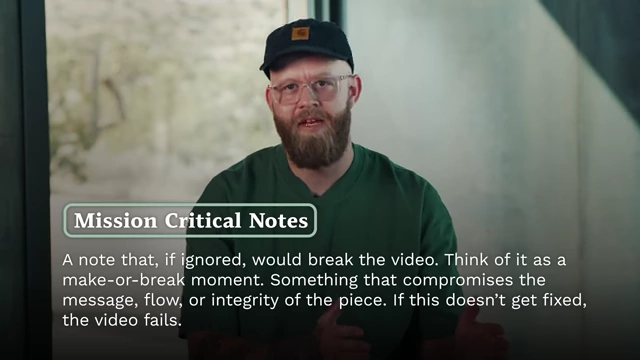
Definition of mission-critical feedback notes [ 00:37:28 ] - For subjective, non-mission-critical notes, frame them as "for future reference" rather than immediate changes. This allows for faster content output and market learning.
- For low-volume content (e.g., monthly YouTube videos), lean into more corrective notes due to longer feedback loops. [4:00:00]
- Tactic: Distinguish corrective notes into "for future reference" and "for now." Start with a 30% "future reference" / 70% "for now" split and adjust based on your team's needs and content volume. [4:10:00]

Proposed allocation of feedback: 30% for future reference and 70% for immediate changes [ 00:41:48 ]
Making a Safe Environment for Mistakes [4:24:00]:
- Fear kills creativity. A safe environment allows for experimentation and failure.
- Many leaders are comfortable with experimentation only if it "wins." Disappointment after a "flop" discourages future innovation.
- Tactic: Create a culture where failure is a stepping stone. Model this behavior as a leader by admitting your own "flops" and celebrating learning from them. [4:35:00] This increases morale and transparency.
Content Hackathons [4:50:00]:
- Dedicated days for the team to create content they normally wouldn't, focusing on innovation over performance.
- Initially, the speaker had a misaligned incentive, rewarding impressions, which led to safe content.
- Current Approach:
- Schedule quarterly (or monthly for high-volume teams) full-day hackathons.
- Ensure everyone's normal work is cleared to dedicate the full day.
- Communicate the vision: a day for bold experimentation without performance pressure.
- Kickoff call: 9 AM to 4 PM for creation, then 15 minutes to upload and prepare for presentations.
- Winner Determination: Team-wide anonymous vote for the most innovative and experimental content relevant to the brand. This aligns incentives with innovation.
- Hackathons lead to new formats, scripting methods, and packaging, driving significant innovation.
- Tactic: Schedule a quarterly Hackathon for your team. [5:28:00] (A playbook is available for download.)
Resource for the Hackathon Playbook [ 00:53:41 ]
The 70/20/10 Framework [5:39:00]:
- A framework for content strategy to balance consistency and innovation.
- 70%: Content known to work, consistently performing at or above benchmark.
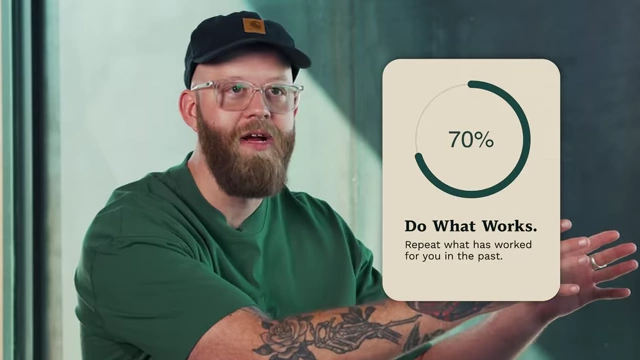
70% of content should be based on what is known to work [ 00:54:18 ] - 20%: Iterations on the 70%, fine-tuning, slight experiments (e.g., changing hooks, formats, structures).
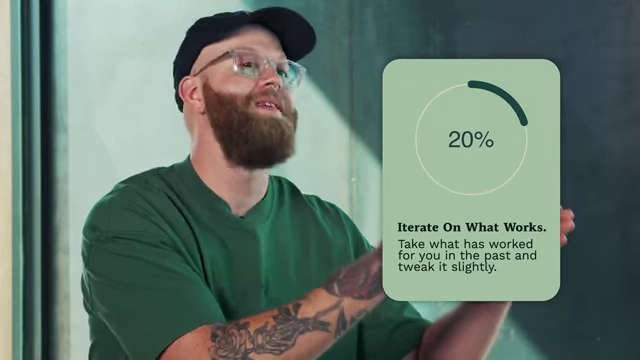
20% of content should be iterating on what works [ 00:54:41 ] - 10%: Pure experimentation, trying completely new things. This is where innovation is driven. Content hackathons operationalize this 10%.
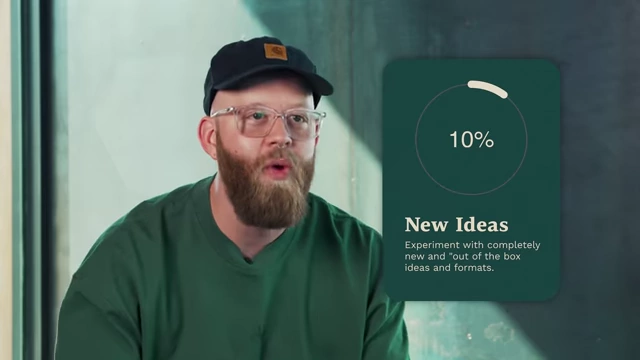
10% of content should be dedicated to new ideas and experimentation [ 00:55:15 ] - Brands grow on the 70%, but lead on the 10%.
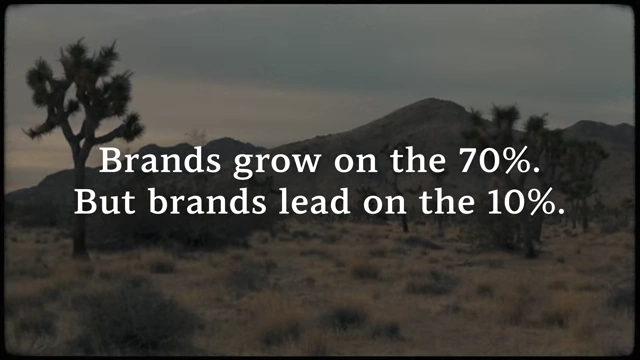
Brands grow on consistency but lead with innovation [ 00:55:54 ] - Tactic: Equip your team with this framework. Instead of doing it weekly, dedicate 2-3 days every month to experimentation. [5:58:00] This allows for batching and more efficient innovation.
Building a Real-Time Feedback Loop [5:45:00]:
- Avoid giving feedback only at the end of a project, which can lead to massive rework.
- An anecdote: For a sensitive vlog, the speaker implemented weekly check-ins with the editor. This caught a significant story decision by week two that would have otherwise required a complete redo.
- Tactic: Implement more frequent check-ins with your team to provide real-time feedback, especially for big projects. [5:55:00]
Train Through Hands-On Experience [5:58:00]:
- Creatives learn best by doing, not passively listening to presentations.
Creatives learn best through hands-on experience [ 00:59:46 ] - Passive training (lectures) leads to disengagement and squirming.
- Tactic: Shift from passive training to more practical, hands-on workshops. [6:00:00] Example: Short-form editors edit the same footage, then collectively review and critique each other's work.
- Creatives learn best by doing, not passively listening to presentations.
Give Them Freedom to Solve Problems [6:15:00]:
- Avoid solving problems for your team immediately.
- Giving immediate answers robs them of critical thinking and problem-solving skill development.
- Tactic: When teams come with a problem, ask leading questions (e.g., "How would you approach this?," "What would you do if I wasn't here?"). [6:25:00] This shifts the responsibility for solutions to them, building confidence and reducing their reliance on the leader.
Give Opportunities to Lead [6:35:00]:
- Formal training is important, but it doesn't always have to be led by the manager.
- Tactic: Schedule monthly team training sessions and rotate who leads them. [6:55:00] Have team members present on topics they are passionate about and experts in (e.g., storytelling, sound design, motion graphics).
- Benefits: Presenters learn more, share knowledge with the team, reveal hidden skills, and develop communication/presentation skills.
- Address pushback from team members with ample notice and support, coaching them through the process.
- Tactic: Schedule skip-step meetings (1:1s with individuals two layers down). [7:18:00] This provides direct feedback on how managers are performing and identifies issues before they escalate. It helps build trust and overcome managers potentially only reporting good news.
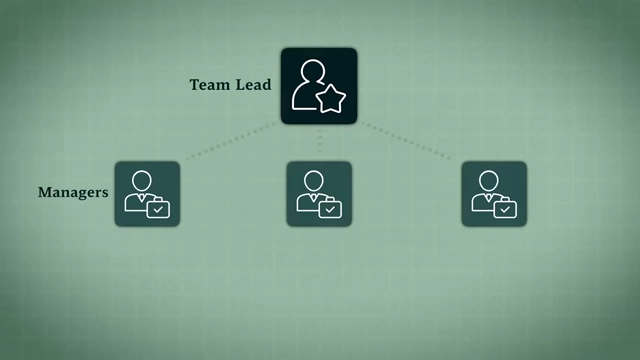
Organizational structure with a team lead, managers, and team members [ 01:07:32 ] 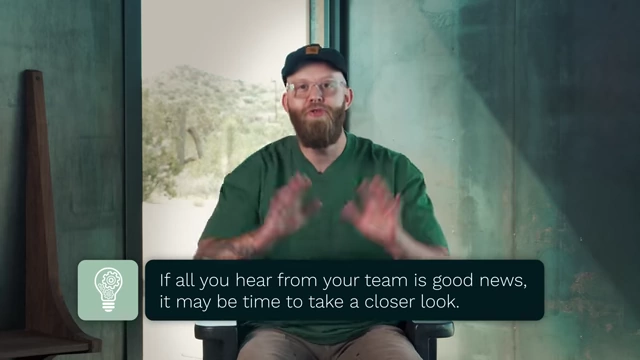
A warning sign when managers only report good news [ 01:11:00 ]
3. Being a Leader Worth Following [1:12:25]
Creating an Environment Where Creatives Thrive [1:12:57]
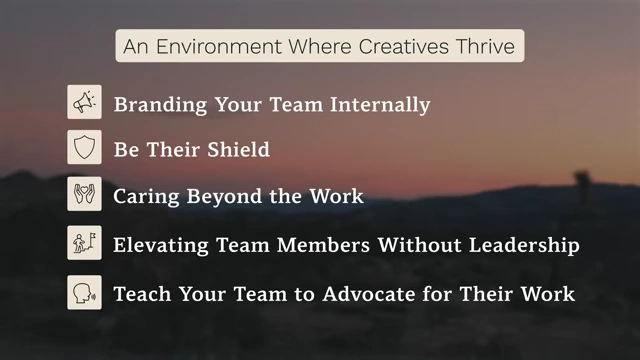
Branding Your Team Internally [1:13:14]:
Branding your team internally [ 01:13:17 ] - A leader's job is to give credit and make the team look good, not to hog credit.
- Good leaders recognize other leaders who empower their teams.
- Tactic: Hype up your team in company-wide meetings. Be specific about individuals and their contributions (e.g., "Sarah did an amazing job on this edit," not "My team did well"). [1:14:50] This builds value for individual team members in the eyes of leadership.
Be Their Shield [1:16:28]:
Being a shield for your team [ 01:16:33 ] - Protect the team from "executive whiplash" (aggressive or inconsistent feedback from upper management).
- An anecdote: The speaker's creative director absorbed all critical feedback from executives, reframing and delivering it constructively to the team, preventing fear and anxiety.
- Executives have high expectations and communicate in their own way, which may not be palatable for creatives.
- Tactic: Absorb tough feedback from executives, internalize it, and then repackage it for the team in a way that is motivating and actionable, rather than fear-inducing. [1:18:00] Physically remove executives from the creative's workspace if communication is aggressive.
- Creatives thrive with consistency and psychological safety.
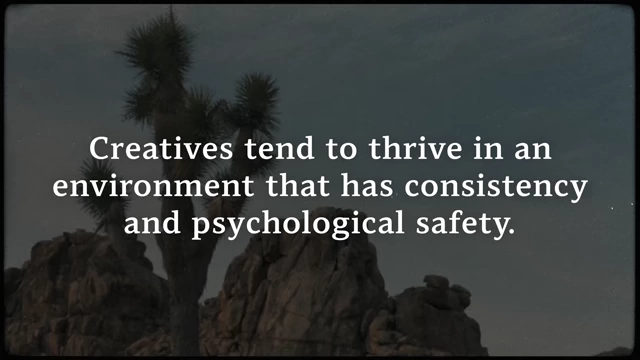
The importance of consistency and psychological safety for creatives [ 01:18:18 ]
Caring Beyond the Work [1:20:04]:
- Small gestures make a big impact. People do their best work when they feel valued as humans, not just employees.
- Tactic: Pay attention to what your team members care about outside of work. [1:20:20]
- Recognize birthdays or work anniversaries with thoughtful gifts related to their interests.
- Send care packages (juice, soup) or thoughtful messages when they are sick. This alleviates anxiety about taking time off and shows genuine care.
- Genuine care fosters loyalty and longevity within the team.
Elevating Team Members Without Forcing Leadership Roles [1:23:14]:
- Not all creatives want to be managers; many are passionate about their craft and seek more ownership within their specialization.
- Most organizations only offer management roles for raises/promotions.
- Tactic: Create two career paths:
- Individual Contributor Path: Multiple levels (e.g., Video Editor Level 1-5) for growth within their craft, with corresponding raises. This gives a roadmap for skill development without management duties. [1:24:40]
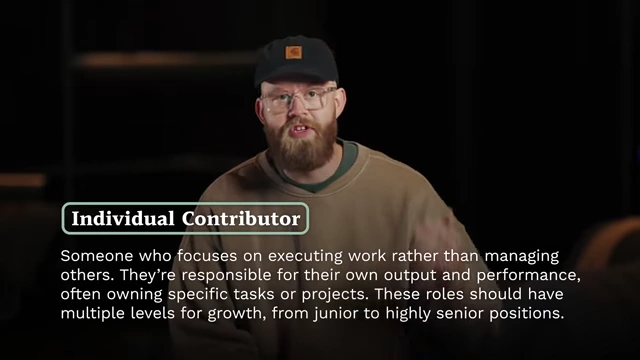
Explanation of the individual contributor career path [ 01:24:46 ] - Management Path: For those who desire to lead people.
- Individual Contributor Path: Multiple levels (e.g., Video Editor Level 1-5) for growth within their craft, with corresponding raises. This gives a roadmap for skill development without management duties. [1:24:40]
- An anecdote: An editor who showed strong leadership qualities in post-production processes didn't want to manage people. He was promoted to Senior Editor, focusing on developing new processes and training other editors, expanding his ownership in his craft.
- Leadership is about setting standards and influencing the team, not just managing people. [1:26:35]
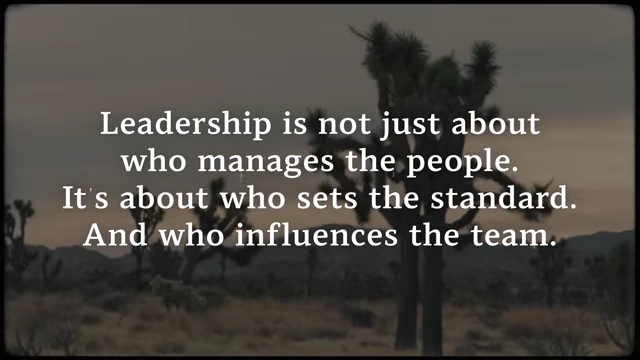
Leadership is about setting standards and influencing the team [ 01:26:40 ]
Teach Your Team to Advocate for Their Work [1:26:45]:
- Creatives often struggle to communicate their value in business terms (revenue, profitability).
- Lack of this skill can cap their earning potential and lead to frustration.
- Tactic:
- Formal Training: Conduct group training sessions (20-30 minutes) on how to articulate their work's impact on business outcomes. [1:28:40]
- Informal Coaching: In 1:1 scenarios, guide them on how to share their work effectively, focusing on data and metrics (e.g., impressions, average view duration, leads generated, converted sales) rather than just artistic appeal. [1:29:00]
- Arming the team with these tools allows them to advocate for themselves and doubles the advocacy when combined with the leader's efforts.
Preventing "Burnout" [1:30:35]
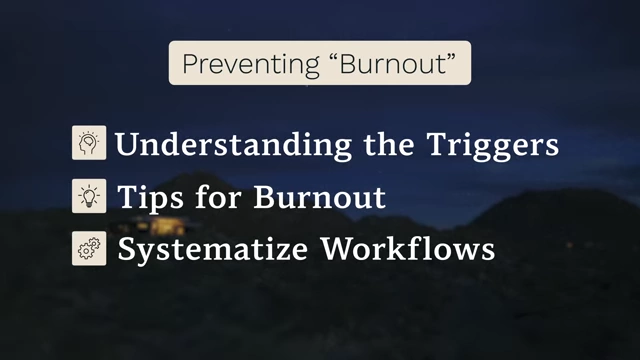
"Burnout" (or work/career fatigue) happens to everyone. It's often caused by lack of autonomy, unclear expectations, and an unsustainable pace, not just heavy workload.
Understanding the Triggers [1:33:06]:
- Warning Signs: Declining creativity, disengagement, avoiding challenges, emotional exhaustion (short temper, anxiety, sadness).
- Avoid decreasing workload if the team is passionate and desires more work.
- Tactic: Watch for these warning signs and address the underlying causes (autonomy, clarity, pace).
Tips for Burnout Prevention [1:34:25]:
- Normalize Rest and Recovery:
- Leaders must model taking time off, even during busy periods. If leaders don't rest, their team won't either.
- An anecdote: A boss encouraged the speaker to take time off despite a heavy workload, setting an example. Another editor who never took time off was encouraged to, eventually taking a 3-week vacation and returning refreshed.
- Tactic: Check in with team members who aren't taking enough time off and encourage them to rest and recover. [1:37:50] Respect their personal decisions, but guide less experienced individuals on pacing.
- Systematize Workflows (Maker-Manager Schedule) [1:38:47]:
Systematizing workflows to prevent burnout [ 01:38:53 ] - Burnout often stems from inefficiencies, not just work volume.
- Creatives struggle with fragmented schedules due to frequent meetings.
- Maker Work: Deep, focused creative/technical work requiring uninterrupted time blocks.
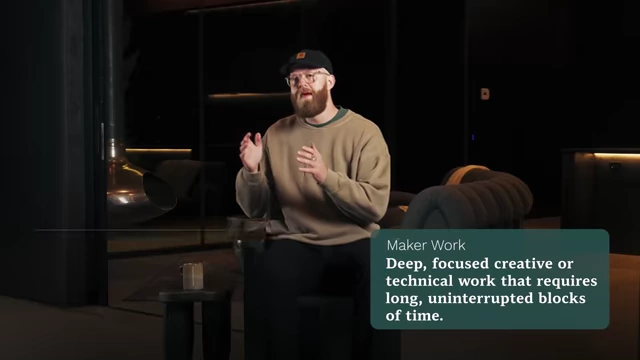
Defining "maker work" for deep creative focus [ 01:40:26 ] - Manager Work: Collaborative, decision-making work involving meetings and unblocking others.
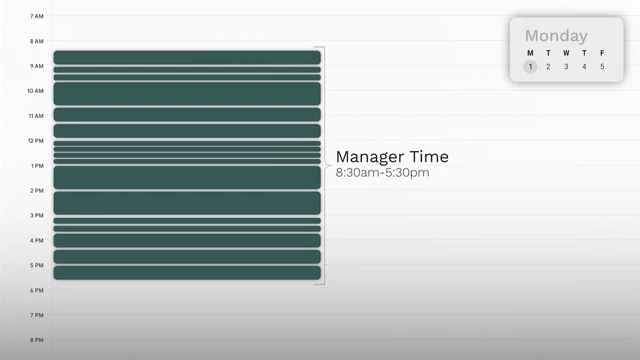
Example of a "manager day" schedule with stacked meetings [ 01:42:02 ] - Most organizations prioritize manager schedules, disrupting maker flow.
- Tactic: Implement a Maker-Manager schedule. Designate specific days or blocks of days for "maker time" (no meetings) and "manager time" (meetings). [1:41:00]
- Example: Mondays as manager days (meetings back-to-back), Tuesdays, Wednesdays, Fridays as maker days (no meetings, or meetings only in the afternoon to allow morning deep work).
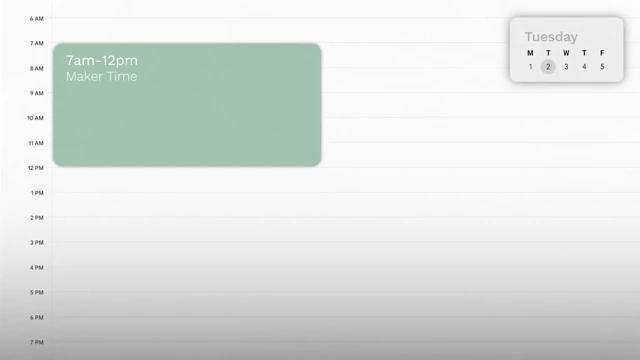
Example of a "maker time" block for deep work [ 01:42:28 ] 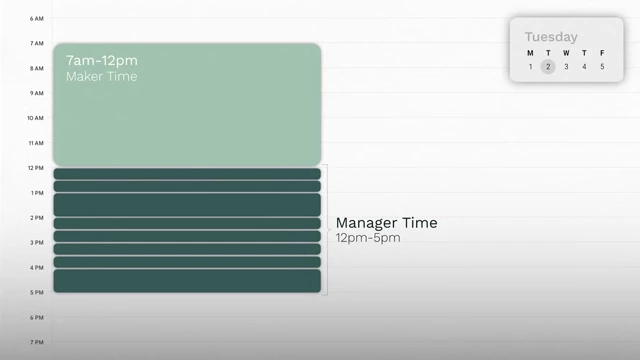
A typical split day with morning maker time and afternoon manager time [ 01:42:45 ] 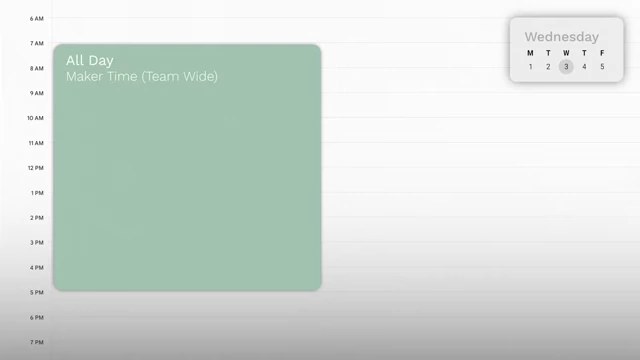
An all-day "Maker Time" for the entire team [ 01:43:24 ] 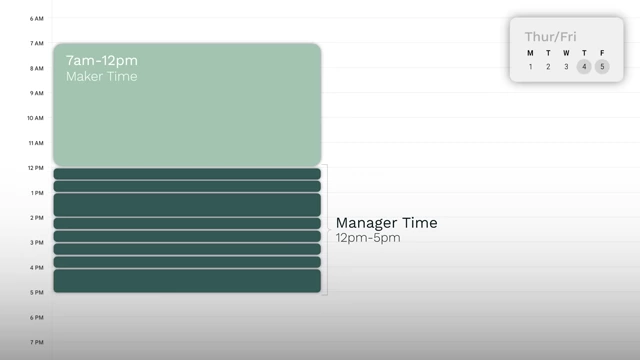
Example of a Thursday/Friday schedule with maker and manager time [ 01:44:14 ] - For team-wide maker days (e.g., Wednesdays), limit meetings to 1:1s or no meetings at all to foster deep focus.
- Batching maker work improves efficiency and prevents distractions.
- Example: Mondays as manager days (meetings back-to-back), Tuesdays, Wednesdays, Fridays as maker days (no meetings, or meetings only in the afternoon to allow morning deep work).
- Normalize Rest and Recovery:
Keeping Creatives Focused: [1:44:37]
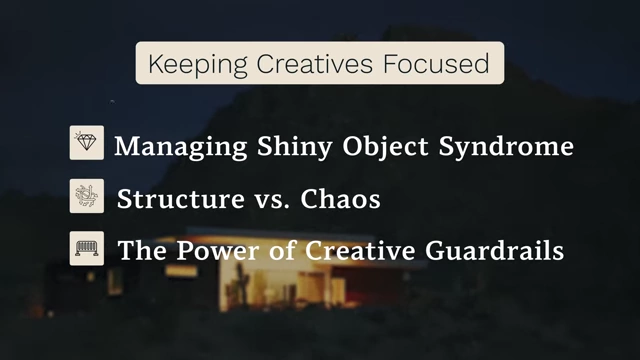
Strategies for keeping creatives focused [ 01:44:41 ] - Managing Shiny Object Syndrome [1:44:37]:
- Creatives often see new opportunities everywhere, but chasing every idea leads to scattered, inconsistent execution.
- Tactic: Teach discernment. [1:45:00]
- An anecdote: An excellent short-form editor wanted to switch to YouTube editing. The leader presented two clear paths: excel in short-form to become senior editor quickly, or start at the bottom in YouTube editing with slower advancement. The editor chose to focus on short-form, understanding the career trajectory.
- Help your team evaluate opportunities (benefits, cons) to make informed decisions that align with their long-term career goals.
- Structure vs. Chaos (Creative Guardrails) [1:51:50]:
- The ideal balance is a "happy medium" between too much structure (stifles innovation) and too little (leads to disorder/confusion). Confusion is the enemy of creativity.
- Tactic: Set clear objectives, mission, and vision ("the what"), then provide creative space for the team to decide "the how." [1:52:00]
- Reverse engineer roles and functions: some (e.g., videography for a fast-paced entrepreneur) might thrive in "organized chaos," while others (e.g., YouTube editing) need more system and process.
- The Power of Creative Guardrails: Constraints can fuel creativity. [1:52:55] Instead of vague requests (e.g., "make this video go viral"), provide specific constraints (e.g., "create a mashup using only podcast clips about building a brand"). This forces innovative solutions within boundaries.
- Managing Shiny Object Syndrome [1:44:37]:
Three Principles for Being a Leader Worth Following [1:54:00]
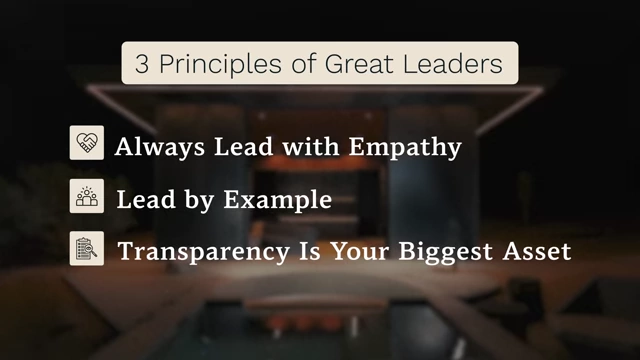
Always Lead with Empathy [1:54:05]:
- Earn respect, don't demand it. Create an environment where the team feels safe to approach you with problems and ideas.
- Tactic: Be intentional with check-ins. Ask about their well-being, struggles, enjoyment, and life outside work. [1:54:19]
- Understand that outside factors influence work performance. Empathize with challenges (e.g., a bad morning, family issues).
- An anecdote: A team member shared about a death in their family. The leader offered time off and sat with them to process, demonstrating care beyond work.
- Genuine empathy builds trust and loyalty, which leads to better work and reduced turnover.
Lead by Example [1:57:15]:
- Demonstrate your work ethic through action, not just words. You set the standard.
The importance of leading by example [ 01:57:27 ] - People follow leaders who put in the work themselves.
- Tactic: Show, don't tell. If you expect high standards, be the first to set and maintain them. [1:57:32]
- An anecdote: When the speaker was disengaged for two months, he observed his team making similar mistakes. This reinforced that the team magnifies the leader's behavior (doing what the leader does "times 10").
- Your actions set the tone for the team's discipline and consistency.
- Demonstrate your work ethic through action, not just words. You set the standard.
Transparency Is Your Biggest Asset [1:59:25]:
- Leaders who pretend to have all the answers create disconnect. Honesty fosters respect.
- Avoid covering up mistakes or posturing as if everything was intentional.
- Tactic: Own your mistakes immediately. [2:00:47]
- If a project underperforms, analyze, learn, and share those learnings with the team, rather than shifting blame.
- Be the first to vocalize when you've "messed up." (e.g., "Caleb's idea flopped.").
- Admitting mistakes earns more respect and fosters a culture of learning.
Conclusion [2:01:19]
- Leadership is about creating conditions for the team to thrive: clarity, trust, and space to do their best work.
- This builds a culture of innovation, ownership, and growth, leading to better work and better people.
Summary of covered topics: Mindset Shifts, Tactical Frameworks, Leadership Philosophies [ 02:01:48 ]