Understanding Dopamine Detox and How to Rewire Your Brain for Lasting Discipline
This video explains how modern life overstimulates our brains with easy dopamine hits, leading to decreased motivation for hard tasks. It clarifies that dopamine is the "wanting" chemical, not the "pleasure" chemical, and excessive easy dopamine leads to "downregulation" of receptors, making natural rewards feel boring. A "dopamine detox" involves temporarily removing hyperstimulating sources to reset the brain's reward system. The process causes temporary withdrawal but leads to increased sensitivity to natural rewards and a shift from pleasure-seeking to satisfaction-building. Practical steps include identifying high-dopamine activities, eliminating them for 3-14 days, and replacing them with activities that offer slower, more sustainable rewards. The video also emphasizes environment design and social influence in maintaining long-term discipline.

The Brain's Economic Principle and Modern Exploitation [00:00:34]
Our brains constantly evaluate actions based on the "return on energy investment," favoring low effort and guaranteed pleasure, a survival mechanism from ancient times.
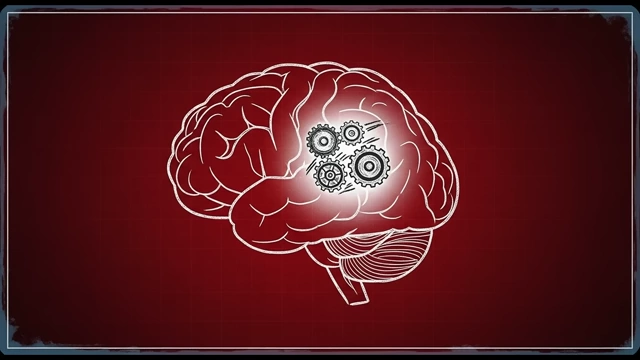
- The Brain's Bias for Low Effort, High Reward [00:00:37]
- The brain is constantly asking, "What's the best return on energy investment?"
- High effort with uncertain reward leads to the brain hitting the brakes.
- Low effort with guaranteed pleasure gets a green light.
- This is not a character flaw but a survival mechanism from ancient times.
-
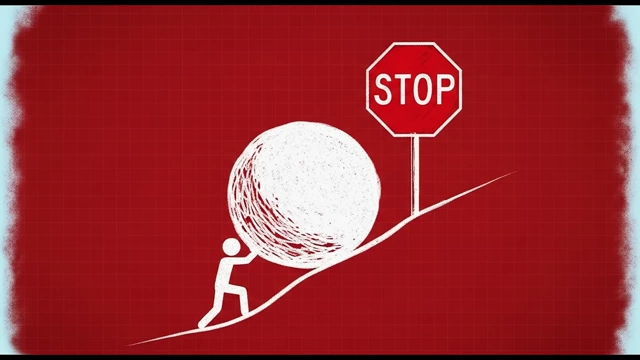
A person pushing a boulder uphill towards a stop sign, representing the brain's resistance to high effort tasks. [ 00:00:53 ]
- Modern World's Impact on the Brain [00:01:00]
- Today's world, with apps, snacks, and content, is designed to trigger neural pathways for instant, zero-effort pleasure.
- This leads to the brain being "hacked," not broken, by constant stimulation.
-
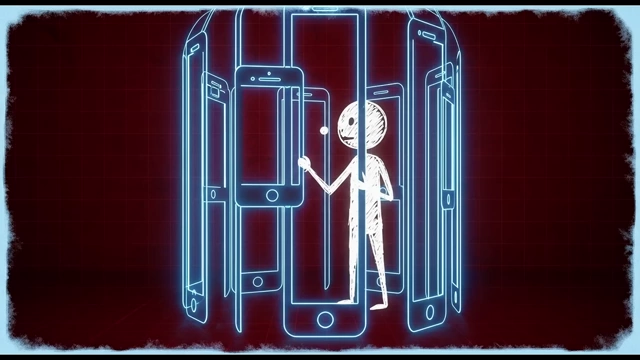
A person trapped inside a cage made of glowing smartphones, illustrating how modern technology exploits the brain for easy rewards. [ 00:01:10 ]
Understanding Dopamine and Downregulation [00:01:18]
Dopamine is the "wanting" chemical, spiking when anticipating a reward, not when receiving it.
- The Effect of Easy Dopamine Hits [00:01:51]
- Too many easy dopamine hits cause "downregulation," where dopamine receptors decrease, like turning down the volume on satisfaction.
-
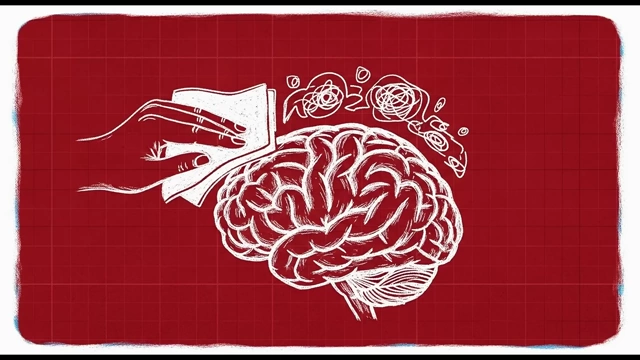
A hand wiping a 'messy' brain clean, representing the concept of dopamine receptor downregulation. [ 00:01:51 ] - This means more stimulation is needed to feel the same level of interest, making previously engaging activities (like reading or working out) feel boring or impossible.
-
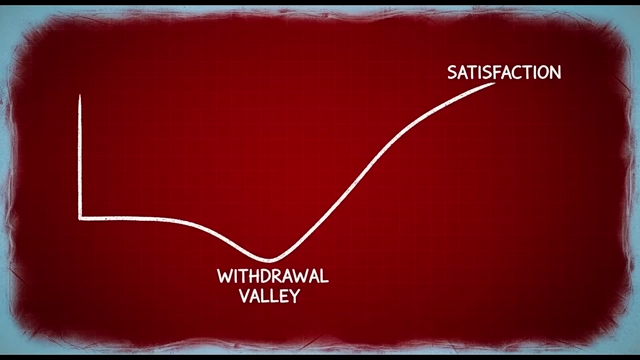
A graph illustrating the 'Withdrawal Valley' followed by a rise to 'Satisfaction' during a dopamine detox. [ 00:02:05 ] - This is a tolerance effect, similar to drug addiction, explaining why high social media users feel unmotivated.
-
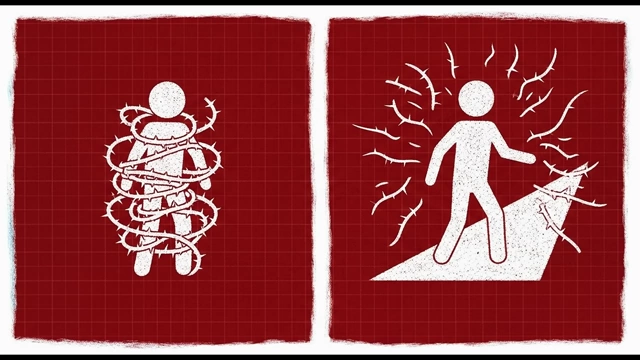
Two figures, one tangled in thorns and another walking on a thorny path, illustrating how effort feels like punishment to a stimulated brain. [ 00:02:26 ] -
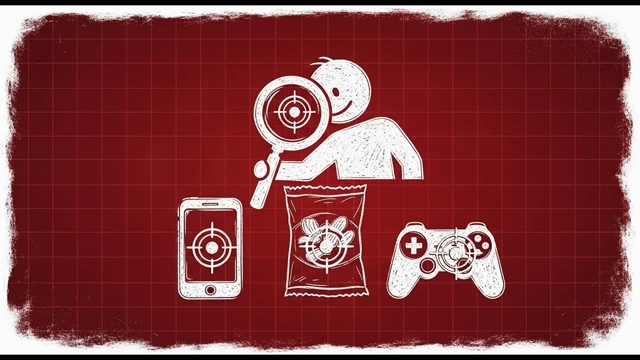
A person using a magnifying glass to target a smartphone, snack bag, and game controller, representing high-dopamine, low-effort activities. [ 00:02:31 ]
- Neuroplasticity and Rewiring the Brain [00:02:40]
- The brain is constantly rewiring itself based on daily actions and choices.
- Every choice strengthens pathways for discipline or distraction.
-
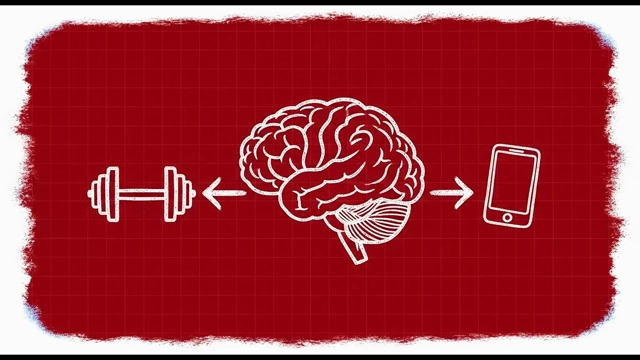
A brain with arrows pointing towards a dumbbell and a smartphone, showing the two opposing directions the brain can be wired. [ 00:02:44 ] -
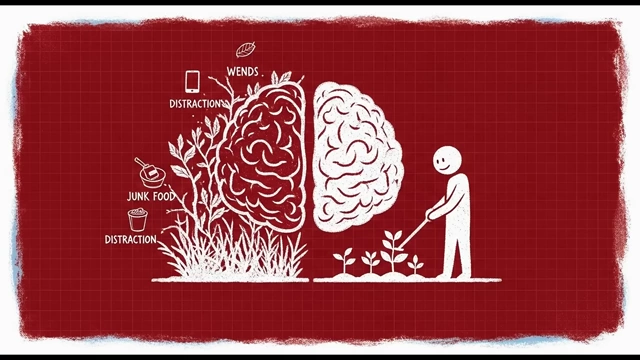
A brain split into two: one side overgrown with 'distractions' and junk food, the other side showing a person planting seeds for 'growth' and discipline. [ 00:02:59 ]
The Dopamine Detox: Recalibrating Your Brain [00:03:00]
A dopamine detox involves temporarily removing artificial, hyperstimulating sources of dopamine to reset the brain.
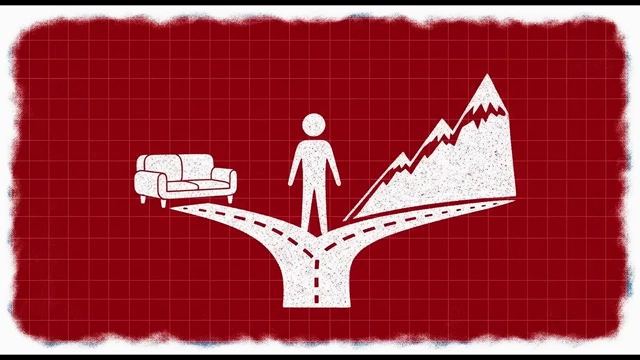
- Mechanism of Detox [00:03:13]
- The dopamine system is like a dimmer switch cranked to maximum brightness, making normal light (natural rewards) seem dark.
-
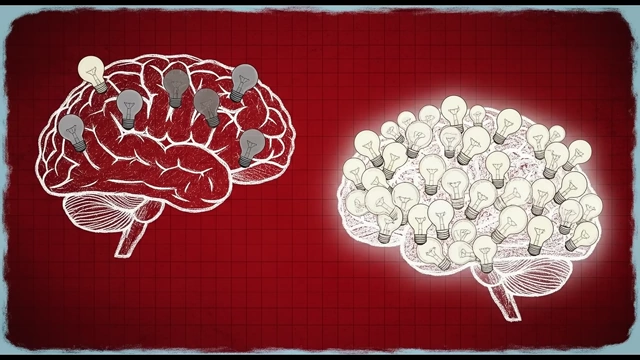
Two brains, one with a few dim lightbulbs and another full of many bright ones, illustrating the 'dimmer switch' analogy for dopamine sensitivity. [ 00:03:14 ] - Removing overwhelming easy pleasure sources causes dopamine receptors to "upregulate," becoming more sensitive.
- This allows natural rewards (completing tasks, exercise, focused work) to register satisfaction again.
-
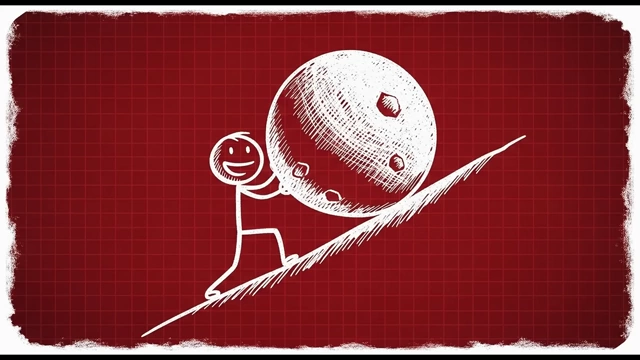
A smiling person pushing a boulder uphill, depicting how engaging in challenging activities can become satisfying. [ 00:03:39 ] - The goal is to return to a baseline where internal satisfaction drives motivation, rather than external stimulation.
-
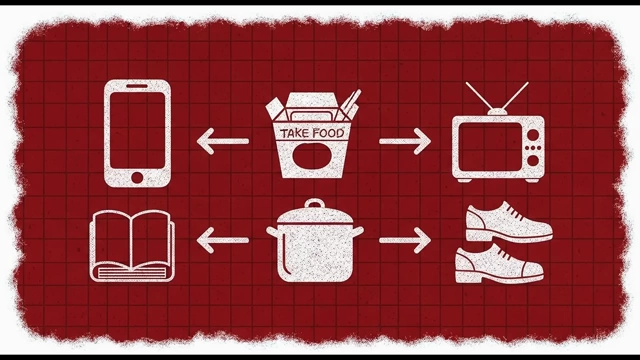
A diagram contrasting high-dopamine activities (phone, takeout, TV) with lower-dopamine, more rewarding alternatives (book, home cooking, walking shoes). [ 00:03:44 ]
- The Withdrawal Phase [00:04:09]
- The initial discomfort (restlessness, irritability, anxiety) is a sign of withdrawal as the brain adjusts.
-
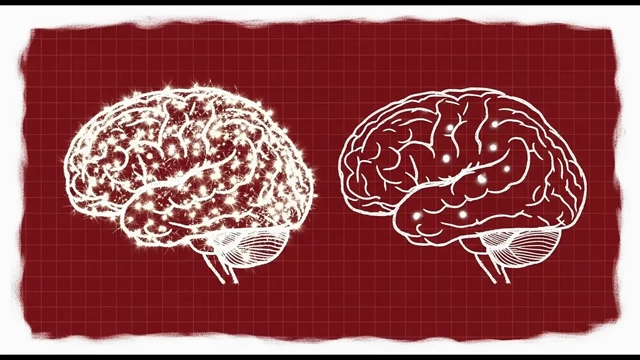
Two brains, one sparkling with excessive neural activity and the other calm, illustrating the effect of a dopamine detox on brain function. [ 00:04:29 ] - Many people give up during this phase, mistaking discomfort for a sign of doing something wrong.
-
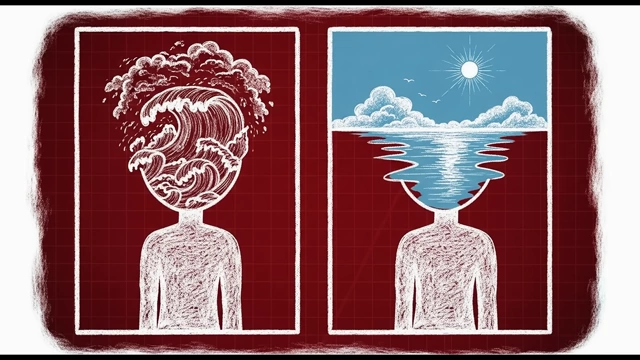
Two head profiles: one filled with stormy ocean waves, and the other with a calm, clear sky over a peaceful sea, symbolizing mental states before and after detox. [ 00:04:34 ]
Practical Steps for a Successful Detox [00:04:40]
- Identify High-Dopamine Activities [00:04:42]
- Focus on activities that require minimal effort for maximum stimulation (e.g., social media, short-form videos, games, junk food, online shopping, pornography).
-
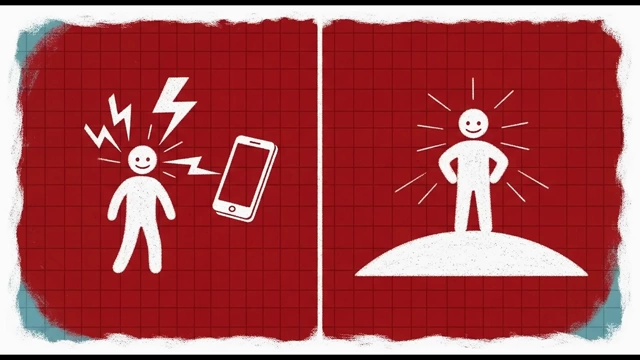
Two figures: one stressed by a stimulating phone, the other standing confidently and calm, representing the shift from overstimulation to self-possession. [ 00:04:44 ] -
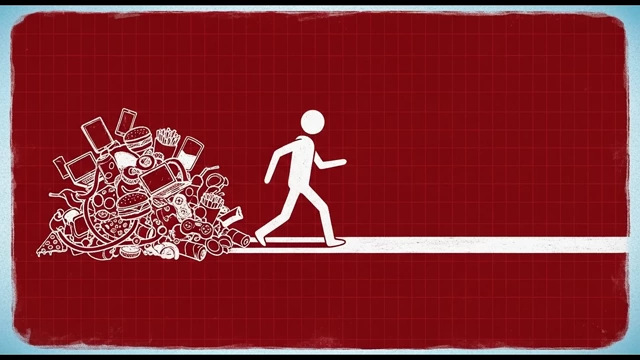
A person running away from a large pile of junk food, phones, and other distractions, symbolizing the act of eliminating high-dopamine sources. [ 00:04:54 ]
- Temporary Elimination [00:05:05]
- Eliminate these activities temporarily: a minimum of 3 days, preferably 7, and 14 days for transformative results.
- This creates artificial scarcity for easy dopamine, forcing the brain to find satisfaction in harder activities.
-

An open physical book, symbolizing a slower, more sustainable source of reward. [ 00:05:14 ] -
A cooking pot, representing the rewarding activity of preparing a meal. [ 00:05:16 ]
- Replace with Sustainable Rewards [00:05:27]
- Actively engage in activities that provide slower, more sustainable rewards (e.g., reading a physical book, cooking, walking without distractions, exercising without media, journaling, genuine conversations).
- These initially feel boring but will eventually trigger dopamine release as the brain learns to anticipate the satisfaction of learning or accomplishment.
-
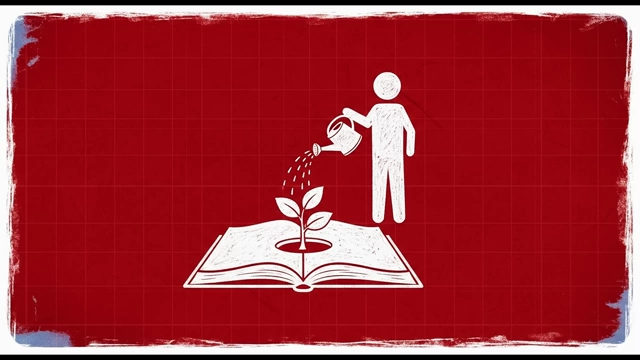
A person watering a plant growing from an open book, symbolizing nurturing growth through deliberate, less stimulating activities. [ 00:05:24 ] -
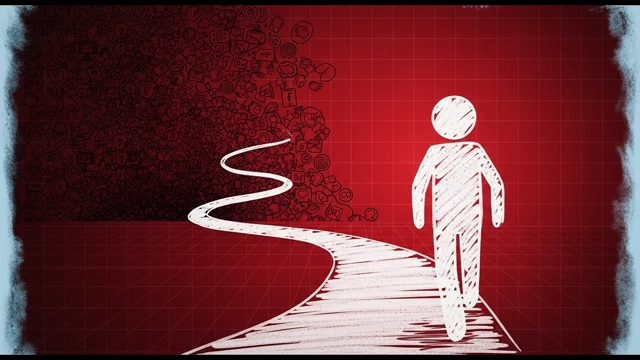
A person walking on a clear path, moving away from a dark cloud of social media icons and distractions. [ 00:06:07 ]
Pleasure vs. Satisfaction and Long-term Rewiring [00:06:20]
- Distinction Between Pleasure and Satisfaction [00:06:20]
- Pleasure is immediate, fleeting, and external, requiring no effort.
- Satisfaction is delayed, lasting, and internal, coming from accomplishment and requiring effort.
-

Two figures: one stressed by a stimulating phone, the other standing confidently and calm on a hill, representing the shift from overstimulation to self-possession. [ 00:06:24 ] - Modern life offers abundant pleasure but lacks satisfaction, leading to unfulfillment despite constant entertainment.
-
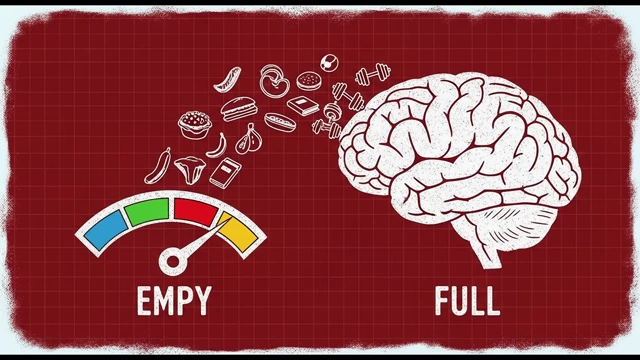
A brain being filled with various inputs, contrasting 'empty' fast food with 'full' healthy foods and productive activities on a gauge. [ 00:06:37 ] -
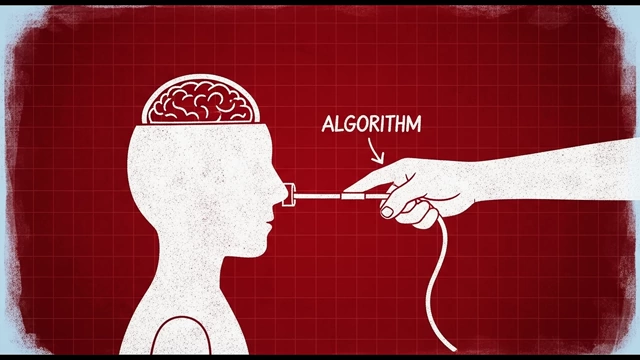
A human head being 'fed' by an 'Algorithm' connected by a wire, symbolizing how algorithms hijack our minds for instant gratification. [ 00:06:42 ] - A dopamine detox shifts focus from seeking pleasure to building satisfaction.
-
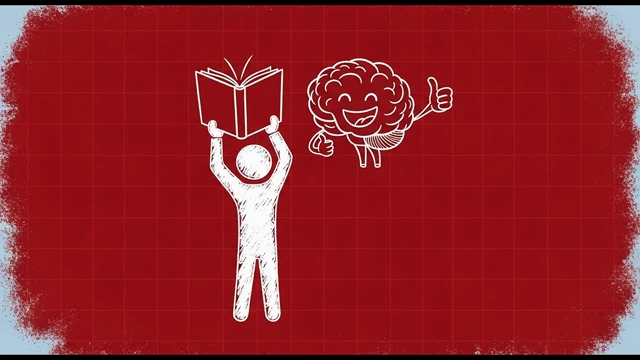
A person happily holding up a book, with a smiling brain beside them giving a 'thumbs up', symbolizing satisfaction from learning. [ 00:06:47 ]
- Satisfaction and Dopamine Release [00:06:54]
- Satisfaction, particularly from overcoming difficult tasks, produces more lasting dopamine and other neurochemicals (serotonin, endorphins).
-
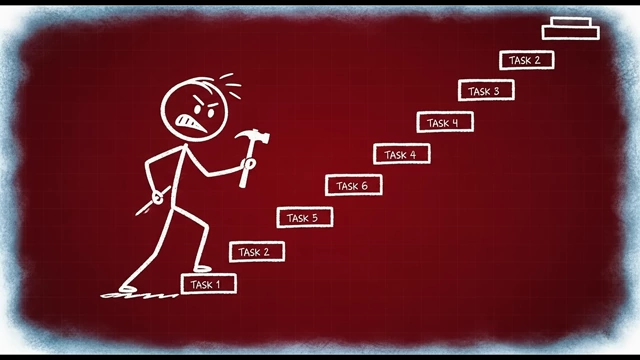
An angry person using a hammer to build stairs labeled 'TASK 1, TASK 2', illustrating the initial painful experience of discipline. [ 00:06:52 ] -
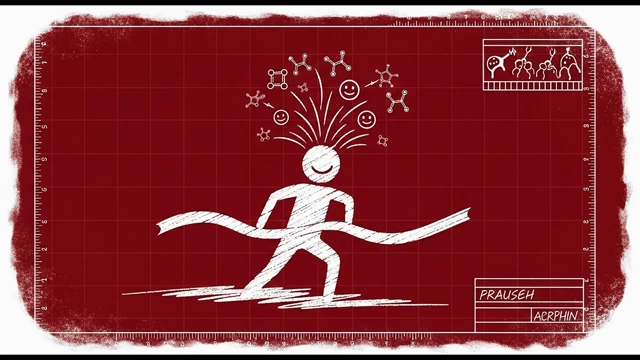
A person breaking through a finish line, with happy neurochemicals (dopamine, serotonin, endorphins) bursting from their head, symbolizing the reward of accomplishment. [ 00:06:57 ] - This activates the prefrontal cortex, enhancing planning, decision-making, and self-control.
-
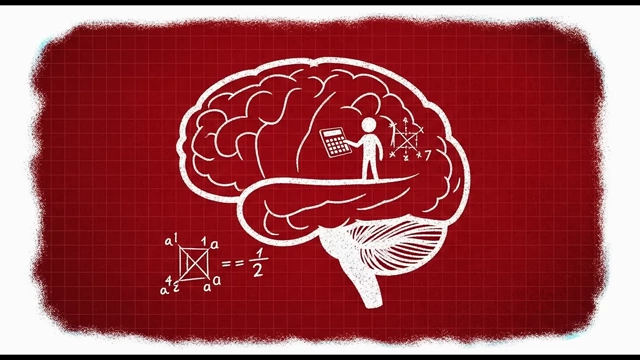
A brain with a small person inside, holding a calculator and surrounded by math, symbolizing the prefrontal cortex's role in planning and decision-making. [ 00:07:34 ] - Choosing discipline over distraction strengthens advanced brain parts and weakens primitive, impulse-driven ones.
-
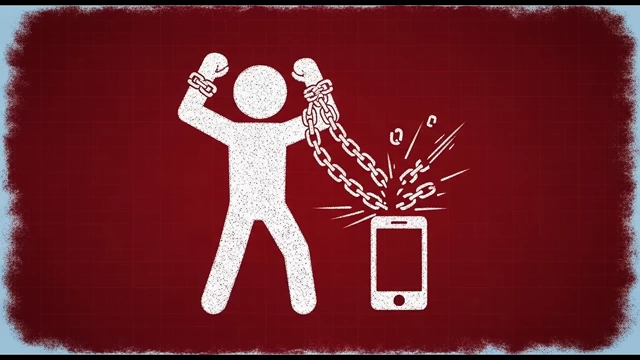
A person breaking free from chains connected to a smartphone, symbolizing liberation from digital addiction. [ 00:07:43 ] -

A person struggling to push against a 'WILLPOWER' wall, with distractions like social media and junk food seeping through, illustrating willpower as a finite resource. [ 00:07:50 ] -
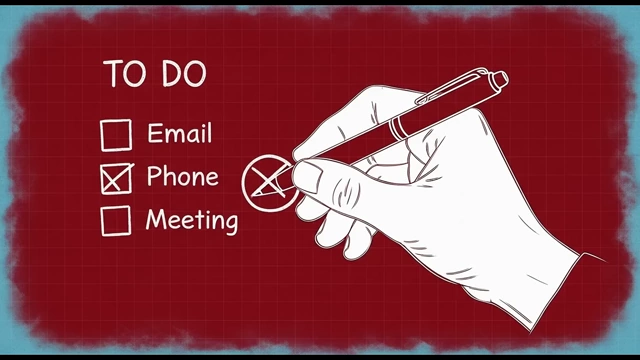
A hand checking off a 'TO DO' list, notably crossing out 'Phone', symbolizing intentional choices for discipline. [ 00:08:05 ] -
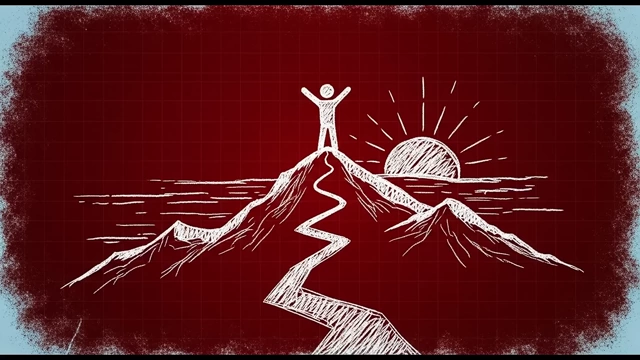
A person standing triumphantly on a mountaintop with the sun rising, symbolizing the excitement and achievement found in challenging tasks. [ 00:08:45 ]
Building Systems and Social Influence for Sustained Discipline [00:09:07]
- Continuous Rewiring and Environment Design [00:09:07]
- Rewiring is not a one-time fix; the brain will always drift toward easy rewards, which is a natural feature.
-
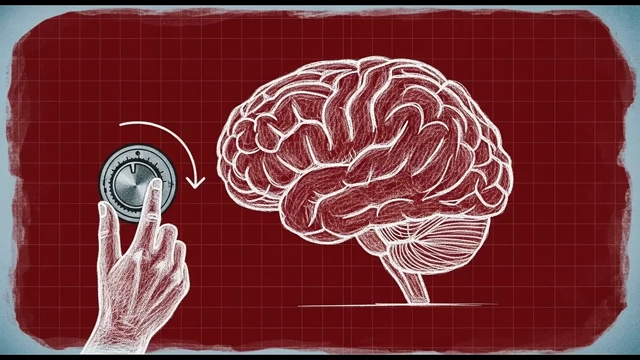
A hand adjusting a dial on a brain, illustrating the continuous process of managing dopamine baseline. [ 00:09:10 ] - Create an environment where discipline is the path of least resistance, making dopamine-rich activities harder to access and satisfaction-rich activities easier to start.
-
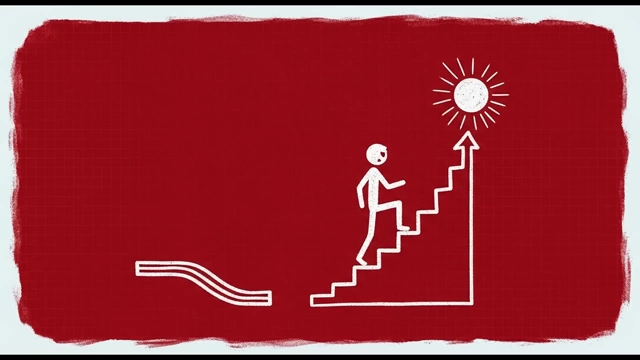
A person climbing stairs towards a rising sun, with a flat, easy path below, illustrating choosing growth over comfort. [ 00:09:15 ] - Examples: delete social media apps, use website blockers, keep the phone away during work, make healthy food visible and junk food inconvenient.
-
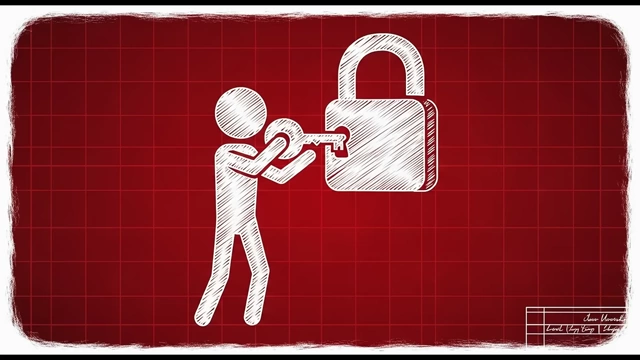
A person unlocking a padlock, symbolizing the act of making high-dopamine activities harder to access. [ 00:09:25 ] -
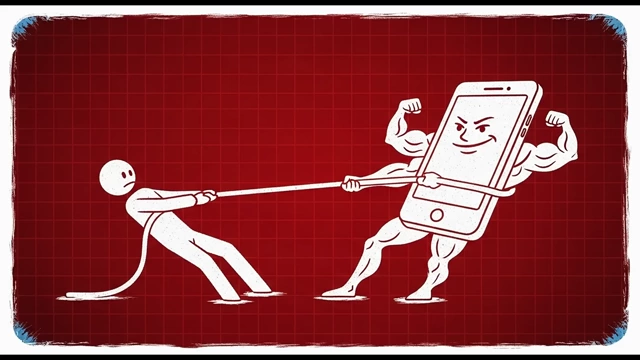
A person engaged in a tug-of-war with a muscular, smiling smartphone, depicting the struggle against digital addiction. [ 00:09:45 ]
- Social Component [00:10:00]
- Surround yourself with people who value focus, discipline, and deep work, as their habits are contagious.
- Seek communities and accountability partners that reinforce desired behaviors.
-
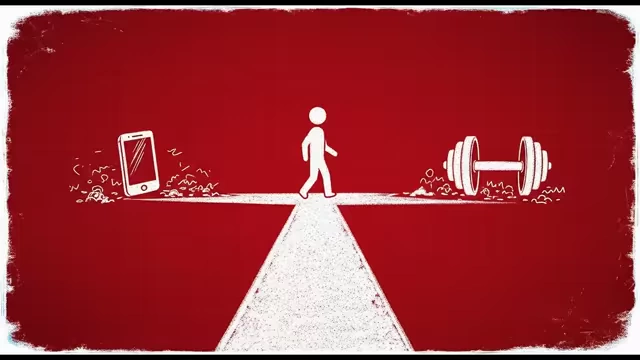
A person walking on a path, with a discarded phone on one side and a dumbbell on the other, symbolizing the choice of environment and social influence. [ 00:10:08 ] -
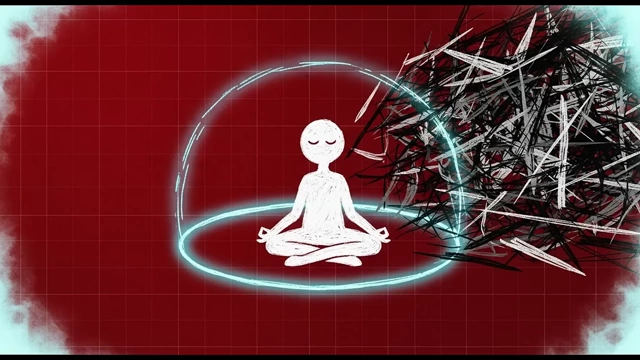
A meditating person protected by a glowing force field, warding off chaotic scribbles, symbolizing resistance to distraction. [ 00:10:43 ]
The Transformative Outcome: Choosing Discipline [00:10:41]
- Shift in Perspective [00:10:41]
- What seems "miserable" from a hijacked brain's perspective becomes easier and more rewarding from a recalibrated one.
-
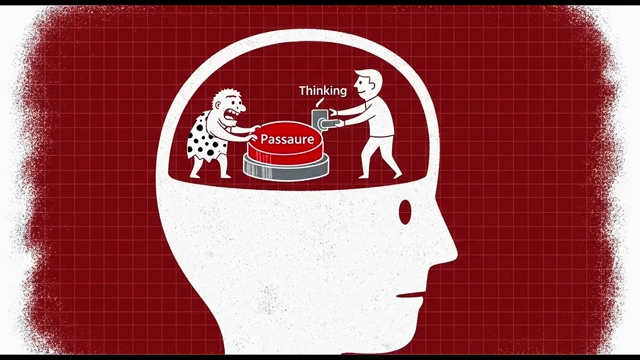
A head profile showing a 'primitive' figure impulsively pushing a 'Pleasure' button, while an 'advanced' figure tries to engage 'Thinking', illustrating the internal conflict between impulse and reason. [ 00:11:03 ] - Distraction leads to emptiness and anxiety, while discipline leads to accomplishment, confidence, and control.
-
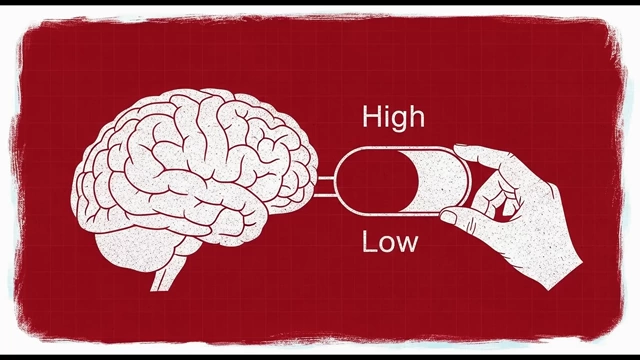
A hand adjusting a 'High/Low' switch on a brain, representing the control over dopamine sensitivity. [ 00:11:08 ] -
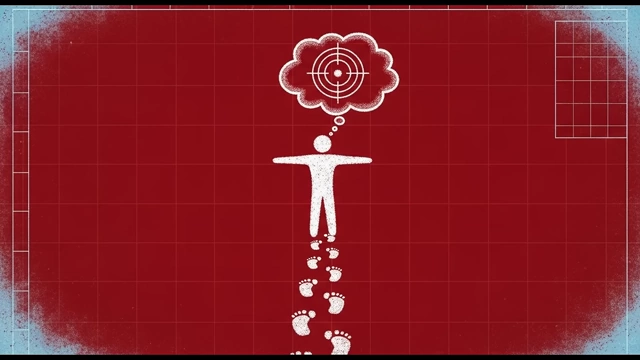
A person with footprints leading to a target in a thought bubble, representing purposeful action and control. [ 00:11:13 ] -
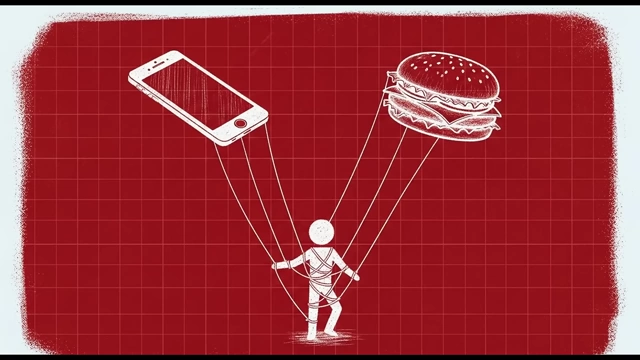
A person controlled by strings attached to a smartphone and a burger, symbolizing being a slave to algorithms and impulses. [ 00:11:28 ]
- Reclaiming Agency and Intrinsic Motivation [00:11:31]
- This process reclaims agency over one's mind, moving from being controlled by algorithms to choosing difficult, enjoyable things.
-
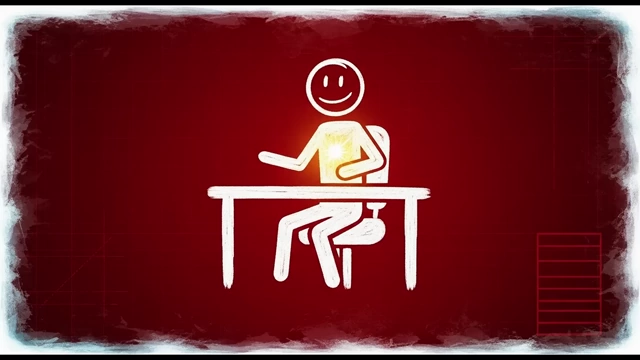
A person sitting at a desk with a glowing heart, representing intrinsic motivation and internal satisfaction. [ 00:11:33 ] -
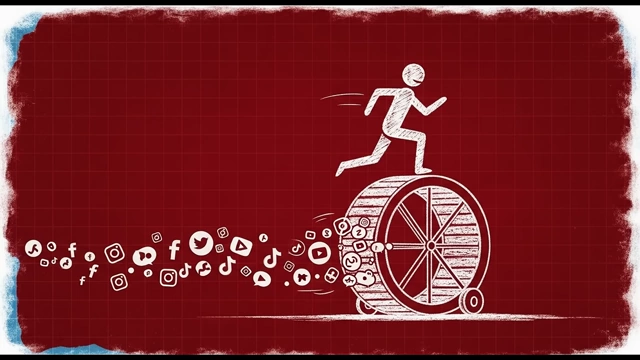
A person running on a hamster wheel, with social media icons cascading out, illustrating the endless cycle of distraction. [ 00:11:38 ] - It fosters intrinsic motivation, where actions are satisfying in themselves, not for external rewards.
-
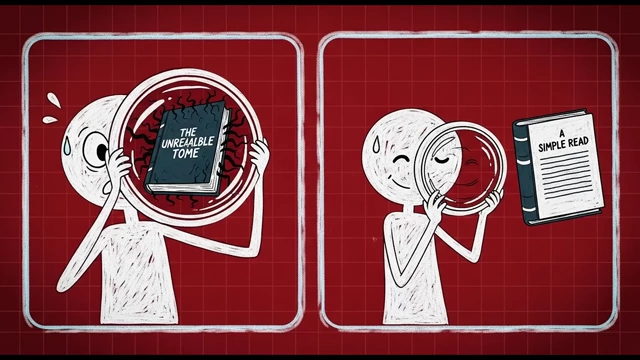
Two figures with masks: one seeing a 'hard' book as terrifying, the other seeing a 'simple read' with a smile, illustrating the shift in perception after rewiring. [ 00:11:53 ] -
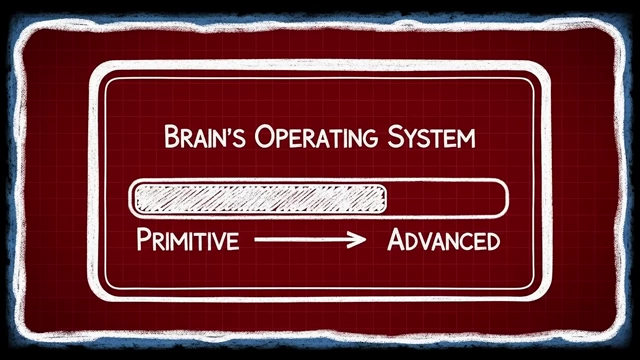
A 'Brain's Operating System' bar progressing from 'Primitive' to 'Advanced', symbolizing mental upgrade and greater self-control. [ 00:11:58 ] -
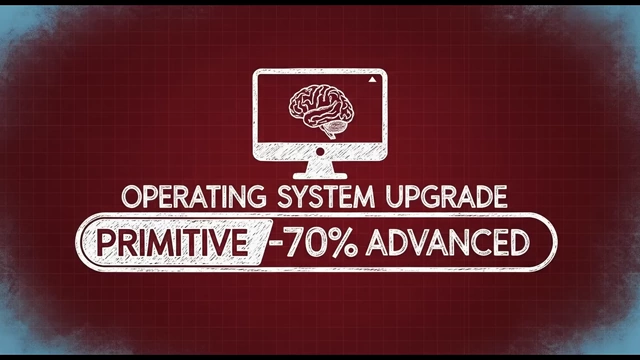
An 'Operating System Upgrade' visual showing progress from 'Primitive' to 'Advanced', with a 70% increase, representing substantial mental rewiring. [ 00:12:13 ] -
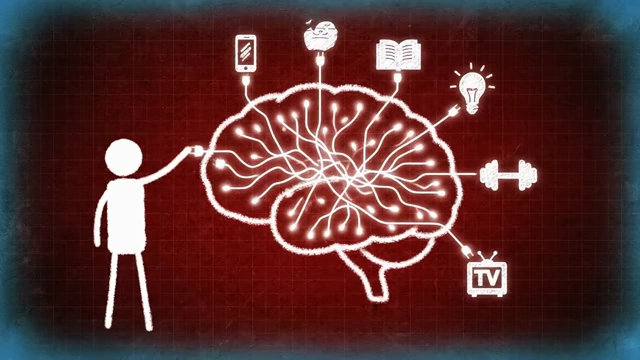
A person plugging various cables into a brain, connecting it to a phone, book, TV, ideas, and weights, illustrating different sources of stimulation. [ 00:13:13 ]
- Call to Action [00:12:58]
- Identify the highest source of "empty dopamine" and commit to removing it for 7 days.
- Observe the withdrawal, its peak, its fade, and what fills the space, documenting the shift in the relationship with effort.
-
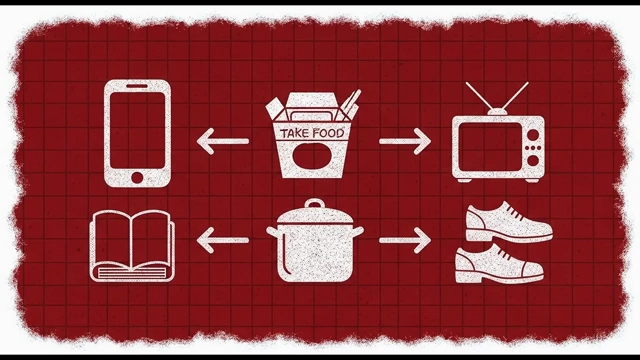
A diagram contrasting high-dopamine activities (phone, takeout, TV) with lower-dopamine, more rewarding alternatives (book, home cooking, walking shoes). [ 00:13:18 ] -
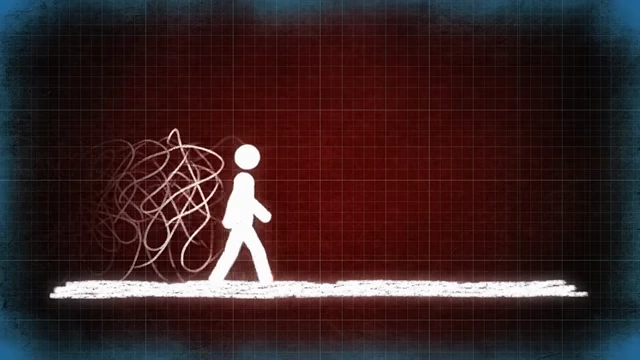
A person walking away from a messy, chaotic cloud, symbolizing leaving distractions behind for a clear path. [ 00:13:51 ] -
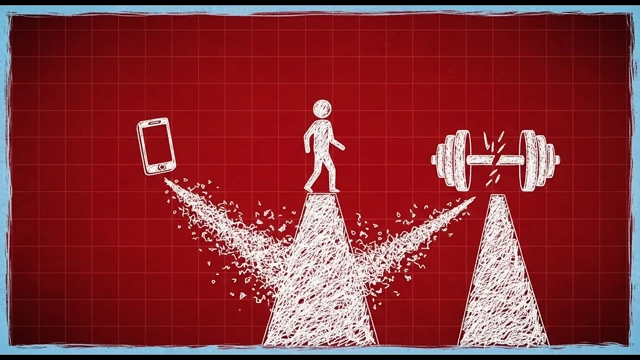
A person walking on a precarious bridge, with a phone on one side and a broken dumbbell on the other, symbolizing the challenging transition during rewiring. [ 00:14:12 ] -

A person climbing a winding path up a mountain, symbolizing the journey of embracing discipline. [ 00:14:21 ]