Elderly Poverty and Housing Challenges in Hong Kong: Auntie Ha's Story
Auntie Ha, an elderly woman in Hong Kong, faces significant challenges living alone and struggling to make ends meet in a subdivided flat. Despite being in her 70s, she works as a cleaner, as the basic old-age allowance is insufficient for her daily needs and medical expenses. Her living conditions are dire, with a tiny room, shared unhygienic facilities, and a persistent mouse problem. Auntie Ha initially struggled with public housing applications due to illiteracy, but with social worker assistance, her application was approved in 2020. Her story highlights the severe issue of elderly poverty and the lack of adequate support and affordable housing for senior citizens in Hong Kong, especially with proposed laws that might worsen her situation.
Introduction to Auntie Ha's Life [0:00]
Auntie Ha, a woman in her 70s, lives in a subdivided flat in Sham Shui Po, Hong Kong's poorest neighborhood. She emigrated from mainland China to join her son and his family, but they later moved abroad, leaving her alone in the city. To survive, she works as a cleaner.
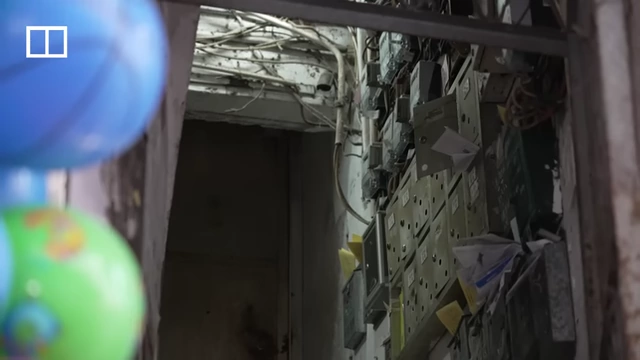
Daily Life and Financial Struggles [0:11]
Auntie Ha navigates daily life with limited resources, highlighting the high cost of living in Hong Kong.
- Grocery Shopping: [0:11] She shops at street markets, comparing prices to find the best deals on ingredients like vegetables and meat.
- [0:12] She notes that larger portions of food are expensive, preferring smaller, cheaper cuts.
- [0:15] For example, she bought choy sum and zucchini for HK$12 (US$1.50) to last three days.
- [0:21] She buys pork ribs that are cheaper than other meats.
- [0:41] She also buys four buns at a time for breakfast, storing them in the fridge and reheating one each morning.
- [0:45] She believes Hong Kong is better than her hometown in mainland China because she can work and afford food.
- [1:14] The cost of food is cheaper in Hong Kong compared to the village she came from.
- Work and Income: [3:05] Auntie Ha works as a cleaner, a job introduced to her by someone.
- [3:17] Her monthly rent is HK$2,000 (US$256).
- [3:32] In 2013, her starting salary as a cleaner was HK$7,440 (US$948) per month, equivalent to HK$28 (US$3.60) per hour.
- [3:51] Her current salary is a little over HK$10,000 (US$1,274) per month.
- [4:40] She states she doesn't want to rely on social security assistance because she prefers working to support herself.
- [9:05] She cannot rely on the basic old-age allowance as it is insufficient to cover medical expenses or daily needs, let alone retirement.
Living Conditions in a Subdivided Flat [2:27]
Auntie Ha's subdivided flat presents various challenges, contrasting sharply with her village home.
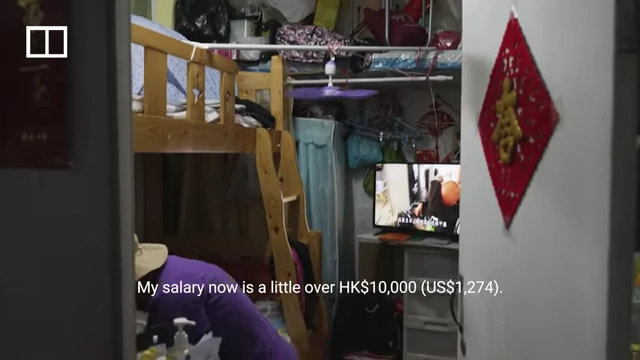
- Size and Amenities: [2:27] Her current living space is very small.
- [2:31] She prefers the village for its open air and better living conditions compared to Hong Kong's crowded environment.
- [3:24] Her current room has a window and an air conditioner, which is an improvement from her previous place, though she mainly uses a fan to save electricity.
- [4:18] She uses nets and tape on the windows to prevent mice from entering.
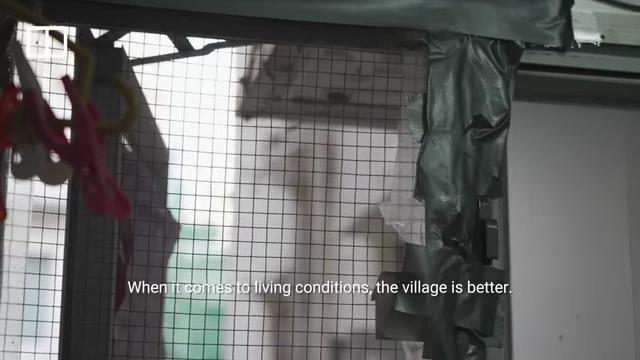
A metal mesh and tape cover Auntie Ha's window to prevent mice from entering her subdivided flat. [ 00:02:29 ] - [4:50] Her niece visited once and was terrified by the mice crawling in the ceiling.
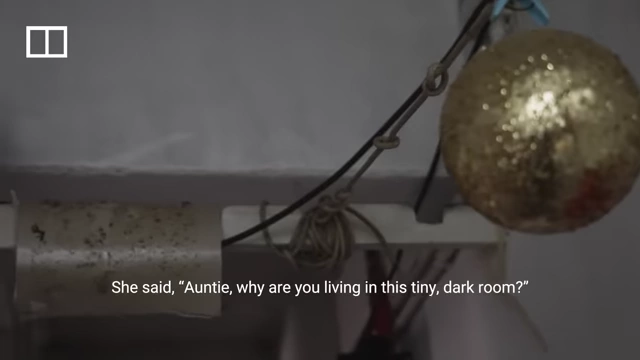
The ceiling of Auntie Ha's room where mice are frequently heard. [ 00:04:40 ] - [5:02] She estimates having caught at least 60 mice over the years, though only two this year.
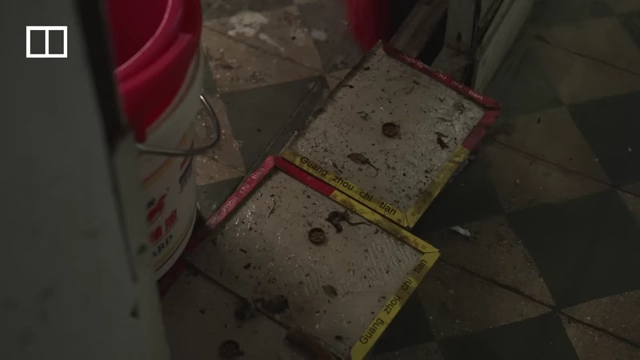
Mouse traps with captured mice in Auntie Ha's subdivided flat. [ 00:04:58 ] 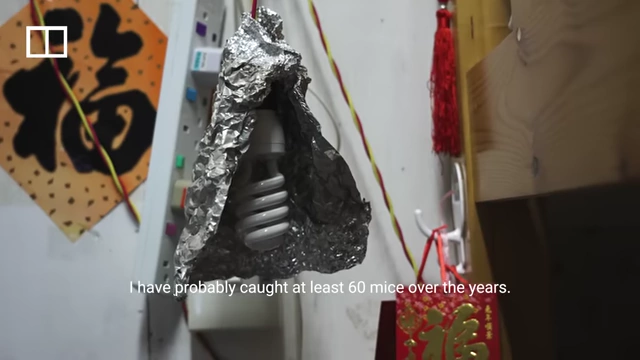
A lightbulb covered in aluminum foil, possibly to deter mice from the ceiling. [ 00:05:11 ]
- Shared Facilities: [7:31] Auntie Ha shares a bathroom and kitchen with other residents.
- [7:52] She complains that the shared washroom is unhygienic and often stinks, making it unpleasant to use.
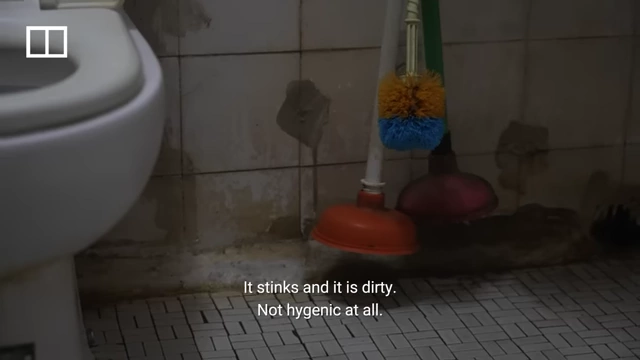
The unhygienic shared toilet facility in Auntie Ha's subdivided flat. [ 00:07:52 ] - [7:57] She can clearly hear others using the toilet, which impacts her privacy.
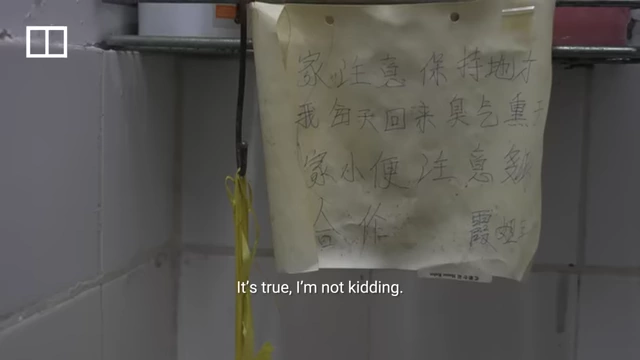
A handwritten note requesting residents to keep the shared bathroom clean due to unpleasant odors. [ 00:08:10 ]
- [7:52] She complains that the shared washroom is unhygienic and often stinks, making it unpleasant to use.
Challenges with Housing Applications [5:31]
Auntie Ha's journey to secure better housing has been fraught with misinterpretations and delays.
- Initial Application Attempt (2016-2017): [6:08] She attempted to apply for public housing by herself.
- [6:13] The Housing Authority sent her an acknowledgement letter, stating her application was received and pending approval.

The public housing application letter that Auntie Ha misinterpreted. [ 00:06:31 ] - [6:22] Due to her illiteracy and limited education, she misinterpreted the phone number on the letter as her queuing identification number, believing she had successfully secured public housing.
- [6:40] She drew a number from the letter, thinking it was her queue number, when it was actually the customer service hotline.
- [6:13] The Housing Authority sent her an acknowledgement letter, stating her application was received and pending approval.
- Intervention by a Social Worker: [6:55] A social worker helped Auntie Ha clarify her application status.
- [6:45] The social worker contacted the Housing Authority to reapply for public housing and inquire about shortening her waiting time due to her circumstances.
- [7:02] Her application was officially approved in 2020 with the social worker's assistance, securing her a public housing unit.
- [7:34] The social worker showed Auntie Ha what her new, independent living space would look like, complete with her own bathroom and kitchen.
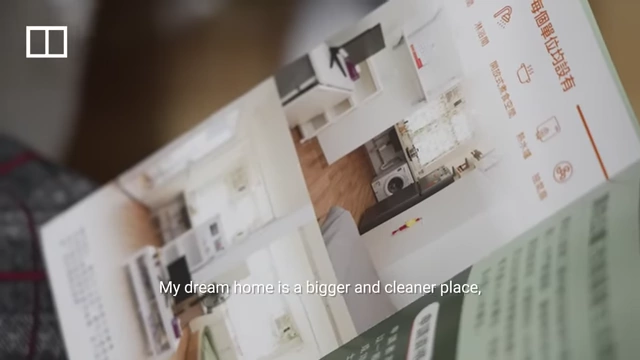
An image of the proposed public housing unit layout, highlighting private bathroom and kitchen spaces. [ 00:07:42 ] - [7:48] Auntie Ha expressed relief that her new private facilities would be better than the current shared and unhygienic ones.
Future Outlook and Policy Implications [8:12]
Auntie Ha's situation reflects a broader issue of elderly poverty and housing inadequacy in Hong Kong.
- The Need for Work: [9:09] Despite her age and physical ailments (stomach and waist pain), she cannot retire because her old age allowance is insufficient.
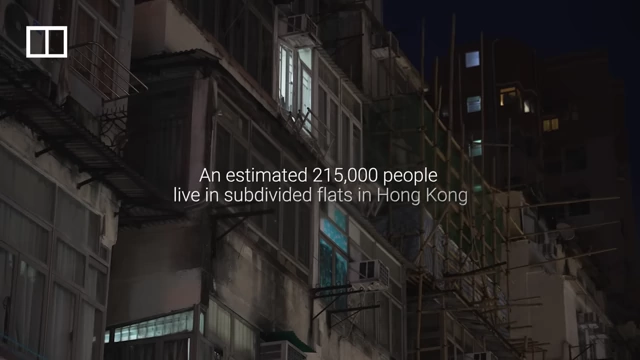
- Impact of Proposed Housing Law: [10:00] An estimated 215,000 people live in subdivided flats in Hong Kong.
- [10:01] In 2024, the government proposed a law requiring subdivided flats to meet certain standards, including having their own bathrooms.
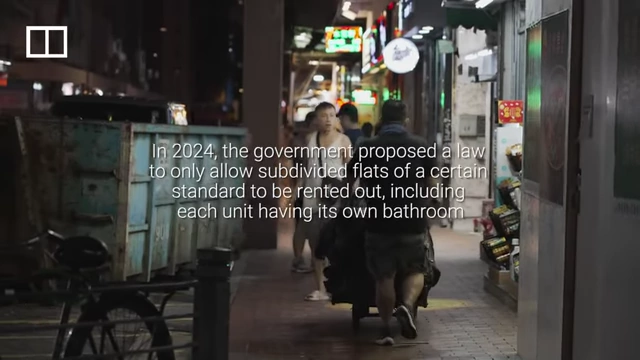
A street view of Hong Kong with text describing the proposed 2024 law for subdivided flats to meet certain standards, including having their own bathrooms. [ 00:08:25 ] - [10:09] If passed, Auntie Ha worries her landlord might evict her or increase her rent to cover renovation costs, further complicating her housing situation.
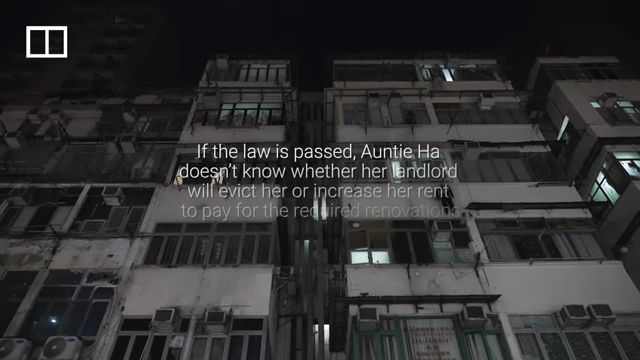
Residential buildings in Hong Kong illustrating the potential impact of new housing laws, where landlords might evict tenants or increase rent for renovations. [ 00:08:32 ]
- [10:01] In 2024, the government proposed a law requiring subdivided flats to meet certain standards, including having their own bathrooms.