Understanding Japan's "Low Desire Society": Economic Stagnation and the Search for Authentic Fulfillment
Japan is experiencing a "low desire society" phenomenon, characterized by young people's lack of ambition, preference for stability, and disinterest in traditional aspirations like promotions, homeownership, and even romantic relationships, leading to low fertility rates. This phenomenon stems from the country's post-World War II economic miracle and its subsequent asset bubble burst in the early 1990s, which led to "lost decades" of economic stagnation, instilling deep risk aversion and pessimism. From an economic perspective, this low desire hinders growth, making traditional stimulus ineffective as people hoard cash. However, from an individual's perspective, low desire isn't inherently a problem, aligning with ancient philosophical ideas of contentment over constant striving, exemplified by Alexander the Great and Diogenes. The video argues that the key isn't the amount of desire, but its authenticity, urging individuals to discern their true aspirations and act courageously upon them, distinguishing between genuine contentment and passive resignation.

Introduction [00:00]
Something peculiar is happening in Japan, especially among young people, who exhibit a lack of desire for traditional pursuits.
- Manifestations of Low Desire:
- Avoiding job promotions, preferring simple routines at the office.
- Reduced pursuit of hobbies, opting for passive entertainment.
- Preferring renting over buying homes and public transport over cars.
- Hoarding savings as cash instead of investing in assets.
- High rates of sexless or nearly sexless marriages and record-low fertility rates.

News Headline: The Japanese sex drought: why are married women so uninterested in making love? [ 00:00:34 ] 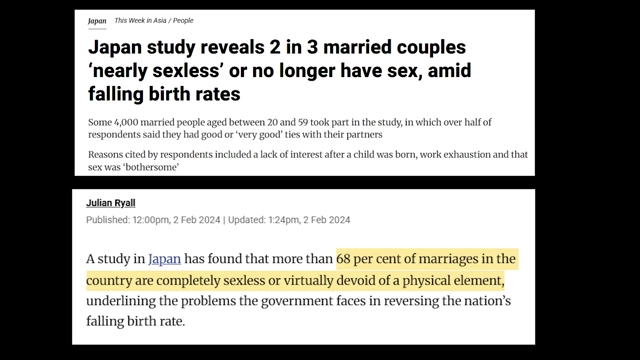
News Headline: Japan study reveals 2 in 3 married couples 'nearly sexless' [ 00:00:36 ]
Graph showing Japan's fertility rate at 1.26 births per woman in 2022, compared to US and Canada [ 00:00:38 ] - About 45% of young adults have not had sex for at least 12 months, and half of never-married individuals are virgins.

Table showing 45.3% of women and 44.5% of men reported not having any sexual partners during the past year [ 00:00:47 ] 
Chart showing percentage of never-married persons with sexual intercourse experience by survey year and age [ 00:00:52 ]
- The Term "Low Desire Society":
- Coined by Japanese management consultant Kenichi Ohmae.

Portrait of Kenichi Ohmae [ 00:00:57 ] - Described as "Japan's unique world unprecedented abnormality" in his book.

Author Kenichi Ohmae's book about 'Low Desire Society' [ 00:01:03 ] - Characterized by a fear of hope and profound risk aversion, with people suppressing desires and saving money to minimize anxiety.
- Coined by Japanese management consultant Kenichi Ohmae.
Japan’s Economic Miracle [01:28]
Japan's current low-desire state contrasts sharply with its post-World War II economic boom.
- Post-War Devastation and Recovery:
- After WWII, Japan was in ruins, its cities devastated, economy shattered, and people impoverished.
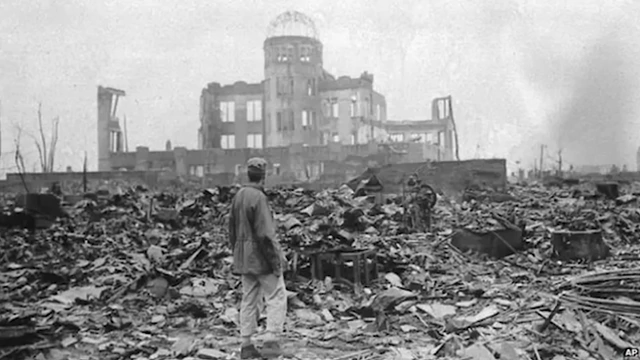
The atomic bomb dome in Hiroshima after World War II [ 00:01:43 ] 
A child sitting on rubble in post-WWII Japan [ 00:01:49 ] - Against all expectations, Japan achieved an "economic miracle," with an average growth rate of 10% per year for decades.

A large group of Japanese people celebrating "The Japanese Economic Miracle" [ 00:02:00 ]
- After WWII, Japan was in ruins, its cities devastated, economy shattered, and people impoverished.
- Rise to Economic Power:
- Vibrant and Ambitious Society:
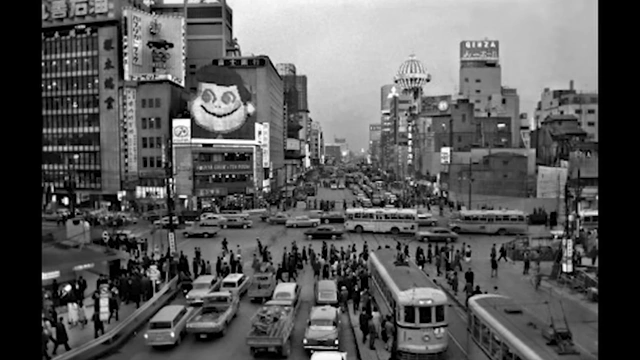
- During this time, Japan was a vibrant and ambitious society.
- People dreamt big, worked hard, and aimed for significant achievements.
- Everyone sought to advance, buy homes, start families, and enjoy a prosperous life.
Bubble Burst [02:52]
The era of rapid growth proved unsustainable, leading to an asset bubble that eventually burst.
- Signs of an Unsustainable Bubble:
- Despite being 25 times smaller in land mass than the US, Japan's total land value was four times that of the entire US.

Map illustrating Japan's land area overlaid on the United States [ 00:03:04 ] - The Tokyo Imperial Palace (3.4 sq km) was reportedly worth more than all real estate in California combined.

The Tokyo Imperial Palace surrounded by a moat and trees [ 00:03:15 ] 
Map of California, highlighting its size for comparison [ 00:03:22 ] - People engaged in rampant speculative buying, including golf club memberships costing up to $3 million.

Article headline: "In Japan, Monuments to a Bubble That Burst" mentioning golf club memberships [ 00:03:38 ] - Japanese corporations expanded globally, acquiring iconic foreign assets like Rockefeller Center ($1.4 billion), Columbia Pictures ($3.4 billion), and Universal Pictures ($6.6 billion).

The Rockefeller Center in New York City [ 00:03:49 ] 
The Columbia Pictures logo [ 00:03:53 ] 
The Universal Pictures logo [ 00:03:56 ] 
News headline: "Suddenly there's concern as Japanese 'buy America'" [ 00:04:04 ] 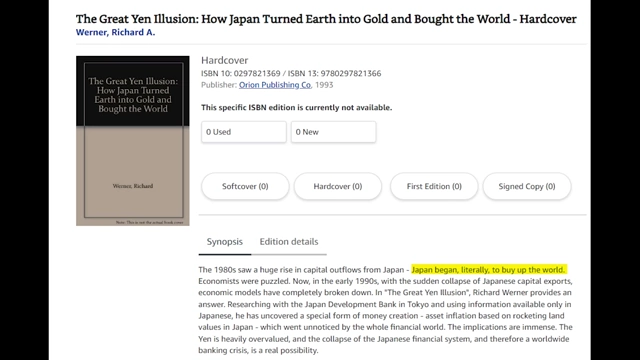
Book cover and synopsis for "The Great Yen Illusion: How Japan Turned Earth into Gold and Bought the World" [ 00:04:06 ] - Investors became accustomed to constantly rising prices, expecting to always sell for more.
- Despite being 25 times smaller in land mass than the US, Japan's total land value was four times that of the entire US.
- The Crash:
- In 1989, the Bank of Japan sharply raised interest rates to control speculation and inflation.
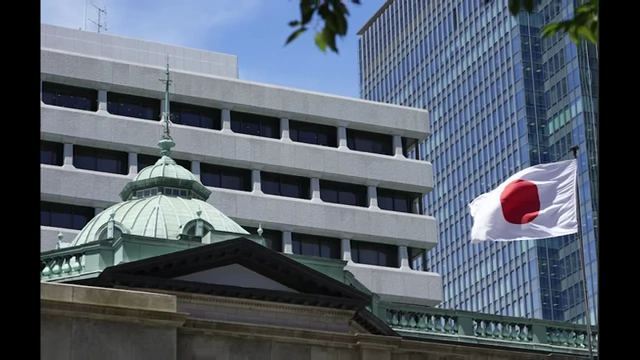
The Bank of Japan building with a Japanese flag waving [ 00:04:27 ] - This led to the asset bubble bursting, triggering a severe economic downturn.
- The stock market crashed in 1990, losing 80% of its value over the next decade.
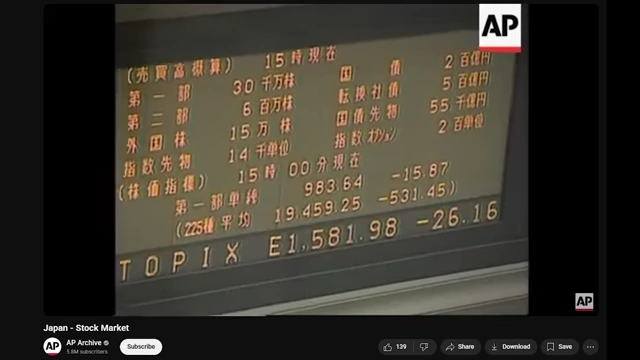
A screen displaying real-time stock market data with red numbers indicating losses [ 00:04:45 ] 
A long-term chart of the Nikkei 225 stock market index showing a sharp decline from 1990 followed by prolonged stagnation [ 00:04:59 ] - The real estate market followed in 1991, losing 70% of its value.
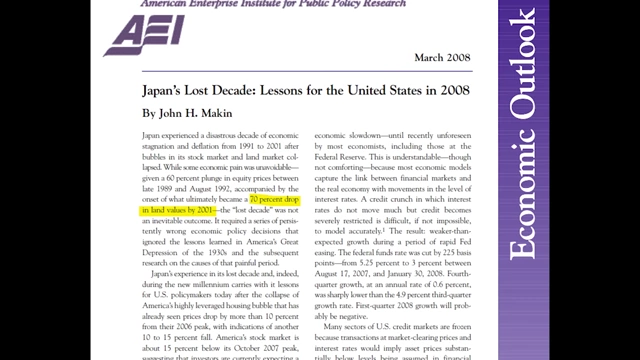
An academic paper titled "Japan's Lost Decade" highlighting a 70% drop in land values by 2001 [ 00:05:02 ] - Businesses and banks faced massive debts, leading to bankruptcies and layoffs.
- Individuals saw their paper wealth vanish.
- In 1989, the Bank of Japan sharply raised interest rates to control speculation and inflation.
Lost Decades [05:22]
The burst bubble led to a prolonged period of economic stagnation known as Japan's "lost decades."
- Economic Stagnation:
- The GDP more or less stopped growing.
- Wages stagnated, and prices deflated.
- Tokyo's real estate never recovered to its peak.
- The Japanese stock market only recently returned to its pre-crash value (last year).
- Societal Impact and Shift in Mindset:
- People became deeply pessimistic and risk-averse, preparing for and expecting the worst.
- The lesson internalized was "Ambition always ends in frustration."
- Individuals began to prioritize stability: steady income, simple routines, and cash on hand.
- The younger generation, growing up in this era of "quiet resignation," never experienced rising living standards and became accustomed to stagnation as the norm.
- Job security was seen as illusory due to past layoffs and bankruptcies of major corporations.
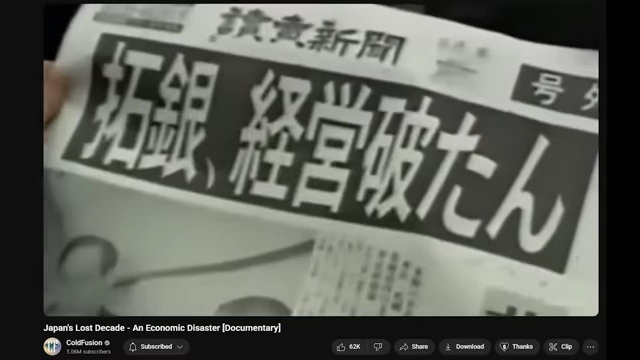
A Japanese newspaper headline indicating a large corporation's bankruptcy [ 00:06:51 ]
- Low Cost of Living as a Factor:
- Fortunately, low prices meant an affordable cost of living (low rent, efficient public transport, affordable food).
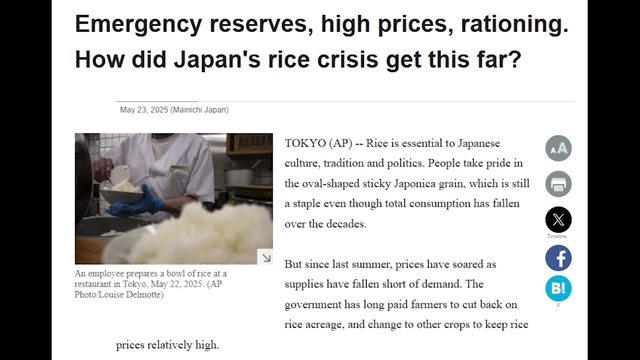
News article about high prices and rationing during Japan's rice crisis [ 00:07:13 ] - This allowed people to get by with modest incomes, fostering a mindset of "keep our heads down and we'll survive," avoiding risks, living below means, and saving.

The entrance of a Daiso 100-yen shop in Japan [ 00:07:21 ] 
A 7-Eleven convenience store in Japan [ 00:07:23 ]
- Fortunately, low prices meant an affordable cost of living (low rent, efficient public transport, affordable food).
The Economic Problem [07:58]
From an economic standpoint, the low desire society presents a significant challenge.
- Desire as the Root of Economy:
- Kenichi Ohmae's book on low desire society primarily focuses on the Japanese economy.
- Desire is fundamental to economic systems; all economic activity aims to fulfill desires.
- If people cease to have desires, the economic machinery grinds to a halt.
- Underperforming Economy:
- Being a low desire society means having an underperforming economy.
- Japan's real GDP per capita grew at an average of only 0.7% per year since the 1990s crash, one of the lowest among G7 nations.
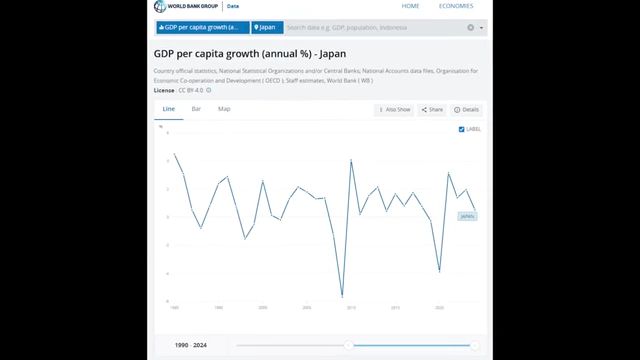
Graph showing Japan's GDP per capita annual growth from 1990 to 2024 [ 00:08:49 ]
Headache for Politicians [08:58]
The low desire society poses a unique and difficult problem for Japanese politicians and policymakers.
- Unique Economic Challenges:
- Economist Simon Kuznets famously categorized countries into "developed, underdeveloped, Japan, and Argentina," highlighting Japan's unique economic behavior.
- Economic interventions that work in other countries often fail in Japan because people lack desire.
- Ineffective Stimulus:
- Most GDP-boosting strategies involve injecting money to stimulate spending and investment.
- However, in Japan, people tend to save injected money as cash due to risk aversion, rather than spending or investing it, causing the money to "disappear" from the active economy.
Individual’s Perspective [10:23]
The video shifts to question whether low desire is a problem from the perspective of the individuals living in Japan.
- A Nuanced Question:
- It's not immediately obvious why low desire is a problem for an individual.
- If someone is content and comfortable without wanting more, it seems to be an absence of problems, not a problem itself.
- This aligns with ancient philosophical teachings, like Buddha's, which suggest that unfulfilled desires are a source of suffering.
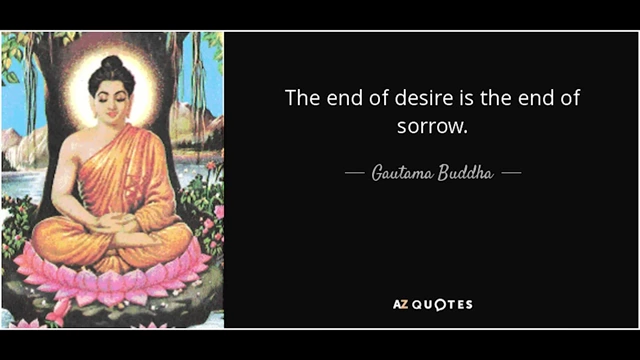
Quote: "The end of desire is the end of sorrow." - Gautama Buddha [ 00:11:52 ]
- Paradox of a Fulfilling Life:
- There are two seemingly contradictory paths to a fulfilling life:
- Get what you want: Fulfilling one's desires through ambition and effort.
- Want what you have: Lowering one's desires and finding contentment with the present.
- Ancient wisdom often views low desire as a virtue, as exemplified by Socrates, who appreciated "how many things I can do without."

Bust of the ancient Greek philosopher Socrates [ 00:12:27 ] 
Illustration of a bustling Athenian marketplace [ 00:12:30 ]
- There are two seemingly contradictory paths to a fulfilling life:
Ancient Greek Stories [12:25]
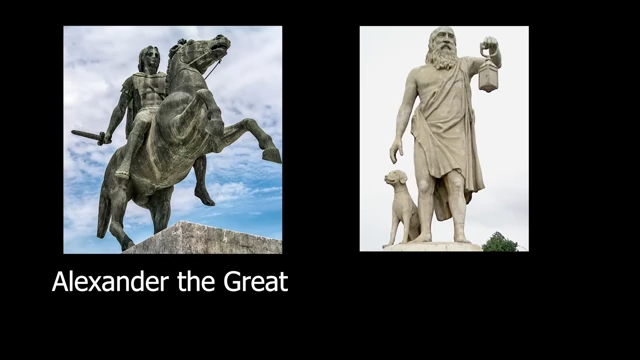
The tension between pursuing desires and finding contentment is illustrated through the story of Alexander the Great and Diogenes the Cynic.
- Alexander the Great:
- Diogenes the Cynic:
- A minimalist philosopher who lived in extreme austerity (homeless, slept in a barrel, discarded his cup upon seeing a child drink with hands).

Painting of Diogenes sitting in a barrel with dogs [ 00:13:25 ] 
Painting of Diogenes discarding his cup after seeing a child drink with their hands [ 00:13:34 ] - Represented the idea of finding contentment by wanting very little.
- A minimalist philosopher who lived in extreme austerity (homeless, slept in a barrel, discarded his cup upon seeing a child drink with hands).
- The Encounter:
- Alexander approached Diogenes, who was sunbathing, and offered to grant any desire within his power.

A classical painting depicting Diogenes sunbathing [ 00:13:45 ] - Diogenes famously replied, "Could you stand a bit to the side because you're blocking my sun?"

Alexander the Great talking to Diogenes who is sitting in a barrel, with Diogenes saying "You are blocking my sun" [ 00:14:07 ]
- Alexander approached Diogenes, who was sunbathing, and offered to grant any desire within his power.
- Who is Better?
- The story poses the question: Is it better to be Alexander, achieving big goals, or Diogenes, finding contentment as he was?

“Amount” as an Answer [14:25]
A common, but perhaps insufficient, answer to the question of desire is finding a "healthy medium."
- Lack of Specificity:
- This answer suggests a balance between having some desires and working hard while maintaining work-life balance.
- However, it lacks specificity regarding the "optimal amount of desire," making it a "lazy" answer.
- Focus on Quantity:
- This approach implies that the amount of desire is the central issue, which the video suggests is not the primary key.
“Authenticity” as an Answer [15:19]
The video proposes that the true answer lies in the authenticity of one's desires.
- Alexander's Insight:
- Alexander, after meeting Diogenes, remarked, "If I weren't Alexander, I would like to be Diogenes."
- This suggests a lack of choice for Alexander, who was "condemned to be himself" – naturally ambitious and driven by many desires.

Map showing Alexander the Great's military campaigns and routes [ 00:17:20 ] - While people can change, each individual has a unique nature and capacity for change. Alexander, despite his admiration for Diogenes, was inherently driven to pursue his own path.
- The Key: Authentic Desire:
- The key is not the amount of desire, but what one authentically desires based on their true self.
- Acting on authentic desires requires three difficult things:

Numbered list: 1. The awareness to know ourselves, 2. The wisdom to decide, 3. The courage to take action [ 00:17:56 ] - Awareness to know ourselves: Understanding one's true desires, not those conditioned by external factors.
- Wisdom to decide: Choosing a path aligned with these authentic desires.
- Courage to take action: Overcoming fear and inertia to pursue that chosen path.
- Personal Example (The Speaker's Experience):
- The speaker shared his experience as a corporate consultant, a career he initially thought he loved because of external validation (parental approval, peer enthusiasm, LinkedIn messages).
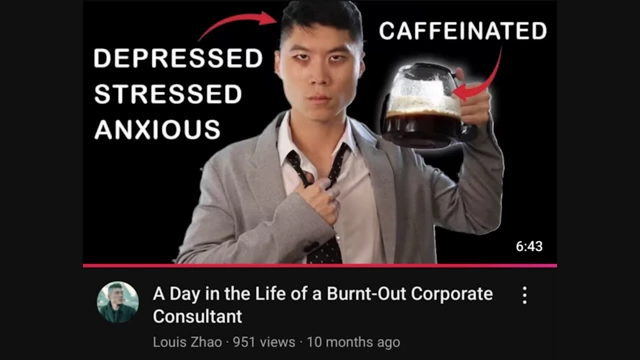
YouTube thumbnail of the speaker titled "A Day in the Life of a Burnt-Out Corporate Consultant" [ 00:18:06 ] - He realized this was not his authentic desire but a conditioned one, leading to misery.
- This is described as a "shadow career" – working in a career one doesn't care about to avoid what one does care about.

Steven Pressfield, author of "The War of Art" which discusses the "shadow career" concept [ 00:19:14 ] - It took significant time and suffering to recognize this, decide to quit, and find the courage to do so.
- The speaker shared his experience as a corporate consultant, a career he initially thought he loved because of external validation (parental approval, peer enthusiasm, LinkedIn messages).
Conclusion [19:47]
The applicability of whether a low desire society is a problem depends on the authenticity of individuals' low desire.
- Authentic Low Desire:
- Some individuals genuinely have low desires because it aligns with their true self, like Diogenes.
- They have seen through consumerism and are content without incessant wants.
- For these people, low desire is not a problem; it's a virtue from which others can learn. Politicians' economic interventions would be futile and annoying for them.
- Inauthentic Low Desire:
- Other individuals have low desires not out of conscious choice but due to passivity (e.g., fear of failure, low self-esteem, addiction to comfort, lack of support).
- For these individuals, unpursued dreams cause internal suffering, and their resistance prevents them from contributing their gifts to the world.
- For this group, low desire is a problem, primarily a personal one.
- While external support (from politicians or others) can help, ultimately, individuals must take the initiative to pursue their unique journeys.
- Encouragement:
- The video encourages those shunning their dreams to find the courage to start and keep walking, emphasizing that the only mistakes are "not starting and not finishing."