Understanding Renewable Energy: Costs, Materials, Land Use, and Grid Integration
This video debunks common misconceptions about renewable energy, particularly solar and batteries, by comparing them to fossil fuels.
- Fossil Fuels vs. Renewables: Petroleum is a "disposable energy" source with high, ongoing operating costs, while renewables like solar offer a durable, one-time investment with free energy capture.
- Cost Comparison: The lifetime fuel cost of a small gasoline car (
$19,500) could instead purchase enough solar panels (111 of 500W panels) to power multiple homes for decades or cover an electric car's entire energy needs for just $2,100.
Screenshot of a solar panel wholesaler's website, showing prices for pallets of 500W solar panels. [ 00:19:40 ] - Solar Farms & Efficiency: Large-scale solar farms, even in less sunny regions, are profitable due to near-zero operating costs post-installation, driving down electricity prices.
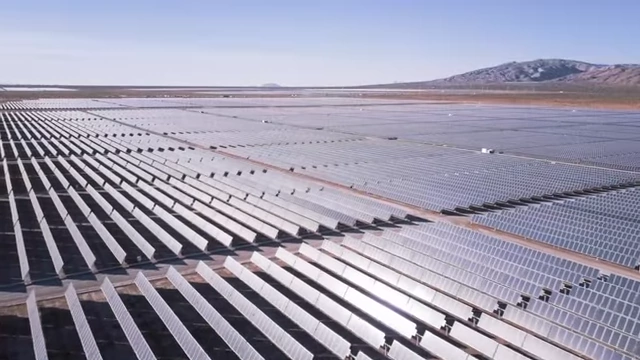
An aerial view of a vast solar farm under a clear sky. [ 00:26:20 ] - Land Use: Concerns about land use for solar are often exaggerated; converting just a quarter of US land currently used for corn ethanol production could generate 84% more electricity than the entire US grid uses annually.

A webpage showing statistics on corn production and land use, with a section highlighted about corn used for ethanol. [ 00:36:10 ] - Materials & Recycling: Solar panels are primarily recyclable glass and aluminum, with thin silicon cells. Batteries, though containing "nasty chemicals," are durable and highly recyclable, with emerging technologies (like sodium-ion) reducing reliance on scarce materials. Battery materials are recovered, not destroyed, enabling a closed-loop system akin to lead-acid battery recycling.
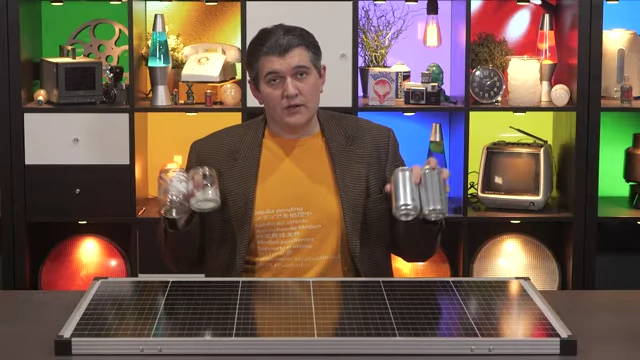
A solar panel on a table with glass jars and aluminum cans next to it, illustrating its primary components. [ 00:44:30 ] - Political Context: The video highlights a pattern of political obstruction to renewable energy, often driven by fossil fuel interests and misinformation, hindering progress towards a more affordable and secure energy future.
Intro [00:00]
The video begins by highlighting a puzzling disconnect in 2026: despite advanced digital technology, there's still an obsession with finding oil, a 19th-century technology. Petroleum is primarily used for gasoline and diesel, powering machines but being a "disposable energy" source, meaning it's single-use and constantly needs replenishment. This leads to precarious reliance on resource extraction, geopolitical vulnerabilities, and high, volatile operating costs that impact the entire economy.
How to obtain video link
How to obtain video link on mobile
- Go to YouTube
- Long press the video. A menu will appear
- Click "Copy link" or ("Share" then "Copy link")
- Come back to this page and click "Submit"
How to obtain video link on desktop
- Go to YouTube
- Right click the video and click "Copy Link Address"
- Come back to this page and click "Submit"
How to obtain video link
How to obtain video link on mobile
- Go to YouTube
- Long press the video. A menu will appear
- Click "Copy link" or ("Share" then "Copy link")
- Come back to this page and click "Submit"
How to obtain video link on desktop
- Go to YouTube
- Right click the video and click "Copy Link Address"
- Come back to this page and click "Submit"
Some opening notes [07:35]
The presenter clarifies that the video aims to educate about renewable energy without endorsing specific products. He emphasizes that he personally doesn't have rooftop solar but advocates for shifting energy demand to the electric grid, which can be powered by renewables. He addresses anticipated concerns, particularly about batteries, promising to explain why worries about them are largely unfounded. The primary focus will be on cars for comparison, as they are major oil consumers.
Cars and all the oil they use [10:14]
The video uses a 2010 Nissan Cube as an example of a gasoline-powered car.
- Disposable Fuel: The car constantly burns gasoline, requiring ongoing replacement, which is a significant, recurring cost.
- Lifetime Fuel Cost: A Nissan Cube traveling 188,000 miles (assuming 30 MPG highway) would burn approximately 6,250 gallons of gasoline.
- Financial Impact: Using historical average US gas prices from 2011-2025, this amount of gasoline would cost around $19,500, which is more than the car's initial purchase price. This highlights the substantial, continuous operational expenditure (OpEx) of fossil fuels.

A gas tanker truck at a fueling station at night, with a Shell sign visible in the background. [ 00:12:30 ]
Photovoltaics and electric cars [15:38]
The discussion shifts to electric vehicles (EVs) using a Hyundai Ioniq 5 as an example.
- Zero Gasoline Consumption: The EV, having no engine, consumes no gasoline even after nearly 50,000 miles of driving.
- Diverse Charging Sources: EVs can be charged from any electricity source, including nuclear, hydroelectric, natural gas (currently ~40% of US electricity), and most excitingly, solar.
- Solar as Free Energy: Photovoltaic (PV) solar panels convert sunlight into electricity at no ongoing fuel cost, presenting a "free" energy harvest after the initial equipment purchase.
- Battery Storage: While sunlight isn't constant, batteries allow for energy storage to power EVs and homes at night or on cloudy days.

A man standing next to a grey electric car, holding a solar panel. [ 00:15:40 ]
A cost and opportunity comparison [18:59]
The video contrasts the economics of gasoline cars with solar-powered EVs.
- Solar Panel Cost: Wholesale prices for 500-watt solar panels are around $175 each, often with a 25-year warranty.
Screenshot of a solar panel wholesaler's website, showing prices for pallets of 500W solar panels. [ 00:19:40 ] - Investment Opportunity: The $19,500 previously spent on gasoline for the Nissan Cube could buy 111 such solar panels. This amount of solar capacity could fully power six or seven average single-family homes for decades.
- EV Lifetime Fuel Cost with Solar: A driver in Chicagoland needing to power a Hyundai Ioniq 5 for 13,000 miles annually would require 12 solar panels, costing about $2,100. This single upfront capital expenditure (CapEx) would cover the car's entire lifetime energy needs.
- Durable vs. Disposable: This demonstrates that renewable energy capacity is a durable, one-time investment that generates free electricity for years, unlike fossil fuels which require continuous purchasing and are destroyed upon use.
Solar farms [22:33]
The discussion moves to large-scale solar energy production.
- DePue Solar Farm Example: A 27-megawatt solar farm in DePue, Illinois, on approximately 120 acres, highlights that even in less sunny states, solar is viable.
- CapEx vs. OpEx for Businesses: Businesses understand the difference between capital expenditure (CapEx) – upfront investment in durable assets – and operating expenditure (OpEx) – ongoing costs like fuel.
- Generators vs. Grid: Backup generators have high OpEx due to fuel costs, making them more expensive than grid electricity, even if the grid uses natural gas. Grid-scale power stations benefit from economies of scale, making electricity generation and distribution efficient.
- Solar Farm Profitability: Solar farms have near-zero OpEx (sunlight is free). Once the initial CapEx for panels is covered, almost all revenue from selling electricity to the grid becomes profit. This economic advantage drives the proliferation of solar farms.
An aerial view of a vast solar farm under a clear sky. [ 00:26:20 ]
A discussion of land use [30:35]
The video addresses common concerns about the large land footprint of solar farms.
- Solar Farm Footprint: The 27 MW solar farm in DePue, Illinois, uses roughly 120 acres.
- Corn Ethanol Land Use Comparison: The presenter contrasts this with land used for corn ethanol production in the US.
- Natural Environment: Illinois, the "Prairie State," has been largely converted to farmland.
- Single Harvest: Cornfields yield only one harvest per year, unlike solar panels that "harvest" energy daily.
- Purpose of Corn: A significant portion (25-40%) of the 96 million acres of corn grown in the US is used for ethanol, effectively "feeding cars."
- Energy Output Comparison (120 acres):
- 120 acres of corn ethanol yield ~66,000 gallons of ethanol per year, powering cars for ~2 million miles (assuming a 40% fuel economy penalty for E85).
- The 120-acre DePue solar farm generates ~37,000 megawatt-hours (MWh) per year, powering electric cars for ~74 million miles (assuming 2 miles/kWh).
- Solar is drastically more efficient in terms of miles driven per acre than corn ethanol.
- National Impact: If just the 25 million acres of US farmland currently dedicated to corn ethanol were converted to solar, it would generate 7,708,333,333 MWh annually. This is 84% more electricity than the entire US grid currently produces from all energy sources (4.178 billion MWh in 2023).
- Conclusion on Land Use: Land use for solar is not a significant concern, especially given inefficient agricultural practices like growing corn for fuel.
A webpage showing statistics on corn production and land use, with a section highlighted about corn used for ethanol. [ 00:36:10 ] 
A research paper table comparing land use efficiency of solar PV to corn ethanol for powering electric and internal combustion vehicles. [ 00:38:06 ]
A diversion on wind power [38:29]
The video briefly touches upon wind energy.
- Coexistence with Agriculture: Wind turbines can be placed in fields alongside crops, a practice known as agrivoltaics.
- Wind Turbine "Gasoline" Equivalent: A single 2-megawatt wind turbine on a windy day can charge an EV battery in about 2.5 minutes. This is equivalent to producing about 3 gallons of refined gasoline per minute.
- Operational Differences: Wind turbines are large machines with moving parts requiring more maintenance (OpEx) than solid-state solar panels, making them slightly less cost-competitive than solar but still far more efficient than fossil fuels.
- Reliability: Wind turbines operate on cloudy days and at night, complementing solar power.

A man standing next to a grey electric car with large wind turbines in the background. [ 00:39:10 ]
The materials in solar panels [41:17]
The presenter examines the composition of solar panels to address concerns about "toxic materials."
- Panel Composition: The vast majority of a solar panel's mass consists of aluminum, glass, and adhesives.
- Solar Cells: The actual silicon solar cells are extremely thin (less than 200 micrometers), making up only about 3% of the panel's total mass (approx. 215g for a 100W panel, ~1kg for a 500W panel).
- Recyclability of Main Components: Aluminum and glass are common, cheap, and easily recyclable materials, used widely in food containers. Established industrial processes already recycle these materials.
A solar panel on a table with glass jars and aluminum cans next to it, illustrating its primary components. [ 00:44:30 ] - Silicon and "Toxic Materials": The vast majority of solar cells today use monocrystalline silicon, derived from quartz (rock).
- Lead in Solder: The only potentially harmful substance is lead in solder used for electrical connections. However, lead is safely managed and recycled in other industries (e.g., 99% of lead-acid car batteries are recycled in a closed-loop system).
- Silicon Recycling: Silicon itself can theoretically be recycled by melting and purifying worn-out cells, though it might not always be economically viable. Even if landfilled, the total silicon mass from powering the entire US grid would be less than 1/10th of annual US landfill capacity, and only needed every 25 years.
- Misinformation: Concerns about the material volume are often "fear-mongering" to distract from the massive daily consumption of disposable fossil fuels.
What about the batteries? [50:52]
The video addresses common questions and concerns about battery technology.
- Role of Batteries: Batteries are crucial for energy storage to address the intermittency of solar power (e.g., night, cloudy days).
- Battery Lifespan: Modern batteries, especially with proper thermal management, can last many years, with some chemistries pushing 15+ years for daily charge cycles. This contrasts sharply with single-use fossil fuels.
- Material Recovery: When batteries degrade, the materials do not disappear; their physical arrangement changes, reducing efficiency, but the elemental components remain.
- Recycling Process: Used batteries are the "richest ore" for their constituent materials. New recycling processes are emerging to grind up used lithium-ion batteries into a mineral-rich paste, which can be processed into new raw materials.

A pallet of white, rectangular battery packs, indicative of recycled battery components. [ 00:54:30 ] - Comparison to Mining: This closed-loop recycling reduces the need for virgin material extraction from traditional mines.
- Recycling Process: Used batteries are the "richest ore" for their constituent materials. New recycling processes are emerging to grind up used lithium-ion batteries into a mineral-rich paste, which can be processed into new raw materials.
- Emerging Technologies: Research and development are continuously improving battery technology:
- Lithium Iron Phosphate (LFP): Eliminates the need for nickel, manganese, and cobalt (conflict minerals), and is more stable, reducing fire risks.
- Sodium-ion Batteries: Use readily available sodium (from seawater) instead of lithium, making them ideal for grid-scale storage, though less energy-dense for EVs. They also offer enhanced safety.
- "Lithium is the new oil" Misconception: This statement is false because lithium (and other battery materials) are not consumed like oil. They are durable goods that can be reused and recycled, creating a finite demand for new raw materials once sufficient capacity is built. The goal is to eventually reduce mining significantly, relying mostly on recycled materials.

An aerial shot of a large battery energy storage system with rows of green container-like units. [ 00:51:30 ]
The reasons I made this video [1:02:41]
The presenter explains the motivation behind creating this comprehensive video.
- Viewer Impact: A past, snarky video on his second channel changed a viewer's mind about renewable energy's viability. This prompted him to create a more detailed explanation.
- Misconception of "Self-Evident" Truth: He realized that the obvious logic of "pay more upfront to save more later" (CapEx vs. OpEx) for renewable energy wasn't universally understood, partly due to misinformation.
- Goal of Electrification: His core message is that transitioning to an electric grid, powered by solar and storage, is economically and practically beneficial.
The reason I am who I am [1:10:16]
The presenter discusses his personal philosophy influencing his views on energy.
- Midwestern Values: His upbringing instilled values of long-term thinking, durability, resilience, and maximizing value for money and time. This translates to preferring permanent infrastructure over disposable fuels.
- Respect for Labor: He values human labor and believes society should invest in work that builds lasting infrastructure and improves the human condition, rather than repetitive, endless extraction (likening fossil fuel extraction to Sisyphus's task).
- Innovation in Electricity: He sees electricity as a platform for endless innovation (e.g., computers, modern appliances), unlike fossil fuels where innovation is limited to minor efficiency gains. Existing electrical grid infrastructure can be leveraged and upgraded for new demands.
- Collective Action: He believes the power grid is a "miraculous machine" and a prime example of successful collective action, enabling widespread access to essential services.
Who the liars are and what we need to do about them. [1:16:35]
The video takes a strong political turn, attributing misinformation and obstruction to partisan interests.
- Historical Obstruction: Citing President Jimmy Carter's installation of solar water heaters on the White House in the 1970s, which were removed by President Ronald Reagan in 1986, the presenter establishes a historical pattern of partisan opposition to renewable energy.
- Republican Obstructionism: He argues that Republican administrations consistently undermine efforts to transition to new energy technologies, such as President Trump freezing funding for renewable energy investments mandated by the Inflation Reduction Act. This is attributed to serving fossil fuel donors and a desire to "own the libs."
- Erosion of Constitutional Rights: The presenter expresses deep concern over perceived erosion of constitutional rights, citing examples like militarized government agencies (e.g., ICE) operating outside constitutional bounds, suppression of protest, and government officials promoting falsehoods.

An armored vehicle on a city street, partially obscuring a sign, with text overlayed: "A popular example of DHS Armed Vehicle Patrols Now Happening In Minneapolis". [ 01:22:40 ] - Call to Action: He urges viewers to engage in "small p politics" (civic duty) rather than just "capital P Partisanship."
- Vote: Vote in primaries and general elections, specifically against Republicans, to promote leaders who support renewable energy and constitutional principles.
- Learn & Engage: Educate oneself about political processes (e.g., voter registration, primary system) and discuss issues with family and neighbors to counter misinformation.
- Challenge Lies: Stop tolerating lies, greed, and politicians prioritizing corporate donors over constituents.
- Abolish ICE: Advocates for abolishing Immigration and Customs Enforcement, calling it a "lawless group of masked thugs" engaging in "racist ethnic cleansing" and violating constitutional rights.
- Duty of Care: Emphasizes a collective "duty of care" for each other and the future, which is crucial for achieving a "free future with liberty and justice for all."