Why Brands Must Launch Social Media Shows by 2026: Achieving Unmatched Awareness and Cultivating Consumption Habits
Social media is rapidly replacing traditional TV consumption, making episodic social shows a crucial strategy for brands to gain unparalleled awareness. Brands need to treat their social media like a TV network, focusing on creating content that builds consumption habits through reoccurring elements.
Key takeaways include:
- The Power of Expectation Setting: Successful social shows, like Brooklyn Coffee Shop, establish familiarity through consistent formats, themes, and characters, leading to a "consumption habit" where viewers know what to expect.
- The Show to Network Shift: The future involves brands creating dedicated social accounts for successful shows, essentially becoming their own TV networks to distribute owned content.
- Building a Scalable Show: Crafting a successful social show requires defining a clear narrative, choosing appropriate associations, and ensuring the concept is scalable for long-term production, often by utilizing repeatable sets.
- Nine Essential Elements: To build a social show, focus on narrative, association, theme, idea, format, set, characters, length, and art direction to create a consistent and engaging experience.

Diagram illustrating the 'Show to Network' shift [ 00:04:05 ]
The Shift to Social Media Shows [0:00:00]
Social media is increasingly dominating content consumption, eclipsing traditional TV viewership. Brands are recognizing this shift and are beginning to produce episodic content to engage audiences where they spend most of their time. The video outlines six key elements for brands to leverage this trend effectively by 2026.
1. The Structure of a Social Show [0:00:37]
A social show is distinct from a single piece of content due to its reoccurring aspects.
- Reoccurring Format: Consistent presentation style.

Hot Ones format setup [ 00:00:43 ] - Reoccurring Theme: A consistent central topic or message.

Hot Ones theme (hot sauce collection) [ 00:00:44 ] - Reoccurring Characters: Familiar personalities that audiences connect with.

Hot Ones main character, Sean Evans [ 00:00:45 ] - These reoccurring elements are vital for forming a consumption habit [0:00:57], where viewers develop an expectation and familiarity with the content, making them more likely to engage repeatedly.

Visual representation of a consumption habit [ 00:01:00 ] - A consumption habit means knowing what value you'll receive from content the moment it captures your attention, due to its familiar elements.
2. The Importance of Expectation Setting [0:01:11]
Setting clear expectations is crucial for engaging audiences and creating content that stands out.
- Value Expectation: Clearly communicate the type of value (information, education, inspiration, motivation) the audience will receive.
- Packaging and Delivery Expectation: Establish a consistent way the content is presented.
- Case Study: Brooklyn Coffee Shop [0:01:27]
- This channel has amassed nearly 200,000 followers by mastering expectation setting.
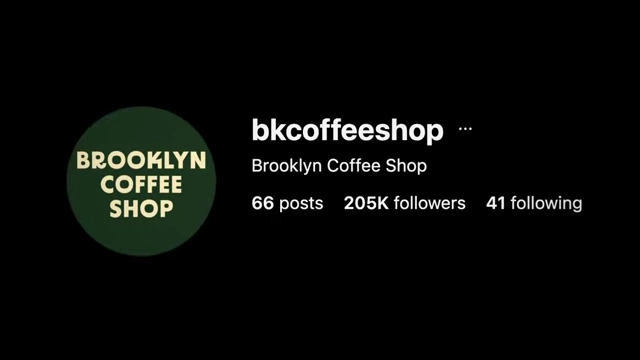
Brooklyn Coffee Shop Instagram profile (205K followers) [ 00:01:32 ] - Consistent Setting: All episodes are filmed at a quaint Brooklyn coffee shop counter [0:01:41].
- Reoccurring Characters: Two baristas with unique personalities are main characters in every episode [0:01:50].

Main barista characters in Brooklyn Coffee Shop [ 00:01:55 ] - Predictable Format: A third character, a customer, walks in, places an order, and engages in dialogue with the baristas [0:02:02].

A customer entering Brooklyn Coffee Shop [ 00:02:06 ] - Episodes are typically 1.5 to 2 minutes long and delivered in a sitcom/sketch format [0:02:14].
- Consistent Hook: Every episode starts with a familiar action, like a customer walking in or baristas reading a novel [0:02:49].
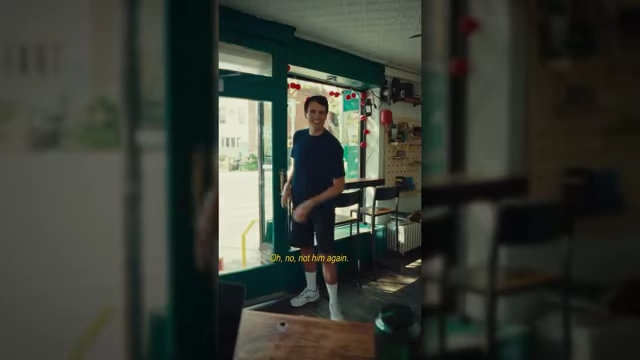
Brooklyn Coffee Shop consistent hook example [ 00:02:52 ] - The show consistently meets the expectations it sets, ensuring viewers instantly recognize the content and its value proposition [0:03:00].
- This channel has amassed nearly 200,000 followers by mastering expectation setting.
3. The Show to Network Shift [0:03:11]
While many brands currently house their social series on their main accounts, the next evolution involves treating the brand as a TV network.
- Evolutionary Model: A main brand account with supporting, dedicated accounts for successful shows.
Diagram illustrating the 'Show to Network' shift [ 00:04:05 ] - This allows brands to own and distribute multiple social shows under their umbrella, similar to a traditional TV network.
- Early Adopters Demonstrating Success:
- Gant: Launched "Postcards from Polio" [0:03:18], an episodic series with voiceover letters from a traveler.

Title card: Gant's 'Postcards from Puglia' [ 00:03:23 ] - Ritz Paris: Created "Behind the Ritz" [0:03:35], showcasing the luxury and detail of their services through staff stories.

Ritz Paris staff member from 'Behind the Ritz' [ 00:03:40 ] - Burberry: Implemented "Burberry Weather Campaign" [0:03:47], featuring multiple episodic series like a weather report and tourist activities.

Burberry Weather Campaign host [ 00:03:53 ] - Immieats: Launched "Ramen on the Street" [0:04:44], a separate TikTok account featuring an interviewer sharing ramen with random individuals, garnering millions of views monthly.

Immieats Instagram profile [ 00:04:45 ] - Cabba: Developed "Bullmates" [0:05:06], a dating show centered around ordering Cava Bowls.

Scene from Cava's 'Bullmates' dating show [ 00:05:10 ] - Built: Created "Roomies" [0:05:12], a sitcom-like series about four roommates in a New York City apartment.

Title card for Built's 'Roomies' [ 00:05:15 ]
- Gant: Launched "Postcards from Polio" [0:03:18], an episodic series with voiceover letters from a traveler.
- This "show to network" model offers an unprecedented opportunity for top-of-funnel awareness for brands willing to adapt early.
Core Principles for Building a Social Show [0:05:30]
A successful social show sits at the intersection of three fundamental aspects.
Narrative: Defining Brand Perception [0:05:39]
- The narrative is the central idea or perception a brand wants to establish in the audience's mind about itself, its brand, or its product.

Key element: Narrative [ 00:05:40 ] - It acts as a filter and guardrail for all content ideas, ensuring alignment with the desired brand image (e.g., luxury vs. playful).

Patagonia logo as a brand example [ 00:05:50 ] 
Rowing Blazers logo as a brand example [ 00:05:56 ] - The show's central idea must align with what the brand wants to be associated with.
Association: Strategic Alignment [0:06:10]
- Association refers to the people, places, things, and products a brand wants to be linked with.

Key element: Association [ 00:06:10 ] - This is powerful in consumer psychology, as people choose brands with shared identities and values.
- For example, a luxury brand would feature its show in a high-end setting like a Bentley, not a vintage truck, to maintain a consistent perception.
Scalability: Designing for Longevity [0:06:19]
- A great social show must have the ability to be scaled [0:06:22].
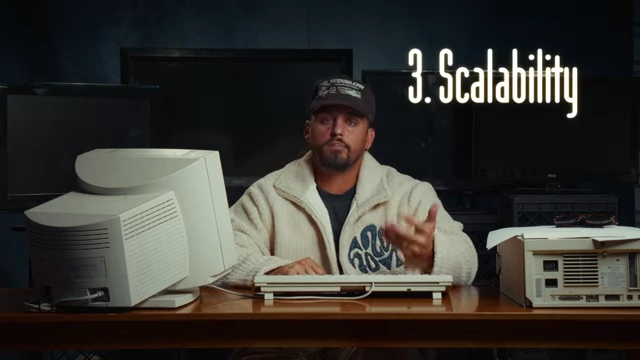
Key element: Scalability [ 00:06:20 ] - If a show can only produce a limited number of episodes, it's a limited series, not a sustainable show.
- Thinking in Sets: Design content ideas that can be infinitely scaled by leveraging reoccurring settings or "sets."
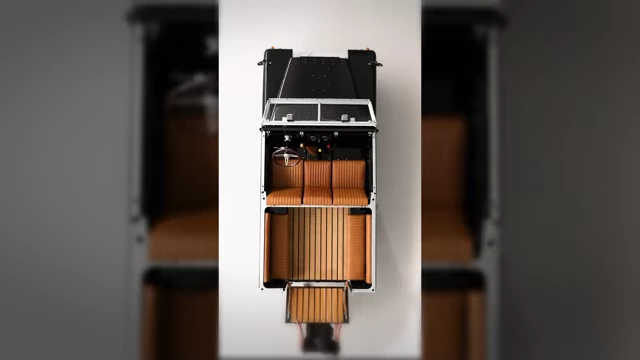
Overhead view of a car, as a scalable set example [ 00:06:24 ] - This allows for consistent and efficient production of episodes without significant changes to factors [0:06:34].
- An exercise suggested is to break down mainstream shows by their reoccurring settings (e.g., the coffee shop in "Friends") and then brainstorm ideas within those settings [0:06:57].

The Central Perk coffee shop set from 'Friends' [ 00:07:00 ] 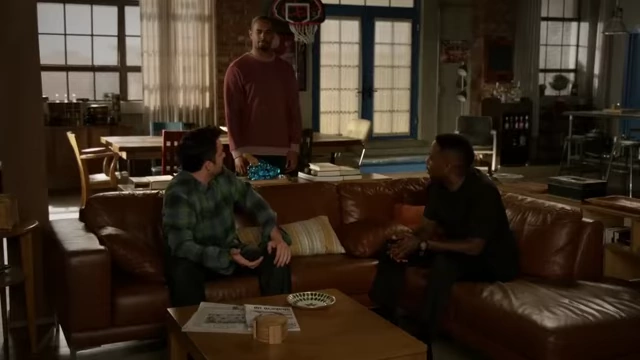
The apartment living room set from 'New Girl' [ 00:07:04 ]
Nine Elements for Crafting a Social Show [0:07:10]
To construct a social show piece by piece, consider these nine crucial elements:
- Narrative [0:07:13]: The perception you aim to form in the audience's mind about your brand.
- Association [0:07:22]: The people, places, things, and products you want your brand to be linked with.
- Theme [0:07:45]: The central idea or underlying message that connects all the stories within your show.

Key element: Theme, showing connected stories [ 00:07:50 ] - Idea [0:07:50]: How you package and present the overarching theme.
- Format [0:07:54]: The structure and style in which you deliver the idea (e.g., sitcom, interview, documentary).

Key element: Format, represented by a filmstrip [ 00:07:55 ] - Set [0:07:56]: The consistent physical location or environment where the idea is delivered.
- Characters [0:07:59]: The individuals who deliver the content and drive the narrative.

Key element: Characters [ 00:08:00 ] - Length [0:08:01]: The typical duration of each episode.

Key element: Length, represented by a film reel [ 00:08:05 ] - Art Direction [0:08:04]: The overall visual and stylistic identity of the show.
These elements provide a framework for brands to launch successful social shows and capitalize on the current market opportunity before it becomes saturated with larger brand investments.