Ranking Robert Greene's 48 Laws of Power: From Least to Most Manipulative
This video summarizes and ranks 10 of Robert Greene's 48 Laws of Power on a scale from "you're good" to "pure evil".
- Law 1: Never Outshine the Master.
- Law 2: Never Put Too Much Trust in Friends.
- Law 3: Conceal Your Intentions.
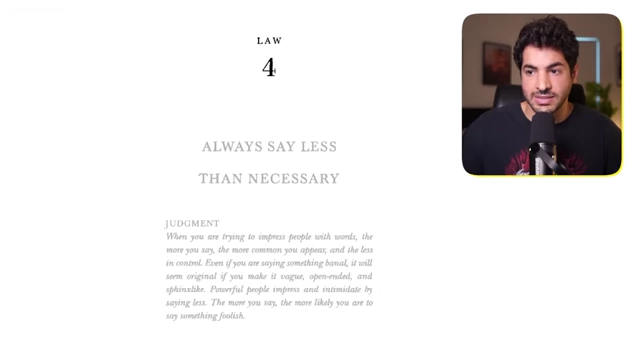
- Law 4: Always Say Less Than Necessary.
- Law 5: So Much Depends on Reputation.
- Law 6: Court Attention at All Costs.
- Law 7: Get Others to Do the Work for You, But Always Take the Credit.
- Law 8: Make Other People Come to You, Use Bait if Necessary.
- Law 9: Win Through Your Actions, Never Through Argument.
- Law 10: Infection: Avoid the Unhappy and Unlucky.

The final tier list ranking the 10 laws of power. [ 00:33:38 ]
Introduction [00:00:00]
The video introduces Robert Greene's "The 48 Laws of Power" as a controversial book known for its manipulative tactics. It then goes on to rank the laws. The ranking is based on how ethical or unethical the application of each law is, from "you're good" to "pure evil."

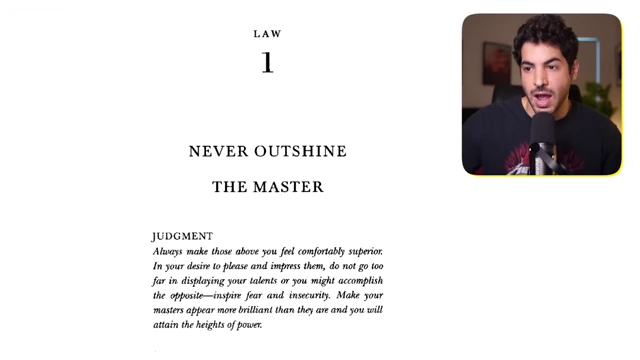
Law 1: Never Outshine the Master [00:00:35]
The first law is about using superiors to one's advantage.
- Illustration with the story of Nicolas Fouquet and King Louis XIV:
- Nicolas Fouquet, the finance minister of France, was known for his vast wealth.
-
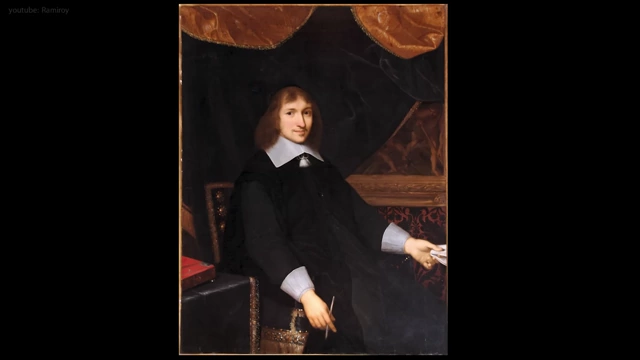
A portrait of Nicolas Fouquet. [ 00:00:52 ] - He owned a magnificent palace called Château de Vaux-le-Vicomte, built by the best architects.
-

An aerial view of the grand Château de Vaux-le-Vicomte with its elaborate gardens. [ 00:01:14 ] - Upon the death of the prime minister, Fouquet sought to impress King Louis XIV by hosting an extravagant party at his estate to secure the position.
-
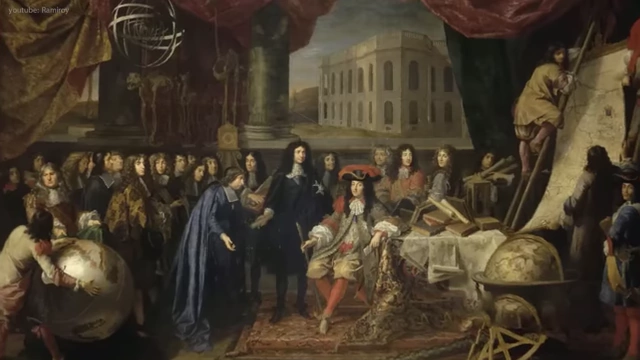
A painting depicting King Louis XIV seated among his court. [ 00:00:47 ] - The king felt outshined by Fouquet's wealth and grandeur, leading to Fouquet's arrest and imprisonment.
-
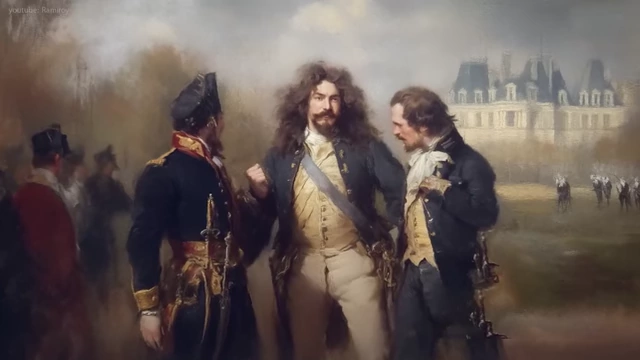
A painting illustrating the arrest of Nicolas Fouquet outside his grand estate. [ 00:02:04 ] - King Louis XIV subsequently built the Palace of Versailles, making it even grander than Fouquet's palace, using the same architects.
-

An exterior view of the opulent Palace of Versailles, built by King Louis XIV. [ 00:02:40 ] - The lesson is to avoid triggering insecurities in those above you.
- Real-life examples:
- Megan Fox's firing from "Transformers" after comparing Michael Bay to Hitler.
-

Megan Fox and director Michael Bay at a public event. [ 00:03:10 ] - Employees hiding accomplishments to avoid threatening their bosses.
- Asking for advice from superiors can disarm them.
-
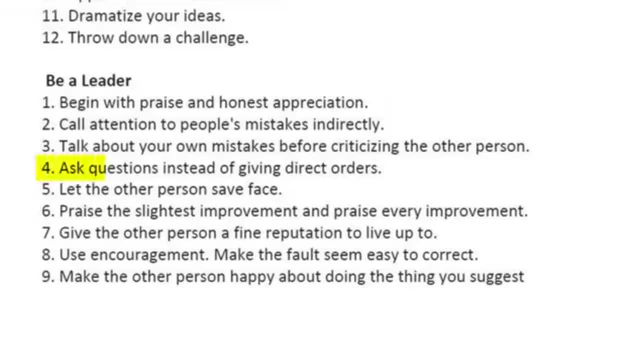
An excerpt from "How to Win Friends and Influence People" highlighting the advice to "Ask questions instead of giving direct orders". [ 00:03:53 ]
- The concept of "evil eye" is introduced:
- Flaunting wealth can attract envy and resentment.
-

A collection of "Evil Eye" charms, traditionally used for protection against negative energy. [ 00:04:10 ] - An Instagram post showcasing a person's luxury cars is presented as a modern example of flaunting wealth.
-

An Instagram post showing multiple luxury cars as an example of flaunting wealth. [ 00:04:16 ]
Law 2: Never Put Too Much Trust in Friends [00:05:14]
This law advises caution in trusting friends and suggests learning how to use enemies.
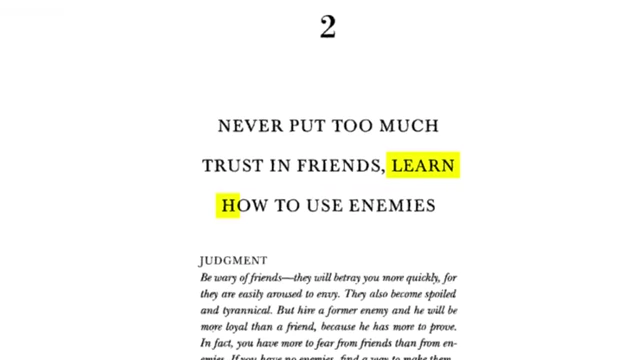
- The story of Michael III and Basil illustrates the law.
- The Byzantine Empire was ruled by Empress Theodora and her lover, with her son Michael III set to inherit the throne.
-

A painting depicting Empress Theodora with a young Michael III and a military figure. [ 00:05:33 ] - Michael III, after banishing his mother, sought someone trustworthy without ambition for the throne, finding Basilius, a commoner who saved his life.
-

A painting showing Basilius saving Michael III from a wild horse. [ 00:06:09 ] - Michael III made Basilius his best friend, educated him, made him a counselor, doubled his salary, and even forced his side chick to marry Basilius to elevate his social standing.
-

An illustration depicting Basilius diligently studying. [ 00:06:31 ] - Basilius eventually convinced Michael to kill his uncle, took command of the army, and later assassinated Michael III to seize the empire.
-

A painting showing Basilius addressing an army, illustrating his rise to power. [ 00:07:16 ] -

A painting depicting Basilius riding a horse through a city with Michael III's head on a pike, proclaiming himself emperor. [ 00:07:47 ]
- Explanation:
- People prefer to believe their position is due to their own efforts, not external help.
- Pointing out someone's dependence can breed resentment.
- It is important to remain cautious even with friends when dealing with life-altering decisions.
Law 3: Conceal Your Intentions [00:09:21]
This law emphasizes the importance of hiding one's true aims to gain an advantage.
- The historical example of Otto von Bismarck:
- Before unification, Germany was a collection of 39 sovereign states, with Prussia and Austria as dominant powers.
-

A map illustrating the 39 sovereign German states in 1815. [ 00:09:30 ] - Otto von Bismarck, a Prussian politician, desired war with Austria to unite Germany, despite the King of Prussia favoring peace and Prussia's army being weaker.
-
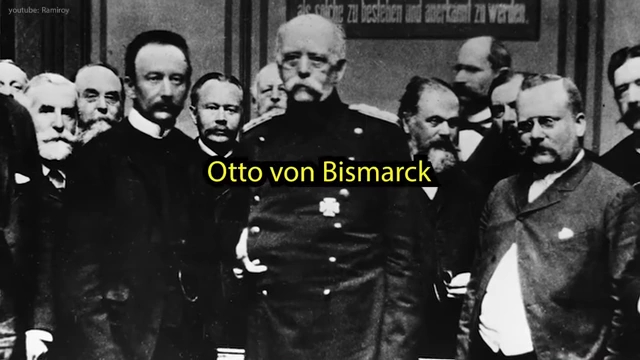
A historical photo of Otto von Bismarck, a key figure in German unification. [ 00:09:37 ] - He made a public speech about peace, which led to his promotion by the king who saw him as reasonable.
-
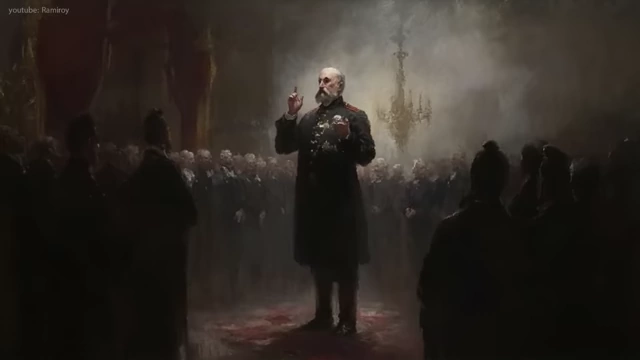
A painting of Otto von Bismarck delivering a speech to an assembled audience. [ 00:10:11 ] - When the time was right, with a stronger Prussian army, Bismarck launched a war on Austria, won, and united Germany.
-

A painting of a battle scene, depicting the victorious Prussian forces. [ 00:10:42 ]
- Practical examples:
- Teams in strategy games concealing their alliances to avoid making enemies.
-

A screenshot from the game General Zero Hour, showing troops on a map, illustrating how teams conceal intentions. [ 00:11:16 ] - Not sharing business ideas to avoid theft, citing Mark Zuckerberg as an example of ideas being stolen.
-
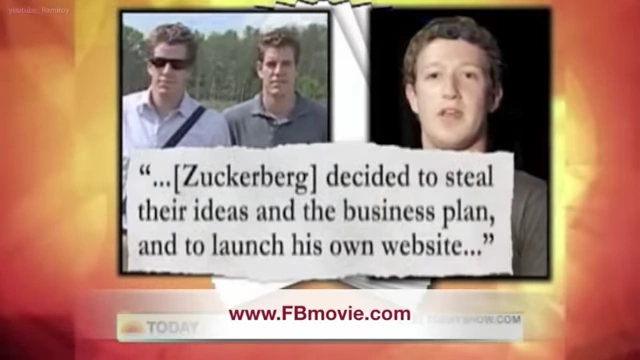
A news segment discussing how Mark Zuckerberg allegedly "stole their ideas and the business plan". [ 00:11:30 ] - Not revealing romantic interests to prevent interference.
- Scientifically, not talking about goals increases the chance of achieving them.
- Multiple articles are shown explaining "Why talking about your goals may prevent you from achieving them."
-
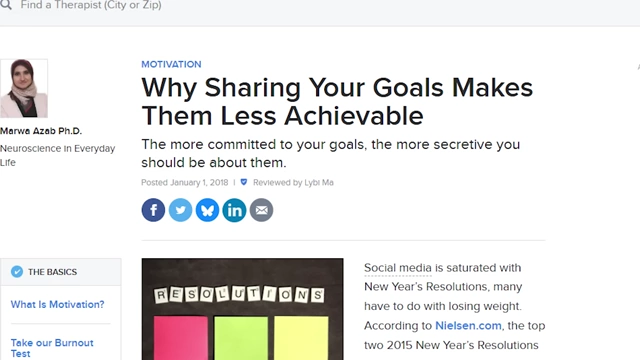
A compilation of article headlines discussing how talking about goals can hinder their achievement. [ 00:11:55 ]
Law 4: Always Say Less Than Necessary [00:12:30]
The less you say, the more meaningful your words become.
- King Louis XIV as an example:
- King Louis XIV, known as the "Sun King," was seen as the center of the universe.
-
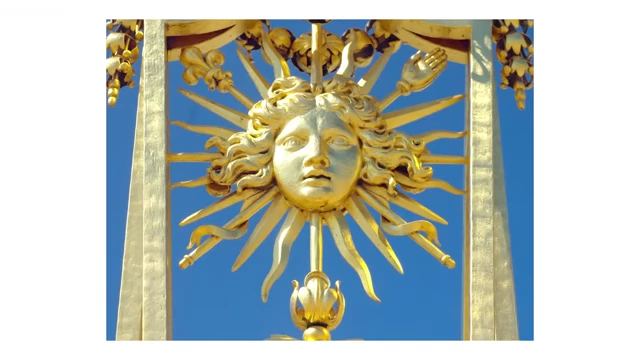
A golden sculpture depicting King Louis XIV as the "Sun King". [ 00:12:37 ] - Ministers and nobles would present their ideas to Louis XIV.
-
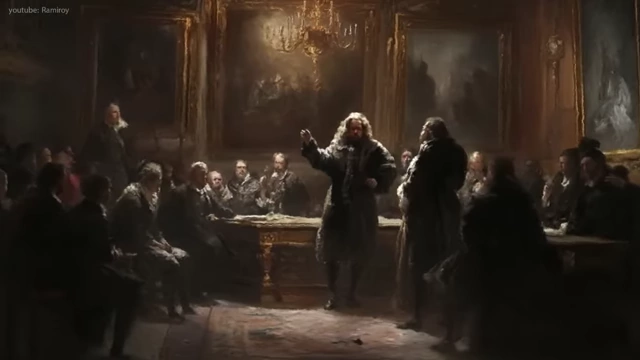
A painting showing ministers and nobles gathered, presenting ideas to King Louis XIV. [ 00:12:48 ] - He would simply respond, "I shall see," maintaining an air of mystery and power.
-

King Louis XIV seated on his throne, with the caption "I shall see". [ 00:12:57 ]
- Implications:
- Silence creates value and respect for one's words, following a supply and demand principle.
-
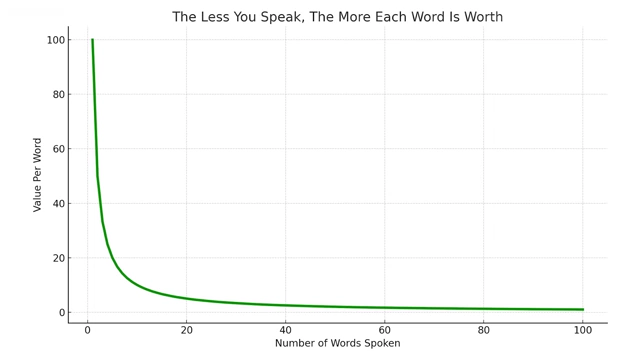
A graph titled "The Less You Speak, The More Each Word Is Worth" showing value per word decreasing with the number of words spoken. [ 00:13:15 ] - Remaining silent allows others to project their aspirations.
- Excessive talking can indicate insecurity.
- An example is given of playing a game of Mafia, where the innocent person spoke little, but the killer "couldn't stop talking" due to overcompensation.
-
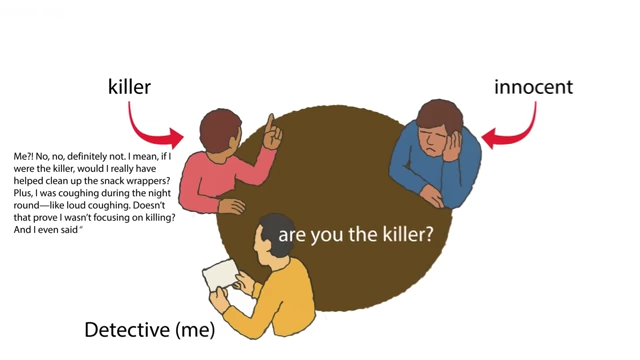
A diagram illustrating the game "Mafia," showing the detective asking the "killer" who is over-explaining. [ 00:14:31 ]
Law 5: So Much Depends on Reputation [00:14:42]
Reputation is invaluable and must be guarded carefully.
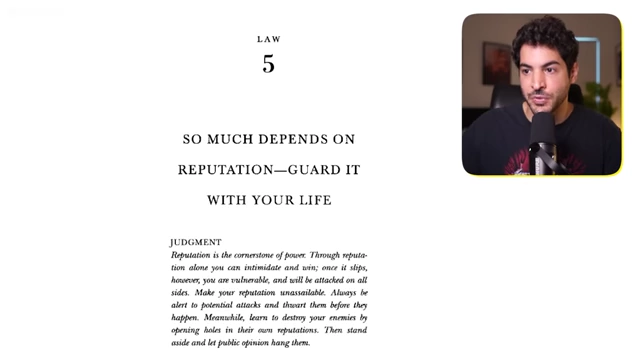
- The story of Zhuge Liang (Zu Lang) demonstrates this law.
- Ancient China was divided into three kingdoms, including the Shu Kingdom led by Zhuge Liang, a brilliant strategist known for being "ten steps ahead of everybody."
-

A map illustrating the three kingdoms of ancient China. [ 00:14:50 ] - Zhuge Liang intentionally built his reputation, even using a former enemy lieutenant to spread misinformation.
-

A painting of Zhuge Liang, a renowned Chinese strategist. [ 00:15:01 ] - When outnumbered by Sima Yi's army, Zhuge Liang opened the city gates and sat on the wall playing a lute, appearing calm and comfortable.
-

A painting showing Zhuge Liang calmly sitting on a city wall playing a lute while an enemy army approaches. [ 00:15:50 ] - Sima Yi, wary of Zhuge Liang's reputation for cunning, assumed it was a trap and retreated, even though the city was undefended.
-

A scene depicting Sima Yi and his army, as they decide to retreat from the city. [ 00:16:19 ]
- The power of reputation:
- Modern millionaires spend millions on branding and reputation.
- Elon Musk's attempts to appear relatable by streaming video games failed due to perceived ingenuineness.
-

A screenshot of news headlines about Elon Musk being called a "fake gamer" and a "fraud". [ 00:16:46 ] - Mark Zuckerberg's efforts to rebrand himself also face public skepticism.
-

A side-by-side comparison of Mark Zuckerberg's old and new public images, highlighting his rebranding efforts. [ 00:16:53 ] - A truly good reputation comes from genuine character, not artificial crafting.
Law 6: Court Attention at All Costs [00:17:59]
Any attention, even negative, is better than being ignored.
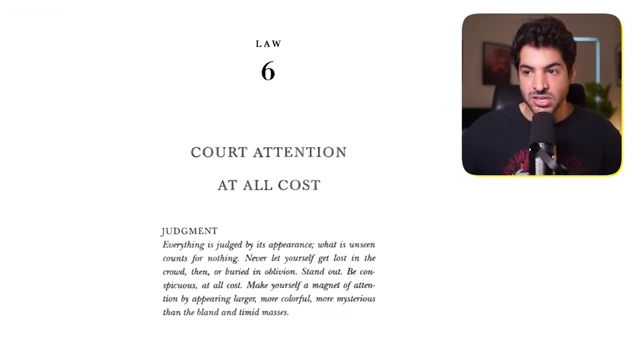
- P.T. Barnum's strategies for attracting attention to his museum:
- His boss, Turner, spread a rumor that a murderer in a black suit was in town, knowing Barnum would be mistaken for him and draw a crowd to the circus (museum).
-

A dramatic painting depicting P.T. Barnum being mistaken for a murderer in a black suit by a crowd. [ 00:18:24 ] - Barnum later paid a homeless man to inconspicuously lay bricks on the street, generating curiosity and drawing over 1,000 people to the museum to find out what was happening.
-
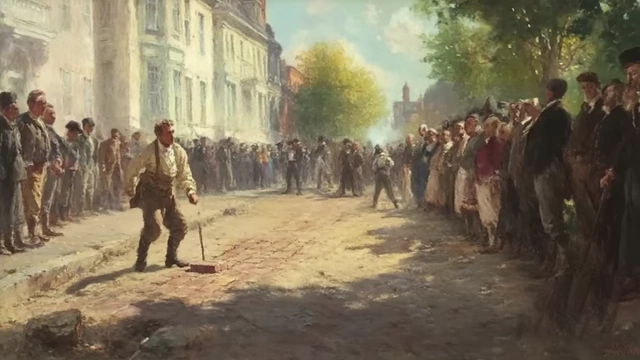
A painting of a crowd of people watching a man lay bricks on the street, illustrating P.T. Barnum's attention-grabbing tactic. [ 00:19:06 ]
- Modern applications:
- Celebrities engaging in outlandish behavior to stay relevant, such as Elon Musk's controversial gestures or Kanye West's public statements.
-

News headlines about Elon Musk's daughter calling his rally gesture a "Nazi salute" and Kanye West's controversial claims. [ 00:19:49 ] - Miley Cyrus's controversial rebrand to regain attention.
-

A split image showing Miley Cyrus's earlier wholesome image and her later provocative performance on stage. [ 00:20:09 ] - Street performers using unusual dancers to capture audience attention.
-

A street musician performing with an energetic dancer drawing attention from passersby. [ 00:20:28 ]
Law 7: Get Others to Do the Work For You, But Always Take the Credit [00:20:49]
This law emphasizes the importance of delegation but warns against claiming others' work.
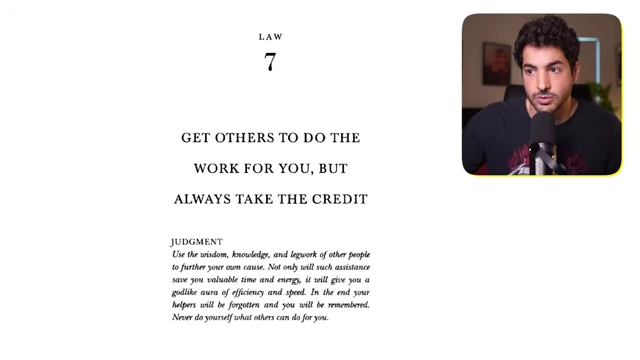
- The story of Tesla and Edison, and Westinghouse:
- Edison promised Tesla $50,000 to improve his dynamo but only gave him a small raise after Tesla succeeded.
-
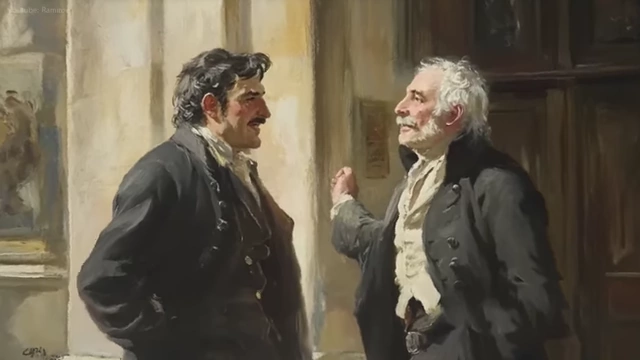
A painting depicting Nikola Tesla and Thomas Edison having a discussion. [ 00:21:02 ] - Tesla then worked for George Westinghouse on the AC (Alternating Current) system, which is widely used today.
-

A diagram illustrating the basics of Alternating Current (AC) and its various plug types used globally. [ 00:21:40 ] - Despite Tesla's significant contributions, his name was largely lost in the shuffle, and Westinghouse offered him only $200,000 instead of the $12 million in royalties he was owed.
-
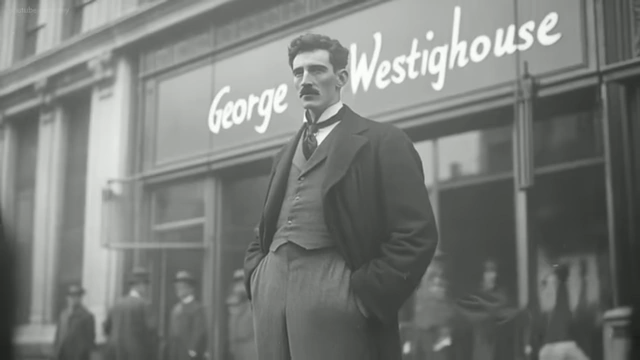
A black and white photo of George Westinghouse standing in front of his company building. [ 00:22:19 ]
- Lessons:
- Delegation is valuable for efficiency, as seen with team projects where contributions should be acknowledged.
-

A group of colleagues collaborating on a team project in an office setting. [ 00:23:04 ] - However, the "take the credit" aspect is manipulative and unethical, representing an "evil" approach.
-

A cartoon depicting one person saying "I made this" while presenting work, and another person questioning, "You made this?". [ 00:23:16 ] - It's important to protect your contributions and ensure proper credit and compensation.
Law 8: Make Other People Come to You, Use Bait If Necessary [00:23:23]
Attract people and opportunities rather than chasing them.
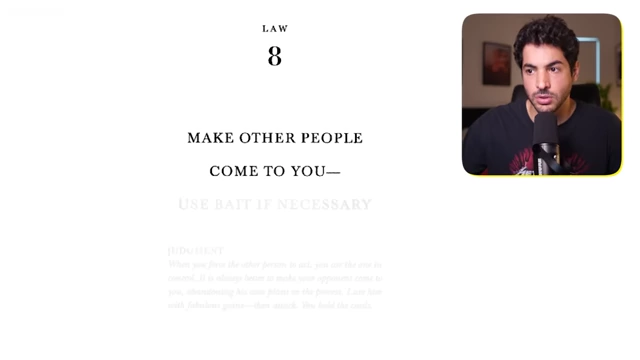
- The story of Talleyrand and Napoleon demonstrates this law.
- After his defeat, Napoleon Bonaparte was exiled to Elba, a small island near Italy.
-

A map highlighting Elba, the island where Napoleon Bonaparte was exiled. [ 00:23:41 ] - At the Congress of Vienna, the European powers debated splitting Napoleon's empire but feared his proximity to Europe. Talleyrand, Napoleon's former foreign minister, suggested sending Napoleon further away, but was ignored.
-
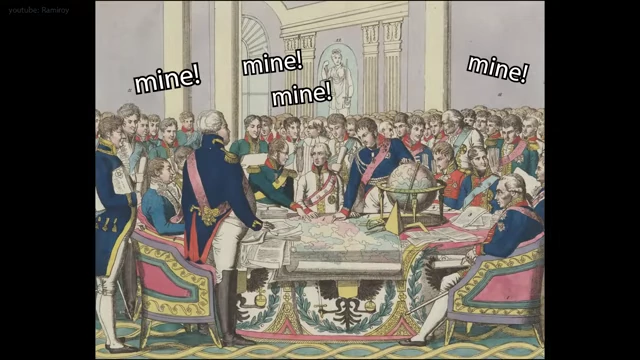
A painting of the Congress of Vienna, where European powers debated Napoleon's fate. [ 00:23:57 ] - Talleyrand, using Napoleon's ego, convinced him that France would welcome his return and secretly facilitated his escape by persuading British generals to turn a blind eye to his departure.
-

A painting showing Talleyrand speaking to Napoleon. [ 00:24:45 ] - Napoleon returned to France, was welcomed by the public and army, and ruled again briefly.
-

A painting depicting Napoleon's triumphant return to France, greeted by a cheering crowd. [ 00:25:10 ] - However, he was eventually defeated again and exiled to Saint Helena, a remote island off the coast of Africa, achieving Talleyrand's original goal.
-

A map showing the isolated island of Saint Helena, where Napoleon was finally exiled. [ 00:25:49 ]
- The principle of attraction:
- In romance, focus on self-improvement and let potential partners come to you, like tending a garden to attract butterflies.
-

A sequence of images illustrating the metaphor of nurturing a garden to attract butterflies instead of chasing them. [ 00:26:10 ] - In business, build a strong portfolio to attract clients.
-

A man sculpting himself from clay, illustrating the metaphor of self-improvement to attract others. [ 00:26:14 ]
Law 9: Win Through Your Actions, Never Through Argument [00:26:39]
Demonstrate your point through action rather than debate.
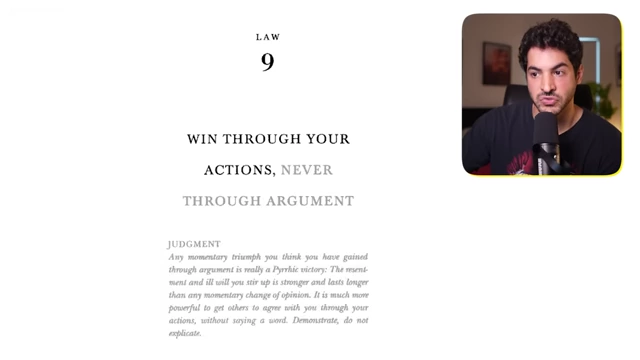
- Michelangelo and the statue of David provides an example:
- When Michelangelo was completing his statue of David, the mayor of Florence complained the nose was too big, unaware that it was meant to be viewed from below.
-

A painting of the Mayor of Florence pointing at the nose of Michelangelo's statue of David. [ 00:26:52 ] - Instead of arguing, Michelangelo subtly pretended to adjust the nose by sprinkling dust, satisfying the mayor's ego without altering the masterpiece.
-

A painting depicting Michelangelo on scaffolding, feigning to adjust the nose of his statue of David, while the mayor watches. [ 00:27:13 ]
- Limitations:
- The speaker dislikes the manipulative aspect of this law.
- Actions speak louder than words, but avoid dishonest tactics.
- A scenario is presented where a man boasts about attracting many girls, but the visual shows him talking to girls directly, emphasizing that actions speak louder than words.
-

A man talking to several women, illustrating the principle of showing charisma through action rather than just talking about it. [ 00:28:22 ]
Law 10: Infection: Avoid the Unhappy and Unlucky [00:28:40]
Avoid those who bring negativity and misfortune.
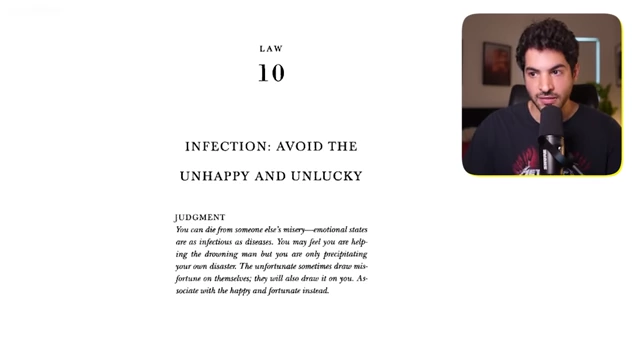
- The story of Lola Montez:
- Mary Gilbert, also known as Lola Montez, was a dancer and courtesan who had a string of relationships that ended in disaster for the men involved.
-
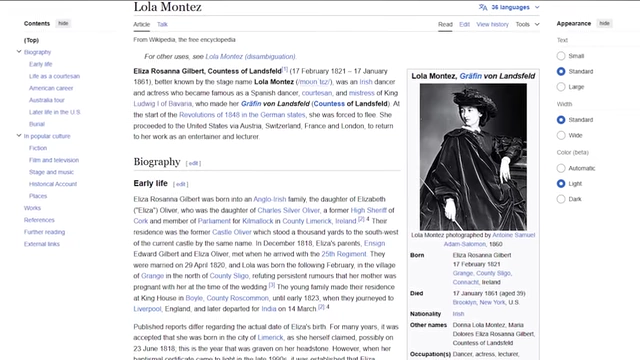
A Wikipedia page providing a biography of Lola Montez. [ 00:28:47 ] - She charmed Alexander Dujarier, a newspaper owner, who died in a duel after defending her honor.
-

A painting depicting Alexander Dujarier, wounded, after a duel. [ 00:30:15 ] - She then moved to Munich and seduced King Ludwig I of Bavaria, leading to his abdication due to public outrage against her influence.
-
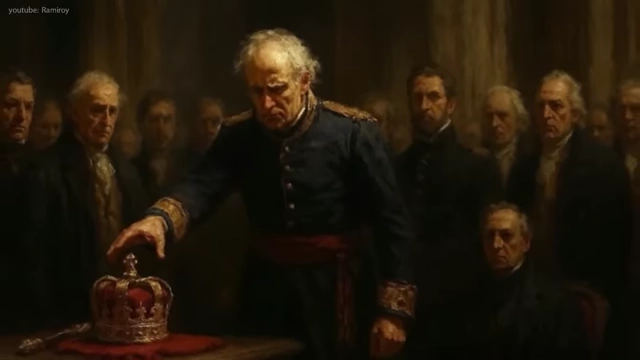
A painting showing King Ludwig I of Bavaria placing his crown on a table, signifying his abdication. [ 00:31:37 ] - In England, she was arrested for bigamy and later slashed George Heild with a knife, leading to his social ruin and impoverished death.
-

A painting showing Lola Montez, agitated, slashing George Heild with a knife. [ 00:32:13 ] - Finally, she abandoned Patrick Hull, who turned to alcoholism and died of depression.
-

A painting depicting Patrick Hull, looking despondent and holding a bottle, symbolizing his descent into alcoholism. [ 00:32:45 ]
- There are certain people in life that can spread negativity that impacts your own life, no matter who they are.
- It's not about being uncharitable, but recognizing patterns of misfortune that may not be accidental.
- These "unhappy and unlucky" individuals often blame others, but upon closer inspection, their own actions contribute to their circumstances.