Why Americans are Stuck at Work: A Deep Dive into Labor Market Stagnation
This video explains why many Americans feel stuck in their jobs and the implications for the economy.
- The U.S. labor market is experiencing stagnation, with 1.2 million jobs lost since April 2024 and hiring at its slowest pace since 2013, excluding the pandemic.

Graph showing Quits: total nonfarm rates from 2016 to 2025 [ 00:00:14 ] 
Graph showing Hires: total nonfarm rates from 2013 to 2025 [ 00:00:20 ] - The "quits rate" is down to about 2%, indicating workers are less likely to voluntarily leave their jobs due to economic anxiety, inflation fears, and reduced wage growth.
- Many employees (4 out of 5) are not thriving at work, and 58% feel their skills are underutilized, leading to disengagement, stress, and lack of mobility.

Infographic stating 58% of workers feel underutilized in their current roles [ 00:00:58 ] - This stagnation also affects companies, leading to "quiet quitting" and significant productivity losses (estimated at $5 million annually for a 1000-person company).
- The broader economic impact includes stifled innovation, dampened consumer confidence, and a weakened bargaining power for job seekers, particularly new graduates and early-career workers facing AI disruption in entry-level roles.
Introduction [0:00]
The U.S. labor market is currently showing significant signs of stagnation, impacting both workers and the broader economy.
- Current Economic Indicators
- The U.S. economy has experienced a loss of 1.2 million jobs since April 2024 [0:00].
- The "quits rate," which measures voluntary job departures, has fallen to approximately 2% after pandemic-era fluctuations [0:08].
- Employer hiring is at its slowest pace since 2013, excluding the pandemic period [0:16].
Graph showing Quits: total nonfarm rates from 2016 to 2025 [ 00:00:14 ] - This leads to "job clinging" or "job hugging," where employees stay in their current roles due to uncertainty rather than seeking new opportunities [0:30]. - Workers face increased stress and reduced career mobility as a result [0:36]. - Companies, while appearing to have high retention, may be masking deeper issues of employee disengagement [0:41]. - Economic growth and innovation are slowed because workers are not moving and developing new skills [0:45]. - A significant 58% of U.S. professionals believe their skills are being underutilized in their current roles [0:56].
Graph showing Hires: total nonfarm rates from 2013 to 2025 [ 00:00:20 ]
Infographic stating 58% of workers feel underutilized in their current roles [ 00:00:58 ]
Trapped at Work? [1:27]
Economic anxiety and a shift in the labor market dynamics contribute to workers feeling stuck in their current jobs.
- Worker Sentiment and Economic Uncertainty
- Nearly 1 in 5 job seekers surveyed lack confidence in finding a fulfilling job [1:32].
- Economic uncertainty is reflected in fewer people quitting jobs and fewer organizations hiring [1:38]. - Wage growth has slowed, and the premium for switching jobs has decreased [1:51]. - Workers are prioritizing stability due to concerns about inflation and the ability of their pay to keep pace with rising costs [1:56]. - Companies are also cautious due to economic policies like tariffs, leading to hiring freezes or relying on attrition instead of layoffs [2:06]. - Klarna's CEO, Sebastian Siemiatkowski, mentioned replacing workers with AI and accelerating compensation for remaining employees [2:31].

Infographic showing that almost 1 in 5 jobseekers lack confidence in finding a great job [ 00:01:33 ] - Organizations are becoming flatter, reducing middle management layers, which can leave employees feeling directionless and disconnected from senior leadership [2:52]. - This lack of direction contributes to increased stress among employees [3:04].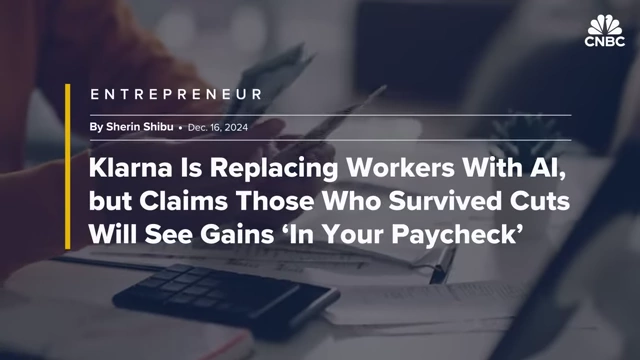
News headline about Klarna replacing workers with AI and increasing compensation for survivors [ 00:02:49 ]
Worker Dissatisfaction [3:09]
Staying in an unfulfilling job, while seemingly safe, poses risks to both individual careers and organizational productivity.
- Risks of Job Clinging for Workers and Companies
- Becoming complacent in a job can make employees vulnerable to layoffs if companies eventually need to downsize [3:17].
- Career coaches advise focusing on internal career growth, skill improvement, and seeking opportunities within the current organization to boost career development [3:27].
- Some data suggests that wage growth for "job stayers" has recently outpaced that of "job switchers," although economists still generally recommend job hopping for higher wages [3:44].
- Employee disengagement leads to significant financial losses for companies.
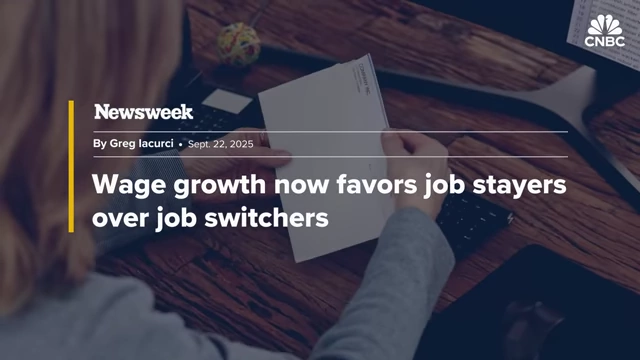
News headline indicating wage growth now favors job stayers over job switchers [ 00:03:49 ] - A February 2025 study estimated that for a 1000-person company, disengagement costs about $5 million annually in lost productivity [3:56].
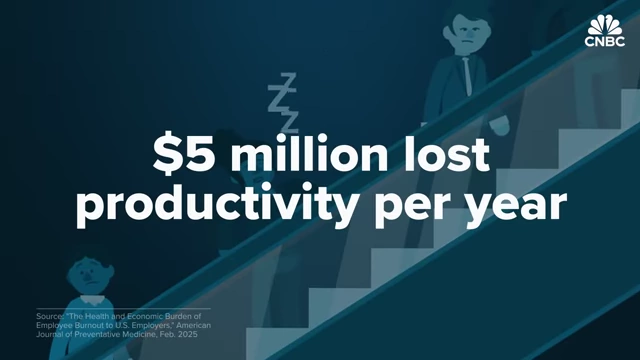
Infographic showing an estimated $5 million lost productivity per year [ 00:04:06 ] - An average disengaged worker can cost a company $4,000 per year, while a disengaged executive could cost $20,000 [4:07].
- Disengaged employees affect overall productivity and can create a network effect, where their uncompleted work falls on engaged teammates, increasing stress [4:16].
- Low employee turnover, while appearing as stability, can actually mask "quiet quitting" [4:59].
- 40% of U.S. employees feel directionless due to fewer managers, impacting productivity, satisfaction, and the company's ability to innovate and grow [5:06].
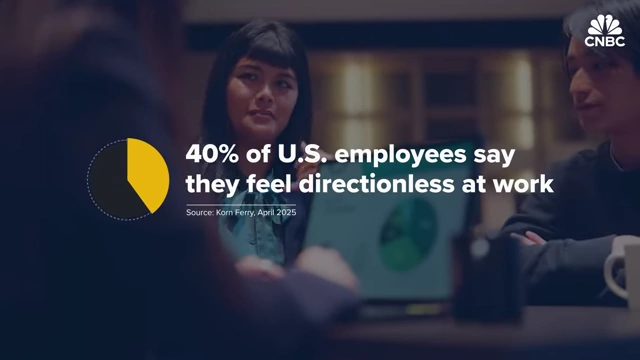
Infographic stating 40% of U.S. employees say they feel directionless at work [ 00:05:10 ]
- A February 2025 study estimated that for a 1000-person company, disengagement costs about $5 million annually in lost productivity [3:56].
What Does This Mean for the Economy? [5:37]
The widespread disengagement and stagnation in the labor market have profound implications for the global and national economy.
Broader Economic Impacts - Globally, low employee engagement is estimated to cost $9.6 trillion annually, or approximately 9% of global GDP [5:46].
- Reduced labor mobility, historically a driver of productivity and innovation, is stifled by a cautious workforce [5:57]. - This cycle of caution leads to flattened wage growth, dampens consumer confidence, and reduces organizational agility and capacity for innovation [6:05]. - The "frozen" labor market reduces new opportunities, particularly for those seeking to switch jobs or enter the workforce [6:19].
Infographic showing 9% of global GDP as the estimated annual cost of low employee engagement [ 00:05:55 ] - This severely impacts new graduates and early-career workers who struggle to find entry-level positions [8:03].
- AI adoption is linked to a 13% decline in jobs for young U.S. workers, as AI disrupts entry-level roles that serve as stepping stones to more skilled positions [8:15].
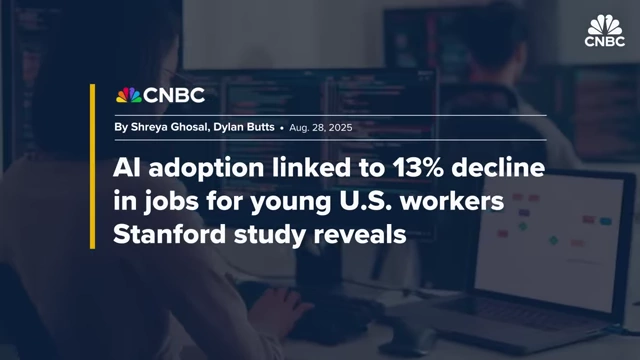
News headline about AI adoption linked to a 13% decline in jobs for young U.S. workers [ 00:08:20 ] - Worker bargaining power has diminished, contrasting with just a few years ago when quitting for higher-paying jobs was easier [6:50].
- Labor standards, like the minimum wage, have stagnated, and unionization rates have declined, limiting workers' leverage [6:59].
- Wage growth has generally not kept pace with productivity increases over the past three to four decades [7:47].
Opportunities for Innovation - The current environment presents an opportunity for innovative companies to adapt [8:33]. - Gen Z and entry-level workers are moldable, teachable, and technologically adept, offering potential for retooling skill sets [8:37]. - Leaders need to focus on repurposing the existing workforce and retooling new professionals to leverage AI for better decision-making and increased productivity early in their careers [8:54]. - Companies that embrace this opportunity, with strong leadership and a lean workforce utilizing technology, can achieve faster growth and scale [9:13].