Six Timeless Productivity Lessons from 30 Years of Research
This video distills three decades of productivity research into six timeless lessons to help you achieve more with less stress.
- Do Less Ruthlessly: Prioritize by limiting your daily to-do list to five items, identifying one Most Important Task (MIT) to complete first, creating a "to-don't list" of distractions, and making "no" your default response to new requests.
- Protect Your Golden Hours: Identify your peak mental performance window (often early morning for most) for "deep work," ensuring a distraction-free environment, tackling the hardest task first, and using time-boxing.
- Systematize the Small Stuff: Implement rules like the 2-minute rule for quick tasks, avoid multitasking, batch similar activities (e.g., email, calls), and limit your choices to reduce decision fatigue.
- Track Your Progress: Recognize that making progress in meaningful work is the biggest motivator. Regularly note three daily accomplishments and conduct weekly reviews to build momentum.
- Take Strategic Breaks: View breaks not as laziness but as essential tools for peak performance. Incorporate restorative breaks that involve movement, being outdoors, social interaction, and full detachment from work.
- Consistency Over Intensity: Focus on building consistent habits rather than relying on sporadic heroic efforts. Small, repeated actions create lasting progress and outperform intense but infrequent bursts of work.
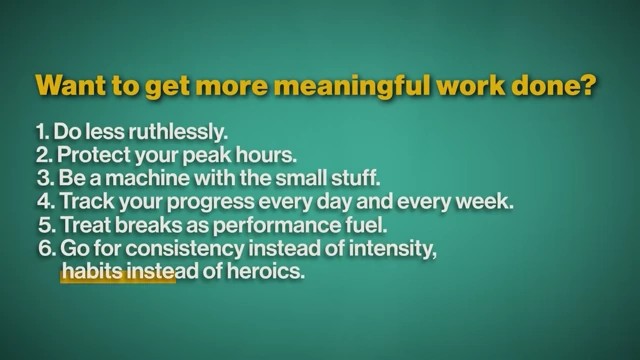
Summary of the six principles for getting more meaningful work done [ 00:11:43 ]
Introduction to Timeless Productivity Lessons [0:00:00]
The speaker, Daniel Pink, a productivity author, shares that after reading numerous productivity books over decades, he has identified six core, timeless lessons. These lessons, he assures, are not about "hacks" or "18-hour workdays" but about designing a system to do less, focus on what truly matters, and build lasting habits to achieve more with less stress.
1. Do Less Ruthlessly [0:00:20]
The fundamental advice for increasing productivity is to "do less." Highly productive individuals focus on fewer tasks but execute them better.
- Limit Your Daily To-Do List [0:00:46]
- Restrict your daily to-do list to no more than five items. This forces prioritization and often leads to accomplishing more.
- Identify your "Most Important Task" (MIT) from this list and complete it first, without exceptions, to build a sense of accomplishment and forward momentum.
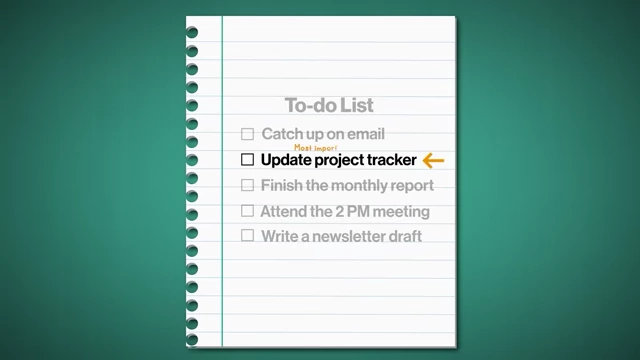
An example of a prioritized to-do list with a Most Important Task (MIT) [ 00:01:03 ]
- Create a "To-Don't List" [0:01:17]
- List three activities that steal your time, drain energy, or hijack focus (e.g., checking email first thing, answering every call, attending useless meetings, doomscrolling).
- Treat this list with the same importance as your to-do list and actively avoid these distractions.
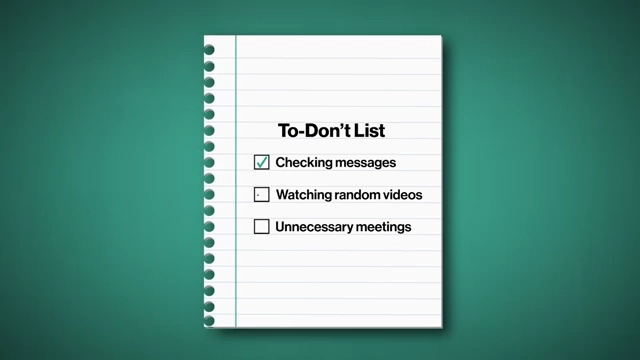
An example of a 'To-Don't List' with common distractions [ 00:01:38 ]
- Make "No" Your Default Answer [0:01:44]
- Adopt "no" as your initial response to new requests, forcing you to critically evaluate if an opportunity is truly worth your time and attention before committing.
- The Warren Buffett 25/5 Rule [0:02:15]
- The story of Warren Buffett advising his pilot illustrates ruthless prioritization:
- List 25 goals.
- Circle the 5 most important.
- Discard the remaining 20, avoiding them at all costs, to focus entirely on the top 5.
- This highlights that effective productivity is often about subtraction, not addition.
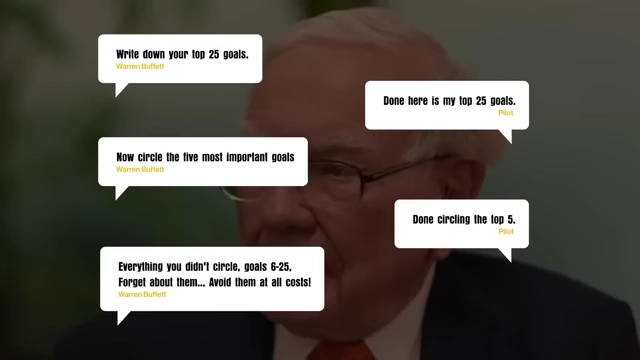
Warren Buffett's 25/5 rule for ruthless prioritization [ 00:02:35 ]
- The story of Warren Buffett advising his pilot illustrates ruthless prioritization:
2. Protect Your Golden Hours (Deep Work) [0:02:44]
Everyone has a period when their brain is sharpest; this time must be fiercely protected for "deep work."
- Identify Your Peak Mental Window [0:02:47]
- Recognize when your brain is most alert and focused. For most people, this is early in the day.
- Carve out these few hours for tasks that demand full attention and concentration.
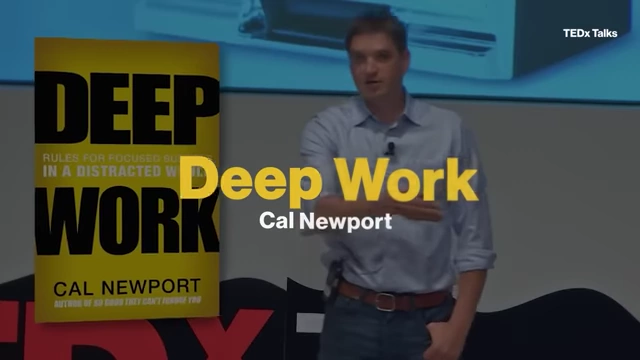
Cal Newport and his book 'Deep Work', defining focused work [ 00:03:03 ]
- Create a Distraction-Free Environment [0:03:10]
- Eliminate all distractions during deep work sessions: no meetings, messages, or open browser tabs.
- The speaker exemplifies this by not opening email and leaving his phone outside his office when writing. Maya Angelou even rented hotel rooms for undisturbed writing.
- Tackle the Hardest Task First ("Eat the Frog") [0:03:32]
- Begin your golden hours with the most challenging task, the one you're most likely to procrastinate on.
- Mark Twain's advice: "If it's your job to eat a frog, do it first thing in the morning. And if it's your job to eat two frogs, eat the biggest one first."
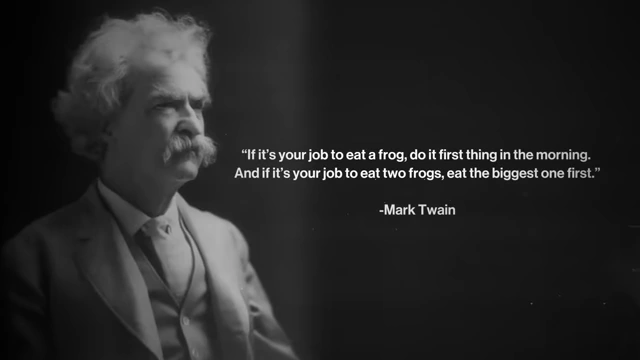
Mark Twain's quote about tackling the hardest task first [ 00:03:40 ] - Research supports that tackling difficult tasks first leads to greater accomplishment and satisfaction.
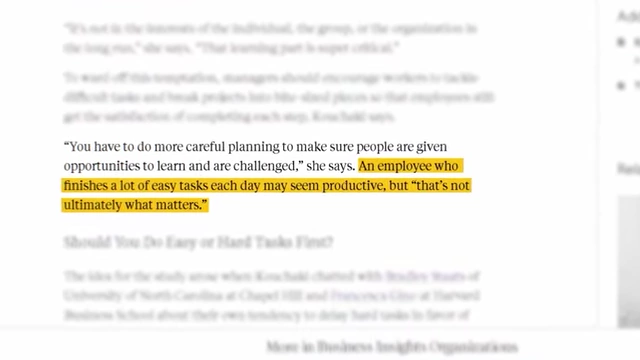
Research excerpt highlighting that tackling difficult tasks first is most productive [ 00:03:52 ]
- Know Your Chronotype [0:03:59]
- Understand your natural biological rhythm for sleep and wakefulness (early bird or night owl).
- Night owls (about one in five people) should schedule their deep work for later in the day or at night when they are most alert, rather than conforming to a typical "morning prime time."
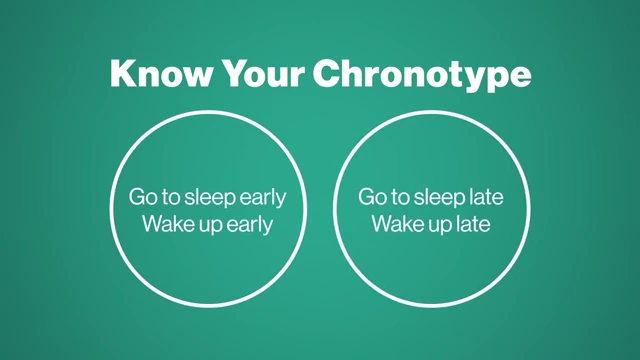
Illustration demonstrating different chronotypes: early bird vs. night owl [ 00:04:09 ] 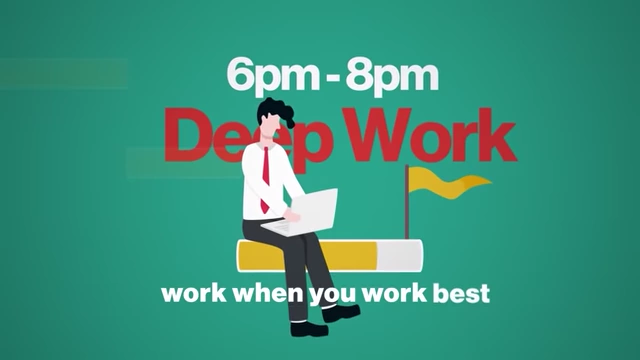
An illustration advising night owls to schedule deep work for their peak hours [ 00:04:20 ]
- Utilize Time Boxing [0:04:30]
- Set specific start and end times for tasks (e.g., "I'll work on this report from 10:00 AM to 11:30 AM").
- This structure sharpens focus, limits drift, and creates a clear container for tasks.
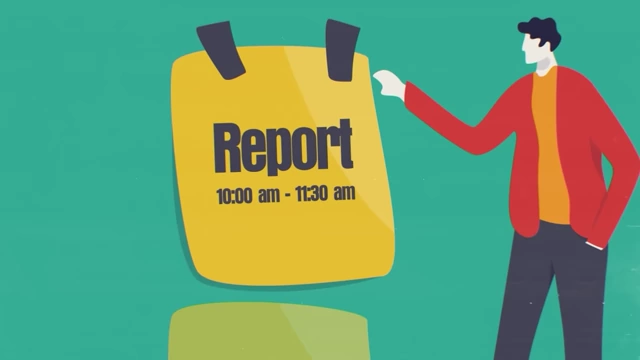
A visual example of time-boxing a task, setting a clear start and end time [ 00:04:41 ] 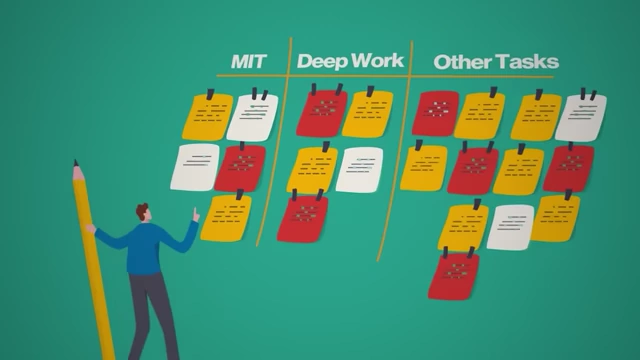
Visualizing task categorization into MIT, Deep Work, and other tasks [ 00:04:49 ]
3. Systematize the Small Stuff [0:04:58]
Minimize decision-making and cognitive load for smaller, routine tasks by systematizing them.
- Use the 2-Minute Rule [0:05:08]
- If a task takes less than two minutes, do it immediately instead of adding it to a list or overthinking it. This prevents clutter.
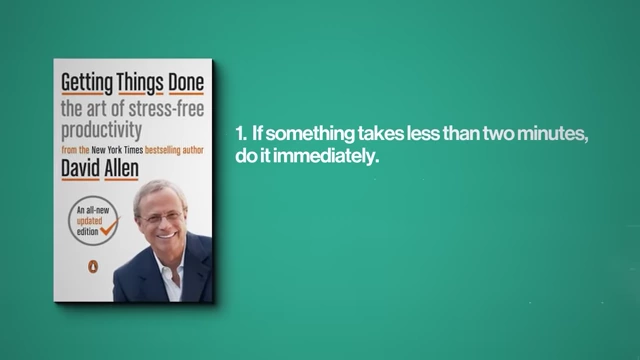
David Allen's 'Getting Things Done' and the 2-minute rule for quick tasks [ 00:05:09 ]
- If a task takes less than two minutes, do it immediately instead of adding it to a list or overthinking it. This prevents clutter.
- Stop Multitasking [0:05:20]
- Multitasking is ineffective, making you slower, sloppier, and more stressed. Focus on completing one task before moving to the next.
- Batch Like a Boss [0:05:38]
- Group similar tasks together (e.g., email, phone calls, errands, administrative work).
- For example, process emails a few times a day in dedicated bursts, avoiding tab switching and notifications. This saves time lost to context switching.

An example of batching similar tasks like email and phone calls [ 00:05:44 ]
- Limit Your Choices [0:05:58]
- Counterintuitively, fewer choices lead to more happiness and better outcomes by reducing decision fatigue.
- Barack Obama's habit of wearing only gray or navy suits to conserve brain power for more important decisions is cited as an example of even powerful people automating small stuff.
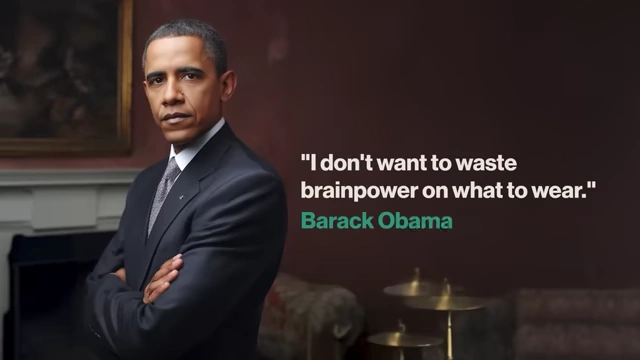
Barack Obama's quote on limiting choices to conserve decision-making energy [ 00:06:22 ]
4. Track Your Progress [0:06:26]
Visible progress is a powerful motivator for sustained effort.
- Progress as the Biggest Motivator [0:06:29]
- Research by Teresa Amabile (Harvard) shows that making progress in meaningful work is the single biggest day-to-day motivator, outperforming praise, pay, or pressure.
- The challenge is that progress is often unseen, so a mechanism to notice it is crucial.
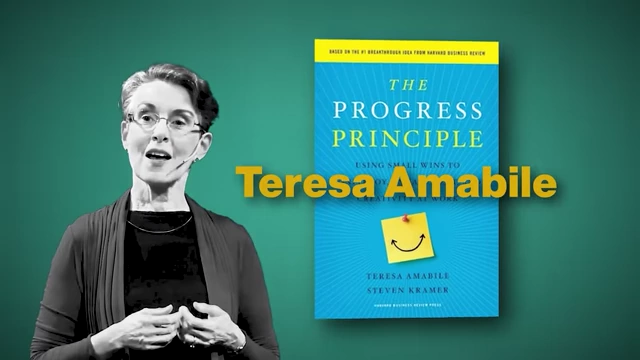
Teresa Amabile, author of 'The Progress Principle', on the power of progress [ 00:06:34 ] 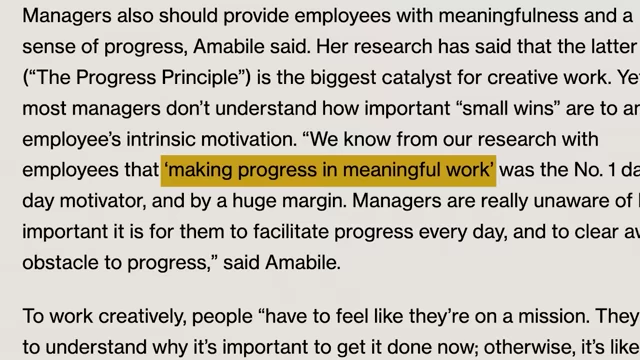
Research finding that 'making progress in meaningful work' is the top daily motivator [ 00:06:36 ]
- Daily Progress Tracking [0:06:57]
- Spend one minute at the end of each day to write down three ways you made progress, regardless of size. This helps visualize movement and sustains motivation.
- Weekly Reviews [0:07:11]
- Implement a weekly rhythm of review:
- Mondays: Ask "What's ahead?", "What matters most?", "What are my priorities?" (5 minutes).
- Fridays: Ask "How did it go?", "Where did I make progress?", "Where could I have done better?" (5 minutes).
- This routine builds powerful momentum.
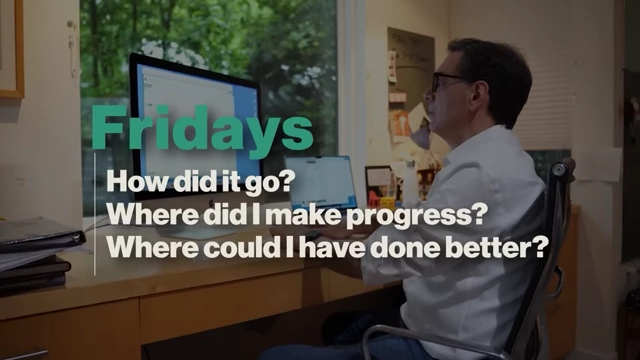
Weekly review questions for Monday and Friday to track progress [ 00:07:24 ]
- Implement a weekly rhythm of review:
- Pixar's "Dailies" Example [0:07:36]
- Animators at Pixar regularly show their unfinished work in "dailies" sessions, not for impressive presentations, but simply to demonstrate progress and receive feedback, which builds accountability and improves work quality.
5. Take Strategic Breaks [0:08:00]
Breaks are not a luxury or a sign of laziness; they are a critical component of high performance.
- Lessons from Elite Performers [0:08:03]
- Anders Ericsson's 1993 study of elite violin players found that while they practiced intensely (often in 90-minute sessions), they also took extensive breaks. Their peak performance was linked to strategic recovery, not constant grinding.
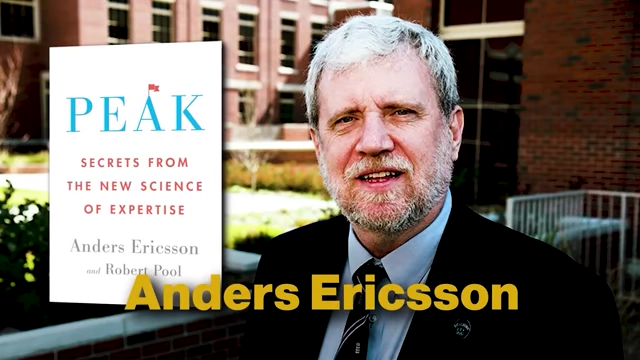
Anders Ericsson, author of 'Peak', whose research highlights strategic breaks [ 00:08:06 ]
- Anders Ericsson's 1993 study of elite violin players found that while they practiced intensely (often in 90-minute sessions), they also took extensive breaks. Their peak performance was linked to strategic recovery, not constant grinding.
- Breaks as Tools of Excellence [0:08:31]
- Human beings are built for cycles of effort and recovery, not continuous 8-hour efforts. Incorporating breaks is hard-headed and ruthless productivity.
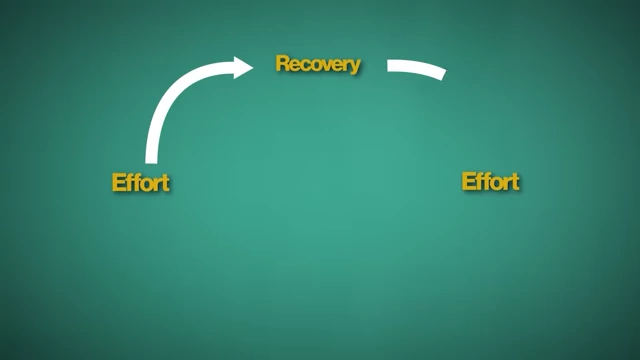
The effort-recovery cycle essential for sustained performance [ 00:08:53 ]
- Human beings are built for cycles of effort and recovery, not continuous 8-hour efforts. Incorporating breaks is hard-headed and ruthless productivity.
- 5 Principles of Restorative Breaks [0:09:01]
- From Daniel Pink's book "When":
- 1. Something beats nothing: Even short breaks are better than none.
- 2. Moving beats stationary: Active breaks (e.g., walking) are more effective than staying put.
- 3. Outside beats inside: Being in nature, even briefly, has substantial restorative effects.
- 4. Social beats solo: Breaks with others are more restorative, even for introverts.
- 5. Fully detached beats semi-detached: Completely disconnect from work; leave your phone behind.
- Better breaks help you refocus, reset, and return stronger.
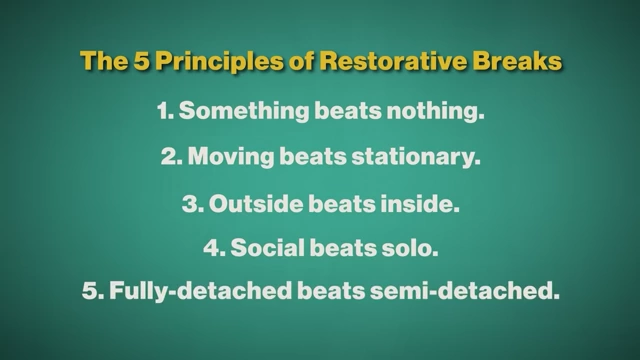
The five principles for taking restorative breaks [ 00:09:32 ]
- From Daniel Pink's book "When":
6. Consistency Instead of Intensity, Habits Instead of Heroics [0:09:46]
Sustainable, long-term success comes from consistent, small actions, not infrequent, intense bursts.
- The Power of Showing Up [0:09:56]
- The most accomplished people are not 24/7 maniacs, but those who show up consistently and do the work daily.
- Avoid Heroic Efforts [0:10:12]
- All-nighters, 18-hour workdays, or finishing week-long projects in a single day are unsustainable and often lead to worse work quality.
- Build Simple Routines (Habits) [0:10:23]
- Design simple habits that make it easy to do important tasks without overthinking or overexerting.
- James Clear describes this as "casting votes" for the kind of person you want to become (e.g., writing daily casts a vote for being a writer).

James Clear, author of 'Atomic Habits', on 'casting votes' for the person you want to become [ 00:10:33 ] 
Visual representation of 'casting a vote' for being a writer [ 00:10:39 ] 
Visual representation of 'casting a vote' for being disciplined [ 00:10:42 ]
- Repetition Drives Long-Term Success [0:10:45]
- A 2020 USC study found that the biggest predictor of long-term habit success is repetition, especially early on, more so than motivation, willpower, or rewards.
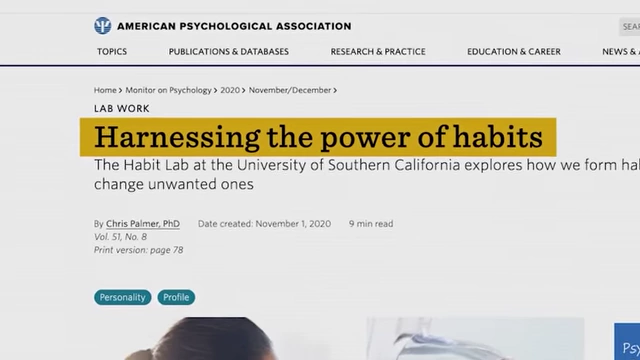
USC research highlighting the power of habits and repetition [ 00:10:48 ] 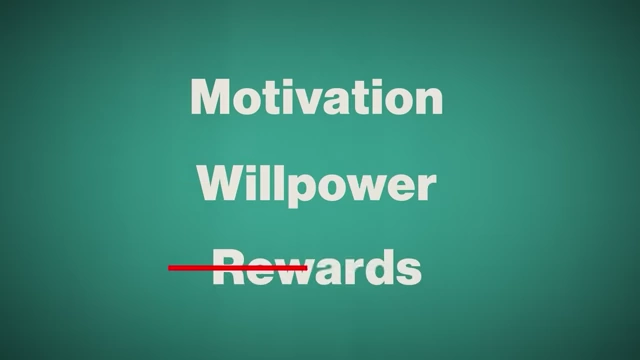
Visual debunking motivation, willpower, and rewards as primary habit drivers [ 00:10:55 ] - Consistently showing up, even for a few minutes daily, is more effective than intense sporadic efforts because "intensity exhausts and consistency compounds."
- Focus on quiet, deliberate, daily progress to avoid burnout.
- A 2020 USC study found that the biggest predictor of long-term habit success is repetition, especially early on, more so than motivation, willpower, or rewards.
Conclusion: The 6 Principles for Meaningful Work [0:11:24]
To get more meaningful work done, follow these six principles:
- Do less ruthlessly.
- Protect your peak hours.
- Be a machine with the small stuff.
- Track your progress every day and every week.
- Treat breaks as performance fuel.
- Go for consistency instead of intensity, habits instead of heroics.
These are not complicated, but they are effective.
Summary of the six principles for getting more meaningful work done [ 00:11:43 ]